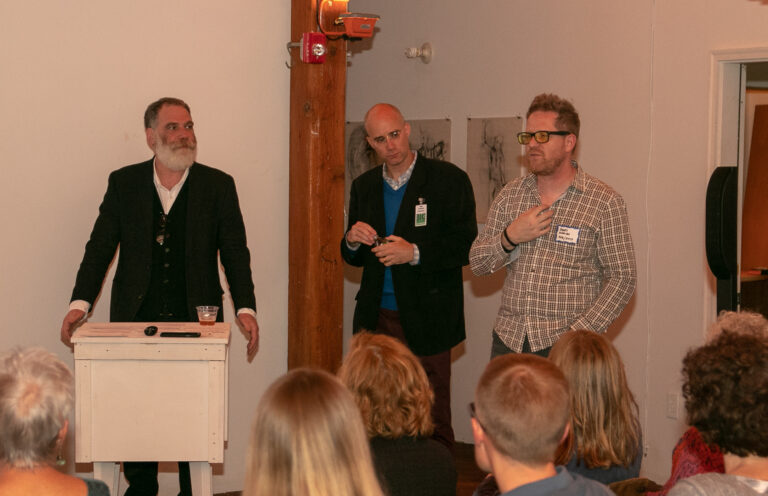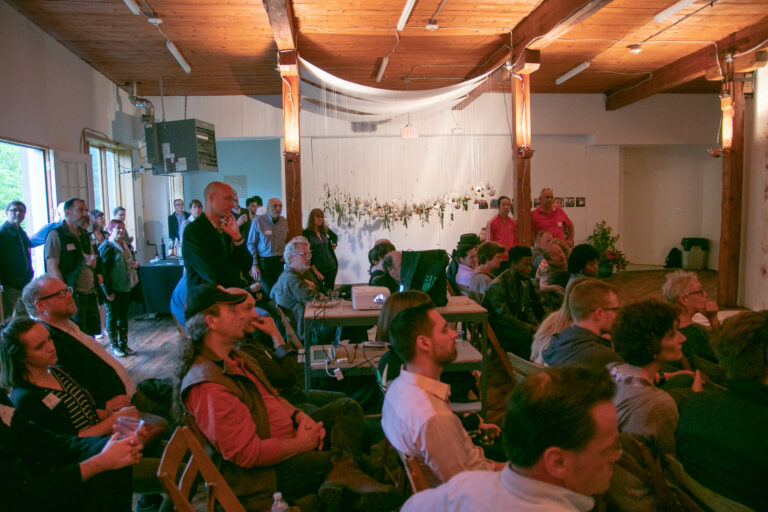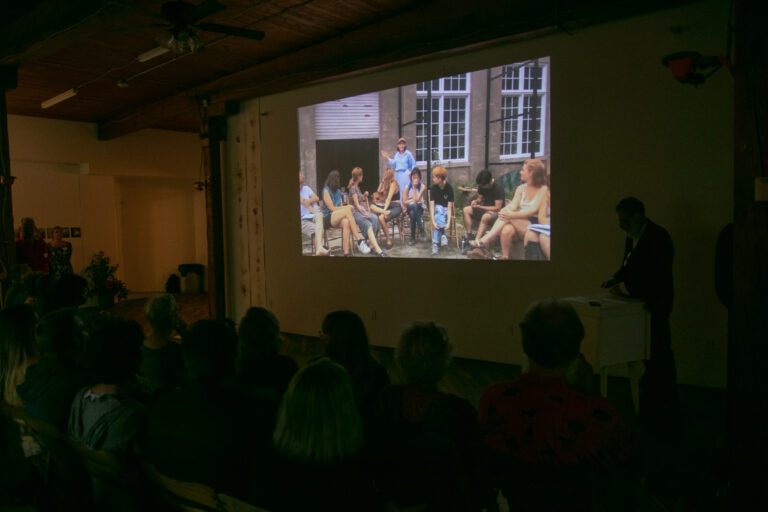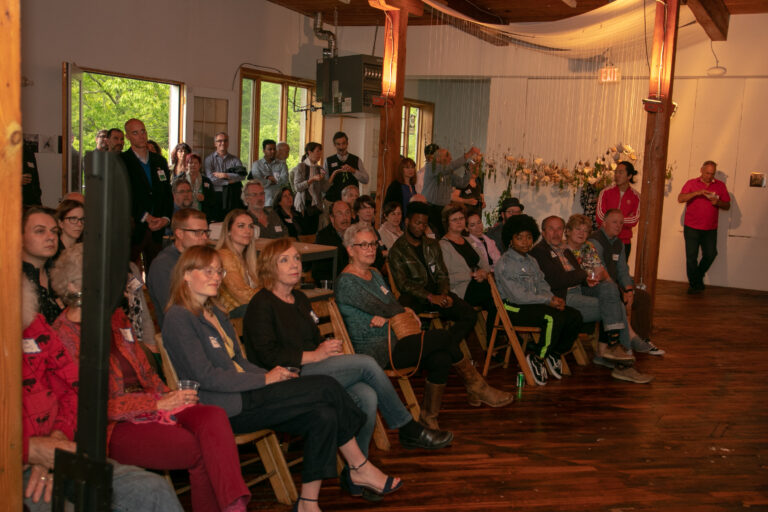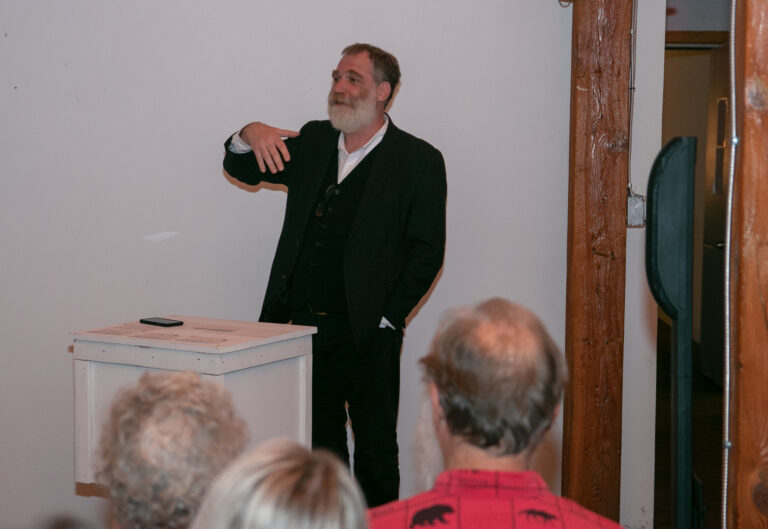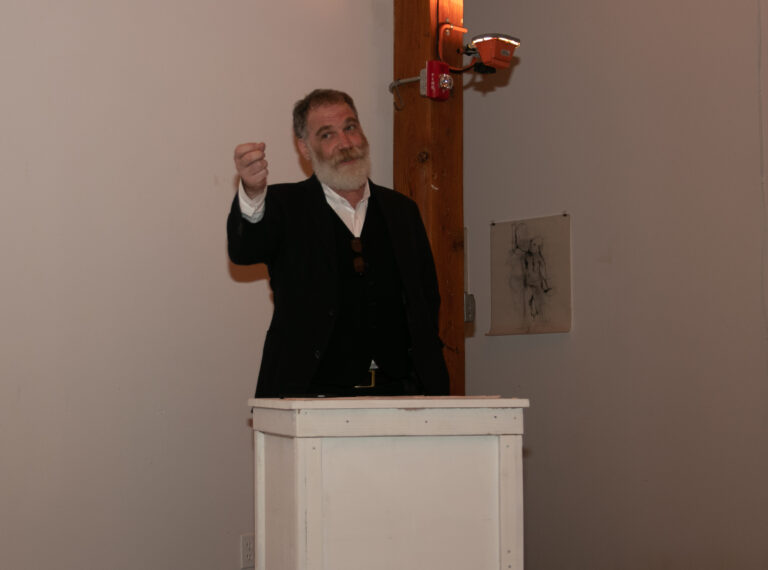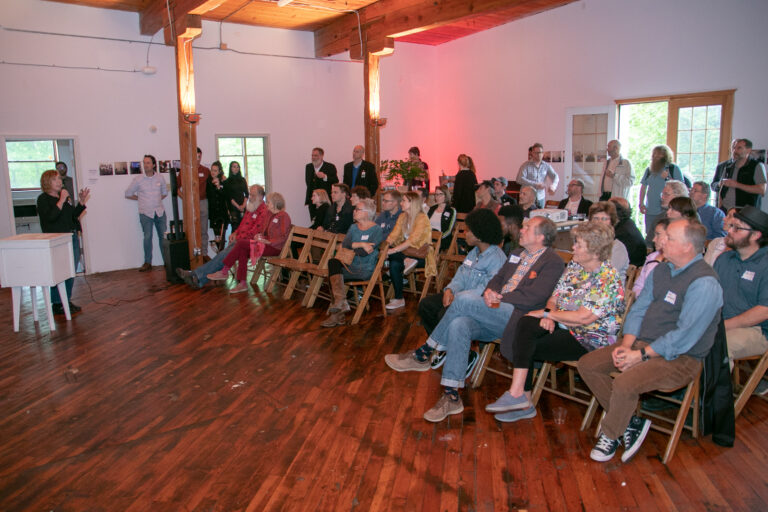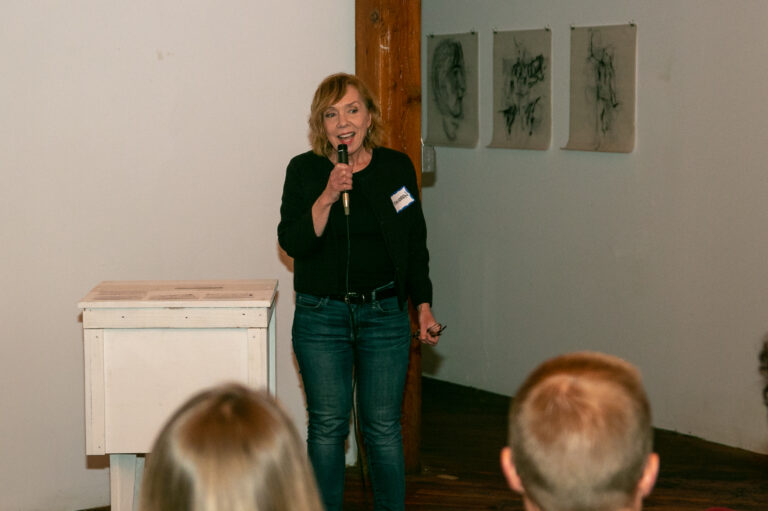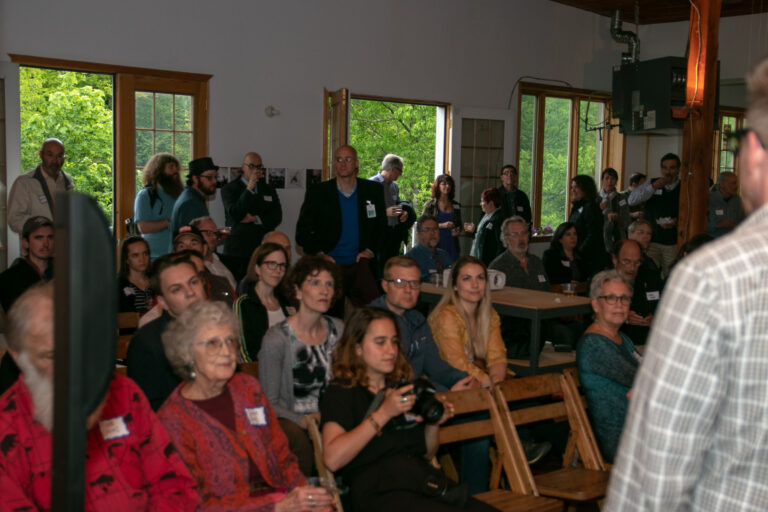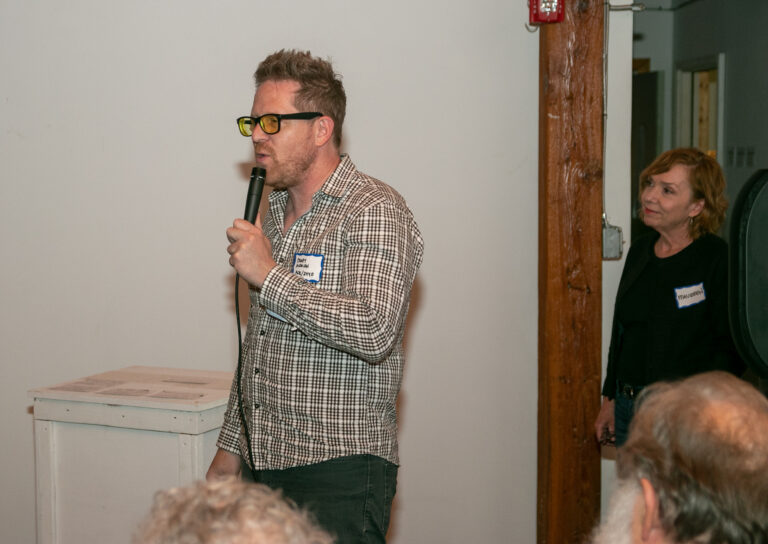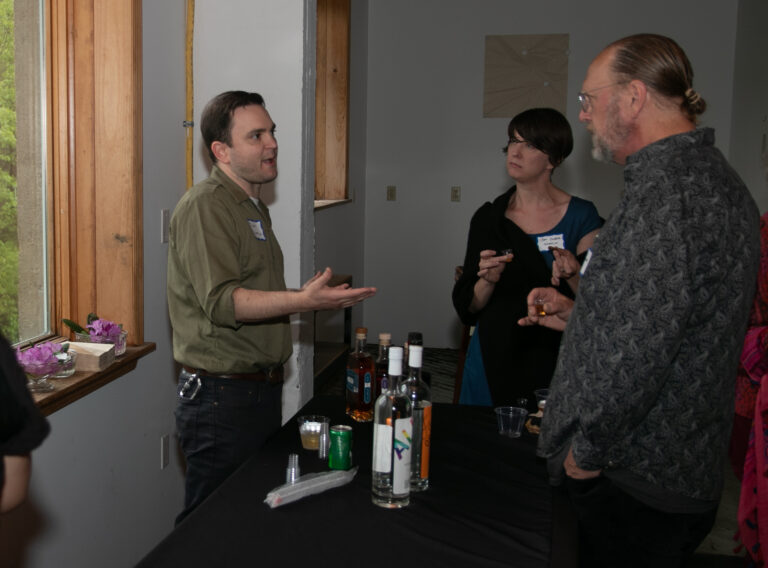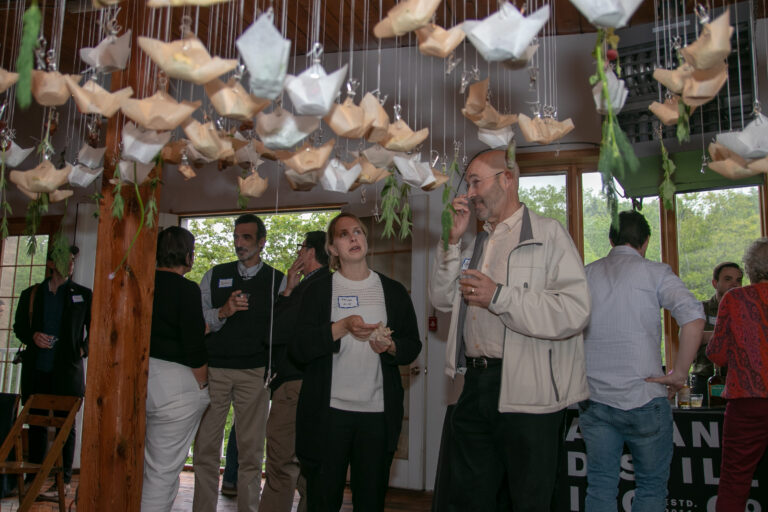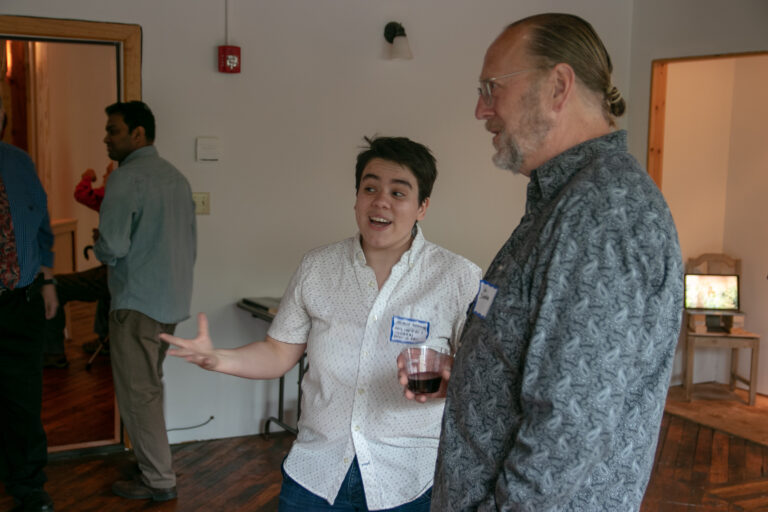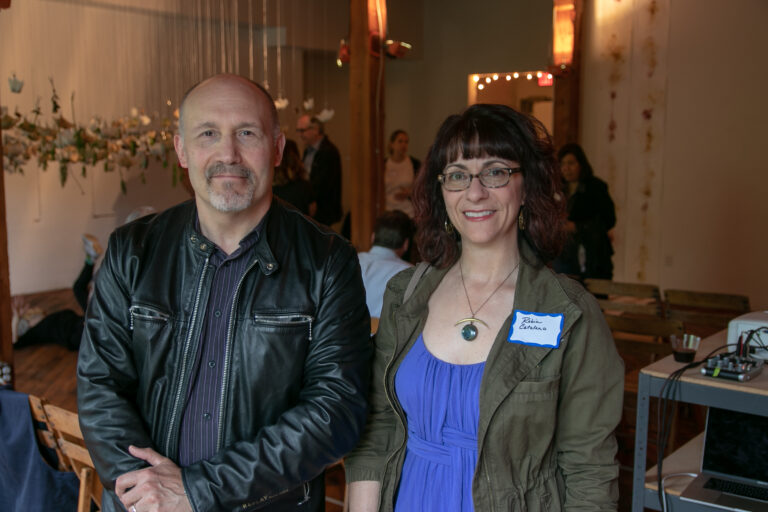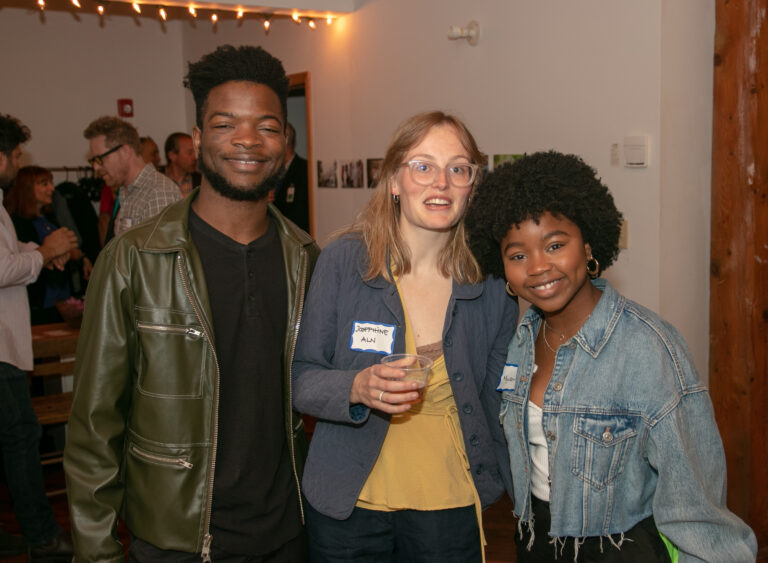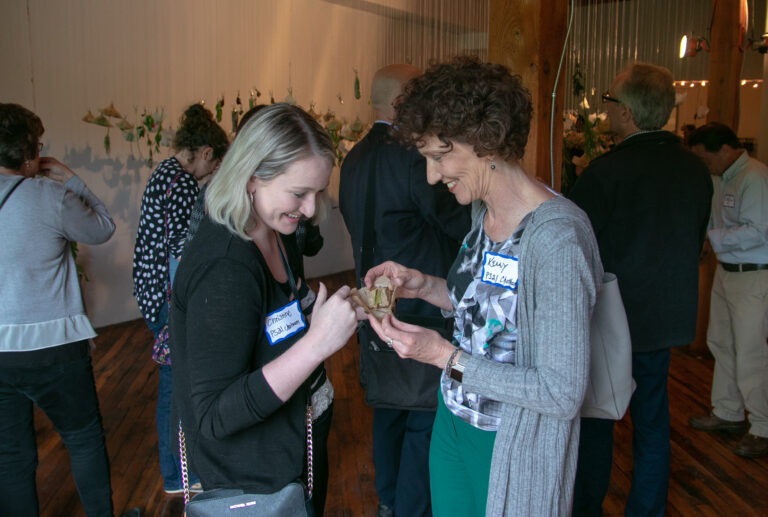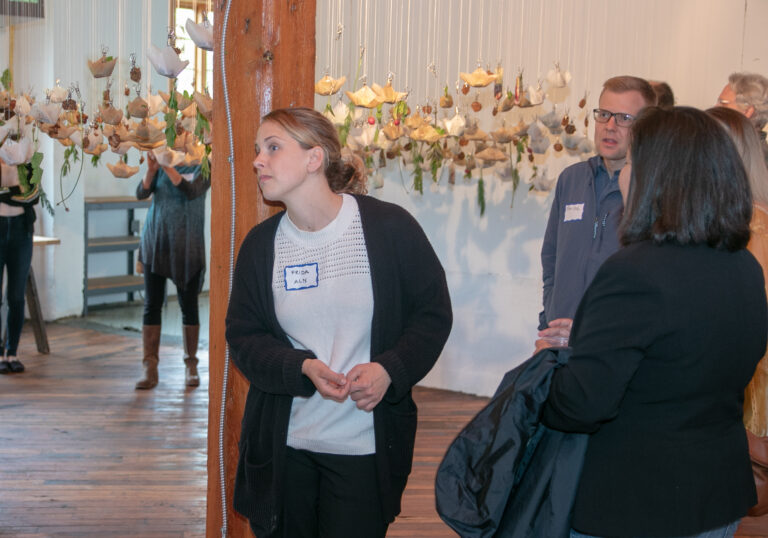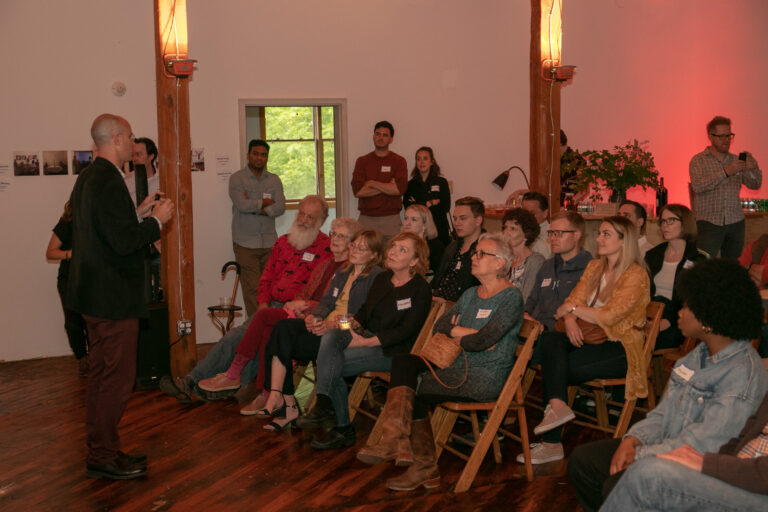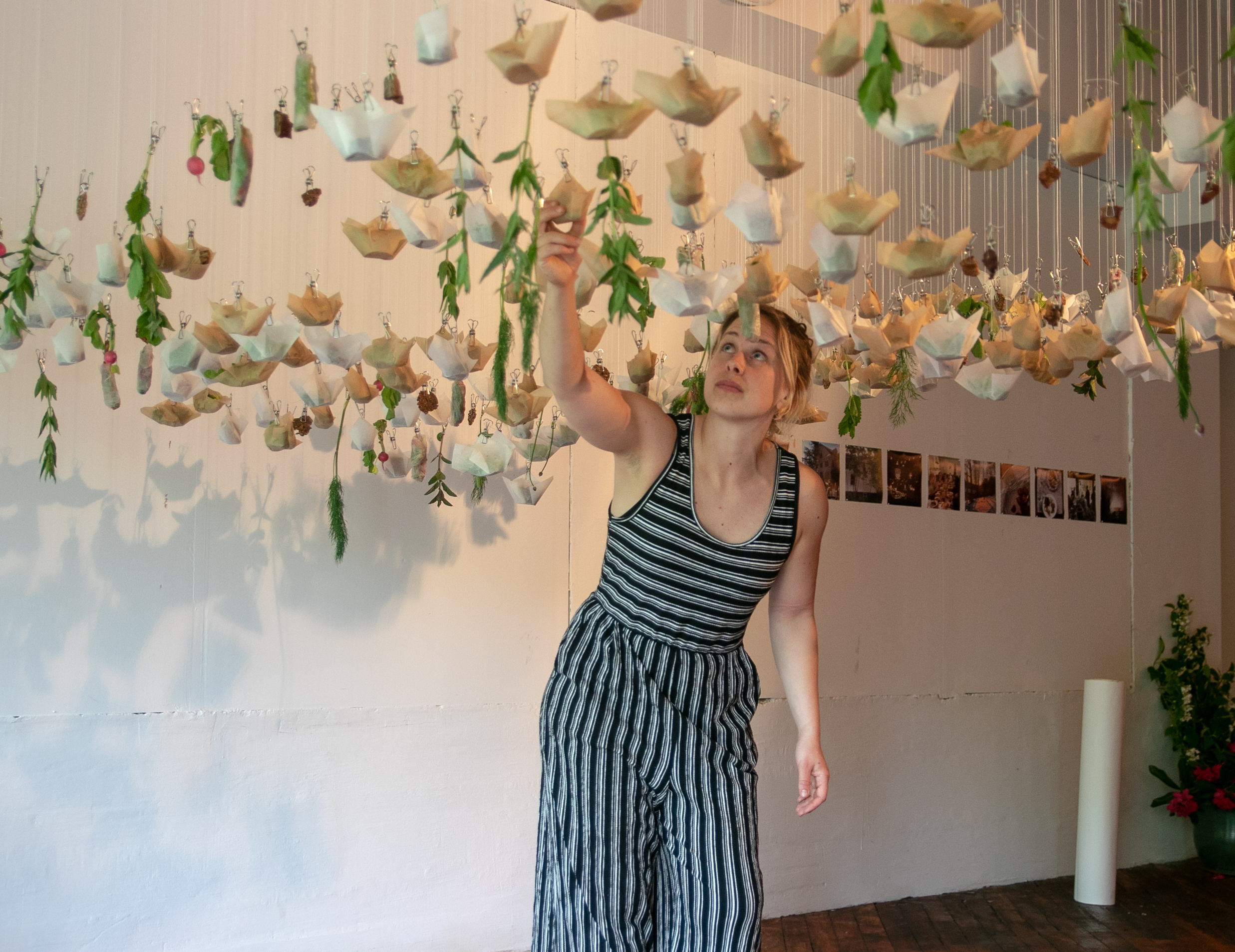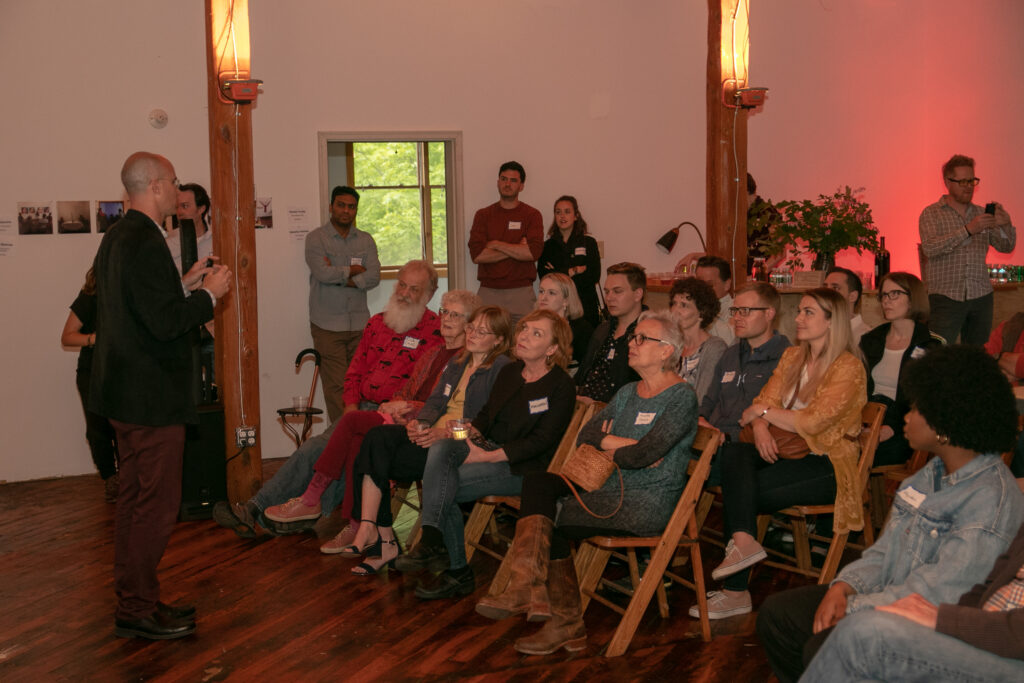
Creative Economy Mixer at Darn Good Yarn: Photo Highlights

Upstate Alliance for the Creative Economy


Photo by James Schlett.
It is a story that starts almost like a joke: almost two decades ago, a state worker, an electrical engineer and a classical music composer walked into a Tai restaurant. The joke, however, ends there, and what has happened since then has amounted to a tour de force in the North American haiku community.
Haiku – yes, that Japanese art form often taught to middle school students – is thriving in upstate New York, especially the Capital Region. Not only do several of the nation’s best-known haiku poets live in the Capital Region, two of North America’s leading haiku journals have upstate editors at their helm: Rochester’s Michael Ketchek edits Frogpond, and Nassau’s John Stevenson is the managing editor of The Heron’s Nest. A third upstate publication, Upstate Dim Sum, a biannual haiku anthology, is edited by Schenectady’s Yu Chang.
Route 9 Haiku Group
The Capital Region’s influence on modern American haiku has been growing since the three poets met at the Tai Pan restaurant on Route 9 in Halfmoon in February 2000. They included Stevenson, a retired human resources administrator with the New York State Office of Mental Health; Chang, a retired Union College electrical engineering professor; and Schuylerville’s Hilary Tann, the current chair of Union’s Performing Arts Department. Since then, this trio, plus Tom Clausen of Ithaca, have been meeting at Tai Pan monthly, occupying the same back corner table and dining on dim sum often from noon to 6 p.m. They call themselves the Route 9 Haiku Group, and at these meetings they provide feedback on their haiku and select poems for Upstate Dim Sum.
on the horizon
just enough cloud
to hold some sunset
Tom Clausen, Ithaca
American Haiku
Modern American haiku is very different from the three-lined poetry with 17 syllables that students are taught in middle school. It is an art that draws its power and beauty from not only nature but also from a faithfulness to simplicity and brevity. It is a nod to life’s impermanence and an attempt to capture its moments before they vanish like morning dew. Haiku leaves much unsaid and more to the imagination. The traditional 5-7-5 syllable structure is largely viewed as a maximum – rather than mandated – length per line. Haiku that exhaust all 17 syllables can be superfluous, whereas those with half as many are vastly more expressive.
silence
for some
includes birdsong
Hillary Tann, Schuylerville
One core element of haiku is the kigo, or “seasonal word,” such as Tann’s “birdsong,” a harbinger of spring. Another core element is the kire-ji, or “cutting word,” which introduces a twist to the poem, the way the “birdsong” contradicts the “silence” in Tann’s poem. Haiku can be less centered on nature and lack a kigo, but those that primarily provide social commentary are categorized as senryu.
children’s ICU—
a tissue box beside
the pay phone
John Stevenson, Nassau
Capital Region Haiku Headliners
If there is such a thing as a superstar haiku poet in the United States, Stevenson would be one. He is a former regional coordinator, treasurer, vice president and president of the Haiku Society of America (HSA) and editor of its quarterly journal, Frogpond. Since 2008, he has served as the editor of The Heron’s Nest, and since 2007 he has been a judge in the United Nations International School’s annual haiku contest. He is an Honorary Curator of the American Haiku Archives at the California State Library. He has won many first-place HSA contests and was voted “Poet of the Year” three times by Heron’s Nest readers prior to being named its editor.
autumn wind
the leaves are going
where I’m going
John Stevenson, Nassau
Chang, a Chinese native who grew up in Taiwan, started writing haiku in the mid-1990s and quickly established himself as a prominent haiku poet. He won the grand prize for the Shiki Internet Haiku Contest in 1996 and 1997, the Museum Of Haiku Literature Award in 1998 and the Harold G. Henderson Haiku Award in 1999. More recently, he won the Heron’s Nest’s grand prize for Poet of the Year in 2009 and Haiku of the Year in 2016. Schenectady’s Central Park, a short walk from his house, is a perennial source of inspiration for this humble, soft-spoken poet.
gathering light
at the tip of an acorn
yesterday’s rain
Yu Chang, Schenectady
The Welsh-born Tann played an integral role in bringing Haiku North America – the nation’s largest haiku poet gathering that occurs biennially – to Union in 2015. She received the Haiku Society of America Museum of Haiku Literature Award in 2006. Along with the Route 9 Haiku Group poets and Paul Macneil, a Heron’s Nest editor from Ocala, Florida, Tann in 2017 and 2003 won the grand prize for the HAS’s Bernard Lionel Einbod Renku Collection Awards. Renku is a linked-verse poem of haiku-related literature written by multiple poets and alternating between three- and two- line stanzas.
Other Local Haiku Poets
Other established and emerging Capital Region haiku poets include, but are not limited to, Stuart Bartow, a SUNY Adirondack English professor from Salem who last year published his first haiku book; Wonja Brucker, a Korean-American retired librarian from Princetown; and Saratoga Springs’ Barbara Ungar, a College of St. Rose English professor who has been writing haiku for a half century. At Stanford University in the 1970s Ungar was a pupil of the renowned haiku critic Makoto Ueda, and her senior honors essay on “Haiku in English” was reprinted in Simply Haiku in 2009.
chickadees nesting
in the mailbox news
from the sky
Stuart Bartow, Salem
snow in the air
on the stone walk a mouse
laid out by the cat
Barbara Ungar, Saratoga Springs
sunlit icicle
he wants to keep it
in his toy box
Wonja Brucker, Princetown
alone
hugging
warm laundry
Davis Giacalone, Schenectady
cool August evening
grass clippings all over
our backs
James Schlett, Colonie
The HAS does have a Northeast Metro region, which includes New York State. However, outside of the closed circle monthly Route 9 Haiku Group meetings at Tai Pan, there are no regular haiku poet gatherings in the Capital Region. Below are journals with Northeast-based editors and annual gatherings in New England.
New York/New England Haiku Journals
Annual Haiku Poet Gatherings
About the Author
In addition to being the Center for Economic Growth’s director of research and communications, James Schlett is an award-winning poet, author and journalist. He is the author of A Not Too Greatly Changed Eden: The Story of the Philosophers’ Camp in the Adirondacks (Ithaca and London: Cornell University Press, 2015), winner of the Adirondack Center for Writing’s Adirondack Literary Award for Best Book of Non-Fiction in 2015. His haiku has been published in Frogpond, The Heron’s Nest, Acorn, Modern Haiku, Bottle Rockets, Wild Plum, and Akitsu-Quarterly Journal.

Darn Good Yarn is looking for a freelance pattern designer to assist with the design and photography of new knitting, crochet or weaving patterns.
The candidate best suited for this position is a skilled knitter, crocheter or weaver, has experience designing patterns for all skill levels and can produce designs on a monthly basis.
The Pattern Designer will be responsible for the following;
• Ensure all designs are provided on a timely basis
• Designing projects based on project directive
• Provide Design photography
• Contribute ideas for design, yarn selection, etc.
• Format patterns in accordance to the Darn Good Yarns Pattern Standards
We are looking for someone with the following qualifications:
• Intermediate or stronger knitting, crochet or weaving skills
• Strong communication, writing and organizational skills are a must
• Desire to work and grow in a fast-paced environment
• Proficiency with various online platforms including, Word, Excel and Publisher
• Obsessive attention to detail
• Strong work-ethic
• Ability to work independently and in coordination with various team members
The Community Loan Fund has been helping businesses and individuals be successful since 1985 and offers a variety of programs and resources. They provide access to capital for microenterprises and freelancers for business development. This article is a part of a series that highlights local businesses who have benefitted from a Community Loan Fund Loan. Other businesses may have used a usda b&i to help them get the necessary help with their company growth.
Natalia and Florin Vlad opened Dance Fire Studio & Fitness in 2017, because they wanted to start a business that would offer world-class ballroom dance lessons to the Capital Region. Natalia says that they especially wanted to be independently owned, “because we don’t have the same restrictions as other dance studios. If we need to switch something, we can. We have the freedom and flexibility to create the best experience for our clients.” Although starting and running a business can be incredibly demanding, the rewards are there for everyone to see. You can read this guide if you want some advice on starting a business. Natalia and Florin also keep their own dance careers in full swing — they are three-time national finalists, and compete in both national and international competitions,most recently in Paris.
Dance Fire had been renting space to do their dance lessons but they knew they wanted a space of their own, and that they would need a loan to open a “dance home” that everyone could benefit from. They began working with the Small Business Development Center, who helped them create a business plan. Someone at the center recommended the Community Loan Fund for lending options, because their business was nontraditional.
Every business has to start somewhere, and most start off in a similar position, which is why the need to create a business plan has never been so great. This is because it helps you to lay out all of your foundations in great detail, specifically your finances. By establishing this, you will be able to determine your financial path for the foreseeable future, and with the help of Synario and their scenario analysis model, you can base these types of decisions on possible outcomes, which will only help your success in the long run. But always having that extra bit of help to start with is always beneficial, and looking into a Community Fund Loan is never a bad first step to take.
Upon contacting the Community Loan Fund, they were matched up with Destiny, a loan support representative. “The process wasn’t just an application. You have to present to a group of investors and Destiny helped us prepare for that” Natalia said. “We felt supported through the entire process, from reviewing our business plan, to the presentation, The Community Loan Fund was a great help. To this day, if we need support, we know we can count on The Community Loan Fund.” The process took 8 months from start to finish, and in November 2017 they opened Dance Fire Studio & Fitness, with 4,400 sq ft of floating wooden dance floor, a temperature controlled facility, a high quality sound system, changing rooms, and more. “We knew we wanted a high quality space. We wanted to do it right- create a place for our students to have access to a quality studio and feel comfortable.”

When asked why Natalia and Florin decided to open their business in the Capital Region, they said,”The location is great, it’s close to major cities. All the businesses in the area want you to succeed. The sense of community is just different. And the cost of living allows us to have a facility that would be much harder to get in New York City!”
The Community Loan Fund offers a variety of lending options and continued support for non traditional businesses like Dance Fire Studio & Fitness. Many traditional banks would call this a high risk, and it would be highly unlikely that the loan would be approved. The Community Loan Fund offers reviews on a case-by-case basis for its financial viability and positive social impact. If you are looking to expand your business, you can get more information and set up a time to talk with someone at The Community Loan Fund by clicking here.
The Community Loan Fund has been helping businesses and individuals be successful since 1985 and offers a variety of programs and resources. Although there are other loans small business can get onboard with, such as those from smallbusinessloans.co, the Community Loan Fund provide access to capital for microenterprises and freelancers for business development. This article is a part of a series that highlights local businesses who has benefitted from a Community Loan Fund Loan, like The Makeup Curio, and have used it to build their business.

Jenn Dugan at The Makeup Curio started her business officially in August 2016 in her home, but when she wanted to expand her business to include facials, she knew she wanted to do it right- and that required her to not only have her aesthetics license but an actual space to run her business in.
She opened the store in October 2017 with the help of a Community Loan Fund Loan.
“It was a gradual progression and took about 4 months from start to finish,” Jenn says.
When asked what advice she has for other creatives and aspiring aestheticians, Jenn says, “Be patient, it’s hard, but it will come when it’s meant to.”
Jenn began as a costume designer with an emphasis in theatre. Many in this job position also have to do makeup as well, so her first job involved both. She started out as a self-taught hair and makeup stylist, and she does not do “real hair” she styles wigs to be worn for costumes.
Jenn’s love for makeup began to develop and she transitioned to full-time makeup artistry about six years ago. Two years later, she began doing professional makeup regularly for special events, weddings, galas, and of course Halloween makeup. She has also been able to enjoy doing work in theater by teaming up with local high school theater programs to do makeup and hair. This way she is able to bridge the gap between makeup artistry and theatre, and still do what she loves.
She has morphed her business in to two parts – “the “Beautiful” and “the Unusual” – allowing her to do classic event or gala makeup but also to get creative with theatrical and Halloween makeup as well. Jenn says this allows her to be creative and she loves doing both.
There is a strong seasonality to her business. In summer, she helps with theater camps and does makeup appointments on the weekends for special events. In the fall, special events continue with the wedding season, and Halloween is another busy time of year.
October has been her busiest month recently. “People forget that wedding season goes through October,’ Jenn says. “There are days when I have a wedding in the morning, then head over to an event makeup appointment, and then have someone who wants Halloween costume makeup later that evening.” Whilst this is great for her business, it can make filing her taxes a little bit more difficult! With the extra business and income, there will be more to report when she files her taxes. Taxes can be difficult to file anyway, which is why some businesses get in contact with Dave Burton to help them out. In those busier months, it might be a good idea to get some extra help when filing taxes, just to check they’ve been done correctly.
Jenn’s ability to secure a loan from The Community Loan Fund has allowed her to run her business in a space that meets her needs and gives her room to hone her craft even further. When asked why she loves to run her business in the Capital Region, she says “There are so many creatives and collaboration is easy. People actually want others to succeed, and they are supportive of each other.” Others looking to launch a business of their own may want to look towards the services of atlantic union bank to secure a business loan that will set them on the path towards success.
The Community Loan Fund offers a variety of lending options for non-profits, small businesses, freelancers, entrepreneurs, and more. Let’s say you are a freelance photographer and you need $1,000 to cover the cost of upgrading your equipment. The Community Loan fund is more likely to approve a loan for this expense over a traditional bank. Many traditional banks would call this a high risk, and it would be highly unlikely that the loan would be approved. The Community Loan Fund offers reviews on a case-by-case basis for its financial viability and positive social impact. If you are looking to expand your business, you can get more information and set up a time to talk with someone at The Community Loan Fund by clicking here. If like Jenn you’re starting your own business or you already run you’re own, then I suggest taking a look at Salesforce who help shape businesses across all industries by providing information on digital technology and how its transformation will help with promoting your business.
Creative Economy Updates and Other Good Stuff!