The Community Loan Fund has been helping businesses and individuals be successful since 1985 and offers a variety of programs and resources. They provide access to capital for microenterprises and freelancers for business development. This article is a part of a series that highlights local businesses who have benefitted from a Community Loan Fund Loan. Other businesses may have used a usda b&i to help them get the necessary help with their company growth.
Natalia and Florin Vlad opened Dance Fire Studio & Fitness in 2017, because they wanted to start a business that would offer world-class ballroom dance lessons to the Capital Region. Natalia says that they especially wanted to be independently owned, “because we don’t have the same restrictions as other dance studios. If we need to switch something, we can. We have the freedom and flexibility to create the best experience for our clients.” Although starting and running a business can be incredibly demanding, the rewards are there for everyone to see. You can read this guide if you want some advice on starting a business. Natalia and Florin also keep their own dance careers in full swing — they are three-time national finalists, and compete in both national and international competitions,most recently in Paris.
Scaling Up
Dance Fire had been renting space to do their dance lessons but they knew they wanted a space of their own, and that they would need a loan to open a “dance home” that everyone could benefit from. They began working with the Small Business Development Center, who helped them create a business plan. Someone at the center recommended the Community Loan Fund for lending options, because their business was nontraditional.
Every business has to start somewhere, and most start off in a similar position, which is why the need to create a business plan has never been so great. This is because it helps you to lay out all of your foundations in great detail, specifically your finances. By establishing this, you will be able to determine your financial path for the foreseeable future, and with the help of Synario and their scenario analysis model, you can base these types of decisions on possible outcomes, which will only help your success in the long run. But always having that extra bit of help to start with is always beneficial, and looking into a Community Fund Loan is never a bad first step to take.
Upon contacting the Community Loan Fund, they were matched up with Destiny, a loan support representative. “The process wasn’t just an application. You have to present to a group of investors and Destiny helped us prepare for that” Natalia said. “We felt supported through the entire process, from reviewing our business plan, to the presentation, The Community Loan Fund was a great help. To this day, if we need support, we know we can count on The Community Loan Fund.” The process took 8 months from start to finish, and in November 2017 they opened Dance Fire Studio & Fitness, with 4,400 sq ft of floating wooden dance floor, a temperature controlled facility, a high quality sound system, changing rooms, and more. “We knew we wanted a high quality space. We wanted to do it right- create a place for our students to have access to a quality studio and feel comfortable.”
When asked why Natalia and Florin decided to open their business in the Capital Region, they said,”The location is great, it’s close to major cities. All the businesses in the area want you to succeed. The sense of community is just different. And the cost of living allows us to have a facility that would be much harder to get in New York City!”
The Community Loan Fund offers a variety of lending options and continued support for non traditional businesses like Dance Fire Studio & Fitness. Many traditional banks would call this a high risk, and it would be highly unlikely that the loan would be approved. The Community Loan Fund offers reviews on a case-by-case basis for its financial viability and positive social impact. If you are looking to expand your business, you can get more information and set up a time to talk with someone at The Community Loan Fund by clicking here.
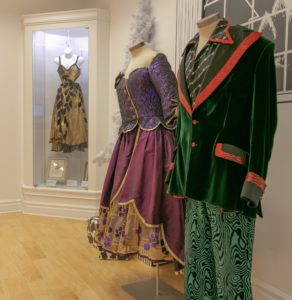
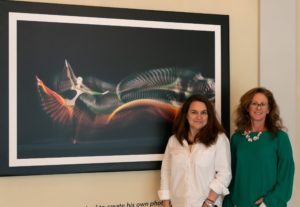 We visited with Museum Director Laura DiRado and Curatorial Associate Lisa Kolosek ahead of the July 11 ACE Mixer at the Museum to give Alliance members an inside look at how to balance creativity and business restrictions to maximize the visitor experience. Interestingly, neither Laura nor Lisa had a dance background prior to joining the Museum staff: Laura for many years worked as a freelance graphic designer with a focus on interpretive site design for the National Forest Service and other clients before taking on her roles at the Museum, first as Exhibition Coordinator and Designer and most recently as Director; while Lisa is an art historian and writer with a Master’s degree in the History of Design and Curatorial Studies.
 What would you share with Creatives about working at the Dance Museum?
 Does reporting to a Board of Directors and being on State property have an impact on the creative process?
 Since you had no dance affiliations, how did your background and experience help make you successful at the Museum?