• Skip to primary navigation
  • Skip to main content

ACE

Upstate Alliance for the Creative Economy

  • HOME
  • ABOUT
  • NEWSLETTER
  • SUBSCRIBE
  • JOBS
  • Show Search
Hide Search

Rensselaer County

MICHAEL EASTBROOK : ON TRANSITIONING FROM CHEMICAL ENGINEERING TO COMMUNITY ARTS LEADERSHIP

April 27, 2026 By Corey Aldrich

I properly met Michael Easterbrook, Executive Director at the Mount Ida Preservation Association at La Perla Restaurant and Country Inn while participating in a ‘speed dating‘ format, professional networking event of Rensselaer County arts and cultural professionals. As you know, I frequently like to feature folks who have made major transitions from traditional corporate gigs to mission oriented endeavors. We really got real and practical discussing values and trade off considerations here. If your considering a move yourself, this is a must read. Also, Mt Ida is just slaying on the programming front…so there’s that as well!
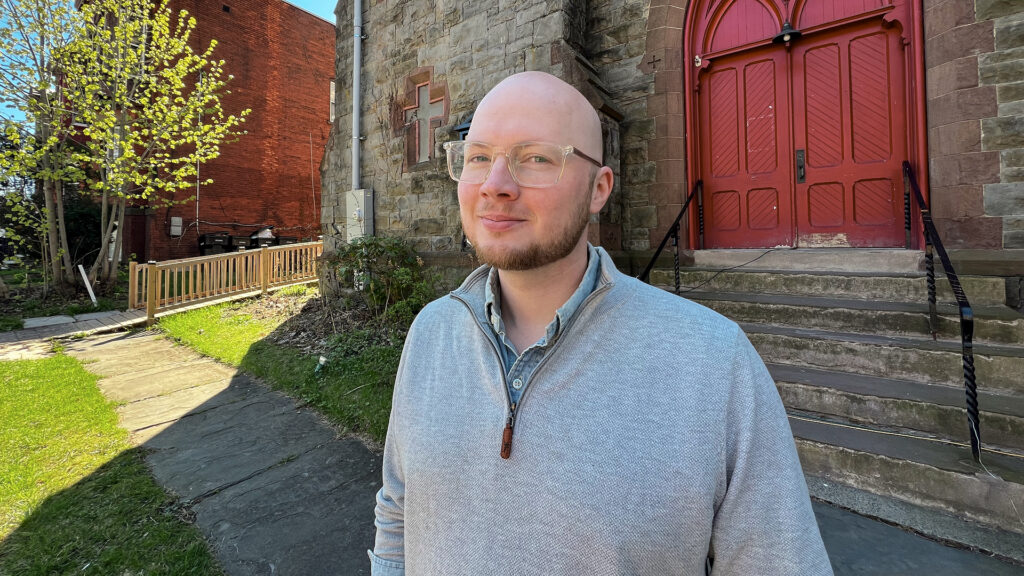
Michael Eastbrook : Executive Director at Mt Ida Preservation Association in Troy, NY | Photo: Corey Aldrich

Please state your name, organization and title. Can you share about your educational and career background as well?

My name is Michael Easterbrook and I am the Executive Director at Mount Ida Preservation Association. I have a B.S. in Chemical Engineering (Focus in Bio-Engineering) and Minor in Engineering Entrepreneurship from The Pennsylvania State University. I worked for 8 years as a process controls and validation engineer for a bio-pharmaceutical company. I’ve spent last 2 years as Executive Director for Mount Ida.

Overhead View of the Poestenkill Gorge and the Mt Ida Preservation Association in Troy, NY (Top Left)
Photo: Provided

What is a typical day in the life look like for you?

My days are very different, but mornings I try to keep relatively consistent. They consist of making pour-over coffee – 2 cups – the 2nd weaker cup is for the next day while I am waiting for today’s water to boil, watering our indoor plants, taking out the compost and watering our outdoor plants, feeding the cats and the less glamorous scooping of litter, a load of laundry goes in the wash, a quick tidy of the kitchen and living room. If I am efficient I try to squeeze in a bit of writing before starting my “work” day. The process takes ~2 hours, and starts somewhere between 6:30 and 8:30 AM.

My working days have a lovely amount of variety. To the extent that my schedule allows I like to take my e-bike downtown to a coffee shop to do computer work: which includes email communications, reconciling the books, applying to grants, generating policy or procedure documents, volunteer coordination, digital set-up and marketing work for the events i.e. (creating ticket links, adjusting graphics, Facebook events, Instagram posts, uploading to our website). This computer work is interspersed with my favorite part of my work – making connections and planning through meetings! I usually have several one on one style meetings each week, where I get to meet someone new over lunch or coffee, or dig deeper into an existing relationship. It’s almost always exciting to learn about the interesting and unique work folks are making happen in the capital region, and coordinating how it might connect to or through Mount Ida.

My computer work day ends around 4 – 6 PM. Many times I am headed to a group meeting, or to set-up for an event. Evenings are either supporting/enjoying an event, or enjoying an evening and meal at home with my wife.

Late evening, I move laundry to the dryer, and prep the next load for the wash. I wind down with a little bit video gaming, reading a graphic novel from Cromulent Comics or poetry I’ve nabbed from Papermoon before bed.
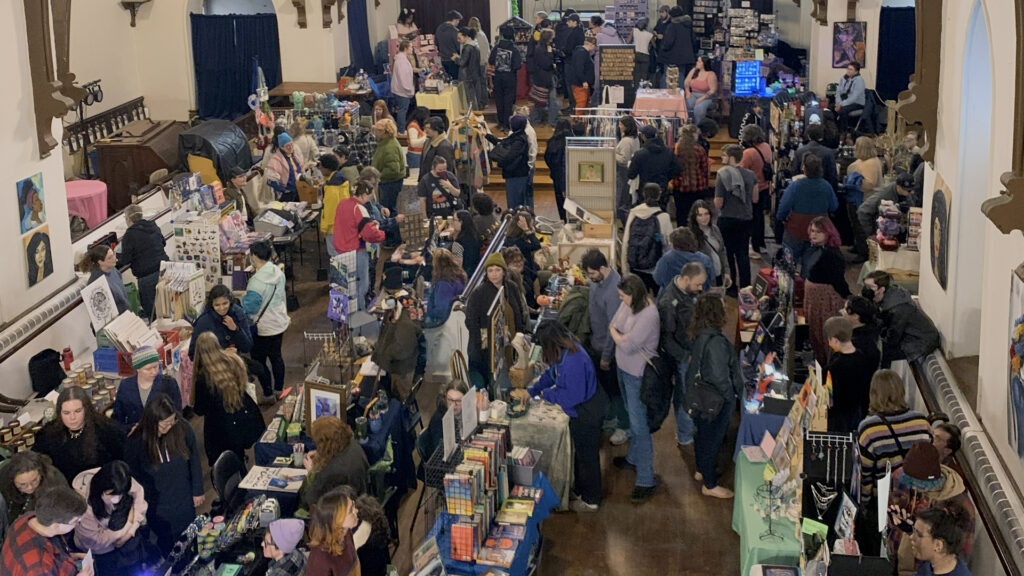
Big Gay Market Event at Mt Ida Preservation Association in Troy, NY | Photo: Provided

What types of programming and activities are happening at Mt Ida?

We have a diverse variety of activities happening here. Certainly lots of performance including the LUNA Music series, poetry reading, marketplace events and even on occasion…circus performance! Creative health and wellness events are also starting to play a larger part of the regular activity happening in the building including a consistent Estatic Dance event. There is also, theatrical / plays being rehearsed and performed in the space. We have a commercial kitchen we are in the process of bringing online for a rental program to support local entrepreneurial enterprise and finally, we are a food distribution point (Mt Ida Food Pantry) for those in need and hold regular community brunch events on site. I imagine I am forgetting a few things here but you get the idea…lots!
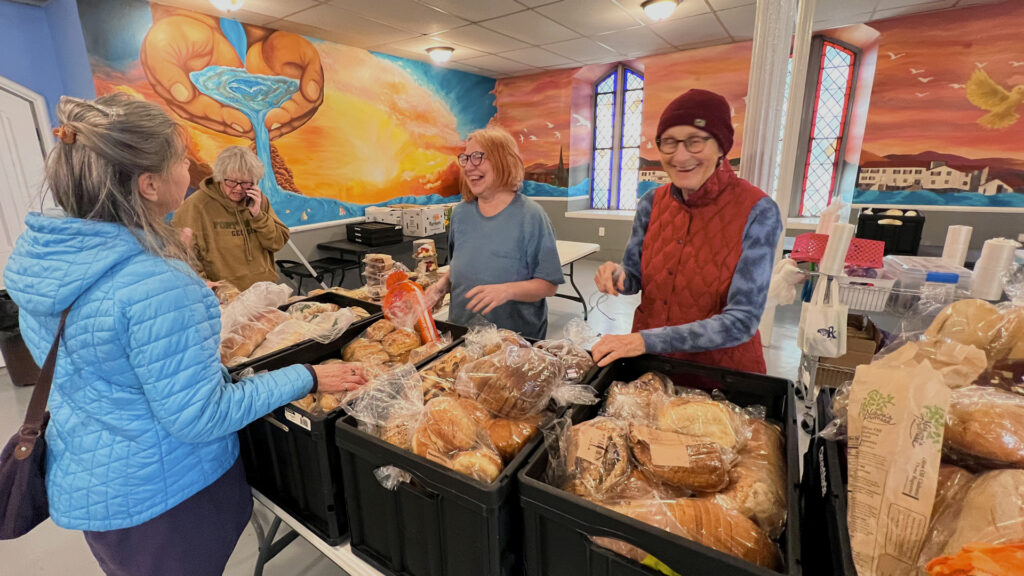
Food Pantry Event at Mt Ida Preservation Association in Troy, NY | Photo: Corey Aldrich

You left a promising career as a chemist at a well known company. What made you decide to jump ship and take on (actually create!) this project? How have you had to adapt in your daily life to do so? Financially, family-wise?

I didn’t know I was going to pursue the work I am now, when I left my job in bio-pharma, I left for many small reasons. Between 2021 and 2022, my wife moved in with me, we took on a major renovation, and planning our wedding. We were living out of boxes, and neither of us had the energy after work to physically or mentally unpack and organize our new life together. So in part, I left to tackle unpacking and settling us into living together. My job was primarily a desk job, I designed experiments to ensure our commercial manufacturing processes worked as intended, and I then wrote reports summarizing that data. These reports were essential to the regulatory process, but at the end of the day – the best case scenario for these reports is that someone in the FDA reads them and agrees with the conclusions, and never asks about it. So in part, I left that job because my work didn’t feel rewarding. I also felt the shifts in society and politics shaping the backdrop of my world. There were so many other small reasons, but those three ring loudest: take time to work on my home, do something that felt more rewarding, and to develop my personal world view.

It was a scary decision to leave, because I wasn’t going on to the next thing. I was just leaving. I had a plan to take care of some things, but I had no idea what I’d do after that, how I was going to make a living; what doors I was closing.
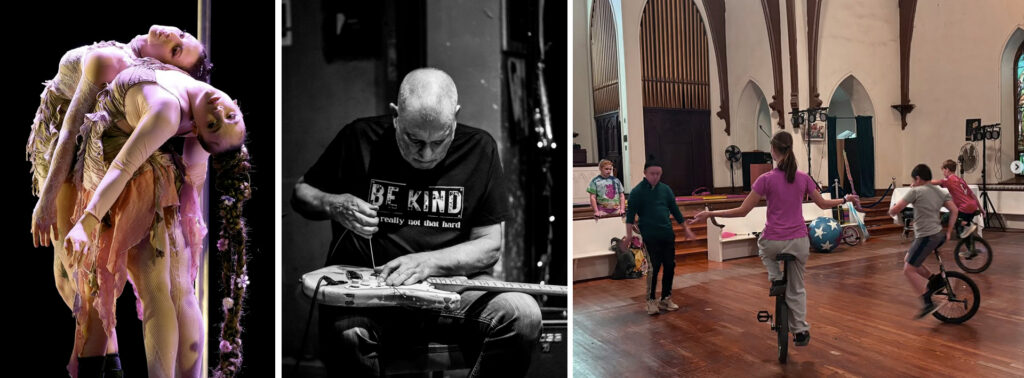
Circus and Improve Music Performance and Teaching Moments at Mt Ida Preservation Association in Troy, NY
Photo: Provided

The path has revealed itself in little ways since that decision to leave. Working on our home, revealed the way taking the time to care for your space improves your daily joy. Working on developing a world view, after much reading and research revealed to me how important connected community is to my politics. Working on discovering what felt like rewarding work led me to deepening my role at Mount Ida.

Now Mount Ida is a way for me to pursue these things: improving a space in my neighborhood, creating a connected community as means of expressing my politics – its work that feels meaningful and rewarding in a way that is refreshing. Strangely its just as stressful as the job I left, maybe more so, but the meaning and philosophical alignment make it worth it.

I don’t want to make it sound like a have it figured out though. There is still much of the balance to figure out. Financially I make a tiny fraction of what I was making. I was lucky to have saved a lot money during my career to support us through these past couple years, and I am lucky my wife is able to financially carry most of our expenses, but eventually the money I am to able to be paid through Mount Ida will have to grow for it be something that’s financially sustainable for us.
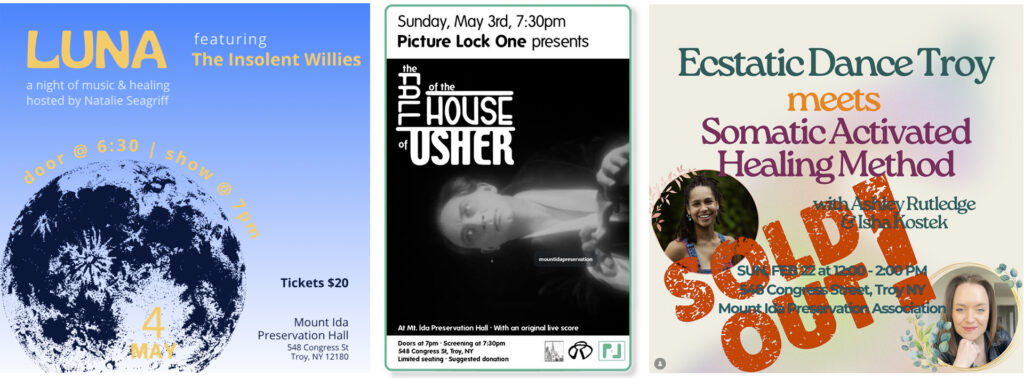
Event Flyers for Programming at Mt Ida Preservation Association in Troy, NY | Photo: Provided

My wife has been incredibly supportive through the entire process and encouraged me every step of the way, but we’ve certainly had to have conversations about how we each feel about our respective contributions to the household. I’ve taken on more responsibilities at home, in trade for the extra flexibility I have with my less traditional employment and lower income. We check in with each other more, to make sure we are both still comfortable with the balance we’ve arranged.

At the start, we were very careful, and took a pretty fine comb to our finances. We cancelled subscriptions, and restricted our spending. In the end, strangely, it feels like our lifestyle didn’t change that much, and we’ve loosened up since. Every so often we need to reel in spending again after getting a little too comfortable, but it feels healthy in a way to check-in with ourselves financially and evaluate what what’s really important for us to spend money on.
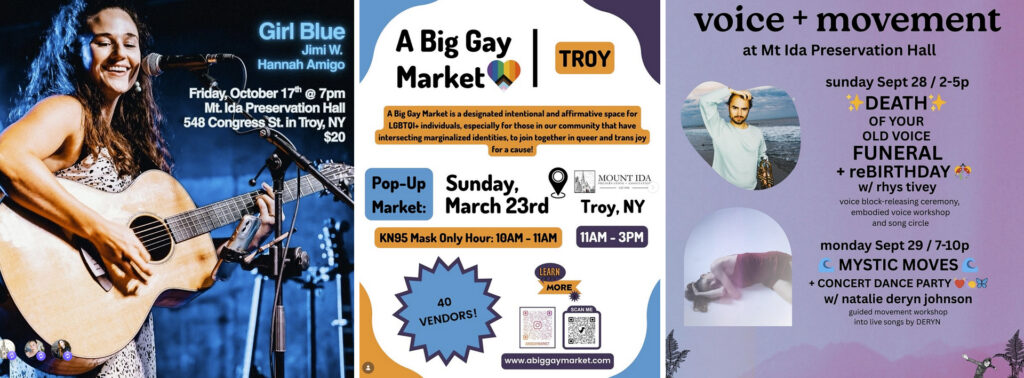
Event Flyers for Programming at Mt Ida Preservation Association in Troy, NY | Photo: Provided

How would you describe where the organization is currently at and where you would like to see it in the next couple years? What’s that roadmap look like?

Mount Ida is putting itself on the map, learning how to operate through experience, and building financial sustainability. Over the past two years, we’ve worked out the logistic capability and structure for hosting various events at our historic church space. In the process Mount Ida has made a little name for itself with a recent feature in Metroland, a nomination for alternative venue of the year, and a couple of stories in CBS 6 and the Times Union.

To sustain an active roster of art programing, there is the challenge cleanly defining our behind-scenes workflows so that we can bring in new staff and volunteers, and create an easy to follow and exciting experience for them! A big part of those workflows will also be marketing; developing reliable channels to get the word out about what’s happening at Mount Ida. While revenue from events sustains Mount Ida through the Fall and Spring Seasons, We are also preparing to open year-around programs that will generate some regular revenue: namely a rental commercial kitchen and healing arts class program.
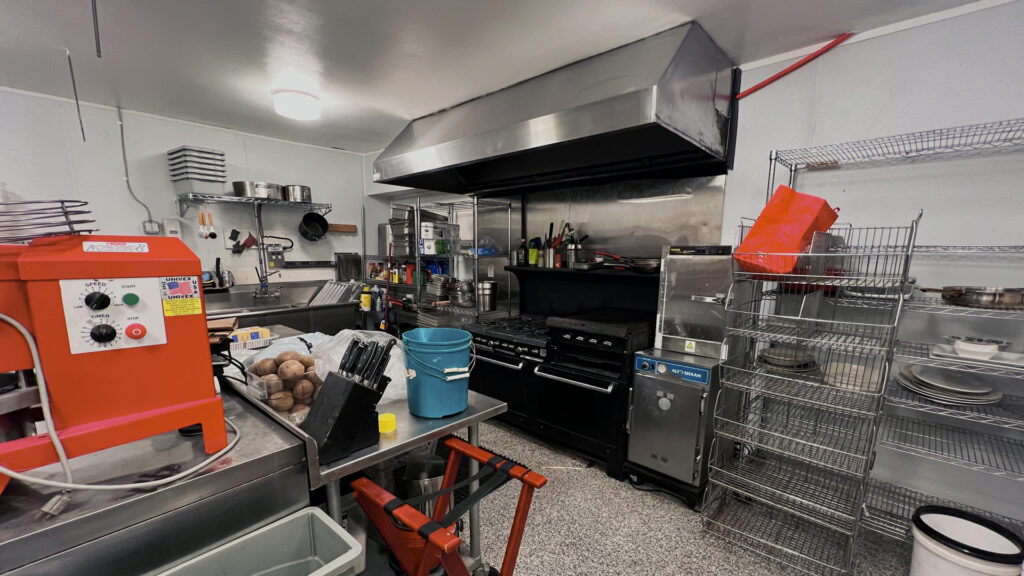
Commercial Kitchen at Mt Ida Preservation Association in Troy, NY | Photo: Corey Aldrich

Once we have operational stability down, we’ll be looking to leverage our work to tackle the bigger projects on the property; repairing, restoring, and improving the building. The dream will be to one day create a public access overlook deck to take advantage of our view of Poestenkill Gorge. That project will complete the vision of a community and art center that we can proud to have in the Mount Ida Neighborhood and for the City of Troy!

Anything in the immediate future you have going on you would like to share? Recent wins?

Keep an eye out for our May program, which will be running every weekend. Our Mother’s Day Brunch with Chef Larry Schepici (Previous Restaurant Affiliations include: Jacks Oyster House, the Brown Derby, Saratoga National and Tosca Grill / Illium Cafe) will be a 5-star grand buffet dining experience, and is an important fundraiser for us on Sunday May 10th. The Luna Series will continue through the summer on the Monday closest the full moon (1st Mondays), and our open mic will continue through the summer on 1st Tuesdays of the month.

WEB: mountidatroy.org | IG: @mtidapreservation
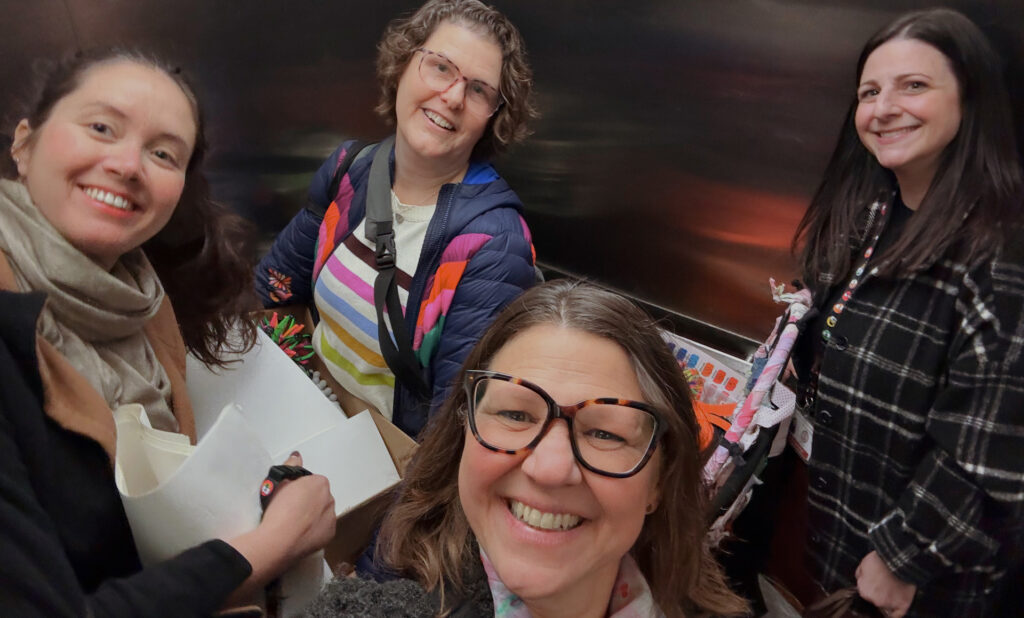
SPECIAL FEATURE : Exploring Community Mental Health and Therapeutic Expressive Arts with C.R.E.A.T.E.

April 25, 2026 By Corey Aldrich

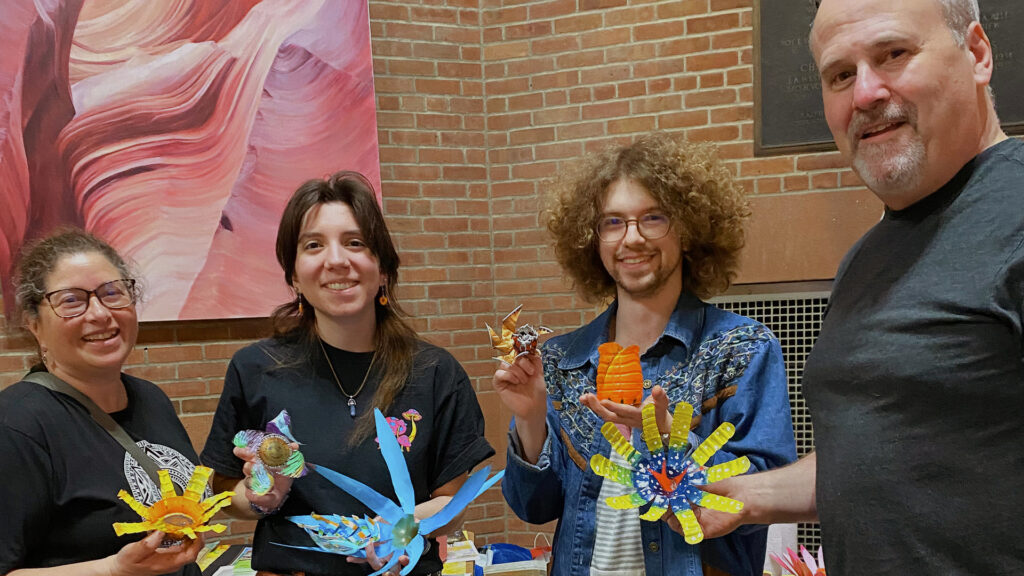
The C.R.E.A.T.E Community Studios Team | Photo: Provided

GUEST CONTIBUTORS:
Guest Contributors: Julie Thompson Lewis – Masters of Science, Co-Founder | Heather Hutchison – Transpersonal Counseling Psychology : Concentration in Art Therapy (LCAT, ATR-BC), Executive Director and Co-Founder | C.R.E.A.T.E. Community Studios

May is Mental Health Awareness month, a perfect opportunity to highlight how art has the unique ability to help all of us in our mental wellness. Every month, more quantitative scientific research confirms what we, as creatives, know intrinsically: Engaging in the creative arts is healing for us personally. AND we believe it can heal communities.

Across the Capital Region, we at C.R.E.A.T.E. (Capital Region Expressive Arts, Transformation & Empowerment) Community Studios have been redefining how communities approach mental health since 2017. We blend creativity with community care to offer welcoming spaces where individuals of all ages and abilities can explore healing through art. At a time when mental health challenges are increasingly visible, we see therapeutic expressive arts as both a preventive and restorative tool for community well-being.

Workshop Event at C.R.E.A.T.E. Community Studios | Photo: Provided

As co-founders, we started C.R.E.A.T.E. because of the lack of resources specifically devoted to mental health and art in the Capital Region. After our clients left treatment programs that offered clinical art therapy, we looked for resources to recommend to them. When we realized nothing else existed in our area, we built it ourselves. Our programs create pathways for people to move out of isolation and into connection. What makes our organization unique is that all our facilitators have backgrounds in special education, somatic work such as yoga and body-based healing, art therapy, or related fields.

Therapeutic expressive arts—a practice rooted in the belief that creativity fosters emotional release, self-awareness, community connection, and personal growth—sits at the core of our programming. Unlike traditional mental health programs, these approaches emphasize process over product, inviting participants to engage in painting, movement, music, and writing without pressure or judgment. We guide participants in connecting with their inner experiences, helping to regulate the nervous system and build resilience through creative exploration.

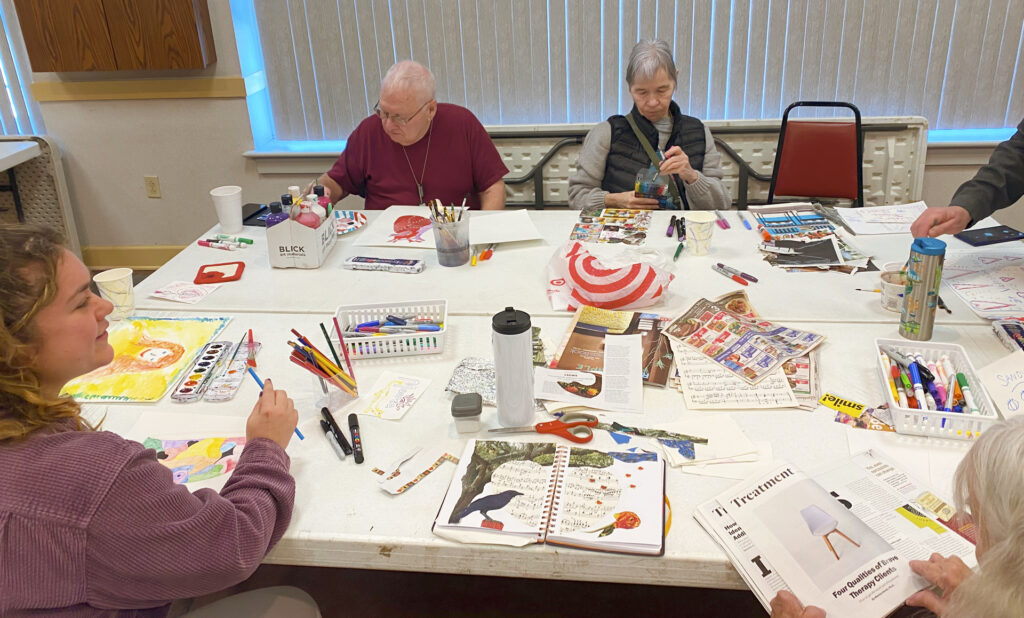
Open Studio at C.R.E.A.T.E. Community Studios | Photo: Provided

We often hear from community members that their experiences in our workshops are transformative. For some, it’s a first step toward addressing long-held stress or trauma; for others, it becomes a consistent practice that supports ongoing mental wellness and combats social isolation. “I feel safe here,” is a common response from our participants. 

Our programs range from open studio sessions to specialized offerings exploring various media such as ceramics, painting, and songwriting. Another emphasis of ours is community connection through public art. Public art has the power to engage community members in making art, and activate the spaces they live in. For example, our upcoming “ALCO Tunnel Tile Mosaic” in Schenectady combines community-made artwork into a functional public art space.  In Saratoga, we have been collaborating with artists from Black Dimensions in Art and local filmmaker Careina Yard on Erasing Spaces and Faces: The Legacy of Urban Removal in Saratoga Springs, a multidisciplinary social practice project that explores the devastating effects of the displacement and erasure of Black and Brown communities through “urban removal,” a little-known part of the history of Saratoga Springs. By making these experiences affordable, accessible, and inclusive, we are working towards healing in community, bringing joy to our public spaces, and reducing stigma around mental health care.

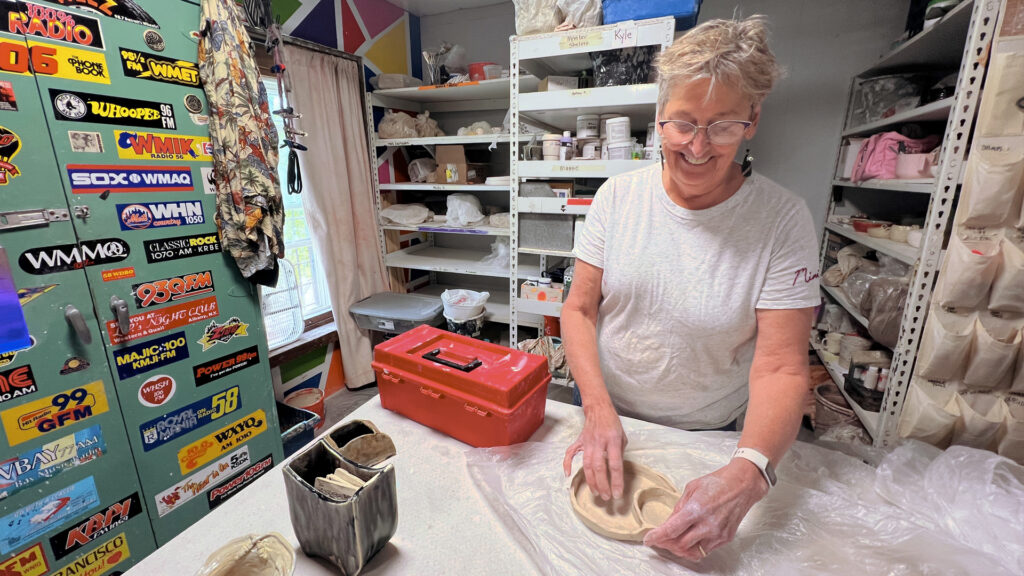
Ceramic Studio at C.R.E.A.T.E. Community Studios | Photo: Provided

Our impact extends beyond individual participants. Through partnerships with schools, small businesses, and nonprofits, we bring expressive arts directly into community spaces. During May, Mental Health Awareness Month, we collaborate on community events and public workshops that encourage dialogue, connection, and mental wellness. Our signature event, CREATE-a-Thon, will be held on May 9 from 1 pm to 9 pm at our Schenectady studio location. These efforts not only raise awareness and bring people together, but also help build sustainable, grassroots models for supporting mental health.

As conversations around mental health continue to evolve, we believe deeply in the power of creativity as a collective healing force. By centering expressive art as a pathway to wellness, we are helping to build a more connected, compassionate community—one brushstroke, breath, and shared experience at a time.

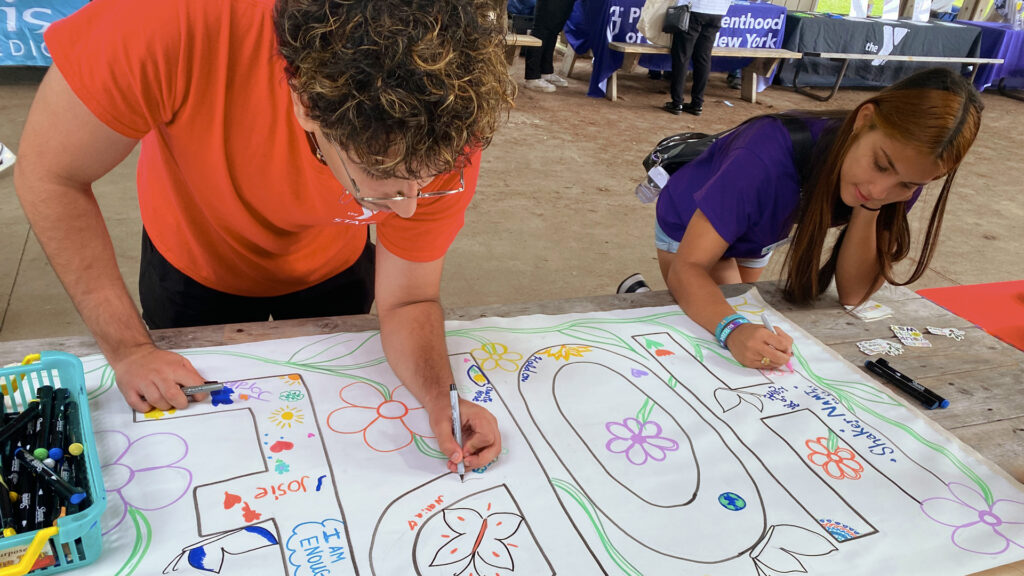
Doodling at a Tabling Event with C.R.E.A.T.E. Community Studios | Photo: Provided

ABOUT C.R.E.A.T.E COMMUNITY STUDIOS

C.R.E.A.T.E. Community Studios has four studios in three locations in the Capital Region – 70B Beekman Street in Saratoga Springs, 621 River St. in Troy, 140 Erie Boulevard (main studio) in Schenectady, and 140 Erie Blvd #W105 (ceramics studio) in Schenectady. Look for C.R.E.A.T.E. out and about in your community as well – we often show up at your local farmers market, street festivals, and libraries. To learn more or sign up for our monthly newsletter, hit up our website.

WEB: createcommunitystudios.org | IG: @createcommunitystudios

FROM DUN AND BRADSTREET TO INDEPENDENT THEATER W/ TANYA GORLOW

March 2, 2026 By Corey Aldrich

Participating on a new committee that is endeavoring to pull together arts and cultural organizations across Rensselaer County (more on this in an upcoming issue), I had the privilege of getting to know Tanya Gorlow. I mean, I had met her before at Sand Lake Center for the Arts where she is the current Executive Director but seeing her up close and in action in this work group, her professionalism and attention to detail…well, I knew I had to know more. Having not done a piece on the organization before it just seemed that now was the time.

Please state your name, organization, title. Can you give us a bit of backstory?

My name is Tanya Gorlow, I am the Executive Director at Sand Lake Center for the Arts in Sand Lake New York. My history with the center started in late winter/early spring of 2024 in a show called Little Wars. I was cast as Lillian Hellman in the fictional historical play by Steven Carl McCasland. I loved the kind, creative community that was part of SLCA. During my interview, I shared that supporting and fostering that community was a large part of my interest in the role.

I come from a background that includes leadership, marketing, production, and business development. I hold a Bachelors Degree in Anthropology and Theatre, Dance and Performance Studies from the University of California, Berkeley. I’ve held leadership roles at Dun & Bradstreet and Butcher Bird Studios. My professional endeavors supported a semi-professional career producing and performing in theatre. I found that I was learning and developing as a professional no matter what I was working on: leading a team of marketing professionals working on a product launch, breaking down a character or fundraising for an independent play. The ED role of SLCA feels like the culmination of the skills I developed in my day jobs and in the pursuit of my art.

Brighton Beach Memoirs 2025 at Sand Lake Center for the Arts in Sand Lake, NY | Image: Provided

Can you tell us a bit about SLCA? What does your programming look like? Your annual budget? How do you fit in the tapestry of such a small community?

SLCA is a not-for-profit community arts center offering theatre, music, visual arts, educational programs and more. We have a theater space, with flexible seating; a lobby that also serves as our gallery; and a small cafe that provides refreshments for our events or a place for catering to land during a rental. My understanding is that we are one of the few theaters in the Capital region that is accessible with a ramp up to the stage.

We have a 5 show theatrical season. For 2026, we opened with A Raisin In The Sun on January 30th; 1776 on April 10th; The Wolves on June 5th; Agatha Christie’s Black Coffee on August 7th; and Neil Simon’s Broadway Bound on October 16th. We also have a free concert series sponsored by Troy Sand & Gravel and Bonded Concrete, youth concerts, and musicians throughout the year. Our gallery is host to local artists – currently we have photographs on exhibit by Phil Caruso from when he was a set photographer. Vincent Caruso NYC street photography has been in the gallery during the month of February. We have workshops for all ages throughout the year, as well.

As a not-for-profit, we have fundraising events, including a Broadway revue at a local venue, and our gala, Taste of Sand Lake, where local restaurants offer a sampling of the area’s delicious cuisine.

Our annual budget is about $230,000.

A Fine Family Performed 2025 at the Sand Lake Center for the Arts in Sand Lake NY | Image: Provided

We’ve been in our current location since 2002. Originally, when Circle Theatre Players signed the lease for the building it wasn’t ready for performances, visitors, or even staff. It was through the efforts of the community that the performance space was created, the backstage area set up, storage and offices established, etc. I have been fortunate enough to meet the community members who raised the barn, put the siding on the building, wired the building, put the ceiling in the performance spaces, and did just about everything else you can imagine. I was at an event where one of our community members walked up to me and said, “I have your organ in my garage.” The history of this building and this organization is in the community around it, both the immediate Sand Lake/West Sand Lake/Averill Park area and the wider Capital Region.

Currently, I am the only full-time employee. We have a few highly-appreciated part-time folks. Everything else is done by our community, from our volunteers to our sponsors to our artists to our audience. Without any one of those groups, we wouldn’t function. My hope is that through our programming that we are able to give back to the community that gives so much to us by providing opportunities to create and learn more about art, as well as experience it. I also hope that we’re a place to reconnect with old friends or meet new ones in the gallery over a coffee from Gipfel’s (ED NOTE: For our story on Sand Lake Merchant) or at a show on a Friday night after enjoying happy hour or dinner at any of the wonderful local bars and restaurants. Whenever we can collaborate with a local organization, we’re always very happy to do it and have ongoing relationships with several.

Hiiiii!! Again Performed at the Sand Lake Center for the Arts in Sand Lake NY | Image: Provided

You have a strong arts and business background which gives you a rounded perspective. What would you say are the biggest challenges you have running SLCA and your methods for overcoming them?

Right now, I would say the biggest challenge is that there’s a ton of things to do that involve our programming, facilities management, fundraising, and community building and not enough time in the day. My joke last year was that I was keeping track of my surprise priority of the day: I’d go in to the center with a list of things to do, only to be surprised by something completely out of left field! Bees in the mailbox is still my favorite. My primarily method for figuring out how to tackle the growing to-do list is asking myself the following questions:

Does it impact the health and safety of anyone who comes into the building? I have shoveled the snow off the stairs more times than you can imagine because of this one. Also, the bees in the mailbox falls into this category!

Is there a deadline that affects our ability to operate? Our insurance and utility bills fall into this category, as do many other things.

Is someone waiting on me to move forward with something with will improve/impact the center? Grants, our committees, our employees and contractors, etc. are all part of this.

Is someone waiting on an answer that impacts their relationship with the center?
What will move us forward? That upper left hand corner of Stephen Covey’s Time Management Matrix for the biz nerds out there.

I’ll never get everything done, but I hope each day to be as effective as possible.

Exhibition Set Up in Barn Squares Gallery at the Sand Lake Center for the Arts in Sand Lake NY
Image: Provided
Barn Squares Gallery at Sand Lake Center for the Arts in Sand Lake NY | Image: Provided

You mentioned Arts Letter and Numbers in addition to Sand Lake Mechant above. How have you been able to synergize with local businesses and other mission oriented organizations in a way that creates a ‘there there’ for community?

Sand Lake Merchant has co-hosted the Merchant Market in the spring and the Holiday Market in the fall with us for a few years now. They’ve been fantastic partners, and also helped us in an incredible way during our Style on the Stage event in 2025. Brian Sheldon, who was SLCA’s previous ED for 7 years before me, worked with Arts Letter and Numbers and Nopiates for the Transformation project. There was also a performance experience that ALN held at SLCA in August of 2024.

In 2026, we’re working towards a collaboration in the gallery with ALN during the month of May. ALN does some really incredible work and there are a few things that I’d love to work with them on in the future, if we’re able. In my mind, collaboration between SLCA and ALN (and this applies to our other groups and businesses in the community) needs to take into consideration the needs of both organizations and ensure that both organizations, the artists, and the audience benefit. Since we both have physical spaces, I could imagine events in the future that has the audiences travel between the spaces to create a full experience.

Triskele Performs in 2025 at Sand Lake Center for the Arts in Sand Lake, NY | Image: Provided

SHAMELESS PLUG: Anything coming up we need to know about?

Yes! Coming up, we have our collaboration with AP Live, the Youth Music Showcase on 3/7, which highlights our areas local student musicians. We have an awesome ZenTangle craft workshop on 3/14, which is only $10 to register. We’re lucky enough to have Triskele here for St. Patrick’s Day on 3/17. And our next play is 1776, opening on 4/10.

WEB: slca-ctp.org | IG: @slca-ctp

Experimental Creativity as a Form of Inquiry w/ Exec Director Dena Beard

January 26, 2026 By Corey Aldrich

Long known as an organizational asset for resident artists and campus related endeavors, there is a new focus on finding ways to incorporate EMPAC (At Rensselaer Polytechnic Institute in Troy) into the fabric of the downtown Troy community and beyond. Find out what is in process and in store from a recent conversation with newish Executive Director, Dena Beard.

Dena Beard : Executive Director at EMPAC in Troy NY | Photo : Emma Marie Chiang

Please state your name, organization and position. Can you share a bit about your experiential / academic background?

I’m Dena Beard, Executive Director of the Curtis R. Priem Experimental Media and Performing Arts Center (EMPAC) at Rensselaer Polytechnic Institute, where I support artistic projects that challenge habituated forms of perception and invite new modes of engagement—across performance, sound, time-based media, and research-driven art.

Before coming to EMPAC, I served as Director of the Leonard & Claire Tow Center for the Performing Arts at Brooklyn College and spent nearly a decade as Executive Director of The Lab in San Francisco, working on projects rooted in experimental music, performance, and cross-disciplinary practice. Earlier in my career, I worked as Assistant Curator at the UC Berkeley Art Museum and Pacific Film Archive.

Across these roles, my focus has been on creating conditions for artists to work rigorously and experimentally, while also building organizations that are legible, humane, and porous—places where process is visible and audiences feel invited into how work is made, not just asked to consume finished products. I’ve been shaped by how powerfully art can activate space, community, and imagination. That’s why I do this.

EMPAC : Studio 1 at Rensselaer Polytech Institute in Troy NY | Photo : Provided

You have an interesting diversity in institutional leadership between your time on the west coast with THE LAB in San Francisco and in NYC at Brooklyn College’s Leonard & Claire Tow Center for the Performing Arts. What made you decide to take on EMPAC and how is that background informing you in your approach?

EMPAC is unlike any other arts institution in the country. RPI made a once-in-a-generation investment in experimental art, research, and technology—and that ambition is real, not rhetorical. Over the years, EMPAC has supported more than 700 artists whose works now circulate internationally and enter major museum collections. What drew me here was the opportunity to steward a program that operates simultaneously as a performance venue, a research laboratory, and a civic space in Troy.

My prior work taught me that institutional frameworks can either obscure creativity or make space for it. At The Lab, we foregrounded artists’ ways of seeing and making, creating conditions for experimentation rather than containing work within predictable program structures. That included commissioning artists meaningfully, offering $25K to $150K and forms of support still rare in the field: healthcare, legal representation, full access to space. What emerged was an adaptive ecosystem: when artists were trusted, they shared resources and reshaped the organization itself.

At the Tow Center, I worked within a large public academic institution, supporting Brooklyn College’s Conservatory of Music and Department of Theater while bringing local and international artists into deep conversation with students and New York publics. That work taught me how to bridge academic environments and professional artistic practice without flattening either.

Coming to EMPAC was about merging these two approaches, one rooted in generosity and adaptability, the other accountable to a complex academic institution and a broader public. My goal isn’t to change EMPAC’s identity, but to make its extraordinary work more legible, more durable, and more connected to the people who live and work in Troy and across the Capital Region.

EMPAC : TOPOS Remote Peformance at the Gasholder Bldg in Troy NY | Photo : Patrick Dodson

EMPAC has been largely misunderstood by the public historically. I see you have been working on raising awareness not only about what it is but also finding ways to bridge the gap, creating a more inclusive interaction with the regional arts community and general public. Why do you feel that is important for the institution? What challenges are your facing in the implementation of that approach?

EMPAC was founded on the idea that art and research aren’t separate activities—that experimental creativity is a form of inquiry, and that technological innovation often requires imaginative leaps we don’t always recognize as artistic. Nearly two decades in, that premise still holds. The question now is how EMPAC carries this work forward in ways that offer models of imagination and resilience to people living in this region.

EMPAC has sometimes been perceived as opaque or inaccessible—not because the work isn’t compelling, but because the processes behind it haven’t always been visible. I think experimental work benefits from context, from gracious welcome, and from trust.

Hanae Utamura Performs at EMPAC in Troy, NY | Photo: Tara Holmes

For me, accessibility doesn’t mean simplifying the work. It means offering tangible points of entry: clear language, open doors, a public space for informal gathering—for food and drink, for conversation, for being together. Anyone who comes here should feel it’s their public park, a place to meet friends, go on a date, step away from screens for an hour, or even just take a nap between commitment

The challenge is doing this without flattening complexity. The initial capital funding for EMPAC expired more than a decade ago, and today over 80% of staff time and resources currently support campus projects. We’re figuring out how to offer more to the broader public without overextending staff or compromising EMPAC’s standing in the arts. That requires careful pacing, discipline, and a willingness to listen—to students, to artists, and to our neighbors in Troy. It’s slow work, but it’s essential if EMPAC is going to function not just as a laboratory and campus auditorium, but as a cultural anchor for the Capital Region.

Victoria Shen and Mariam Rezaei Performance at EMPAC in Troy NY | Photo : Michael Valiquette

What’s a typical day in the life look like for you?

There’s no such thing as a typical day, which probably explains why I love this work!

A day might include a technical walk-through with engineers and artists, a budget or infrastructure meeting with RPI leadership, a rehearsal, a conversation with faculty, and a late-night performance. In between, I’m thinking about long-term strategy: how EMPAC’s research mission aligns with RPI’s, how we care for a very complex building, and how we support a brilliant staff who are doing deeply specialized and deeply weird work.

A lot of my time is spent translating: between artistic and technical languages, between academic culture and public-facing programming, between ambition and sustainability. It’s demanding, but incredibly generative.

Leslie Cuyjet in Ephemeral Organ Festival at EMPAC in Troy NY | Photo : Michael Valiquette.jpg

SHAMELESS PLUG: Anything on the horizon that you have planned that you would like to share?

Absolutely. EMPAC is entering a really exciting phase.

This year we’re hosting three festivals that invite audiences from Troy and across the region into different ways of experiencing contemporary work: staging grounds (February 20–28), focused on time-based visual art; Corpus (April 23–25), dedicated to dance and movement-based practices; and Topos (September 3–5), centered on music. Each festival premieres new work we’ve produced alongside projects we’re eager for audiences to encounter—sometimes at early, evolving stages.

We’re also developing Interface, a more informal series designed to bring people into EMPAC through conversation, experimentation, and social exchange, hopefully with a drink in hand.

EMPAC is very much a living instrument, and I’m excited to invite more people to play it with us.

Troy Based Context Collective is a Creativity Hub for Local Artist Community

November 24, 2025 By Corey Aldrich

Mariah Kitner got on the ACE! radar a few years ago when we featured her clay art work on a social media post. Fast forward a couple of years and I am beginning to hear a buzz about a new gallery space in Troy called Context Collective. At the time, I did not make the connection but I kept hearing about well supported openings and great exhibitions. When I finally got in the loop it all came together and I realized that there was so much more to what was happening there than I could have possibly imagined. Mariah is a talented artist and a skilled business woman who puts the economy in creative, all the while creating a supportive space for artists and makers of all stripes in her little kingdom in downtown Troy.

Mariah Kitner: Director and Co-Founder at Context Collective in Troy, New York | Image: Debi Gustafson

Please state your name(s). What is your position in the company? Can you share a little about your educational or experiential background?

My name is Mariah Kitner, and I’m the Director and Co-Founder of Context Collective, a gallery, workshop, and private event space I run with my studio-mate and collaborator Ash King. I have a BFA in Painting with a minor in Art History from Pace University and have worked in galleries and artist management in New York City for nearly a decade before pivoting to ceramics in 2020. My studio practice, Context Clay, explores the intersection of art, design, and storytelling through hand-built and wheel-thrown ceramics. Ash and I share a commitment to building a creative community here in Troy, and Context Collective grew out of our desire to create an inclusive, intentional space for artists and the public to connect through art.

Opening at Context Collective in Troy New York | Image: Provided

What is the mission of CC?

The mission of Context Collective is to support emerging and underrepresented artists through exhibitions, hands-on workshops, and collaborative experiences that center accessibility, curiosity, and craft. At its heart, Context Collective exists to nurture creativity, connection, and care. We believe in creating space for artists and community members to come together, to make, to feel, to reflect, and to be seen. Our programs are designed with intention, offering moments of pause and presence in a fast-moving world. The space serves as a hub for creativity and community, where art becomes an act of togetherness.

Main Gallery Space at Context Collective in Troy New York | Image: Provided

Can you walk us through the different areas of the space?

Context Collective is located in downtown Troy in a space that’s both functional and inspiring. The front of the building serves as our gallery and workshop area, where we host exhibitions, artist talks, and creative gatherings. Upstairs is mine and Ash’s shared ceramic studio loft for wheel throwing and hand-building, and the back showroom displays our small-batch ceramic collections. Downstairs, we have our production and glaze room, a full events kitchen, and a kiln area where the behind-the-scenes magic happens. Every part of the space is designed for making, showing, and sharing art in the community.

Workshop at Context Collective in Troy New York | Image: Provided

Can you tell us a bit more about sustainability and what you see as income streams for the project?

Our sustainability model is rooted in diversity and collaboration. Context Collective generates income through a mix of workshops, private events, gallery rentals, retail ceramic sales, and exhibition sales. We also pursue grant funding and community-based crowd-funding to keep our programs accessible while supporting fair pay for artists. This balance allows us to maintain a high level of quality and care while growing sustainably within the local arts ecosystem.

Group Show at Context Collective in Troy New York | Image: Provided

What are your future plans for the space? Any expansion plans programmatic or otherwise?

As we move into our second year, our focus is on deepening the programs that have brought people together since we opened. We’ve hosted twelve exhibitions in our first twelve months, ranging in medium, theme, and scale, from local group shows to national open calls. In that same time, we’ve led fifty-four workshops focused on ceramics, craft, ritual, and artistic development.

Looking ahead, we’re expanding our partnerships, refining workshops, and building out our customizable private event packages for groups looking to celebrate through creativity. We’re also developing programming that brings new audiences into contact with contemporary art and craft. One of our most popular exhibitions was an open call community portrait show that featured seventy-one artists, and we’re planning to bring back our pilot Clay Play Days, which offered pay-what-you-can handbuilding sessions that were met with incredible enthusiasm. To keep these community-centered events accessible, we’re inviting donations through our ongoing PayPal campaign to help fund materials, artist stipends, and future programming.

Context Collective Co-Founder Making Ceramic Chains | Image: Provided

BONUS: Anything coming up we should know about?

Our most recent exhibition Love Note closed on Saturday November 22nd, marking the end of our first full year of programming. The show featured my large scale castle in the cloud ceramic vessels and Ash’s ceramic chains celebrating connection and imagination, it feels like a beautiful reflection of the year we’ve had.

We’re excited to open our next exhibit, The Context Winter Market, a winter market featuring twelve artists who have exhibited or led workshops with us in the past year. The market opens on Shop Small Saturday, November 29, and runs through December, with special events during the Troy Victorian Stroll on December 7 and Meet the Makers Day on December 13. Our regular gallery hours are Saturdays 11am-4pm and by appointment, with extended holiday hours in December on Fridays from 4pm-8pm.

WEB: contextclay.com | IG: @context.collective.troy

  • Page 1
  • Page 2
  • Page 3
  • Interim pages omitted …
  • Page 11
  • Go to Next Page »

Creative Economy Updates and Other Good Stuff!

STAY CONNECTED!

  • Facebook
  • Instagram
  • Twitter
Copyright © 2020 THE UPSTATE ALLIANCE FOR THE CREATIVE ECONOMY

info@upstatecreative.org | 41 State Street, Albany, NY 12207

Design by Reach Creative