• Skip to primary navigation
  • Skip to main content

ACE

Upstate Alliance for the Creative Economy

  • HOME
  • ABOUT
  • NEWSLETTER
  • SUBSCRIBE
  • JOBS
  • Show Search
Hide Search

Troy

METROLAND (NOW) : Revival of a Capital Region Institution

October 9, 2024 By Corey Aldrich

Like the glory days of First Friday, METROLAND played such an important part in the creative discovery of what the Capital Region had to offer. Every week I remember picking up a copy (Usually at Tess’s Lark Tavern) and scanning through it to plan my weekend activities. While there are some other sources of arts and cultural listings in the region where you can find out things that are happening and get good interviews and background (Radio Radio X and Nippertown) METROLAND was always a gold standard for finding out where and what was happening from the above to underground scenes. Musician / Comedian Erin Harkes is looking to bring back that energy and has secured the brand for a new rendition as retooled as METROLAND NOW. The question is, what will she do with it?
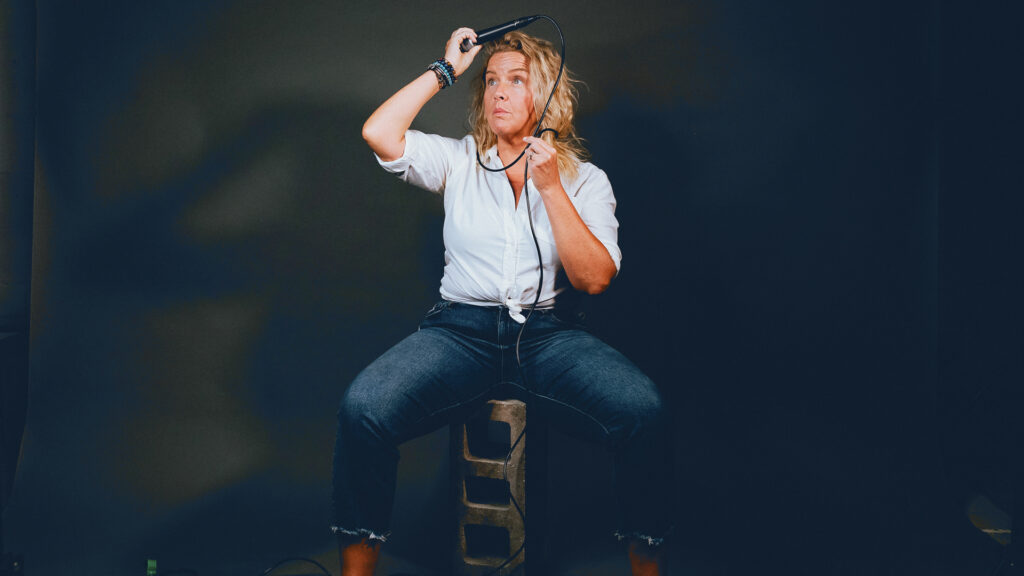
Erin Harkes : Musician, Comedian and Publisher at METROLAND NOW | Photo: Kiki Vassilakis

Could you state your name, title and background?

Erin Harkes. Multi-hyphenate 😉 Musician, Comedian, and now publisher!

As an entertainer who has spent over two decades in the capital region, navigating every twist and turn the industry has presented, continuously adapting and reinventing myself along the way. The constant throughout this journey has been the significance of marketing. While the methods of marketing may evolve, the essential need for it remains unchanged.

Many people often ask why I haven’t relocated to a larger city. It’s a complex question. Perhaps it stems from a sense of contentment or, by some accounts, complacency. It’s undeniable that bigger cities offer opportunities that may not be available here, yet I have consistently found ways to create my own paths. Instead of commuting to places like Boston or NYC every time I want to showcase my comedy, I decided to take matters into my own hands by producing shows specifically to provide myself with performance opportunities. I’ve approached music in a similar fashion, and now, I’m venturing into publishing as well with METROLAND NOW.

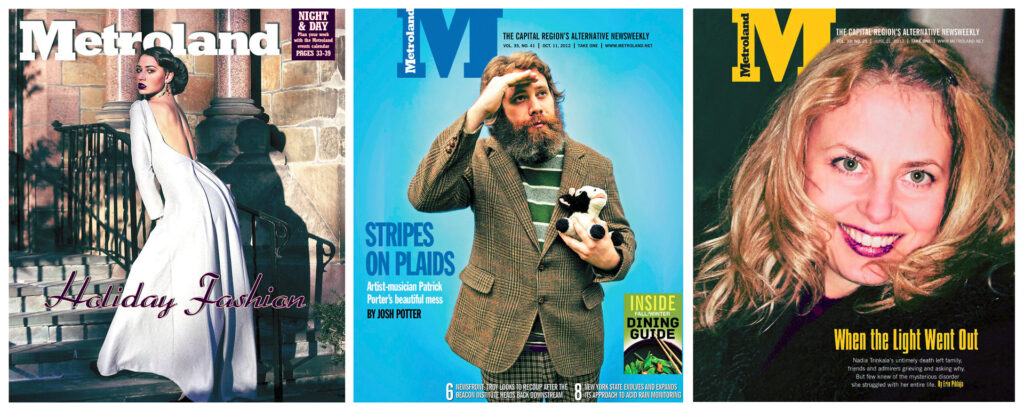
Historic METROLAND Covers | Photo(s): Facebook

To many of us who have been around the region for a while, METROLAND was a gold standard for the arts and cultural sector (and activism). I was so disappointed to see it go. What made you decide that now was the time to revive that and how were you able to pull that off? What geographic area will you be covering? Topically, what will be the content focus of the publication?

I felt there was a void / vacuum in the area. There are definitely other publications but some are just not an option for me as a performer. I had always had the idea of reviving METROLAND in the back or my brain. I honestly never thought beyond that until this year. It all kind of happened organically through countless conversations with other creatives and folks in the community. We will be covering Albany, Troy, Schenectady, Saratoga and the general perimeter around those four. But we won’t hold ourselves back from places beyond that when the call comes! The focus, for now, will mostly be music but we’re expanding into arts and other entertainment, comedy, community events, non-profit organizations, small businesses, a comprehensive calendar and just see where it takes us! As long as the message is positive, we’ll share it!
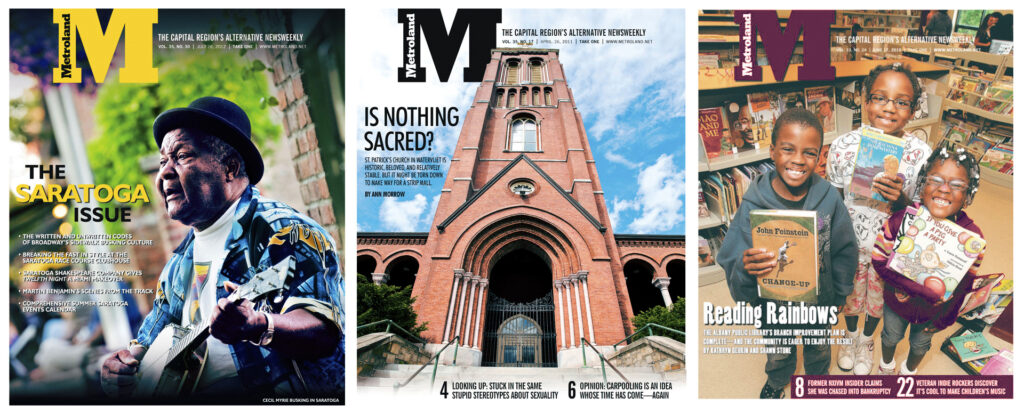
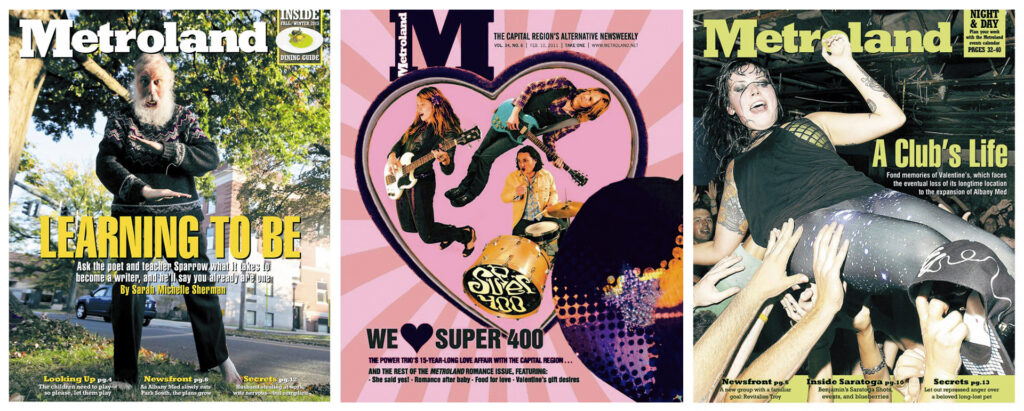
Historic METROLAND Covers | Photo(s): Facebook

I know you started with the idea of being an online publication only and now I have heard murmurs that you are considering bringing a version into print also. Can you tell us more about what that will look like and what the timelines are on that front? Will this be a weekly issue?

I started this idea with NO intention of printing but the more I talked to folks the more I heard this exact phrase uttered: “I miss picking one up.” I really listened to that. For whatever reason, folks miss the physical nature of METROLAND. I don’t believe print is dead but I also don’t see the need for a weekly so we’re going to try for a monthly hopefully starting this month! (October 2024)
Historic METROLAND Covers | Photo(s): Facebook

A robust and representative publication takes a lot of team work. How big is your current team? Is it mostly volunteers or paid folk? As I recollect, that last version of Metroland ended up closing due to financial issues. Do you have a plan to ensure that you don’t end up with similar challenges?

My current team is about seven folks, including myself. Everyone has been volunteering, including myself. There’s one person who I have been paying out of my own pocket because she does this for a living and has a small child and another on the way, whereas the other team members have day jobs. Everything is transparent; everyone knows who’s making what. I’m actively working on way to ensure that everyone, including myself, gets paid. It’s a priority. The last thing I want to do is exploit artists!

I registered as a non-profit because my priority is to try and help other non-profits in the area – be it venues or general NFP’s – get the attention they might not be able to afford otherwise. I plan on doing some fundraising and getting some sponsors/patrons/donors to help give to the cause. There will also be advertising opportunities that can generate income. My plan to make sure we stay financially viable is to use the resources I have built over my 20+ years in the Capital Region and learn from my peers. I have been offered an incredible amount of support from some of the most successful people in the area and am genuinely humbled by the respect I’ve been shown. I have a big ego and know what my vision is but I am not too proud to ask for help with the things that I haven’t learned enough about yet. It will take a village, but I HAVE that village.
Historic METROLAND Covers | Photo(s): Facebook

If folks want to be involved on the creative content side or are interested in advertising or being a distribution point, what’s the best way for them to get in touch?

We have received SO many submissions so far. We are working on the best way to filter through them all and give the best consideration to each and are still ironing out a process to make this easy for everyone involved. When it’s time it will be very clear how to do that! Right now we suggest checking the website and the social media. We’re chipping away at the messages we’ve already gotten and asking people to be patient with us. I have amazing volunteers and I am not about to overwhelm them. There’s a fine line between ambition/tenacity and harassment, though. The latter will not be rewarded. Even the most talented folks won’t be considered if they aren’t respectful during this process. Also the core group has to vote unanimously on new contributors. I want everyone to be safe and comfortable with their peers. That is paramount. Contacting ME directly isn’t a good idea, either. Haha! Just trying to make our boundaries very clear.
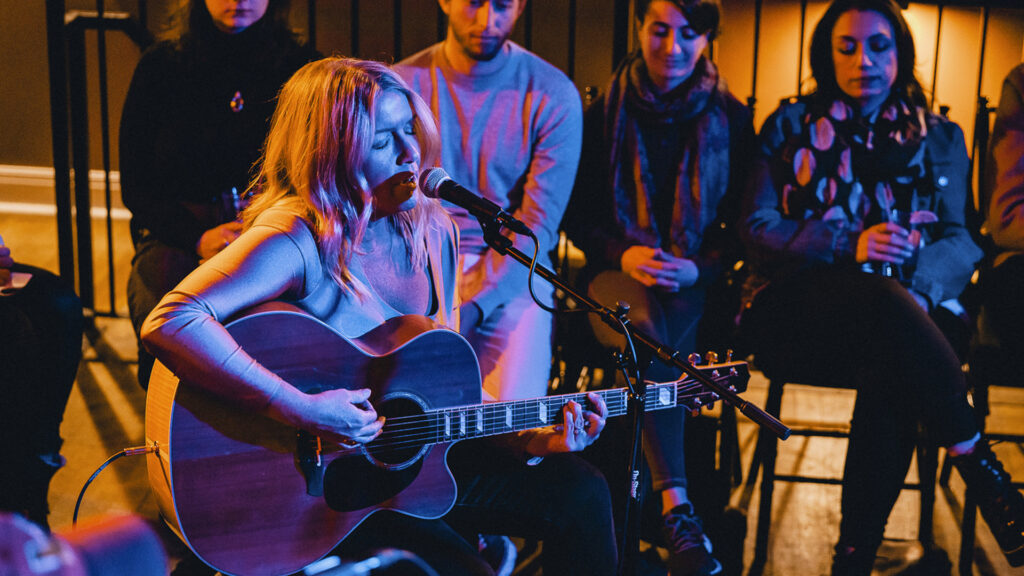
Erin Harkes : Musician, Comedian and Publisher at METROLAND NOW | Photo: Kiki Vassilakis

Shameless Plug: What would you like to share with us? Any things coming up on the horizon we should know about?

Thank you but honestly nothing right now! We just ask that everyone share the website and the socials and keep it up with all the positive messages. I can’t wait to watch this grow and work with our vibrant and talented community!

Finally, know that ACE! has your back! 🙂

LIKEWISE! I look very much forward to working with you guys closely!


For more on the final days of METROLAND previous...check out the article in the Times Union from January 2016 by Paul Grondahl.
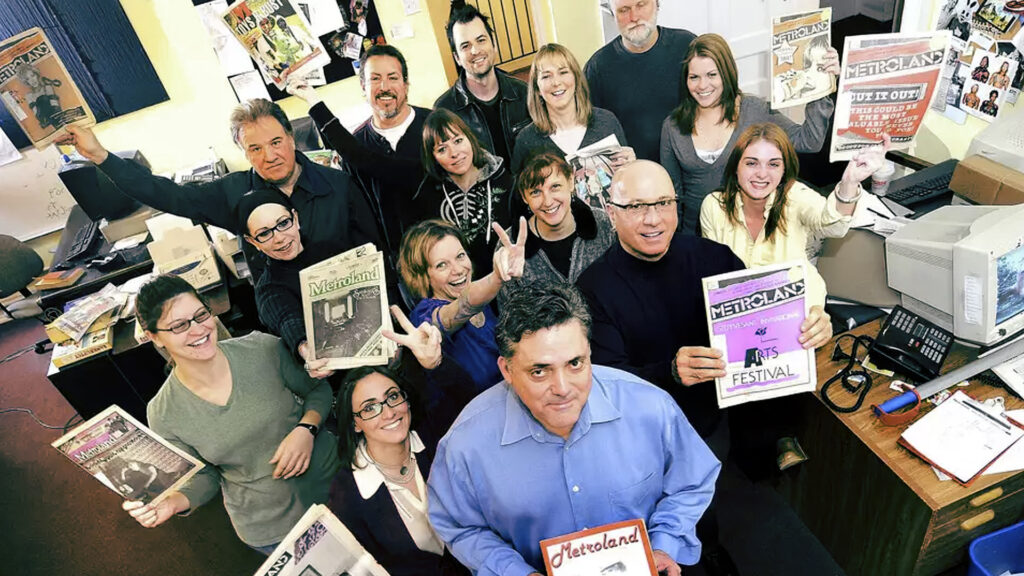
The Team at METROLAND – The Final Days | Photo: Steve Jacobs / Times Union

PINT SIZED and NO FUN: A Tale of 3 Cities with Entrepreneur August Rosa

April 2, 2024 By Corey Aldrich

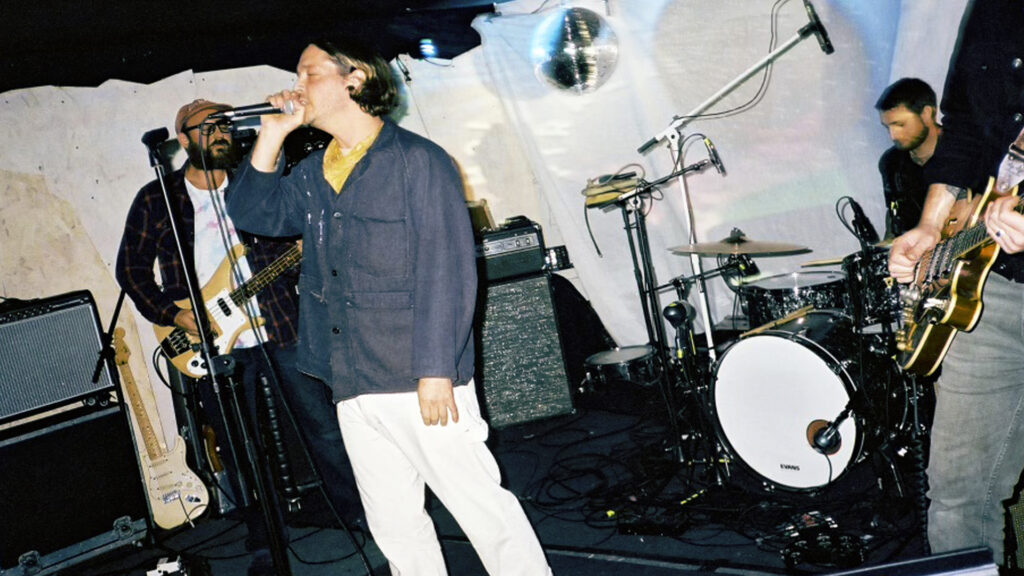
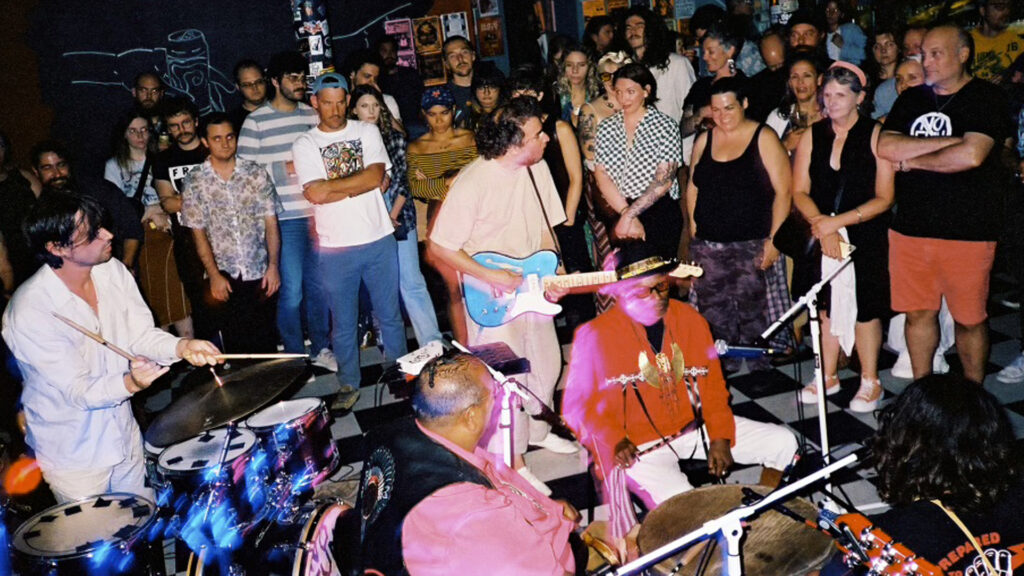
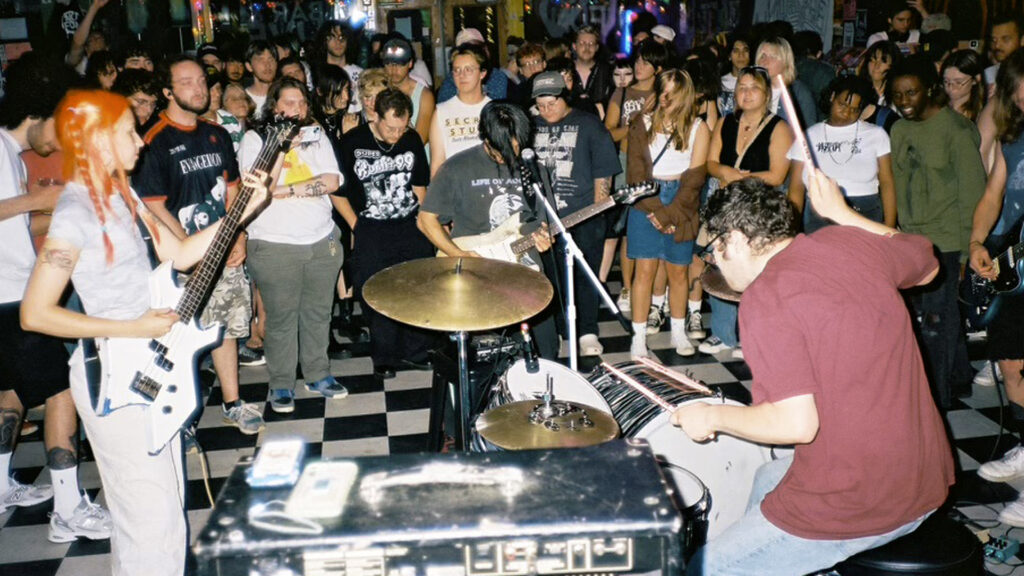
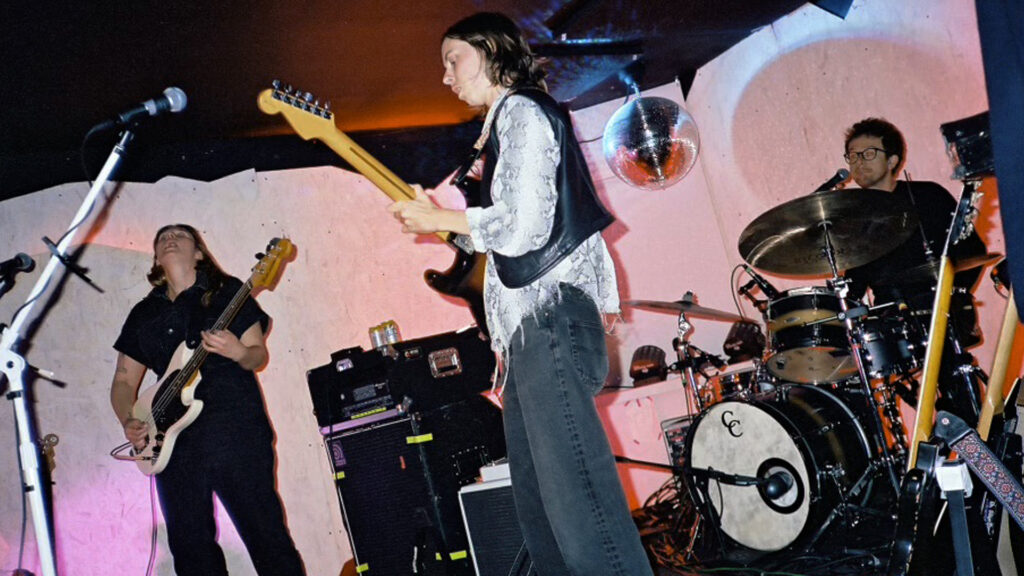
Having been to several shows at August Rosa‘s most recent venue, (including Hand Habits, Tiawan based Mong Tong, the Algonquin Pow Wow Medicine Singers with Yonatan Gat, and then there was that cool ass DAEDELUS show) it always impresses me the incredible variety of all types of music that can be experienced there. I was aware of his Albany and Saratoga PINT SIZED craft beer based locations and have tippled a drink or two in Albany specifically. What really excites me though, is the visceral music programming and developing community based around NO FUN.

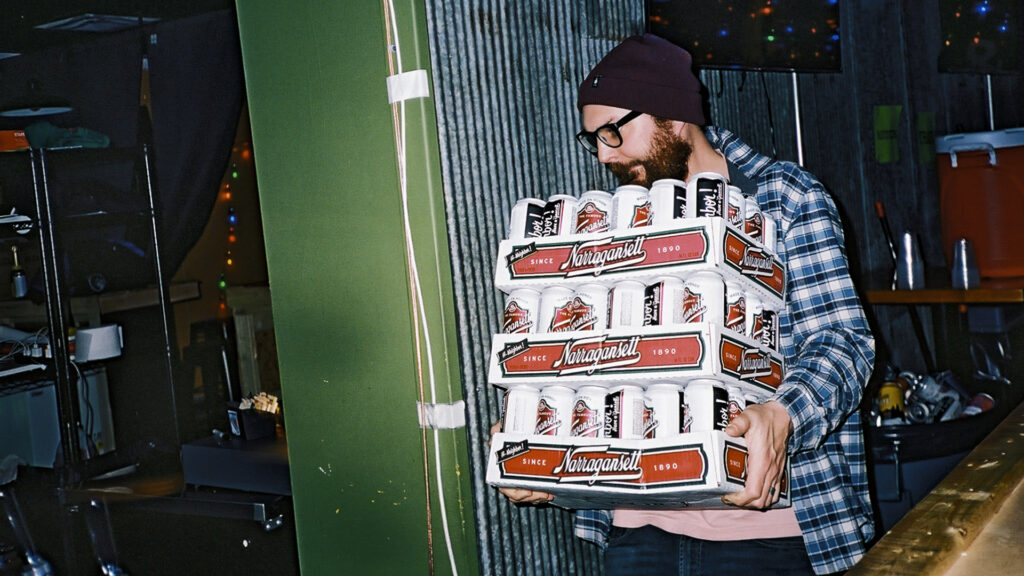
August Rosa : Pre-Show Load In at No Fun in Troy, New York | Image: Patrick Dodson

Please state your name, professional and educational background. Also, can you elaborate a bit on the three locations that you are currently operating?

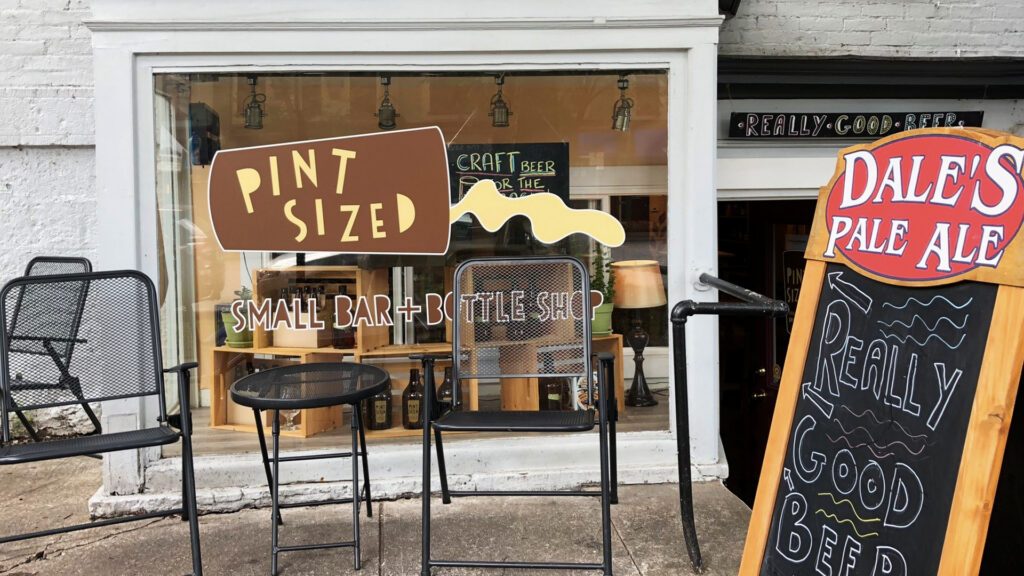
Why hello Corey Aldrich. My name is August Rosa I am Owner and Operator of Pint Sized in downtown Saratoga Springs on Broadway and Albany on Lark Street. Most of my time is spent at No Fun in Troy nowadays my third location. I was briefly involved in a wine bar called Post on Lark Street as well with some of my best friends that I used to be in a band with (Aficionado). It is going to be 10 years of being an entrepreneur on July 4th 2024! Prior to diving into business ownership I did marketing for MASS MoCA and the Downtown Albany Business Improvement District. I had really great bosses at both of those jobs that were patient with me as a creative… but incredibly lazy and objectively bad employee. No joke…having run businesses now for close to 10 years and understanding the full scope of how things work from the ground up, I believe I would kick ass at any job as long as it wasn’t boring. I went to the College of Saint Rose (RIP) with a major in Communications and a minor in Music Industry for undergrad and then got my MBA at SUNY Albany. I also was welcomed into the band Sun Natives on bass guitar by TJ and Brandon which is a nice outlet that is a purely creative outlet much needed void of any business interference.

August Rosa Plays Bass with the Sun Natives at No Fun in Troy, New York | Image: Patrick Dodson
Pint Sized Storefront in Saratoga Springs, New York | Image: Provided

Can you talk a bit about the difference between NO FUN in Troy and the PINT SIZED locations Albany and Saratoga?

The focus at NO FUN is what happens on the stage and not what is in the coolers. Pint Sized are craft beer centric bars that at any time have over 100 different options to choose from. Prior to opening NO FUN I would often throw events that were not conducive to the spaces. They are called Pint Sized for a reason. Our Saratoga location might be 400 square feet of usable space for patrons. We one time had an 11 person band there. It was ridiculous, extremely fun and packed out… but truly ridiculous. We still do events like karaoke and trivia at the Pint Sized locations but have shifted our live music attention to No Fun where we have a great sound system and the space to throw very sick shows.

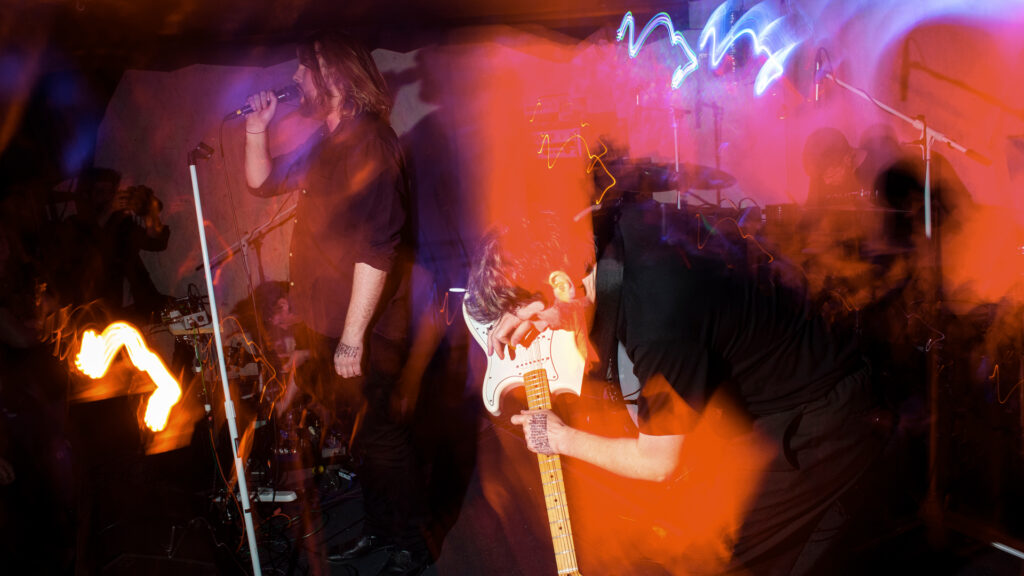
A Place to Bury Strangers Live at No Fun in Troy, New York | Image: Patrick Dodson

Can you share a bit about what your motivation was to open and what your current vision is for NO FUN?

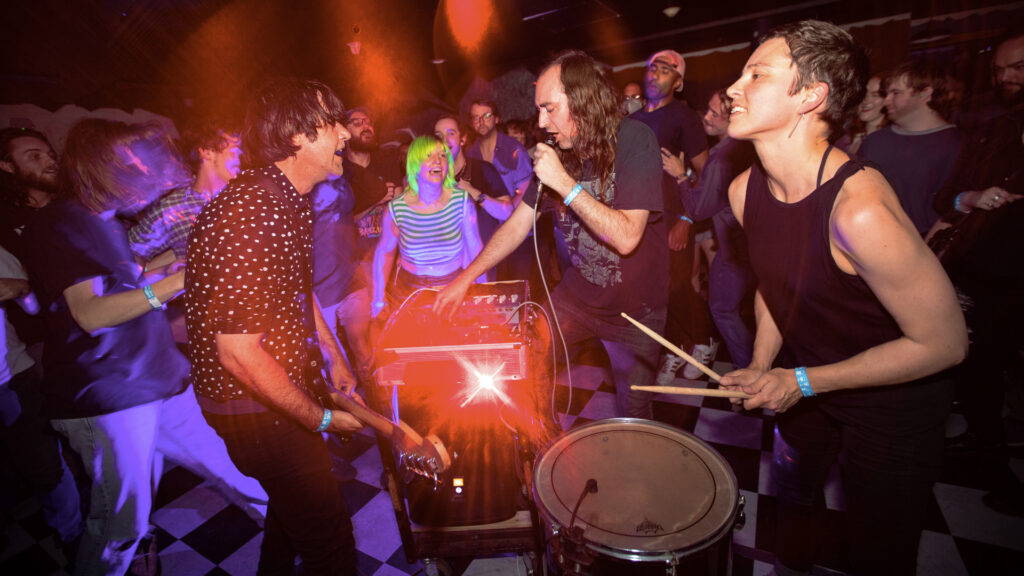
I was constantly finding myself having to go to a big music festival to knock out a ton of bands I wanted to see or travel to the major metros for the type of music I am interested in. I like the weird stuff and felt there was a void in the area for that stuff. The only thing filling that in my opinion was the programming Super Dark Collective brings to Desperate Annie’s (Saratoga) as well as basement shows. I wanted to create a space that was slightly bigger (not too big!) that everyone would feel comfortable going to so I could bring some bigger bands in the area and not have to travel for the stuff that I like the most. I believe No Fun is the absolute perfect size for the type of stuff we like to present. Feels good with 50 heads and feels really good as it approaches 200 heads.

WITCH (Zambia) Live at No Fun in Troy, New York | Image: Patrick Dodson

My favorite places to play / see shows are more DIY in nature… be it a basement or an art space. I wanted No Fun to not have a shred of corporate feel and vibe like you were at a show at your friends house while at the same time functioning professionally as a legitimate licensed business. Places I drew inspiration for the project include Death By Audio, Glasslands Gallery, 285 Kent… there were a million places like this in NYC that absolutely ruled, Valentines of course is a big inspiration (What’s up Howard?!) and the many house show spaces that have popped up throughout the region the past 20 years I have lived here. One of my favorite shows I played in the area was a vacant apartment that still had power and an unlocked door. We legit just brought a shitty PA system into the place, plugged in and packed the house. This was back when Facebook worked and was cool and an event listing could drum up 100 plus folks in an hour or two.

Algonquin Pow Wow Medicine Singers with Yonatan Gat Live at No Fun in Troy, New York
Image: Patrick Dodson

Having been to several shows there (including Hand Habits, Tiawan based Mong Tong, the Algonquin Pow Wow Medicine Singers with Yonatan Gat, and then there was that cool ass DAEDELUS show) it always impresses me the incredible variety of all types of music that one can experience there. How do you manage to keep such a strong schedule and number of bands coming through?

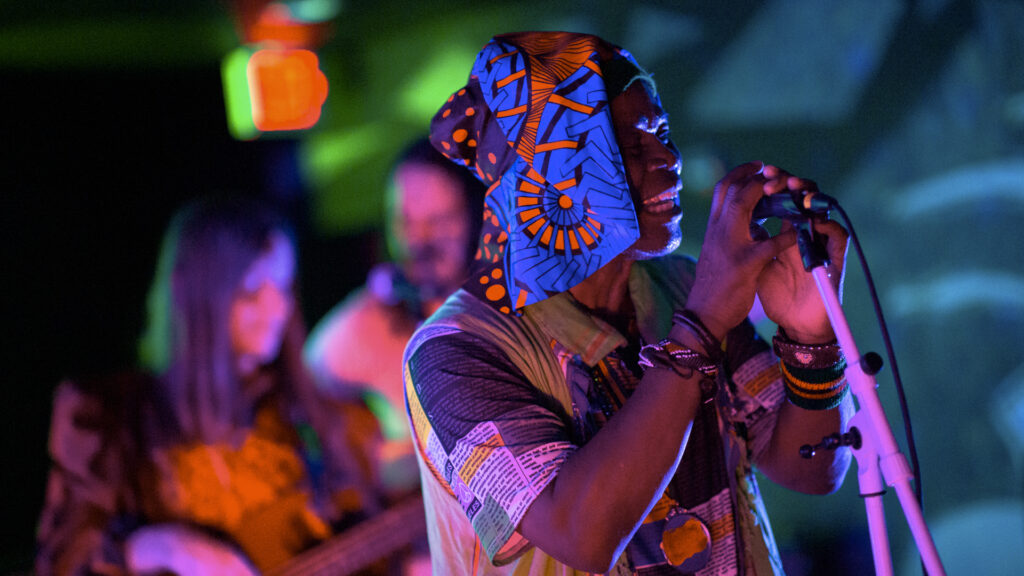
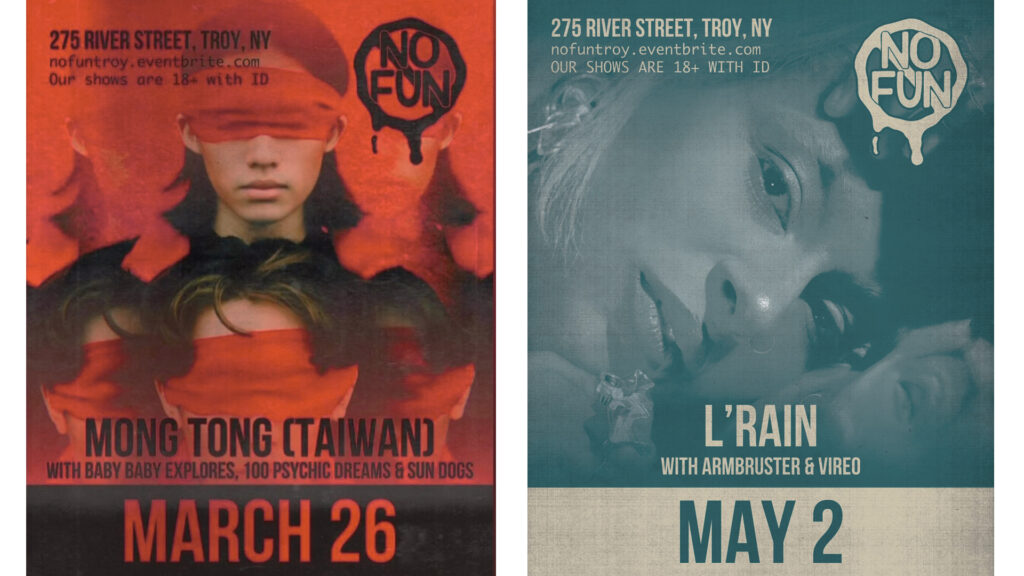
It honestly happened faster than I thought. In the beginning I was bugging agents and bands all the time and not getting responses. Over time we proved ourselves and have developed some really great relationships that align exactly with the type of stuff I like to book – psych rock, post punk, world music… typically weirder and oftentimes louder stuff. I have brought in some acts that I have listened to forever and legit look up to like A Place To Bury Strangers, Ted Leo, No Age, Delicate Steve, Dan Deacon!!! (Chk Chk Chk), Gilla Band and our good friend Meg Duffy with Hand Habits to name a few. Some of the most rewarding acts were global in nature including Imarhan (Algeria), Medicine Singers (Algonquin Pow Wow), Acid Mothers Temple (Japan), WITCH (Zambia) and Mong Tong (Taiwan) which just happened.

Gutting a Body of Water Live at No Fun in Troy, New York | Image: Patrick Dodson
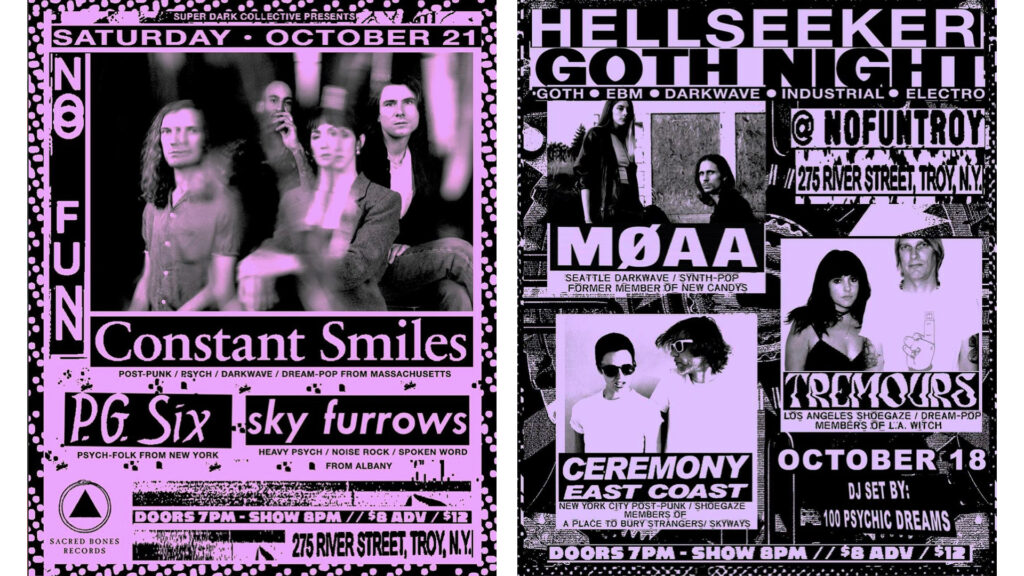
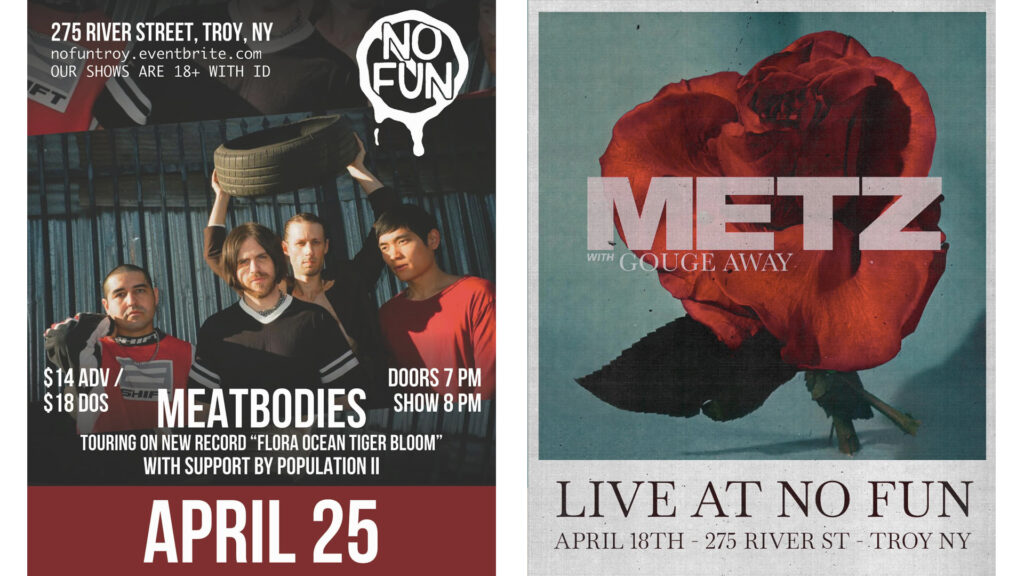
No Fun in Troy, New York Concert Posters | Image: Provided

Our programming is very kinetic and we are on track to do over 250 shows close to if not over 1000 bands this year! It is not a solo effort by any means and wouldn’t be possible without working with some of the area’s most innovative curators / presenters. There is a really solid group of folks who present at the space including Super Dark Collective (Shane Sanchez is our Booking Manager), Hey Greasy, Byrdhouse Records, Bee Side Cassettes, Albany Hardcore…There are a bunch more and bands who bring their release shows and ideas to us but these are some of the more regular presenters.

No Fun in Troy, New York Concert Posters | Image: Provided

The economics and logistics of running a business can be intense, especially a live music venue open multiple days per week. Can you share a bit about your day to day and how you’re keeping the bands and rent paid?

It truly sucks! Please buy tickets in advance. Not just at No Fun but to any place you go to see shows. I cannot stress how helpful it is. It gives agents strong ticket counts so they have confidence in spaces and bring more sick shows to the area. It also helps us to prepare properly for crowd size. And…you also save a few bucks!!!

A big goal of mine is to keep my mental health in check with this thing. I am not going to lie, this project is not easy and projects like this can end at any time. There are definitely moments where I want to stop doing it. All that being said, it is in a very strong place right now and financially viable. I am always focused on keeping momentum going to keep the bills paid up. Unfortunately it comes at the cost of not being able to shut it off. I really am going to have to figure that out sooner than later.

Hand Habits Live at No Fun in Troy, New York | Image: Patrick Dodson

Anything you have coming up you would like to share with our audience to keep them in the loop? Long term plans etc?

There are honestly too many to list. Just go to nofuntroy.eventbrite.com and pick something at random. All of the shows are great and deserve a crowd. I highlight the vibe of each show in the descriptions in just a few words. The whole purpose of the project is to have folks engage with new experiences. I see a lot of folks that go to the same show over and over again which is frustrating. I really do notice the folks that take the effort to get out of their comfort zone and that is the most fulfilling element of the project in my opinion. Those folks know who they are and I cannot thank them enough as they are the driving force that keeps me interested in doing it.

Upcoming 2024 Shows at No Fun in Troy, New York | Image: Provided

I would prefer having twenty people see something new and unexpected that they will remember their whole life over a sold out event with people who just go to the same exact shows all the time. Also it would be cool if people over the age of 30 stopped acting like they are in retirement mode. I pretty much stop engaging with individuals once they say they are too old to do stuff. I don’t care to be around folks with that mentality. It’s depressing and I see too much of it. All of my ads at this point target 21-30. Please take advantage of your life while you are still here.

K that’s enough of my bullish!t. Go to shows!!!

Gilla Band Live at No Fun in Troy, New York | Image: Patrick Dodson

Write This Way : A Conversation w/ SONG CITY’s Scott Womer

April 2, 2024 By Corey Aldrich

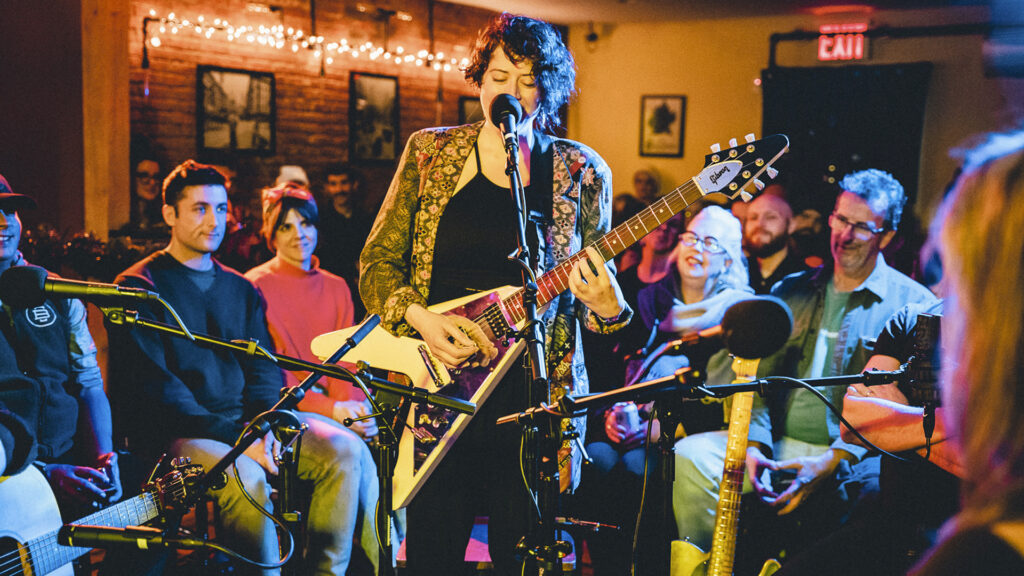
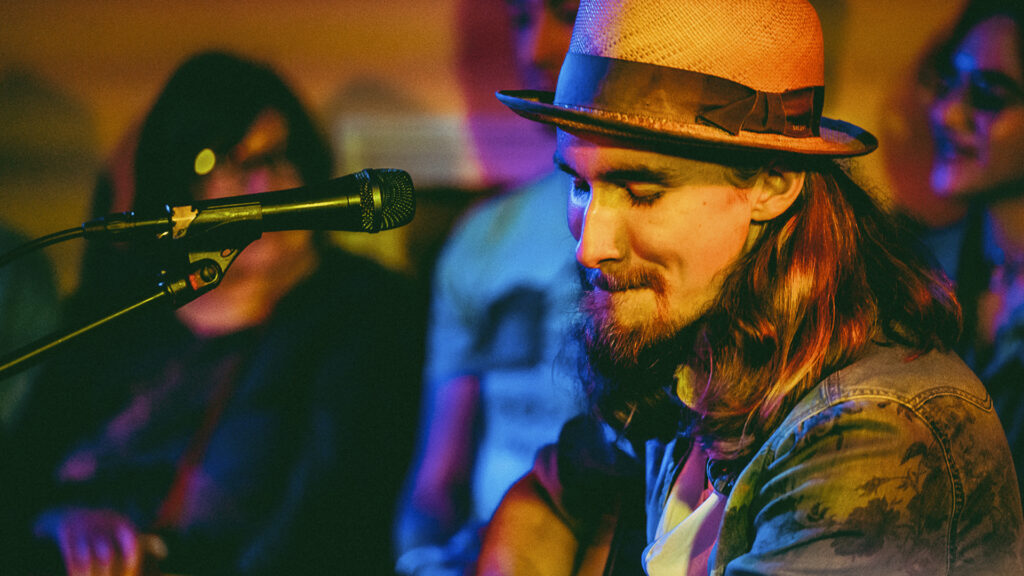
About two years ago, I started seeing and hearing about something called Song City. The branding was tight, it felt like something important was happening. Eventually, I realized that it was in fact a local phenom. These shows, upstairs at the RUCK have a very organic feel. Played in a round, musicians all interacting with and feeding off one another – the vibe is very intimate. I caught up with Scott Womer to find out more about the overall program mission and direction and to get a peek under the covers to see what makes this series tick.

Song City Founder and Director, Scott Wormer | Image: Kiki Vassilakis (with edits)

Please state your name, what you do and any relevant background info.

My name is Scott Womer, Songwriter and the Founder / Director of Song City in Troy New York. During the day, I work as a Litho Technician at Global Foundries in Malta. On the education front, I hold a BA from Gordon College.

Song City w/ Caitlin Barker at the RUCK in Troy, New York 01.10.23 | Image: Kiki Vassilakis

I know you’re a musician yourself. What motivated you to put together the SONG CITY series. What is your mission and goals for the program?

In 1995, I moved from Albany to Nashville, in hopes of getting more music opportunities. It’s a humbling experience to move from a small music scene to one of the premier music cities of the world, where there are thousands of people doing what you do, and doing it much better. Having seen that happen multiple times, I decided to alter my goals. Over the next 5 years, I had tremendous experiences working at a record label, doing session work, learning to write, forming a band, and recording an EP.

The greatest thing I learned in Nashville was the power of a song. Beyond techniques, abilities, and trends, the song is what changes lives. Much of this lesson happened at a venue called The Bluebird Cafe. A staple in Nashville, the Bluebird featured weekly showcases, featuring 4 local songwriters, mostly known for their writing of songs by all our favorite country stars. This is also the venue where artists such as Taylor Swift and Keith Urban were discovered. The weakness of the Bluebird at that point in their history, was that they were a single-genre showcase. Not only does that lack in variety, more importantly, it conditions the audience to think that this is the only style of songwriting. At the time, I had no idea how that observation would affect my future.

Song City w/ Amani O at the RUCK in Troy, New York 6-13-23 | Image: Kiki Vassilakis

Years later, when I moved back to Troy NY, and was so energized by the talent and variety of the local music scene, I felt compelled to do whatever I could to help it grow. After writing and recording a project under the name Fenton Hardy during Covid, I realized how important it is to be part of an artistic city. Community is at the heart of every effective movement. So, I took what I had experienced at the Bluebird, and expanded it to include all genres. Some of our greatest writers are hip hop artists, jazz artists, alternative and avant-garde artists, and they deserve a place at the table. This not only creates respect for all styles of songwriting, but expands the audience’s experience and musical taste.

Song City at the Ruck in Troy, New York | Image: Kiki Vissilakis

Our home at The Ruck is integral to the success of Song City. One day, Dave Gardell, owner of my neighborhood bar, The Ruck, contacted me about bringing music back to their venue. They were interested in concerts and an open mic, and asked me to run those events. What I didn’t know was that there is a second and third floor to the Ruck that was beautiful and fairly unused. I instantly realized this was the room I was looking for.

Beyond the Song City showcase, we also host a monthly songwriting community called The Open Floor which began simply as a monthly open mic. We have a “Song Challenge” at each month’s Open Floor that has become the major draw for each of these evenings. On the first day of each month, I post a phrase. The writers then have the rest of the month to write a song using that phrase, and perform it at The Open Floor, on the fourth Tuesday of each month. It is in no way a competition for us. It’s purely a motivational tool to keep us consistently writing. The second half of each Open Floor is a time for everyone that wrote for the challenge to play their song for each other. It’s amazing to see how many ways a phrase can be used. I often write a song myself for the challenge, and it’s significantly improved my songwriting.

Song City at the RUCK in Troy, New York | Image: Kiki Vassilakis

As a producer, I can attest to the challenge of producing music shows where folks get paid and there’s a little change left at the end of the night. How have you structured the business side to pull all that off?

Most local artists can not afford management. And because of this, they deal with being double-booked, underpaid, cancelled last minute, and under-publicized. They deserve to be taken care of. Because of this, going into Season 2, I raised the ticket price by 50%, so that I could raise their pay by the same percentage. Additionally, We also where able to help support the program via grant funding we secured through The Arts Center of the Capital Region. The events are highly publicized, given a generous bar tab, a comp ticket, and one of the nicest green rooms in the 518. We also hire the best music photographer in the capital district, Kiki Vassilakis, to shoot each showcase, of which the artists are given all of these photos to use for their own use. As much as I would love to make my living serving the local music community, we currently are at a place where we can pay all involved, artists, audio engineer, and photographer.

Song City at the RUCK in Troy, New York 09.12.23 | Image: Kiki Vassilakis

I believe you were the recipient of the NYSCA Re-grant program through the Arts Center of the Capital Region. Can you share a little but about why you feel like programs such as this are important to the sustainability of our creative community?

The days of musicians making money through their recorded music are over. As much as music streaming has increased the general public’s ability to have access to more music than anytime in history, it has also stripped away the musicians’ ability to make a living off their recorded music. Spotify currently pays artists approximately $0.003 per stream on average. That means for every 1000 plays on Spotify, an artist will make approximately $4.00. And from 2024 onwards, artists will also need to hit a minimum number of listeners to make their track eligible for royalty payments. Therefore, if artists are truly going to make money through their art, they need to be performing shows often and being paid well. They also need to be selling merch and physical copies of their music. So there is a greater need than ever for the public to support the local artists, beyond streaming their music.

Song City’s Ink Retreat 2023 at YMCA’s Silver Bay | Image: Kiki Vassilakis

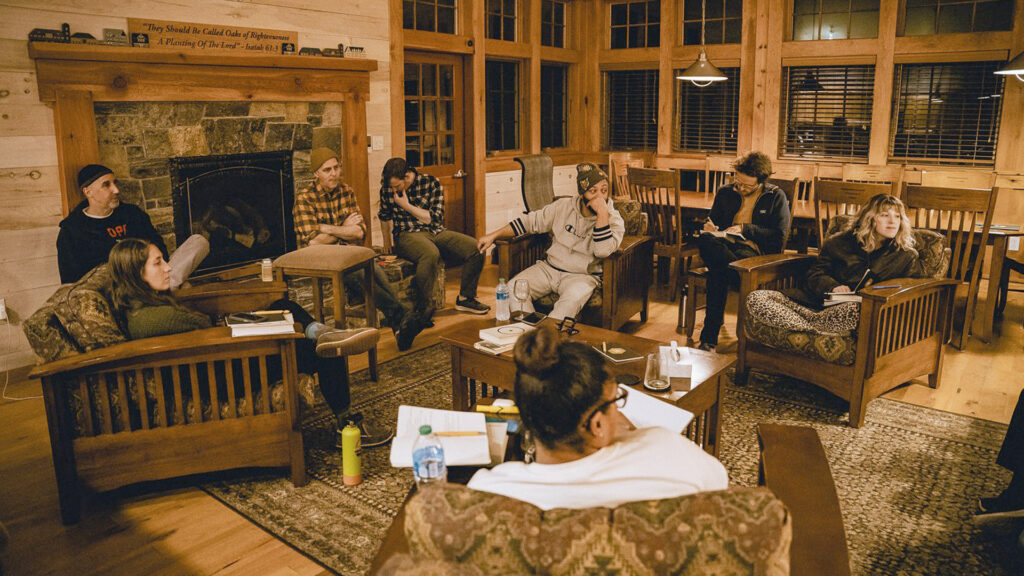
The final piece of the current Song City universe is a yearly songwriting retreat called Ink. Last year, we were honored to be awarded a $5000 Community Arts Grant through the NYSCA and The Art Center of the Capital Region which helped fund the program. Many songwriters applied and 10 were chosen, to spend 3 nights at a lodge on Lake George, part of the YMCA Silver Bay property. Like Song City, we encouraged writers of all genres to apply, R & B, indie-pop, alt-rock, folk, hip hop etc. The days were a combination of individual writing, collaborations, daily walks, amazing food, and nightly gatherings around the fireplace sharing our songs. We read and discussed Rick Rubin’s brilliant book “The Creative Act” and used some of his techniques to change how we normally write. We also had a small demo studio and engineer in-house to capture the new songs. And ultimately concluded with a showcase here in Troy, featuring the songs written on the retreat, as well as a live recording and film of that show.

Song City at the RUCK in Troy, New York | Image: Kiki Vassilakis

Anything you have coming up you would like to share with our audience to keep them in the loop? Long term plans etc?

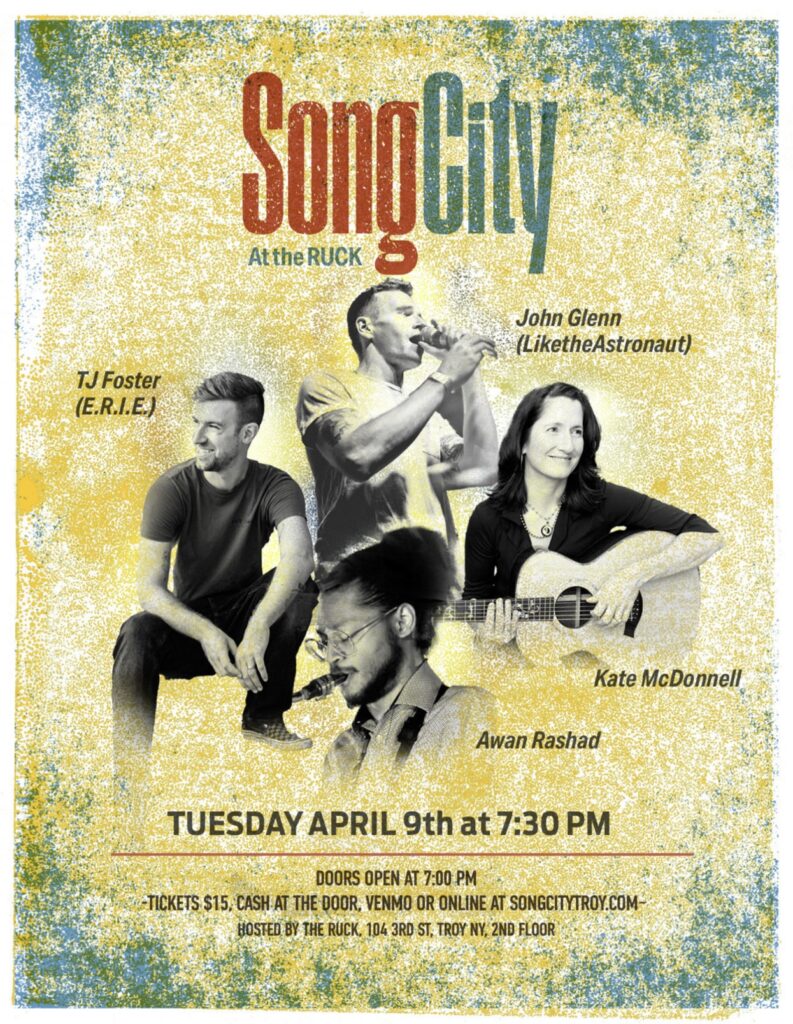
The next few months are busy at Song City. We have 3 showcases left in Season 2, with the next one happening on Tuesday, April 9, at 7:30pm, hosted by The Ruck in Troy. This month we are featuring jazz saxophonist Awan Rashad, TJ Foster, frontman for the local rock band E.R.I.E., alt-pop artist, John Glenn from LiketheAstronaut, and contemporary folk songwriter Kate McDonnell. The Open Floor songwriting community continues to meet every 4th Tuesday. We are beginning to plan 2024’s Ink Retreat, and we are getting ready to release a special recording of the showcase we did this last year, featuring live performances of the artists and songs written on 2023’s retreat!

Watch for all of this on songcitytroy.com and Instagram at @songcitytroy. If you would like more information, would like to be involved, or would be interested in supporting Song City, you can reach me directly at songcitytroy (@) gmail.com.

Re-Energizing Our Regional Foundations with the Hart Cluett and Burden Iron Works

December 18, 2023 By Corey Aldrich

I have been thinking a lot lately about the current state of our arts and cultural institutions and the challenges they face. Staffing in general but specifically leadership is a major problem. That coupled with the ever changing dictates and expectations of a fluid society increasingly distracted by technology. There is a real demand to re-evaluate how our institutions serve the public and keep the sacred keys of our history and stories in tact. As such, I decided to take a moment and speak to the staff at a couple of such institutions. Both the Hart Cluett Museum and the Hudson Mohawk Industrial Gateway have newish Executive Directors and interestingly, the feedback everyone had to my questions was surprisingly consistent.

For the interview I spoke to:

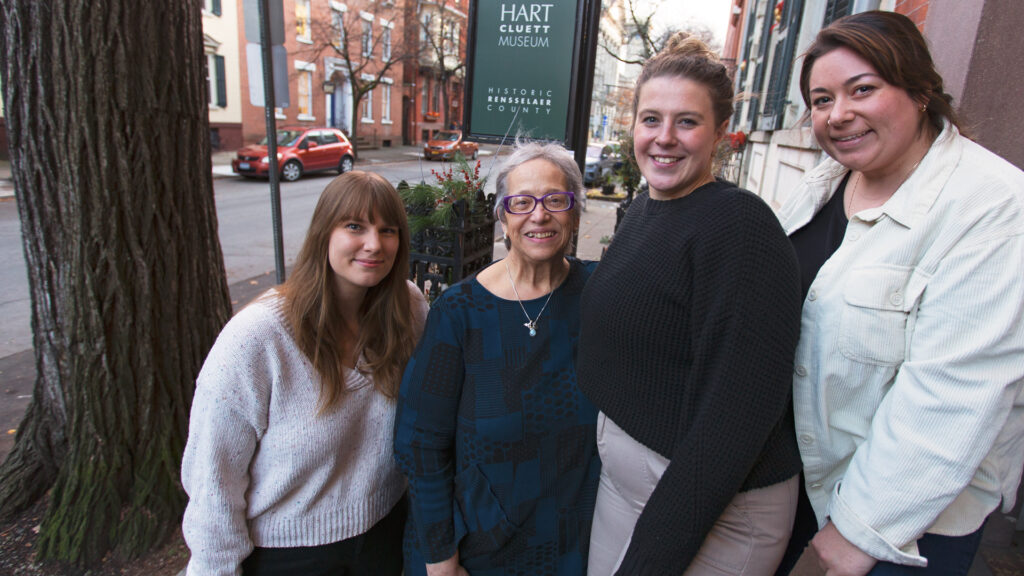
Kathryn T. Sheehan, Executive Director Hart Cluett Museum, Rensselaer County & Troy City Historian
Amanda Irwin, Deputy Director Hart Cluett Museum
Samantha Mahoski, Curator & Archivist Hart Cluett Museum
Anna Doren, Education Director Hart Cluett Museum

Dr. Susan Ouellette, Executive Director Hudson Mohawk Industrial Gateway / Burden Iron Works Museum

The Hart Cluett Team in Troy, NY | Image: Corey Aldrich

We see a lot of changes happening in historical / museum space as of late, specifically in how we create value for community and new audience. What do you identify as important shifts that need to happen to build continued relevance and connectivity with the community at large?

KATHRYN: A main goal of mine is to understand the many levels of stories that are present in the Hart Cluett House . Despite what the visitor may see when going through the 1827 house, I want the visitor to understand all the stories of the people that lived and worked in this house. In our exhibition spaces I want to support our curator to further develop historic issues that are still relevant today and for people to see that connection of past history to current issues. I want us to attract underserved audiences through our exhibitions and programs, so their stories and history are accurately chronicled for future generations.

AMANDA: I think the key word to defining our relevance is connection. We serve all of Rensselaer County, which includes a vast and diverse landscape and population, rural farming communities to bustling downtowns. Maintaining that representation can be difficult, but it’s integral to telling the stories of those who have helped build this region and to those who continue to make our area a place to live, work, and build a life. I believe our value is tied to the way in which we bring those stories to life, whether that is through a traditional exhibit experience or a field trip. I’m happy to say that the museum admission is ‘Pay what You Wish‘ to remove barriers and welcome all visitors.

SAMANTHA: How we create value for community and new audiences requires us to actually go out into the community, engage with those community members by having conversations and holding space for them to express their needs.

ANNA: We have many visitors come to explore our Research Library and join us for walking tours. Currently our curator, Sam Mahoski, has made a point of creating diverse exhibits exploring different aspects of Rensselaer County history that are relevant to us today, learning about our local history can help us understand current events and appreciate the diversity of our area.

SUSAN: Our museum is just reopening after a long hiatus of being closed due to COVID as well as stymied by a backlog of unfinished restoration work. What we hope will happen as a result of our opening is a re-connection with the local community and to become an extension of community space. We hope not only to be a place where objects and documents are stored, but also a place where local concerns and interests can be nurtured and addressed.

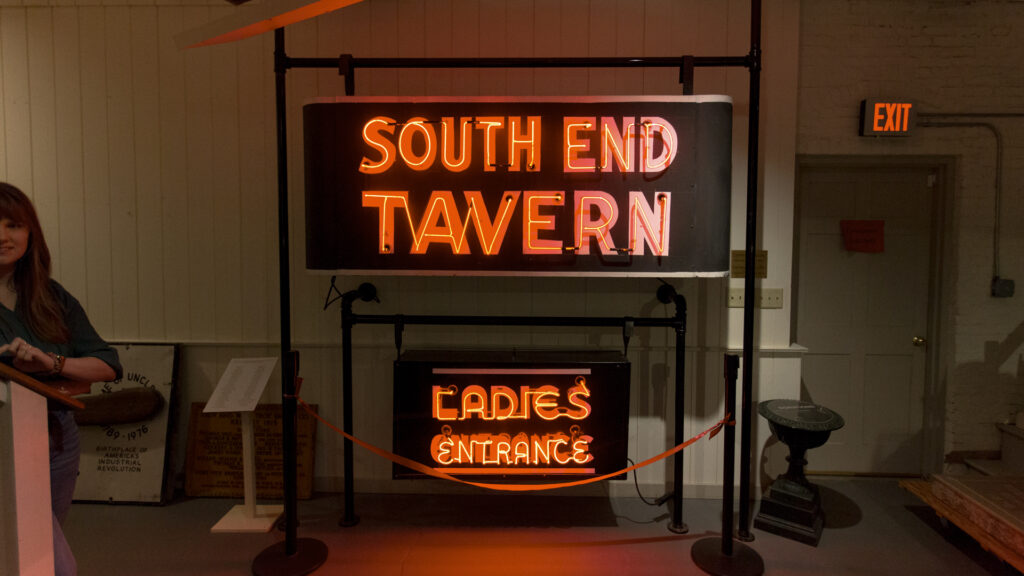
Historical Neon Signs from the South End Tavern in Troy, NY | Image: Corey Aldrich

How do you see things changing in the next few years, what will your museum look like and how will that be different from today?

KATHRYN: I hope our museum will continue to be a dynamic institution where we recognize “every face and every story” in chronicling the history of the county. That may be reflected in changing furnishings and decorative arts in the Hart Cluett House as well as offering new and exciting programs and exhibitions in the Carr building as well as offsite throughout the county.

AMANDA: I think as a staff that is half seasoned employees and half new faces, we are at a good turning point of acknowledging what the organization has done in the past and ways to push the envelope moving forward. Our backgrounds, education, and professional experiences work to compliment each other and bring different approaches to challenges…I think there is a lot of potential for new partnerships with places like our sister organization the Hudson Mohawk Industrial Gateway Museum, especially as we expand our educational and community programming. I would love to see more of a focus on the people who walk by our building everyday and don’t know we exist, whether it’s a family headed to the weekend farmers market, college students, or residents.

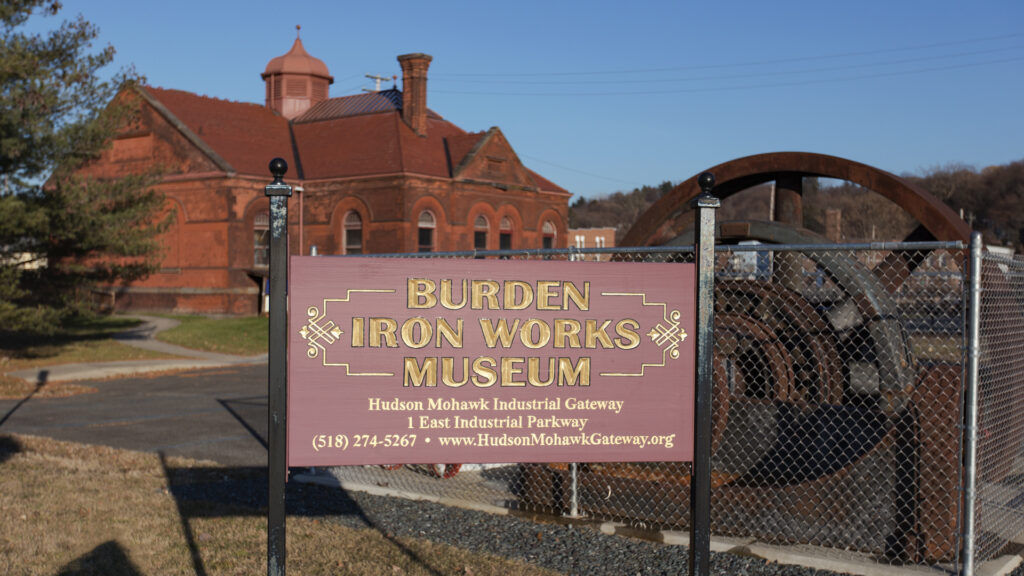
Hudson Mohawk Industrial Gateway, Burden Iron Works Museum in Troy, NY | Image: Corey Aldrich

SAMANTHA: To remain relevant over the next few years, the Hart Cluett Museum will need to implement changes that better reflect the needs of its fellow community members. How these changes will be implemented and how the museum will look in a few years is unknown to me but it is my hope that these changes, whatever they may be, will allow for more diverse audiences that feel welcome, valued, and heard in our space – something that the Museum currently lacks. I do think, however, that with conversations and holding opportunities for dialogue, the Museum can visualize the needs of our community members and implement change based on those needs.

ANNA: I hope to make the Hart Cluett Museum a regular stop for locals on rainy days and visitors exploring our area. I hope to build relationships with other organizations and community members and have an array of programming people are excited about.

SUSAN: We are planning to improve and expand our programming to attract more people to the museum. This would include engaging the community to directly affect what kinds of programming we should pursue.

Uncle Sam Wilson Painting at the Hart Cluett Museum in Troy, NY | Image: Corey Aldrich

What would you say is the biggest challenge in front of you that needs to be addressed to achieve your goals?

KATHRYN: Money is always the biggest challenge with not-for-profit organizations, and we are no stranger to that. The other challenge is that we represent all of Rensselaer County even though we are physically located in downtown Troy. To do that we may be able to offer more offsite exhibitions throughout the county, increase our presence in the towns, through joint programming and workshops on using research materials in our library. I am fortunate that as county historian I have a good working relationship with the 14 town historians and the smaller all volunteer historical societies. I can assist them with research, technical assistance and be a conduit to the state historian’s office.

AMANDA: One recent challenge had been consistent staffing, as a result of pandemic aftermath and organizational transitions. I am happy to say that we have made strides in the right direction. As we look to make improvements in the historic house and offer more programs however, that increases staff time, supplies, and other general operating expenses needed.

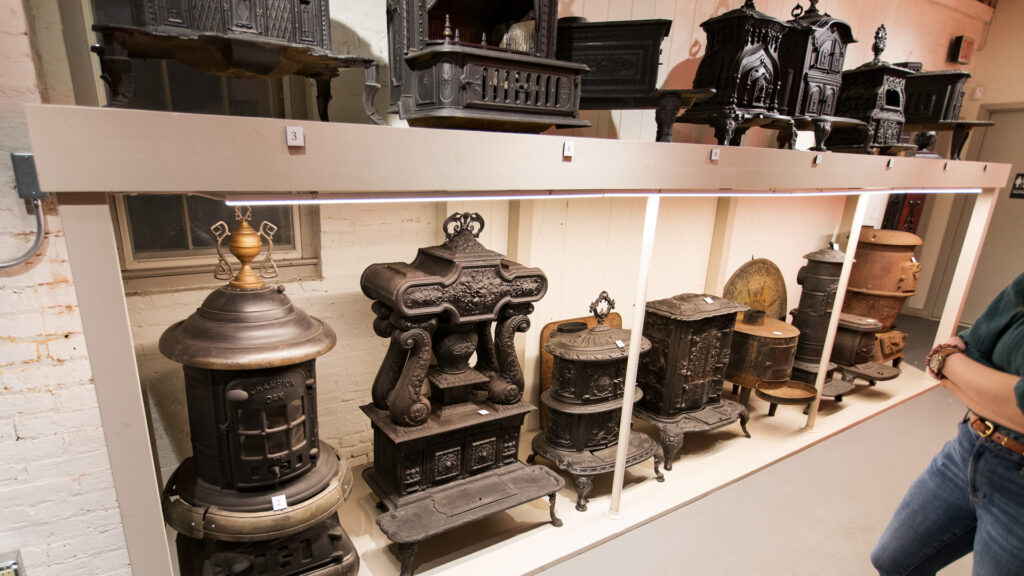
Woodstove Collection at the Hart Cluett Museum in Troy, NY | Image: Corey Aldrich

SAMANTHA: We have the gall, the grit, and the gumption to get things done, and always have as a team-oriented organization, but in terms of pay equity, program planning, exhibition design, repairs to the historic house, and beyond… it becomes rather clear that we could accomplish a lot once properly resourced. The generosity of our supporters and team of volunteers have allowed us to make strides in progressing the organization, but imagine what this place could be capable of if we could had expanded resources. To achieve my goals as the Curator and Archivist currently makes it difficult to achieve the standards and expectations of our community.

ANNA: Getting people’s attention and showing them that the museum is here– and we’re here for them! We preserve the history of everyone in Rensselaer County so that anyone who is curious can explore it. I want more people to come inside and then come back again with friends. Getting people talking about our space and using it can help us understand their needs and interests so we can do more to serve them!

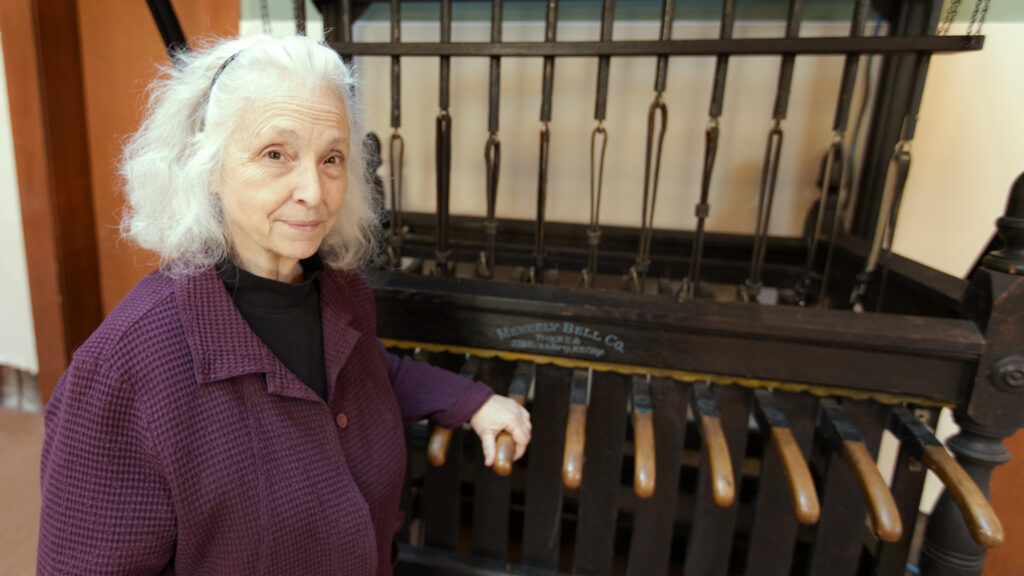
Dr. Susan Ouelette, Executive Director at the Hudson Mohawk Industrial Gateway / Burden Iron Works Museum in Troy, NY | Image: Corey Aldrich

SUSAN: We need to expand our programming and employee base here at the museum. We are, aside from myself, entirely dependent on volunteers. Finding the kind of funding that would allow for part-time or even full-time employee would be a game changer for us. Student internships are also one of the ways we can also improve programming.

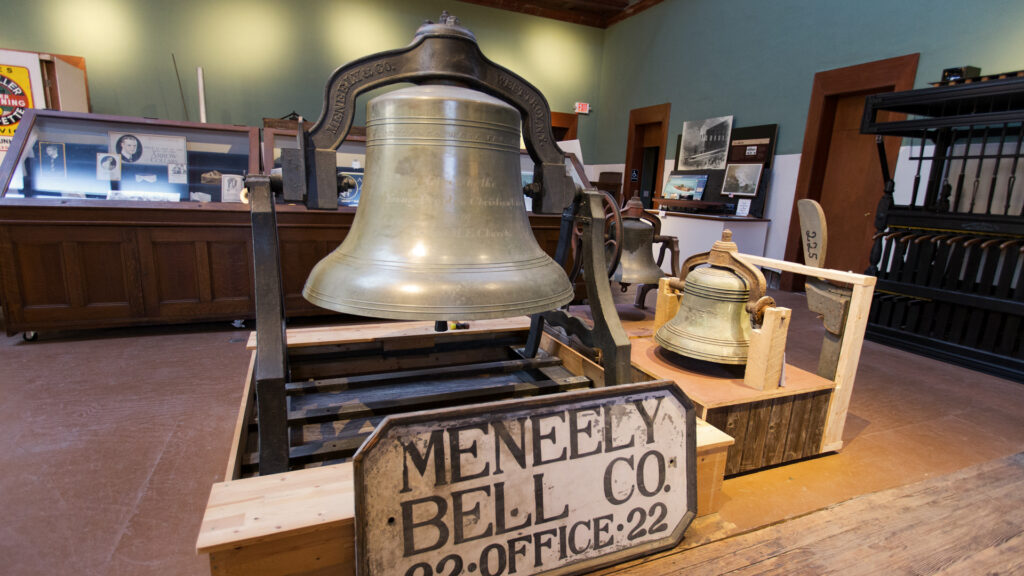
Meneely Cast Bells at the Burden Iron Works Museum in Troy, NY | Image: Corey Aldrich

Those with the keys to a cities / region’s history represent the foundation of place, that which all is built upon. Why is it especially important for us today to have that connection? What is the danger of disregarding it?

KATHRYN: When I was appointed Rensselaer County and Troy City historian back in 2006 I was never more acutely aware that I reflected for the county pride of place and the importance our county history is to the region, state and nation. We have been a county for 232 years. I want people to know that it is by no accident that we have the amazing architecture in downtown Troy or the rich agricultural landscape that largely makes up the vast majority of Rensselaer County. It is over 200 years of resourceful people that grew this county and made us nationally recognized in science, education, and the arts. Those contributions and the contributions that new residents living and working in Rensselaer County are part of that succession; bringing new thoughts, ideas and energy, embracing the past history that is shared and building on that for the next 200 years!

AMANDA: I believe that we are a cultural pillar in our community, there is pride in acknowledging the accomplishments of the past and also understanding previous shortcomings as we look to the future. I picture the museum as a chord connecting past, present, and future, and the danger of disregarding that leaves us untethered.

Steam Engine at the Burden Iron Works Museum in Troy, NY | Image: Provided

SAMANTHA: In today’s world, we are active bystanders in seeing the breakdown in the foundation of place and the dangers of disregarding it. History is what you had for breakfast, its everywhere you go, and history lives here. So why does all of that matter? Because the continued cultivation of our community relies on it – our shared past brings us together and makes us stronger. Without that sense of belonging, we begin to lose sight on the very values that have made Rensselaer County what it is today.

ANNA: History repeats itself and our current reality is a direct result of what has happened here before—the people who’ve lived here, the traditions, laws, policies, and major events shaped what we are experiencing today. We preserve history so people can understand where they come from and apply it to issues we’re facing today.

As a museum, we make sure to preserve the entire history and present it to the public as completely as possible. There’s bias in any interpretation and we hope that with our exhibits and programs we can invite the public into the conversation and make sure we’re preserving the full history of Rensselaer County. Our mission is to recognize “every face and every story,” we do this with the history we preserve and the community we serve.

SUSAN: If we are not able to connect with our community and have real conversations with each other about our past, present, and desires for our future, we will not be able to move forward. The importance of place in identity can be a positive influence in building confidence and expressions of unity can help to minimize the overall negatives that continue to crop up in the world around us.

The Fish Market Project : Creativity Outside the City Center Update with D. Colin

November 2, 2023 By Corey Aldrich

Poet, artist, performer, curator and activist D. Colin wears many hats. Over the last year she has donned a newer one to add to her collection as Curator and Program Director at the Fish Market Project in North Central Troy, a satellite of the Arts Center of the Capital Region. As she wraps up the 2023 season, we thought it would be informative to get an inside track of what it’s like moving the boundaries of art and creativity outside of the city center and spreading it to areas that otherwise would not have that hyper local opportunity to participate.

D. Colin – Curator and Program Director at the Fish Market Project in Troy, NY | Image: Provided

Please state your name and role in the organization. How long have you been in this role?

My name is D. Colin and I am the Curator and Program Director for The Fish Market Project. Although my time at The Fish Market started in January 2022 as an artist in residence, I’ve been in this current role since March of 2023.

Poetic Visions Event at the Fish Market in Troy NY | Photo: Provided

Can you tell us more about what the FISHMARKET is and what type of programming you are running there? How long has it been in existence?

The Fish Market is literally a former fish market turned into a community arts engagement project by the Arts Center of the Capital Region. In 2021, ACCR offered two six-month artist residencies to launch the space. The second year an NEA (National Endowment for the Arts) grant made it possible for Meg Jala and myself, to offer a variety of arts programming in the space with Jade Warrick joining the team. Though they both moved on to pursue other opportunities, I’ve worked to continue the vision of community-centered arts programming. The Fish Market is a neighborhood arts hub for creatives and community members to gather, connect, and make art. Over the past year, there have been art exhibits, poetry open mics, and free workshops for a variety of art forms including acting, dance, drumming, and drawing. Every week, artists and community members have the opportunity to use the space to explore their own creative work during open hours which I like to call co-create time. I have also been able to have collaborative arts programming and special events in the space with a variety of partners including the Social Justice Artists Collective and Black Dimensions in Art, Inc. Now that The Fish Market is entering its third year and we have a better idea of what works most meaningfully there. I am excited to see how the community continues to grow.

Participatory Art Making at the Fish Market Project in Troy NY | Photo: Provided

As a satellite location for the Arts Center of the Capital Region, you have strong backing and institutional support. That said, this is a newer endeavor that will be carving out its own path in the neighborhood. What is the overall goal of the programming and what do you envision it becoming to the neighborhood?

The overall goal of programming is to provide a safe space for artists and community members to gather, to foster relationships between artists and the community, and to create together. I believe that it’s important for the arts to be accessible. A space like The Fish Market gives folks an opportunity to learn more about the arts and their own creative process while also impacting the neighborhood in a positive way. Personally, I see The Fish Market as a gathering space with the arts at its core, someplace where people can heal and grow together with creativity leading the way. When I was a young artist, I didn’t have spaces like this to help in demystifying the process of being an artist or even just in learning a variety of ways to express myself. I had to look for those outlets in other ways. My hope for The Fish Market is that it continues to be that space for others, especially those who live in North Central Troy.

Gallery Attendees Checking Out the Art at the Fish Market in Troy NY | Photo: Provided

As you try different events and initiatives, what are some best practice principles or suggestions you could share with other folks looking to replicate this model?

I’m often asking for feedback. Some of the ideas for workshops and events have come from folks who’ve walked in during open hours or who’ve attended other events. Keeping ideas community-centered whether through direct conversations or having a suggestion box helps not only with ideas but also with relationships. At the same time, I try to weave in programming that nobody suggested or thought about by asking what might be missing and how can I connect with the community. If people don’t know what to ask for, sometimes it’s useful to introduce experiences to see how it goes. Consistency is also a driving force in helping programming grow. When folks have an expectation of how an event will go and when programming will happen, it’s easier to promote and likely attendance will steadily grow. I think with any new project, it also takes time. The Fish Market is two years old, but I think that amount of time is necessary to get a more solid understanding of what makes the most sense in the space.

Jordan Taylor Hill Running a Drum Clinic at the Troy Fish Market Project, Troy NY | Photo: Provided

Any programming or events you have coming up that you would like to share?

We just had our Fish Market Festival, a 3-day end of season celebration. The Hudson Valley Writers Guild will be at The Fish Market in November. There will be an opening reception for their art exhibit on Friday, November 3rd starting at 5 pm. There will also be collage workshops, a poetry reading, and open gallery hours for folks to attend and see the art. I encourage folks to follow @fishmarketproject on Instagram or Facebook for schedule details. People can also stay updated by getting on the Arts Center of the Capital Region’s email list.

  • « Go to Previous Page
  • Page 1
  • Page 2
  • Page 3
  • Page 4
  • Page 5
  • Go to Next Page »

Creative Economy Updates and Other Good Stuff!

STAY CONNECTED!

  • Facebook
  • Instagram
  • Twitter
Copyright © 2020 THE UPSTATE ALLIANCE FOR THE CREATIVE ECONOMY

info@upstatecreative.org | 41 State Street, Albany, NY 12207

Design by Reach Creative