• Skip to primary navigation
  • Skip to main content

ACE

Upstate Alliance for the Creative Economy

  • HOME
  • ABOUT
  • NEWSLETTER
  • SUBSCRIBE
  • JOBS
  • Show Search
Hide Search

Diversity in the Creative Economy

Prince UFO Catchers : Young Creative Entrepreneurs Laying It On the Line

November 25, 2024 By Corey Aldrich

I met Danbi Yu and Bradley Alverez through a co-producer (Guinevere of the Dentist Office) for a pop up cyberpunk market that I have worked on with the Arts Center of the Capital Region. Not only do I find them to be some of the most attractive / positive and kind people, but I loved the passion they bring to share Japanese arcade culture with the region. I have worked with them on a few projects and am really excited to share their new entrepreneurial endeavor!
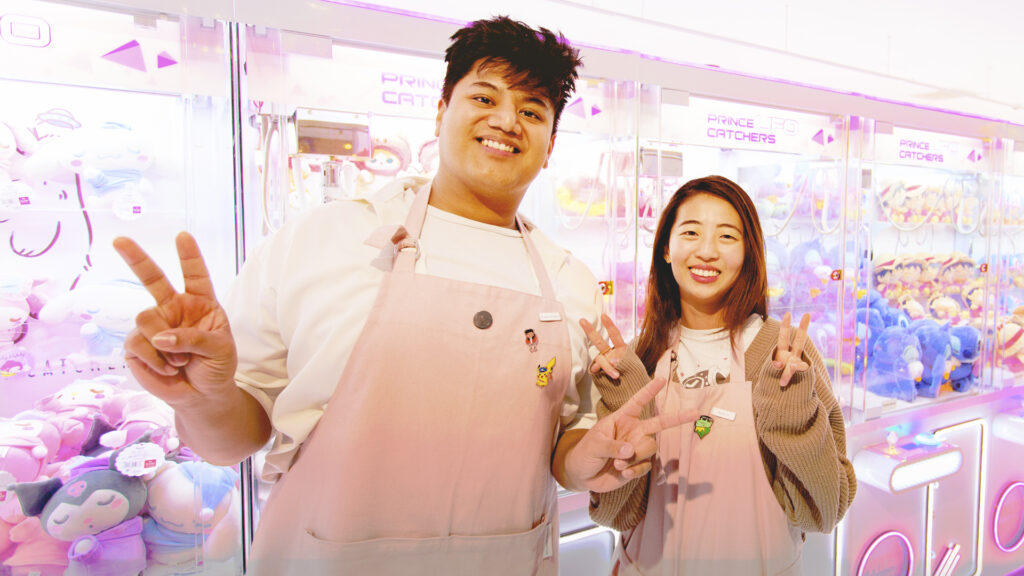
Bradley Alverez and Danbi Yu : Owners and Founders at Prince UFO Catchers | Photo: Corey Aldrich

Please state your name, title and educational / artistic background.

Danbi Yu and Bradley Alvarez, Co-Founders of Prince UFO Catchers.

Bradley and I attended SUNY Potsdam. There, I majored in English Writing and Philosophy. Bradley majored in Spanish and minored in Art. We studied abroad in Japan in the last semester of our 4-years in college, in a countryside prefecture called Akita and at an international school called Akita University. During this time, we have had the opportunity to explore various prefectures in Japan, including Tokyo, Kyoto, Osaka, and Hiroshima. We also had the chance to meet locals and become friends with the Japanese students there. But most of our free time, I admit that we spent at Japanese arcades playing for anime figures and gigantic plushies. After the study abroad experience, I quickly jumped into the publishing industry as an editor and Bradley launched a start-up resell business called Shop.De.Alvarez. While I honed my professional writing, editing, project management, and administrative work skills, Bradley became familiar with the entrepreneurial process of making connections, buying merchandise, researching market value, and finding selling platforms. 
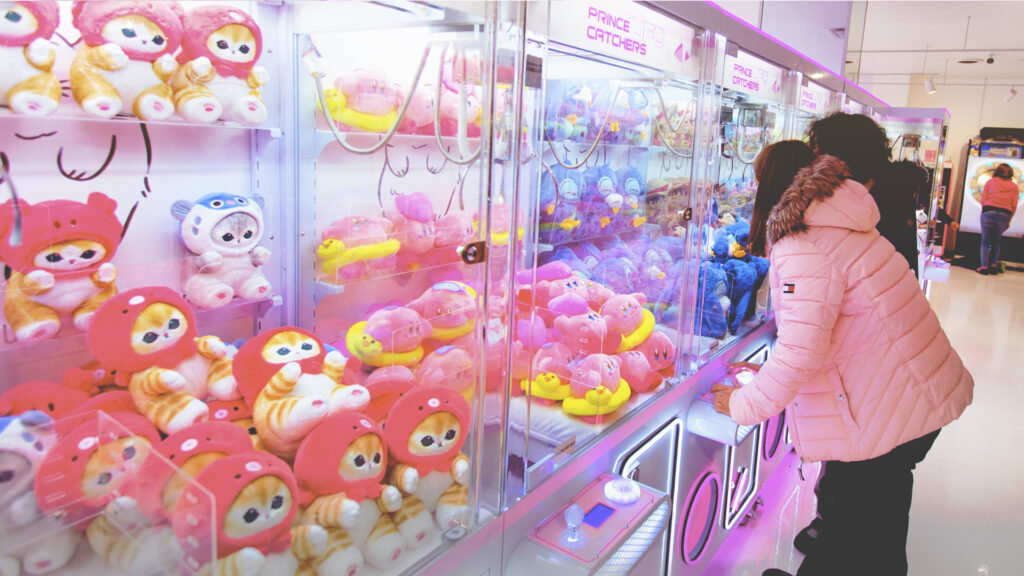
Catching Plushies at Prince UFO Catchers in Colonie Center Mall | Image: Corey Aldrich

I have worked with you in the past at different pop up events. Can you tell us more about your shop? What motivated you to open a physical location. Any additional programming ideas for the space?

We have had an interest in claw machines/Japanese-style arcades ever since we studied abroad in Japan in 2018. We were blown away by the Japanese arcades because of their focus on claw machines, their customer service, the level of quality prizes inside the machines, and the aesthetics of the entire environment that catered to not only Japanese people but foreigners like us. They had token machines at every corner that converted cash into satisfyingly sounding 100 yen coins. They had anime figures, a variety of creative plushies, and rhythm games at every level of the arcade.

At the beginning of our entrepreneurial journey, we started off with vending mini claw machines inside of restaurants, grocery stores, cafes, etc. and we eventually started to participate in various events. We luckily landed a vending spot at Colonie Center Mall and began to have a relationship with the leasing people there. They were actually the ones who suggested that we should do a physical location because claw machine arcades were becoming popular throughout the world but there was nothing like that around the capital region of New York. And so, we thought if we were going to do this, we wanted to recreate our experiences in Japan as close as possible. Claw machines, high-quality prizes, fair winnings, attention to detail to the smallest things, and customer service that would cater to the audience by adjusting the prizes as many times as possible if needed and giving advice on how to win quicker.
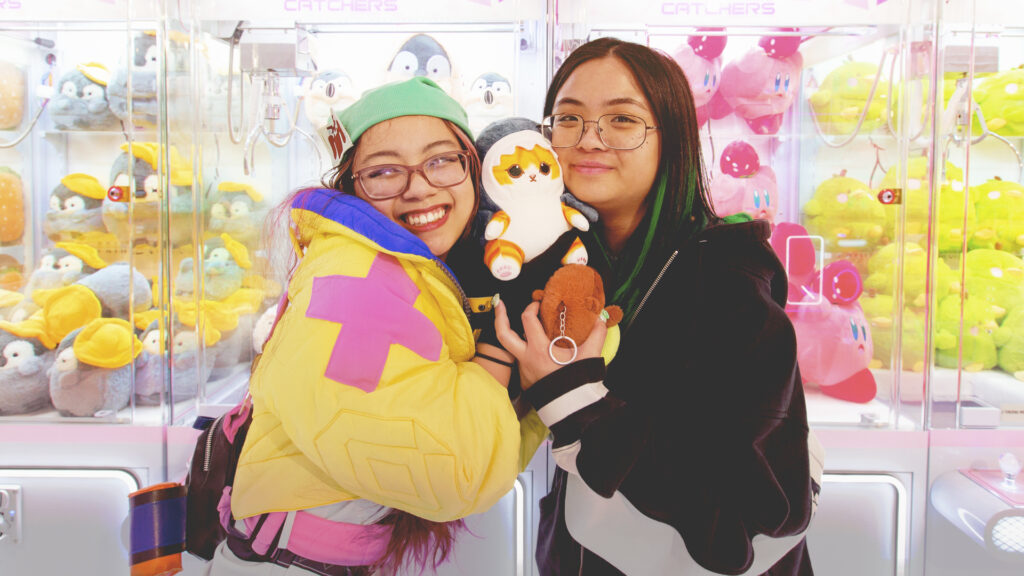
Mary and Friend Show Off Their Winnings at Prince UFO Catchers | Image: Corey Aldrich

In the near future, we are planning to have more rhythm games, like Dance Dance Revolution and/or Taiko no Tatsujin, and of course a monthly-bimonthly rotation of the prizes inside the claw machines. We are also planning to host events within the space. We are entertaining a Rhythm Game Competition or even a Speed Dating Event, but that would all be TBD and TBA on our Instagram page.
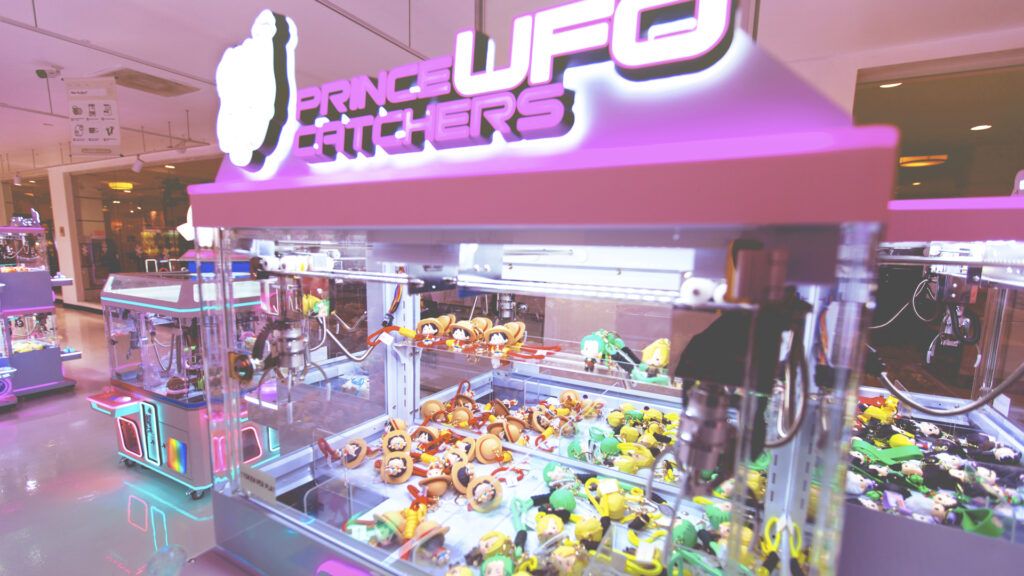
Keychain Characters at Prince UFO Catchers in Colonie Center Mall | Image: Corey Aldrich

What type of research did you do to decide what type of machines and products you would have? What drove your product theme?

Our product theme varies. Our original focus was anime, like One Piece, Jujutsu Kaisen, SpyxFamily, etc., but we thought it shouldn’t be so niche because children would love things like Pokemon, Winnie the Pooh, Stitch, etc. Another thing we liked about Japanese arcades was that they didn’t just have plushies or keychains. They also have food products like chips, sodas, chocolates, etc. They had practical things like mini hand towels, pillows, bags, pencil case holders, and whatever you could imagine. This way, I thought we could cater to not only the plush fans, anime fans, a collector, or a certain age group but to all people who might just want to walk in and try something they haven’t seen before.

Of course, when we were still vending, we tried to learn as much about claw machines and the sources from which we get our merch as possible, to vet out quality prizes from not-so-quality, and we are still in this learning process but a lot better than we were a year ago.
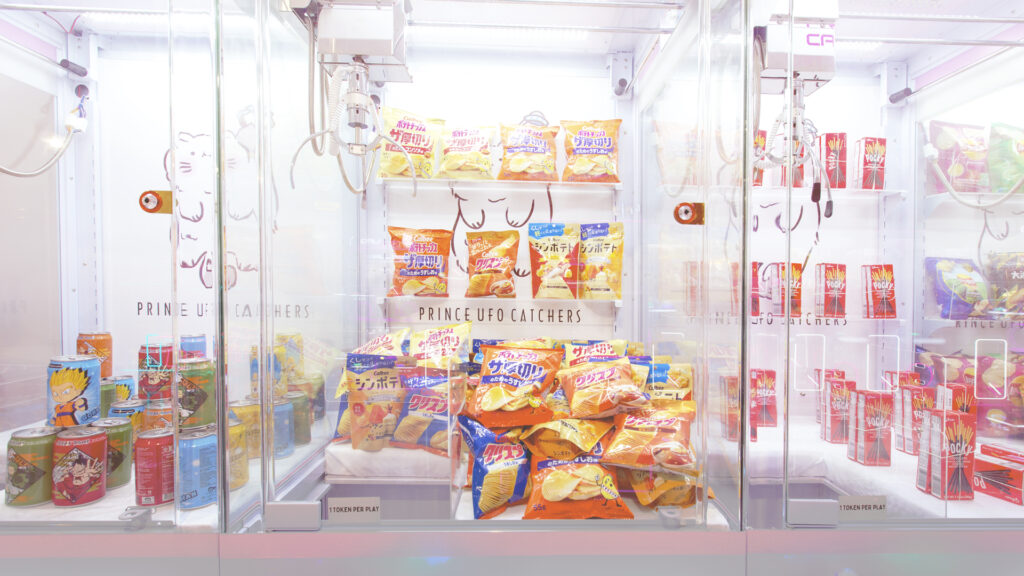
Japanese Imported Beverages / Snacks at Prince UFO Catchers in Colonie Center Mall : Image: Corey Aldrich

Setting up a retail shop is financially challenging. How were you able to pull that off? Did you have to bring in partners? I am always interested in how folks make these things a reality, so many creatives have dreams of doing creative entrepreneurial businesses but don’t know where to start.

To be honest, the financial part was the trickiest part on our end. We tried exploring so many loan options but quickly found that no bank would entertain a start-up business despite my fully fleshed-out 25-page business proposal and many financial projection sheets. We tried a private loan but were daunted by the idea of having 40% interest rates that we would have to pay back in less than five years. We even reached out to the Chamber of Commerce in Albany and the Community Loan Fund for small business loans, but found that they couldn’t do anything for us since we were considered a fresh business. As a last resort, Bradley and I sold our one and only investment property in Troy that we had managed to buy back in 2020, and this was what helped fund us at the start of this journey.

But I would like to add that we were relentless in this. It was very unrealistic at the beginning of this journey, financially, but I knew that this was something we wanted to do. Whatever the method, whether it was seeking out a family loan or calling up private investors all over the country, we wanted to make this a reality. Luckily for us, we were able to sell the house for a good price at the right time, but I truly believe that we would’ve found another method if this hadn’t been the case. What I’m trying to get at is that obstacles are always present when we are chasing something that seems bigger than ourselves at that moment, but it is also up to us to determine whether those obstacles make our reality or whether we can create a reality that is beyond those obstacles. I believe we chose the latter because we had a strong desire to share our love for Japanese arcades in America.
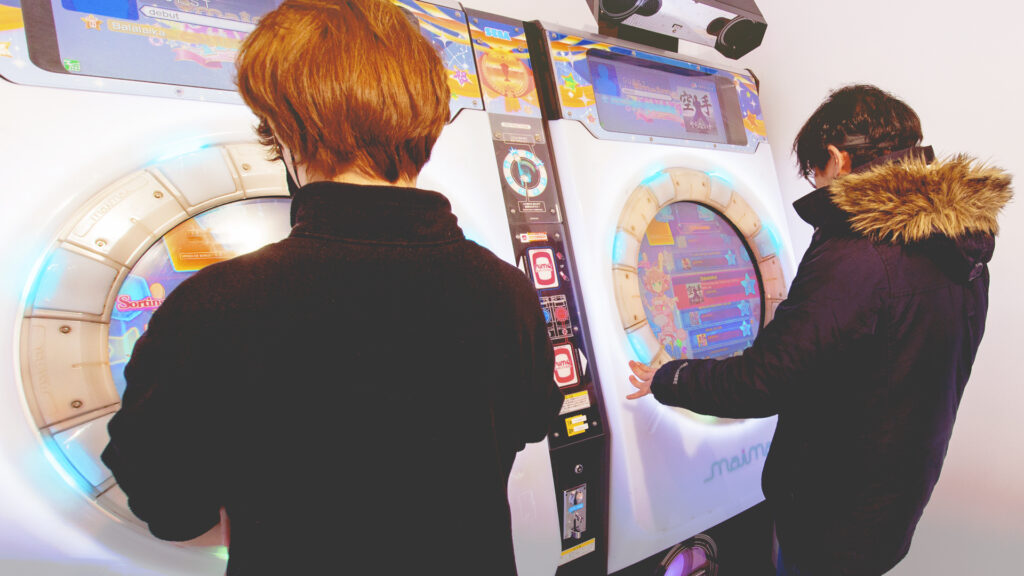
Deep in Game Play at Prince UFO Catchers in Colonie Center Mall | Image: Corey Aldrich

Shameless plug: Anything additional coming up we should know about? Can folks still talk to you about getting a machine in their location?

We do try to participate in some events here and there, like the card show in Albany or the Anime Night in Troy, but it honestly depends on the date + time. We try to participate in these events because it is a nice way to meet other vendors, coordinators, and customers, but at the same time, running a business has proven to be very time/energy consuming. As for vending, we still do them, but it’s only in Westchester due to the help we receive from Bradley’s family. For upstate NY, we are familiar with other people who do vending so always feel free to reach out to us if you’d like a claw machine in your business!

Fun Fact: The name of our arcade originates from our cat’s name, Prince, and what the Japanese call claw machines “UFO Catchers.” 

For more info or to follow them on Instagram: Prince UFO Catchers
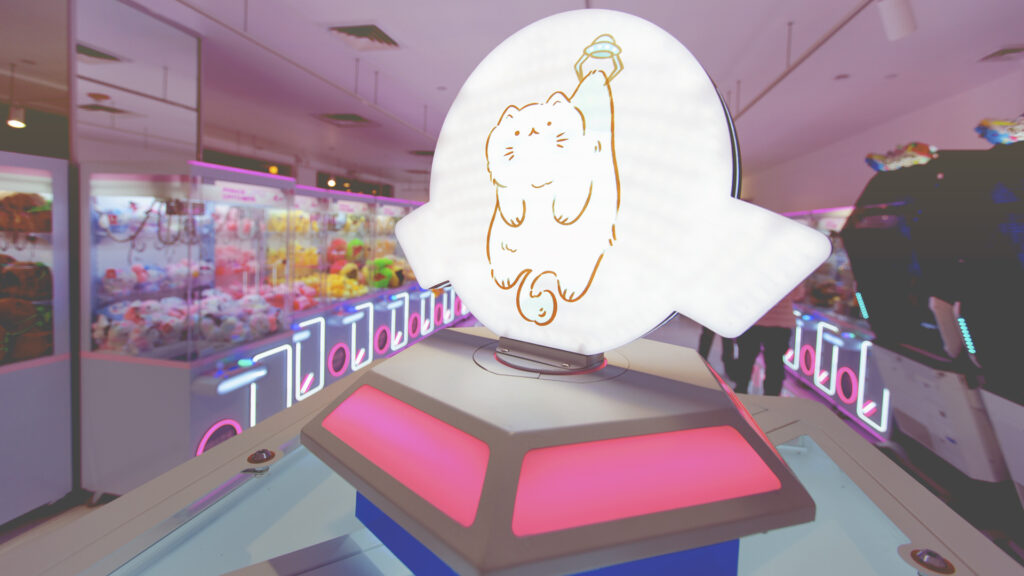
Prince the Cat Logo for Prince UFO Catchers | Image: Corey Aldrich
Arielle Steele : Finance by Day Film by Night | Building a Creative Career One Gig at a Time

June 6, 2024 By Corey Aldrich

I met Arielle Steele recently at a backyard picnic at John Yost‘s house (Film Maker and Founder at Fifth Column Features). After about 30 minutes of engaging conversation I knew I wanted to highlight her story. So many of our freelance creatives are working day gigs with big aspirations of moving full time into their creative practice. Arielle brings a solid business background to hers and as if she is not busy enough, was recently named Vice President of the Board at the newly rejuvenated 518 Film Network – a group ACE! has produced some very successful networking events with in the past.

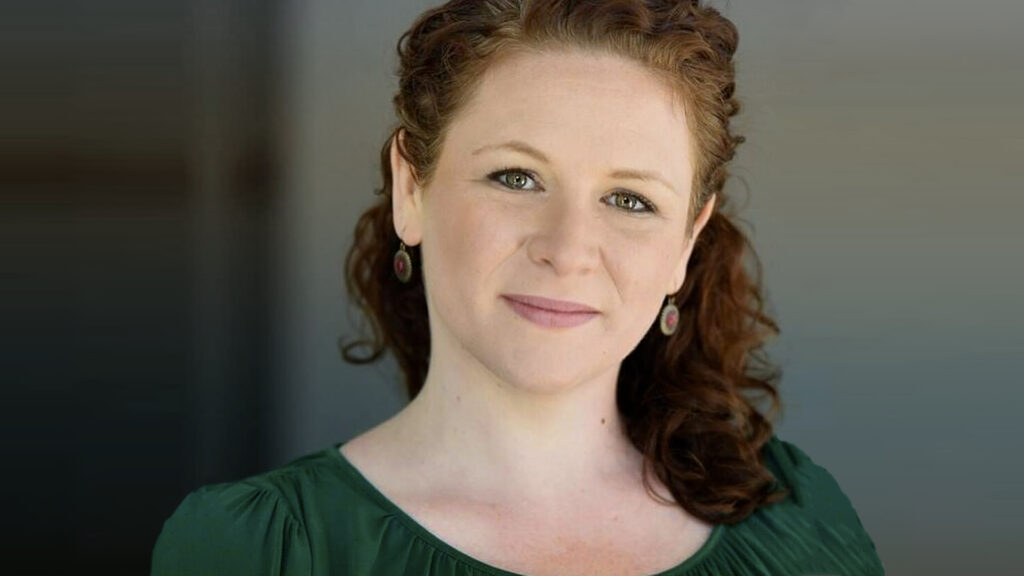
Arielle Steele : Financial Analyst at AYCO and Independent Film Maker / Producer | Image: Jayana LaFotos

Please state your name, company and job title.

My name is Arielle Steele and I am a Wealth Management Professional at Ayco-Goldman Sachs by day and a Filmmaker-Producer by night. I obtained my Bachelor’s Degree in English Literature from Williams College, where I discovered film as a second love. Since then I’ve juggled my work in traditional 9-5s in education and finance with my passion for film. On set, I usually occupy the producer or associate producer’s seat. Recently I have expanded my work in film to include the festival circuit. In 2023 I was the Film Festival Coordinator for the inaugural Renaissance Black Film Festival here in Albany.

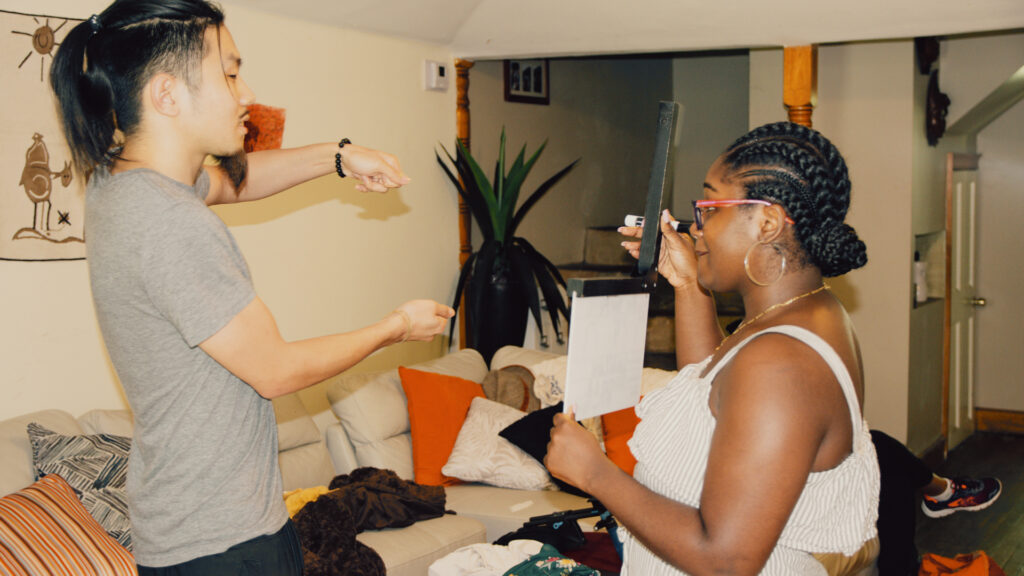
Arielle Steele On Set | Image: Provided

Can you share what a typical day looks like for you on your day job and one when you are running a creative project?

A typical day for me within finance is a day full of juggling competing priorities servicing our clients. Whether it’s executing trades over the phone with clients, sending out wires, liaising with internal teams to maintain brokerages, training new team members, or mentoring new hires with the developmental program I created with senior employees at the firm, my day is focused on providing great experiences for our clients and ensuring that my team is fully prepared to take on the day. There’s always an overarching project I’m working on in tandem with my daily asset movement and administrative responsibilities.

When I’m working on a creative project my day to day varies depending on the length of the project, the role I’m assuming, and where we are in production (pre, shooting, or post).

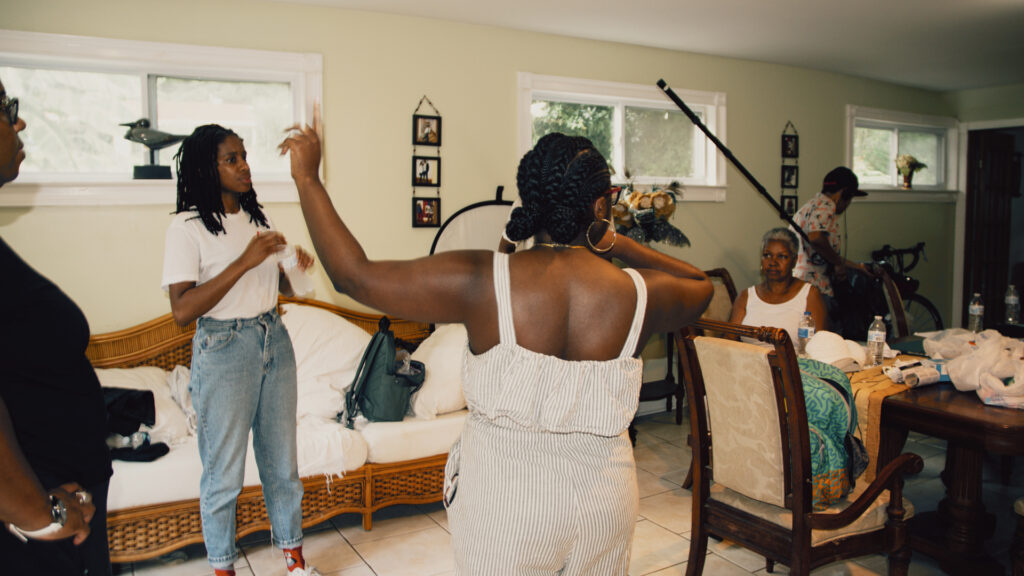
Arielle Steele On Set | Image: Provided

Because I have a full time job I typically choose short term projects, such as short films or music videos. On these days I’ll create call sheets for the next day, review shot lists, create sides for the actors and crew, and check in with PAs to make sure we’re ready to shoot for the day. If it’s a small enough shoot I’ll have to wear multiple hats and act as a PA myself, getting talent to the location, ensuring crafty and meals are available and served in a timely fashion. I’ll consistently check in with the AD and director to ensure we have what we need to shoot efficiently.

In many ways it mirrors my main job because I rely heavily on my project management skills both on and off set.

However, pre-production is my favorite part of the process. Everyone is bubbling with excitement and the seemingly near endless possibilities for the project, while I’m thinking of ways to harness this energy to yield the best results. I work with the director and in some cases writer-director to grasp their vision and offer solutions for costuming, locations, and crew that strikes the balance of honoring their vision and the budget. Then we crunch the numbers and conquer! These meetings typically span a few days in the evenings to accommodate my availability.

Arielle Steele On Set | Image: Provided

How do navigate finding time wearing the different hats of these two very different roles? Are there any ways in which your day job helps you in your creative practice?

Honestly speaking navigating these two roles can get challenging when I’m in the throes of a film project. Knowing that my main job has its peaks I’ll plan to work on projects during the financial “off season.” This is only part of the battle. When on set I’ll try to be there during off days and capitalize on my evenings doing prep work for a shoot. So for a week I’ll be firing on all cylinders.

As for transferable skills, there unexpectedly is a lot of overlap. Excel is both my friend and foe on both sides of the aisle. I check in constantly with other teams/heads of departments and produce deliverables for my supervisor/directors. In the pre-production stage I create pitch decks to secure funding for films, and in the office I’ve created pitch decks for developmental programming. Though finance and film seem to be worlds apart, in terms of production they actually work in tandem with one another.

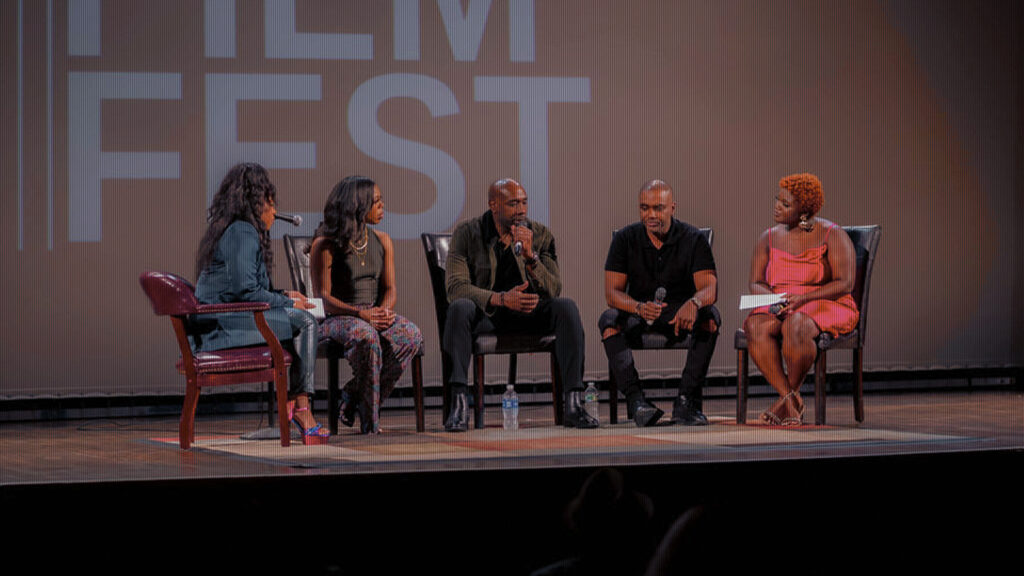
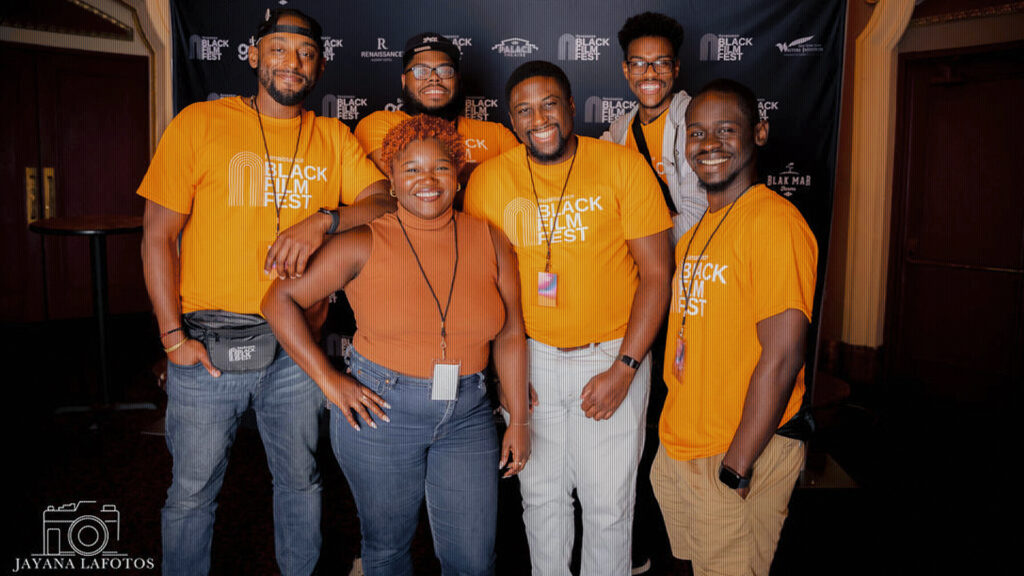
Renaissance Black Film Festival Panel Discussion with Arielle Steele | Image: Jayana LaFotos

Any particular projects that you would like to share that you are especially proud of?

One project that I’m especially proud of was the film programming I did for the Renaissance Black Film Festival. We secured 100+ submissions on the first go around, and the shorts we selected were phenomenal. Under Kevin Johnson and Patrick Harris’ leadership I was able to moderate a panel with Jamal Hill, Gail Bean, and Morris Chestnut. It has been a career highlight for me.

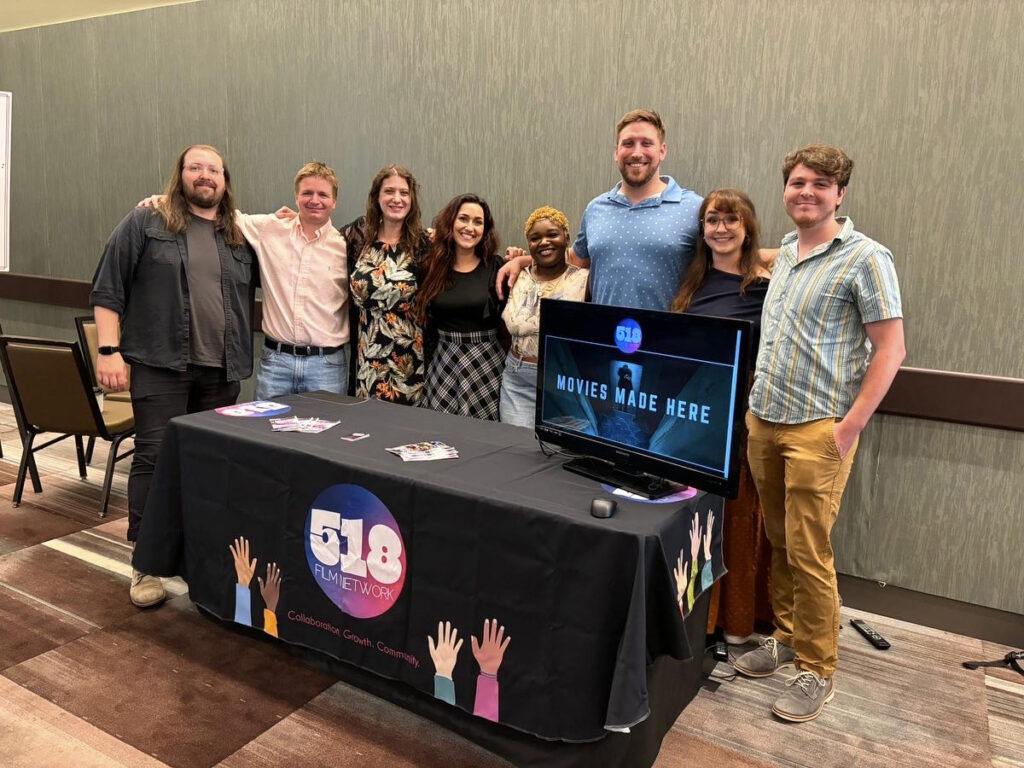
Additionally my work with non-profit 518 Film Network has invigorated me. Created by Michelle Polacinski and Micah Khan, the network was founded on the idea of forging an equitable and rich filmmaking community, something I really resonated with. When Michelle and Micah decided to end their terms, it gave me the opportunity to be an active participant with the 518 film community. I’m really excited for the work we’re doing and the programming to come this summer!

Renaissance Black Film Festival Photo Op | Image: Jayana LaFotos

As a female and minority Film Producer how would you describe the state of opportunity for you to participate in projects regionally? The challenges? What advice would you give to other women who are looking to participate more in leadership roles in the industry regionally?

The projects I typically work on are for independent filmmakers so that field varies from commercial opportunities. Bearing that in mind, as an emerging producer my opportunities have been generated by my personal network. I am incredibly thankful for those who have seen my passion for production and trusted in the vision.

This is not to say that I haven’t tried mainstream avenues within local television networks. In the past I’ve tried to go that route and it was difficult. Even applying for Production Assistant positions, networks want to see a traditional film history, which as a multi-hyphenate hailing from a liberal arts college, I didn’t have. People don’t want to take a gamble which is understandable, but it makes it that much harder for greener folks, and women of color especially to get in the door.

My advice to those like me, who don’t reflect the majority of the industry, is to find their community and keep showing up. Of course landing your first big job with a network, Netflix production, or Hollywood production is major. But until then hop on projects with your friends, get to know other creators in your area so you can keep working and getting to know the world around you. Network across so you can grow with your siblings in film, as you identify possible mentors in your given field. While your mentor helps you stay true to your ultimate goal, your comrades will inspire you and aid you in strengthening your creative muscles. Show up, give as much as you get and create. Your time will come. It’s taken me since 2016 of on and off work to get to this point and I still have a ways to go.

Anything coming up you would like to shamelessly plug? Long term plans / goals you would like to share?

Shameless plug: I am now the Board VP of 518 Film Network and I’m very proud to announce that 518 Film Network has relaunched and we are now accepting members! We offer filmmakers in the region a chance to connect and showcase their work via screenings. We eventually will be expanding on educational opportunities for members and will be hosting mixers this summer.

FOR MORE INFO: arielle-steele.com

STEAM + A = Creative Activism : A Conversation with Kristen Holler

January 19, 2023 By Corey Aldrich

I first met Kristen Holler in her role at the Albany Barn. I have had the opportunity to work with her on projects there and in Schenectady at the Electric City Barn involving ACE! and my own production work with my company 2440 Design Studio. So when I was included on an email from Steve Pierce announcing her new position as Executive Director at the Sanctuary for Independent Media, I immediately knew that this could be a tremendous match for her and the organization. Focused and tireless, Kristen has a deep arts and community background. Though fresh on the job, I wanted to be a part of launching an awareness about her transition and have her share a quick update with us all about the amazing STEAM based approach that the Sanctuary is bringing to a neighborhood community and beyond.

Kristen Holler : Executive Director at The Sanctuary for Independent Media | Photo: Provided

Can you tell us a bit of your background and what you did before this?

Prior to coming to the Sanctuary for Independent Media I was the Executive Director of Albany Barn – a nonprofit org that supports artist development through a wide variety of technical assistance and subsidized/shared resource programs – from 2013 until 2022. In that time I helped to drive the opening of Electric City Barn in Schenectady, and served as a project manager for the Capital Walls public art initiative in collaboration with Albany Center Gallery. My professional background has been almost exclusively in the nonprofit space, but has been a combination of direct service and administrative roles across housing, employment, health, and arts organizations.

Live Performance at Freedom Square | Photo: Provided

The Sanctuary is so many things – from performance art, to science to activism…can you give us an idea of what the main areas of focus will be for you and why this position was attractive to you?

I think the thing that resonates most for me is that although the Sanctuary ‘is so many things,’ each of those things is linked back to the pursuit of social justice, and the use of creativity and independent expression as tools in that pursuit. I had the pleasure of working with and learning from Steve Pierce and Branda Miller – two of the organization’s founders – in my time at The Barn.

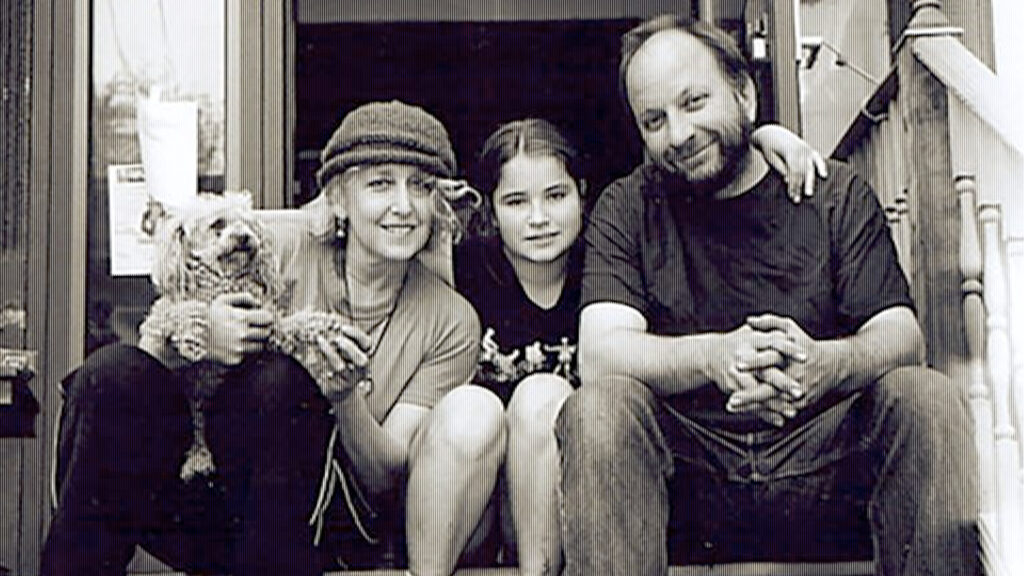
Branda Miller and Steve Pierce sitting with daughter Masha, and dog, Rose Fang. | Photo: Provided

It is an honor to step into this beautiful space that they’ve created, to build upon their legacy. My focus will be strengthening continuity and sustainability across the varied initiatives and programs and to provide strategic leadership in a time of transition.

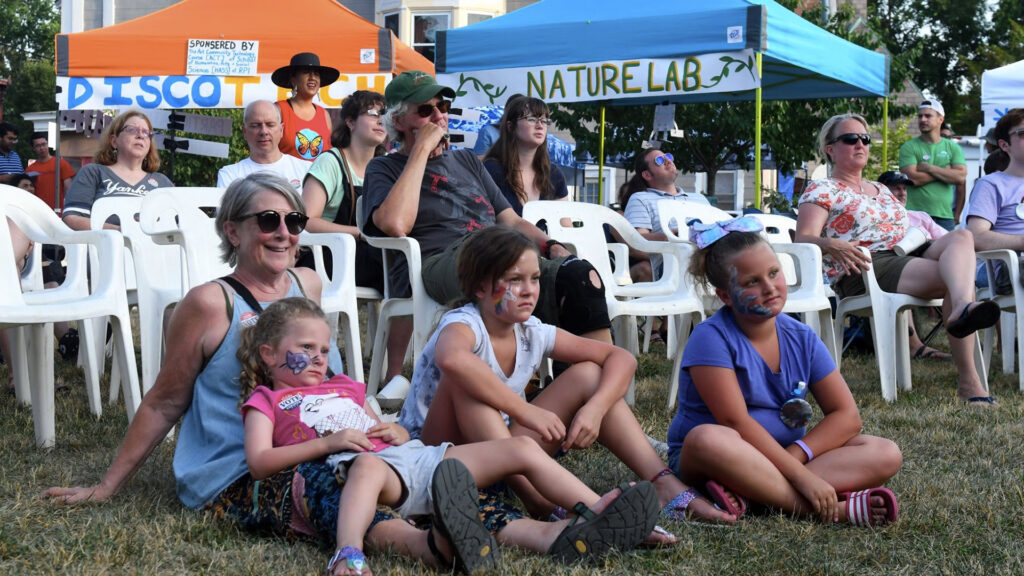
Event Audience at Sanctuary for Independent Media. | Photo: Provided
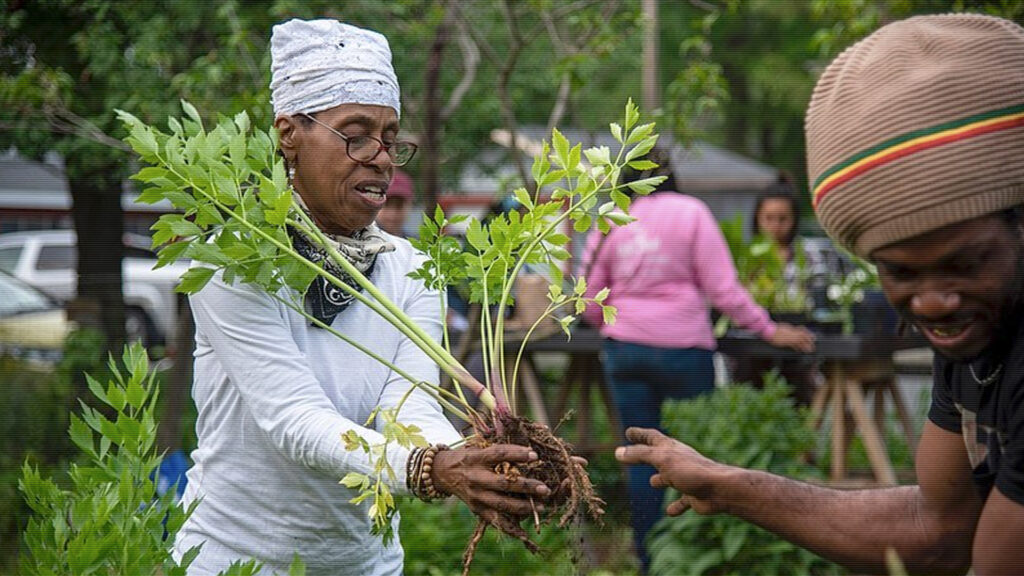
Collard City Growers participants work the permaculture garden. | Photo: Provided

Can you share with us some meaningful ways in which the Sanctuary is making a difference in the lives of those who are in the neighborhood and beyond?

The Sanctuary’s varied programming really provides something for everyone, and the community of individuals who have created and driven this organization forward for the past 20+ years have shown a true dedication to remaining independent from corporate control and responsive to community input.

Collard City Growers participants work the permaculture garden. | Photo: Provided

One of the major ways that The Sanctuary has impacted the immediate neighborhood is through investment in vacant lots and buildings, reactivating them for community use including Freedom Square – a public performance and gathering space; Collard City Growers – a food justice, arts, and permaculture project; NATURE Lab – a community science lab; and People’s Health Sanctuary – a community-led mutual aid health initiative. Another space where I think The Sanctuary has had real impact is in creating STEAM programming where the arts, sciences, and media are not silos, but an intersection of related disciplines where the arts are tools for scientific discovery, the sciences are a tools for creative expression, and media is the vehicle for sharing the process and the outcomes in ways that are accessible to a wider audience. (Editors Note: This!!)

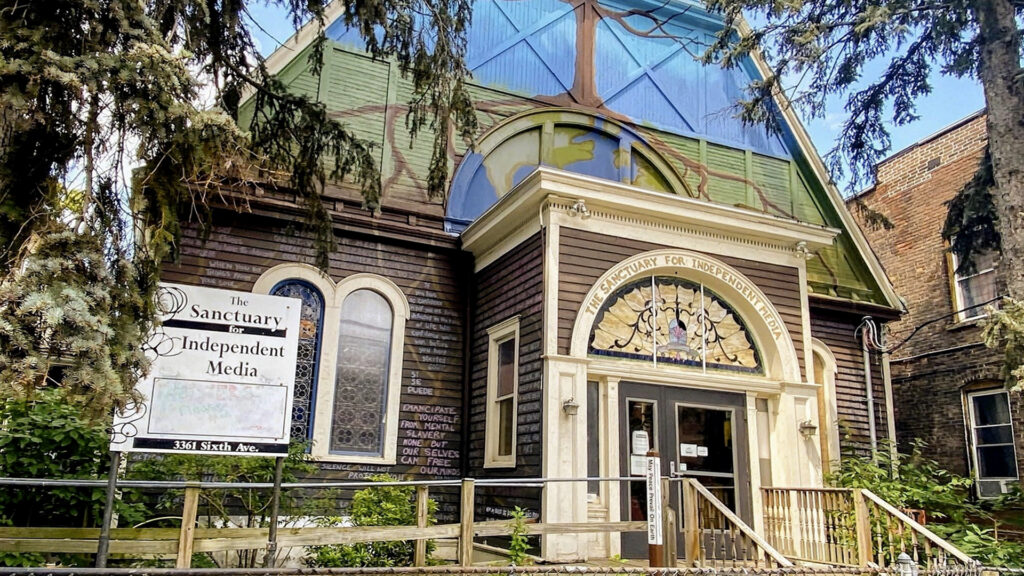
The Sanctuary for Independent Media Main Entrance. | Photo: Provided

There has also been a consistent effort to develop and maintain strong community relationships with individuals and other organizations through these connections. The Sanctuary has helped to get important community-led initiatives into the media – including stories that depict a more positive image of the N. Central Troy community. Outside of the immediate neighborhood The Sanctuary’s media content and performance series have drawn visitors virtually and in person from other states and countries.

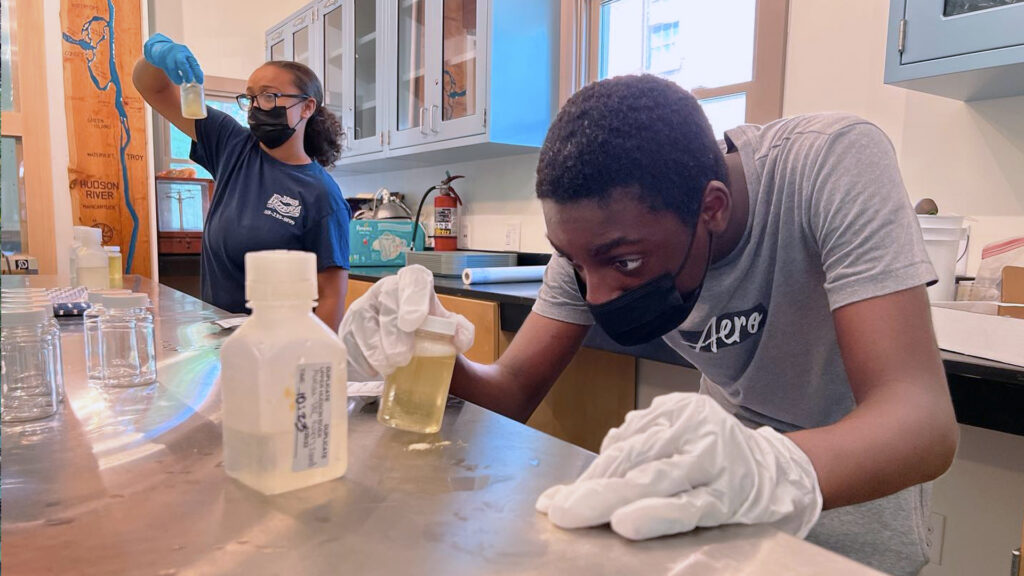
Nature Lab (Water Justice Project) participants testing Hudson River water samples. | Photo: Provided

What are the primary funding sources for the organization?

The organization is funded largely by individual donors and sustaining contributors – particularly Sanctuary Radio and Sanctuary TV. Additional funding is provided by NYSCA, DEC, NEA, McCarthy Charities, Howard & Bush Foundation, and The Community Foundation for the Greater Capital Region.

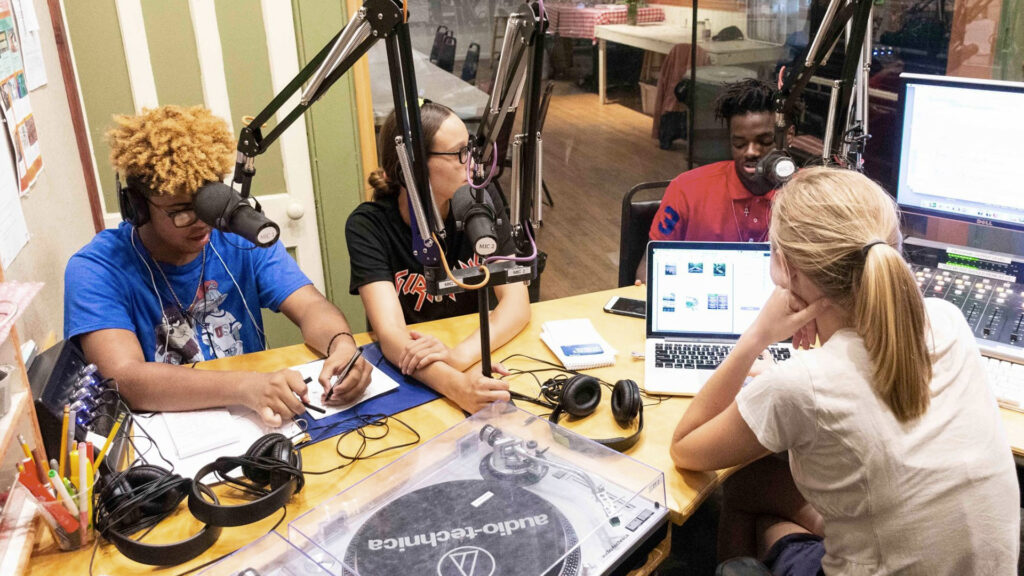
Developing story based narratives at Sanctuary Radio. | Photo: Provided

Anything coming up on the horizon we should be aware of or keep on the lookout for?

People can tune into Hudson Mohawk Magazine daily at 7am, 9am, and 6pm for independent coverage of local news and topics impacting our Region. The People’s Health Sanctuary will have a series of open houses in the winter and early spring that are in the final stage of scheduling. The Sanctuary will continue with its signature annual events including Freedom Fest in the summer and Story Harvest in the fall. Information on upcoming events can always be found on our website.

Freedom Square entrance at the Sanctuary for Independent Media. | Photo: Provided

WEB: mediasanctuary.org

Community Based Design Aspirations : The Albany Riverfront Collaborative

December 20, 2022 By Corey Aldrich

I was approached about the ‘Albany Riverfront Collaborative‘ by an architect friend, Scott Townsend of SWBR. He reached out to me asking if I was aware of the project and wondering if ACE! would be interested in playing a role in the growing chorus of voices that have an interest in participatory collaboration on what is surely one of the most potentially impactful projects for the riverfront in downtown Albany in decades. As the project is entering an important community feedback phase in the following months, it felt right to amplify the exciting opportunity presented to stakeholders associated with the City of Albany riverfront. To get a little more insight I reached out to Jodi Smits Anderson (AIA, LEED-AP BD+C, Well-AP), a managing principle at Einhorn Yafee Prescott (Albany) who happens to be spending a lot of time engaging interested folks about a collaborative design process.

Jodi Smits Anderson – Member at Albany Riverfront Collaborative | Photo: Corey Aldrich

Can you tell me a bit about the project? What is it trying to accomplish and why now?

The core of the project is reimagining the City of Albany’s riverfront. Albany’s upstate sister cities, Syracuse, Rochester, and Buffalo, have all been implementing significant changes to their outdated urban highway structures. ARC (Albany Riverfront Collaborative) founders came together to 1) help people see that we can make powerful change to uplift our communities and improve access to the Hudson River, 2) build relationships to gain support for this change with regional leaders and elected officials, and 3) design aspirational goals that guide the current project and future work – doing so together, with no exceptions!

Albany Riverfront Current | Photo: Jonah Michel of @AroundAlbany

The best time to influence a project’s scope is prior to the actual design process, through discovery of what is possible. Once design is completed, the only tools available to inform the work tend to be confrontational ones: lawsuits, criticism, protest, etc. The consultants for the project are set to begin designing late winter/early spring of 2023, and collaborative feedback during the process is vital to achieving goals of equity and inclusion.

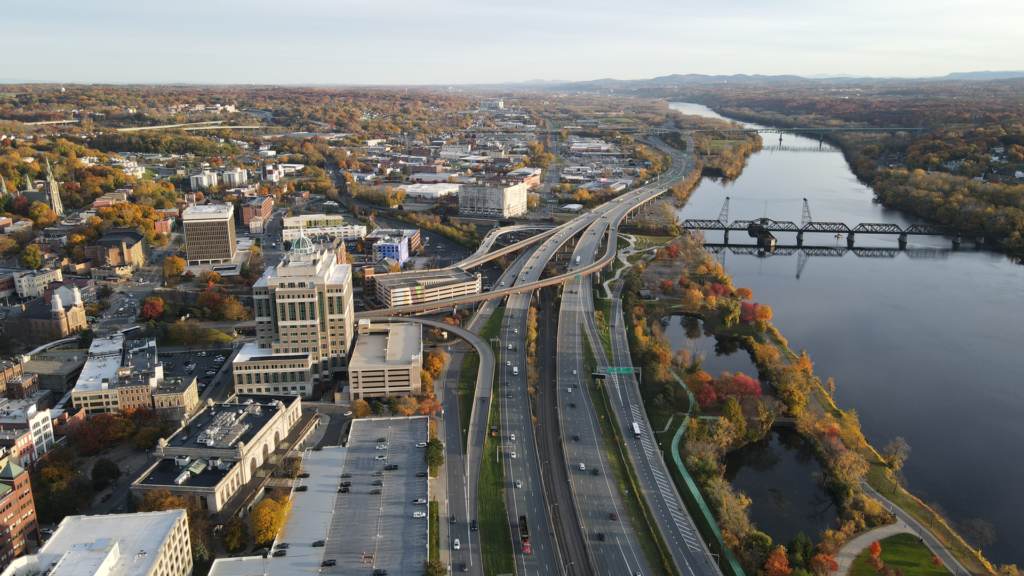
Three redesign concepts are currently on the table for I-787: 1) A highway cap consisting of parkland that connects the city to the river above the fast-moving traffic; 2) an urban canal system that brings the river into the city while restoring water-leveling locks, creating marinas, and generating local interest and tourism (similar to that of the Providence River Walk in Rhode Island); and 3) an appropriately scaled boulevard that balances pedestrian, transportation, commercial, and community needs.

It is likely that the best design incorporates elements of all three, for each idea builds on different perspectives and priorities, from water management and environmental health to recreation and economic development.

Albany Riverfront Current | Photo: Provided
I-787 Beltway on the Riverfront | Photo: Provided

From a historical perspective, what affect has the I-787 corridor had on the City of Albany, specifically the people who lived / live in the areas impacted?

It is amazing to me how projects have ripple effects over time and space. I-787 and the highway interchanges, along with the Empire State Plaza itself, initially took out 98 acres of locally owned businesses, homes, and community places. This gutted the city and created a physical gap. The intention was to provide faster circulation for cars, offices for government, and to create an impressive skyline. Over time, this gap, this slice through town, has forged disparities in the economic levels of impacted communities and created a downtown that is primarily for workers who don’t live here. In addition, all the communities of Albany are distanced from the Hudson River, with only three access points, none of which are vibrant or welcoming.

Can you share some current financial aspects of the project and also community based goals being discussed?

There was a 2018 study completed by DOT for the Capital District Transportation Committee (CDTC) that clearly stated that creating a boulevard, located on either side of the railroad tracks, was a distinct possibility for further study and analysis. The budget this time is more than fifteen (15) times the funding for that study.

Specifically, the Department of Transportation (DOT) has $5 million dollars to reimagine the City of Albany’s riverfront to promote access to it while adapting to the Hudson’s current and future tidal rise, reconnecting neighborhoods, spurring economic activity, and creating opportunities for current and future residents.

Albany Riverfront Proposed Redesign Features | Photo: Provided

We’ve been hearing from communities including the Albany Downtown BID, South Albany, the Pastures, and North Albany among others. I, myself, live in Pine Hills and have worked downtown for 15 years, mostly biking and walking to and from the office. The visions of joy being shared through the work of the ARC center around access to Nature and removal of the great weight of concrete over people’s heads. There is a lot of concern over development and a way to do it without pricing our current residents out of the city. This is why local voices are vital. We also hear about slowing down traffic and increasing access points into the city. This last piece is particularly impactful because it can lead to economic growth – for all of the city. Studies show that this approach helps people spend more time and more money in cities, as they are more likely to be part of the community after work hours.

Can you tell us about the public and private stakeholders and cultural and community organizations who have signed on to help make this happen?

The list of stakeholders / partners is impressive. They include residents, neighborhood and community groups, for and not for profit organizations, businesses and government entities. The intent of the Albany Riverfront Collaborative has always been to be a connector. ARC’s goal is to facilitate a growing understanding for all the communities of Albany, including commuters and visitors. That we all have a right and a responsibility in the vision for the city. We want elementary school kids to write about the Hudson, and college students to do the carbon calculations on the plans. We want people to propose legislation to clean and heal the Hudson, and all the streams we have buried in Albany. We support Radix Center‘s urban gardens and the South End Butterfly Sanctuary pollinating them. Local artists and local advocates can agree about the need for a shared, co-created, inclusive, climate smart, and healthy future. CDTA and the local neighborhood associations can inform the plans, and you and I can love our city. That’s the potential we all can see and work for.

Where can folks go to get more information?

You can check out our website and follow us on social media. We are currently looking for more people with a vested interest in the long term development of the City of Albany to connect with the process so please, reach out if you have an interest!

WEB: albanyriverfrontcollaborative.com
IG / FB: @albanyriverfrontcollaborative

5 Fantastic Latin-Owned Restaurants: Angel’s Latin Restaurant, Catskill

December 7, 2021 By Maureen Sager

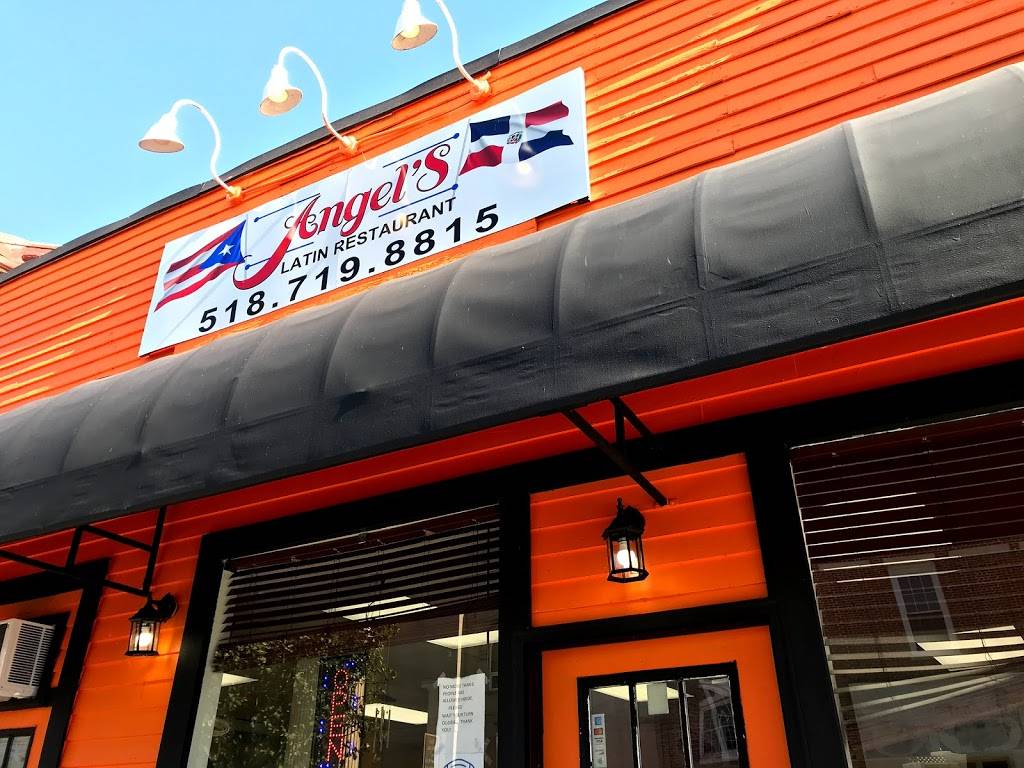
Angel’s Latin Restaurant is a steam counter. For the uninitiated, steam counters are made of stainless steel, and hold steamy bins of hot food, set behind glass.  You tell the server what you’d like to eat, and they’ll heap generous servings into containers for you to take home or eat in. Steam counters are common in Manhattan, Brooklyn and other cities, but not so much here in the Capital Region. So, if you’re a former NYC resident, Angel’s will be a nostalgiac treat. This unassuming, bright orange storefront on Catskill’s Main Street offers authentic, hearty, delicious Dominican food at great prices and in huge servings.

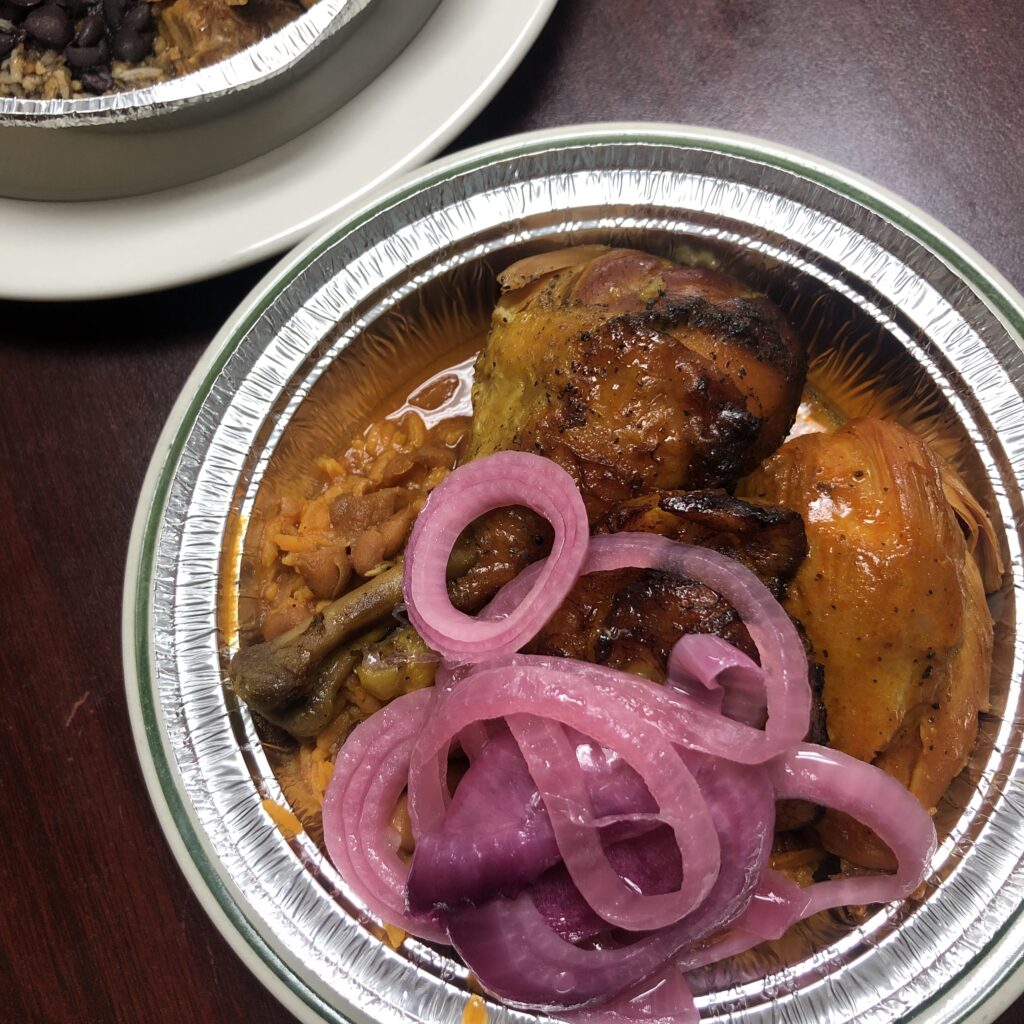
Roast Chicken
The small roast chicken plate. Six bucks.

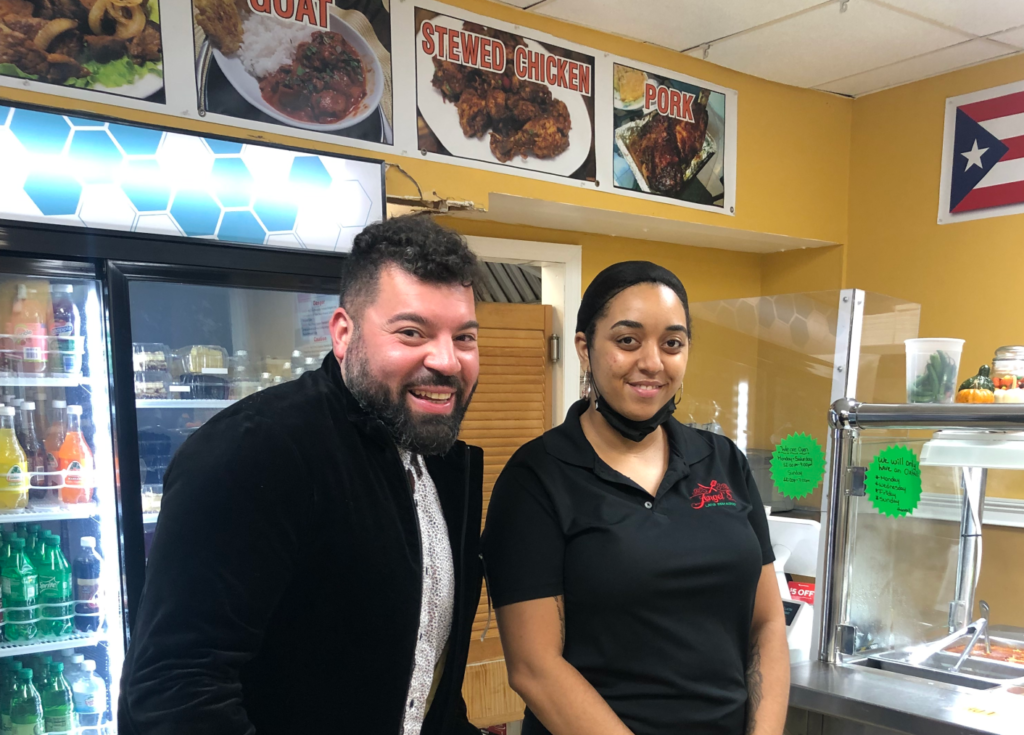
Upon entering Angel’s, Oscar and I were greeted by Nilfa, a friendly young woman who stands behind the counter, ready to answer questions about the huge array of food prepared by her aunt and her aunt’s husband.

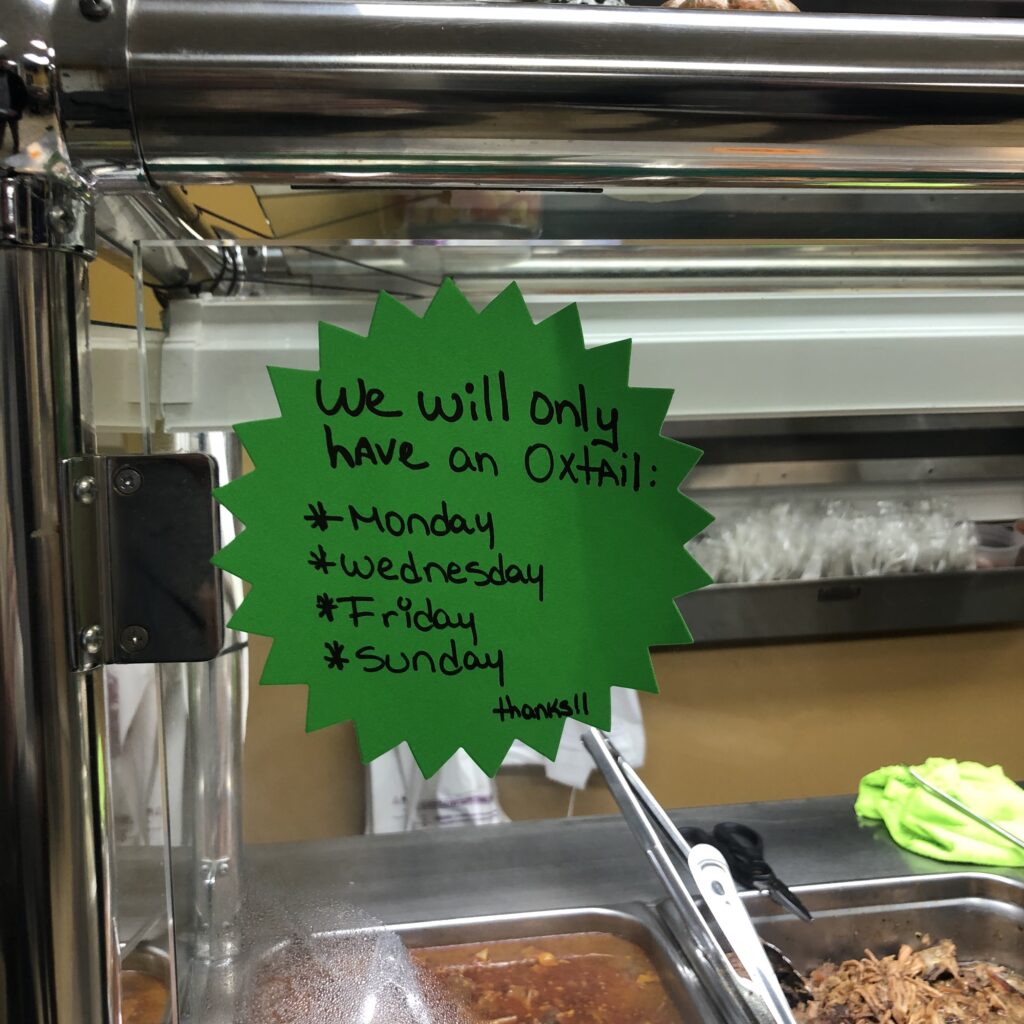
There’s a very wide variety of choices here, with specials on each day of the week. On the night we visited, there was stewed chicken, roast chicken (my favorite!), three kinds of rice (red, white, and black, which had an Asian / soy sauce twist of flavors. The black rice is a specialty of Angel’s), and your choice of beans – red or black. There was also goat, two kinds of pork, two beef dishes, bacalao (salt cod), and yucca. Some nights, you’ll also find oxtail.

Oscar and Nilfa
Oscar and Nilfa, whose family owns and runs Angel’s Latin Restaurant

Ask For: Tostones with Garlic Sauce

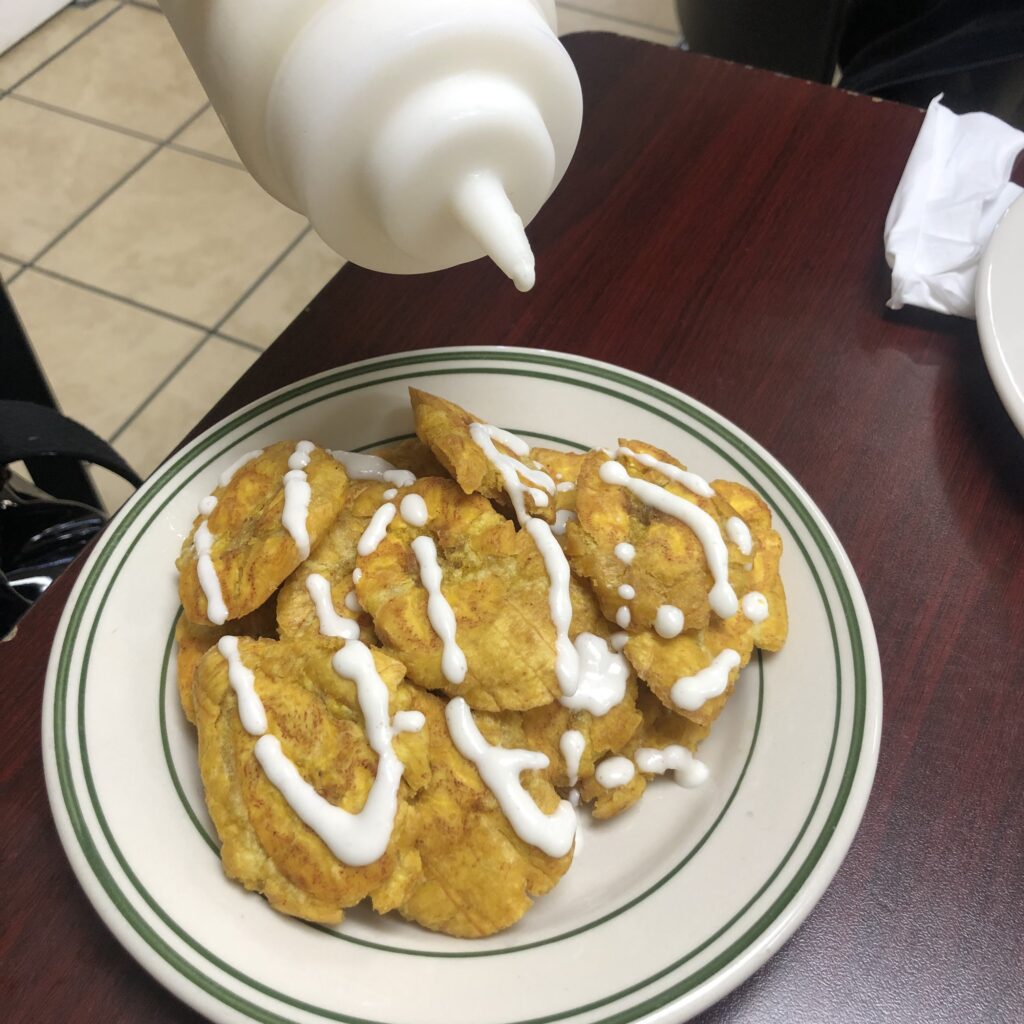
Oscar talked to Nilfa and her aunt in Spanish, asking whether they had tostones (fried green plantains). Nilfa replied that the tostones are always made to order, so that they’re extra crisp. And you’ll be glad to know, they’re SUPER delicious and served steaming hot. Be sure to ask them for the garlic sauce, served on the side. It’s another specialty of the house.

Tostones
Made-to-order tostones. Ask for the garlic sauce — it’s in the fridge!

Angel’s ”is completely run by family. Kids do the dishes. Everyone in the family contributes,” Nilfa told us.  On the night we were there, the clientele was entirely people of color, and we asked Nilfa if this was usual. “Yes,” she said, “though sometimes we do get a mix of people. I try to explain the menu and the food when someone is not familiar with Dominican food.” Their menu also caters to the foods of other Latin-Caribbean countries like Puerto Rico, “because Dominican is lesser knows. We try to have some things that are familiar,” Nilfa said.

Oxtail
Here’s your chance to try oxtail!

Our HUGE dinners cost $6 for a small plate and $8 for a large plate, for meat, rice and beans, and sides.  Crazy good prices, and completely delicious!

Angel’s Latin Restaurant, 334 Main Street, Catskill, NY, (518) 719-8815. Open 12pm-9pm Monday through Saturday, 12pm-7pm on Sunday.

Back to 5 Amazing Latin Restaurants Home Page

  • « Go to Previous Page
  • Page 1
  • Page 2
  • Page 3
  • Page 4
  • Page 5
  • Go to Next Page »

Creative Economy Updates and Other Good Stuff!

STAY CONNECTED!

  • Facebook
  • Instagram
  • Twitter
Copyright © 2020 THE UPSTATE ALLIANCE FOR THE CREATIVE ECONOMY

info@upstatecreative.org | 41 State Street, Albany, NY 12207

Design by Reach Creative