• Skip to primary navigation
  • Skip to main content

ACE

Upstate Alliance for the Creative Economy

  • HOME
  • ABOUT
  • NEWSLETTER
  • SUBSCRIBE
  • JOBS
  • Show Search
Hide Search

Events

MICHAEL EASTBROOK : ON TRANSITIONING FROM CHEMICAL ENGINEERING TO COMMUNITY ARTS LEADERSHIP

April 27, 2026 By Corey Aldrich

I properly met Michael Easterbrook, Executive Director at the Mount Ida Preservation Association at La Perla Restaurant and Country Inn while participating in a ‘speed dating‘ format, professional networking event of Rensselaer County arts and cultural professionals. As you know, I frequently like to feature folks who have made major transitions from traditional corporate gigs to mission oriented endeavors. We really got real and practical discussing values and trade off considerations here. If your considering a move yourself, this is a must read. Also, Mt Ida is just slaying on the programming front…so there’s that as well!
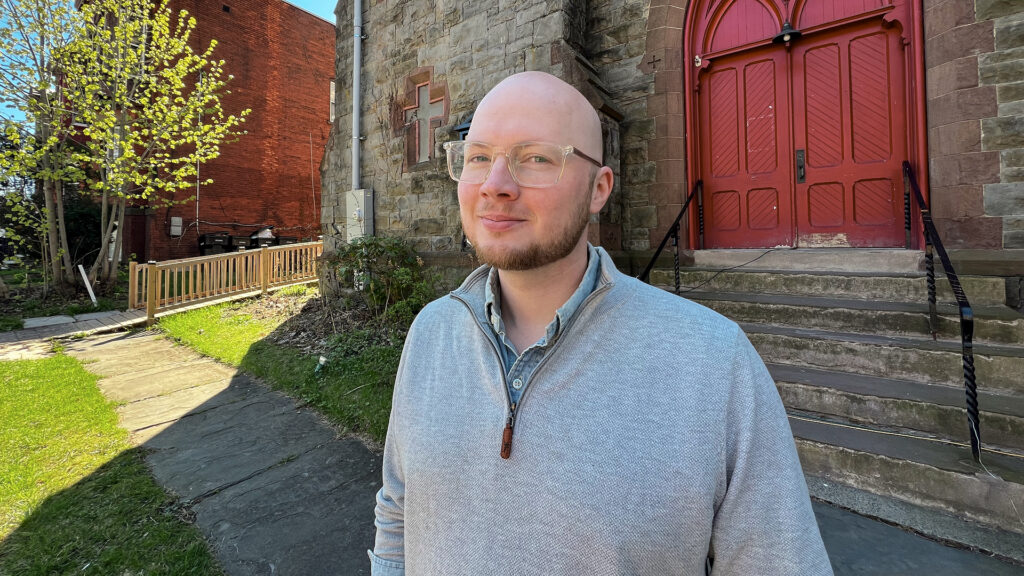
Michael Eastbrook : Executive Director at Mt Ida Preservation Association in Troy, NY | Photo: Corey Aldrich

Please state your name, organization and title. Can you share about your educational and career background as well?

My name is Michael Easterbrook and I am the Executive Director at Mount Ida Preservation Association. I have a B.S. in Chemical Engineering (Focus in Bio-Engineering) and Minor in Engineering Entrepreneurship from The Pennsylvania State University. I worked for 8 years as a process controls and validation engineer for a bio-pharmaceutical company. I’ve spent last 2 years as Executive Director for Mount Ida.

Overhead View of the Poestenkill Gorge and the Mt Ida Preservation Association in Troy, NY (Top Left)
Photo: Provided

What is a typical day in the life look like for you?

My days are very different, but mornings I try to keep relatively consistent. They consist of making pour-over coffee – 2 cups – the 2nd weaker cup is for the next day while I am waiting for today’s water to boil, watering our indoor plants, taking out the compost and watering our outdoor plants, feeding the cats and the less glamorous scooping of litter, a load of laundry goes in the wash, a quick tidy of the kitchen and living room. If I am efficient I try to squeeze in a bit of writing before starting my “work” day. The process takes ~2 hours, and starts somewhere between 6:30 and 8:30 AM.

My working days have a lovely amount of variety. To the extent that my schedule allows I like to take my e-bike downtown to a coffee shop to do computer work: which includes email communications, reconciling the books, applying to grants, generating policy or procedure documents, volunteer coordination, digital set-up and marketing work for the events i.e. (creating ticket links, adjusting graphics, Facebook events, Instagram posts, uploading to our website). This computer work is interspersed with my favorite part of my work – making connections and planning through meetings! I usually have several one on one style meetings each week, where I get to meet someone new over lunch or coffee, or dig deeper into an existing relationship. It’s almost always exciting to learn about the interesting and unique work folks are making happen in the capital region, and coordinating how it might connect to or through Mount Ida.

My computer work day ends around 4 – 6 PM. Many times I am headed to a group meeting, or to set-up for an event. Evenings are either supporting/enjoying an event, or enjoying an evening and meal at home with my wife.

Late evening, I move laundry to the dryer, and prep the next load for the wash. I wind down with a little bit video gaming, reading a graphic novel from Cromulent Comics or poetry I’ve nabbed from Papermoon before bed.
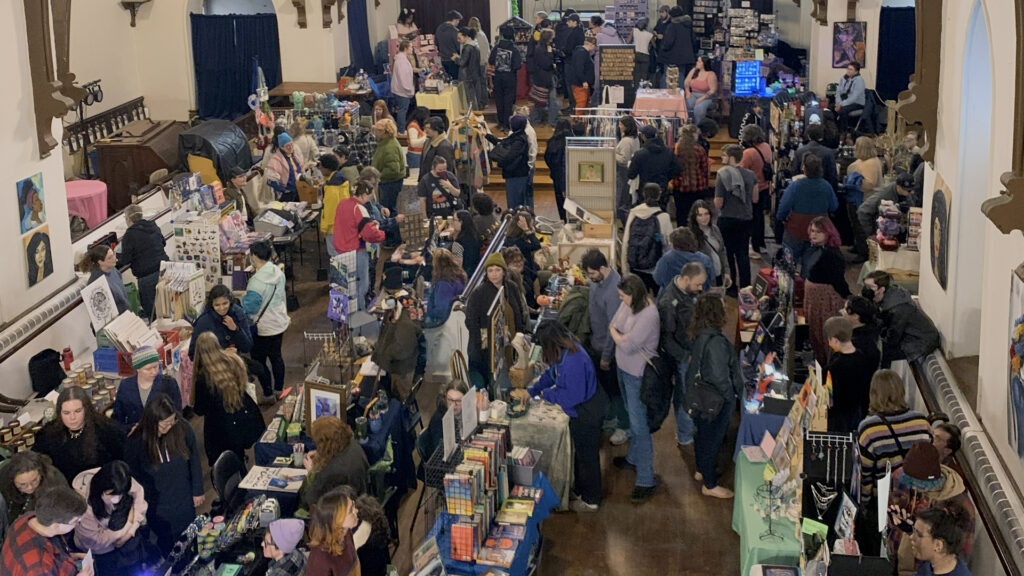
Big Gay Market Event at Mt Ida Preservation Association in Troy, NY | Photo: Provided

What types of programming and activities are happening at Mt Ida?

We have a diverse variety of activities happening here. Certainly lots of performance including the LUNA Music series, poetry reading, marketplace events and even on occasion…circus performance! Creative health and wellness events are also starting to play a larger part of the regular activity happening in the building including a consistent Estatic Dance event. There is also, theatrical / plays being rehearsed and performed in the space. We have a commercial kitchen we are in the process of bringing online for a rental program to support local entrepreneurial enterprise and finally, we are a food distribution point (Mt Ida Food Pantry) for those in need and hold regular community brunch events on site. I imagine I am forgetting a few things here but you get the idea…lots!
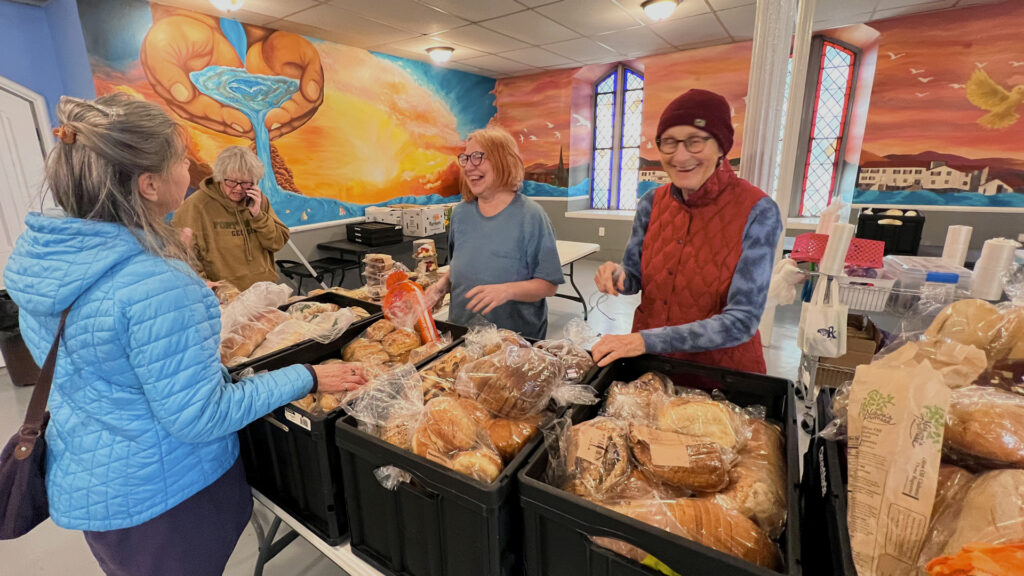
Food Pantry Event at Mt Ida Preservation Association in Troy, NY | Photo: Corey Aldrich

You left a promising career as a chemist at a well known company. What made you decide to jump ship and take on (actually create!) this project? How have you had to adapt in your daily life to do so? Financially, family-wise?

I didn’t know I was going to pursue the work I am now, when I left my job in bio-pharma, I left for many small reasons. Between 2021 and 2022, my wife moved in with me, we took on a major renovation, and planning our wedding. We were living out of boxes, and neither of us had the energy after work to physically or mentally unpack and organize our new life together. So in part, I left to tackle unpacking and settling us into living together. My job was primarily a desk job, I designed experiments to ensure our commercial manufacturing processes worked as intended, and I then wrote reports summarizing that data. These reports were essential to the regulatory process, but at the end of the day – the best case scenario for these reports is that someone in the FDA reads them and agrees with the conclusions, and never asks about it. So in part, I left that job because my work didn’t feel rewarding. I also felt the shifts in society and politics shaping the backdrop of my world. There were so many other small reasons, but those three ring loudest: take time to work on my home, do something that felt more rewarding, and to develop my personal world view.

It was a scary decision to leave, because I wasn’t going on to the next thing. I was just leaving. I had a plan to take care of some things, but I had no idea what I’d do after that, how I was going to make a living; what doors I was closing.
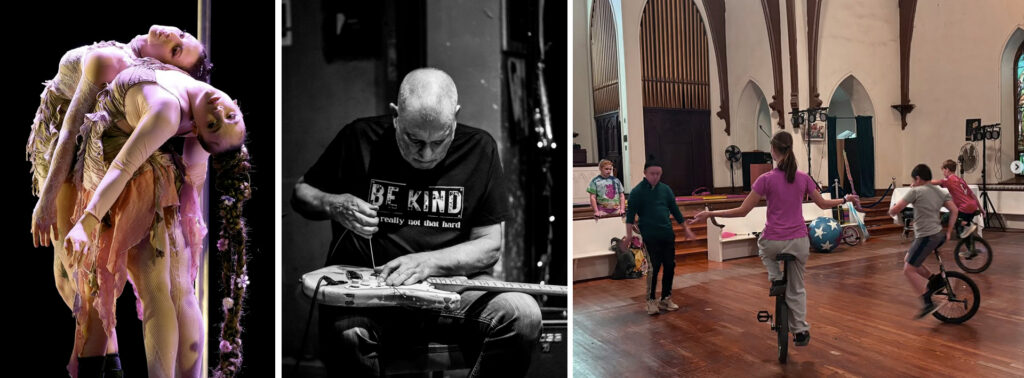
Circus and Improve Music Performance and Teaching Moments at Mt Ida Preservation Association in Troy, NY
Photo: Provided

The path has revealed itself in little ways since that decision to leave. Working on our home, revealed the way taking the time to care for your space improves your daily joy. Working on developing a world view, after much reading and research revealed to me how important connected community is to my politics. Working on discovering what felt like rewarding work led me to deepening my role at Mount Ida.

Now Mount Ida is a way for me to pursue these things: improving a space in my neighborhood, creating a connected community as means of expressing my politics – its work that feels meaningful and rewarding in a way that is refreshing. Strangely its just as stressful as the job I left, maybe more so, but the meaning and philosophical alignment make it worth it.

I don’t want to make it sound like a have it figured out though. There is still much of the balance to figure out. Financially I make a tiny fraction of what I was making. I was lucky to have saved a lot money during my career to support us through these past couple years, and I am lucky my wife is able to financially carry most of our expenses, but eventually the money I am to able to be paid through Mount Ida will have to grow for it be something that’s financially sustainable for us.
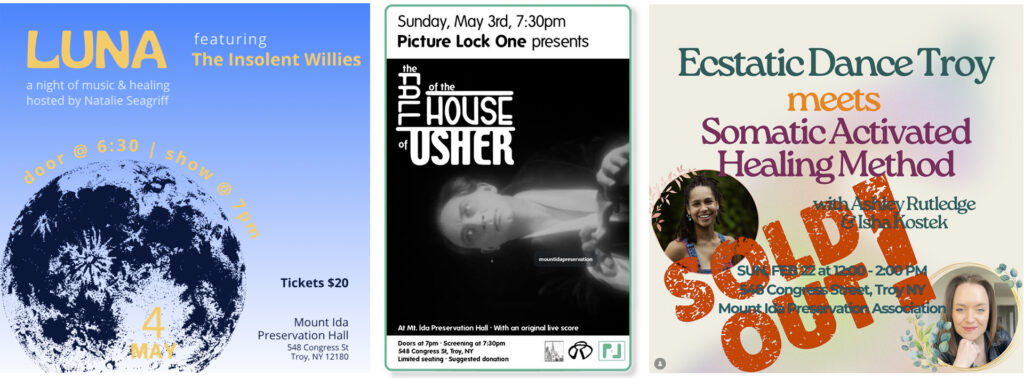
Event Flyers for Programming at Mt Ida Preservation Association in Troy, NY | Photo: Provided

My wife has been incredibly supportive through the entire process and encouraged me every step of the way, but we’ve certainly had to have conversations about how we each feel about our respective contributions to the household. I’ve taken on more responsibilities at home, in trade for the extra flexibility I have with my less traditional employment and lower income. We check in with each other more, to make sure we are both still comfortable with the balance we’ve arranged.

At the start, we were very careful, and took a pretty fine comb to our finances. We cancelled subscriptions, and restricted our spending. In the end, strangely, it feels like our lifestyle didn’t change that much, and we’ve loosened up since. Every so often we need to reel in spending again after getting a little too comfortable, but it feels healthy in a way to check-in with ourselves financially and evaluate what what’s really important for us to spend money on.
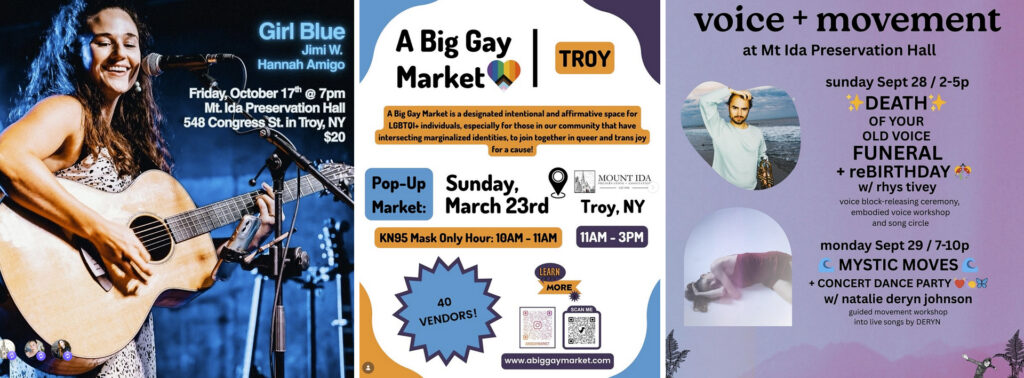
Event Flyers for Programming at Mt Ida Preservation Association in Troy, NY | Photo: Provided

How would you describe where the organization is currently at and where you would like to see it in the next couple years? What’s that roadmap look like?

Mount Ida is putting itself on the map, learning how to operate through experience, and building financial sustainability. Over the past two years, we’ve worked out the logistic capability and structure for hosting various events at our historic church space. In the process Mount Ida has made a little name for itself with a recent feature in Metroland, a nomination for alternative venue of the year, and a couple of stories in CBS 6 and the Times Union.

To sustain an active roster of art programing, there is the challenge cleanly defining our behind-scenes workflows so that we can bring in new staff and volunteers, and create an easy to follow and exciting experience for them! A big part of those workflows will also be marketing; developing reliable channels to get the word out about what’s happening at Mount Ida. While revenue from events sustains Mount Ida through the Fall and Spring Seasons, We are also preparing to open year-around programs that will generate some regular revenue: namely a rental commercial kitchen and healing arts class program.
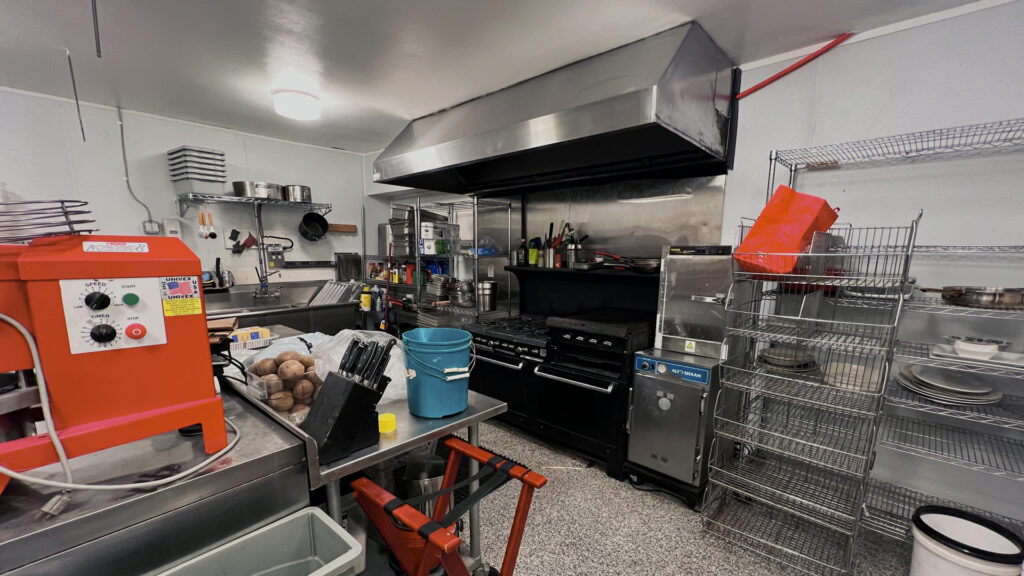
Commercial Kitchen at Mt Ida Preservation Association in Troy, NY | Photo: Corey Aldrich

Once we have operational stability down, we’ll be looking to leverage our work to tackle the bigger projects on the property; repairing, restoring, and improving the building. The dream will be to one day create a public access overlook deck to take advantage of our view of Poestenkill Gorge. That project will complete the vision of a community and art center that we can proud to have in the Mount Ida Neighborhood and for the City of Troy!

Anything in the immediate future you have going on you would like to share? Recent wins?

Keep an eye out for our May program, which will be running every weekend. Our Mother’s Day Brunch with Chef Larry Schepici (Previous Restaurant Affiliations include: Jacks Oyster House, the Brown Derby, Saratoga National and Tosca Grill / Illium Cafe) will be a 5-star grand buffet dining experience, and is an important fundraiser for us on Sunday May 10th. The Luna Series will continue through the summer on the Monday closest the full moon (1st Mondays), and our open mic will continue through the summer on 1st Tuesdays of the month.

WEB: mountidatroy.org | IG: @mtidapreservation

AMY GRIFFIN CREATES A THIRD SPACE FOR PUBLIC GATHERING

August 26, 2025 By Corey Aldrich

If you have ever had the privilege to work with Amy Griffin, you know what I do…that she is probably the most easy going, kind and light hearted person that you could hope to meet. Underneath the surface – a talented, creative and highly collaborative arts professional that is really finding her stride in her current role as Director at the Opalka Gallery in Albany. After years of working with her on one of my all-time favorite projects, it felt like high time to sing her praises a bit and share her ideas with the community at large.

Amy Griffin : Director at Opalka Gallery in Albany, New York | Image: Provided

Please state your name, title and organization. Can you also tell us a bit about your history including education, other jobs of note and other special accolades?

My name is Amy Griffin. I am currently the Director at the Opalka Gallery on the Russell Sage College campus in Albany, New York.

The road to Opalka Gallery was long and winding. I got my MFA from Hunter College in Photography and worked in publishing, teaching, and the NYC archives. From there I did college teaching. I also worked at the NY State Museum in the exhibitions department and wrote about art for the Times Union. I’ve been here for 10 years and moved into the Director position 3 years ago.

Seance Exhibit Gallery Performance with the Ellen Sinopoli Dance Company | Image: Provided

Can you share a bit about your mission at the Opalka Gallery? Maybe a little bit about how the program integrates into academic campus life and the general public.

We are always trying to raise the profile of the gallery to welcome the community in as much as possible, while supporting artists. We want people to feel comfortable coming to check out exhibitions and to participate in our free events, even if they don’t think they know much about art. There’s a lot of interest in “third spaces” and that’s what we want to be for the community–a place that’s not home or work but you don’t have to spend money. This goes for students, as well. Russell Sage‘s Albany campus is small–we want the students here to have a place to go for fun events or just to get away to some place quiet during the day. We also offer free music on most First Fridays, in addition to our September Pop-Up Beer Gardens and we’ll have a free map-making station in our fall exhibition. We’ve been offering a free kids’ art workshop each semester, organized and taught by Russell Sage College Masters of Art Teaching students. We also employ college work study students–so, we have lots of ways that we interact with both the college community and the community at large.

Music Performance at the Osi Audu : The Self in African Art Exhibition | Image: Provided

On the gallery side, would you share a bit about your curatorial philosophy? I have seen some amazing shows there, most recently the Osi Audu : The Self in African Art. I seem to remember there being an interesting back story on how you made that one come to life.

 Diversity matters–that includes the types of shows we do and the medium of the work we show. We’re committed to bringing in engaging contemporary art and design from all over, while also supporting the regional art community. We wouldn’t want to do all group shows of local artists or only painting shows from painters outside the region. We mix it up, looking for excellent work that can be linked to the programs and curriculum here at the college, as well as engaging the broader community. For the Osi Audu show, Pierre Brooks, a collector of African art, stopped by the gallery a few times, invited me to check out his collection down in Greene County. Since we emphasize contemporary art, I hadn’t thought of a way to work with Brooks and his collection until I came across the work of Osi, a painter based near Kingston who makes abstract paintings in direct response to African art pieces and then it all came together!

PechaKucha at the Opalka Gallery in Albany New York | Image: Provided

I know you are also running some other public facing programming as well such as PechaKucha and the annual Pop Up Beer Garden and Neighborhood Block Party (Note: ACE! has been a promotional partner of this series for several years now) How do you see that type of programming fitting into your strategic goals for the gallery?

These kinds of events are perfect for our strategic goals because they’re community-building events that bring people into the gallery who might not necessarily choose to come see an art exhibition. They help expand our reach and also support the creative economy, which, I don’t have to tell you at ACE!, supports the local general economy. For a PechaKucha event, we might get close to 150 people–those people typically are then looking for a place for dinner or drinks afterward.

The 2025 Screenprint Biennial at the Opalka Gallery in Albany New York | Image: Provided

Care to share a bit of the personal challenges and rewards of the job? Any mid term or long term goals you are looking to accomplish there?

I love seeing a crowd here for an exhibition reception or other event–it feels good to be helping make Albany a dynamic place to be. 

The challenge is, as with any art/non-profit job, that we always feel like we are short on staff. We always want to do more and more but that translates into more and more work and more money! We’d love to have an expanded gallery education program, for instance, or add more events. One smaller scale goal is to expand our Artist Registry. Right now, it’s just a page on our website–artists can upload their name, medium, and website URL and then curators can potentially use it to find artists. But my goal is to build it out to be a searchable database not unlike what White Columns in NYC has done–only tailored for artists based in the region.

Shameless Plug: What are you excited about that we should be putting on our calendar?

In addition to “Compass Roses: Maps by Artists–Albany“ which opens on Sept. 2, we’re in the thick of planning for our fall Pop-Up Beer Gardens–the first 3 Fridays in September! In addition to our whole slate of fall programming of course! 

WEB: opalka.sage.edu
IG: @opalka_gallery | FB: @opalkagallery

1UpState GAME EXPO IS BACK FOR YEAR 2 with Expanded Programming and Participation

October 9, 2024 By Corey Aldrich

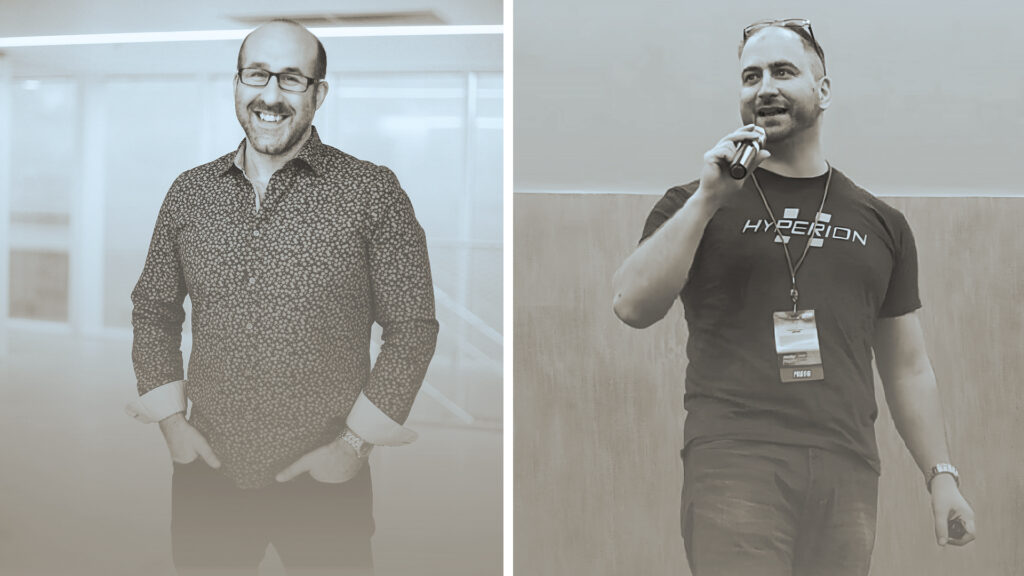
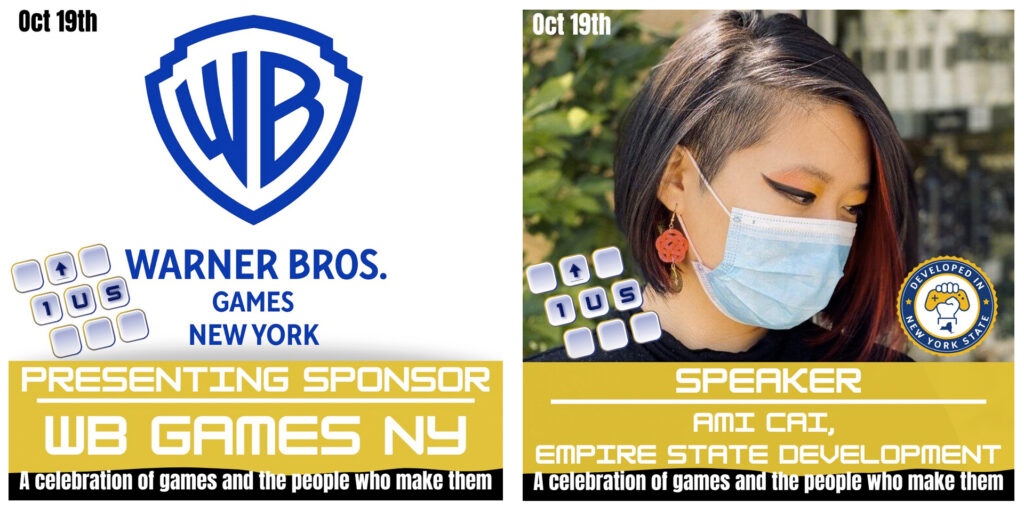
Super excited to be helping to get the word out on this exciting and growing video gaming conference. Expo Founder Anthony Rossi reached out to ACE! and Discover Albany when 1UpState was just a long shot idea about a year in advance of the 2023 inaugural event. His passion was contagious and he was building excitement in small to mid-sized regional studios and regional educational institutions for his idea. Last year was a great success and the vibe was on point. This year is building on that progress with great vendors, presenters and a headline sponsorship from Warner Bros. Games. I spoke with Anthony and this years keynote speaker Jason Dela Rocca to get a better idea of what we can expect and how our region can better position itself in the gaming industry.

Jason Dela Rocca : Investor, Game Funding Advisor and Ecosystem Strategist / Event Keynote
Anthony Rossi : Co-Producer and Organizer at 1UpState | Photo(s): Provided

Can you both share / sketch out a bit about your background and how you came to be involved in the gaming industry?

ANTHONY: My current favorite joke is that “I have been playing Final Fantasy since before it had a number in the title!” So really, I grew up with gaming as a hobby and just simply never gave it up. After I graduated college, I started to dip into what would be known now as being a “Content Creator“, with my most endeavor being a podcaster under the title, “Videogame Crosstalk” where I would interview people who work in the tech or science industry or involved in the gaming community. As for the gaming industry in my current capacity, it really started when I posed the question to the community of the Tech Valley Game Space as to whether or not people would want to put together a larger local showcase event. Turns out one had been started, but never gained enough traction to be brought into being. They graciously invited me into the group to try to revive it, off we went! I currently work in Project Management as my day job, so for the entire process of organizing 1UpState my role is purely to be the organizer. This is what allowed me to view the endeavor as a whole, break down the aspects into manageable parts, and direct those who do have a deeper understanding in game development to guide decisions to better serve our audience.

JASON: I’ve been in the game industry for nearly 30 years! In the mid-90s there were no game schools or degrees, barely a book or two on making games, and the Internet barely existed. It always seemed like games were made by robots in Tokyo.

My education is a mix of business and tech, but I never really had the pure game making skills to actually make games. So, I have mostly worked in a supporting role, helping build community and support structures that enable game developers to succeed. I was the Executive Director of the IGDA (International Game Developers Association) for 9 years. I co-founded the first venture-backed game incubator in the world, called Execution Labs. We invested in 25 indie game studios and nurtured them to make awesome games. I also do a bunch of advisory/consulting work with governments around the world on how best to invest, grow and support their local game ecosystem.

All that said, I do have a few credits to my name. One of my first credits was a “Special Thanks” in the original Baldur’s Gate back in 1998!

Anthony, you have a pretty demanding day job, what made you decide to invest the time and effort to create 1UpState? I know it’s pretty time-consuming planning an event of this scale!

ANTHONY: I wanted it to be done RIGHT. When you go to enough of them, you begin to see the commonalities of their setup and design, and what does or does not work. As gaming has become more popular, I noticed organizers were still treated gaming as an activity for children while completely ignoring the fact that people are holding on to gaming as their personal downtime hobby later in life, and that games have matured into a full art form of their own.

As for the time aspect, the main thing to understand is that I am not organizing this by myself. I am working with a full team to help organize all of this! Internally, I have been working with Jamey Stevenson, Chris Spahn, and Lilly McAvoy. Additionally, I am working with Richard Lin of Agora Media, Dane Jennings for sponsorship solicitation, Andrew Bugenis for videography, and of course the amazing staff of the Albany Capital Center to manage all the other many, MANY details! And of course, the many volunteers to help work the event itself to make sure the exhibitors have what they need and that everything runs smoothly.

What would you say are some of the challenges to creating critical mass in a region that is trying to build a sustainable gaming economy?

JASON: One of the big challenges is properly supporting/nurturing entrepreneurship. Many regions are full of talented and passionate game makers, but they often remain on the sidelines, tinkering away as hobbyists or weekend warriors. That’s wonderful and great to see. But, how do you enable those folks (at least the ones that want to) make the leap to becoming professional game makers and earning a living?

This is compounded by the fact that most schools teaching games do not offer any business/marketing related courses, and generally try to funnel graduates to entry level jobs at big studios…. often out of state. So, when a region doesn’t have a large employer base, the schools are reinforcing brain drain rather than enabling entrepreneurship and pushing graduates to create new studios… effectively making their own jobs!

Last year seemed pretty successful for a 1st year initiative. I found the programming to be diverse and inclusive. How is this year shaping up? What can folks expect experientially if they attend the conference?

ANTHONY: 1UpState is a “bridge” between the consumer focused convention style event, such as the various Comic-Cons or Geek Fests, and the professional Conferences. This will be the key point to keep in mind as you plan your attendance to the event. After you pass by the registration tables, the main hall will be several rows of exhibitors. These exhibitors will be mainly small, local game developers, whether they are showcasing the game that they have built by themselves, with a small team, or they may be a student team from a local university. There will also be other supporting organizations that helped bring 1UpState into its current state, such as Tech Valley Game Space, Empire State Development, Retro Game Con, and others. And finally, since everyone enjoys them, there will be a few crafters putting up their gaming centric wares for sale.

As for panel discussions, there will be a variety of topics covered, and they will mostly be 30min micro-talks. Topics covered will be more developmental focused, intended for those between the beginner/student to intermediate level game developer. This way the topics are accessible to those who are interested in game development while still being interesting enough for those who have some experience on their resume. We also pay special attention to diversity and representation when accepting panel and speaker applications. We want to be sure that our selection of speakers and topics matches the representation of the gaming community, even if it means declining some pretty great sounding applications.

At the current time, we plan to have about 38 exhibitor tables and 9 panel sessions, including a Keynote speaker. There will also be concessions during the duration of the event and a “Quiet Room” where attendees can take a break from the lights and noises without having to leave the venue.

Anything you particularly excited about this year?

ANTHONY: Absolutely! Aside from some of the amazing speakers, we are also adding two very special items to the program! First, we will be having a small business workshop conducted by Destiny Watkins from the Community Loan Fund of the Capital Region. The workshop will focus on understanding business finances and setting yourself up as a business entity. This will help those who are interested in starting their own game development studio or company to set themselves up for success from the beginning. The other item we have will be a separate play-testing area for board game developers. In the back of Meeting Room 2C, there will be a set of tables set up and managed by a local board gaming group, Spielbany. Here, attendees will be able to play board games that are currently being created and provide feedback to the designers themselves, in real time, as they play!

Jason, what recommendations would you make to folks like Anthony and the 1UpState team who are trying to build that synergy?

JASON: Keep pushing! Consistency is critical. Look for opportunities to always mix in business/marketing in the content. Game makers love to talk about their craft — and that’s important — but we need chances to feed them their business broccoli as well 😉 Further, case studies are always inspiring. Bringing in folks that have made that leap, to share their stories, to advise and inspire others. It becomes more relatable than just a grizzled veteran like me sharing wisdom.

Ultimately, it requires the 1UpState team to think deeply about what the local community needs to succeed, and then try to fill those gaps as much as possible.

Is there still time for folks to get involved? What is the best way for individuals to find out more about the schedule and programming?

ANTHONY: At this point, we are simply finalizing the last remaining bits and pieces of the event and sending info out to have our program designed and printed. All information is being added to our main webpage, 1upstate.com, which also includes links to all of our socials. We’ll be making announcements as things get finalized, so be on the lookout for those and more!

Write This Way : A Conversation w/ SONG CITY’s Scott Womer

April 2, 2024 By Corey Aldrich

About two years ago, I started seeing and hearing about something called Song City. The branding was tight, it felt like something important was happening. Eventually, I realized that it was in fact a local phenom. These shows, upstairs at the RUCK have a very organic feel. Played in a round, musicians all interacting with and feeding off one another – the vibe is very intimate. I caught up with Scott Womer to find out more about the overall program mission and direction and to get a peek under the covers to see what makes this series tick.

Song City Founder and Director, Scott Wormer | Image: Kiki Vassilakis (with edits)

Please state your name, what you do and any relevant background info.

My name is Scott Womer, Songwriter and the Founder / Director of Song City in Troy New York. During the day, I work as a Litho Technician at Global Foundries in Malta. On the education front, I hold a BA from Gordon College.

Song City w/ Caitlin Barker at the RUCK in Troy, New York 01.10.23 | Image: Kiki Vassilakis

I know you’re a musician yourself. What motivated you to put together the SONG CITY series. What is your mission and goals for the program?

In 1995, I moved from Albany to Nashville, in hopes of getting more music opportunities. It’s a humbling experience to move from a small music scene to one of the premier music cities of the world, where there are thousands of people doing what you do, and doing it much better. Having seen that happen multiple times, I decided to alter my goals. Over the next 5 years, I had tremendous experiences working at a record label, doing session work, learning to write, forming a band, and recording an EP.

The greatest thing I learned in Nashville was the power of a song. Beyond techniques, abilities, and trends, the song is what changes lives. Much of this lesson happened at a venue called The Bluebird Cafe. A staple in Nashville, the Bluebird featured weekly showcases, featuring 4 local songwriters, mostly known for their writing of songs by all our favorite country stars. This is also the venue where artists such as Taylor Swift and Keith Urban were discovered. The weakness of the Bluebird at that point in their history, was that they were a single-genre showcase. Not only does that lack in variety, more importantly, it conditions the audience to think that this is the only style of songwriting. At the time, I had no idea how that observation would affect my future.

Song City w/ Amani O at the RUCK in Troy, New York 6-13-23 | Image: Kiki Vassilakis

Years later, when I moved back to Troy NY, and was so energized by the talent and variety of the local music scene, I felt compelled to do whatever I could to help it grow. After writing and recording a project under the name Fenton Hardy during Covid, I realized how important it is to be part of an artistic city. Community is at the heart of every effective movement. So, I took what I had experienced at the Bluebird, and expanded it to include all genres. Some of our greatest writers are hip hop artists, jazz artists, alternative and avant-garde artists, and they deserve a place at the table. This not only creates respect for all styles of songwriting, but expands the audience’s experience and musical taste.

Song City at the Ruck in Troy, New York | Image: Kiki Vissilakis

Our home at The Ruck is integral to the success of Song City. One day, Dave Gardell, owner of my neighborhood bar, The Ruck, contacted me about bringing music back to their venue. They were interested in concerts and an open mic, and asked me to run those events. What I didn’t know was that there is a second and third floor to the Ruck that was beautiful and fairly unused. I instantly realized this was the room I was looking for.

Beyond the Song City showcase, we also host a monthly songwriting community called The Open Floor which began simply as a monthly open mic. We have a “Song Challenge” at each month’s Open Floor that has become the major draw for each of these evenings. On the first day of each month, I post a phrase. The writers then have the rest of the month to write a song using that phrase, and perform it at The Open Floor, on the fourth Tuesday of each month. It is in no way a competition for us. It’s purely a motivational tool to keep us consistently writing. The second half of each Open Floor is a time for everyone that wrote for the challenge to play their song for each other. It’s amazing to see how many ways a phrase can be used. I often write a song myself for the challenge, and it’s significantly improved my songwriting.

Song City at the RUCK in Troy, New York | Image: Kiki Vassilakis

As a producer, I can attest to the challenge of producing music shows where folks get paid and there’s a little change left at the end of the night. How have you structured the business side to pull all that off?

Most local artists can not afford management. And because of this, they deal with being double-booked, underpaid, cancelled last minute, and under-publicized. They deserve to be taken care of. Because of this, going into Season 2, I raised the ticket price by 50%, so that I could raise their pay by the same percentage. Additionally, We also where able to help support the program via grant funding we secured through The Arts Center of the Capital Region. The events are highly publicized, given a generous bar tab, a comp ticket, and one of the nicest green rooms in the 518. We also hire the best music photographer in the capital district, Kiki Vassilakis, to shoot each showcase, of which the artists are given all of these photos to use for their own use. As much as I would love to make my living serving the local music community, we currently are at a place where we can pay all involved, artists, audio engineer, and photographer.

Song City at the RUCK in Troy, New York 09.12.23 | Image: Kiki Vassilakis

I believe you were the recipient of the NYSCA Re-grant program through the Arts Center of the Capital Region. Can you share a little but about why you feel like programs such as this are important to the sustainability of our creative community?

The days of musicians making money through their recorded music are over. As much as music streaming has increased the general public’s ability to have access to more music than anytime in history, it has also stripped away the musicians’ ability to make a living off their recorded music. Spotify currently pays artists approximately $0.003 per stream on average. That means for every 1000 plays on Spotify, an artist will make approximately $4.00. And from 2024 onwards, artists will also need to hit a minimum number of listeners to make their track eligible for royalty payments. Therefore, if artists are truly going to make money through their art, they need to be performing shows often and being paid well. They also need to be selling merch and physical copies of their music. So there is a greater need than ever for the public to support the local artists, beyond streaming their music.

Song City’s Ink Retreat 2023 at YMCA’s Silver Bay | Image: Kiki Vassilakis

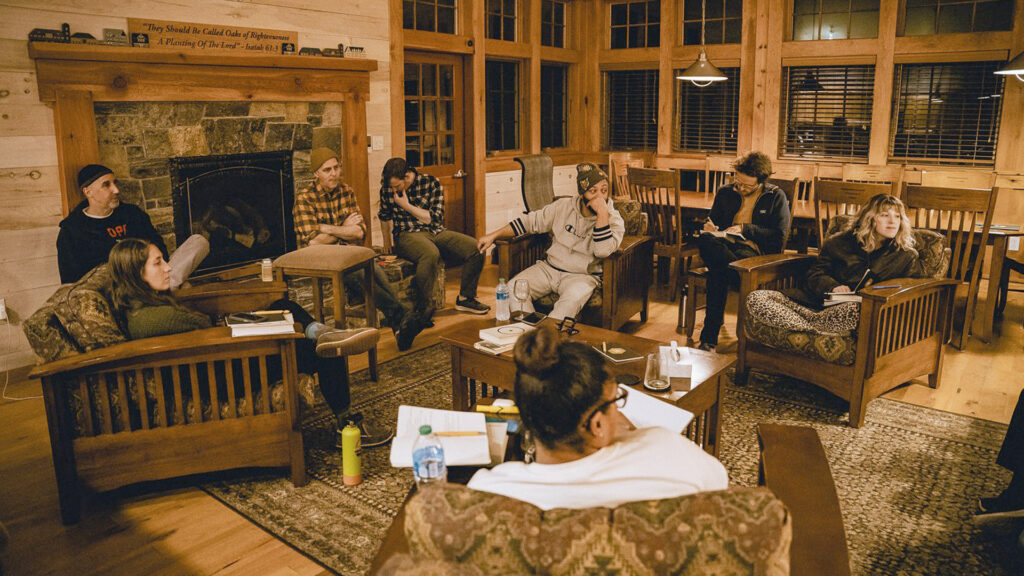
The final piece of the current Song City universe is a yearly songwriting retreat called Ink. Last year, we were honored to be awarded a $5000 Community Arts Grant through the NYSCA and The Art Center of the Capital Region which helped fund the program. Many songwriters applied and 10 were chosen, to spend 3 nights at a lodge on Lake George, part of the YMCA Silver Bay property. Like Song City, we encouraged writers of all genres to apply, R & B, indie-pop, alt-rock, folk, hip hop etc. The days were a combination of individual writing, collaborations, daily walks, amazing food, and nightly gatherings around the fireplace sharing our songs. We read and discussed Rick Rubin’s brilliant book “The Creative Act” and used some of his techniques to change how we normally write. We also had a small demo studio and engineer in-house to capture the new songs. And ultimately concluded with a showcase here in Troy, featuring the songs written on the retreat, as well as a live recording and film of that show.

Song City at the RUCK in Troy, New York | Image: Kiki Vassilakis

Anything you have coming up you would like to share with our audience to keep them in the loop? Long term plans etc?

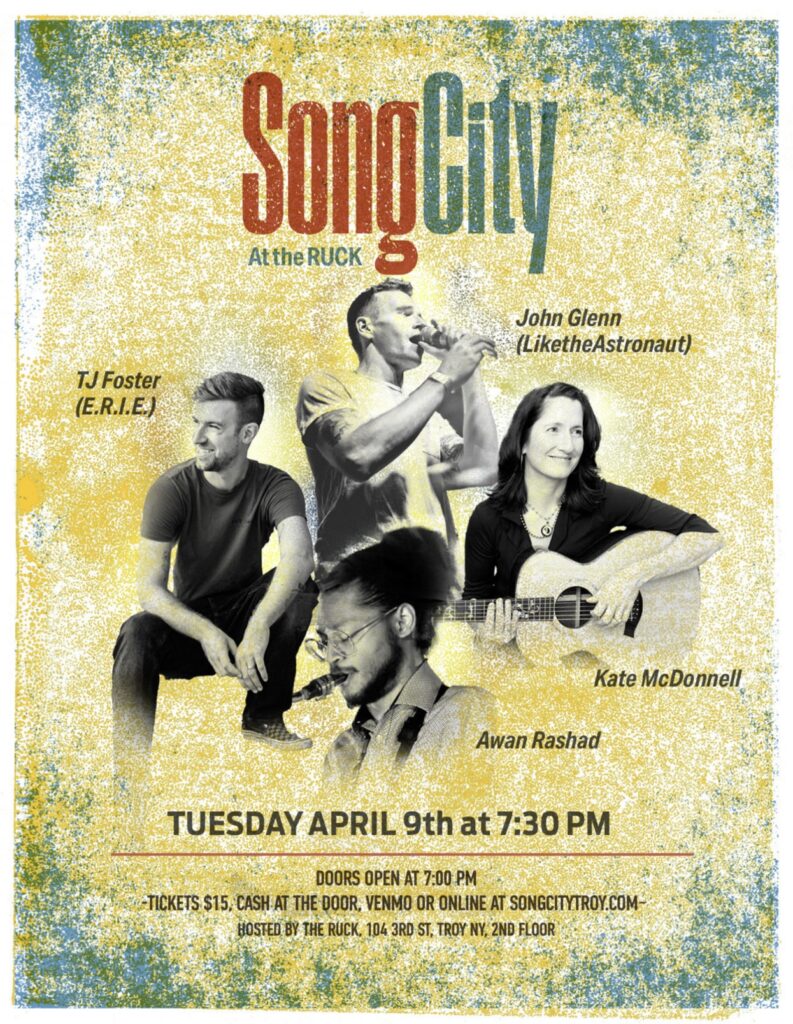
The next few months are busy at Song City. We have 3 showcases left in Season 2, with the next one happening on Tuesday, April 9, at 7:30pm, hosted by The Ruck in Troy. This month we are featuring jazz saxophonist Awan Rashad, TJ Foster, frontman for the local rock band E.R.I.E., alt-pop artist, John Glenn from LiketheAstronaut, and contemporary folk songwriter Kate McDonnell. The Open Floor songwriting community continues to meet every 4th Tuesday. We are beginning to plan 2024’s Ink Retreat, and we are getting ready to release a special recording of the showcase we did this last year, featuring live performances of the artists and songs written on 2023’s retreat!

Watch for all of this on songcitytroy.com and Instagram at @songcitytroy. If you would like more information, would like to be involved, or would be interested in supporting Song City, you can reach me directly at songcitytroy (@) gmail.com.

Albany’s Newest Secret Sauce : Diane Eber on ‘Hatching the EGG’

January 31, 2024 By Corey Aldrich

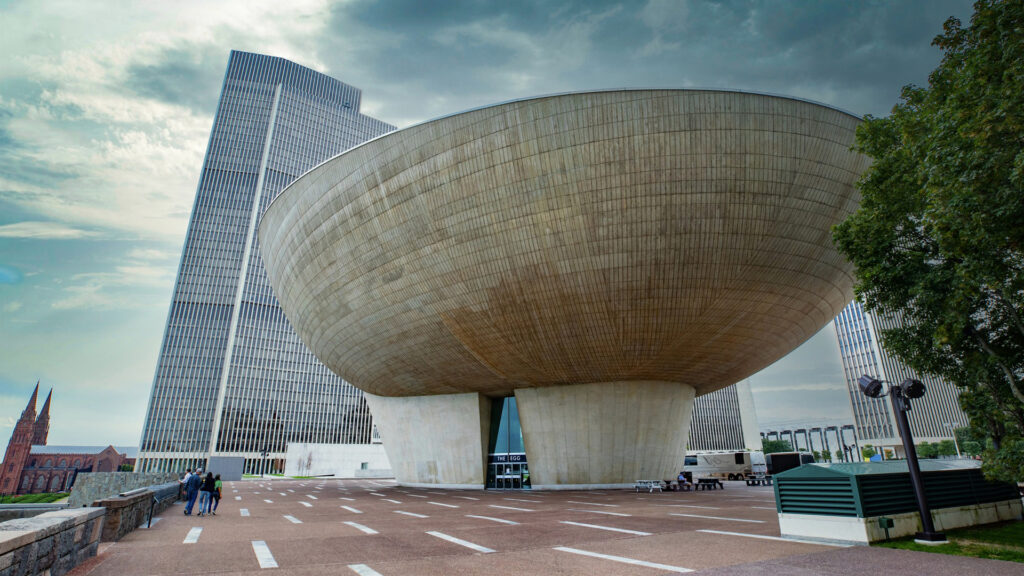
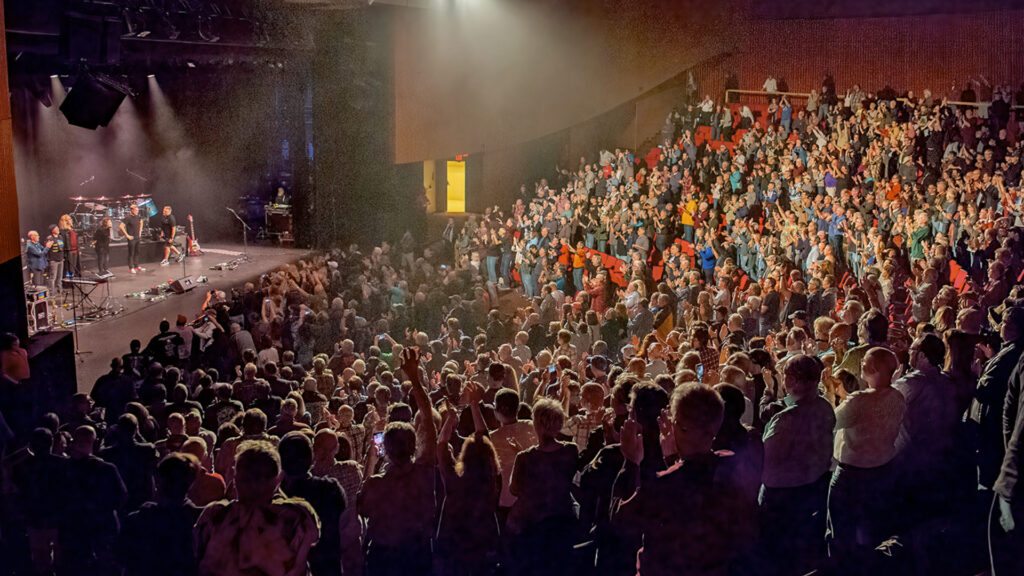
I first met Peter Lesser (Previous Executive Director of the EGG) many years ago through an introduction from Ellen Sinopoli. I was on the Ellen Sinopoli Dance Company board of directors at the time and had stopped by Ellen’s office in The EGG. I was really blown away by the architecture and the excellent programming that Peter was bringing there…to the tune of over 200 events and upwards of 70K attendees per year! After 22 years, the time came and Peter moved on to spend more time with his family on the West Coast. Since then, after an exhaustive search, a new Executive Director has joined on to take up the mantle. Diane Eber is fun, energized, no nonsense and ready to honor that legacy while moving it forward for a new paradigm, in a new time. I caught up briefly with her to get a sense of who she is and what that will look like.

Diane Eber, Executive Director at The EGG in Albany, New York | Image: Provided

Please tell us your current title and what that entails on a daily basis. Also, a brief synopsis of your previous career experience and education.

My name is Diane Eber and I am Executive Director of The Egg in Albany, New York. My day is usually spent in LOTS of meetings with various partners / staff members / artists / agents / OGS / funders. Then if I have time I try and squeeze in some emailing and dreaming of future programming. I try to always prioritize creative time and make sure I spend at least SOME of my day thinking about ART which is why I do this work.

I am a music nerd at heart – raised by 2 musicians, I was on the path of being a classical clarinetist and then found my true passion was in the magic of bringing together an artist and an audience. I discovered my love for this path booking shows at Vassar College and then went on to work at a booking agency and followed by Warner Music Group, a major record label. I eventually landed at BRIC Celebrate Brooklyn. In college I was a Psychology Major but spent most of my days learning the ins and outs of the music business and booking as many shows as I could pull together.

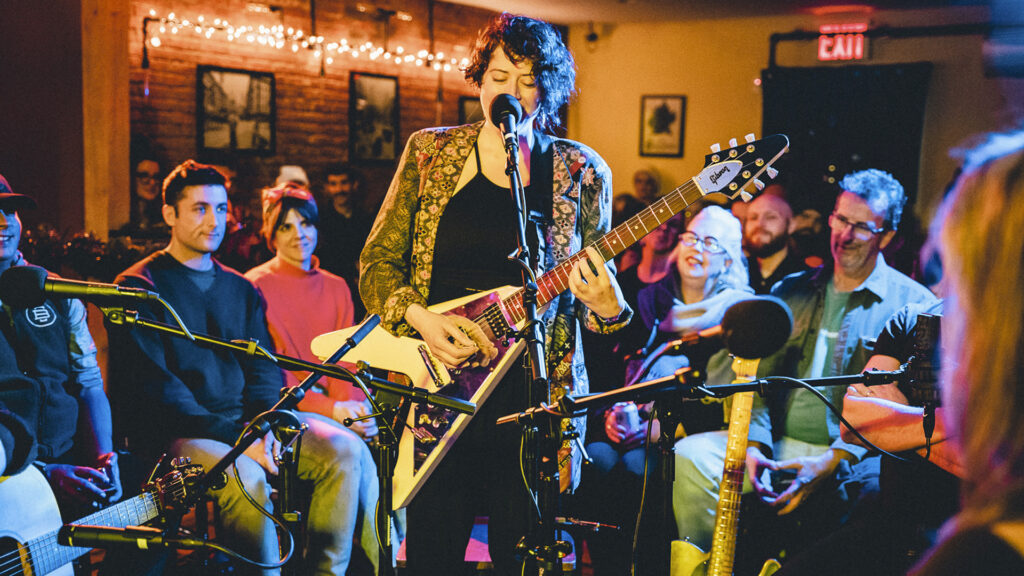
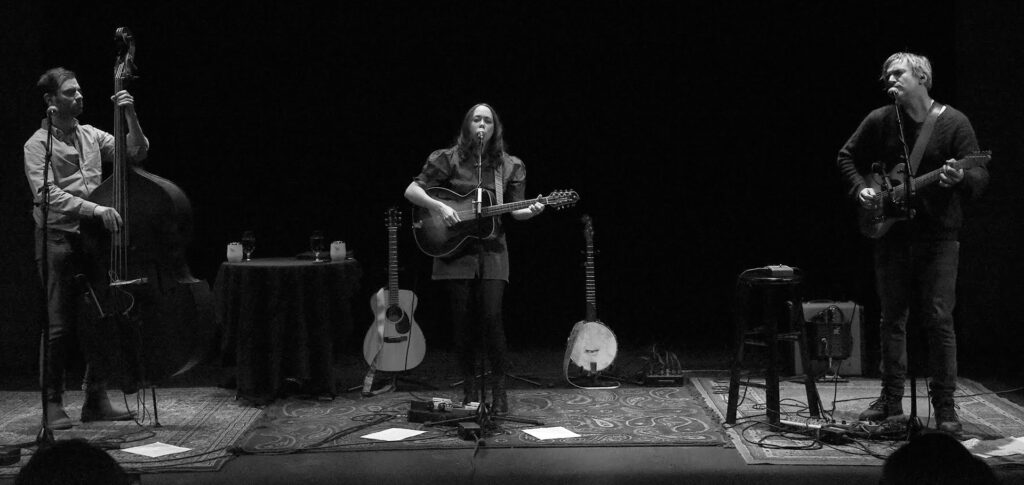
Mitski at MASS MoCA | Image: Provided
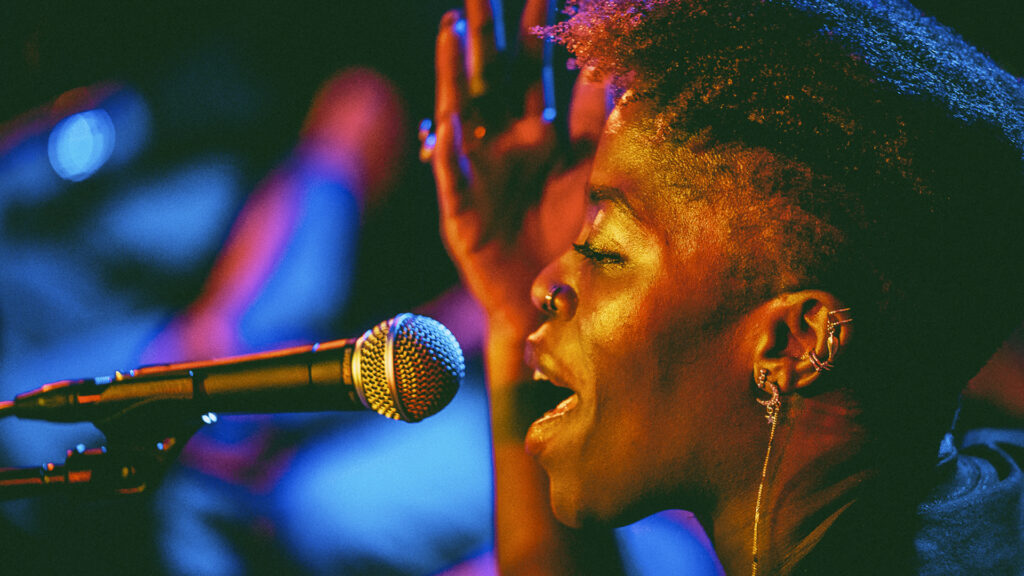
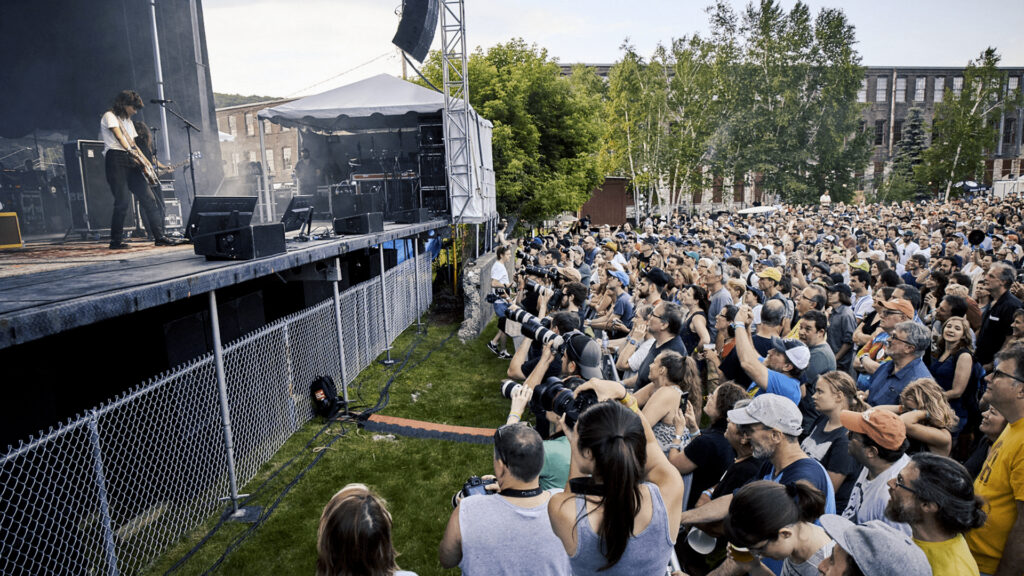
Courtney Barnett at Solid Sound Festival 2019 | Image: WFUV Public Radio

The EGG is an important institution on so many levels for Albany with some pretty established shoes to fill following up Peter’s (Peter Lesser) legacy. Can you share a bit about how you plan to continue that track record of stability while building a new institutional direction that addresses current needs and changes in the industry and attendee preferences?

Yes – Peter built SUCH an amazing legacy and what an incredible history of artists who have graced these 2 stages. I am humbled to try to fill his foot steps. It will be a gradual path to breathe new life into The Egg and I will be making small incremental changes as I go.

Right now I am mostly listening and learning about the community and the history and starting to have big dreams about how we can ‘Hatch The Egg.’ I have already brought in a marketing person who is amazing and it’s the first time The Egg has had a marketing person since the ’90s! I also made the bold (somewhat controversial) move to allow beverages into both theatres. I believe strongly that art is for everyone and that the experience of going to the theatre should not feel elitist. Part of making the experience comfortable is having a drink in your hand. I hope to attract new audiences and create buzz and excitement about this incredible space.

Sarah Jarosz Plays The EGG | Image: Claude Sawyer
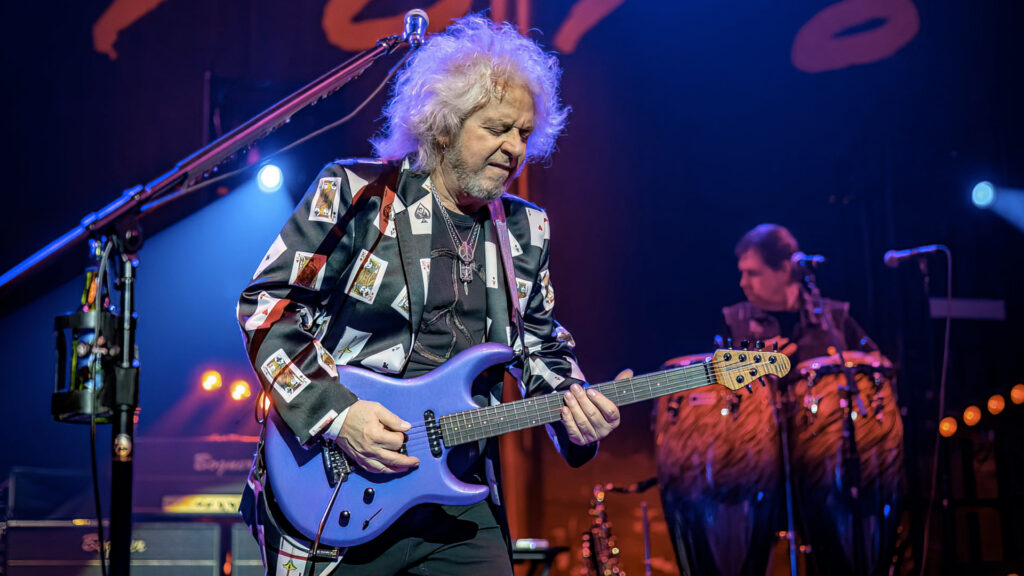
Steve Lukather Shreds – TOTO at The EGG 2023 | Image: Claude Sawyer

In our recent conversation, you discussed finding new ways to incorporate a creative community ecosystem into the space and programming. Can you share a bit about that?

Creativity is at the core of everything I do and is so important to cultivate and help grow. I would love for The Egg to really be defined by it’s ‘ellipsoidal structure‘ (literally that is what the Enabling Legislation document calls the building – ‘ellipsoidal structure’ – I LOVE that!). At the core of The Egg we are a space with no straight lines where art and creativity can thrive and push artistic boundaries. I took this job because I love the idea of building a curatorial identity for The Egg where the building itself is the primary creative grounding.

The EGG in Albany, New York | Image: John Bellm
Interior Shot of The EGG in Albany, New York | Image: Provided

For programmatic initiatives: the big vision is to lean into the building – tell the story of its history and invite audience to engage with not just what is happening onstage but with the building itself – outside and in. Think of The Egg as a blank canvas for art. We are currently developing a couple of approaches on that front. ‘The Egg Incubates‘ – where we will incubate and support new work and premiere it on our stages and, ‘Expansion‘ – a series where we invite audience and artists to expand their minds and curate a series that goes beyond our current state of being.

2023 Steve Hackett at the EGG | Image: Timothy H. Raab

Part of breathing new life into The Egg is the branding and visual identity. You will see a shift in our graphic presence as well as the development of an authentic, individualized voice on social media. The Egg will be a place for engagement not just show announcements. This is all still a work in process as we develop these ideas more concretely for the next season. Consider this an ACE! insider sneak peak!

To follow along, check us out on social media and specifically, watch these 2 hash tags: #hatchtheegg #spottheegg

The Egg is such a striking part of the Albany skyline, history and ecosystem…it’s amazing where you can #spottheegg!

2023 Upcoming Shows at The EGG | Image: Provided

What’s the best way for folks to explore collaboration opportunities with The EGG?

Reach out to me via email! Diane (@) theegg.org

Always happy to connect – but just be patient if I don’t respond right away – my inbox is CRAZY 😉

  • Page 1
  • Page 2
  • Page 3
  • Page 4
  • Go to Next Page »

Creative Economy Updates and Other Good Stuff!

STAY CONNECTED!

  • Facebook
  • Instagram
  • Twitter
Copyright © 2020 THE UPSTATE ALLIANCE FOR THE CREATIVE ECONOMY

info@upstatecreative.org | 41 State Street, Albany, NY 12207

Design by Reach Creative