• Skip to primary navigation
  • Skip to main content

ACE

Upstate Alliance for the Creative Economy

  • HOME
  • ABOUT
  • NEWSLETTER
  • SUBSCRIBE
  • JOBS
  • Show Search
Hide Search

NYS

The Revolution WILL BE…In Person!

January 26, 2026 By Corey Aldrich

2026 is really kicking off with a bang. ACE! was on location for the grand re-opening of three major regional institutional arts organizations including The Egg (Albany), Saratoga Arts (Saratoga) and a new and expanded space for Albany Center Gallery (Albany). This represents some major investment in our region in community arts, culture and entertainment, and helps drive the Capital Region as a creative economy hub for work and play with an investment to the tune of well over $20M collectively. Find out what each organization was able to add and refresh with their reset and how that will impact future forward programming for our region.

THE EGG | YOUR EGG IS SERVED (ALBANY NY)

The Egg Staff Celebrates at the Grand Re-Opening Event | Photo: Megan Mumford

After a six month closure, state and local leaders cut the ribbon this month for a $19.5M renovation at The Egg. Though the project predates Governor Kathy Hochul’s $400m Championing of Albany’s Potential initiative, it complements the overall mission and direction being mapped out for Albany by her office.

The Egg : Crowd Shot at the Grand Re-Opening Event | Photo: Elissa Ebersold
The Egg : Dancing to DJ Hollywood at the Grand Re-Opening Event | Photo: Elissa Ebersold

The Egg is a performing arts center located in Albany, N.Y.’s Empire State Plaza. An unmistakable feature of the capital city’s skyline, the venue houses two theatres encased in a domed, egg-like concrete structure that took 12 years to construct and was completed in 1978. The Egg presents music, art, theatre, comedy, dance, and family entertainment year-round.

“The Egg is a meeting place for New Yorkers and visitors looking to immerse themselves in the thriving creative industries that are integral to our state’s bold identity,” Governor Kathy Hochul said. “As part of Downtown Albany’s revitalization, this long-awaited renovation modernizes one of the Capital Region’s most distinct cultural landmarks. This new chapter of The Egg showcases the value of spaces where the arts and culture converge...”

OGS (New York State Office of General Services) oversaw a project that modernized the interior of the building while honoring its original design and mission. Work included replacing seating and carpeting throughout both the Kitty Carlisle Hart and Lewis A. Swyer theatres and all public areas; installing a state-of-the-art, fully automated LED theatrical lighting system; and adding new dimmable LED house lighting that better showcases the building’s unique architecture.

The Egg : Hart Lobby Before Renovation | Photo: Megan Mumford
The Egg : Hart Lobby After Renovation | Photo: Megan Mumford

“The Egg is a place where art happens with no straight lines, and these renovations make it possible for us to serve Albany and all of New York in a bigger way. We are deeply grateful to Governor Hochul for believing in this building and making this investment in the arts possible ” said Diane Eber :Executive Director The Egg

The renovation also expands accessible seating in both theatres, upgrades restrooms, and adds an induction loop assistive listening system to improve the experience for guests who use hearing aids or cochlear implants. Public spaces have been refreshed with restored mid-century finishes and new custom furniture designed to complement The Egg’s ellipsoidal structure, aligning the interior with the boldness of the exterior for the first time since the venue opened in 1978.

“Updating The Egg reaffirms the importance of the arts scene in the Capital Region and supports our efforts to reconnect Downtown with its residents and visitors. ” Senator Patricia A. Fahy

The Egg : New Seating and Carpet | Photo: Megan Mumford

The renovation supports a renewed vision for The Egg as a statewide performing arts center and destination, where the building itself is an integral part of the artistic experience. The upgrades will enable more complex productions, improve comfort and accessibility for audiences, and ensure the venue can continue to serve as a gathering place for decades to come.

“When people come to visit our great City of Albany, The Egg is the first building they see on our skyline. This exciting renovation helps to solidify this structure as an icon of our downtown, and I am thrilled to celebrate its completion. ” Albany Mayor Dorcey Applyrs

WEB: theegg.org | IG: @theegg | ADDRESS: EMPIRE STATE PLAZA

ALBANY CENTER GALLERY | MORE ART EVERYWHERE (ALBANY NY)

Albany Center Gallery : Ribbon Cutting Event for the New Digs | Photo: Provided

Located in the old Pizza 54 space on North Pearl Street (Known by many back in the day as Pizza Timmy’s!). Albany Center Gallery has significantly expanded their space from 1700 sqft at their previous location to 6600 sqft. The new space features offices, storage, a kitchen, a larger education space that can also be used as a secondary gallery, and a large street front main gallery that currently is showcasing over 200 works in it’s annual member show.

Jankow Companies oversaw the fit up in conjunction with Platt Construction. This was partially funded with a grant from Capitalize Albany for build out costs. Additional funds to underwrite the move where funded via specific donations and / or were covered via a specified funding campaign.

Albany Center Gallery : New Location Opening Night Crowd | Photo: Michael Joyce

“With more space, we are able to support more artists, present more ambitious exhibitions, and bring even more of the community together under one roof. Our new home at 48 North Pearl Street allows us to expand our programs, activate the gallery with evening events, and create dynamic, welcoming experiences where art becomes part of everyday life in downtown Albany.” stated Tony Iadicicco, Executive Director at Albany Center Gallery “It’s a big step forward for ACG and for the artists and community we serve. As we move forward, we remain committed to our mission, uplifting, showcasing, and advocating for the creative community while ‘Bringing Art Everywhere.’”

Albany Mayor Dr. Dorcey Applyrs marked January 16, 2026 as “Albany Center Gallery Day” inaugurating the day in City of Albany history.

Albany Center Gallery : Tony Iadicicco Executive Director | Photo: Corey Aldrich

WEB: albanycentergallery.org | IG: @albanycentergallery
ADDRESS: 48 N. PEARL ST.

SARATOGA ARTS | YOUR COMMUNITY ARTS CENTER (SARATOGA SPRINGS NY)

Saratoga Arts : Re-Opens After Upgrades | Photo: Spencer Sherry

I recently caught up with Amy Bloom, Executive Director at Saratoga Arts in Saratoga Springs, NY for an update on their renovation efforts. They just finished up a $2M+ space renovation / upgrade and recently re-opened to the public after a 6 month build out period. Funding sources included $1M from the City of Saratoga Springs, $766K through a capital grant from NYSCA (New York State Council of the Arts) with the remainder fundraised by Saratoga Arts’ board members, donors and a few other local foundations.

The renovation has resulted in several key improvements – a new gallery with programmable, energy efficient lighting, 2 renovated bathrooms, an upgraded theater (including a sound booth and new projector/sound equipment), and replacement windows throughout much of the building — in particular the curtain wall (The windows that face the carousel in the back of the building).

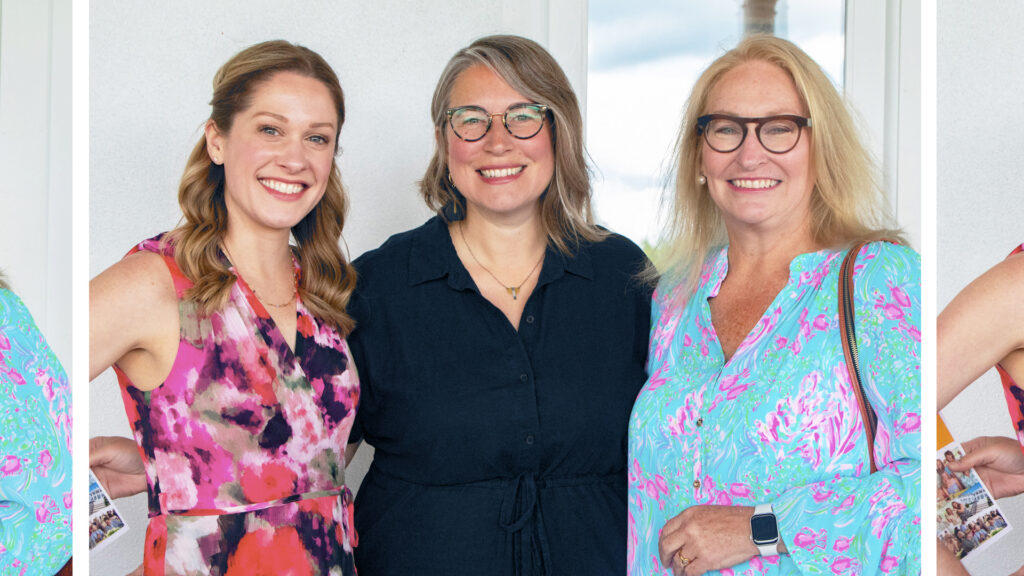
Saratoga Arts : Shown Allan Weatherwax (Board President), Amy Bloom (Executive Director) and Spencer Sherry (Grants and Community Outreach Coordinator) | Photo: Corey Aldrich

On the lower level you will find new lighting and ceilings throughout most of the classrooms, including a door from the main classroom providing direct access to Congress Park. To follow, a patio will be installed in collaboration with the City of Saratoga, slated later in spring 2026. The printmaking studio has new plumbing and a new sink was added in the smaller classroom. Additional improvements include upgraded wifi (especially on the lower level where there was none prior), a new boiler, new gutters, and electrical panels throughout much of the building.

“As a supporter of Saratoga Arts for over 30 years, NYSCA is proud to be a part of this extensive renovation project, which has created a multi-use facility to serve thousands of visitors. This new sustainable space will serve as a catalyst for creativity and collaboration for the entire region. Congratulations to the entire Saratoga Arts team, we look forward to decades more of your innovative and accessible programming.” Erika Mallin : Executive Director of NYSCA (New York State Council of the Arts)

Per Amy, the renovations will significantly improve Saratoga Arts ability to fulfill their programmatic mission to the community and provide an enhanced experience for community engagement.

WEB: saratogaarts.org | IG: @saratogaarts | ADDRESS: 320 BROADWAY

Religious Buildings and Historic Tax Credits: Time for a New Approach

November 24, 2025 By Corey Aldrich

I run into Julian Adams frequently in downtown Troy, usually at his favorite coffee haunt, Jacob Alejandro. A jovial chap and a significant informational resource for all things historic preservation, I recently reached out to him for the deets regarding the ongoing saga with the Holland Avenue Tudors in Albany as a friend of mine was wondering what it would take to repurpose a few of them as a professional live work campus for their small health practitioner / creative based collective. In our discussion, Julian mentioned this recent article he wrote and it has significant relevance to me as I see so many amazing structures in our region decaying away from lack of adequate reuse planning. I dropped in a few images of some vacant church spaces that have been on my radar for years.

Julian Adams : Director of Historic Preservation at Carmina Wood Design | Image: Provided

AUTHOR: Julian Adams
Director of Historic Preservation at Carmina Wood Design. Past experience includes Director of Community Services and Programs and Senior Historic Sites Restoration Coordinator at New York State Historic Preservation Office (NYSHPO)

I have worked in Historic Preservation for almost 40 years. Over that time, I have interacted with federal government historic programs using federal standards and guidelines for rehabilitation projects, restoration projects, reconstruction projects, historic resource surveys, National Register listings, building documentation, and preservation/restoration grants. However, of all the treatment standards in the Secretary of the Interior’s Standards for the Treatment of Historic Properties, the Standards for Rehabilitation are the ones I have most used and still use almost every day.

That set of treatment standards has guided many projects to a balance between project needs and the historic resource and continues to do so. However, over my career, there is one building type that can give state level reviewers pause in applying the Standards in an adaptive reuse project: Religious buildings, particularly Sanctuary buildings.

St. Joseph’s Church in Albany, New York | Image: Google Maps

As preservationists and many communities know, the reuse of religious properties can face significant challenges that often lead to their long-term abandonment, decay, and unfortunately, demolition. Although it’s not the only reason for their loss, the Standards for Rehabilitation, as currently interpreted, can add to the difficulty of retaining and finding a new life for these purpose-built structures, as funding through Historic Tax Credits (state and federal) can be crucial to the success of a project. Perhaps it is time to find ways under existing or new programs to allow them to remain as historic and physical landmarks in their communities, serving in a new way.

Historic religious buildings are typically specific use-built structures, many with unique decorative interior and exterior features and open interior volumes. Constructed in a time with different demographics and community density, they can represent a very early point in local history, or a high-water mark of the local economy, sometimes both, with redecoration, additions or alterations marking the time. Many are physical visual anchors of the area: They can be in the center of the city or village, or a major landmark visually and culturally, or in a part of a city or village associated with an important period of growth or immigration. In any event, they are all associated with a specific community identity and history.

St John’s Church in Albany, New York | Image: Google Maps

The fact that many of these buildings were “constructed in a time with different demographics and community density” is where the problem can stem from. Many larger cities have entire areas that have emptied out due to the loss of major employers, the pull (push?) of suburban development, the impact of urban renewal, or loss of population due to many other factors. In some cases, the neighborhoods that built these landmarks have been abandoned or demolished, but somehow many of the religious buildings and their associated buildings remain. Even in more intact or smaller communities, demographic shifts and the simple fact that people aren’t attending church as they once did have left many of these buildings empty.

In some of those complexes, former schools, athenaeums, convents, etc., have been converted into housing or other needed programs. However, the major uniting structure, the sanctuary building itself, can remain unused. Some have found uses as event spaces or galleries; however, in an area with several such resources there are only so many of these uses that can be supported; some are so large that the size alone can be daunting.

Saint Mary’s Church , Troy New York | Image: Google Maps

In trying to reuse a religious building, I have seen many different proposals: While some of these would make a preservationist shudder, and rightfully so, I think that it may be time to talk about what can be achieved under a more flexible reading of the Standards or review processes when it comes to the adaptive reuse of this building type and how we might work towards that.

A federal official once told me that if a project was denied due to their interpretation of the Standards, no worry, the right developer would come along and do a “better” job. For those who know upstate NY this is not always a reality. The closing and abandoning of religious buildings and complexes rapidly accelerated in NYS and nationwide over the last 15–20 years; this represents a crisis that preservationists cannot ignore.

Many states have a state tax credit; however, many of these tie that credit’s approval to the federal approval, damning projects from getting the state credit as well as the federal credit. For those that have independent state approval, the level of that credit alone may not be enough to make the project successful by itself.

Saint Peter’s Church, Troy New York | Image: Google Maps

I don’t have a quick and easy answer for this, but I do know that a high-level review (federal) of these properties might not be close enough “to the ground” to understand the challenges facing them.

I would hate to think that part of the problem is the Standards themselves, particularly when the preamble includes: “The Standards will be applied taking into consideration the economic and technical feasibility of each project”.

In the case of religious buildings, I am not proposing a laissez faire approach to review, such as allowing total “gutting” or removal of all character defining features. What I am advocating is a more balanced approach to working through the issues, including the building, its condition, the threat, the local need, local economy, and the impact its loss would have on the community.

In speaking with colleagues, it has been proposed that it may be time for legislative action on this issue. One approach would be to demand federal rule change in the Standards, emphasizing the preamble’s direction for the review of difficult property types.

Saint Patrick’s Church, Troy New York | Image: Google Maps

A second approach would be to allow those states with Historic Tax Credit programs to operate independently from the existing concurrent federal review process. Perhaps a periodic “check in” would be undertaken to keep the communication between federal and state reviewers ongoing, and to share questions, best practices, new ideas, or any concerns. This could also be done within national regions to encourage cross border collaboration and sharing of information, challenges, and approaches to review. However, the final approval of projects would rest with the states, who know, as stated above, the building, its condition, the threat, the local need, local economy, and the impact its loss would have on the community.

Changes to review processes have been mentioned from time to time, with federal officials typically being hesitant to “open up the rules”, fearing loss of the tax credit program or the federal/state partnership due to an administration or Congress that is seen as hostile to historic preservation. Even with that fear, it may be time to get more serious about this tactic, given the recent impacts to the federal preservation work force and the more-than ever need for funding assistance for significant adaptive reuse projects. States have traditionally been seen as “laboratories” for new approaches and programs within the United States, and it may be time to open the labs.

In closing, I would have what was built as record of faith, history, and a community’s aspirations remain in a streetscape, a skyline, on a town square rather than losing it when there can be alternative approaches to review.

‘Freelance Isn’t Free’ Signed Into NY State Law : CHECK!

September 11, 2024 By Duncan Crary

Photo Credit: NYS Media Services

On August 28 the ‘Freelance Isn’t Free Act’ took effect as New York State law (Article 44-A to the General Business Law).

The law entitles Freelancers* to timely and full payment, enforced by the NYS Attorney General’s Office. The law mandates that the hiring party must provide written contracts for freelance engagements valued at $800 or more or lasting longer than 120 days. And it spells out stiff penalties for those who do not supply contracts or who are chronic violators.

Freelancers are entitled to double damages for late payment. (After 30 days if no payment schedule is defined in the contract.)

On average, freelancers are stiffed $6,000 per year.

The Department of Labor has developed a model contract that can be used to meet the contract requirements of the ‘Freelance Isn’t Free Act.’

FREELANCE WORKER AGREEMENT

If you are a freelance worker and you believe your rights under the law have been violated, you can file a complaint with the New York State Attorney General HERE.

Finally, you can find the full text of the law HERE.

I expect more news articles and columns will be published in the upcoming weeks, further elaborating and clarifying these protections and process.

But for now, please pass it on. Let your graphic designer, writer and musician friends, etc. know about this. Make people in the business world aware that ‘Freelance Isn’t Free.’


Duncan Crary is Owner and Founder at Duncan Crary Communications out of Troy, New York. He is a publicity, communications and events consultant with more than 20 years of professional public relations experience. He has been called “Troy’s other Mayor” (Michael DeMasi, Albany Business Review), a “publicity artist” (Jimmy Vielkind, Capital New York/Politico), and “a gregarious public-relations consultant, history buff and Troy tub-thumper” (Joanne Kaufman, Wall Street Journal).

He is the founder of The League of Extraordinary Red Heads, which was profiled in The New Yorker magazine in 2019.

Taliesin Thomas is Mixin’ It Up : International Gravitas Blends with a Passion for Upstate

February 29, 2024 By Corey Aldrich

I first met Taliesin Thomas at one of my side projects, ARTS BAR, a pop up cocktail bar at the Arts Center in Troy. She was rolling with Ali Herrmann, a Troy based mixed media artist that night. TT is larger than life and unforgettable. Since that fateful meet we have spent many late nights discussing esoteric philosophies of arts and culture, and the value proposition of Upstate NY. You may recognize her as an occasional guest writer here at ACE! When she recently scored a gig with Hyperallergic to cover the Hudson Valley art scene, I knew it was time to give her a formal introduction.

Taliesin Thomas in Front of a Mural at the Troy Art Block in Troy, NY | Image: Taliesin Thomas

Please state your name, title, what you do for a living in the creative world.

My name is Taliesin Thomas and my current professional roles are both local-focused and global-centric. Since 2007, I am the Founding Director of AW Asia and the Collections Manager for Art Issue Editions—two private art collections based in New York. The AW Asia collection is comprised of contemporary Chinese art and photography, including rare artworks by many of China’s leading figures such as Ai Weiwei, Zhang Xiaogang, and Zeng Fanzhi (among others). The Art Issue Editions collection is composed of primarily Western contemporary artists, including Keith Haring, Jean-Michel Basquiat, Kenny Scharf, KAWS, and Daniel Arsham among other celebrated figures. We work behind the scenes to loan the artworks in these collections to major museums worldwide in addition to doing special curatorial projects, collaborations, and publications with Princeton University Press and other prominent publishers. One of our most important recent projects, for example, is a partnership with the Hirshhorn Museum in Washington DC to present a comprehensive retrospective of contemporary Chinese photography that is also a promised gift. Since moving upstate, I have become immersed in the dynamic creative scene in the region, and I now oversee Artist Initiatives at The Arts Center of the Capital Region in Troy in addition to teaching and regular arts writing.

Installation View of the Exhibition ‘A Window Suddenly Opens: Contemporary Photography in China’
Hirshhorn Museum in Washington DC, November 4, 2022 to January 7, 2024 | IMAGE: Taliesin Thomas
Thomas with Art Critic Jerry Saltz at the Frieze Art Fair in NYC, May 2022 | Image: Taliesin Thomas

How did you end up moving into this career? Were you always interested in art?

I have been involved in the pursuit of art since the earliest time of my life. During my nearly 30-year career I have worked in various professional capacities including the artist studio, museum, commercial gallery, artist residency, and art foundation setting. I studied advanced art in high school and that inspired me to do my undergraduate degree in fine arts at Bennington College. Over time, my practice and inclinations shifted, and I became more interested in the theoretical and philosophical dimensions of art. The vast literature on aesthetics is a great source of stimulation, and I call myself an artist-maker turned artist-philosopher. This path propelled me to do my graduate work at Columbia University which led to a Ph.D. in Art Theory and Philosophy with the Institute for Doctoral Studies in the Visual Arts.

Ai WeiWei ‘In Search of Humanity’ Exhibition at the Kunsthal Rotterdam, The Netherlands
September 30, 2023 – March 3, 2024 | Image: Kunsthal Rotterdam)

What’s a typical day look like for you work wise?

I often refer to my work life as a ‘grab-bag’ experience—every day brings something exciting across my desk! On any given day I interface with a range of colleagues in various sectors of the international art industry, including ongoing dialogues with artists, curators, museums, galleries, organizations, auction houses, art storage facilities, and shipping companies as well as special areas of research and writing as it relates to our projects. From my desk in Troy, I oversee the movement of artworks from our collection to get them around the globe to be enjoyed by others while simultaneously engaging with the local and regional arts scene in the most meaningful ways—I feel constant gratitude for this professional connectivity.

Taliesin Thomas with Artist Ai Weiwei During the Opening of the Ai Weiwei ‘In Search of Humanity’ Exhibition Kunsthal Rotterdam in The Netherlands, September 30, 2023 – March 3, 2024 | Image: Kunsthal Rotterdam

What caused you to decide to move to the Capital Region, it seems like you were in a pretty amazing scene down in the city…

I appreciate this question—the existential intensity of the pandemic revealed an irreversible perspective on the ‘quality of life’ concept, and that propelled me out of the urban hustle. I lived in Brooklyn for 19 years and built up my professional standing before relocating to the Hudson Valley. Working for a passionate globe-trotting art collector is a unique position, and that is how I was able to bring our independent office to Troy. I embrace the whole of New York—the city, Upstate, and the entire Empire region—as a magnificently inter-connected arts eco-system. I big-red-heart New York!

Installation View of the ‘Critical Forum Artist Exhibition’ at The Arts Center, January 8 to February 24, 2024 IMAGE: Taliesin Thomas

You mentioned that you started working more locally as well, specifically that Arts Center of the Capital Region. Can you tell us more about your program there?

The Arts Center in Troy is home to a robust arts program of year-round classes and exhibitions. As the Director of Artist Initiatives, I oversee two distinct programs: Artist Training and Critical Forum. The Artist Training program hosts the ‘Secret Sauce‘ series and we are organizing another terrific line-up of speakers for this coming fall. The ‘Critical Forum‘ program is an intensive professional development opportunity for emerging and mid-career artists. A maximum of twelve participants are chosen for this program through an open-call application process. The application cycle for this year’s Critical Forum cohort will be open from March 1 to April 1—heads-up artists: Apply! The cohort meets monthly over a six-month period at The Arts Center for group critiques that also include invited arts professionals from the region.

Taliesin Thomas with the Critical Forum Cohort on a Visit to Governor’s Island in NYC, July 2023
IMAGE: Taliesin Thomas
Taliesin Thomas with Keith Haring Artworks from the Art Issue Editions Collection on Loan to The Broad in
Los Angeles, CA ‘Keith Haring Art is for Everybody,’ May 27 – October 8, 2023 | IMAGE: Taliesin Thomas

Finally, you recently picked up a great gig, tell us about Hyperallergic! Also, any other things up your sleeve we should know about?

Since moving to the Hudson Valley, I have been a regular arts reviewer for Chronogram. This has allowed me to network with many incredible colleagues and organizations and is my continued aim to promote artists and exhibitions in our region. My interview with artist Jeffrey Gibson (based in Hudson) for Chronogram was very meaningful as a few months ago it was announced that he will represent the United States at the 60th Venice Biennale this year. I was recently approached by Hyperallergic to establish a Hudson Valley arts preview column, and that has been an outstanding fit thus far! It is a continued joy to align the flourishing creative scene in upstate New York and to be an active contributor in the Troy arts community and beyond.

The Museum Association of New York : The Tie That Binds – A Conversation with Erika Sanger

March 23, 2023 By Corey Aldrich

Please state your name, title and what it is you do for the organization.

My name is Erika Sanger and I am the Executive Director of the Museum Association of New York. In this role, I am the leading ambassador and advocate for museums and cultural institutions in New York State. I work with the board and staff to deepen connections with members and constituents; seek new opportunities for programs and funding; maintain, support, and develop relationships with members and stakeholders including museum professionals, industry partners, state and federal funding agencies, private foundations, local, regional, and federal government officials, and leaders of peer institutions and arts organizations. I was honored last year by the American Alliance of Museums with the 2022 Advocacy Leadership Award for my work on behalf of museums in New York and across the nation.

The Museum Institute at Great Camp Sagamore | Leadership Learning Retreat 2021 | Photo: Provided

Can you share a bit about your background?

I joined the Museum Association of New York in August of 2016 after serving twelve years as the Director of Education at the Albany Institute of History and Art. There, I provided vision for the development of programs for adults, children, schools, and families, focusing on object-based learning and digital initiatives. I led the institute’s “digital renaissance,” most notably with the launch of a new website and creation of interpretative strategies around hand-held digital devices and interactive media.

I gained my work experience and leadership skills through positions held at renowned arts and cultural institutions including the International Center of Photography, the Jewish Museum, the New-York Historical Society, the Brooklyn Museum, and the Asheville Art Museum in Asheville, NC. I also served as Director of Development at Penland School of Crafts in NC, where I was actively engaged in the region’s artist community and participated in the design and implementation of heritage tourism initiatives and campaigns for capital and endowment funds.

I’ve developed program assessments with Harvard University’s Project Zero, the North Carolina Center for the Advancement of Teaching, and with the education department at the University at Albany. Programs produced under my direction have received funding from state and federal agencies, including the Humanities and Arts Councils of the states of New York and North Carolina, the Institute for Museum and Library Services and the National Endowments for the Arts and Humanities.

I received a BFA from Clark University and an MA from NYU’s Steinhardt School of Culture, Education, and Human Development.

MANY Annual Conference | Photo: Provided

Can you tell us what a typical ‘day in the life‘ for you is?

I frequently say that this job is like riding a roller coaster! We host an April annual conference, professional development programs are produced across the state all year, the legislative calendar of the state and federal governments dictates our advocacy work, and our virtual programs reached over 1,600 people in 48 US States and 8 other nations in 2022. On any given day I may work on a grant application, have a board committee meeting, advise a member on a project or program, and work with our accountant on the organization’s finances. In 2022, we adopted a new strategic plan, revised our by-laws and personnel policy, and changed the board of directors’ terms to align with the organization’s fiscal year.

Jamie Jacobs : The Rock Foundation | Georgette Grier-Key – Executive Director and Curator : Eastville Community Historical Society | Didi Barrett – NYS Assembly Member (D-106) | Erika Sanger – Executive Director : Museum Association of NY | Chloe Hayward – Director of Education : Studio Museum in Harlem Photo: Provided
Museum Association of New York Membership Map

Can you tell us a bit about the mission and focus of MANY? How many members do you have and what types of institutions / organizations are in the group?

The mission of the Museum Association of New York is to help shape a better future for museums and museum professionals by uplifting best practices and building organizational capacity through advocacy, training, and networking opportunities. We closed 2022 with 730 members, a 6% increase over 2021 and in the first quarter of 2023, have gained 25 more. The largest number of our members are in the Capital Region and New York City, but we have members located in every region of the state, from every discipline and every budget size from all volunteer organizations to museums with budgets that exceed $10 million. Our website has a great map with each organizational member identified and most people would recognize many of our members.

March on Washington for Jobs and Freedom | August 28, 1963 by Rowland Scherman
Courtesy of National Archives and Records Administration

What is something you are currently working on that your excited about or that you feel we should know about?

As our nation approaches the 250th anniversary of the signing of the Declaration of Independence, we know that museums are searching for ways to engage their communities with connections to the history of our nation. They are seeking ways to tell multi-vocal stories of our past, to embrace all the people who live in their communities regardless of race, religion, or nation of origin.

The Museum Association of New York is New York’s representative to the Museums on Main Street program of the Smithsonian Institution’s Traveling Exhibition Service. In that capacity we are traveling their exhibition Voices and Votes: Democracy in America to twelve New York museums to help them prepare for the semi-quincentennial, aka America 250. This traveling exhibition includes historical and contemporary photographs; educational and archival video; engaging multimedia interactives, and historical objects like campaign souvenirs, voter memorabilia, and protest material.

Each museum will display the Smithsonian exhibition and produce a small exhibition drawn from their own collection that relates to their community’s role in the development and advancement of Democracy in America, explores a Voices and Votes theme, or tells the story of how people in their community created positive change for our nation. The local exhibitions may be installed in the museum, or in a community partner space like a library or school, or the Voices and Votes exhibition could be installed in a community partner space and the local exhibition in the museum. The application deadline is approaching and we know selecting the exhibition host sites will be a real challenge!

Additionally, The Museum Study Act passed the New York State legislature unanimously (minus one!) in 2022 with overwhelming support from several state agencies. The Governor’s veto noted that the legislature would need to appropriate funds for it to be signed. Actions to that end are already in motion.

EDITORS NOTE: Erika’s comments on The Museum Study Act

  • Page 1
  • Page 2
  • Go to Next Page »

Creative Economy Updates and Other Good Stuff!

STAY CONNECTED!

  • Facebook
  • Instagram
  • Twitter
Copyright © 2020 THE UPSTATE ALLIANCE FOR THE CREATIVE ECONOMY

info@upstatecreative.org | 41 State Street, Albany, NY 12207

Design by Reach Creative