• Skip to primary navigation
  • Skip to main content

ACE

Upstate Alliance for the Creative Economy

  • HOME
  • ABOUT
  • NEWSLETTER
  • SUBSCRIBE
  • JOBS
  • Show Search
Hide Search

Corey Aldrich

STEAM + A = Creative Activism : A Conversation with Kristen Holler

January 19, 2023 By Corey Aldrich

I first met Kristen Holler in her role at the Albany Barn. I have had the opportunity to work with her on projects there and in Schenectady at the Electric City Barn involving ACE! and my own production work with my company 2440 Design Studio. So when I was included on an email from Steve Pierce announcing her new position as Executive Director at the Sanctuary for Independent Media, I immediately knew that this could be a tremendous match for her and the organization. Focused and tireless, Kristen has a deep arts and community background. Though fresh on the job, I wanted to be a part of launching an awareness about her transition and have her share a quick update with us all about the amazing STEAM based approach that the Sanctuary is bringing to a neighborhood community and beyond.

Kristen Holler : Executive Director at The Sanctuary for Independent Media | Photo: Provided

Can you tell us a bit of your background and what you did before this?

Prior to coming to the Sanctuary for Independent Media I was the Executive Director of Albany Barn – a nonprofit org that supports artist development through a wide variety of technical assistance and subsidized/shared resource programs – from 2013 until 2022. In that time I helped to drive the opening of Electric City Barn in Schenectady, and served as a project manager for the Capital Walls public art initiative in collaboration with Albany Center Gallery. My professional background has been almost exclusively in the nonprofit space, but has been a combination of direct service and administrative roles across housing, employment, health, and arts organizations.

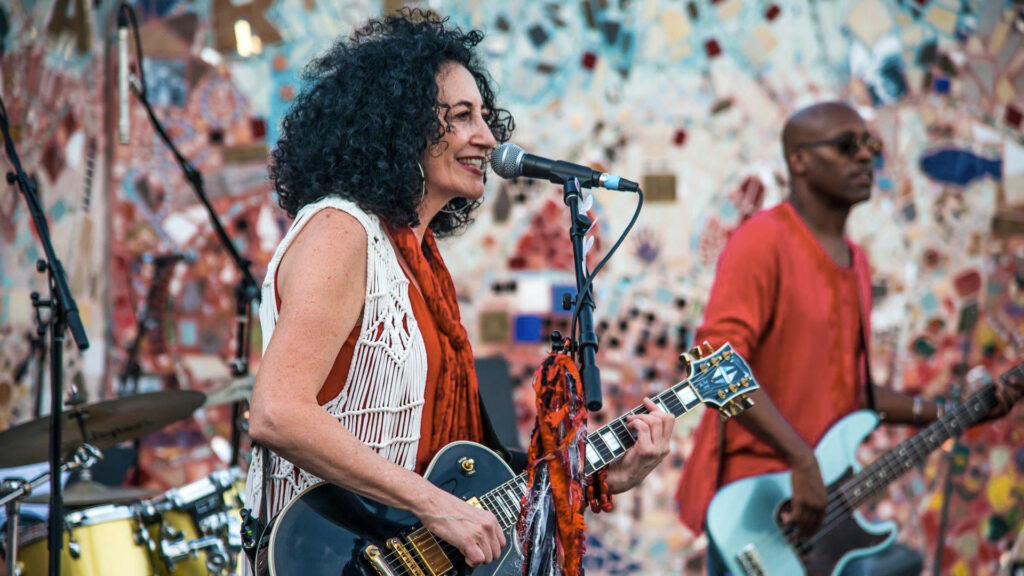
Live Performance at Freedom Square | Photo: Provided

The Sanctuary is so many things – from performance art, to science to activism…can you give us an idea of what the main areas of focus will be for you and why this position was attractive to you?

I think the thing that resonates most for me is that although the Sanctuary ‘is so many things,’ each of those things is linked back to the pursuit of social justice, and the use of creativity and independent expression as tools in that pursuit. I had the pleasure of working with and learning from Steve Pierce and Branda Miller – two of the organization’s founders – in my time at The Barn.

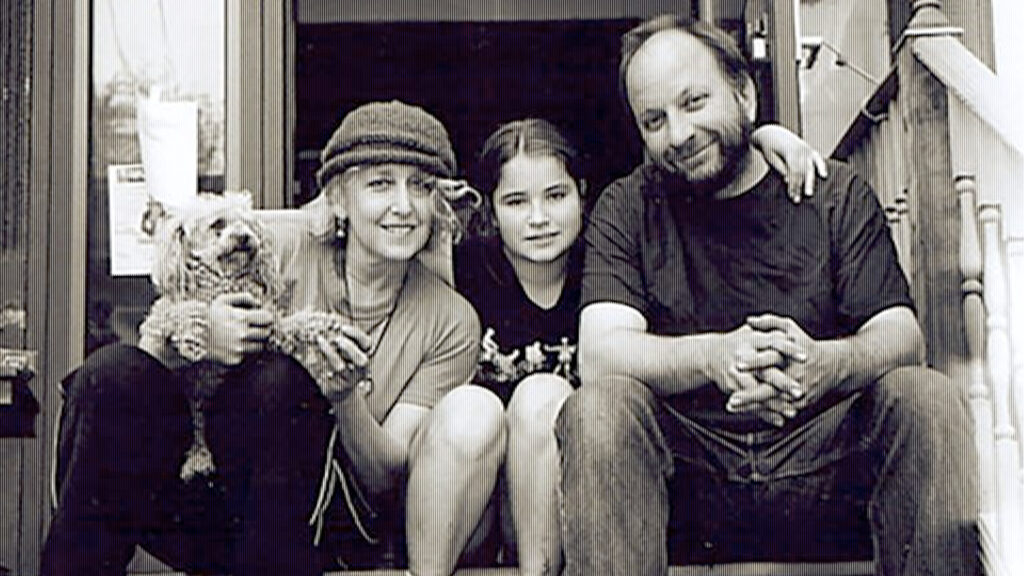
Branda Miller and Steve Pierce sitting with daughter Masha, and dog, Rose Fang. | Photo: Provided

It is an honor to step into this beautiful space that they’ve created, to build upon their legacy. My focus will be strengthening continuity and sustainability across the varied initiatives and programs and to provide strategic leadership in a time of transition.

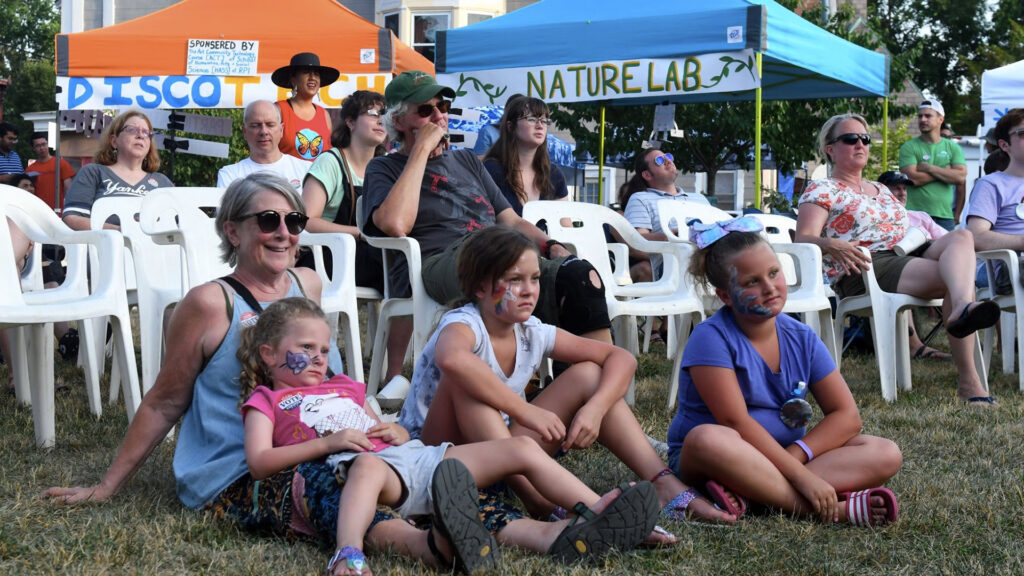
Event Audience at Sanctuary for Independent Media. | Photo: Provided
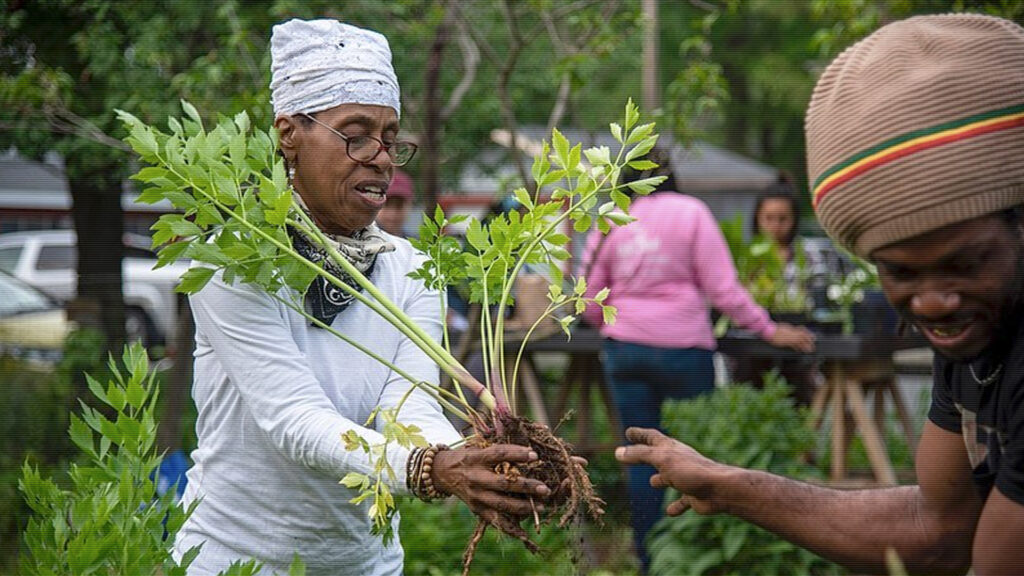
Collard City Growers participants work the permaculture garden. | Photo: Provided

Can you share with us some meaningful ways in which the Sanctuary is making a difference in the lives of those who are in the neighborhood and beyond?

The Sanctuary’s varied programming really provides something for everyone, and the community of individuals who have created and driven this organization forward for the past 20+ years have shown a true dedication to remaining independent from corporate control and responsive to community input.

Collard City Growers participants work the permaculture garden. | Photo: Provided

One of the major ways that The Sanctuary has impacted the immediate neighborhood is through investment in vacant lots and buildings, reactivating them for community use including Freedom Square – a public performance and gathering space; Collard City Growers – a food justice, arts, and permaculture project; NATURE Lab – a community science lab; and People’s Health Sanctuary – a community-led mutual aid health initiative. Another space where I think The Sanctuary has had real impact is in creating STEAM programming where the arts, sciences, and media are not silos, but an intersection of related disciplines where the arts are tools for scientific discovery, the sciences are a tools for creative expression, and media is the vehicle for sharing the process and the outcomes in ways that are accessible to a wider audience. (Editors Note: This!!)

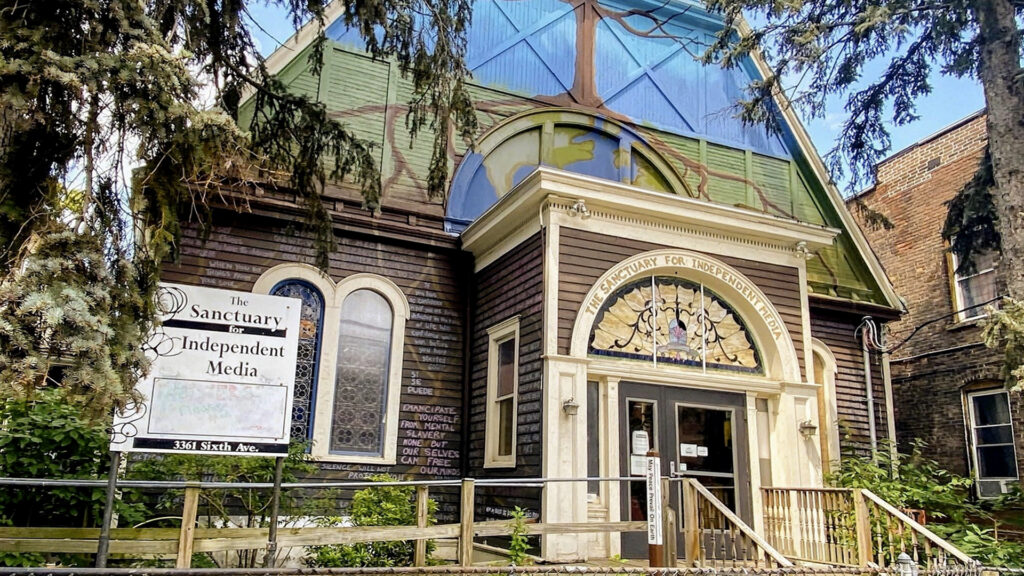
The Sanctuary for Independent Media Main Entrance. | Photo: Provided

There has also been a consistent effort to develop and maintain strong community relationships with individuals and other organizations through these connections. The Sanctuary has helped to get important community-led initiatives into the media – including stories that depict a more positive image of the N. Central Troy community. Outside of the immediate neighborhood The Sanctuary’s media content and performance series have drawn visitors virtually and in person from other states and countries.

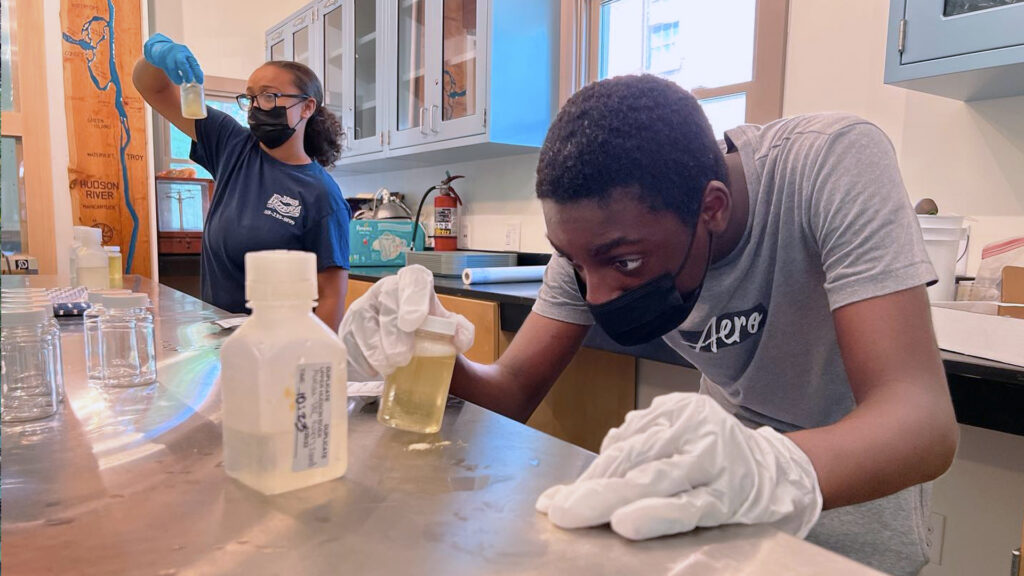
Nature Lab (Water Justice Project) participants testing Hudson River water samples. | Photo: Provided

What are the primary funding sources for the organization?

The organization is funded largely by individual donors and sustaining contributors – particularly Sanctuary Radio and Sanctuary TV. Additional funding is provided by NYSCA, DEC, NEA, McCarthy Charities, Howard & Bush Foundation, and The Community Foundation for the Greater Capital Region.

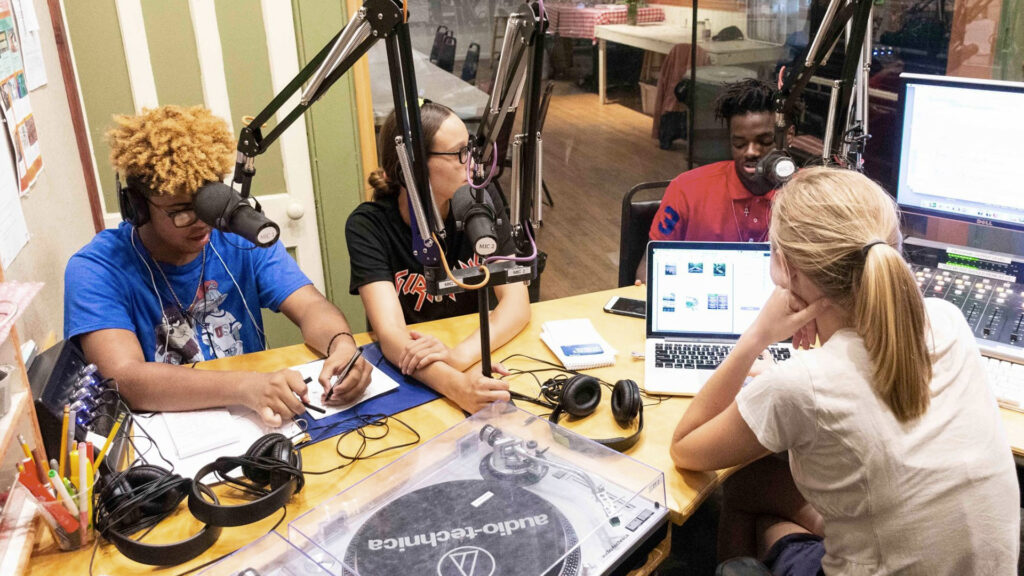
Developing story based narratives at Sanctuary Radio. | Photo: Provided

Anything coming up on the horizon we should be aware of or keep on the lookout for?

People can tune into Hudson Mohawk Magazine daily at 7am, 9am, and 6pm for independent coverage of local news and topics impacting our Region. The People’s Health Sanctuary will have a series of open houses in the winter and early spring that are in the final stage of scheduling. The Sanctuary will continue with its signature annual events including Freedom Fest in the summer and Story Harvest in the fall. Information on upcoming events can always be found on our website.

Freedom Square entrance at the Sanctuary for Independent Media. | Photo: Provided

WEB: mediasanctuary.org

Community Based Design Aspirations : The Albany Riverfront Collaborative

December 20, 2022 By Corey Aldrich

I was approached about the ‘Albany Riverfront Collaborative‘ by an architect friend, Scott Townsend of SWBR. He reached out to me asking if I was aware of the project and wondering if ACE! would be interested in playing a role in the growing chorus of voices that have an interest in participatory collaboration on what is surely one of the most potentially impactful projects for the riverfront in downtown Albany in decades. As the project is entering an important community feedback phase in the following months, it felt right to amplify the exciting opportunity presented to stakeholders associated with the City of Albany riverfront. To get a little more insight I reached out to Jodi Smits Anderson (AIA, LEED-AP BD+C, Well-AP), a managing principle at Einhorn Yafee Prescott (Albany) who happens to be spending a lot of time engaging interested folks about a collaborative design process.

Jodi Smits Anderson – Member at Albany Riverfront Collaborative | Photo: Corey Aldrich

Can you tell me a bit about the project? What is it trying to accomplish and why now?

The core of the project is reimagining the City of Albany’s riverfront. Albany’s upstate sister cities, Syracuse, Rochester, and Buffalo, have all been implementing significant changes to their outdated urban highway structures. ARC (Albany Riverfront Collaborative) founders came together to 1) help people see that we can make powerful change to uplift our communities and improve access to the Hudson River, 2) build relationships to gain support for this change with regional leaders and elected officials, and 3) design aspirational goals that guide the current project and future work – doing so together, with no exceptions!

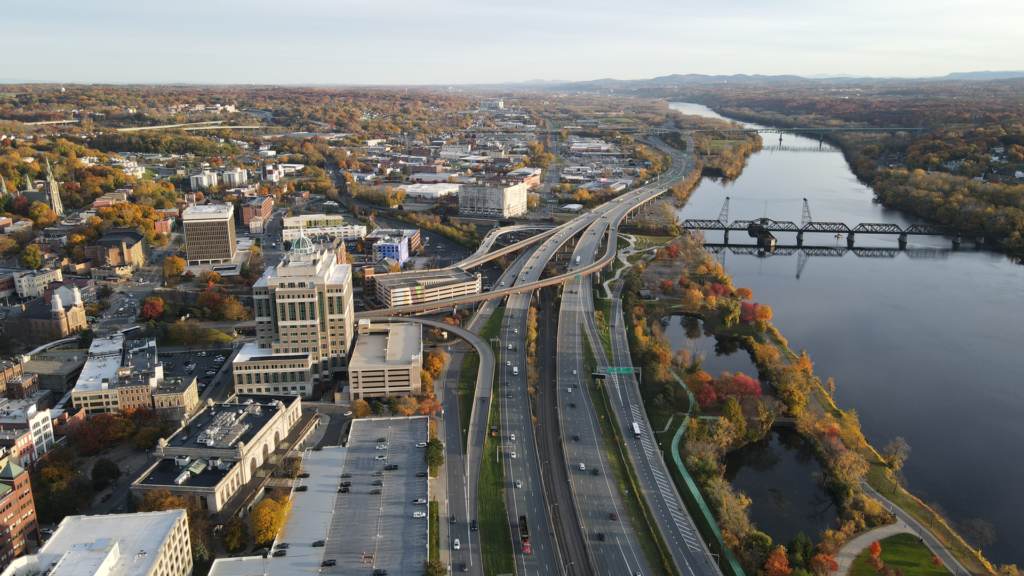
Albany Riverfront Current | Photo: Jonah Michel of @AroundAlbany

The best time to influence a project’s scope is prior to the actual design process, through discovery of what is possible. Once design is completed, the only tools available to inform the work tend to be confrontational ones: lawsuits, criticism, protest, etc. The consultants for the project are set to begin designing late winter/early spring of 2023, and collaborative feedback during the process is vital to achieving goals of equity and inclusion.

Three redesign concepts are currently on the table for I-787: 1) A highway cap consisting of parkland that connects the city to the river above the fast-moving traffic; 2) an urban canal system that brings the river into the city while restoring water-leveling locks, creating marinas, and generating local interest and tourism (similar to that of the Providence River Walk in Rhode Island); and 3) an appropriately scaled boulevard that balances pedestrian, transportation, commercial, and community needs.

It is likely that the best design incorporates elements of all three, for each idea builds on different perspectives and priorities, from water management and environmental health to recreation and economic development.

Albany Riverfront Current | Photo: Provided
I-787 Beltway on the Riverfront | Photo: Provided

From a historical perspective, what affect has the I-787 corridor had on the City of Albany, specifically the people who lived / live in the areas impacted?

It is amazing to me how projects have ripple effects over time and space. I-787 and the highway interchanges, along with the Empire State Plaza itself, initially took out 98 acres of locally owned businesses, homes, and community places. This gutted the city and created a physical gap. The intention was to provide faster circulation for cars, offices for government, and to create an impressive skyline. Over time, this gap, this slice through town, has forged disparities in the economic levels of impacted communities and created a downtown that is primarily for workers who don’t live here. In addition, all the communities of Albany are distanced from the Hudson River, with only three access points, none of which are vibrant or welcoming.

Can you share some current financial aspects of the project and also community based goals being discussed?

There was a 2018 study completed by DOT for the Capital District Transportation Committee (CDTC) that clearly stated that creating a boulevard, located on either side of the railroad tracks, was a distinct possibility for further study and analysis. The budget this time is more than fifteen (15) times the funding for that study.

Specifically, the Department of Transportation (DOT) has $5 million dollars to reimagine the City of Albany’s riverfront to promote access to it while adapting to the Hudson’s current and future tidal rise, reconnecting neighborhoods, spurring economic activity, and creating opportunities for current and future residents.

Albany Riverfront Proposed Redesign Features | Photo: Provided

We’ve been hearing from communities including the Albany Downtown BID, South Albany, the Pastures, and North Albany among others. I, myself, live in Pine Hills and have worked downtown for 15 years, mostly biking and walking to and from the office. The visions of joy being shared through the work of the ARC center around access to Nature and removal of the great weight of concrete over people’s heads. There is a lot of concern over development and a way to do it without pricing our current residents out of the city. This is why local voices are vital. We also hear about slowing down traffic and increasing access points into the city. This last piece is particularly impactful because it can lead to economic growth – for all of the city. Studies show that this approach helps people spend more time and more money in cities, as they are more likely to be part of the community after work hours.

Can you tell us about the public and private stakeholders and cultural and community organizations who have signed on to help make this happen?

The list of stakeholders / partners is impressive. They include residents, neighborhood and community groups, for and not for profit organizations, businesses and government entities. The intent of the Albany Riverfront Collaborative has always been to be a connector. ARC’s goal is to facilitate a growing understanding for all the communities of Albany, including commuters and visitors. That we all have a right and a responsibility in the vision for the city. We want elementary school kids to write about the Hudson, and college students to do the carbon calculations on the plans. We want people to propose legislation to clean and heal the Hudson, and all the streams we have buried in Albany. We support Radix Center‘s urban gardens and the South End Butterfly Sanctuary pollinating them. Local artists and local advocates can agree about the need for a shared, co-created, inclusive, climate smart, and healthy future. CDTA and the local neighborhood associations can inform the plans, and you and I can love our city. That’s the potential we all can see and work for.

Where can folks go to get more information?

You can check out our website and follow us on social media. We are currently looking for more people with a vested interest in the long term development of the City of Albany to connect with the process so please, reach out if you have an interest!

WEB: albanyriverfrontcollaborative.com
IG / FB: @albanyriverfrontcollaborative

Made in America : Tech Valley Center of Gravity Provides Makers a Space to Learn and Grow

November 16, 2022 By Corey Aldrich

Having done several projects with COG over the years it was an exciting surprise to see the amazing new offerings that the facility developed since the pandemic. In a recent tour after a long hiatus, I was literally blown away by the level of professional equipment, variety of applications and the on-sight expertise available in what is surely the regions premier community Makerspace. To get a better handle on it all, I spoke with Dan Falkenstrom – Operations Director at Tech Valley Center of Gravity.

Dan Falkenstrom – Operations Director at Tech Valley Center of Gravity | Photo: Provided

Please state your name, title, and background. What do you do at COG on a daily basis?

Dan Falkenstrom, Operations Director. After graduating RPI with a dual degree in Mechanical & Aerospace Engineering, I spent time as a manufacturing engineer at Pratt & Whitney, Knolls Atomic Power Lab, and GE. I joined the COG as a member to make motorcycle parts, began serving as the volunteer treasurer, and have been an employee since 2018. In my current role I oversee our day-to-day operations, perform training, and maintain equipment. But most importantly, I help makers and startups overcome hurdles by connecting them with other creators and resources.

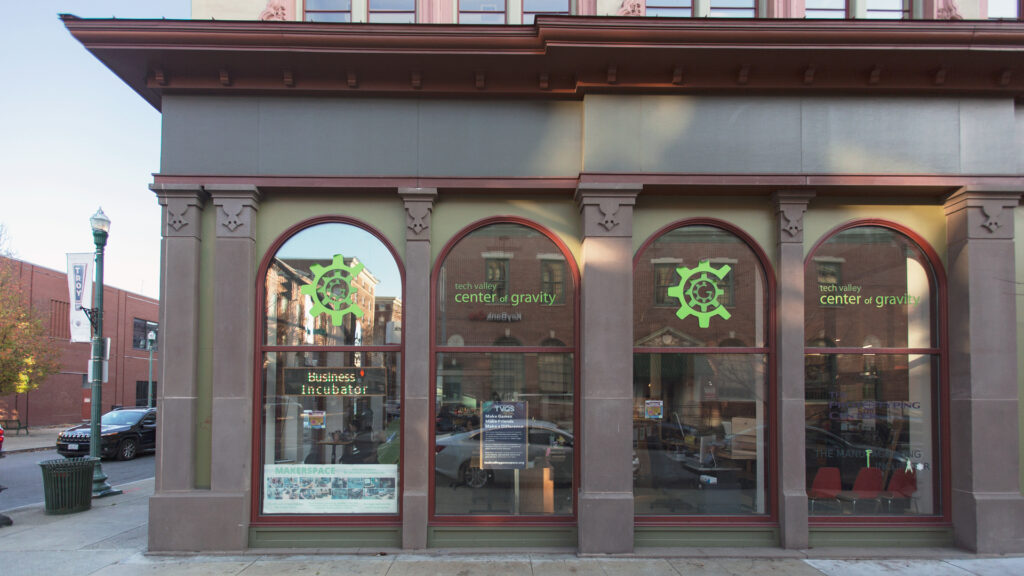
Tech Valley Center of Gravity – Downtown Troy, NY | Photo: Corey Aldrich

What makes COG different from other ‘coworking’ spaces in the region?

The main difference is that we are so much more! While we do have a traditional coworking area, which is predominantly visible through our street-level windows, I hesitate to consider ourselves a typical ‘coworking’ space. Makerspaces are more of a workshop environment – it’s perfectly acceptable (and encouraged) to start drilling, hammering, or soldering. Our aim is to support individuals, startups, and established businesses by providing low-cost access to fabrication equipment, workshop space, education, and a network of passionate creators.

The organizational structure of makerspaces is also very different from coworking spaces. As a non-profit organization, we have a strong focus on accessibility and community. In addition, our members have voting rights and help steer the direction of the organization. We are supported by a great group of sponsors, which allows us to keep membership and all of our resources financially accessible.

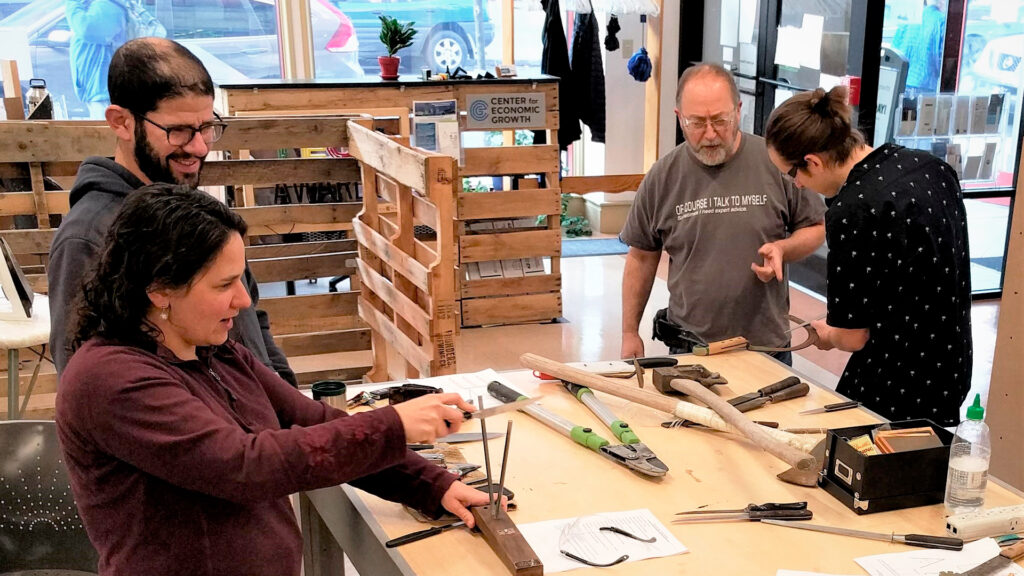
Sharpening Class at Tech Valley Center of Gravity | Photo: Provided

Can you tell us a bit about the types of facilities that you have available for use?

Within our 15,000 square feet, we have Maker Zones dedicated to 3D printing, children’s STEAM activities, laser cutting, electronics, fiber & glass arts, woodworking, welding, and machining. All told, we have over $200,000 of equipment available for members to use. Our kitchen, meeting room, and classroom/event space are also available to rent.

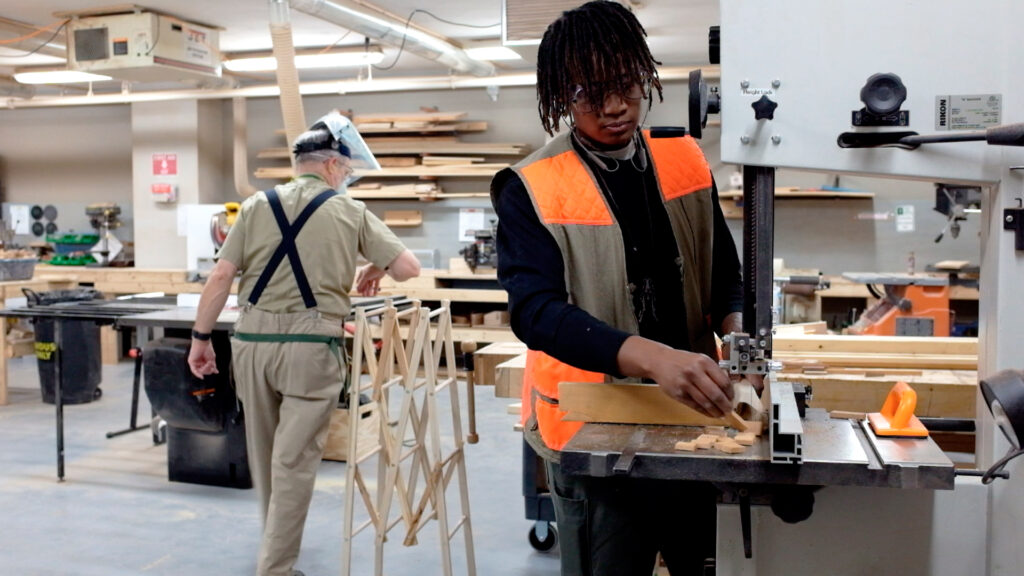
John and Sean working in the Woodshop at the Tech Valley Center of Gravity | photo: Provided

Who is COG best suited for? Can you tell us a bit about the people and projects happening there?

In our experience, at some level, everyone’s a maker. Our membership spans artists to engineers, students to retirees, and hobbyists to entrepreneurs. Over the past year I’ve seen our members make everything from prom dresses, cutting boards, bio-leather prototypes, physics experiment components, custom watches, welded steel sculptures, and more.

As a state-certified Incubator, we’re especially equipped to help hardware startup companies developing physical products through our Manufacturing Incubator program. In line with that, we’ve placed an emphasis on making digital fabrication equipment accessible. It’s really exciting to see so many small businesses get their start here.

Sewing Area at the Tech Valley Center of Gravity | Photo: Provided

Talk a little about the value of a STEAM over STEM based approach.

It’s a more holistic approach that acknowledges how interwoven these disciplines really are. All STEM fields are intrinsically creative disciplines. Beyond the ability to design products that look good and are enjoyable to use, problem solving requires out-of-the-box thinking. Take, for example, the scene from the movie “Apollo 13,” where engineers had to design a way to connect air filters using only what the astronauts had on board – “We have to make this, fit into the hole for this, using nothing but that.” Exercising both halves of the brain improves the ability to look at materials in new ways, to consider alternate processes, and to develop novel solutions to seemingly impossible constraints.

Kyle Moise makes and sells custom leather watch straps at the Tech Valley Center of Gravity
Photo: Provided

What are your goals for 2023? Anything your especially excited about?

2023 will be our 10 year anniversary, which is extra exciting because it puts us in the company of the few makerspaces that have reached the decade mark. As we continue to grow, we’ve been fortunate enough to secure additional funding to our Community Access Fund, which will allow us to expand our financial aid programs, such as our Pay-What-You-Can program and field trip assistance for Title 1 schools. Be sure to subscribe to our newsletter and follow our socials to learn more! Now that we’ve added a Community Developer to our team, you’ll be seeing much more activity about what we’ve got going on. Our main goal is to eliminate the phrase “I had no idea all of this was here!” from the reactions of our first-time visitors.

Inventor Nancy Tedeschi speaks at an event for entrepreneurs at the Tech Valley Center of Gravity
Photo: Provided

WEB: tvcog.net


Saratoga Sounds Under ‘Acoustic Clouds’ : Re-envisioning the Arthur Zankel Music Center

October 12, 2022 By Corey Aldrich

The Arthur Zankel Music Center | Photo: Provided

The Zankel Music Center on the Skidmore College Campus opened in 2010. The 54,000 sq-ft facility features the 600-seat, acoustically brilliant Helen Filene Ladd Concert Hall. In addition, the building also houses a 100-seat lecture and recital hall, rehearsal and practice rooms, and the Skidmore Music Department. It’s not uncommon to walk into Zankel and hear the sublime sounds of piano, violin, or operatic singing floating through the corridors. A campus and community asset, it welcomes roughly 25,000 visitors each year.

The Helen Filene Ladd Concert Hall at The Zankel Music Center | Photo: Provided

THE MISSION

The mission at Zankel is two-fold: 1) to strengthen it’s role as a cultural resource for upstate New York by refining and expanding it’s world-class programming, and 2) to diversify and transform Skidmore’s music program in collaboration with faculty. The concert hall features tunable acoustic “clouds” and a look resembling Carnegie Hall’s Zankel Hall (named for Arthur and his wife, Judy). A unique offering among regional venues, hits a sweet spot in capacity, aesthetics, and experience of sound. A regional best kept secret outside of the Saratoga Springs community, one which the facilities newest addition Zhenelle LeBel looks to change.

Zhenelle LeBel joined Skidmore College as the Managing Director of the Arthur Zankel Music Center on August 1 of this year. Previously, she was with an important Troy based performance space, the Experimental Media and Performing Arts Center (EMPAC) at Rensselaer Polytechnic Institute where she was a senior arts administrator for the curatorial team.

Zhenelle LaBel : Managing Director at The Arthur Zankel Music Center | Photo: Provided

PROGRAMMING NOTES

Programming at the Zankel spans a range of musical genres, from Western classical to jazz to music from cultures around the globe. The audience reflects that in its multi-generational and multi-ethnic composition. In coming seasons, Zhenelle states that they will interrogate these genres with questions like: What happens if you center Black experiences and expressions of classical music? Where are the women in jazz? Is the term “world music” problematic, from the perspective of American colonialism? They plan on supporting these dialogues with lectures, screenings, and related convenings with the aim to include a diversity of voices.

John Batista and Stay Human | Photo: Rudy Lu

Zankel is bustling with the student body daily, between students enrolled in Music programs and a staff of around 30 student employees who help run events. They also facilitate collaborations across departments, working with faculty and their students to engage campus with programs that complement the events–master classes and workshops, screenings, talks, and exhibits, understanding that these interdisciplinary activities enrich the arts for all.

“These collaborations have a direct impact on student’s awareness of and interest in performances at Zankel, and are what I think contribute most to their attendance. Unlike our public audience, who attends primarily for entertainment, the Skidmore community shows up because in most cases, they’ve gained a new way of relating to the music and are curious. We love to inspire curiosity!” Zhenelle LeBel

Jungle in Concert | Photo: Provided

A RICH PEDIGREE

The Zankel has had laudable roster of talent perform on stage including: Branford Marsalis, Jon Baptiste, Emanuel Ax, Ani DiFranco, the Indigo Girls, Paul Simon, and Ladysmith Black Mambazo. In addition to presenting student recitals each semester, which is seen as an essential service to provide burgeoning artists the opportunity to perform for an audience, they also welcome performances by professionals who may be emerging in their field.

Recent performer Taína Asili | Photo: Nathan Bogardus

As for near future developments and focus, Zhenelle says, “Next year will bring exciting changes to our program, with new artistic residencies and a shift toward more multi-disciplinary performances. I am working on a thematic framework for our 2023/24 season that seeks to respond to some of my earlier questions, curating artists whose music both uplifts and informs. Can’t name names just yet!“

Follow them on social media to keep abreast of the new programming as it develops or reach out to Zhenelle directly.

WEB: www.skidmore.edu/zankel/index.php
IG: | FB: @zankelmusiccenter

5 Questions with Community Arts Leader Louise Kerr

October 12, 2022 By Corey Aldrich

Louise Kerr : Executive Director at Saratoga Arts | Photo: Provided

1) Please state your name, what organization you represent and your role in that organization.

My name is Louise Kerr and I am currently the Executive Director at Saratoga Arts in Saratoga Springs, NY.

2) What is the organization’s core mission and who are you primarily serving in the execution of that mission?

Saratoga Arts’ mission is to enrich the region by cultivating a vibrant arts community and by ensuring that the arts are accessible to all.

We serve the capital region and beyond both at 320 Broadway with our 14,000 square foot facility that houses gallery and exhibition spaces, a 110-seat black box theater, painting, drawing, weaving, printmaking studios, and now a music/studio rehearsal voice lab, all geared towards community access and use, collaborations through our many partner organizations like the libraries, visitor center, train stations and more for artists to show and sell their work. We hosted two ‘Art in The Park‘ events this year seeing well over 8,000 visitors and have rolling pop-up markets and events throughout the year. We have educational kids camps that run each quarter with our summer season being the longest at 10 months for kids and teens aged 5 to 18. Each quarter we offer teen and adult classes in life drawing, painting, improv, workshops in printing, weaving, jewelry making, and more – basically if a teaching artist can think it up we can help facilitate a place for them to make that class or workshop come to life.

Saratoga Arts Programs for Kids

We are also responsible as the regrant organization for NYSCA for Saratoga, Fulton, and Montgomery counties, to distribute direct grant funding support to individual artists, and community and city organizations. We help fund many annual projects like art and book festivals, musical and theatrical performances, spoken/written word projects, and art exhibitions, just to name a few! In 2022 we dispersed $149,000 in grants and to date, we have given more than $1.3 million dollars directly into the community. Our cycle for 2023 just opened so if you live in any of those three counties, please visit our website and let us help fund your artistic project.

Saratoga Arts Programming and Opportunities

3) You mentioned to me about annual themes that are being developed as a structure for arts organizations in Saratoga to collaborate on, can you tell me more about that and what the focus for 2023 will be? Why do you feel this approach is important?

I became the ED in August of 2020 and long before I arrived there were collaborations within the arts and culture organizations. The pandemic just expedited the need for everyone to work together and since then I would say those ties grew stronger and more rapidly.

It just naturally evolved as geographically Saratoga Arts is a central, easily accessible community hub that has sat on the corner of congress park for 25 years. All of our relationships with grantee organizations along with the larger institutions like SPAC, The Tang, Yaddo, Caffe Lena and so many more, have continued to flourish and work together.

Beekman Street Arts District continues to grow and our arts and culture opening weekend “All Together Now” in June was a resounding success. Especially with the additional support and collaboration of the Mayor and city, the Chamber of Commerce, Discover Saratoga, and the Downtown Business Association, all of the many world-class cultural events that happen throughout Saratoga Springs are finally beginning to be noticed and 2023 is shaping up nicely with collaborative themes of ‘The Earth, people and place, migration and change‘… like I said in the beginning, this strong network already existed but I was just lucky in my timing of arriving when I did and being immediately embraced and accepted as everyone worked together to overcome the pandemic. I think that being part of something like Saratoga Arts that not only is a resource for the community but also a creative connector in a chain of organizations all pulling in the same direction, is vital for the richness of where you call home and key in the expansion and success of the arts especially.

Main Gallery | Mia Westerlund Roosen | Photo: Provided

4) What does a typical day look like for you?

The art center is currently a work in progress and in a time of exponential growth. I am usually doing 15 things at once and going 100 mph… emails and text messages start dinging around 7 am. On any given day at SA there can be 200+ visitors coming through, artists of all ages making all kinds of creative work, lots of rambunctious 3-5-year-olds running around the gallery and in the park, a set being built in the theater, actors rehearsing, someone learning to playing a piano, some sort of cleaning and organizing happening by amazing volunteers, meetings in person with board members, contractors, partner organizations, supporting members and donors, zooms with government agencies, budgets, grant deadlines, running across town to attend an event, and never ending planning and paperwork. Then there is making time for my small but mighty staff, who also are wearing many hats and all working on multiple projects to keep us moving ever forwards. It’s usually 7 or 8 pm by the time I force myself to stop working.

5) I believe you have some exciting news about new facility-related upgrades that you and your team are working on, can you share a bit about what those will be and the timeline?

The crazy hours and frenzied work schedules are in large part due to the fact the art center is going through a complete transformation. It was a little bit tired and worn from so many years of use and not enough consistent maintenance or repairs when I arrived so we have partnered with the city to do extensive renovations and updates over the next three years. The city will focus on mainly structural and exterior renovations like gutters, drainage, roofing, HVAC upgrades and such and we have pledged to raise $700,000 to help update everything internally to reinvent the galleries and makers’ spaces, install new modern equipment and make this building multi-purpose and bursting with creativity 24-7. To date, we have already invested almost $200,000 into the building and with the support of key donations and sponsors, a new extended long-term lease and city partnership, 2023/24 is looking very exciting.

In the immediate near future we are focused on the completion of a few things including an environmentally safe printmaking studio and a rehearsal/music and voice lab. These are already beginning to be used while we expand equipment and build-outs, thanks in part to generous donations of presses and a rehearsal grant from NYSCA allowing us to extend over 1000 hours of studio time for free through December 2022. These spaces will be community accessible as well as places to teach, learn and do specialty workshops.

Also slated for completion by the end of 2022 is re-establishing Film and screenings on a regular basis in our theater thanks to a generous donation of equipment from the now-dissolved film forum. This is very exciting and much requested by our community not just because it opens the doors for so many collaborations with new partnerships, creative programming with filmmakers, small documentaries and other screenings, animation creation, immersive film/performances, and more, but is something that lends itself well to a community center like ours. It offers an intimate and connected regular community meeting place, not intimidating or generic like a big movie theater space, somewhere to nurture constructive dialog and debate, rooted and filled with creative and interesting work from all genres, accessibility for entry level students at the beginning of a careers through to seasoned professionals. I really am looking forward to seeing more people discovering the versatility of what they can do at our facility, and hopefully, be inspired to participate and create!

WEB: www.saratoga-arts.org
IG | FB: @saratogaarts


This article is presented through a content collaboration with ACE and CapNY.

Visit CapNY on Instagram at @gocapny.

  • « Go to Previous Page
  • Page 1
  • Interim pages omitted …
  • Page 11
  • Page 12
  • Page 13
  • Page 14
  • Page 15
  • Interim pages omitted …
  • Page 18
  • Go to Next Page »

Creative Economy Updates and Other Good Stuff!

STAY CONNECTED!

  • Facebook
  • Instagram
  • Twitter
Copyright © 2020 THE UPSTATE ALLIANCE FOR THE CREATIVE ECONOMY

info@upstatecreative.org | 41 State Street, Albany, NY 12207

Design by Reach Creative