• Skip to primary navigation
  • Skip to main content

ACE

Upstate Alliance for the Creative Economy

  • HOME
  • ABOUT
  • NEWSLETTER
  • SUBSCRIBE
  • JOBS
  • Show Search
Hide Search

ACE PLACES

Religious Buildings and Historic Tax Credits: Time for a New Approach

November 24, 2025 By Corey Aldrich

I run into Julian Adams frequently in downtown Troy, usually at his favorite coffee haunt, Jacob Alejandro. A jovial chap and a significant informational resource for all things historic preservation, I recently reached out to him for the deets regarding the ongoing saga with the Holland Avenue Tudors in Albany as a friend of mine was wondering what it would take to repurpose a few of them as a professional live work campus for their small health practitioner / creative based collective. In our discussion, Julian mentioned this recent article he wrote and it has significant relevance to me as I see so many amazing structures in our region decaying away from lack of adequate reuse planning. I dropped in a few images of some vacant church spaces that have been on my radar for years.

Julian Adams : Director of Historic Preservation at Carmina Wood Design | Image: Provided

AUTHOR: Julian Adams
Director of Historic Preservation at Carmina Wood Design. Past experience includes Director of Community Services and Programs and Senior Historic Sites Restoration Coordinator at New York State Historic Preservation Office (NYSHPO)

I have worked in Historic Preservation for almost 40 years. Over that time, I have interacted with federal government historic programs using federal standards and guidelines for rehabilitation projects, restoration projects, reconstruction projects, historic resource surveys, National Register listings, building documentation, and preservation/restoration grants. However, of all the treatment standards in the Secretary of the Interior’s Standards for the Treatment of Historic Properties, the Standards for Rehabilitation are the ones I have most used and still use almost every day.

That set of treatment standards has guided many projects to a balance between project needs and the historic resource and continues to do so. However, over my career, there is one building type that can give state level reviewers pause in applying the Standards in an adaptive reuse project: Religious buildings, particularly Sanctuary buildings.

St. Joseph’s Church in Albany, New York | Image: Google Maps

As preservationists and many communities know, the reuse of religious properties can face significant challenges that often lead to their long-term abandonment, decay, and unfortunately, demolition. Although it’s not the only reason for their loss, the Standards for Rehabilitation, as currently interpreted, can add to the difficulty of retaining and finding a new life for these purpose-built structures, as funding through Historic Tax Credits (state and federal) can be crucial to the success of a project. Perhaps it is time to find ways under existing or new programs to allow them to remain as historic and physical landmarks in their communities, serving in a new way.

Historic religious buildings are typically specific use-built structures, many with unique decorative interior and exterior features and open interior volumes. Constructed in a time with different demographics and community density, they can represent a very early point in local history, or a high-water mark of the local economy, sometimes both, with redecoration, additions or alterations marking the time. Many are physical visual anchors of the area: They can be in the center of the city or village, or a major landmark visually and culturally, or in a part of a city or village associated with an important period of growth or immigration. In any event, they are all associated with a specific community identity and history.

St John’s Church in Albany, New York | Image: Google Maps

The fact that many of these buildings were “constructed in a time with different demographics and community density” is where the problem can stem from. Many larger cities have entire areas that have emptied out due to the loss of major employers, the pull (push?) of suburban development, the impact of urban renewal, or loss of population due to many other factors. In some cases, the neighborhoods that built these landmarks have been abandoned or demolished, but somehow many of the religious buildings and their associated buildings remain. Even in more intact or smaller communities, demographic shifts and the simple fact that people aren’t attending church as they once did have left many of these buildings empty.

In some of those complexes, former schools, athenaeums, convents, etc., have been converted into housing or other needed programs. However, the major uniting structure, the sanctuary building itself, can remain unused. Some have found uses as event spaces or galleries; however, in an area with several such resources there are only so many of these uses that can be supported; some are so large that the size alone can be daunting.

Saint Mary’s Church , Troy New York | Image: Google Maps

In trying to reuse a religious building, I have seen many different proposals: While some of these would make a preservationist shudder, and rightfully so, I think that it may be time to talk about what can be achieved under a more flexible reading of the Standards or review processes when it comes to the adaptive reuse of this building type and how we might work towards that.

A federal official once told me that if a project was denied due to their interpretation of the Standards, no worry, the right developer would come along and do a “better” job. For those who know upstate NY this is not always a reality. The closing and abandoning of religious buildings and complexes rapidly accelerated in NYS and nationwide over the last 15–20 years; this represents a crisis that preservationists cannot ignore.

Many states have a state tax credit; however, many of these tie that credit’s approval to the federal approval, damning projects from getting the state credit as well as the federal credit. For those that have independent state approval, the level of that credit alone may not be enough to make the project successful by itself.

Saint Peter’s Church, Troy New York | Image: Google Maps

I don’t have a quick and easy answer for this, but I do know that a high-level review (federal) of these properties might not be close enough “to the ground” to understand the challenges facing them.

I would hate to think that part of the problem is the Standards themselves, particularly when the preamble includes: “The Standards will be applied taking into consideration the economic and technical feasibility of each project”.

In the case of religious buildings, I am not proposing a laissez faire approach to review, such as allowing total “gutting” or removal of all character defining features. What I am advocating is a more balanced approach to working through the issues, including the building, its condition, the threat, the local need, local economy, and the impact its loss would have on the community.

In speaking with colleagues, it has been proposed that it may be time for legislative action on this issue. One approach would be to demand federal rule change in the Standards, emphasizing the preamble’s direction for the review of difficult property types.

Saint Patrick’s Church, Troy New York | Image: Google Maps

A second approach would be to allow those states with Historic Tax Credit programs to operate independently from the existing concurrent federal review process. Perhaps a periodic “check in” would be undertaken to keep the communication between federal and state reviewers ongoing, and to share questions, best practices, new ideas, or any concerns. This could also be done within national regions to encourage cross border collaboration and sharing of information, challenges, and approaches to review. However, the final approval of projects would rest with the states, who know, as stated above, the building, its condition, the threat, the local need, local economy, and the impact its loss would have on the community.

Changes to review processes have been mentioned from time to time, with federal officials typically being hesitant to “open up the rules”, fearing loss of the tax credit program or the federal/state partnership due to an administration or Congress that is seen as hostile to historic preservation. Even with that fear, it may be time to get more serious about this tactic, given the recent impacts to the federal preservation work force and the more-than ever need for funding assistance for significant adaptive reuse projects. States have traditionally been seen as “laboratories” for new approaches and programs within the United States, and it may be time to open the labs.

In closing, I would have what was built as record of faith, history, and a community’s aspirations remain in a streetscape, a skyline, on a town square rather than losing it when there can be alternative approaches to review.

AMY GRIFFIN CREATES A THIRD SPACE FOR PUBLIC GATHERING

August 26, 2025 By Corey Aldrich

If you have ever had the privilege to work with Amy Griffin, you know what I do…that she is probably the most easy going, kind and light hearted person that you could hope to meet. Underneath the surface – a talented, creative and highly collaborative arts professional that is really finding her stride in her current role as Director at the Opalka Gallery in Albany. After years of working with her on one of my all-time favorite projects, it felt like high time to sing her praises a bit and share her ideas with the community at large.

Amy Griffin : Director at Opalka Gallery in Albany, New York | Image: Provided

Please state your name, title and organization. Can you also tell us a bit about your history including education, other jobs of note and other special accolades?

My name is Amy Griffin. I am currently the Director at the Opalka Gallery on the Russell Sage College campus in Albany, New York.

The road to Opalka Gallery was long and winding. I got my MFA from Hunter College in Photography and worked in publishing, teaching, and the NYC archives. From there I did college teaching. I also worked at the NY State Museum in the exhibitions department and wrote about art for the Times Union. I’ve been here for 10 years and moved into the Director position 3 years ago.

Seance Exhibit Gallery Performance with the Ellen Sinopoli Dance Company | Image: Provided

Can you share a bit about your mission at the Opalka Gallery? Maybe a little bit about how the program integrates into academic campus life and the general public.

We are always trying to raise the profile of the gallery to welcome the community in as much as possible, while supporting artists. We want people to feel comfortable coming to check out exhibitions and to participate in our free events, even if they don’t think they know much about art. There’s a lot of interest in “third spaces” and that’s what we want to be for the community–a place that’s not home or work but you don’t have to spend money. This goes for students, as well. Russell Sage‘s Albany campus is small–we want the students here to have a place to go for fun events or just to get away to some place quiet during the day. We also offer free music on most First Fridays, in addition to our September Pop-Up Beer Gardens and we’ll have a free map-making station in our fall exhibition. We’ve been offering a free kids’ art workshop each semester, organized and taught by Russell Sage College Masters of Art Teaching students. We also employ college work study students–so, we have lots of ways that we interact with both the college community and the community at large.

Music Performance at the Osi Audu : The Self in African Art Exhibition | Image: Provided

On the gallery side, would you share a bit about your curatorial philosophy? I have seen some amazing shows there, most recently the Osi Audu : The Self in African Art. I seem to remember there being an interesting back story on how you made that one come to life.

 Diversity matters–that includes the types of shows we do and the medium of the work we show. We’re committed to bringing in engaging contemporary art and design from all over, while also supporting the regional art community. We wouldn’t want to do all group shows of local artists or only painting shows from painters outside the region. We mix it up, looking for excellent work that can be linked to the programs and curriculum here at the college, as well as engaging the broader community. For the Osi Audu show, Pierre Brooks, a collector of African art, stopped by the gallery a few times, invited me to check out his collection down in Greene County. Since we emphasize contemporary art, I hadn’t thought of a way to work with Brooks and his collection until I came across the work of Osi, a painter based near Kingston who makes abstract paintings in direct response to African art pieces and then it all came together!

PechaKucha at the Opalka Gallery in Albany New York | Image: Provided

I know you are also running some other public facing programming as well such as PechaKucha and the annual Pop Up Beer Garden and Neighborhood Block Party (Note: ACE! has been a promotional partner of this series for several years now) How do you see that type of programming fitting into your strategic goals for the gallery?

These kinds of events are perfect for our strategic goals because they’re community-building events that bring people into the gallery who might not necessarily choose to come see an art exhibition. They help expand our reach and also support the creative economy, which, I don’t have to tell you at ACE!, supports the local general economy. For a PechaKucha event, we might get close to 150 people–those people typically are then looking for a place for dinner or drinks afterward.

The 2025 Screenprint Biennial at the Opalka Gallery in Albany New York | Image: Provided

Care to share a bit of the personal challenges and rewards of the job? Any mid term or long term goals you are looking to accomplish there?

I love seeing a crowd here for an exhibition reception or other event–it feels good to be helping make Albany a dynamic place to be. 

The challenge is, as with any art/non-profit job, that we always feel like we are short on staff. We always want to do more and more but that translates into more and more work and more money! We’d love to have an expanded gallery education program, for instance, or add more events. One smaller scale goal is to expand our Artist Registry. Right now, it’s just a page on our website–artists can upload their name, medium, and website URL and then curators can potentially use it to find artists. But my goal is to build it out to be a searchable database not unlike what White Columns in NYC has done–only tailored for artists based in the region.

Shameless Plug: What are you excited about that we should be putting on our calendar?

In addition to “Compass Roses: Maps by Artists–Albany“ which opens on Sept. 2, we’re in the thick of planning for our fall Pop-Up Beer Gardens–the first 3 Fridays in September! In addition to our whole slate of fall programming of course! 

WEB: opalka.sage.edu
IG: @opalka_gallery | FB: @opalkagallery

Michael C. Clarke Leaves an Established Law Career to Promote Irish American Heritage

June 3, 2025 By Corey Aldrich

I met Michael C. Clarke, Executive Director at the Irish American Heritage Museum, recently at an event and was bowled over by not only his enthusiasm but his career story and how he came to be where he is today. Having decided to leave corporate real estate several years ago to pursue a career in arts and culture, I am always fascinated to find those kindred souls who make the plunge. But I guess for Michael, it is no surprise he ended up where he is…he has music in his soul and a strong connection to his immigrant heritage. Side note, ask him about a recent trip to Ireland where he helped deliver over 60 lambs on his brothers farm, it’s a good one but to long for this piece!

Micheal C Clarke : Performing Musician and Executive Director at the Irish American Heritage Museum
Image: Corey Aldrich

Could you please state your name, organization, position and give us a little bit about your history including educational, experiential and career background.

My name is Michael C. Clarke. I’m the Executive Director of the Irish American Heritage Museum (IAHM) at Quackenbush Square in Albany. I’ve been here for about six months. I’m a recovered lawyer. I left the law after about 30 plus years of practice and was reasonably successful. When I did, I had the intention of landing somewhere in the Irish cultural space. For a little background, I started playing Irish music when I was six years old and loved it. I was raised in a household of two Irish immigrants and had been very involved and aware of Irish culture and history growing up. I paid for college in law school, not by student loans, but by being a full-time musician playing music in New York City in the 1980s.

Micheal gets his first serious instrument at 13 years old | Image: Provided

IAHM is in the former Albany Planetarium location. In addition to a permanent exhibit including objects and artifacts of historical note, including a actual life sized cottage, there is a beautifully intimate 60 seat venue with a dome ceiling set up like a living room performance space. People come in and they sit down as if they’re at a friends home with the main difference being that there are stars shining up above while they listen to traditional and folk Irish music. We have an intensive program of music here and it’s filling up with internationally recognized artists. Additionally, we have a gallery space that currently has an amazing collection of canvases by painter Kevin McKrells, who is mainly known for his musical pursuits, first as a founding member of Celtic Folk band Donnybrook Fair and his current band, the Celtic Bluegrass band The McKrells.

Current Exhibit ‘Old Men in Hats’ at the Irish American Heritage Museum : Paintings by Kevin McKrell
Image: Corey Aldrich

What is the mission of the organization?

The mission of the organization is to educate. It’s to raise awareness in folks of the richness of Irish culture and art. My job is to curate shows, lectures, performances and exhibits that teach and expose our community to the impact of the Irish on America.

Irish American Heritage Museum Performance Space | Image: Provided

What artists have you had come through? Maybe you could elaborate a bit about that part of the program.

So we’ve had the Irish duo Ivan Goff and Katie Linane, who are internationally known for performing the Uilleann pipes, which is the Irish bagpipes in addition to the elbow pipes and fiddle. Last week we had Gerry O’Connor, who tours the EU and the United States constantly as an international recording artist. He has written books and he teaches at Celtic and traditional Irish music festivals around the globe. We had a band called Open the Door for Three. They are famous in the traditional Irish music and folk scene. They were performing in Buffalo and Maine and reached out to me and asked if they could perform in Albany on the way back through. So many people want to come because of the intimate nature of the venue which is perfect for this style of music. Albany is kind of a strategic stopover for them. I’ve been blessed in the six months that I’ve been here to be able to have this great pool of talent to choose from and only see that expanding over time. Oh one more…I am really excited to announce that later this year we have Kevin Burke who is one of the early members of the world-renowned Bothy Band and later the founder of Irish super-group Patrick Street, who will be performing on September 8th.

Irish Immigrant Objects at the Irish American Heritage Museum | Image: Corey Aldrich

Beyond the music, you said you had a connection with some genealogical research as well?

We have an in house genealogist! Lisa Walsh Dougherty has nearly 20 years experience helping people discover the specifics about their Irish roots. She is fantastic as far as sitting down with folks and is available on a regular basis. One of the scheduled times she comes in is before an open Irish jam style music event we sponsor called the ‘Traditional Music Sessions.’ These are held on the second and fourth Wednesday of every month at the museum. They start at 7:00 PM and we typically will have anywhere from 8 to 12 musicians from the community, who are very good at what they do, sitting around a table jamming out / performing together. Admission is free and the event is open to the public. Lisa comes in an hour before so anybody who wants to come early to do some family history research are able to do so.

Irish American Heritage Museum : Traditional Music Sessions Series | Image: Provided

Anything you can tell us about your midterm or long-term plans that you’d like to share?

I’m a very visual person. The reason why I am where I am today is because three years ago I was like, “What does a photograph of me look like three years from now?” I saw myself exactly where I am. Involved in Irish Cultural and Arts promotion and being a proponent for that.

To fast forward, the photograph of the museum and me three years from now is one where we are encouraging a new generation to embrace their heritage of Irish music, culture, dance and in general creating an overall appreciation of Irish immigration’s impact on America in the community at large. I am focused on activities involving children. Two areas I am actively looking at right now involve Irish music and dance programming, integrating schools and / or education. We’ve got the perfect space for a teacher to come in and organize recitals for kids and their families…

I recently hired a new Assistant Director, Hayden-Grace Francis, and am looking to integrate her more deeply into the various aspects of running the organizational mission. In addition to having a History Degree from Siena College, Heyden is a Certified Irish Dance Instructor through An Coimisiun le Rinci Gaelacha which adds a nice dimension to some of my aforementioned forward planning. Ultimately, I want this to be family oriented. It’s really about the mission, about getting the message out regarding the impact of Irish traditions, art and culture on American life while keeping them alive in a new generation.

HIstoric Cottage at the Irish American Heritage Museum | Image: Corey Aldrich

If people want to get involved, what’s the best way to do that?

Visit our website at irish-us.org or contact me at 518 . 427 . 1916.

Also, check out some of the events we have coming up later this month!

FIRST FRIDAY ALBANY Event – feat. Live Music with CURRAGH
Jun 6, 2025 | 6:00 PM | FREE SHOW! In collaboration with Metroland NOW!

THE EAST COASTERS – Trad / Folk Series
June 10, 2025 | 7:00 PM | Ticketed Event. Three renowned Irish performers from the eastern US weave together their regional styles in a memorable evening of tunes and songs

2025 Celtic Influences Performance Series: SEA SHANTIES W/SEÁN DAGHER
Jun 19, 2025 | 7:00 PM | Ticketed Event. The Sea Shanty resurgence is real! Join world renowned sea shanty expert and performer Seán Dagher in this full-throated, big fun IAHM evening of singing and learning about the genre!

Denver Based Musicians Vibe on a ‘Creative Pulse’ in Upstate New York

March 20, 2025 By Corey Aldrich

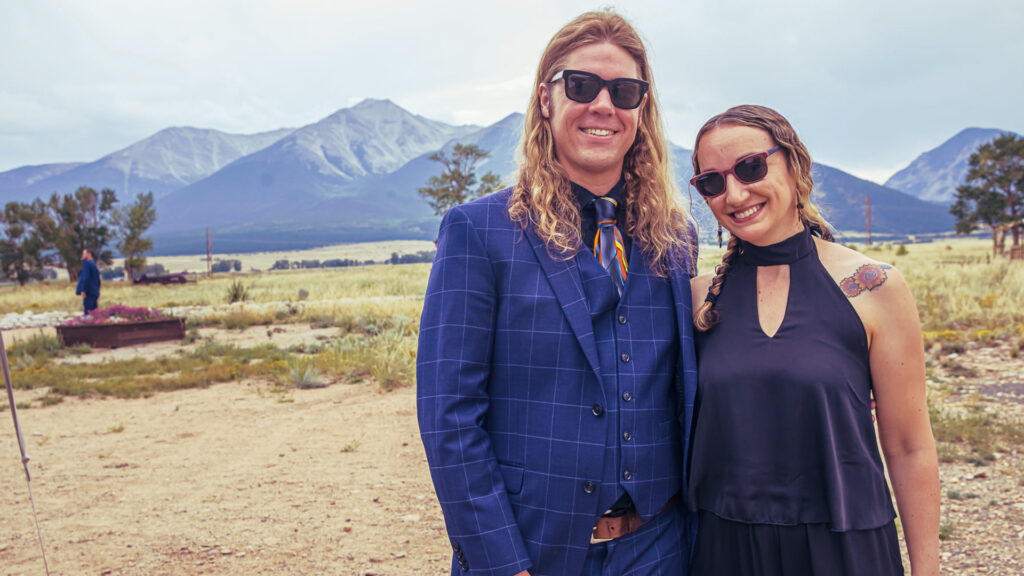
Late to the party, I just recently discovered this gem of performance space that opened up in early 2024 when I had the opportunity to see the amazing Buggy Jive open for the intellectual and well read storytellers, Nathan Meltz and the House of Tomorrow there. Transplants from Denver, Alana and Niek Velvis decided to land here in Upstate, Troy specifically, due to the creative pulse they felt on the street and the ‘unique mix of history, grit, and artistry, with a growing music and arts scene.’ Approachable and community minded, these creative entrepreneurs have made a space for local and regional indie artists to call home. Oh, and they have respectable baked goods, beer and coffee offerings!

Niek and Alana Velvis : Owners at Mojo’s Cafe and Gallery in Troy, New York | Photo: Provided

Please state your name and title. Also, can you share a bit of your backstory?

We’re Alana and Niek Velvis, the owners of MoJo’s Cafe & Gallery in Troy, NY. At our core, we’re musicians who love playing—that’s what brought us together, and it’s what drives most everything we do.

Alana: I am a classically trained percussionist, with years of experience as a session drummer, nationally touring musician, and recording engineer. I’ve played in a wide range of projects, but find myself especially drawn to the second line rhythms and deep funk traditions of New Orleans. I also handle accounting and keeping everything at MoJo’s running smoothly behind the scenes.

Niek: I am a bassist, recording engineer, and entrepreneur with a background in law and business development. Since 2012, I have focused on working with startups while staying active as a musician. My passion in building physical and virtual spaces that allow artists to create freely came to fruition in 2018, which was a start of what led to building MoJo’s here in Troy.

Music has always been at the center of our lives, and MoJo’s was built from that foundation.

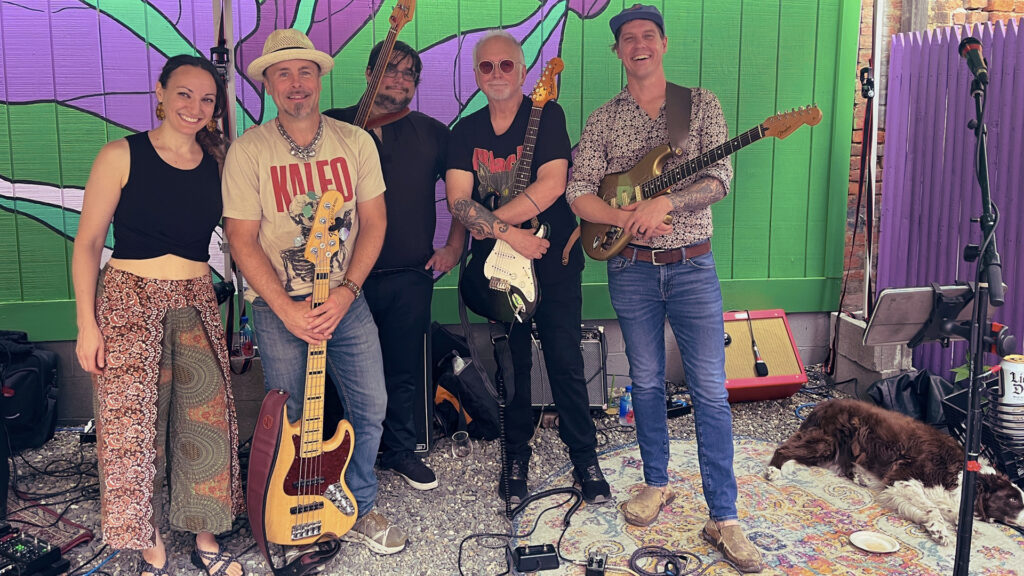
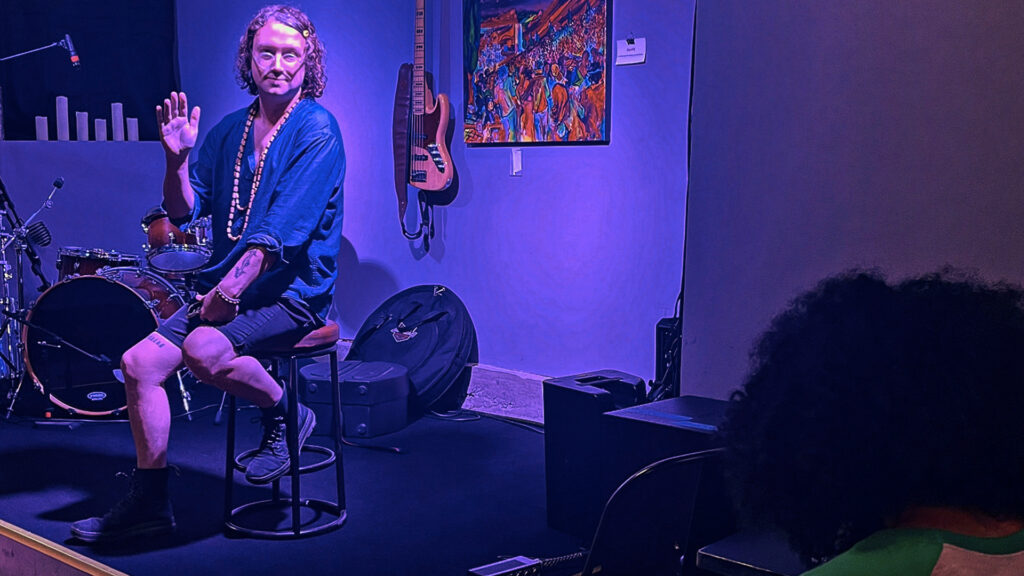
Backyard Stage Vibes at Mojo’s in Troy, New York | Photo: Provided

What was behind your choice in locating in the capital region / Troy? Also, I believe I remember you saying originally you did not plan to open a venue like this…how did it all come about?

We moved to Troy because of a pull to the creative pulse we felt here. For us, the city has a unique mix of history, grit, and artistry, with a growing music and arts scene that felt like the right place to help contribute to something special while remaining authentic to our own journey.

Before moving to Troy, we owned and operated a recording studio in Denver. Recording, engineering, and producing music were a huge part of our lives, and when we made the move to New York, we brought most of the studio gear with us, thinking we’d continue focusing on recording and production. And then, we found the space!

When we walked into what is now MoJo’s, some lightbulbs turned on for us. The layout and the energy felt like the perfect place. Instead of just being a recording space, we saw the potential for a venue, an art gallery, and a gathering place for musicians and artists, so we dove in and MoJo’s became the live extension of what we had already been doing in the studio.

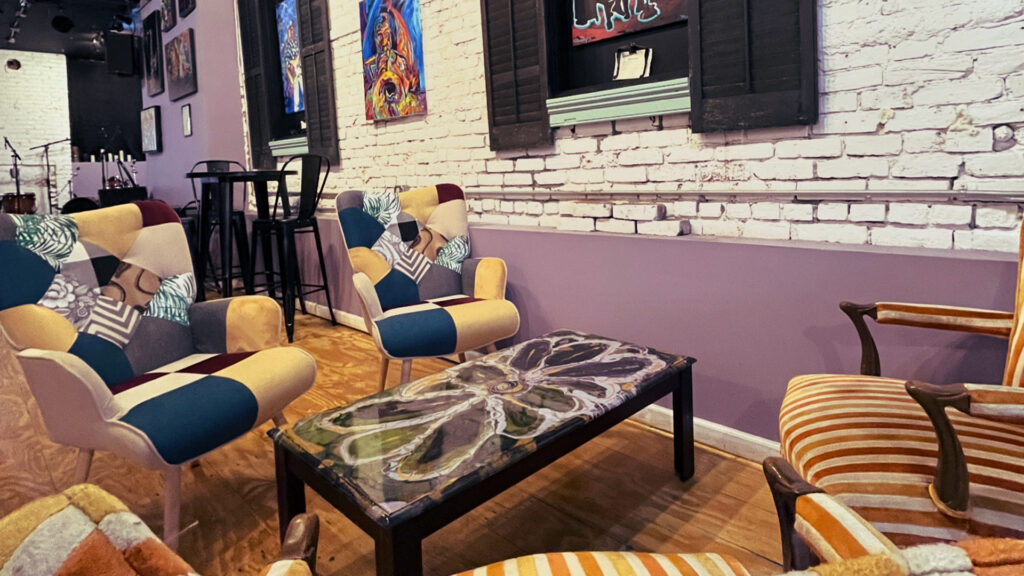
Interior Shot at Mojo’s Cafe and Gallery in Troy, New York | Photo: Provided

From the start, MoJo’s was envisioned as a music venue and art gallery first. The focus has always been on hosting live music and showcasing visual artists. The coffee side of things was the next logical step for us, inspired by the bones of the space and a desire to provide sober-friendly offerings for gallery and show attendees. Building out the coffee portion naturally led to opening the café during the daytime hours, and as the creative energy flowed, we started developing custom coffee offerings with Gipfel Coffee, who roasts all of MoJo’s coffee selections.

You’re right about the plan developing in real time, and we’re grateful for not keeping our feet as there’s never any telling where we’ll be swept off to next.

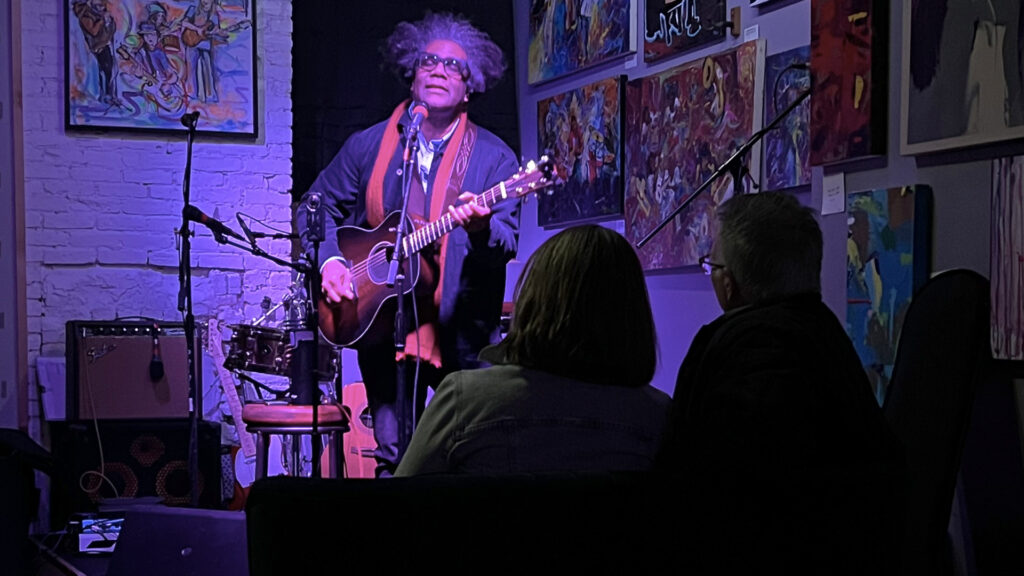
Buggy Jive – Live at Mojo’s Cafe and Gallery in Troy, New York | Photo: Corey Aldrich

Live music is a cornerstone of a vibrant city / community but is notoriously hard to make work economically…especially if you’re trying to compensate artist fairly. Can you share a bit about that side? How are you keeping the rent paid and making that all work?

This is a continuous challenge. Independent music spaces are fragile, especially when you’re committed to artist compensation. The reality is, ticket sales alone don’t cover costs, not in a room of our size. So for us, the key has been diversification. We treat MoJo’s as a multi-layered business with the cafe operating as a 3rd-Space during the day for food and beverage, Private Event Bookings, Art Sales, Custom Coffee Roasts, and Ticketed events.

Beyond that, it takes community commitment, which we are growing organically every day. We book shows for fans, so we work hard to curate a memorable sensory experience directed at an audience that values live music and understands that keeping a space like this alive requires active participation before, during, and after the show.

It’s also about efficiency for running a lean operation, keeping overhead low, and building relationships with artists and vendors where mutual support goes both ways.

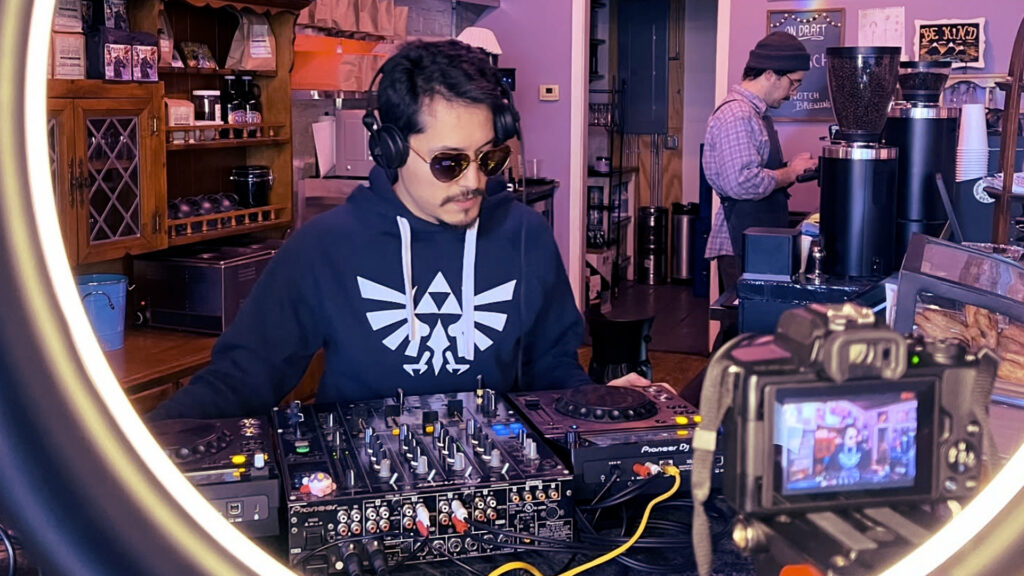
Afternoon Music Break with groop.lab’s DJ Denada | Photo: Provided

Do you have any general comments that you would like to share regarding what we should be doing to ensure that this level of musical ecosystem is sustainable and thriving?

  1. A thriving music scene starts with a dedicated and engaged audience. Show up often, even when you don’t know the performer. Live music and art aren’t nostalgic occasions, they should be part of your daily and weekly routines. The strength of a local music scene depends on people who are curious, open, and willing to experience something new. And when you do? Talk about it. Share what moved you, what surprised you, what made you think. Word of mouth builds culture, and the way we speak about music shapes the way our community values it.
  2. Musicians and artists need to talk about one another as if we are each other’s heroes. Build up your fellow artists, speak about them as if you’re their biggest fan. The love and beauty you speak of is palpable and contagious. When people feel how much love you have for your fellow artists and musicians, they’ll become fans themselves, start going to shows, and spread that energy further. We can actively choose how we frame our community through our language.  Your mindset is yours alone, yet when out in public, you are actively shaping the culture you are a part of. Don’t talk down about each other, lift each other up like the heroes we all are.
  3. Respect process over product. Art and music are all part of a larger ecosystem where artists are manifesting their creative process in real time. Don’t judge a single performance as a finished statement. Artists are evolving, growing, and experimenting live, and the audience, you(!) are a real part of it! One experience at a show should never dictate whether you go to another, so keep showing up.
     
  4. City and State Governments need to recognize the value of music and art spaces as cultural institutions through direct policy support. A municipality that boasts being a music and arts hub just because artists have chosen to live there while lacking direct policy to support music and art is just all smoke and mirrors.
Preshow Vibes at Mojo’s Cafe and Gallery in Troy, New York | Photo: Provided

EXTRA CREDIT: Anything you have coming up or are excited about that you would like to share?

This weekend show is not to be missed, if you haven’t heard Joseph Biss play guitar and sing yet, make it a priority for your Saturday, the musicianship is incredible.

Saturday, March 22nd – Joseph Biss w/s/g Alicia Macier VanScoy
$10 adv / $12 at the door | Doors: 6PM | Show: 7PM

Both nights will bring something special to the room—come through and be part of it.

WEB: mojoscafegallery.com | IG: @mojoscafegallery

Elizabeth Reiss Advice for 2025 : Focus on the Basics | Embrace Change

January 10, 2025 By Corey Aldrich

Elizabeth Reiss, CEO of The Arts Center of the Capital Region is a force of nature. Many of you here no doubt know her or at least of her but many don’t fully understand the energetic impact and momentum she creates in the regional art scene and beyond. Seasoned and confident, Liz is not only a personal mentor to myself and many others but additionally serves as an Advisory Board Member of ACE! who has been connected here since it’s inception. As such, I can’t think of a better person to bring a slice of pragmatic sanity to the barrel we are looking down that we call 2025.

Elizabeth Reiss, CEO at The Arts Center of the Capital Region | Image: Corey Aldrich

Please state your name, title and past experience that got you to where you are today.

My name is Elizabeth Reiss. I am currently the CEO of the Arts Center of the Capital Region.

I’ve always worked in the arts, everything from gallery installer, docent trainer, publications manager to festival producer.  What got me here? At the Arts Center?  When I was in college I took a painting class.  A visiting artist/professor looked at my work and scoffed at it.  Told me to stop painting.  She and my primary professor laughed.  I was humiliated.  I never want that experience for someone.  Everyone should paint. Sing. Dance. Maybe they won’t end up in a gallery. Every artist belongs somewhere – the walls of MoMa or the fridge.  So, I work at a place that celebrates it all.  I love it. I’m lucky. 

That said, what else got me here?  I’m fearless when it comes to thinking I can pull off a project. I’ve opened a children’s museum in NYC, produced an artist-made skate board park in Pittsburgh, and now I’m working on my most complicated endeavor yet – finally developing the upper floors of the Arts Center.  

The 2024 FENCE Show in the Jane Altes Gallery at the Arts Center of the Capital Region
Image: Provided

Can you tell us a bit about what a day in the life looks like for you at the Arts Center?

The Arts Center has a much smaller staff than people may think.  There are 7 of us full time.  So, I spend a lot of time internally, writing & managing projects. I like writing. Our board is really involved, there’s lots of people dropping in. Or, I’m out. I’m old fashioned, I like to meet with people get a little deeper into things. Get to really know people. I spend a lot of my time representing the Center and the region at places like Creatives Rebuild New York, ArtsNYS, or with elected officials. I’m trying to start up a new group  – Capital Region Arts Allies, to help the region get more funding.  We are all surviving, but imagine if we all had enough resources to do more?

Arts Center of the Capital Region – One of the 2024 Troy Glow Exhibits in Downtown Troy NY
Image: Corey Aldrich

I know in addition to your main gig, you are involved in other supportive organizations. Can you tell us a bit about those roles?

When I started at the Arts Center, I knew we were also an arts council and a regrant site, but I didn’t really know what any of of that meant. So, I turned to my peers and had some fabulous mentors who mentors formed ArtsNYS, a state-wide educational and advocacy group. That led to me to serve as President of ArtsNYS for the last three years which has been incredibly fruitful.  The Arts Center was able to distribute a million dollars over two years in grants to our community.  Beyond the funding, I’ve met a lot of people. Last fall I invited the Center for Urban Futures (See ACE! Interview with Eli Dvorkin of CUF) here to talk about the arts and artists in the Capital Region. The growth here is phenomenal. The artist population is growing at a faster rate than any other sector. It’s really exciting. I stepped down as President, but will still be finishing the projects that I started, including a state-wide artist survey that ACE!, CREATE Council on the Arts and Siena College collaborated on with the Arts Center. We are just getting to building the research tools for the findings.  Stay tuned on that one.  

A Young Student Works in the Stained Glass Shop at the Arts Center of the Capital Region in Troy NY
Image: Provided

With a new administration, the end of ARPA funding and the current underwriting challenges for the arts, where do you see things headed in 2025? What in your opinion needs to be the main focus for arts / cultural institutions?

You know, the future is a little uncertain in regards to policy and funding.  And so many people are feeling unsafe right now.  This is where the rings on my tree may be an asset.  I’ve seen this before.  Federal funds may retract, state funds will be under strain….but….private dollars may fare better. It’s too soon to tell.  One thing I do know…. this kind of uncertainty leads me to my own true certainty – in times of unrest people need the arts.  Artists help us understand what we are seeing, experiencing and feeling. Time and time again, when things get tough, people want to feel control.  So they start making things again. There’s a reason crafts blew up during the pandemic. It was something to do, sure, but it was something we could do with our own two hands and with our own autonomy. So the arts will forge on. At the Arts Center? Our main focus will be on strengthening our core programming and to continue to rebuild now that the rescue funds have be spent. Yet, we’ll also try to be sensitive to the changes and stay ahead of them. We will be as nimble as possible to serve the needs as they present themselves. That said, we have a few ARPA (American Rescue Plan Act) and DRI (Downtown Revitalization Initiative) dollars to spend, so look forward to more public art.

BIG INK Print Workshop at the Arts Center of the Capital Region in Troy NY | Image: Provided

What would you say are some practical suggestions that folks can put to use in their organizations to find a more predictable resource sustainability?

That’s a big question. Lets see…

When funding gets tough, its always good to stick to your core competencies and to deliver them with excellence. If you want predictability, you too need to be predictable. That doesn’t mean you have to do the same creative act every day, but it does mean you have to commit to the same level of care and thoughtfulness in what you bring to the public. 

Art Center of the Capital Region – 2023 Troy Art Block in Church Street Alley, Troy NY
Image: Steve Alverez

It’s better to have 100 donors at $10 a month than one donor at $1000 a month even though its a lot more work. Your funding can withstand donors dropping in and out and your programming can stay on track.  

I’m also still learning this one – communicate more than you think you need to.  People – whether they are consumers or donors – want the inside track.  They want to stay in touch. Let’s face it, its hard to get people’s attention, so develop a communication plan and stick with it. Even if no one tells you they are listening. They are. 

Youth Photography Workshop at the Arts Center of the Capital Region in Troy NY
Image: Provided

Anything in the pipeline that we should be aware of? Anything you would like to plug that you have coming up?

More and more creatives are moving upstate and they aren’t interested in our old rules of who does what or our outdated regional boundaries. The work week will continue to flow and change, where people go for arts and entertainment will flow and change, and I hope as a community we can work together to reach for more. 

Sorry I don’t have anything more tangible. It’s winter.  We are all hunkered down.  The kilns downstairs in the pottery studio are warm though…

For more info –
WEB: capartscenter.org
IG: @capregionartscenter
FB: @TheArtsCenteroftheCapitalRegion

Working on the Wheel in the Pottery Studio | Image: Provided
  • « Go to Previous Page
  • Page 1
  • Page 2
  • Page 3
  • Page 4
  • Interim pages omitted …
  • Page 29
  • Go to Next Page »

Creative Economy Updates and Other Good Stuff!

STAY CONNECTED!

  • Facebook
  • Instagram
  • Twitter
Copyright © 2020 THE UPSTATE ALLIANCE FOR THE CREATIVE ECONOMY

info@upstatecreative.org | 41 State Street, Albany, NY 12207

Design by Reach Creative