• Skip to primary navigation
  • Skip to main content

ACE

Upstate Alliance for the Creative Economy

  • HOME
  • ABOUT
  • NEWSLETTER
  • SUBSCRIBE
  • JOBS
  • Show Search
Hide Search

ACE PLACES

Write This Way : A Conversation w/ SONG CITY’s Scott Womer

April 2, 2024 By Corey Aldrich

About two years ago, I started seeing and hearing about something called Song City. The branding was tight, it felt like something important was happening. Eventually, I realized that it was in fact a local phenom. These shows, upstairs at the RUCK have a very organic feel. Played in a round, musicians all interacting with and feeding off one another – the vibe is very intimate. I caught up with Scott Womer to find out more about the overall program mission and direction and to get a peek under the covers to see what makes this series tick.

Song City Founder and Director, Scott Wormer | Image: Kiki Vassilakis (with edits)

Please state your name, what you do and any relevant background info.

My name is Scott Womer, Songwriter and the Founder / Director of Song City in Troy New York. During the day, I work as a Litho Technician at Global Foundries in Malta. On the education front, I hold a BA from Gordon College.
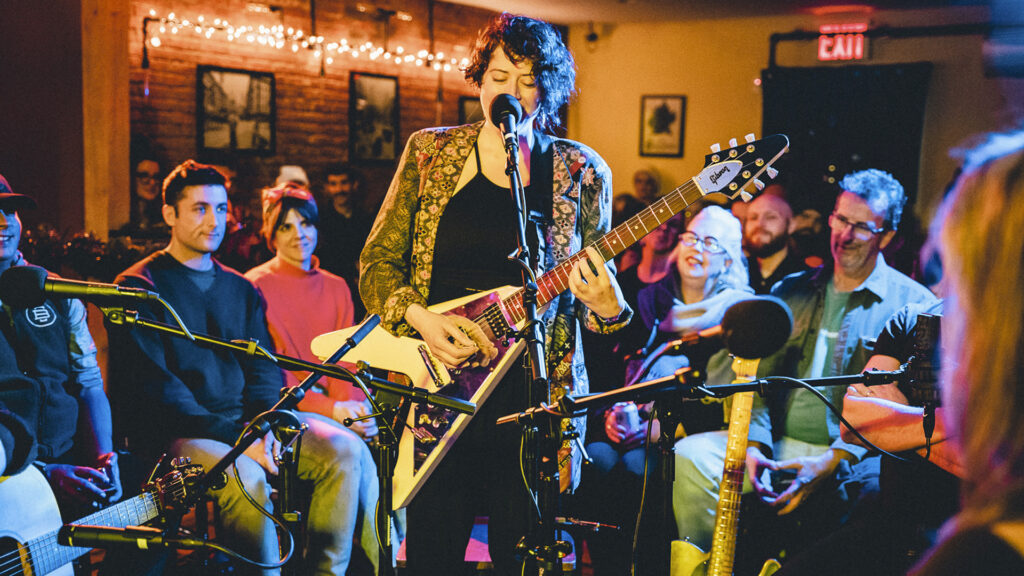
Song City w/ Caitlin Barker at the RUCK in Troy, New York 01.10.23 | Image: Kiki Vassilakis

I know you’re a musician yourself. What motivated you to put together the SONG CITY series. What is your mission and goals for the program?

In 1995, I moved from Albany to Nashville, in hopes of getting more music opportunities. It’s a humbling experience to move from a small music scene to one of the premier music cities of the world, where there are thousands of people doing what you do, and doing it much better. Having seen that happen multiple times, I decided to alter my goals. Over the next 5 years, I had tremendous experiences working at a record label, doing session work, learning to write, forming a band, and recording an EP.

The greatest thing I learned in Nashville was the power of a song. Beyond techniques, abilities, and trends, the song is what changes lives. Much of this lesson happened at a venue called The Bluebird Cafe. A staple in Nashville, the Bluebird featured weekly showcases, featuring 4 local songwriters, mostly known for their writing of songs by all our favorite country stars. This is also the venue where artists such as Taylor Swift and Keith Urban were discovered. The weakness of the Bluebird at that point in their history, was that they were a single-genre showcase. Not only does that lack in variety, more importantly, it conditions the audience to think that this is the only style of songwriting. At the time, I had no idea how that observation would affect my future.
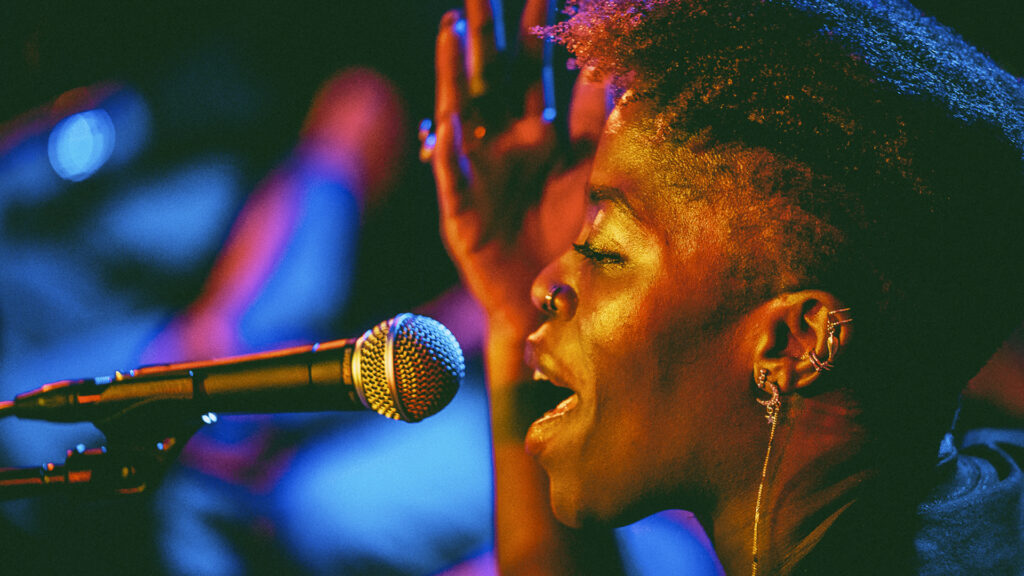
Song City w/ Amani O at the RUCK in Troy, New York 6-13-23 | Image: Kiki Vassilakis

Years later, when I moved back to Troy NY, and was so energized by the talent and variety of the local music scene, I felt compelled to do whatever I could to help it grow. After writing and recording a project under the name Fenton Hardy during Covid, I realized how important it is to be part of an artistic city. Community is at the heart of every effective movement. So, I took what I had experienced at the Bluebird, and expanded it to include all genres. Some of our greatest writers are hip hop artists, jazz artists, alternative and avant-garde artists, and they deserve a place at the table. This not only creates respect for all styles of songwriting, but expands the audience’s experience and musical taste.
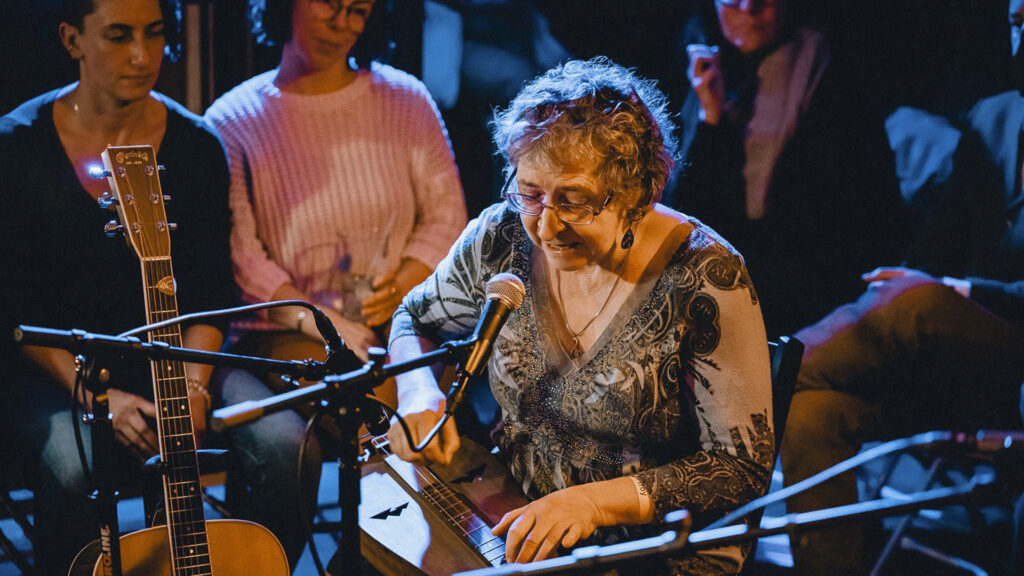
Song City at the Ruck in Troy, New York | Image: Kiki Vissilakis

Our home at The Ruck is integral to the success of Song City. One day, Dave Gardell, owner of my neighborhood bar, The Ruck, contacted me about bringing music back to their venue. They were interested in concerts and an open mic, and asked me to run those events. What I didn’t know was that there is a second and third floor to the Ruck that was beautiful and fairly unused. I instantly realized this was the room I was looking for.

Beyond the Song City showcase, we also host a monthly songwriting community called The Open Floor which began simply as a monthly open mic. We have a “Song Challenge” at each month’s Open Floor that has become the major draw for each of these evenings. On the first day of each month, I post a phrase. The writers then have the rest of the month to write a song using that phrase, and perform it at The Open Floor, on the fourth Tuesday of each month. It is in no way a competition for us. It’s purely a motivational tool to keep us consistently writing. The second half of each Open Floor is a time for everyone that wrote for the challenge to play their song for each other. It’s amazing to see how many ways a phrase can be used. I often write a song myself for the challenge, and it’s significantly improved my songwriting.

Song City at the RUCK in Troy, New York | Image: Kiki Vassilakis

As a producer, I can attest to the challenge of producing music shows where folks get paid and there’s a little change left at the end of the night. How have you structured the business side to pull all that off?

Most local artists can not afford management. And because of this, they deal with being double-booked, underpaid, cancelled last minute, and under-publicized. They deserve to be taken care of. Because of this, going into Season 2, I raised the ticket price by 50%, so that I could raise their pay by the same percentage. Additionally, We also where able to help support the program via grant funding we secured through The Arts Center of the Capital Region. The events are highly publicized, given a generous bar tab, a comp ticket, and one of the nicest green rooms in the 518. We also hire the best music photographer in the capital district, Kiki Vassilakis, to shoot each showcase, of which the artists are given all of these photos to use for their own use. As much as I would love to make my living serving the local music community, we currently are at a place where we can pay all involved, artists, audio engineer, and photographer.
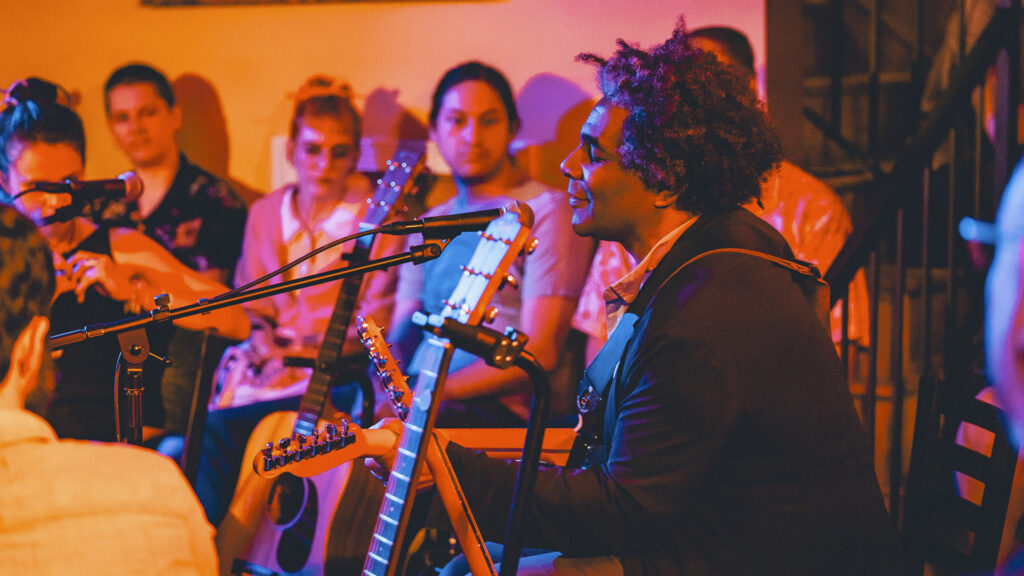
Song City at the RUCK in Troy, New York 09.12.23 | Image: Kiki Vassilakis

I believe you were the recipient of the NYSCA Re-grant program through the Arts Center of the Capital Region. Can you share a little but about why you feel like programs such as this are important to the sustainability of our creative community?

The days of musicians making money through their recorded music are over. As much as music streaming has increased the general public’s ability to have access to more music than anytime in history, it has also stripped away the musicians’ ability to make a living off their recorded music. Spotify currently pays artists approximately $0.003 per stream on average. That means for every 1000 plays on Spotify, an artist will make approximately $4.00. And from 2024 onwards, artists will also need to hit a minimum number of listeners to make their track eligible for royalty payments. Therefore, if artists are truly going to make money through their art, they need to be performing shows often and being paid well. They also need to be selling merch and physical copies of their music. So there is a greater need than ever for the public to support the local artists, beyond streaming their music.
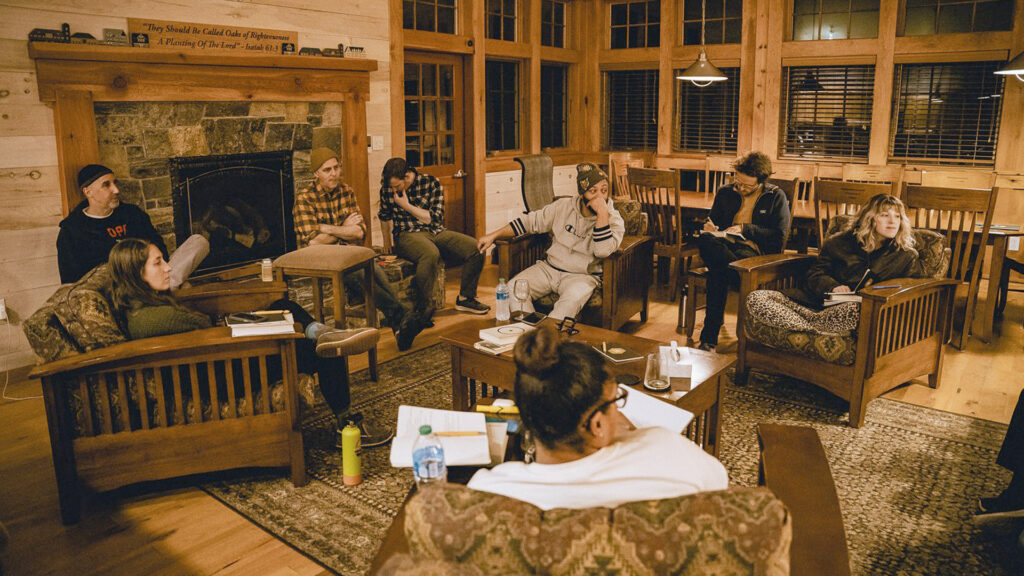
Song City’s Ink Retreat 2023 at YMCA’s Silver Bay | Image: Kiki Vassilakis

The final piece of the current Song City universe is a yearly songwriting retreat called Ink. Last year, we were honored to be awarded a $5000 Community Arts Grant through the NYSCA and The Art Center of the Capital Region which helped fund the program. Many songwriters applied and 10 were chosen, to spend 3 nights at a lodge on Lake George, part of the YMCA Silver Bay property. Like Song City, we encouraged writers of all genres to apply, R & B, indie-pop, alt-rock, folk, hip hop etc. The days were a combination of individual writing, collaborations, daily walks, amazing food, and nightly gatherings around the fireplace sharing our songs. We read and discussed Rick Rubin’s brilliant book “The Creative Act” and used some of his techniques to change how we normally write. We also had a small demo studio and engineer in-house to capture the new songs. And ultimately concluded with a showcase here in Troy, featuring the songs written on the retreat, as well as a live recording and film of that show.
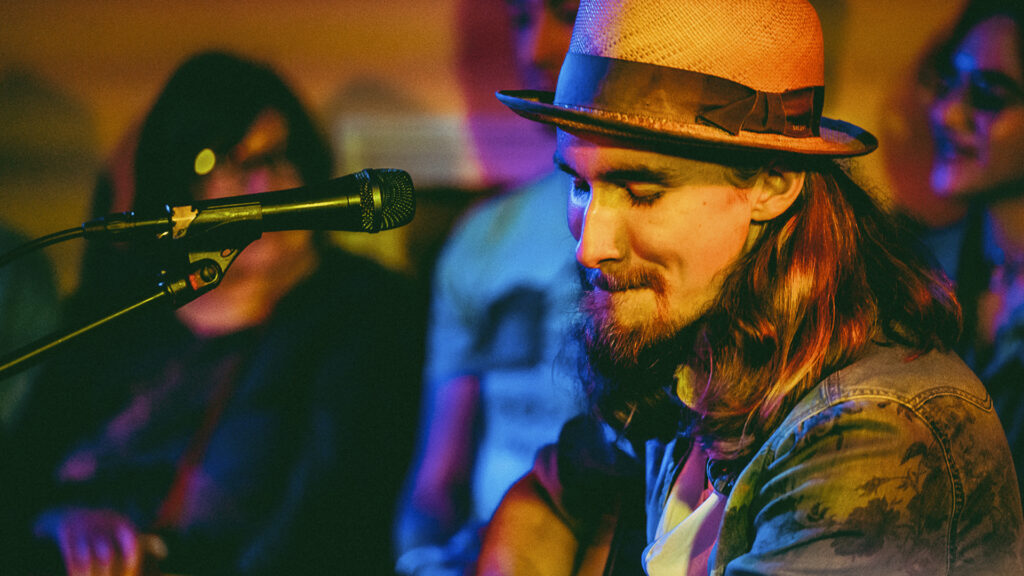
Song City at the RUCK in Troy, New York | Image: Kiki Vassilakis

Anything you have coming up you would like to share with our audience to keep them in the loop? Long term plans etc?

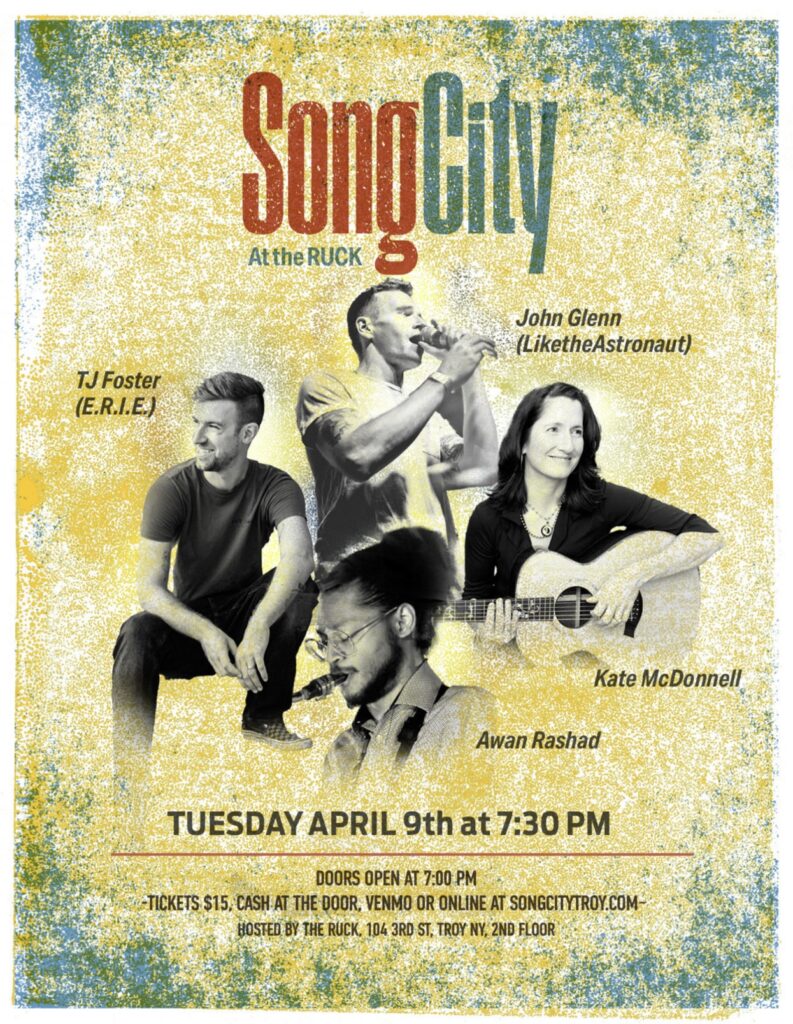
The next few months are busy at Song City. We have 3 showcases left in Season 2, with the next one happening on Tuesday, April 9, at 7:30pm, hosted by The Ruck in Troy. This month we are featuring jazz saxophonist Awan Rashad, TJ Foster, frontman for the local rock band E.R.I.E., alt-pop artist, John Glenn from LiketheAstronaut, and contemporary folk songwriter Kate McDonnell. The Open Floor songwriting community continues to meet every 4th Tuesday. We are beginning to plan 2024’s Ink Retreat, and we are getting ready to release a special recording of the showcase we did this last year, featuring live performances of the artists and songs written on 2023’s retreat!

Watch for all of this on songcitytroy.com and Instagram at @songcitytroy. If you would like more information, would like to be involved, or would be interested in supporting Song City, you can reach me directly at songcitytroy (@) gmail.com.
Albany’s Newest Secret Sauce : Diane Eber on ‘Hatching the EGG’

January 31, 2024 By Corey Aldrich

I first met Peter Lesser (Previous Executive Director of the EGG) many years ago through an introduction from Ellen Sinopoli. I was on the Ellen Sinopoli Dance Company board of directors at the time and had stopped by Ellen’s office in The EGG. I was really blown away by the architecture and the excellent programming that Peter was bringing there…to the tune of over 200 events and upwards of 70K attendees per year! After 22 years, the time came and Peter moved on to spend more time with his family on the West Coast. Since then, after an exhaustive search, a new Executive Director has joined on to take up the mantle. Diane Eber is fun, energized, no nonsense and ready to honor that legacy while moving it forward for a new paradigm, in a new time. I caught up briefly with her to get a sense of who she is and what that will look like.

Diane Eber, Executive Director at The EGG in Albany, New York | Image: Provided

Please tell us your current title and what that entails on a daily basis. Also, a brief synopsis of your previous career experience and education.

My name is Diane Eber and I am Executive Director of The Egg in Albany, New York. My day is usually spent in LOTS of meetings with various partners / staff members / artists / agents / OGS / funders. Then if I have time I try and squeeze in some emailing and dreaming of future programming. I try to always prioritize creative time and make sure I spend at least SOME of my day thinking about ART which is why I do this work.

I am a music nerd at heart – raised by 2 musicians, I was on the path of being a classical clarinetist and then found my true passion was in the magic of bringing together an artist and an audience. I discovered my love for this path booking shows at Vassar College and then went on to work at a booking agency and followed by Warner Music Group, a major record label. I eventually landed at BRIC Celebrate Brooklyn. In college I was a Psychology Major but spent most of my days learning the ins and outs of the music business and booking as many shows as I could pull together.

Mitski at MASS MoCA | Image: Provided
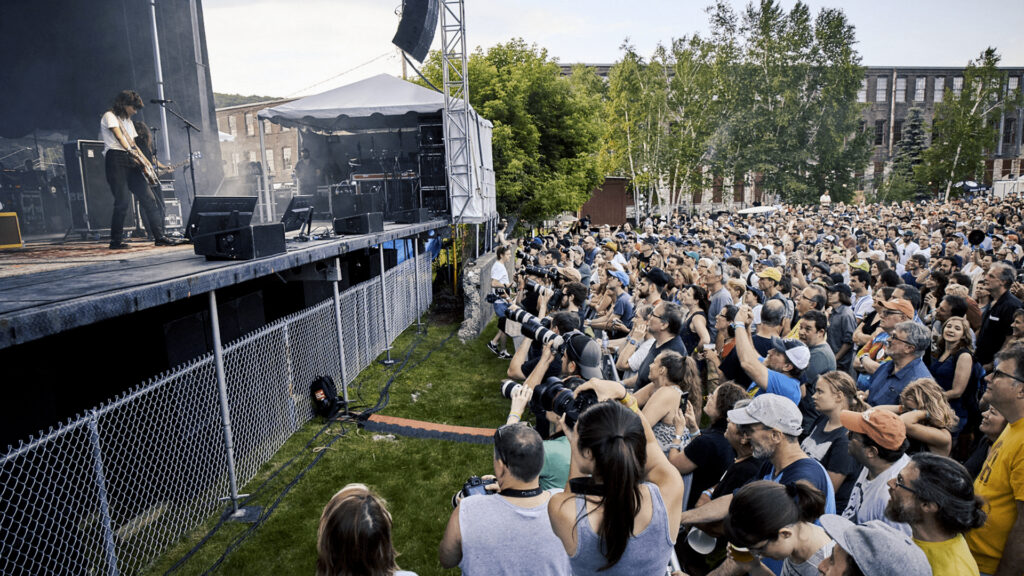
Courtney Barnett at Solid Sound Festival 2019 | Image: WFUV Public Radio

The EGG is an important institution on so many levels for Albany with some pretty established shoes to fill following up Peter’s (Peter Lesser) legacy. Can you share a bit about how you plan to continue that track record of stability while building a new institutional direction that addresses current needs and changes in the industry and attendee preferences?

Yes – Peter built SUCH an amazing legacy and what an incredible history of artists who have graced these 2 stages. I am humbled to try to fill his foot steps. It will be a gradual path to breathe new life into The Egg and I will be making small incremental changes as I go.

Right now I am mostly listening and learning about the community and the history and starting to have big dreams about how we can ‘Hatch The Egg.’ I have already brought in a marketing person who is amazing and it’s the first time The Egg has had a marketing person since the ’90s! I also made the bold (somewhat controversial) move to allow beverages into both theatres. I believe strongly that art is for everyone and that the experience of going to the theatre should not feel elitist. Part of making the experience comfortable is having a drink in your hand. I hope to attract new audiences and create buzz and excitement about this incredible space.

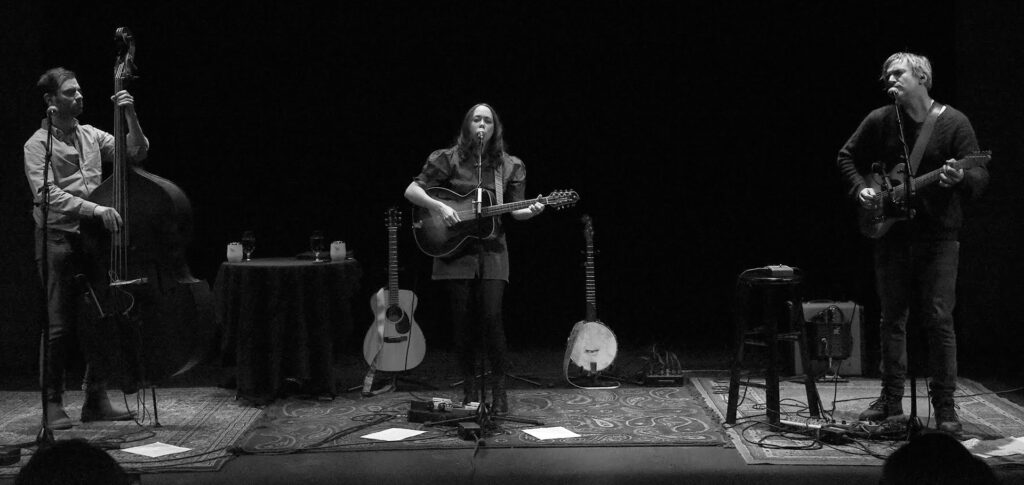
Sarah Jarosz Plays The EGG | Image: Claude Sawyer
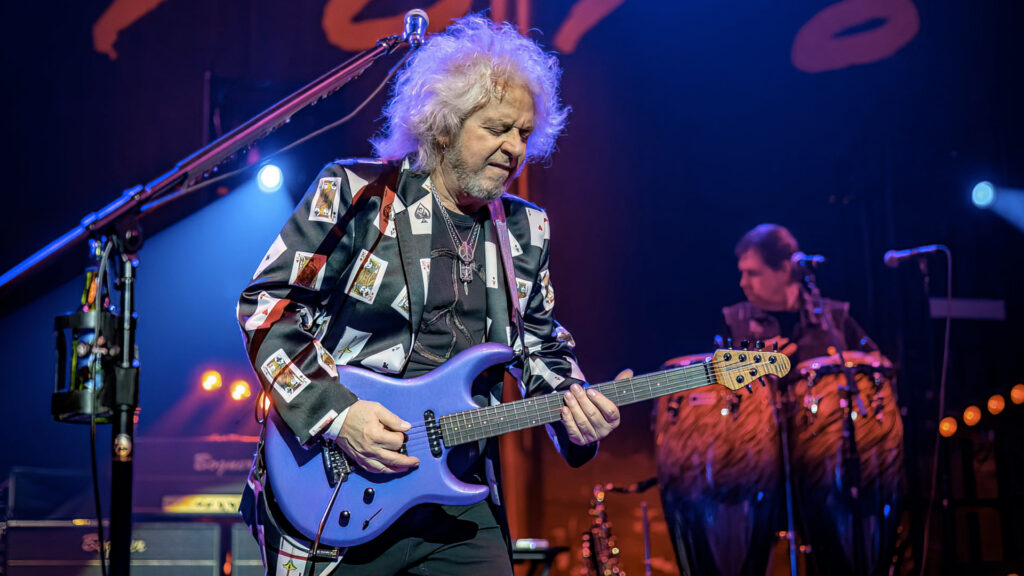
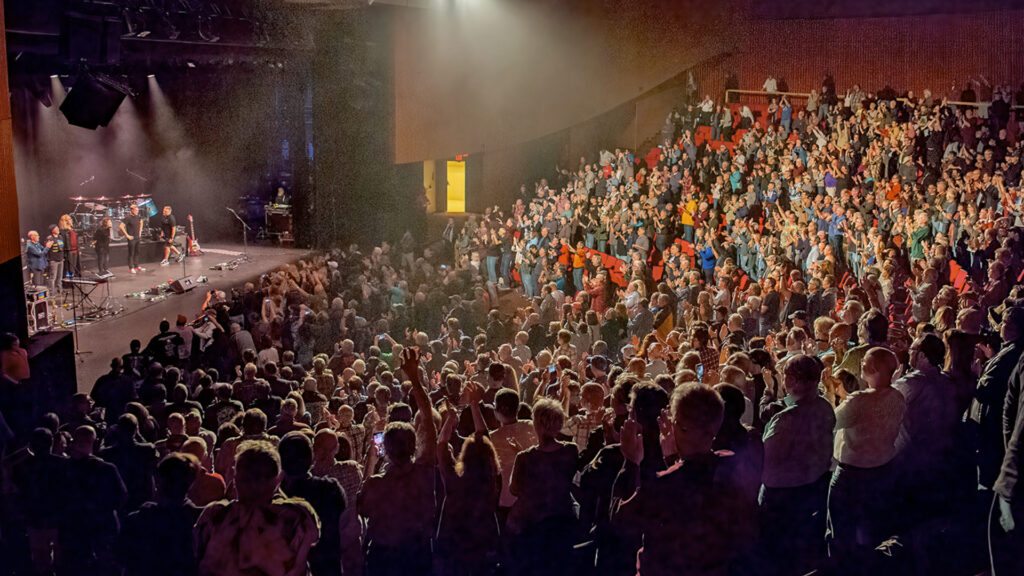
Steve Lukather Shreds – TOTO at The EGG 2023 | Image: Claude Sawyer

In our recent conversation, you discussed finding new ways to incorporate a creative community ecosystem into the space and programming. Can you share a bit about that?

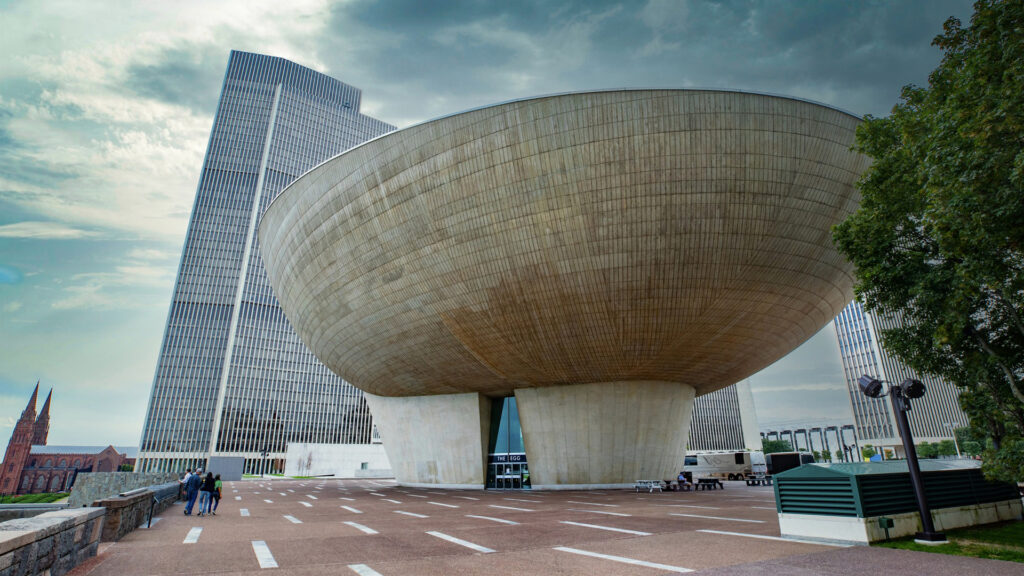
Creativity is at the core of everything I do and is so important to cultivate and help grow. I would love for The Egg to really be defined by it’s ‘ellipsoidal structure‘ (literally that is what the Enabling Legislation document calls the building – ‘ellipsoidal structure’ – I LOVE that!). At the core of The Egg we are a space with no straight lines where art and creativity can thrive and push artistic boundaries. I took this job because I love the idea of building a curatorial identity for The Egg where the building itself is the primary creative grounding.

The EGG in Albany, New York | Image: John Bellm
Interior Shot of The EGG in Albany, New York | Image: Provided

For programmatic initiatives: the big vision is to lean into the building – tell the story of its history and invite audience to engage with not just what is happening onstage but with the building itself – outside and in. Think of The Egg as a blank canvas for art. We are currently developing a couple of approaches on that front. ‘The Egg Incubates‘ – where we will incubate and support new work and premiere it on our stages and, ‘Expansion‘ – a series where we invite audience and artists to expand their minds and curate a series that goes beyond our current state of being.

2023 Steve Hackett at the EGG | Image: Timothy H. Raab

Part of breathing new life into The Egg is the branding and visual identity. You will see a shift in our graphic presence as well as the development of an authentic, individualized voice on social media. The Egg will be a place for engagement not just show announcements. This is all still a work in process as we develop these ideas more concretely for the next season. Consider this an ACE! insider sneak peak!

To follow along, check us out on social media and specifically, watch these 2 hash tags: #hatchtheegg #spottheegg

The Egg is such a striking part of the Albany skyline, history and ecosystem…it’s amazing where you can #spottheegg!

2023 Upcoming Shows at The EGG | Image: Provided

What’s the best way for folks to explore collaboration opportunities with The EGG?

Reach out to me via email! Diane (@) theegg.org

Always happy to connect – but just be patient if I don’t respond right away – my inbox is CRAZY 😉

All the Good, All the Time : at Made X Hudson : Sustainability is More Than Just Fashionable

January 31, 2024 By Corey Aldrich

I met Trixie of Trixie’s List fame outside of Club Helsinki in Hudson, NY. It was part of a quick promotional shoot for ‘Wish You Were Hear,’ a covid pandemic live broadcast music series that I was co-producing with Ryder Cooley of the Dust Bowl Faeries. Since then, I have been on Trixie’s mailing list and recently came across this great article by Ben Rendich that I wanted to share with ACE! subscribers…very cool things are afoot in the sustainable fashion scene in Catskill…as you shall see.

EDITORS NOTE: Original article was published in December so you will notice a mention of the holidays.

Made in Hudson in downtown Catskill New York | Image: Provided

For anyone in search of a last-minute holiday gift, try swinging by Made X Hudson – the full service design atelier headquartered on Main Street in Catskill. From their own branded clothing (produced in-house by a team of skilled seamsters) to beauty and pantry items from a roster of Hudson Valley makers, everything in the store bespeaks local quality.

In addition, Made X Hudson offers a variety of ongoing events and unique services, including sewing classes, knitting circles, Pilates, garment alterations, and even custom clothing.

“We do so many different things, it’s kind of bonkers,” says Sergio Guadarrama, co-founder and the gentleman who helms all of Made X’s creative decision-making.

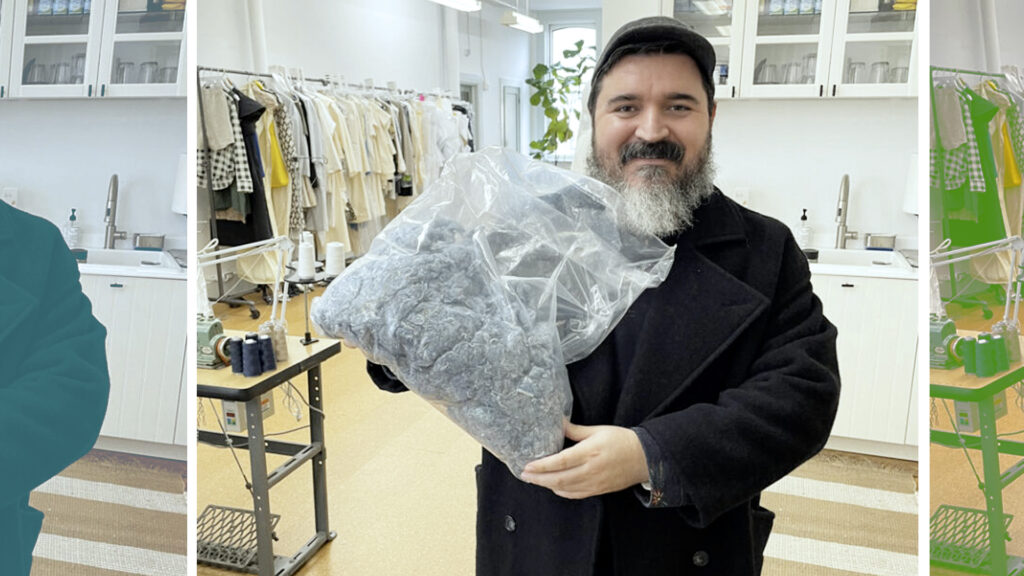
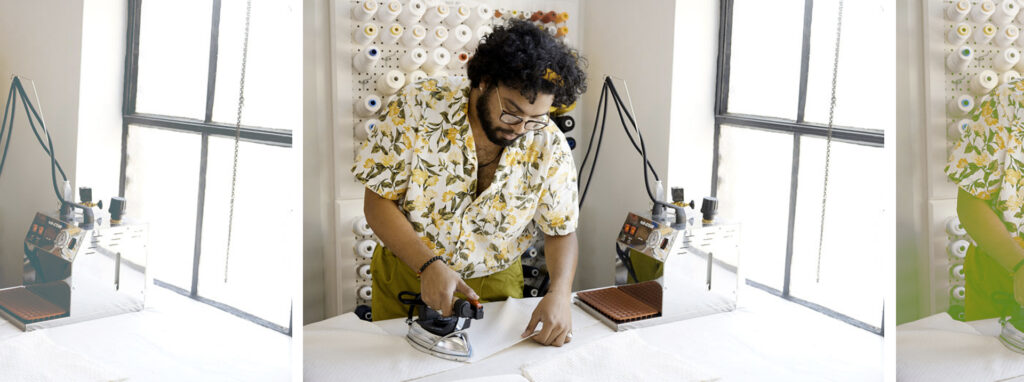
Co-founder at Made X Hudson, Sergio Guadarrama Poses with a Bag of Pre-Spun Wool
Image: Provided

“We’ve done a lot in two years,” agrees Eric De Feo, who manages the business side of things. “We don’t sleep much. It’s 24/7 work.”

Eric is founder and director of the Hudson Community Incubator, an organization devoted to fostering sustainable businesses in the city. It was through this organization that he met Sergio, who’d moved to the area and wanted to open a garment factory.

“It was the peak of the pandemic at that time,” says Eric, “and a lot of factories were struggling. A lot of designers were moving up from the city as well.”

A Made X Employee Works on One of the Store’s in House Creations | Made X Hudson Offers a Variety of Services, Including Garment Alterations | Image: Shannon Greer

The duo hatched their plan in Hudson; they just couldn’t afford any real estate. “We started in a little barn in Leeds with two sewing machines,” remembers Eric. “As soon as we opened our doors, we had orders to create products – from day one.”

Eventually, they allocated enough resources to open their Catskill factory in November 2021, followed by an adjoining shop in March of this year. They opened their Hudson shop this past September.

Sergio has been in the industry for over twenty years, formerly working in women’s evening wear. “I love making things with my hands,” he says. “I love focusing on sustainability and trying to make the fashion industry as ethical as possible.”

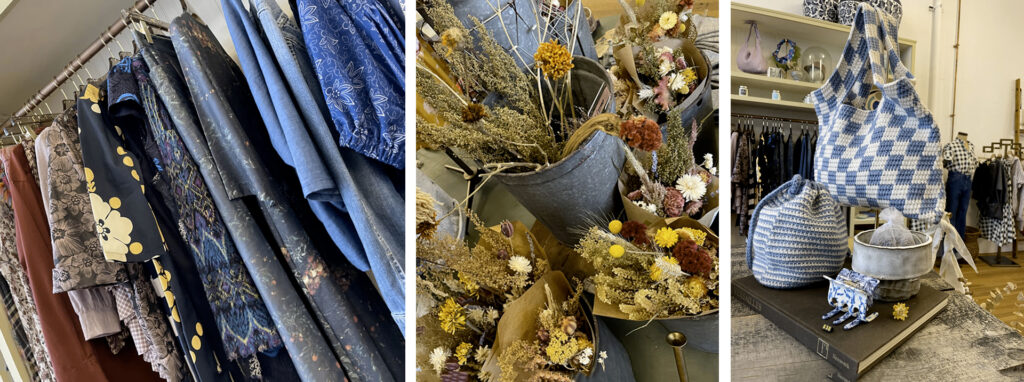
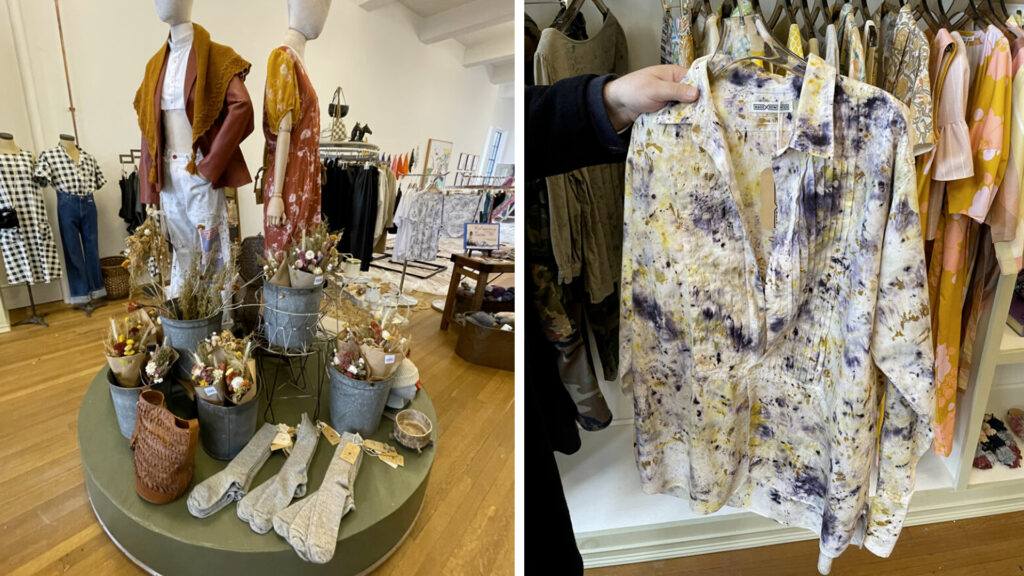
Colorful Racks of Made X Hudson Originals, Dried Flower Bouquets and Locally Made Handbags and Hair Clips are Just Some of the Offerings at Made X Hudson | Image: Provided
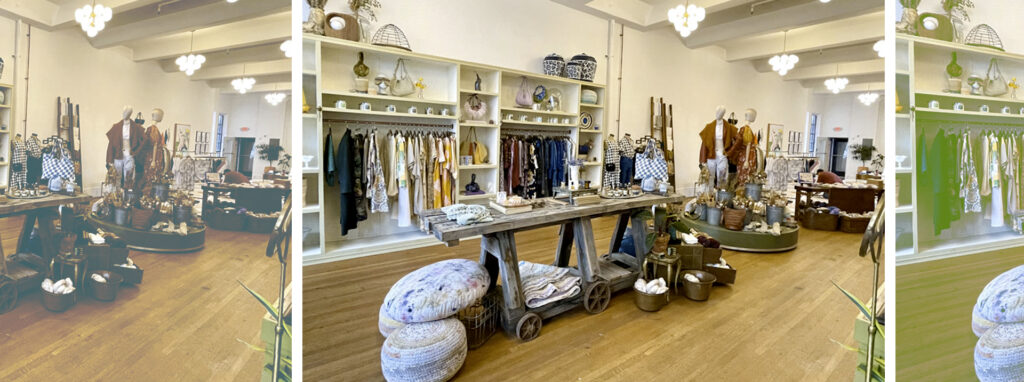
Made X Hudson is a Full Service Design Atelier Based in Catskill, New York | Image: Provided

His familiarity with the less-than equitable practices of other companies has aided in the creation of a factory that, as he puts it, “encompasses all the good.” The objective at Made X Hudson is to put employees first, and to bring manufacturing back to the community. This entails working in the “old style,” where workers are viewed as an investment, not an expenditure.

“You can overhear the banter,” Eric points out, referring to the conversation that’s drifting into the office where we’re conducting our interview. “Usually that’s not allowed in other factories.”

Made X Hudson employees are all folks based in Hudson, Catskill, and Saugerties; their workroom is on the second floor of the Catskill shop. “We have a fabulous team,” says Sergio. “No one is coming in with much factory experience, because many factories have been shuttering over the last few decades. So everybody’s being trained up – usually from some basic, home-sewing experience.”

“That’s why we opened up our retail shops,” he continues. “To subsidize our training and factory work so that we don’t have to create an environment that’s top-down… [It] enables us to have a more enjoyable work environment.”

Steaming Fabric at Made X Hudson | Image: Shannon Greer

This empowered mindset is echoed in Made X’s inventory as well. Most of the products in their shops originate from Hudson Valley artisans – including Brosgé, a Schenectady-based brand of eco-friendly clothing for plus-sized people; MLE, Saugerties designer Emily Li Mandri’s line of handbags, hair clips and other accessories; and Dunia, a Croatian-American designer who curates Made X’s jewelry selection.

Sergio says that this maker-to-store supply chain is yet another means of fostering sustainability. “When you spend money in stores that are selling products made in other locations, you’re sending money away from your own community. What we’re doing leads to a circular economy.”

A Display at Made X Hudson’s Catskill Store | Upcycled Vintage Piece | Image: Provided

Made X Hudson runs the gamut of price points so that everyone can participate in sustainability.

To that end, Made X Hudson is also involved in spearheading a New York State grant initiative that will create a self-sufficient, regional clothing industry, from seed to finished product. “We were selected alongside RPI and FIT to build a fashion innovation center,” says Eric, “which is going to focus on farm-to-fiber products, lab-grown textiles, and also work to promote a New York sustainable supply chain.”

In the meantime, Made X Hudson runs a popular quarterly clothing swap, where for $15 you can bring as many items and take as many items as you want. “You can get a full wardrobe for fifteen bucks,” quips Sergio. And while at the store, swappers can pick up one or two of Made X’s upcycled, vintage pieces, which are sold at entry-level prices alongside their in-house products.

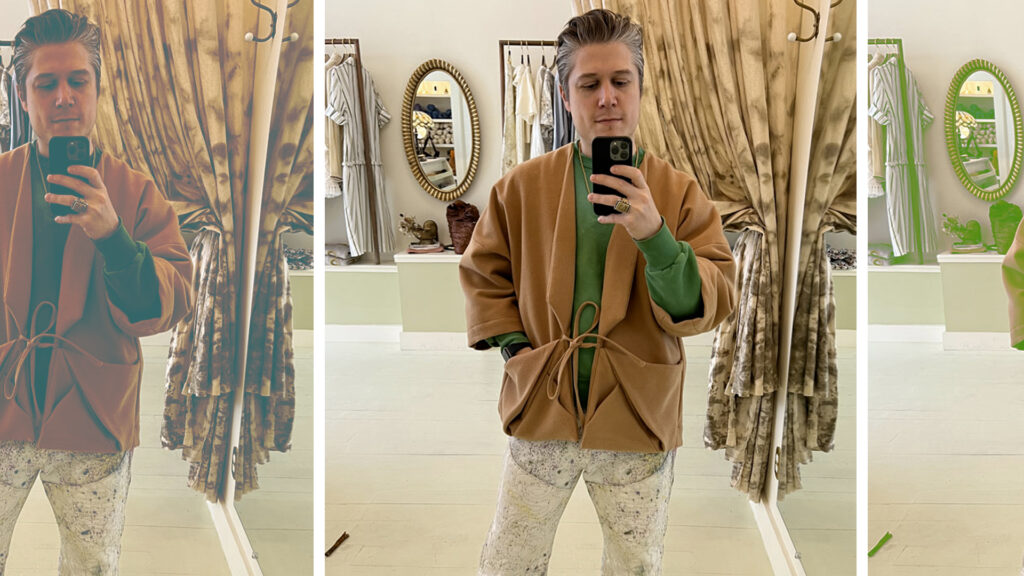
Co-founder Eric De Feo in Made X Hudson Chore Jacket | Image: Eric De Feo

“We run the gamut of price points so that everyone can participate in sustainability.”

Their Catskill location recently featured the team’s first gallery show, showcasing works by Woodstock based photographer Chase Pierson, and every weekend, Atelier Kuki serves farm-to-table, gourmet Japanese bento and desserts from 12-6pm.

“It’s all a lot of fun,” says Sergio. “And it feels like we’re helping people, too.”

You can check out all of Made X Hudson’s services and upcoming events at their website : madexhudson.com


Ben Rendich is a filmmaker and writer. He’s in pre-production on his first feature, and has a blog where he writes movie reviews and essays called Reflections on a Silver Screen. He lives in Catskill.

This article was reprinted with the permission of Trixie’s List where it was originally posted.

From Corporate Banking to Creative Economy : Creating a Space for Community & Commerce

December 18, 2023 By Corey Aldrich

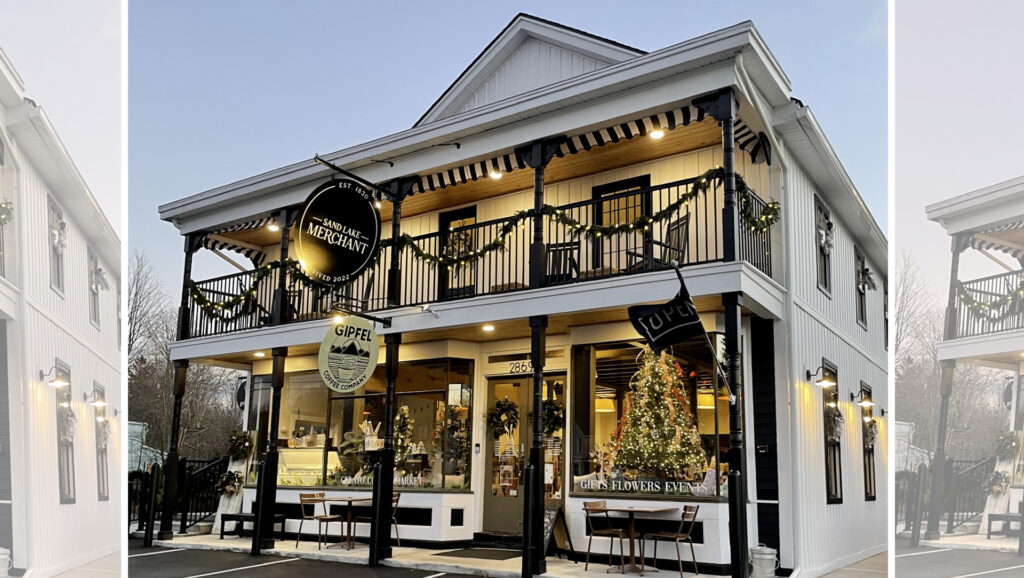
Last Month I was in Sand Lake for an appointment at the Sand Lake Center for the Arts. Looking for a coffee after I was directed to the Sand Lake Merchant across the street where I was happily surprised to see a thriving creative economy outpost and collaborative business model. I took a few minutes to talk to owner Amanda Goyer about her vision and what pried her away from a successful career in the banking industry.

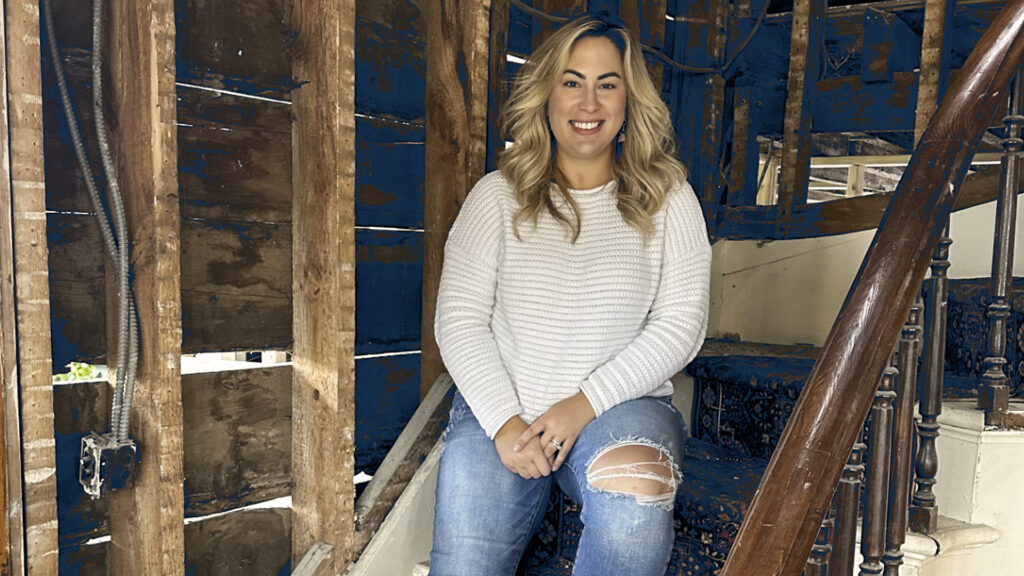
Amanda Goyer : Owner and Curator at Sand Lake Merchant | Image: Provided

Please state your name, business name, and title. Can you give us a bit about your background?

My name is Amanda Goyer and I am the Owner and Curator of Sand Lake Merchant. I was born and raised in the Capital Region in Latham. Graduated from Shaker High School in 2007. Attended Stonehill College in Easton, MA for Criminology and Psychology. Graduated in 2011. I came back to the Capital Region after graduation and got a job as a Crime Analyst with Schenectady Police Department. My initial career goal was to become a detective. I met my now-husband while working at Schenectady PD and the idea of a family came into vision. I made the decision at that time that I wanted a less risky career that I felt more comfortable about raising a family with. I shifted into event planning which I had always had a passion for but was incredibly different from what I had studied or done prior. I ended up at Autotask, now know as Datto, a Global Tech Company. I handled event planning across North America and then had the great opportunity to travel to London and Barcelona. The burnout of that industry is heavy and I felt it. I decided at that time to find something where I wouldn’t have to travel but could still be creative. A role opened at CAP COM Federal Credit Union leading their Foundation or charitable giving arm. That is where I found my home and rose to the role of Director of Community Engagement overseeing the Foundation, Public Relations, Business Development and School Banking. Following that I was at Keybank where I was Corporate Responsibility Officer for the Capital Region & Central New York Markets. In these roles, I learned how to collaborate, develop strategic alliances and deepen community partnerships to create positive change. All of these are attributes that I use today in my collaborative work at Sand Lake Merchant.

Sand Lake Merchant, Sand Lake NY | Image: Provided

What made you decide to do the career shift and focus on the Sand Lake Merchant?

I really had no intentions of leaving my banking career. My goal was to climb the corporate ladder in banking following in my mother’s footsteps. My mother was the late Paula Stopera, former President and CEO of CAP COM Federal Credit Union. Unfortunately she was diagnosed with pancreatic cancer in May of 2021 and passed that July. In the same year my father was diagnosed with dementia. My life and priorities shifted and I knew I needed to take time to heal. I also was reminded how short life is. I wanted to take more time to be with my husband and two young boys. I’m thankful that KeyBank was so kind and gracious when I made the decision to leave my corporate career. One of my mentors said to me when I was making the decision, “it doesn’t have to be forever.” That helped me take the step I needed away from a decade long journey in corporate banking and community development that I knew and loved.

I remember thinking “Who am I without my career?” I had attributed so much of my self-worth and purpose in life to my career. It was very intimidating to leave that piece of me behind.

It was the pause and the gray space that I allowed that sparked what would be the future Sand Lake Merchant. I was scrolling through Zillow one night and came across a beautiful building in our town that I have admired. It was for sale. I said to my husband, let’s just look at this place, what do you think?

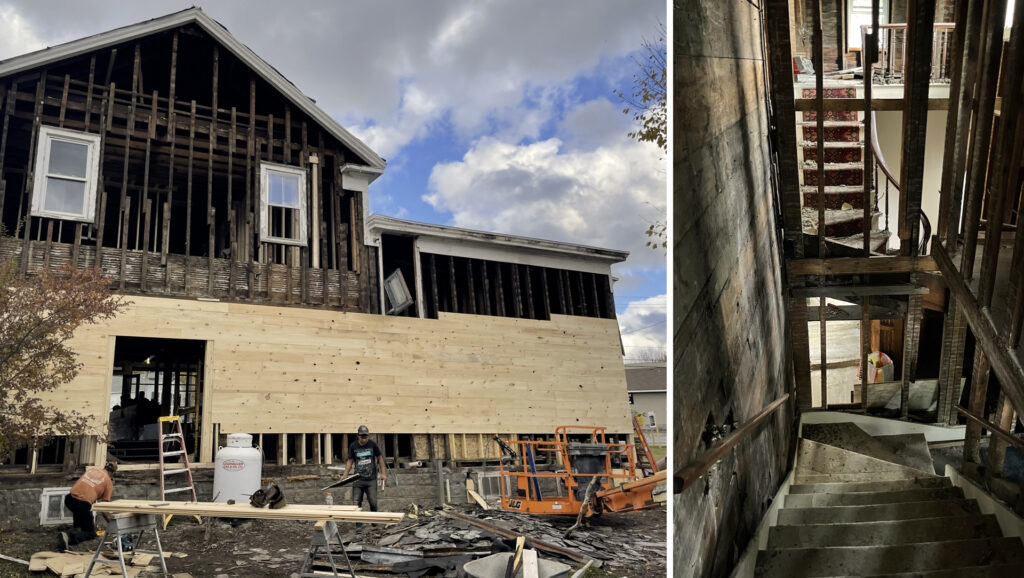
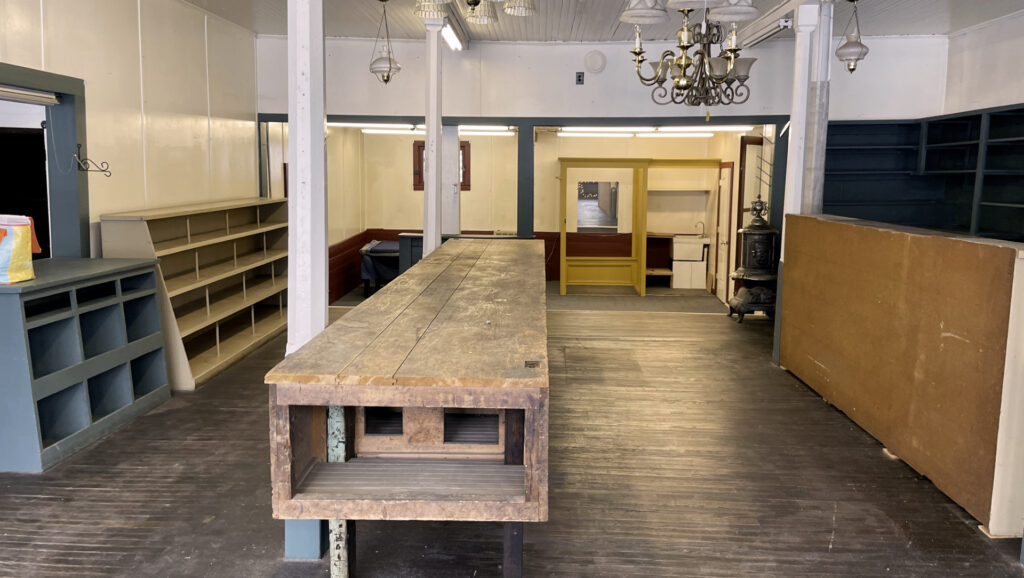
The rest is history. We purchased a 200 year old building in the heart of town. Spent 16 months renovating the space completely. I had an amazing local general contractor. I built the plan based on the foundation of what it had been, which was a General Store for 150 years! From there it was a florist, country store and an antique store. I brought all of the pieces from the past forward and created Sand Lake Merchant.

Sand Lake Merchant : Under Construction | Image: Provided
Sand Lake Merchant : Before | Image: Provided

Can you tell us a bit about the Sand Lake Merchant vision? The space drips with creativity!

The simple truth is I do not offer a product or service myself, but I had created a beautiful building, I was business savvy, not afraid to take risks and knew how to build a network. With that, I knew I needed to surround myself with people that had talents and services that could drive retail businesses. I think the marriage of corporate and creative can create huge success and my goal is to build a framework for how that is done, prove success and let that be a model for others to do the same.

What a feeling of freedom it has been to allow limitless creativity! However, that limitless creativity is focused with the lens of running a business that is built with strong values, diversified revenue streams and strong partnerships.

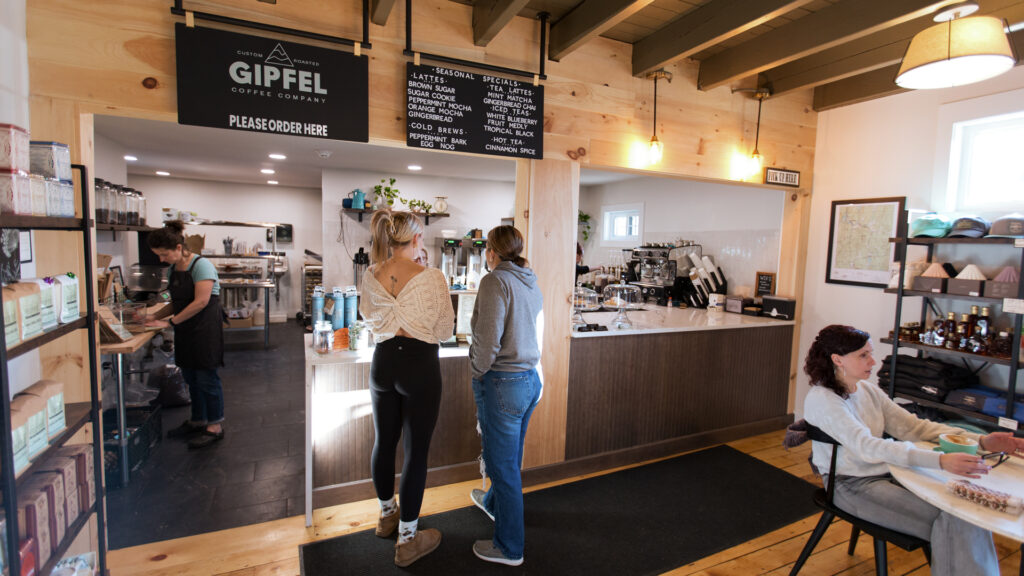
Gipfel Coffee at Sank Lake Merchant in Avrill Park, NY | Image: Corey Aldrich

As a rural based business, there is a limit to the volume of folks you can get in the door which can limit your cash flow to pay overhead and staffing costs. How are you stratifying your programming and using collaboration to create stability? Can you mention a few examples?

I think a big assumption many people had and/or have is that our rural community does not have enough people and/or resources to support a locally-sourced, handmade type of gift shop that I’ve created in Averill Park. That was something I thought a lot about during the planning and research phase of my business. I knew that a gift shop alone would not be enough to draw the daily traffic we desired, but how could I fix that without taking on more than I could handle? The answer was and always will be collaboration.

Our first and most important strategic alliance was that with Gipfel Coffee Company. Gipfel had started their business locally in Averill Park in another location 2 years prior to the opening of Sand Lake Merchant. I became a Gipfel “regular” enjoying their custom roasted coffee and also the sense of community that came with visiting their shop. I knew a pain point of theirs was that they had outgrown the location they were in. Also their visitors were craving a larger space where they could sit and enjoy their coffee and pastries. I knew I could fix that pain point with our nearly 4,000 sq. ft. building, but I wasn’t sure if they would be onboard to move in. I invited their owner Christine Kehn over to see our building during the renovation. I remember asking her if we could sell her bags of coffee when we open the gift shop, and then I said do you want to hear my more aggressive idea? She said sure…I said will you move in with us? We still laugh to this day about that initial meeting. I attribute much of our success to the daily traffic the coffee shop drives in to our location that we would not otherwise get. I’ll always be thankful I was brave enough to ask a bold question and Christine was open to taking the risk alongside me. Today both of our businesses continue to grow and thrive together.

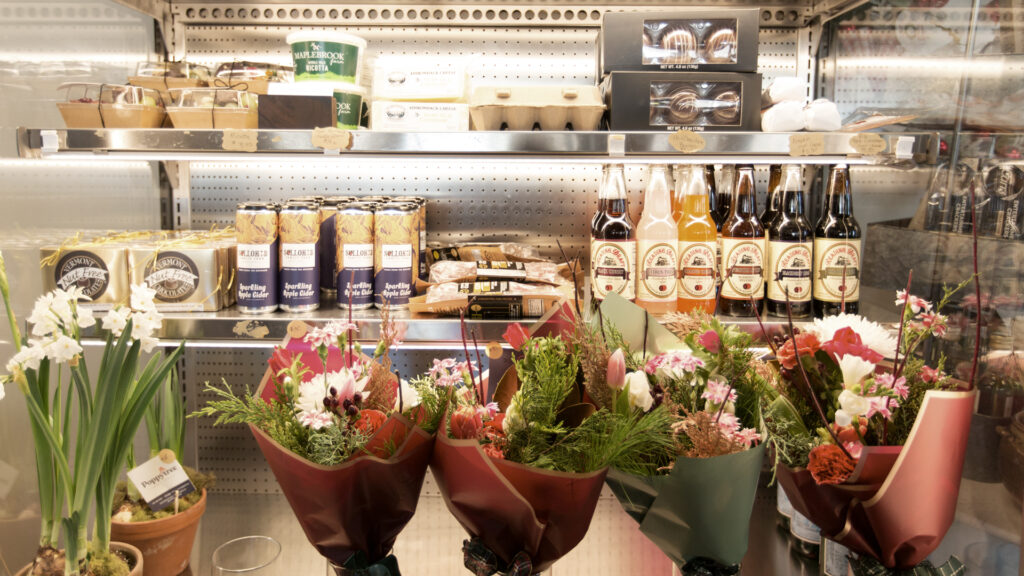
Some Products Available at the Sand Lake Merchant in Avrill Park, NY | Image: Corey Aldrich

I had met another maker, Melissa Orth, owner and designer of PoppyTree Floral Designs in West Sand Lake. At the time I knew of her because of the amazing weddings she had designed florals for on Instagram. Then I noticed she started selling fresh floral bouquets in the old Gipfel Coffee Shop and people were loving them! Soon after I talked with Melissa and found she was looking to downsize the amount of annual weddings she was taking on but wanted to still create and retail her products. Our space allowed her to do just that. Her plants, florals and custom creations are a staple in our store.

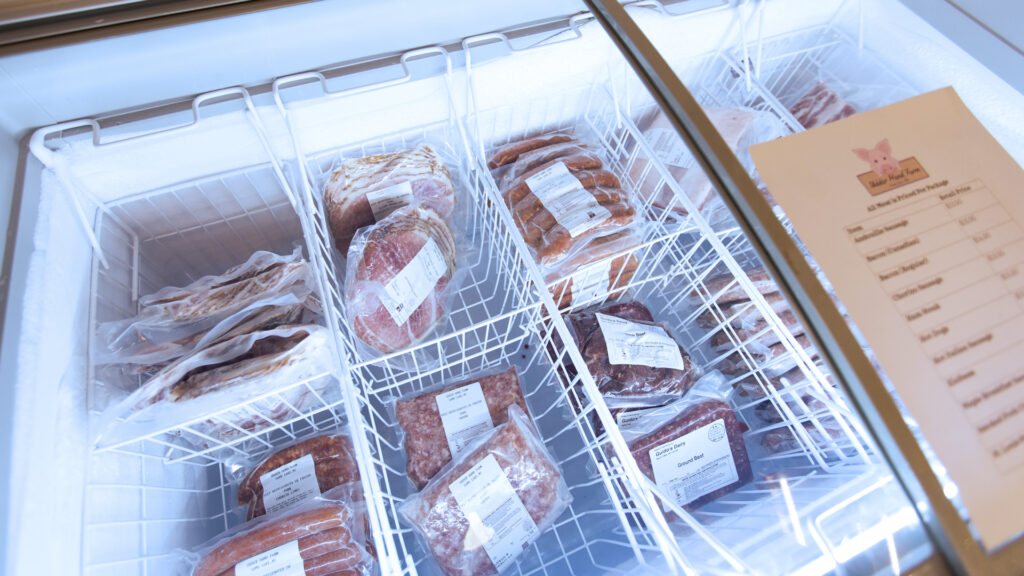
Farm Fresh Meat Available at the Sand Lake Merchant in Avrill Park, NY | Image: Corey Aldrich

Over 30 local makers are part of our creative retail community at SLM. Some have said their collaboration has changed their business and their lives. To see a maker be able to cut back on their day job and be able to focus more on their passion and creativity has been nothing short of a dream come true.

I will also say, our rural community in Averill Park is fast-growing, especially for families! We have the traffic, we have the people willing to invest locally, who are not shying away from paying a little more for a custom made gift or market item. These people have always been here, they were just traveling to Latham or Clifton Park or Saratoga to shop because they were seeking something we didn’t have in our hometown. Now we do, and they are showing up for us!

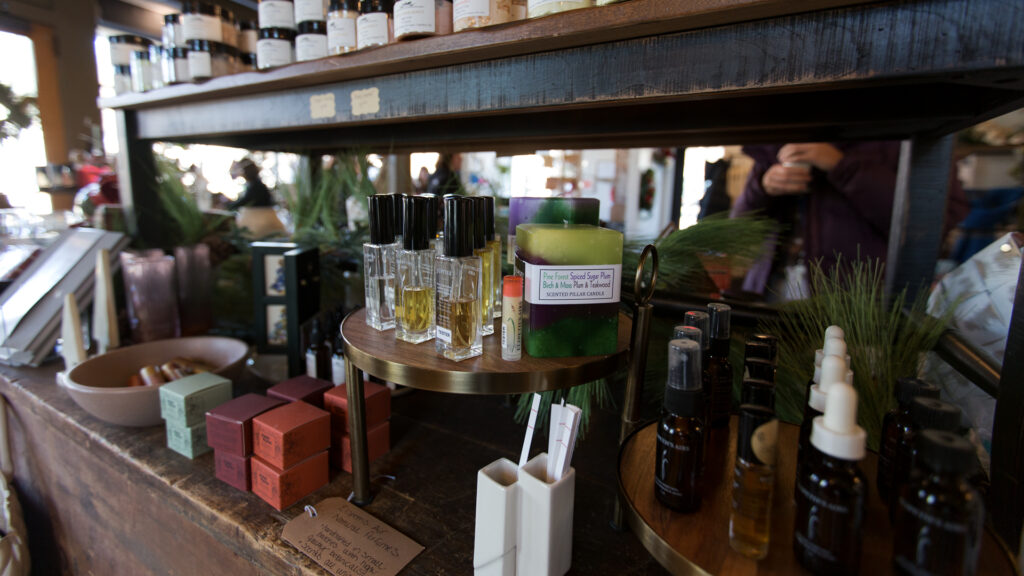
Some Products Available at the Sand Lake Merchant in Avrill Park, NY | Image: Corey Aldrich

What are your goals for the future?

I would like to continue to build community through a variety of collaborative partnerships at Sand Lake Merchant. In addition, continue to expand on the potential of our 2nd floor event space by adding workshops and classes in 2024 hosted by our vendors. For example, paint and sip events, candle or jewelry making, art galleries, meditation, kids yoga and more! My goal is to find ways to grow, scale and sustain the business without necessarily adding more staff right now. The only way we can do that is through creative collaborations that create a win-win experience for everyone involved.

A prime example of this was our recent collaboration with Sand Lake Center for the Arts and our joint “Holiday Merchant Market.” Collectively we used our locations conveniently located across the street from each other to offer creatives the opportunity to showcase their handmade goods for sale. The planning was shared across both teams and the advertising was doubled between both of our networks. We both had a shared vision of creating something special for the community and we did just that. This year, hundreds of people filled the streets of Sand Lake to shop and support our local makers. Several makers said it was their most successful event to date.

I am a big believer in the phrase no risk, no reward and that is what I think about everyday when I’m planning or making choices that scare me.

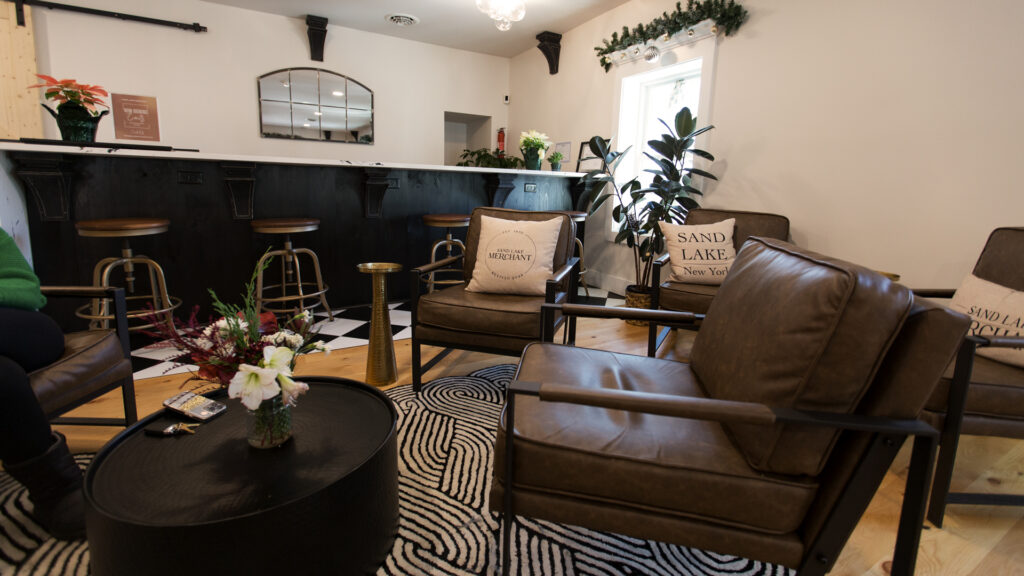
Upstairs Lounge and Multi Purpose Area at the Sand Lake Merchant in Avrill Park, NY | Image: Corey Aldrich

Anything specifically coming up you would like to share with our audience?

Beginning in January of 2024 we are going to be looking for creatives and vendors that would like to utilize our space to host community events and workshops! If anyone is interested in learning more please email us at hello(@)sandlakemerchant.com

Re-Energizing Our Regional Foundations with the Hart Cluett and Burden Iron Works

December 18, 2023 By Corey Aldrich

I have been thinking a lot lately about the current state of our arts and cultural institutions and the challenges they face. Staffing in general but specifically leadership is a major problem. That coupled with the ever changing dictates and expectations of a fluid society increasingly distracted by technology. There is a real demand to re-evaluate how our institutions serve the public and keep the sacred keys of our history and stories in tact. As such, I decided to take a moment and speak to the staff at a couple of such institutions. Both the Hart Cluett Museum and the Hudson Mohawk Industrial Gateway have newish Executive Directors and interestingly, the feedback everyone had to my questions was surprisingly consistent.

For the interview I spoke to:

Kathryn T. Sheehan, Executive Director Hart Cluett Museum, Rensselaer County & Troy City Historian
Amanda Irwin, Deputy Director Hart Cluett Museum
Samantha Mahoski, Curator & Archivist Hart Cluett Museum
Anna Doren, Education Director Hart Cluett Museum

Dr. Susan Ouellette, Executive Director Hudson Mohawk Industrial Gateway / Burden Iron Works Museum

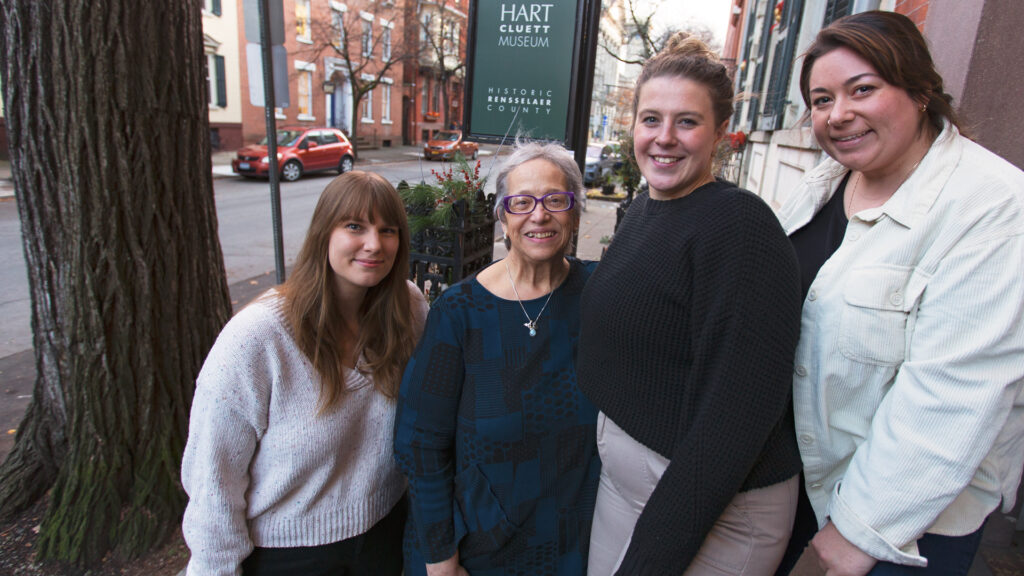
The Hart Cluett Team in Troy, NY | Image: Corey Aldrich

We see a lot of changes happening in historical / museum space as of late, specifically in how we create value for community and new audience. What do you identify as important shifts that need to happen to build continued relevance and connectivity with the community at large?

KATHRYN: A main goal of mine is to understand the many levels of stories that are present in the Hart Cluett House . Despite what the visitor may see when going through the 1827 house, I want the visitor to understand all the stories of the people that lived and worked in this house. In our exhibition spaces I want to support our curator to further develop historic issues that are still relevant today and for people to see that connection of past history to current issues. I want us to attract underserved audiences through our exhibitions and programs, so their stories and history are accurately chronicled for future generations.

AMANDA: I think the key word to defining our relevance is connection. We serve all of Rensselaer County, which includes a vast and diverse landscape and population, rural farming communities to bustling downtowns. Maintaining that representation can be difficult, but it’s integral to telling the stories of those who have helped build this region and to those who continue to make our area a place to live, work, and build a life. I believe our value is tied to the way in which we bring those stories to life, whether that is through a traditional exhibit experience or a field trip. I’m happy to say that the museum admission is ‘Pay what You Wish‘ to remove barriers and welcome all visitors.

SAMANTHA: How we create value for community and new audiences requires us to actually go out into the community, engage with those community members by having conversations and holding space for them to express their needs.

ANNA: We have many visitors come to explore our Research Library and join us for walking tours. Currently our curator, Sam Mahoski, has made a point of creating diverse exhibits exploring different aspects of Rensselaer County history that are relevant to us today, learning about our local history can help us understand current events and appreciate the diversity of our area.

SUSAN: Our museum is just reopening after a long hiatus of being closed due to COVID as well as stymied by a backlog of unfinished restoration work. What we hope will happen as a result of our opening is a re-connection with the local community and to become an extension of community space. We hope not only to be a place where objects and documents are stored, but also a place where local concerns and interests can be nurtured and addressed.

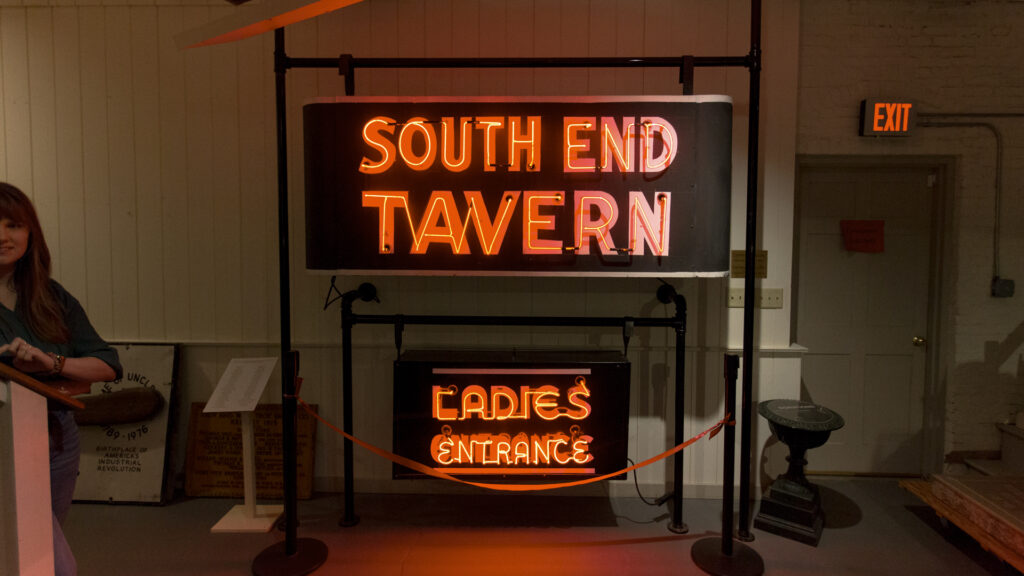
Historical Neon Signs from the South End Tavern in Troy, NY | Image: Corey Aldrich

How do you see things changing in the next few years, what will your museum look like and how will that be different from today?

KATHRYN: I hope our museum will continue to be a dynamic institution where we recognize “every face and every story” in chronicling the history of the county. That may be reflected in changing furnishings and decorative arts in the Hart Cluett House as well as offering new and exciting programs and exhibitions in the Carr building as well as offsite throughout the county.

AMANDA: I think as a staff that is half seasoned employees and half new faces, we are at a good turning point of acknowledging what the organization has done in the past and ways to push the envelope moving forward. Our backgrounds, education, and professional experiences work to compliment each other and bring different approaches to challenges…I think there is a lot of potential for new partnerships with places like our sister organization the Hudson Mohawk Industrial Gateway Museum, especially as we expand our educational and community programming. I would love to see more of a focus on the people who walk by our building everyday and don’t know we exist, whether it’s a family headed to the weekend farmers market, college students, or residents.

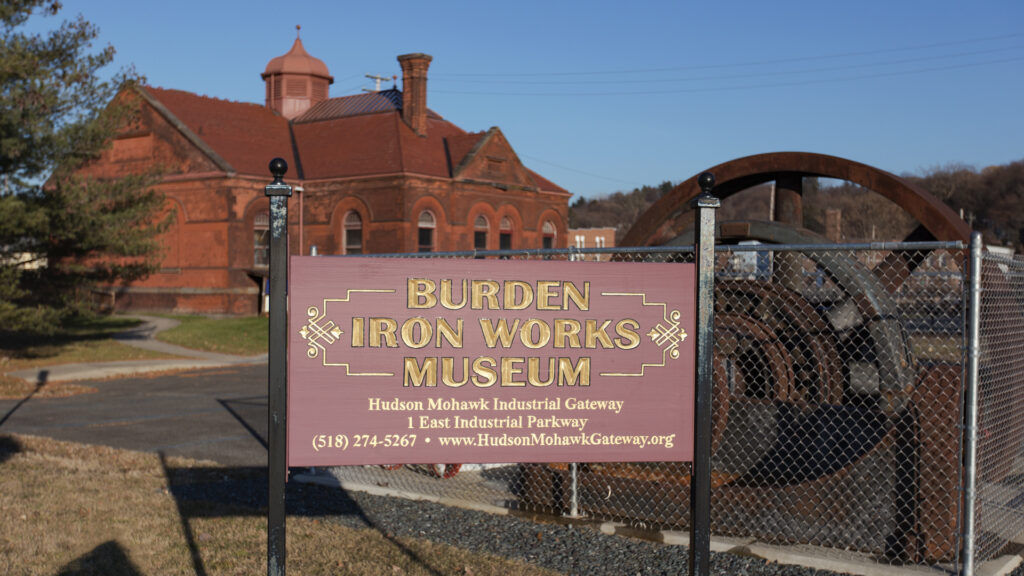
Hudson Mohawk Industrial Gateway, Burden Iron Works Museum in Troy, NY | Image: Corey Aldrich

SAMANTHA: To remain relevant over the next few years, the Hart Cluett Museum will need to implement changes that better reflect the needs of its fellow community members. How these changes will be implemented and how the museum will look in a few years is unknown to me but it is my hope that these changes, whatever they may be, will allow for more diverse audiences that feel welcome, valued, and heard in our space – something that the Museum currently lacks. I do think, however, that with conversations and holding opportunities for dialogue, the Museum can visualize the needs of our community members and implement change based on those needs.

ANNA: I hope to make the Hart Cluett Museum a regular stop for locals on rainy days and visitors exploring our area. I hope to build relationships with other organizations and community members and have an array of programming people are excited about.

SUSAN: We are planning to improve and expand our programming to attract more people to the museum. This would include engaging the community to directly affect what kinds of programming we should pursue.

Uncle Sam Wilson Painting at the Hart Cluett Museum in Troy, NY | Image: Corey Aldrich

What would you say is the biggest challenge in front of you that needs to be addressed to achieve your goals?

KATHRYN: Money is always the biggest challenge with not-for-profit organizations, and we are no stranger to that. The other challenge is that we represent all of Rensselaer County even though we are physically located in downtown Troy. To do that we may be able to offer more offsite exhibitions throughout the county, increase our presence in the towns, through joint programming and workshops on using research materials in our library. I am fortunate that as county historian I have a good working relationship with the 14 town historians and the smaller all volunteer historical societies. I can assist them with research, technical assistance and be a conduit to the state historian’s office.

AMANDA: One recent challenge had been consistent staffing, as a result of pandemic aftermath and organizational transitions. I am happy to say that we have made strides in the right direction. As we look to make improvements in the historic house and offer more programs however, that increases staff time, supplies, and other general operating expenses needed.

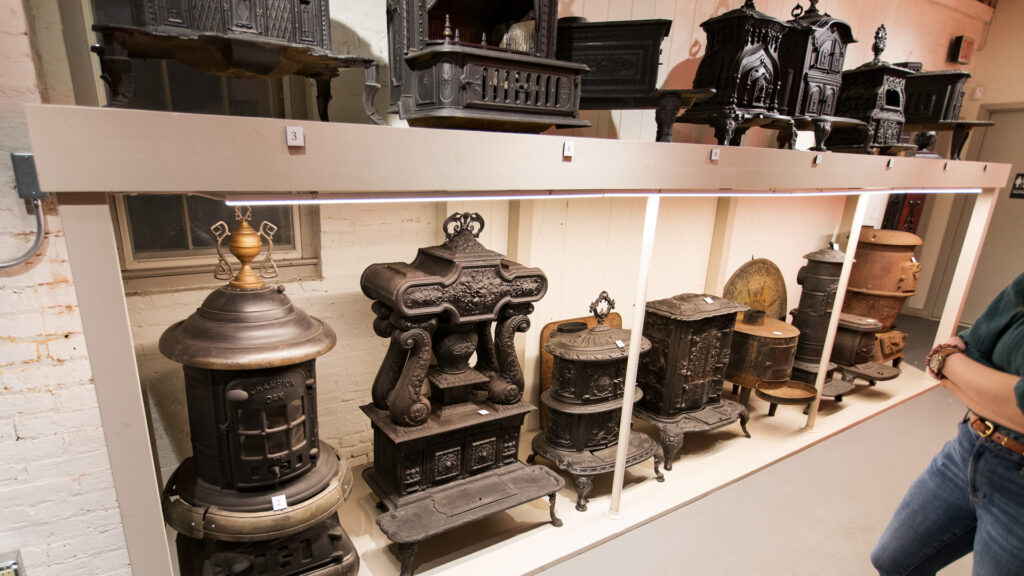
Woodstove Collection at the Hart Cluett Museum in Troy, NY | Image: Corey Aldrich

SAMANTHA: We have the gall, the grit, and the gumption to get things done, and always have as a team-oriented organization, but in terms of pay equity, program planning, exhibition design, repairs to the historic house, and beyond… it becomes rather clear that we could accomplish a lot once properly resourced. The generosity of our supporters and team of volunteers have allowed us to make strides in progressing the organization, but imagine what this place could be capable of if we could had expanded resources. To achieve my goals as the Curator and Archivist currently makes it difficult to achieve the standards and expectations of our community.

ANNA: Getting people’s attention and showing them that the museum is here– and we’re here for them! We preserve the history of everyone in Rensselaer County so that anyone who is curious can explore it. I want more people to come inside and then come back again with friends. Getting people talking about our space and using it can help us understand their needs and interests so we can do more to serve them!

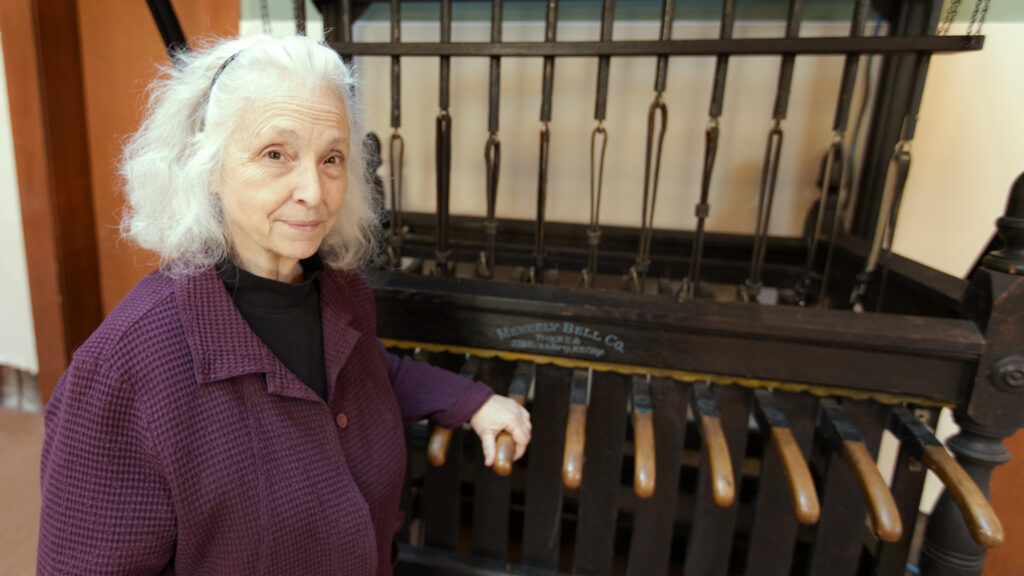
Dr. Susan Ouelette, Executive Director at the Hudson Mohawk Industrial Gateway / Burden Iron Works Museum in Troy, NY | Image: Corey Aldrich

SUSAN: We need to expand our programming and employee base here at the museum. We are, aside from myself, entirely dependent on volunteers. Finding the kind of funding that would allow for part-time or even full-time employee would be a game changer for us. Student internships are also one of the ways we can also improve programming.

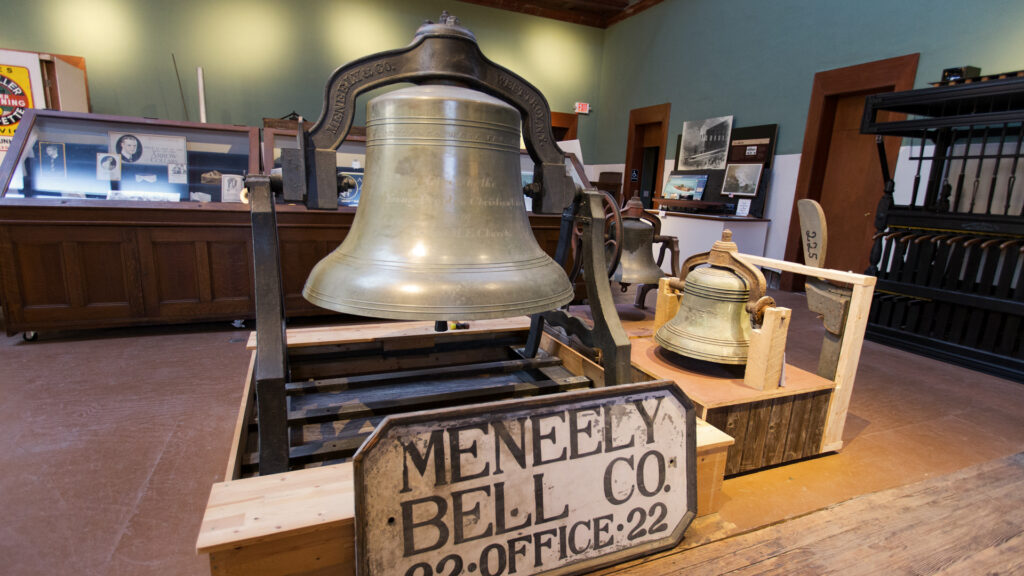
Meneely Cast Bells at the Burden Iron Works Museum in Troy, NY | Image: Corey Aldrich

Those with the keys to a cities / region’s history represent the foundation of place, that which all is built upon. Why is it especially important for us today to have that connection? What is the danger of disregarding it?

KATHRYN: When I was appointed Rensselaer County and Troy City historian back in 2006 I was never more acutely aware that I reflected for the county pride of place and the importance our county history is to the region, state and nation. We have been a county for 232 years. I want people to know that it is by no accident that we have the amazing architecture in downtown Troy or the rich agricultural landscape that largely makes up the vast majority of Rensselaer County. It is over 200 years of resourceful people that grew this county and made us nationally recognized in science, education, and the arts. Those contributions and the contributions that new residents living and working in Rensselaer County are part of that succession; bringing new thoughts, ideas and energy, embracing the past history that is shared and building on that for the next 200 years!

AMANDA: I believe that we are a cultural pillar in our community, there is pride in acknowledging the accomplishments of the past and also understanding previous shortcomings as we look to the future. I picture the museum as a chord connecting past, present, and future, and the danger of disregarding that leaves us untethered.

Steam Engine at the Burden Iron Works Museum in Troy, NY | Image: Provided

SAMANTHA: In today’s world, we are active bystanders in seeing the breakdown in the foundation of place and the dangers of disregarding it. History is what you had for breakfast, its everywhere you go, and history lives here. So why does all of that matter? Because the continued cultivation of our community relies on it – our shared past brings us together and makes us stronger. Without that sense of belonging, we begin to lose sight on the very values that have made Rensselaer County what it is today.

ANNA: History repeats itself and our current reality is a direct result of what has happened here before—the people who’ve lived here, the traditions, laws, policies, and major events shaped what we are experiencing today. We preserve history so people can understand where they come from and apply it to issues we’re facing today.

As a museum, we make sure to preserve the entire history and present it to the public as completely as possible. There’s bias in any interpretation and we hope that with our exhibits and programs we can invite the public into the conversation and make sure we’re preserving the full history of Rensselaer County. Our mission is to recognize “every face and every story,” we do this with the history we preserve and the community we serve.

SUSAN: If we are not able to connect with our community and have real conversations with each other about our past, present, and desires for our future, we will not be able to move forward. The importance of place in identity can be a positive influence in building confidence and expressions of unity can help to minimize the overall negatives that continue to crop up in the world around us.

  • « Go to Previous Page
  • Page 1
  • Page 2
  • Page 3
  • Page 4
  • Page 5
  • Page 6
  • Interim pages omitted …
  • Page 29
  • Go to Next Page »

Creative Economy Updates and Other Good Stuff!

STAY CONNECTED!

  • Facebook
  • Instagram
  • Twitter
Copyright © 2020 THE UPSTATE ALLIANCE FOR THE CREATIVE ECONOMY

info@upstatecreative.org | 41 State Street, Albany, NY 12207

Design by Reach Creative