• Skip to primary navigation
  • Skip to main content

ACE

Upstate Alliance for the Creative Economy

  • HOME
  • ABOUT
  • NEWSLETTER
  • SUBSCRIBE
  • JOBS
  • Show Search
Hide Search

ACE

Want to Run a General Store Rennselaerville? Here’s Your Chance! Rent? $1/Month!

September 22, 2021 By Maureen Sager

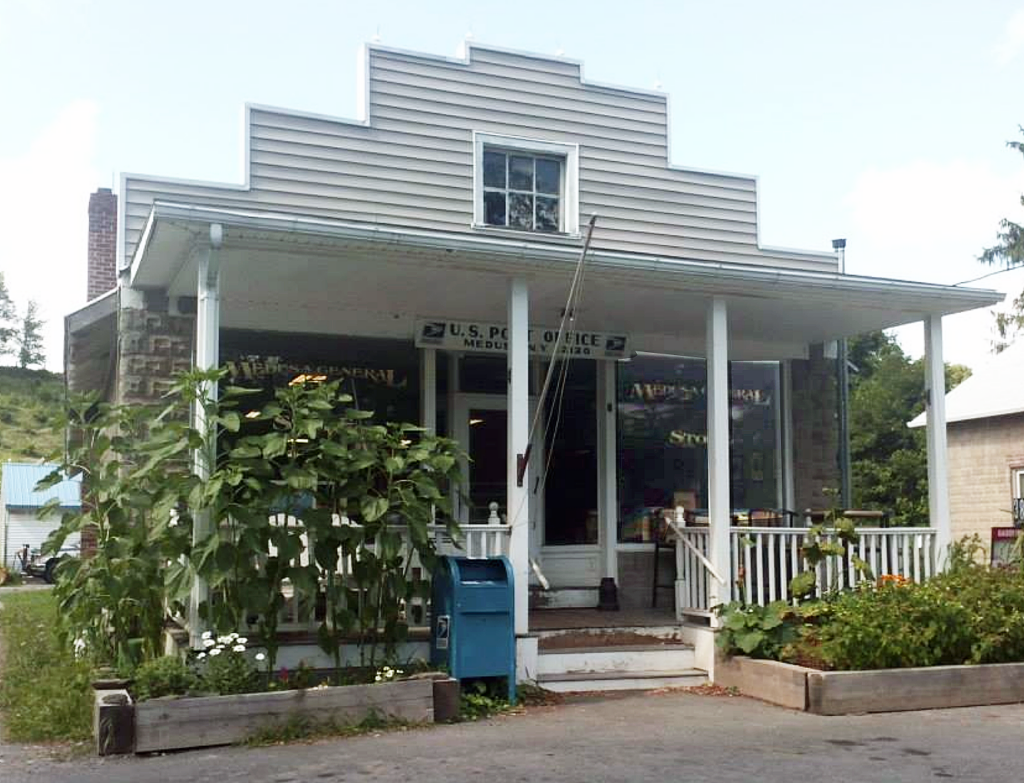
Medusa General Store

I am looking for someone that wants to run a small town grocery store, rent free! I have searched for 5 years to fill the local General store and my hope and the communities would be to find someone willing to take the risk, rent free! The fact is nothing has worked up to this point so this is a last chance at filling the space. The potential proprietor would need to run it as a store/cafe.

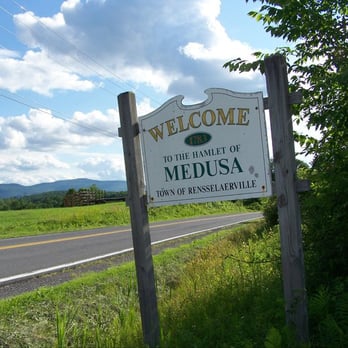
To start with some building specifications: Medusa General Store is a 2200 square foot block building built in 1938 by Ernest and Ruth Bell, in the historic hamlet of Medusa, in the town of Rensselaerville, in southwestern Albany County. The property is roughly 1.3 acres. At one point, the store covered all of the general merchandise needs of the surrounding township!

Medusa Sign

The store has a large deli area with all equipment. As well as shelving and counters. We installed a nine-door walk-in cooler in 2014 both to provide additional space for a large produce and beverage inventory, as well as to reduce the use of inefficient stand-alone coolers.

If you are interested in putting your hard work into this store, we would also put some skin in the game with super low rent and great support from the local community and owners.

This really is an amazing adventure – and we would love to discuss it with you further! If you have specific questions, please call or text.

Beginners and experienced welcome, but serious inquiry only.

Many thanks,
Jason
518-248-8884

This article is reprinted from a post from Listings Project, with permission of the lister.

Five Fantastic Capital Region Wineries to Visit This Fall

September 13, 2021 By Maureen Sager

Fall is a fabulous time to visit the Capital Region’s wineries. Drive the gorgeous rural routes and take in the scenery. And, you’ll be rewarded with seeing the makers in the throes of harvesting and making the 2021 vintage. It’s a thrilling yet tiring time at a winery, and they’ll appreciate your visit.

Tousey Winery, Germantown, NY

Of course, you’ll find terrific local wines. But there are also the personal stories, and the lovely locations, and the exploration of your “back yard” that can yield such delights and surprises. Truly, you can’t go wrong visiting any of the wineries in the Capital Region. And make sure to explore the rest of the Hudson Valley, and all of New York’s world-class wine regions.  

Here are my top recommendations (in alphabetical order):

Altamont Winery, Altamont

Altamont Winery Owner Mike DeCrescenzo (photo courtesy Edible Capital District)

I first met Mike DeCrescenzo, owner of Altamont Winery, at the Schenectady Farmer’s Market, about ten years ago. Intrigued with what was growing on his family’s large farm west of Albany, I took a visit. Knowing nothing about the area, I was skeptical about what kind of grapes could be growing in Altamont. Happily, my expectations were shattered – the vineyard is huge! It was originally planted by Larry Grossi, who passed in 1999. In 2006, Mike’s dad, Louis, decided to take it on, equally trusting what the 26-acre piece of land could yield.

Altamont Winery sign

There are many varieties thriving on the site, and the DeCrescenzos are passionate about their craft. Visiting Altamont is like reconnecting with a family member.  The experience is friendly, welcoming, casual. The wines are home-grown and homemade. Be sure to try the Sirius, a dry white made with St. Pepin and Cayuga; the Leon Millot – a dry red made from this French-American hybrid; the semi-sweet Rose made from a blend of the grapes; and the others, too! Make a day of it. Learn more at www.altamontwinery.com, follow and like them on Facebook and Instagram, and visit at 3001 Furbeck Road, Altamont, NY.

Galway Rock Vineyard and Winery, Ballston Lake

Galway Rock Founder Kate Soldani, processing the harvest

Kate Soldani is the brains – and the brawn – behind Galway Rock Vineyard & Winery in Galway, New York. She started the winery in 2014, inspired by the garagiste movement of fine wine making (small-scale entrepreneurial wine-makers, who do not adhere to the traditions of wine-making). In under a decade, Kate has launched three signature brands with dedicated followers -– Galway Rock, Robinia Hill, and Saratoga Sparkling. The result is a range of white, red, rose, and sparkling wines to please any palate.

Galway Rock Wine selection
Galway Rock Winery produces a wide selection of wines under three separate brand names

A visit to the tasting room is as creative and uplifting as Kate’s wines, offering a flight of six wines, or a signature “mimosa tower” tasting. What’s better than a tower of bubbles?? Hang out on the tasting room’s sunny patio with a specially prepared cheese board. Try the beautifully balanced Galway Rock Merlot-Malbec blend that’s full of delicious dark fruit notes. The Robinia Hill Riesling unfolds with apple and pear notes. And, don’t miss the Saratoga Sparkling Moscato that tickles the palate and turns on the pleasure. Learn more at www.galwayrockwines.com, follow and like them on Facebook and Instagram, and visit at 988 Saratoga Road, Ballston Lake, NY.

Home Range Winery, Canaan

Home Range Winery tractor

Inspired by Cape Cod (of all places!) wine making, Peter Bartlett and Susan Powell reconsidered what was possible on their farm in rural Canaan, New York. The 30-acre Flatbrook Farm – in the Bartlett family for generations — was already planted with Concord grapes, as well as raspberries, blueberries and blackberries. All are fruits that are suitable for wines. Susan was an amateur (and now a full-time) winemaker. Peter is a farmer who raised his three children on Flatbrook Farm. Why not follow their passions for growing and wine making and start a winery?

Thankfully for the rest of us, they did it. Their goal? To grow grapes suitable for a colder climate, and to make wines they would be proud to serve to friends and strangers alike. They planted Marquette and Baco for red wines, and Traminette and Cayuga for white wines.  An old barn on the property was cleaned out and converted to the tasting room and winery. Guests are welcome to explore the farm and to bring a picnic.

The wines have names that reflect the couple’s connections to nature, too. There’s Calm After the Storm, an easy-drinking Cayuga; Big Buck, a signature red made with Marquette; Cold Snap, a luscious blueberry wine; and several others offering a range from dry whites and reds to sweeter wines. Learn more at www.homerangewinery.com, follow and like them on Facebook and Instagram, and visit at 146 Flints Crossing Rd., Canaan, NY.

Nine Lamb Farm Winery, Cambridge

A relative newcomer on the scene is Nine Lamb Winery in Cambridge, NY, about 45 minutes northeast of Albany in some truly breathtaking countryside in Washington County. In 2016, the Bateman family planted six varieties of cold-hardy grapes on land that has been farmed for over 200 years. They’ve created two lovely, distinct brands. For the father/son Bateman team, South Dominion Vineyard represents tradition and heritage. And, their Nine Lamb Farm brand expands their inspiring vision. The Batemans say that Nine Lamb “intersects the realms of art, design, agriculture, and community so as to carry us forward into new life and a shared abundance born out of patience and forgiveness.”

South Dominion Winery, sister brand of Nine Lamb

Take a ride and visit the Cambridge tasting room this fall, when colors are at their peak. Or, try the wines at the Troy Farmer’s Market on Saturdays between 9 am and 2 pm (which is where I discovered them). Their enthusiasm is as inspiring as their wines. The Dionné (South Dominion brand) is a big, dry, oak-aged red with ripe berry notes and some spice on the finish. Learn more at https://www.facebook.com/ninelambfarm, follow and like them on Facebook and Instagram, and visit at 166 Brownell Road, Cambridge, NY.

Tousey Winery, Germantown

Tousey Winery
Dominique’s Pick: Try “Hygge”, the Sauvignon Blanc standout at Tousey Winery
Ben and Kimberly Peacock of Tousey Winery (photo credit: Hudson Valley Magazine)

Everything about Tousey Winery is quirky and cool, from the unusual tasting room along Route 9 between Columbia and Dutchess Counties, to the names of the wines. That’s because the owners, Ben and Kimberly Peacock, are quirky and cool themselves. Ben is English and Kimberly is Scandinavian, and they share a deep love of fine wine. When they decided to settle in Germantown and start a winery, they went all in. That was back in 2008. Today, over a decade later, their wines are trend setters in the region and the state.

Tousey offers traditional wines like Riesling and Cabernet Franc. Additionally, they have blends like their off-dry Queen of Clermont, and the fun and friendly red blend, Riot. They make a Sauvignon Blanc called Hygge that is as clean and beautiful as any SB out there. Plus, they’ve recently added sparklers to their line-up, including Naughtiness, a rose sparkler. And we all know that bubbles make everything better!

Tousey is also renowned for their cassis, a wine made from black currants. Tangy and sweet at the same time, it’s delicious on its own but is best when topped with sparkling wine to make a Kir Royale. That they do it all with three young children is even more impressive. Learn more at www.touseywinery.com, follow and like them on Facebook and Instagram, and visit at 1774 Route 9, Germantown, NY. 

Other Don’t-Miss Spots

I would be remiss to not mention a couple of others that are near and dear to me. Hudson-Chatham Winery, Columbia County’s first winery, is alive and well and making wonderful wines under the ownership of Steven Rosario and Justin Nickell. See where the Columbia County winery experience all started. (1900 State Rte 66, Ghent, NY). Another don’t-miss spot is Stable Gate Winery (12 Linda Way, Castleton-on-Hudson, NY). This female owned and operated vineyard was founded by Valerie Feldman. Her young and forward-thinking perspective on land and relationships shines through everything she does.

Dominique DeVito started Hudson-Chatham Winery with Carlo DeVito and their boys, Dawson and Dylan, in 2007. Today Dominique is a Wine Manager at Exit 9 Wine & Liquor Warehouse in Clifton Park, where she has a world of wines to play with.  She writes a monthly feature for Main Street magazine as well as a “wine of the week” for the magazine’s website and social media. Find it at www.mainstreetmag.com.

LIVING ONLINE SERIES: Judie Gilmore, Opalka Gallery

September 9, 2021 By Corey Aldrich

I recently connected with Judie Gilmore, Executive Director at the Opalka Gallery on the Russell Sage Campus in Albany. We met while working on the Breathing Lights Project, a massive, three-city public art exhibition that captivated the region in 2016. Not surprisingly, Judie continues to make things happen in a big way and has interesting thoughts to share on galleries, events and more.

How did you find your way to the Opalka Gallery and what it is you do there?

Artist Adam Frelin’s “Summit” is installed atop the
Opalka Gallery

My background is in public and community-based art. When the job at Opalka came open in 2017, I was hesitant at first. The idea of working within this stuffy white box seemed limiting to what I love to do — shape public space, collaborate with diverse artists, create community. But, happily, we can do this within the gallery walls. Opalka doesn’t look like other academic galleries. Luckily, Russell Sage liked my vision, and hired me as Director and Curator. With our partnership at Albany Public Library, the public art we have brought there and to our campus, to showcasing guest curators and diverse artists, creating the Pop-up Beer Garden – I am doing what I love.

How has COVID affected the gallery’s operations on a daily basis?

Opalka Pop-Up Beer Garden, Summer 2019

Yes and no. We were one of the only academic galleries in the region open to the public last year. Our daily operations remained the same. But we also wanted to offer engagement opportunities for people not comfortable visiting in-person. We produced exhibitions IRL, and also curated a whole new virtual space, with exhibition websites, 3D tours, virtual events and other online engagement. It was a lot more work that came with a steep learning curve.

How have you adapted to the changing pandemic requirements? Any suggestions or best practices for other gallerists?

Sharon Bates’ “Exhibit B” (2018)

Yes, we’ve definitely adapted and continue to do so. I was hugely grateful for the leadership at Russell Sage. They interpreted mountains of health regulations and then balanced student and staff health with a plan that allowed us to remain open. Their willingness to figure this out underscored that what we are doing is important and valued. It helped me find perspective – our community needs us. Art feeds people’s hearts and souls. It strengthens community ties. It helps people make sense of the world, to find empathy. These are not trivial things. My advice to other galleries – find a way to keep doing what you do. It is valued and important.

What are your thoughts regarding online programming as a substitute for in person programming?

I see both sides of this. I am as tired of Zoom events as the next person. But, last year our virtual lecture series saw an audience that was four (four!) times larger than before. But in terms of the community we are actively creating, nothing is a substitute for in-person programming. One of our last pre-pandemic events was a community dinner with two artists. Forty individuals, mostly strangers, gathered around a table and enjoyed a meal together. This kind of connection just can’t be replicated online.

What’s coming up at the Opalka Gallery this fall?

Currently, we are a proud co-host of the 85th annual Mohawk Hudson Regional exhibition, along with Albany International Airport Gallery and the Albany Center Gallery. This year we saw a record breaking number of applications from visual artists and worked with three outstanding jurors. The show is a testament to the incredible talent in this region. And we are thrilled to kick off our Pop-up Beer Garden again, which features live music, local breweries and food trucks. It’s this dreamy combo of art, music, food and beer, neighbors and local community. Have we ever needed it more?

Editor’s Note: The 2021 POP UP Beer Garden and Neighborhood Block Party series is being held on three Fridays in September. This week’s event will feature Rare Form Brewing and Nine Pin Cider. For band and food partner info, check the Opalka Gallery website.

WEB: https://opalka.sage.edu/
FB: @OpalkaGallery

IG: @opalka_gallery

Photo Gallery: Our First Creative Economy Mixer of 2021, “Glimpsing the Gilded Age”

August 4, 2021 By Maureen Sager

Hart Cluett Museum’s Starlyn D’Angelo

August 4, 2021 By Maureen Sager

Hart Cluett Museum’s Executive Director Starlyn D’Angelo definitely likes a challenge! On March 30, 2021, she took on the head job at the Museum when it was unclear how the world would be moving forward. “I seem to work well when things are hard,” she said. Starlyn talked to ACE about how the Museum’s role has changed in the past year, and the unique opportunities and challenges they’ve faced.

Hart-Cluett’s Annual Holiday Greens Exhibit

How did the Hart Cluett Museum react to the pandemic?

When the pandemic hit, we initially had to lay off staff. But after a short time, they were back, and immediately began to document the events as they were happening. We asked people to document their experiences during the pandemic, about what life was like, what kind of challenges they had. That’s still up on our website now, for anyone who wants to share their story.

Kathy Sheehan
Hart-Cluett’s Educator, Kathy Sheehan

We also started documenting the Rally for Black Lives. It is unusual, in the museum world, to document current events. We’re trained not to focus too much on anything that’s happened in the past fifty years, mainly because we do not yet have perspective. Recently, though, there’s been a major shift toward thinking about documenting current events. We may not be interpreting them right now, but we certainly need to be collecting those stories before we lose them. This is a very exciting development for the Hart Cluett Museum

Also, our educator, Kathy Sheehan, was able to reach many more students during Covid by using remote learning. She did a program for 25 students in the room, and then another 700 students remotely. Ordinarily, transportation is expensive and becomes a barrier. The staff here has taken lemons and made them into lemonade.

What kinds of educational programming does Hart Cluett do?

Hart Cluett Education
Hart-Cluett’s In-School Education Program

Our core K-12 programs focus on the Underground Railroad and another on the Civil War. Generally, these classes are based in schools. Kathy Sheehan is a dynamo. She not only serves as our educator, and she is also the city historian and the county historian. Her adult education walking tours around Troy sell out all the time. They focus on all different topics, such as Life in the Gilded Age, Uncle Sam, Industry and more. She’s a fabulous engaging storyteller.

Hart Cluett Signage
Hart-Cluett’s Collection

Our Drinking History programs are really popular, and they continued online during the pandemic. Pre-Covid, people would gather in a bar, and Kathy would give a short program. While learning a little bit about history, they’d have a historic cocktail.

We also have exhibits at the Museum. Our current exhibit, “The Way We Worked”, was developed with the Smithsonian’s traveling exhibit program. Also, our curator mounts special exhibits each year. Next year’s exhibit will be on Protest and Reform. Amazingly, this topic was actually conceived of before the pandemic and the Rally for Black Lives.

What role did Hart Cluett have in preserving the Rally for Black Lives materials?

Our curators worked with the NYS Museum to collect some of the murals, and we also got a NY Humanities grant to fund the process of documenting the Rally for Black Lives. We’re in the process of doing this right now.

This is a different way of approaching historic documentation, so we’re learning our way, and making mistakes about how you have these conversations with parts of the community we haven’t engaged with previously. Our mission is to recognize every face and every story, which is very ambitious. So, we have to learn to make these conversations really comfortable and safe for every person that was involved.

How do you make sure that you hear from everyone?

The rally was about a problem we have in our communities that needs to be recognized. We want to hear from all of the people who organized the rally, not just the artists who painted the murals. 

Some of the panels are now at the New York State Museum. They present a real challenge for preservation because of the type of materials involved. They have what conservators would call an “inherent vice”, in that they self-destruct and the materials will break down over time.

We’ve taken high quality images so that they can be saved for the future. We can’t store all of them. I don’t know that we’re going to store that many panels because of limited space and it’s very difficult to preserve them. But it’s equally important to preserve the oral account of what was done to organize the event, and perspectives on what the event was like.

It’s important that the documenting be comprehensive, so that it’s not just the artists, or the politicians, or the march organizers. One of the thing that I learned recently was that there was an effort to register people to vote, and the organizers specifically didn’t want that to happen at the rally, for several reasons. It’s important for us to present a comprehensive story, regardless of whether things are conflicting or contradictory. We may have completely different perspectives depending on who we’re talking to.

Can you tell us how filming of “The Gilded Age” helps make the case for historic preservation?

Hart Cluett Exterior
The Hart Cluett Mansion on historic Second Street in Troy

The filming of “The Gilded Age” took place right outside our doors. It spotlights just how special this place is. You just don’t have architecture like this everywhere – it’s special and unique to Troy. It helps us have a pride. It’s special and unique to Troy. It’s an obvious economic benefit, but the quality of life impact is also really important.  We all want to be part of a community and feel like it’s a special place. The architecture in Troy gives us that.

When you tear down these buildings, you’re creating a needless environmental hazard. In many cases, you  can’t reconstruct them. You can’t get the wood in these dimensions anymore, you can’t get the artisans to do the ironwork and woodwork. This creates another opportunity for us. If we train people  to maintain these historic buildings, we’re creating jobs in the trades. There’s such a multitude of reasons to concentrate on historic preservation.

Learn more about Hart Cluett via its website, FB, and IG.

  • « Go to Previous Page
  • Page 1
  • Interim pages omitted …
  • Page 18
  • Page 19
  • Page 20
  • Page 21
  • Page 22
  • Interim pages omitted …
  • Page 45
  • Go to Next Page »

Creative Economy Updates and Other Good Stuff!

STAY CONNECTED!

  • Facebook
  • Instagram
  • Twitter
Copyright © 2020 THE UPSTATE ALLIANCE FOR THE CREATIVE ECONOMY

info@upstatecreative.org | 41 State Street, Albany, NY 12207

Design by Reach Creative