• Skip to primary navigation
  • Skip to main content

ACE

Upstate Alliance for the Creative Economy

  • HOME
  • ABOUT
  • NEWSLETTER
  • SUBSCRIBE
  • JOBS
  • Show Search
Hide Search

CAP REGION NY FEATURED

Eli Dvorkin ‘Sparks’ Justification for Investment in Upstate Arts and Culture

September 11, 2024 By Corey Aldrich

I first heard about the Creative Spark report last year when I was asked to provide some feedback on the state of the creative economy as part of an outreach effort to collect feedback from arts and cultural folks across the region to include in the report. Once it was released I was excited to meet Eli Dvorkin from the Center for Urban Futures at a panel discussion sponsored by Creatives Rebuild NY at the Albany Institute of History and Art and subsequently at an industry presentation on specific stats from the Capital Region. I linked up with him for some feedback on those Capital Region numbers and got a hold of that days presentation to share.

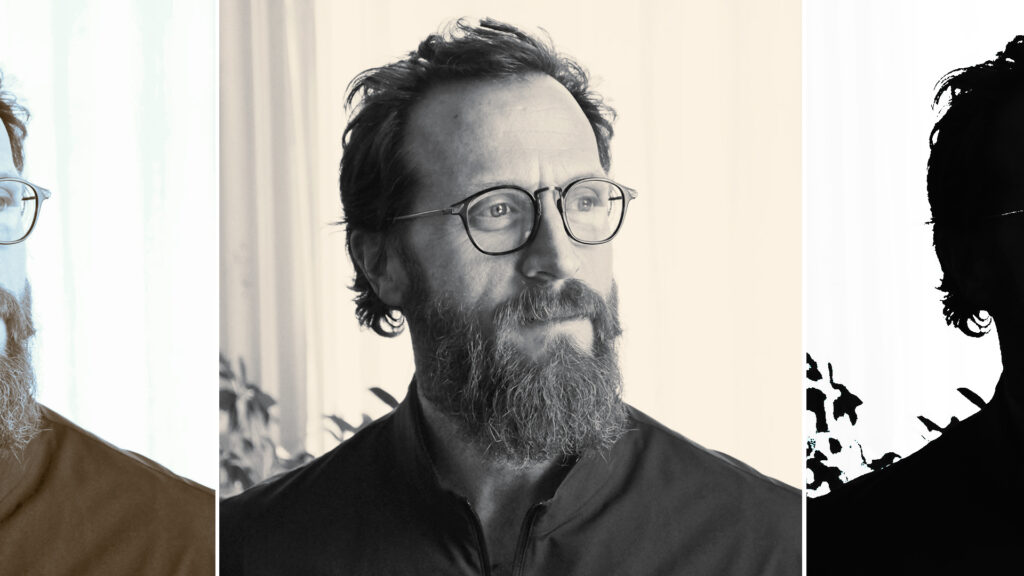
Eli Dvorkin : Editorial and Policy Director at Center for an Urban Future | Photo Credit: Provided

Could you please state your name, title, organization and some background about your previous experience. Also, what drives you to do what you do?

My name is Eli Dvorkin and I’m the Editorial and Policy Director at the Center for an Urban Future (CUF), an independent, nonprofit policy research think tank focused on creating a stronger and more equitable economy across New York. I joined the organization as CUF’s first managing editor in 2016 and I’ve been leading CUF’s research and policy work since 2018. I’ve worked in between the arts and policy worlds for many years. I started out as an arts and culture journalist, organized two traveling art exhibitions across North America, worked as an early employee at Kickstarter, and co-founded Silent Barn, one of New York City’s longest-running and most prolific DIY venues. Prior to joining CUF, I was a staff editor at the Council on Foreign Relations, where I was almost certainly the only employee who came home from work, exchanged a suit for a ripped band t-shirt, and then headed out at 10pm to fix the broken toilet at a sold-out punk show. I’d say I’m driven by the goal of expanding access to opportunity for New Yorkers from under-resourced communities and helping to spark policy changes that make our cities more livable, vibrant, and equitable.

The Silent Barn | Event Circa 2014 | Photo Credit: Dylan Johnson (Facebook)
The Silent Barn | Event Circa 2014 | Photo Credit: Unknown (Facebook)

Earlier this year, I saw you at a presentation at the Albany Institute for History and Art where you were partnered up with Creative Rebuild New York for a panel discussion about the work they have been doing. Can you explain a bit about your synergistic connection in that project and about the UPSTATE’S CREATIVE SPARK report? Why do you think this report is so timely?

The Center for an Urban Future has a long track record of publishing deeply researched and highly readable reports that shine a light on the increasingly critical role that the arts and the broader creative sector in New York’s economy, create greater awareness of the steep challenges facing New York’s working artists, arts organizations, and creative entrepreneurs, and put forward concrete and achievable recommendations for policymakers to more effectively support and sustain a thriving arts and creative sector. Last year, with support from Rochester Area Community Foundation, we were able to publish a new report, ‘Upstate’s Creative Spark’, that provided a first-of-its-kind look at the growing role of the arts as a catalyst for more vibrant local economies across all of upstate New York. We then partnered with Creatives Rebuild New York for a policy forum in Albany that built on the key recommendation of the report: that New York State has a major, untapped opportunity to more fully integrate the arts into a statewide economic development strategy, one that invests in culture from the ground up and creates the conditions for local economies to thrive.

I’m really pleased and humbled that this work is having a significant impact: for instance, three new proposals drawn directly from our report were enacted as part of the FY 2025 state budget (creating the state’s first artist residency program in state agencies; expanding state support for public art projects, and directing the state’s tourism marketing agency to ramp up regional marketing support for artists and arts organizations.)

Source: Upstate’s Creative Spark – Arts Allies of the Capital Region | Courtesy Center for an Urban Future

The time is right for these ideas for several reasons. First, even as artists and arts organizations have been the decisive factor in turning around decades of population declines, revitalizing downtowns, and sparking new business formation in cities across the state, it’s striking that less than 5 percent of the state’s major economic development grants typically flow to arts- and culture-related projects. That needs to change. Second, while the state’s arts and culture sector has in many ways led New York’s broader recovery from the pandemic — rekindling tourism, bringing locals back into their downtowns, and fostering communal healing during a very traumatic period — the arts sector itself is still hurting. Presenting organizations are grappling with smaller audiences and higher costs. Traditional funding sources are stretched painfully thin. And as the work of Creatives Rebuild has shown, far too many artists — especially Black artists and other artists of color — are living in a state of financial precarity. The status quo is not sustainable.

The metrics for the Capital Region are so supportive of the value propositions and ROI for public arts investment, individual artist support and investment in the creative economy in general. Why do you think we struggle so much in Upstate to convince public figures and corporations of not only the need but also the outsized benefits that are realized with a more robust support of arts and cultural programming and infrastructure?

Increasingly, I do think more elected officials, economic developers, and business leaders are starting to get it, but a lot more work is needed. It starts with building a convincing case that the arts isn’t some sort of niche amenity, it’s the lifeblood of thriving local economies and the secret ingredient that enables cities of all sizes to flourish. As our report shows, employment in the arts and culture sector across upstate New York surged 35 percent from 2009 to 2019, nearly 10 times the overall rate of employment growth. Likewise, the number of working artists in upstate New York increased by 26.5 percent between 2011 and 2021 — at a time when the overall under-65 population declined. This creative spark is breathing new life into downtowns, leading to the creation of new restaurants, coffee shops, and other small businesses, and giving young people a reason to stay in their communities and put down roots. What local officials need to realize is that a thriving cultural sector creates the conditions necessary for all other economic activity to succeed. And that requires fresh thinking that prioritizes investments in equitable cultural infrastructure as part of an overall economic development strategy in upstate regions — just as officials would invest in any other essential infrastructure in order to spur job growth.

I know that in addition to population and job growth in the creative sectors, friction points were revealed in your research. What would you say are the biggest challenges that we face in continuing to build on the current momentum in the creative economy in the Capital Region? Any suggestions on where we should be focusing to help alleviate or improve those areas?

The most powerful economic advantage is attracting and retaining talented, creative, and entrepreneurial people — and people want to live in culturally vibrant communities. More than any economic development incentive or tax break, the key to strengthening the Capital Region’s economy lies in ensuring that people want to live, work, and play here. And nothing is more effective at achieving that then bolstering the arts and culture sector. The creative economy thrives in places with strong arts infrastructure — that’s where so many creatives get their inspiration. But there are some major challenges, too, especially as revenues and wages rise far more slowly than costs. The city of Albany and the eight counties in the Capital Region need to work together to direct economic development investments toward arts and culture projects. The region’s arts organizations can’t scrape by on state grant dollars and philanthropic support, and far too few small and mid-sized organizations have the capital or resources needed to level up. The Capital Region needs a regional economic development strategy that integrates the arts, culture, and creative entrepreneurship into every decision, tool, and funding opportunity.

To See the Full Upstate’s Creative Spark: How the Arts Is Catalyzing Economic Vitality Across Upstate New York

To See Upstate’s Creative Spark: Art’s Allies of the Capital Region (Capital Region Specific Presentation)

Jill Fishon-Kovachick is Sculpting Success at Saratoga Clay Arts

June 6, 2024 By Corey Aldrich

I discovered Saratoga Clay Arts through my good friend Ping Xu who is a member there (Also a board member at Saratoga Arts). She kept telling me that I had to see the amazing facilities and community that she was a part of. Well, I have to say…she was right on all counts. What Founder and Executive Director Jill Fishon Kovachick has been able to cultivate is not just an oasis of creativity and an incredibly well equipped makers space but a connected and growing community that many have come to call home.

Please state your name, organization and what you do.

My name is Jill Fishon-Kovachick and the name of my center is the Saratoga Clay Arts Center. I am the Executive Director. I started working with Clay at eleven years of age at Bucks Rock Camp in New Milford Connecticut. I was a camper and became a counselor and found Clay as my medium. From there I went to Skidmore College where I received my BS Degree is Art Education. I studied under Regis Brodie. My love for clay has been my passion for most of my life and continues to be important to me and to be able to teach it to our community fills my heart.

Entrance Sign at Saratoga Clay Arts | Image: Corey Aldrich

Can you tell us about what is happening at the Saratoga Clay Arts and what your mission is? The campus is so beautiful, I really love the vibe there!

Our mission is all about community and to inspire people of all ages. We educate people all about clay. From the hand-building process to the potters wheel. We also have many different types of kilns and glazes. There is also a gallery on site called the Schacht Gallery, which I named after my Grandmother who’s maiden name was Schacht. The gallery brings in local and national artists. We want to expose people of all generations to what it means to work with clay. The gallery broadens people’s understanding of what can be done with clay – in all ways.

Schacht Gallery at Saratoga Clay Arts in Saratoga Springs, NY | Image: Corey Aldrich
Outdoor Patio Area at Saratoga Clay Arts in Saratoga Springs, NY | Image: Corey Aldrich

What does a typical day look like for you on location?

My typical day is wearing many different hats at SCAC. From teaching to answering phones to paying bills and then of course finding time to work on my own work.

Hands On Soda Firing and Throwing Workshop with Matt Long at Saratoga Clay Arts | Image: Corey Aldrich

A lot of organizations with an educational program end up going the not for profit route. Why did you decide to structure as a for profit company?

I ended up making SCAC a private business because I had to react fast to create it. I had been working at Skidmore for Special Programs for 17 years. There I taught a night class for the outside community. Skidmore had decided to delete the night classes for ceramics so the people taking classes needed a place to work. This required me to move quickly to bring everyone to the center. There was no time to set up a not-for-profit. We all needed a place to work – immediately. I bought our current building in foreclosure. I know I made the right decisions as the center has been busier then I ever dreamed could happen.

Materials Pantry at Saratoga Clay Arts | Image: Corey Aldrich
Saratoga Clay Arts has 7 Electric Kilns on Campus (4 Seen Here) | Image: Corey Aldrich

Can you talk a little bit about the economics of the business? I know running a pottery shop requires some serious equipment and infrastructure investment.

We opened in 2011. I was fortunate enough to be able to purchase the building and the equipment to get things going. The business did need some financial backing to cover the equipment side though. Since then we have been raising money through our annual fundraiser which is called the Chili Bowl. We give some of our proceeds to a local organization called To Life which is helping people with breast cancer. and to the Wilton Food Pantry. The local restaurants have participated and have been incredibly generous in donating their donations for the event. It’s a chili cook off and competition and is an amazing and fun event. This of course is in addition to our class and program fees.

EDITORS NOTE: In addition to 7 electric kilns of various types, Saratoga Clay Arts has a large high-fire gas kiln, a salt kiln, a soda kiln, a raku kiln and a pit fire smoker.

Jill at the Kiln | Youth Programming at Saratoga Clay Arts | Image: Provided
Mark Tarabula – Studio Manager at Saratoga Clay Arts in Saratoga Springs, NY | Image: Corey Aldrich

Running a business can be so demanding, how do you balance that with your own artistic practice?

Running a business is incredibly demanding and I have had to give up some valuable time in making my own work to do but it, but it was worth it. The center is such a great place. Since opening and being available all the time I have hired some amazing people. I have a Studio Manager Mark Tarabula , an Artistic Director Leigh Taylor Mickelson and a Marketing and Engagement Community Coordinator Lyndee Deal. This allows me to be able to to focus more on my work. We also have up to 4 Artists in Residence at any given time who teach classes and work for the center in exchange for studio use. Additionally, we hire interns who learn from us and find their direction in clay. They help teach classes and learn the dynamics of running a center.

David Kwak – Resident Artist at Saratoga Clay Arts in Saratoga Springs, NY | Image: Corey Aldrich
Under Construction : New Classroom Space at Saratoga Clay Arts in Saratoga Springs, NY | Image: Corey Aldrich

Bonus question: Anything coming up on the horizon you would like to tell us about, programming to promote?

Some exciting news on the horizon… we are almost finished renovating the basement and have created another beautiful classroom and more studio rentals. We plan for that to be open in June which will allow us to have more room to grow and more classes being offered. Additionally, this will allow us to promote more private parties and corporate clay events.

Fresh Out of the Kiln at Saratoga Clay Arts | Image: Provided

Arielle Steele : Finance by Day Film by Night | Building a Creative Career One Gig at a Time

June 6, 2024 By Corey Aldrich

I met Arielle Steele recently at a backyard picnic at John Yost‘s house (Film Maker and Founder at Fifth Column Features). After about 30 minutes of engaging conversation I knew I wanted to highlight her story. So many of our freelance creatives are working day gigs with big aspirations of moving full time into their creative practice. Arielle brings a solid business background to hers and as if she is not busy enough, was recently named Vice President of the Board at the newly rejuvenated 518 Film Network – a group ACE! has produced some very successful networking events with in the past.

Arielle Steele : Financial Analyst at AYCO and Independent Film Maker / Producer | Image: Jayana LaFotos

Please state your name, company and job title.

My name is Arielle Steele and I am a Wealth Management Professional at Ayco-Goldman Sachs by day and a Filmmaker-Producer by night. I obtained my Bachelor’s Degree in English Literature from Williams College, where I discovered film as a second love. Since then I’ve juggled my work in traditional 9-5s in education and finance with my passion for film. On set, I usually occupy the producer or associate producer’s seat. Recently I have expanded my work in film to include the festival circuit. In 2023 I was the Film Festival Coordinator for the inaugural Renaissance Black Film Festival here in Albany.

Arielle Steele On Set | Image: Provided

Can you share what a typical day looks like for you on your day job and one when you are running a creative project?

A typical day for me within finance is a day full of juggling competing priorities servicing our clients. Whether it’s executing trades over the phone with clients, sending out wires, liaising with internal teams to maintain brokerages, training new team members, or mentoring new hires with the developmental program I created with senior employees at the firm, my day is focused on providing great experiences for our clients and ensuring that my team is fully prepared to take on the day. There’s always an overarching project I’m working on in tandem with my daily asset movement and administrative responsibilities.

When I’m working on a creative project my day to day varies depending on the length of the project, the role I’m assuming, and where we are in production (pre, shooting, or post).

Arielle Steele On Set | Image: Provided

Because I have a full time job I typically choose short term projects, such as short films or music videos. On these days I’ll create call sheets for the next day, review shot lists, create sides for the actors and crew, and check in with PAs to make sure we’re ready to shoot for the day. If it’s a small enough shoot I’ll have to wear multiple hats and act as a PA myself, getting talent to the location, ensuring crafty and meals are available and served in a timely fashion. I’ll consistently check in with the AD and director to ensure we have what we need to shoot efficiently.

In many ways it mirrors my main job because I rely heavily on my project management skills both on and off set.

However, pre-production is my favorite part of the process. Everyone is bubbling with excitement and the seemingly near endless possibilities for the project, while I’m thinking of ways to harness this energy to yield the best results. I work with the director and in some cases writer-director to grasp their vision and offer solutions for costuming, locations, and crew that strikes the balance of honoring their vision and the budget. Then we crunch the numbers and conquer! These meetings typically span a few days in the evenings to accommodate my availability.

Arielle Steele On Set | Image: Provided

How do navigate finding time wearing the different hats of these two very different roles? Are there any ways in which your day job helps you in your creative practice?

Honestly speaking navigating these two roles can get challenging when I’m in the throes of a film project. Knowing that my main job has its peaks I’ll plan to work on projects during the financial “off season.” This is only part of the battle. When on set I’ll try to be there during off days and capitalize on my evenings doing prep work for a shoot. So for a week I’ll be firing on all cylinders.

As for transferable skills, there unexpectedly is a lot of overlap. Excel is both my friend and foe on both sides of the aisle. I check in constantly with other teams/heads of departments and produce deliverables for my supervisor/directors. In the pre-production stage I create pitch decks to secure funding for films, and in the office I’ve created pitch decks for developmental programming. Though finance and film seem to be worlds apart, in terms of production they actually work in tandem with one another.

Renaissance Black Film Festival Panel Discussion with Arielle Steele | Image: Jayana LaFotos

Any particular projects that you would like to share that you are especially proud of?

One project that I’m especially proud of was the film programming I did for the Renaissance Black Film Festival. We secured 100+ submissions on the first go around, and the shorts we selected were phenomenal. Under Kevin Johnson and Patrick Harris’ leadership I was able to moderate a panel with Jamal Hill, Gail Bean, and Morris Chestnut. It has been a career highlight for me.

Additionally my work with non-profit 518 Film Network has invigorated me. Created by Michelle Polacinski and Micah Khan, the network was founded on the idea of forging an equitable and rich filmmaking community, something I really resonated with. When Michelle and Micah decided to end their terms, it gave me the opportunity to be an active participant with the 518 film community. I’m really excited for the work we’re doing and the programming to come this summer!

Renaissance Black Film Festival Photo Op | Image: Jayana LaFotos

As a female and minority Film Producer how would you describe the state of opportunity for you to participate in projects regionally? The challenges? What advice would you give to other women who are looking to participate more in leadership roles in the industry regionally?

The projects I typically work on are for independent filmmakers so that field varies from commercial opportunities. Bearing that in mind, as an emerging producer my opportunities have been generated by my personal network. I am incredibly thankful for those who have seen my passion for production and trusted in the vision.

This is not to say that I haven’t tried mainstream avenues within local television networks. In the past I’ve tried to go that route and it was difficult. Even applying for Production Assistant positions, networks want to see a traditional film history, which as a multi-hyphenate hailing from a liberal arts college, I didn’t have. People don’t want to take a gamble which is understandable, but it makes it that much harder for greener folks, and women of color especially to get in the door.

My advice to those like me, who don’t reflect the majority of the industry, is to find their community and keep showing up. Of course landing your first big job with a network, Netflix production, or Hollywood production is major. But until then hop on projects with your friends, get to know other creators in your area so you can keep working and getting to know the world around you. Network across so you can grow with your siblings in film, as you identify possible mentors in your given field. While your mentor helps you stay true to your ultimate goal, your comrades will inspire you and aid you in strengthening your creative muscles. Show up, give as much as you get and create. Your time will come. It’s taken me since 2016 of on and off work to get to this point and I still have a ways to go.

Anything coming up you would like to shamelessly plug? Long term plans / goals you would like to share?

Shameless plug: I am now the Board VP of 518 Film Network and I’m very proud to announce that 518 Film Network has relaunched and we are now accepting members! We offer filmmakers in the region a chance to connect and showcase their work via screenings. We eventually will be expanding on educational opportunities for members and will be hosting mixers this summer.

FOR MORE INFO: arielle-steele.com

Cohoes Public Library : Rebuilding Connection with the Cities Youth

May 2, 2024 By Corey Aldrich

Raymond LeMay III : Director at the Cohoes Public Library | Image: Provided

Please state your name, educational and/or experiential background and what your current title and job description is.

My name is Raymond LeMay III. I serve as Library Director at the Cohoes Public Library. Previous to the Library I was a substitute teacher with Capital Region BOCES, I have had a number of experiences working with a variety of historical non-profits. I am a life long resident of Cohoes. This library has always been a special place to me; it’s part of what inspired me to go on to receive my Masters in Science in Library and Information Science (MSILS) from SUNY University at Buffalo. I did my undergraduate work at SUNY Empire State College in Public History and Non-profit Management.

I have always had a passion for literature and a commitment to lifelong learning, but most importantly, I have always wanted to help others. Local history and genealogy are also special interests of mine, which prompted me to work toward re-establishing a local history room, starting a genealogy club at our library, and becoming Vice President of Spindle City Historic Society.

Cohoes Public Library Sponsored Activity | Image: Provided

Can you tell us a bit about the history of the Cohoes library?

The public library has a long and distinguished history in the City of Cohoes. The first public library in Cohoes was formed in 1880 as the Cohoes District School Library and was located in the present day Cohoes Music Hall. It was relocated a few times over the years, finally settling in at the former St. John’s Episcopal Church in the 1970s. Because of damage to that building, in 2021, the library moved into our current temporary location at 10 Cayuga Plaza, sharing a space with Cohoes Senior Center.

We are looking forward to the 2025 completion of our new library space inside the former Cohoes Savings Bank building on Remsen Street, recently acquired by the City. This is a beautiful space featuring wall murals that the community is eager to see once again. Work is being done to make this building ADA compliant and to redesign the space for the needs of the library. Overall, moving the public library provides an exciting opportunity to enhance engagement, promote lifelong learning, and create a dynamic library space to meet the modern needs of our community.

American Mastodon at the Cohoes Public Library in Cohoes, NY | Image: Provided

Didn’t you folks used to have a taxidermy woolly mammoth there?

Not a wooly mammoth, but an American Mastodon, actually. A 13,000 year old extinct juvenile male mastodon was discovered in 1866 on the Mohawk River near Cohoes Falls during construction of Harmony Mill No. 3. That actual mastodon is now located at the New York State Museum in Albany. For many years, our library has housed a wonderful replica of that mastodon who watched over our collections and was a treat for our visitors, young and old. At our temporary location, we are currently displaying a mastodon created by the students of the Cohoes City School District in honor of the Hudson Fulton Celebration in 2009.

Student Project at the Cohoes Public Library in Cohoes, NY | Image: Provided

My mom used to bring me and my sisters to the library for reading hours and to take out books. It was really influential for me. Can you share your thoughts on the current role of libraries in our communities and why they are so important, especially in our small communities?

Clearly, the library had a big impact on me as well! Historically, libraries have been seen as just quiet buildings filled with books. This is no longer the case. Libraries today are vibrant public spaces playing an essential role in our communities by providing access to information, promoting literacy and learning, and fostering community connections. Literacy now extends to digital literacy, giving libraries the mission of teaching their community about digital citizenship, how to discern the good information from the false, how to use technology, and how to protect privacy and ensure security of information. Also, bridging the digital divide, an issue more significant than many realize, is another way in which libraries excel.

Libraries are a place where the young and old can gather, learn, grow, and be entertained. They provide positive ways for people to connect. As centers of knowledge and culture, libraries enrich the lives of individuals and contribute to the social, economic, and cultural vitality of our communities. Of course, libraries do have books, but they have so much more. Libraries have digital libraries with content like ebooks and audiobooks available on your digital devices. They also have “libraries of things” (we loan items like fishing poles, blood pressure machines, and board games, and more!). However, some of the most valuable things a library offers is programming by staff or experts.

Programming Examples at the Cohoes Public Library in Cohoes, NY | Image: Provided

I see a lot of interesting kids programming listed on the website. Can you share any best practices on how to get kids engaged into the library world of things?

Between COVID and our change of location, kids in our city became somewhat separated from the library. We are working hard to rebuild our relationship with our young people. I think it is important to meet the children where they are in a way that is welcoming and not intimidating to them. By holding programming that aligns with their established interests, we are hoping to make the library space familiar and welcoming to them. We are focusing on outreach within the community so they get to know the library as a part of their community, and all we have to offer. With diverse and engaging programming, we have the opportunity to create a conversation with
families in the community to better understand their needs and then meet them.

Upcoming Programming at the Cohoes Public Library 2024 | Image: Provided

Can you tell us a bit about funding sources for a program like yours?

We are a municipal library and as such we receive most of our funding from the city.
Additionally, we are supported by the Friends of Cohoes Public Library, a non-profit which does fundraising and contributes to special programs, projects, and services both financially and by volunteering. They are great and we appreciate all they do!

Upcoming Programming at the Cohoes Public Library 2024 | Image: Provided

Finally, open question…anything you would like to plug coming up that folks should know about? Don’t be bashful…

We have so many fun events planned! On May 4th we are holding May the Fourth Be With You: Star Wars Day for kids (of all ages) with a costumed characters from Defenders Detachment (a non-profit cosplay group) On May 11th Southern Adirondack Beekeeping Association will be bringing us a program on the beauty of bees and their benefit to gardens bringing along an observation hive to look at. On May 18 we will have a Model Train Day in partnership with the Berkshire Hudson Division of the NMRA.

We can’t wait for summer! Our summer reading program is always a fun time, and this year we are celebrating that Adventure Begins at the Library! We will be holding a kick-off event at the start of summer and programs throughout for kids of all ages. On July 13th: Cohoes Library Comic Con! This will be a big event with artists, panels, vendors, tabletop gaming, cosplay, and more. We are very excited about this!

Troy Library : Resisting False Narratives to Build Community Bridges

May 2, 2024 By Corey Aldrich

Laurie Dreyer : Branch Manager & Outreach Coordinator at Troy Public Library | Image: Provided

Please state your name, educational and/or experiential background and what your current title and job description is.

My name is Laurie Dreyer and I am the Branch Manager and Outreach Coordinator for the Troy Public Library. I graduated with a Masters in Library Science and Information from UAlbany back in 2016. But I’ve been working in libraries for a lot longer than that – I first started at a public archive in 2010 where I learned about historical records and archives and I fell in love with the old-timey, paper-based information and keeping it preserved. Then I started working at the check out desk in the Library part of the public library and I learned how much better it was to be able to pass that information along to folks who had a need for it. I became an ‘information distribution coordinator’ and here I am 14 years later, loving every minute of it.

After working the last few months to get our Lansingburgh Branch Library reopened after a flood in December, I spend much of my day looking at calendars and plotting ideas for crafts and programs, buying books, and brainstorming what local organizations and businesses we can work with. The whole idea is to get the word out that the Library isn’t just books, we have loads of events, services and resources that are available to everyone.

Troy Public Library in Troy, New York | Image: Plusbo Mwacher via Pintrest

Can you tell us a bit about the history of the Troy library? Architecturally it’s so steampunk, always thinking about Jules Vernes ‘20,000 Leagues Under the Sea‘ when I am in the stacks…

Mary Hart had the Main library built back in 1897, when books were rare and expensive and needed protection. But the Troy Public Library was started as an organization in 1799, nearly a hundred years before the Hart Building existed and was nomadic, moving between locations like Librarian’s personal residences for many decades. The Lansingburgh Academy building wasn’t even around at that point, having been initially built in 1821 and used as the Lansingburgh Academy for many years until the Library took over the building in 1997. I’m so glad that we have been able to maintain these two important historical buildings while still innovating with the modern city that Troy is becoming. You can read the whole history of the Library, its beginnings and its buildings on our website HERE.

Mabs Enchanted City Shoot for Electric City Couture at the Troy Public Library | Image: Sarah Pezdek

As a young man, the library where I was growing up had an important impact on me. Can you share your thoughts on the current role of libraries in our communities and why they are so important?

As we see an increase in divisive politics and sketchy news stories, public Libraries are more important than ever. The importance of having a place where we know that the facts have been checked by professionals and each item added has gone through multiple rounds of consideration cannot be overstated. In a world of manufactured outrage, it is vital that each community have at least one source of consistency and accuracy. We strive to be that for our community. We have books and they aren’t going away – despite what some folks think – but we also have digital resources like ebooks, streaming audiobooks, music, movies, and TV shows. We have databases that are geared toward kids, toward those who wish to check financial markets, for people researching art, people working on mechanical repairs, and so much more.

If you come into the Library’s buildings, you will find that we have free wifi and computers for folks to use and you can access even more databases, like Ancestry.com, inside the Library. Looking for a job? We have software that you can use that will create a fully formatted resume and cover letter for you. We also lend passes to local museums, have snowshoes on loan for the winter, and blood pressure monitors to keep track of your health. We regularly partner with other local organizations like Capital Roots, The Troy Senior Center, The Sanctuary for Independent Media and so many more to host programs and events and to help promote the services that each of them offers. I really like to think of us as a community connector – we find the information or entity and we tell everybody how to contact them!

Family Friendly Programming at the Troy Public Library | Image: Provided
Embroidery Class at the Troy Public Library in Troy, New York | Image: Provided

I see a lot of interesting kids programming listed on the website. Can you share any best practices on how to get kids engaged into the library world of things?

We have a really active children’s department which is always doing something super fun. A few highlights are our Monday Family Game nights and our upcoming Summer Reading events. For Game Nights, we have a huge selection of family board games at the Main Library, so you can really choose anything you want to play. It’s a great way to test out games that you and your family might be interested in playing or owning. For Summer Reading, we are going to have raptors and reptiles in the library, we are going to be hosting the very fun Whalemobile and Big Truck Day.

Research has shown that kids are excited about reading already, so it’s really up to parents and us librarians to make sure kids understand what they can get at the library. We have tried to make it easy for kids of all ages to get a library card with our MyCard program where kids between 5-17 can come into the library and get a card without an ID or any of the address verification stuff that we make adults give us. I think it is super important for kids to know that we librarians are never going to judge them on what they read, so they can come in and get whatever books they want to read. If they want to sit in the Library and read, that’s fine. We also have a therapy dog, Greta, who comes in on Saturdays and kids can read to her.

Programming Examples at the Troy Public Library in Troy, New York | Image: Provided

Can you tell us a bit about funding sources for a program like yours? Some granularity in this answer would be appreciated and super informative to our audience.

As our Director likes to say, “public is in the name so that means there are no secrets”. As far as bureaucratic entities go, our funding structure is pretty uncomplicated. We are a special district library, which means that the state of NY established the City of Troy as a ‘district’ for the Library back in 2010. So now, we have a budget election every September and we publish a detailed proposed budget so that the people of Troy can make an informed decision.

We do end up using a good deal of our budget toward building upkeep and maintenance, which is what happens when you have two historic buildings that are open to the public. We have an active Friends of the Library group who help us fund specific projects and events, though they rarely can help with capital projects. We are always looking for people willing to bequeath us funding or, as recently happened, to offer a matching grant. As a historically underfunded organization, the Library certainly does what it can with the budget we have. We have been lucky that folks in our administration and on our Board of Trustees are talented grant writers who have really been instrumental in keeping our buildings open.

Author Photo Op with Mayor Madden and Congressman Paul Tonko | Image: Provided

What are some of the current challenges you are facing?

Right now, we are looking for funds to get the Lansingburgh Branch’s Children’s Room back up and running since our insurance claim has been twice denied by the insurance company. We all find this situation pretty disheartening, as our children’s
room was very popular and allowed families to come to the library and sit and read with their children. It was a wonderful meeting place for things like our story hour and other kids programs. And now we have kids coming into the Library who want to be able to play and read and feel comfortable in a space where their parents don’t have to pay to simply sit and spend time with their kiddos.

It has been a difficult few months without that space.

Up and Coming Programs at the Troy Public Library for May 2024 | Image: Provided

Finally, open question…anything you would like to plug coming up that folks should know about? Don’t be bashful…

We are working on a lot of fun stuff for this summer – Teen Video Gaming, Big Truck Day, Quilt Making kits for adults – and Summer Reading. It is free and open to everyone AND you can win fun prizes just for reading!

What we really want to do is to hear from our community about what we are doing well and where we can improve. We have launched a community survey that is going to be up until July 15. Anyone can fill it out, even if you do not live in the City of Troy. It takes about 5 minutes to complete online: HERE. This survey is a HUGE help to us since it helps us prioritize our services and see what more our community needs from us. We hope you’ll consider filling it out.

If nothing else, though, let me just encourage you to stop by the Library and say ‘HI!’ We love having visitors and you don’t even have to buy anything!

  • « Go to Previous Page
  • Page 1
  • Interim pages omitted …
  • Page 4
  • Page 5
  • Page 6
  • Page 7
  • Page 8
  • Interim pages omitted …
  • Page 18
  • Go to Next Page »

Creative Economy Updates and Other Good Stuff!

STAY CONNECTED!

  • Facebook
  • Instagram
  • Twitter
Copyright © 2020 THE UPSTATE ALLIANCE FOR THE CREATIVE ECONOMY

info@upstatecreative.org | 41 State Street, Albany, NY 12207

Design by Reach Creative