• Skip to primary navigation
  • Skip to main content

ACE

Upstate Alliance for the Creative Economy

  • HOME
  • ABOUT
  • NEWSLETTER
  • SUBSCRIBE
  • JOBS
  • Show Search
Hide Search

Glens Falls

KATE WILKINS ON SERVING ARTISTS AND COMMUNITIES WELL

June 3, 2026 By Corey Aldrich

I ran into Kate Wilkins, Chief Advancement Officer and Deputy Director at The Hyde Collection recently while meeting my friend Ping Xu to check out the Tashiko Takaezu : Voices of Abstraction exhibition (Curated by of Jill Fishon-Kovachick of Saratoga Clay Arts). We had a moment to sit down and chat about the current trajectory of The Hyde Collection and overall the state of opportunity in the arts and cultural sector in the Capital Region in general. I was impressed by what she shared and the reason she has decided to invest her time and expertise in Upstate New York.
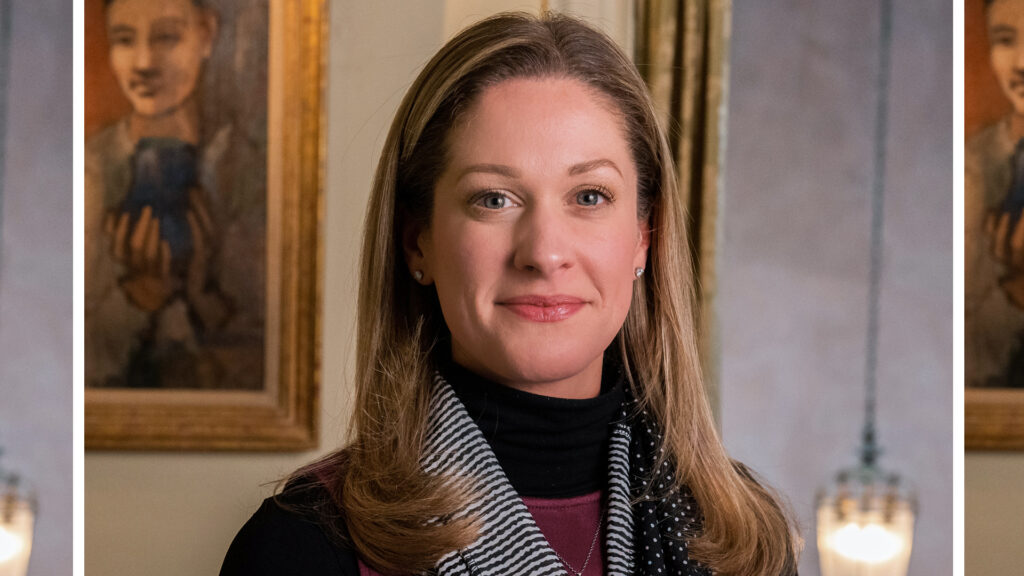
Kate Wilkins : Chief Advancement Officer and Deputy Director at The Hyde Collection in Glens Falls, New York Image: Jim McLaughlin

Can you please state your name and title, and organization. Can you share a bit about your educational and experiential background?

I’m Kate Wilkins, Chief Advancement Officer & Deputy Director of The Hyde Collection. My time working with The Hyde goes back to early 2021, when I joined the organization as Director of Development. Over the last five years, it has been my good fortunate—along with my colleagues in leadership—to steward the Museum into a new era, which includes an expanded emphasis on community engagement, education, and economic impact. In my current role, I oversee advancement work across fundraising, membership, sponsorship, and institutional giving, with a focus on building relationships and support that directly strengthen our programs and mission.

I hold a BFA from Alfred University (2007), and later completed a Master’s in Museum Studies along with a Graduate Certificate in Non-Profit Management from Harvard University in 2018. That combination of studio-based training and museum administration has shaped how I think about cultural work, both from the artistic side, as well as from the operational and strategic side of running museums.

Before coming to The Hyde, I was Development Director at Opera Saratoga, where I supported fundraising efforts during the early days of the pandemic. Raising funds for a summer season we weren’t sure was going to happen was a real feat! Prior to that, I served as Annual Fund Director for Proctors Collaborative, helping grow annual support across a multi-venue arts organization that includes Proctors Theater, Capital Repertory Theater, and Universal Preservation Hall (UPH). Earlier in my career, I held advancement roles at The Sembrich and the Slate Valley Museum, both of which gave me a strong foundation in small and mid-sized cultural institutions and a deep appreciation for community-facing arts work.
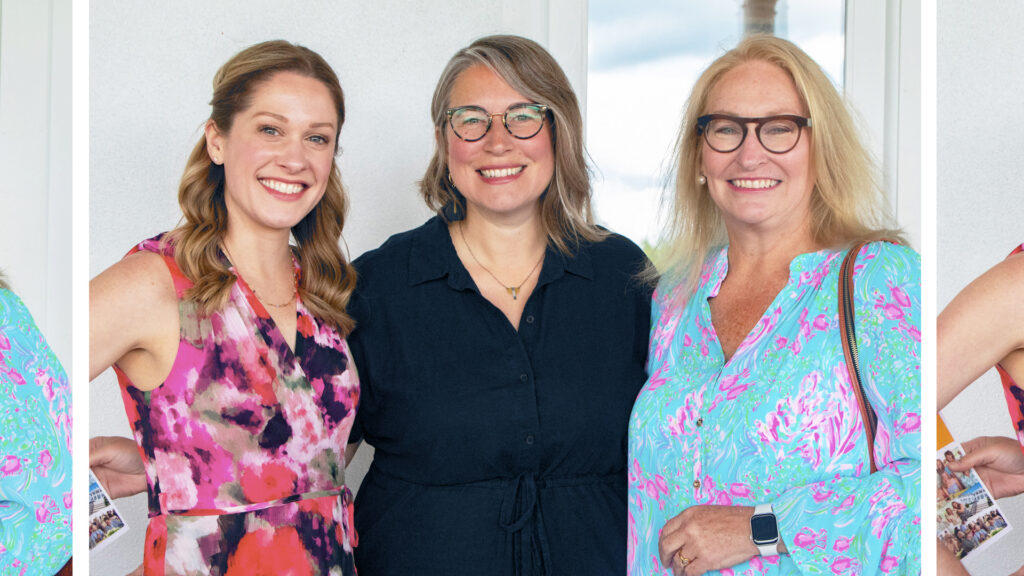
Kate Wilkins, Elizabeth Dubben and Hillarie Logan-Dechene : 2025 | Photo : Provided

At the very beginning in my career, I briefly worked in graphic design, just long enough to realize I was more drawn to the broader ecosystem around art than to design itself. That realization led me quickly toward gallery and museum work and my first opportunity to engage with that world was at Amrose + Sable Gallery in Albany, a space many in the region will remember. The gallery was founded by Elizabeth Dubben, who is now Executive Director of Collar Works and Associate Director of the Arts Administration Program at Skidmore College.

Elizabeth and I met purely by chance, in a way that now feels very meant to be: I had been out for one of Albany’s early First Fridays with friends and ended up in the gallery that evening. After seeing her speak and experiencing the space, the following Monday, I reached out to Elizabeth to propose an internship. That conversation became the starting point of my work in the field. I spent the next two years working closely with her, gaining foundational experience in gallery operations, exhibitions, and community engagement. From there, I moved into a role in membership and collections care at The Alfred Ceramic Art Museum at Alfred University, where I began to deepen my understanding of how museums sustain relationships with artists, members, and audiences.
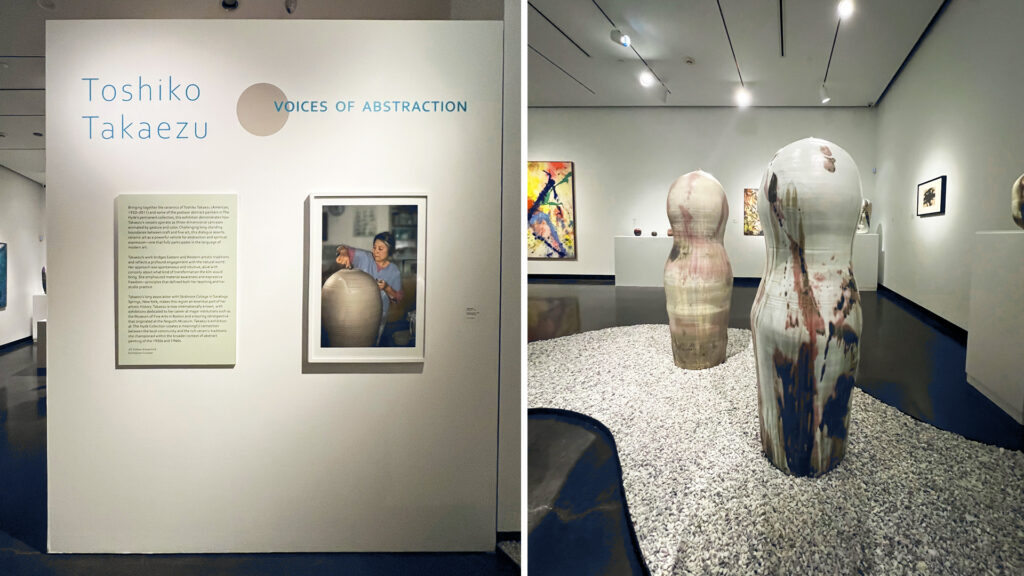
Toshiko Takaezu : Voices of Abstraction Exhibit at the Hyde Collection in Glens Falls, NY | Photo : Corey Aldrich

In 2024, during what now feels like a very full circle moment, I was invited by Elizabeth Dubben to join Skidmore College as an Assistant Lecturer in the Arts Administration Program where I mentor students on financial management, audience, engagement, and best practices in arts non-profits. I am so gratified to be part of a program like this one that mentors the next generation of arts administrators. The program itself is a shining example of how much professional development opportunities have grown to support the ambitions of arts and culture leaders in our region. 

Those early experiences shaped how I approach museum work today. They grounded me in the idea that strong cultural organizations are built through relationships first, between institutions, artists, donors, students, and communities, and that the most durable support comes from consistent stewardship, trust, and a shared sense of purpose. Just as importantly, they reinforced the value of genuine grassroots energy that ultimately gives cultural work its momentum and meaning.
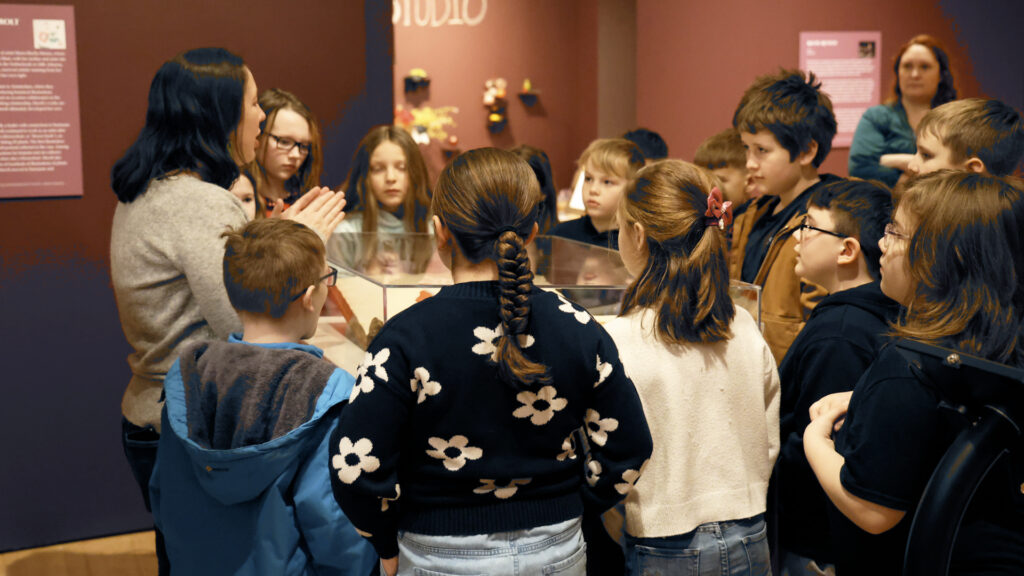
Youth Programming at the Hyde Collection in Glens Falls NY | Photo : Provided

I find the story of how you were in the Capital Region, left and then decided to come back of great interest. Can you share that with the audience? I feel this is touching on an area that several of us have felt over time as to where we are going as a region.

My role at The Alfred Ceramic Art Museum at Alfred University brought me back to my alma mater in Western New York, and in many ways it marked the beginning of a much larger journey. As meaningful as my experience at Amrose + Sable had been, I also understood that I was still very early in my career. At that point, around 2009, the arts landscape in the Capital Region and Adirondacks looked very different than it does today. Outside of a few standout organizations and galleries, there simply weren’t as many visible pathways for long-term professional growth in the arts. What’s more, programs like the one I now teach in at Skidmore College were in their infancy or non-existent. I knew that if I wanted to eventually contribute meaningfully to institutions like The Hyde Collection, Proctors Collaborative, or others in the region, I needed to broaden both my experience and my education.

I spent two years at Alfred before life and work opportunities took me farther afield, to Cincinnati and later to the North Shore of Boston. In both places, I worked in the auction industry, which exposed me to a very different side of the art world. It was exciting and educational, and I learned a tremendous amount about collections, markets, and the business side of art. But those years also clarified something important for me: I missed the mission-driven nature of nonprofit cultural work and the sense of community that comes with it. That realization ultimately led me back toward museums and public-facing arts organizations.
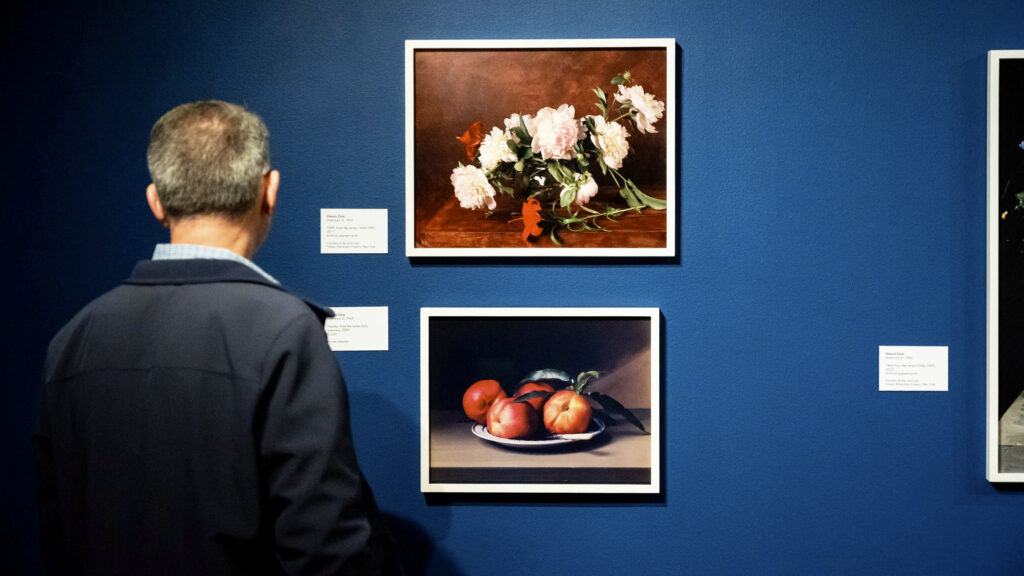
Sharon Core : 1606 to the Sixties Exhibit at the Hyde Collection in Glens Falls, NY
Photo : Rob Spring Photography

I began work on my graduate studies at Harvard University in 2014, pursuing museum studies and nonprofit management at a time when I was also paying close attention to what was happening back home in upstate New York. Even from a distance, I could see that the arts economy in the Capital and Adirondack regions was evolving in exciting ways. Organizations were becoming more ambitious, more collaborative, and more interconnected. People I had known during my Amrose + Sable days were helping shape a growing cultural ecosystem through places like Saratoga Arts, The Laffer Gallery, and the Tang Teaching Museum at Skidmore College, just to name a few. At the same time, organizations like The Sembrich, Opera Saratoga, and the Slate Valley Museum were expanding their visibility and impact in meaningful ways.

By the time I made the decision to return in 2016, it felt less like “coming back” and more like returning to a region that had matured alongside me professionally. One of the most striking differences I noticed was the shift in mindset across the arts sector. When I left in 2009, there was often an underlying sense of competition among organizations—for audiences, funding, and visibility. When I returned, there was a growing understanding that the region’s strength actually came from collaboration, a sense of shared purpose, and a vision for the region as a multi-disciplinary arts destination. As an example of this, Proctors had evolved into Proctors Collaborative with a vision centered on partnership across communities and disciplines, and many organizations were beginning to see themselves not as isolated institutions, but as part of a larger regional cultural identity.

Then, despite all odds, the pandemic accelerated that spirit of collaboration even further. Arts organizations had to rely on one another in new ways, share resources and ideas, and think collectively about audience engagement and sustainability. I think that period reinforced something many of us already believed: that the future of the arts in this region depends not only on strong individual organizations, but on a shared commitment to supporting one another and building a vibrant cultural ecosystem together.
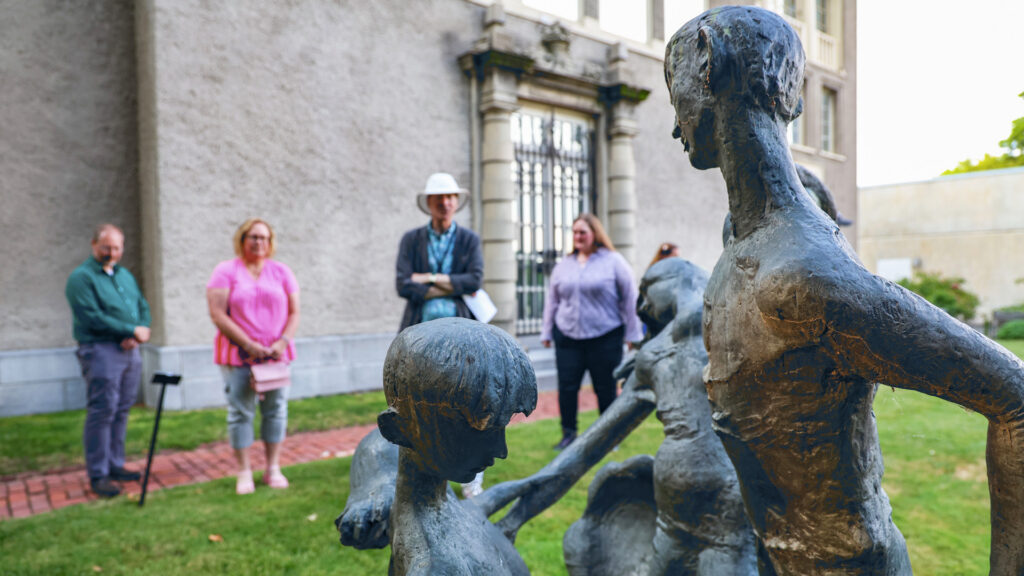
Arts After Hours Series at the Hyde Collection in Glens Falls, NY | Photo : Provided

You had a fellow non-profit fundraiser in your social circle once tell you that you should leave the arts…that there was not a sustainable future in this sector. What did you see that they did not and what kept you focused on staying true to your intuition? 

Unfortunately, my time at Proctors Collaborative was cut short by the pandemic. I am so grateful that during that very strange time, Proctors left the door open for both employees and audiences to return when it was safe. At the same time, no one knew when that might be, and I’m not very good at sitting still or not working, so I went after new opportunities as quickly as I could. I consulted as many folks in my network as possible, polling them for advice, connections, and suggestions. 

During one conversation with another nonprofit fundraiser, it was suggested that if I wanted long-term stability in development work, it might be wise to pivot away from the arts entirely. Under the circumstances, it was understandable advice. The sector was facing enormous uncertainty, and many organizations were struggling simply to stay afloat. But it was also advice I eschewed almost immediately.
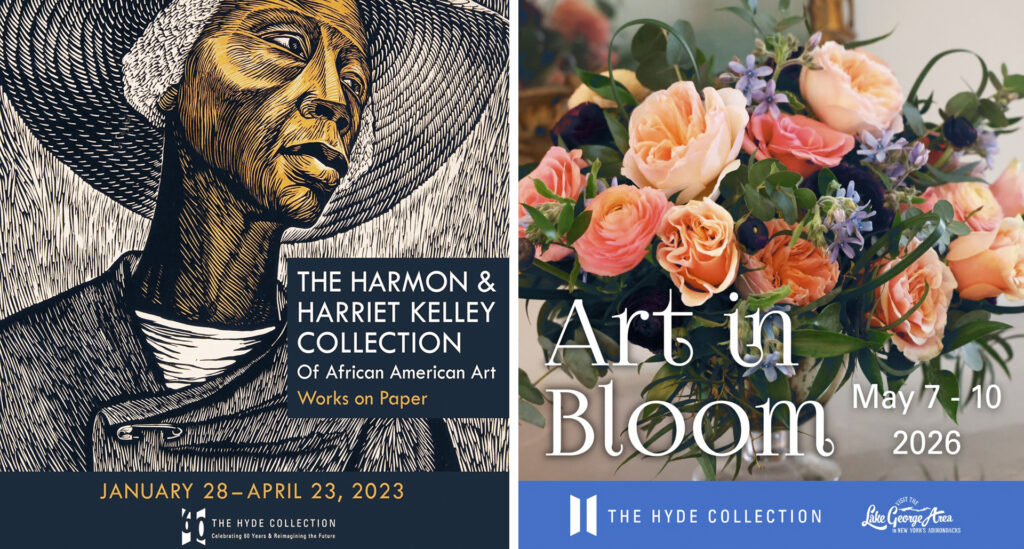
By that point, I had already seen the extraordinary sense of camaraderie, creativity, and collaboration that existed within the arts community across the Capital and Adirondack regions. I didn’t believe that momentum would simply disappear in a crisis. If anything, I felt certain the opposite would happen; that arts organizations, artists, and cultural leaders would find ways to rebuild together, support one another, and reimagine what was possible. What I know to be true is that artists across all disciplines are driven, hungry to succeed (I could make a Hamilton joke here, but I won’t!), and motivated by an undeniable need to create, especially when faced with adversity. And ultimately, that’s exactly what happened.

I think part of my conviction came from the fact that my professional connection to the arts is also deeply personal. I grew up as both a visual artist and a dancer, and throughout my career I’ve had the opportunity to work with museums, theater companies, music organizations, and institutions that directly support working artists. Because of that, I’ve always understood arts organizations not just as a place to work, and produce or present great art, but as essential community spaces. Our arts organizations offer places for people to gather, find meaning, express identity, and build connection. That belief made it impossible for me to walk away from the field, even during one of its most difficult moments.
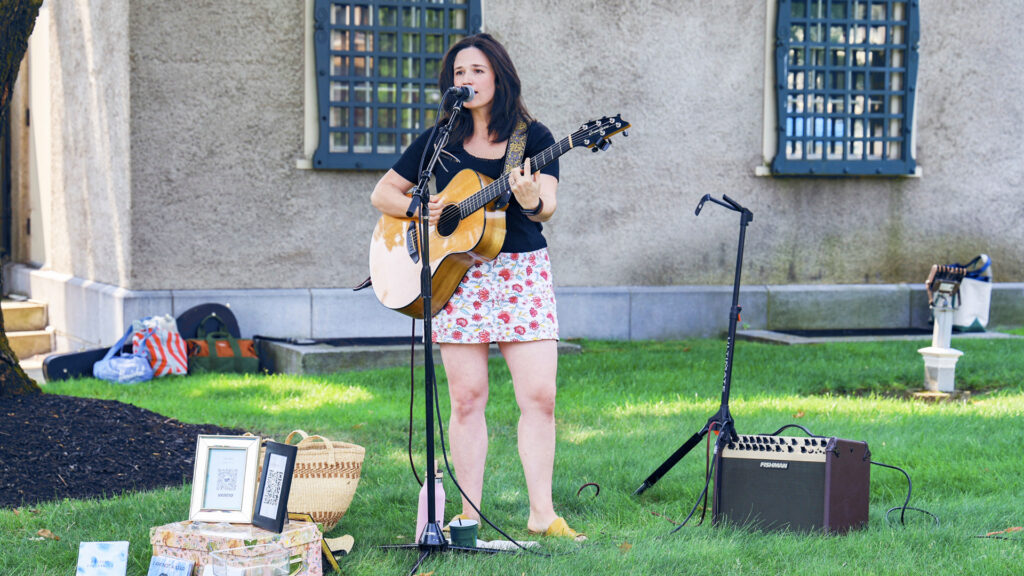
Girl Blue Performs a Lawn Show at the Hyde Collection in Glens Falls, NY | Photo : Provided

As luck and opportunity would have it, the pandemic ultimately led me to my role with Opera Saratoga in 2020 and then to The Hyde Collection in 2021. When I moved back to the region in 2018, The Hyde was at the very top of my personal “workplace wish list,” so joining the organization a few years later felt both exciting and deeply meaningful.

What’s been especially rewarding since then is seeing just how interconnected the regional arts community has become. The Hyde has partnered with all of the organizations I’ve mentioned in this conversation, and then some, to create enriching, multidisciplinary experiences for our shared audiences and supporters.
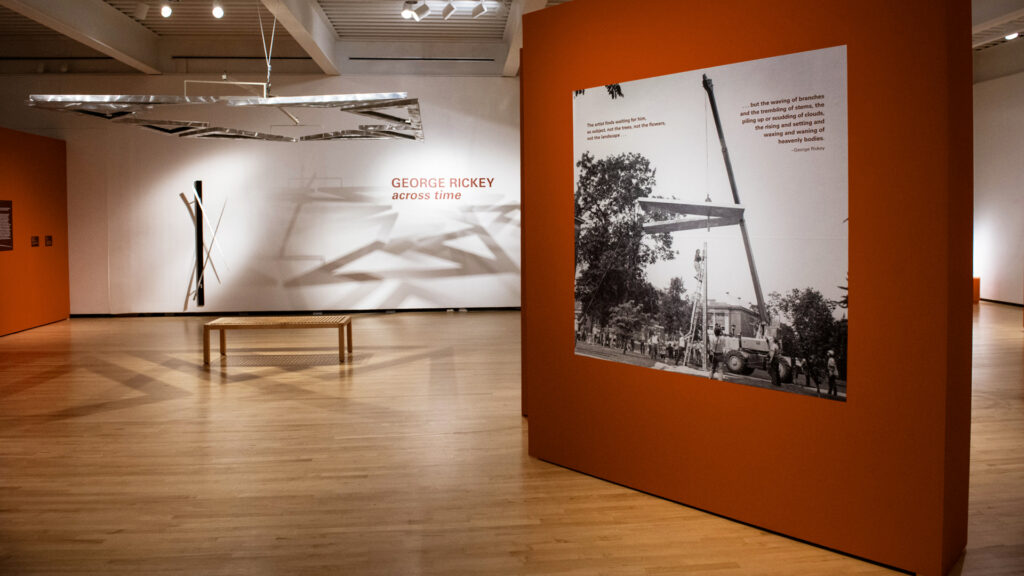
George Rickey : Across Time Exhibit at the Hyde Collection in Glens Falls, NY | Photo : Provided

You have a strong sense of the value attached to business training for folks working in the arts. Can you explain why you feel this is important and address the question of how that can and should impact the mission of an arts and cultural organization?

I think one of the biggest misconceptions about arts organizations is that mission and business strategy somehow exist in opposition to one another. In reality, the strongest arts organizations are usually the ones that understand how deeply connected those things are. Good business practices don’t diminish mission-driven work. Rather, they create the stability and infrastructure that allow the mission to grow and endure.

Early in my career, I worked in very small organizations where everyone wore multiple hats and financial realities shaped nearly every decision. I also saw firsthand what can happen when extraordinary artistic vision outpaces organizational infrastructure or business acumen. Even the most exciting creative ideas need sustainable systems, sound financial planning, and strong operational leadership behind them in order to truly succeed and endure. As a result and later on through my graduate work in museum studies and non-profit management, I began thinking more intentionally about how governance, fundraising, audience development, financial management, and strategic planning all directly affect an institution’s ability to serve artists and communities well.

On the one hand, arts organizations can be emotionally charged, highly creative spaces, but they are also complex organizations with staff, budgets, facilities, collections, educational responsibilities, and long-term obligations to the public. If those operational pieces are not healthy and sustainable, even the most inspiring artistic vision can struggle to survive. I think business training gives arts leaders the tools to think proactively instead of reactively, and to build institutions that are resilient enough to support ambitious programming, invest in staff, care for collections, and remain accessible to their communities over time.

At the same time, I think it’s important that business strategy in the arts remains mission-centered. That’s also why I care so much about stewardship and relationship building in advancement work. Sustainable support for the arts doesn’t come only from financial transactions; it comes from people feeling genuinely connected to an institution’s purpose and believing they are part of something meaningful. In that sense, good business practice in the arts is really about sustainability, trust, and community responsibility as much as it is about revenue or operations.
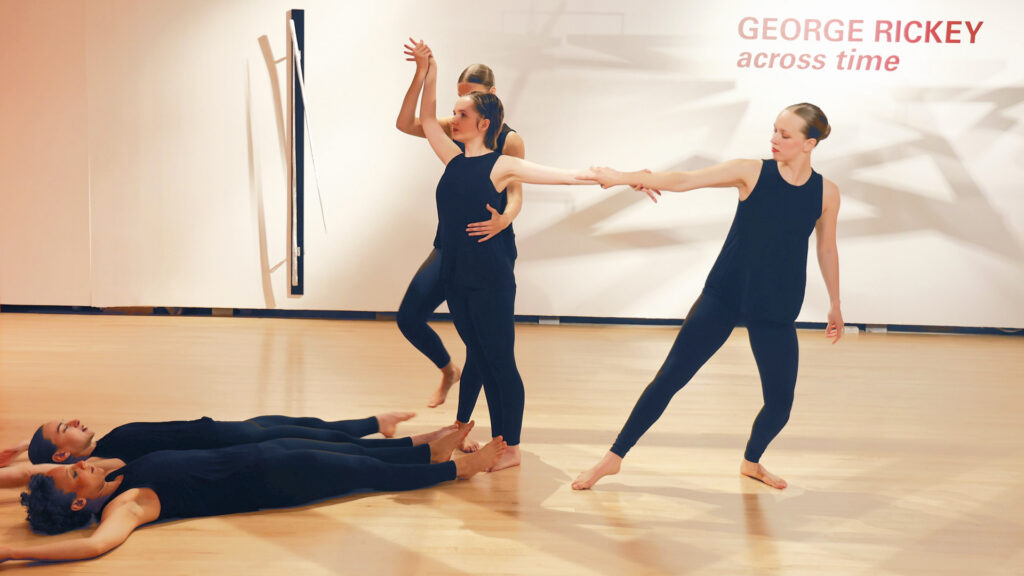
The Ellen Sinopoli Dance Company Performing at the Hyde Collection in Glens Falls, NY | Photo : Provided

You are part of a growing and recognizable movement in the Capital Region of younger, highly experienced women who are taking leadership roles in our major arts and cultural institutions. Why do you think that is happening now and how do you see that ultimately influencing / impacting our communities across the region?

I think there are a few things contributing to that shift: One is that many arts and cultural organizations across the Capital and Adirondack regions have spent the last decade evolving in really meaningful ways. Institutions have become more collaborative, more community-centered, and more open to new models of leadership. As organizations have worked to better reflect the communities they serve, there’s also been a growing openness to newer and more diverse perspectives at the leadership level. I think one result of that evolution is that more women are stepping into highly visible leadership roles across the region’s cultural sector.

The Hyde Collection is certainly an example of that shift. With the exception of our CEO, John Lefner, the Museum’s senior leadership team representing advancement, curatorial and collections care, and education are all women, and our Board of Trustees is also predominantly female. I think that leadership dynamic has contributed to a culture that is highly collaborative, mission-focused, and community-oriented, while also bringing a wide range of perspectives into institutional decision making.

I also think there’s been a growing recognition that leadership in the arts requires a very broad and adaptable skill set. Today’s cultural leaders are expected to think strategically about fundraising, education, audience engagement, economic impact, accessibility, partnerships, marketing, and long-term sustainability, often all at once. Many women in the field have built careers navigating exactly those topics simultaneously. 

It’s worth noting, too, that many of us came up through the region’s arts network together. We’ve worked across museums, theaters, galleries, artist-run spaces, nonprofits, and educational institutions. We know one another, we collaborate naturally, and there’s often a shared understanding that the success of one organization can positively impact the entire regional cultural landscape. That mindset feels very different from the more siloed environment that existed when I was first entering the field.
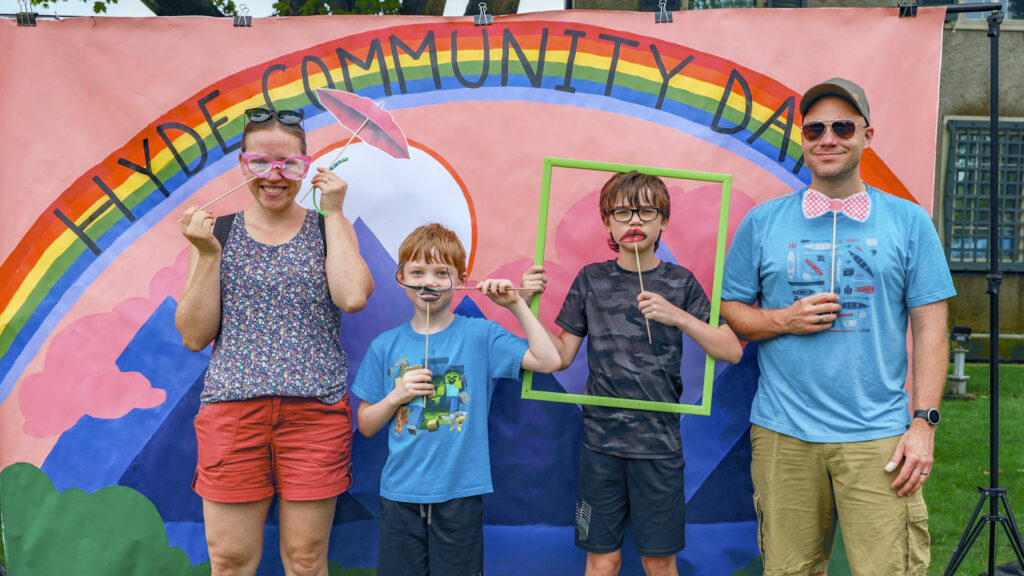
Hyde Community Day at the Hyde Collection in Glens Falls, NY | Photo : Provided

SHAMLESS PLUG: Any programmatic initiatives or projects that you would like to share with us?

I’m excited to share news of our always popular upcoming Community Day on Sunday, August 2 at The Hyde Collection. It will be a full day of music, food, free museum admission, tours, and family-friendly activities designed to welcome audiences of all ages into the Museum.

On Monday, July 20 we are also looking forward to our Hyde Summer Luncheon at the Sagamore Resort on Shelving Rock Terrace. This signature fundraising event brings together supporters, community leaders, and friends of The Hyde for an afternoon that celebrates the Museum’s mission while raising critical support for our exhibitions, education programs, and community initiatives. It remains one of our most important and well-attended gatherings of the year, and a meaningful moment to reflect on the impact of the work we do together.
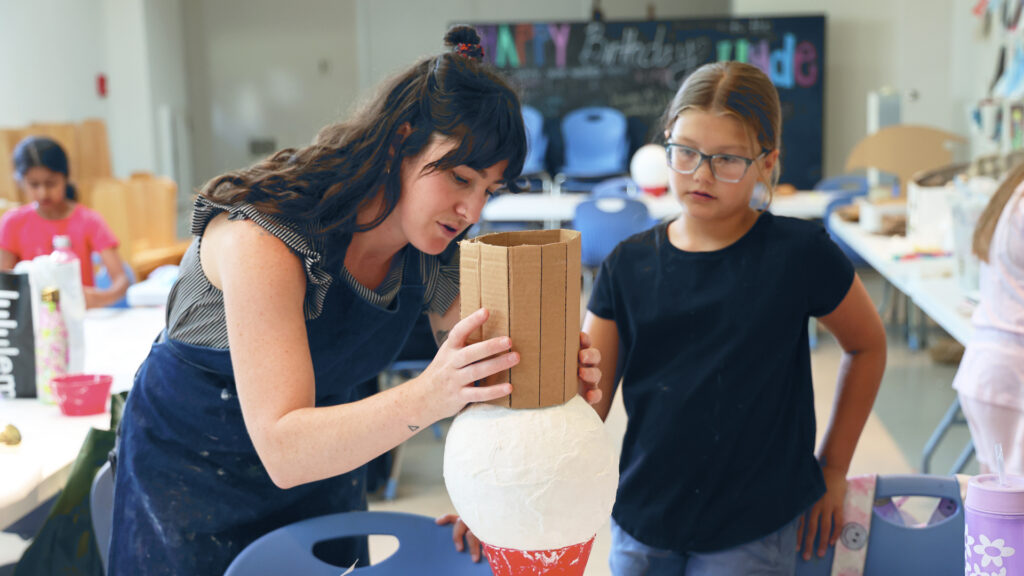
Youth Programming at the Hyde Collection in Glens Falls, NY | Photo : Provided

More broadly, The Hyde is in the midst of a real expansion of our educational mission. In 2025 alone, we worked with more than 6,000 program participants across youth and adult programs, reflecting a significant increase in both reach and engagement. A particularly meaningful example of this growth is Hyde & Seek, a program developed in partnership with AIM Services and Community Work Independence (CWI), which provides inclusive, accessible arts experiences for individuals with intellectual and developmental disabilities. What began just three years ago with three participants has grown to more than 20 participants per session, with an additional waiting list of over 20 individuals eager to join future programming.
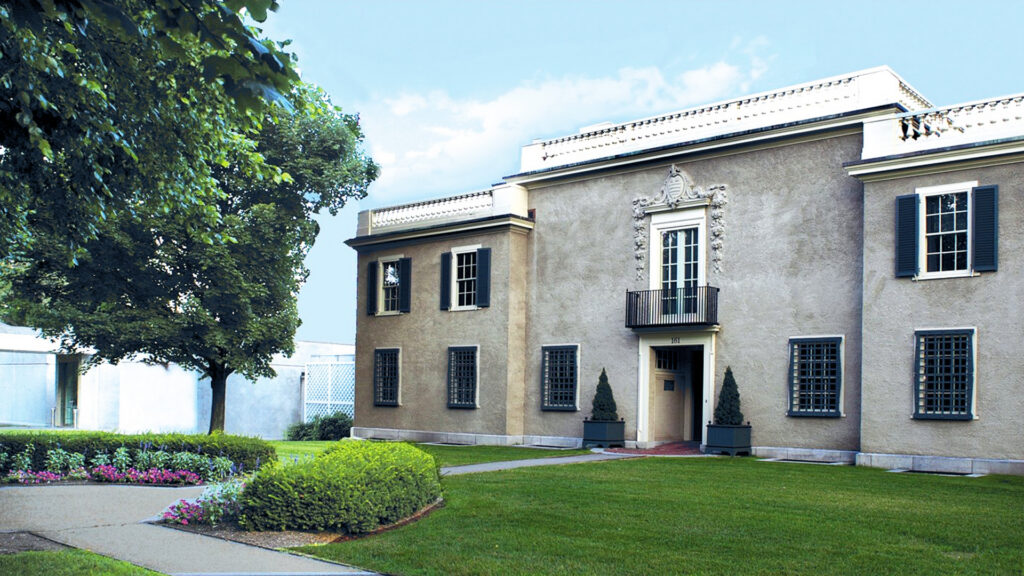
Hoopes House at the Hyde Collection in Glens Falls, NY | Photo : Provided

It is momentum like this has directly informed our Reimagine Project. The first phase focuses on the adaptive reuse of the historic Hoopes House as The Hyde Center for Arts Education, a dedicated space designed to expand our capacity for inclusive, accessible, and mission-driven educational programming.

Bringing it back to the galleries, we have a strong lineup of exhibitions opening this year that continue to reflect the range and ambition of our programmatic vision at The Hyde Collection. This summer, we will open Wings & Wilderness (June 6–October 11), followed by Tanya Marcuse: Book of Miracles (August 22–January 10, 2027) and Form and Function: The Beauty of Shaker Design (August 22–January 10, 2027). As the year concludes, we will present Scandinavian Home (November 7–February 28, 2027).

We hope you’ll join us at the Museum soon, whether for a program, a community event, or simply an inspirational afternoon in the galleries. There’s a lot happening at The Hyde!

WEB: hydecollection.com | Instagram: @hydecollection

LARAC ABSORBS GLENS FALLS ARTS DISTRICT, DRIVING DOWNTOWN ECONOMIC DEVELOPMENT

March 2, 2026 By Corey Aldrich

You may remember, back in August 2022 when ACE! put together a street fest / creative economy panel discussion at the Park Theater. We had some coverage at the time examining the interesting structure downtown Glens Falls had for arts and cultural support. (Glens Falls: A Winning Team Sharing Secrets to Success). Fast forward a couple of years and progress continues to be made collaboratively with the Downtown Arts District and its distinguished members in a newer arrangement that sees LARAC (Lower Adirondack Regional Arts Council) as the oversight entity. I connected with Phil Casabona, Executive Director at LARAC for an update.

Please state your name, organization and title. Can you add a bit about your background experientially and educationally?

My name is Philip Casabona and I am the Executive Director + Festival Director + Gallery Curator for LARAC, the Lower Adirondack Regional Arts Council, a mission driven, non-profit arts organization in Glens Falls, NY. Upon graduating SUNY Oneonta in 2009 with a BFA with a concentration in Photography, like many young people my age at that time, I immediately walked into my dream job making money faster than I could count it…oh wait, that’s the parallel universe me. I graduated college with the excitement of pursuing the arts, professionally, in some form. It was a longer road than expected, with a handful of torturous, non-art related jobs, but all teaching me something that has led to my current position. In 2012 at the age of 25, my wife a, who was my girlfriend at the time, and I, moved to Astoria, Queens, for a year. There I worked for a high-end clothing retailer, in their annex location in Tribeca, as their “Inventory Manager“. I was responsible for all locations day to day inventory, worked alongside the buyer’s department, as well as opened new store locations in other cities, like Boston, Atlanta, and a few others. This position, along with other managerial roles I had since I was 16, unknowingly taught me skills that would be most valuable in my current positions.

I have been with LARAC for 12 years, starting prior to that as a volunteer. Then, having support from my friend and the Gallery Curator at the time, I applied for an open part time position as LARAC’s Festival Coordinator, which I did for a number of years, before going full time and taking on the task of Gallery Curator. As LARAC struggled to navigate Covid-19, we managed to keep our doors open and our staff employed. When the opportunity came up to replace our previous ED, I entered the race. I have been acting Executive Director for the past four years as well.

LARAC Mural Art | Image: Provided

Can you fill us in a bit about the mission of LARAC? Annual budget, number of employees? Also, I understand you expanded recently by absorbing the GF Downtown Arts District into your fold. Can you share a little bit about the history of that and what that means for LARAC and the artists you serve?

LARAC is a mission-based organization with a very simply mission. We are here to support artists and creatives, local, regional, and beyond, and nourish the positive cultural impact they make on our community. Financially, as a SCR site through NYSCA, we are able to support artists and organizations in Warren and Washington Counties. I am part of a three person staff, including fulltime employee Kori Albrecht, LARAC’sCommunity Outreach + Grants Director, and part time employee Diane Swanson, LARAC’s Program’s Director. The three of us are standing on the shoulders of giants that helped grow LARAC from a volunteer organization to a paid staff with a building that we own. We are beholden to our members and our community for keeping us in operation. As of 2025, we are operating on an annual budget of $360,000. This includes the $100,000 worth of NYSCA funding that Kori distributes to grantees within the counties we support.

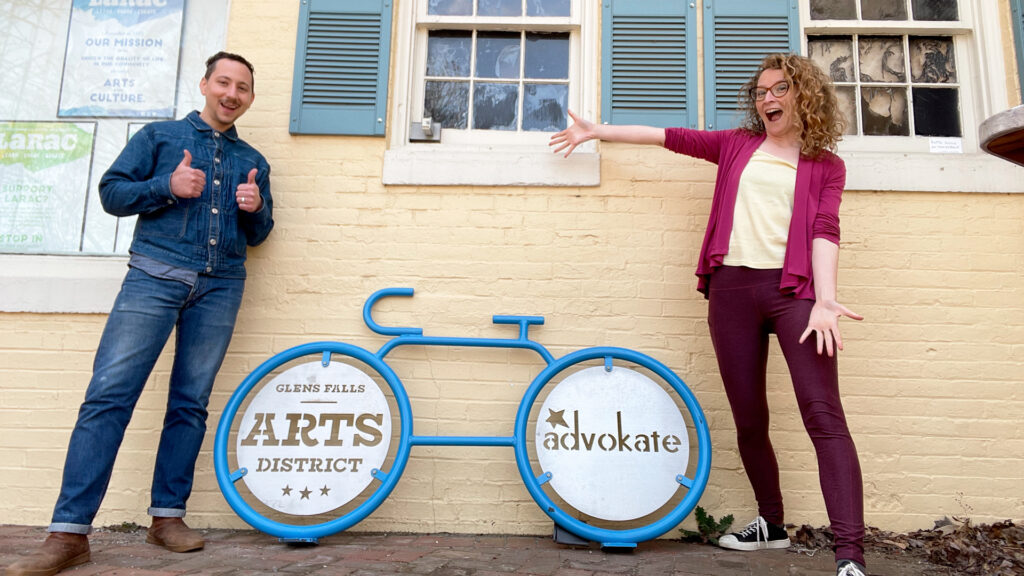
Glens Falls Arts District Downtown Bike Racks | Image: Corey Aldrich

In 2025, LARAC also became the umbrella non-profit organization for the Glens Falls Arts District. GFAD, is a committee of local arts related non-profits that have been moving the needle, contributing as economic driving forces, and sculpting the landscape of the City of Glens Falls for decades. I firmly believe the arts are the foundation of Glens Falls. Recently the City, the Counties, and the region have begun to view us in the same light. Glens Falls is such a unique city. We are only roughly 15,000 people, yet we have such a strong arts scene. Thus, the AD was born. A collective effort to help solidify DRI funding from NYS, which GF was awarded 10 years ago. In the past few years, we have seen all the planning of that DRI to the tune of $10 million, come to fruition. The infrastructure efforts on South Street are accompanied by the public art, which is where the AD came into play! The AD consists of LARAC, the Park Theater, The Hyde Collection, the Charles R. Wood Theater, the Glens Falls Symphony Orchestra, the World Awareness Children’s Museum, the Chapman Museum, the Crandall Public Library, the Adirondack Theater Festival, North Country Arts, and The Shirt Factory. All arts entities in the city limits work together to beautify our city, encourage arts interaction by local and visiting populations, drive economic value to our city, and help each other all stay viable. These efforts have helped strengthen all of our relationships with each other and with the governing body of the City of Glens Falls, the EDC, and Warren and Washington Counties.

LARAC becoming the umbrella non-profit of the AD means the AD answers to the LARAC Board of Directors. However, what it really means is that it gives the AD a new opportunity to continue working together to positively impact our city. With the DRI initiative complete, we now have a new avenue to look for, and secure funding for future projects and have a collective voice stronger than any one of us does alone. This inherently helps LARAC further our mission of supporting our local and regional artists.

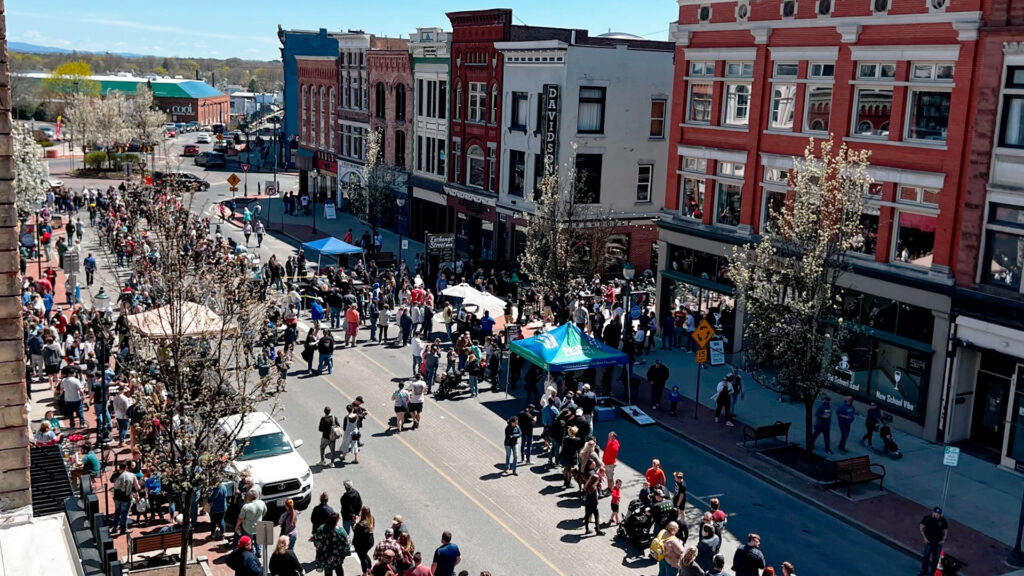
LARAC’s June Arts Festival 2025 in Glens Falls NY | Image: Lake George Regional Chamber of Commerce

I really like your approach to getting your members art into hands of the general public. Between your full-time retail store and events like the annual LARAC ARTS FEST, how have you been able to leverage your relationship with the city and local businesses to advantage your members?

Part of our mission, in more detail, is to help artists become financially stable, grow their passion and abilities into potential income streams and help them start to take the next steps to becoming part-time or full-time professional artists. Helping artists get seen, whether it is in our gallery, our shop, our festivals, or our live music stages at the festivals…these are all avenues to get them in front of the general public.

Coincidentally, these same avenues to get the artist in front of the public also work as a platform to showcase and educate the public on the different forms of artistic expression. A venue to show our patrons obtainable local art, creating an environment for them to support these creatives. One of the biggest and most recognizable LARAC events that does this and truly showcases our wonderful relationship with the City and Warren County is our Annual LARAC June Arts Festival. An Annual event that started in 1972, this year will be our 56th event and will showcase over 165 artists, 10 non-profits, and 8 food trucks, all juried in from across the country to sell their handmade goods. June 13 – 14, 2026, LARAC will bring 15,000+ people from all over to the City of GF, creating the single biggest weekend economic driver event in the city and county. This event is made possible by our relationship with the City of Glens Falls, Warren County Tourism, and the local business which directly and positively impacts our members and our community.

Gallery Shop at LARAC in Glens Falls NY | Image: Corey Aldrich

Speaking of the city…you mentioned a group you are a part of called MOSAIC that includes the city and the IDA as I recollect. Can you tell us more about this group and where you see that going. It sounded like some really innovative stuff!

As I mentioned earlier, it is amazing what the city had going for it prior to intentional efforts to collaborate. In the recent present, as the organizations within the AD started working together in a calculated effort to improve our individual organizations by strengthening ourselves as a collective and beautifying the city, some wonderful opportunities have come up. Doors started to open in places we didn’t see coming. We started to build and strengthen relationships with our governing bodies and other entities that see the value in our efforts. One of those people, recently, has been Jim Siplon, the President and CEO of the Warren County Economic Development Corp (EDC). Jim and his office have created a collective group, many faces of the AD, as well as others from outside GF. This includes members of the IDA and leaders of non-profit groups and organization in Washington County who share a table and create a safe space to build ideas. Jim sees the value of the arts in GF and the potential we have as a springboard for positive growth and economic and cultural impact. Together we are working on ideas to unify and rally for future funding.

There is an inherent and immeasurable value in the positive impact of the arts and the culture it encourages. It is an effort worth our time, and LARAC, the AD, and MOSAIC understand this assignment.

LARAC Member Art Gallery Examples | Image: Provided

EXTRA CREDIT: Anything you would like to plug and additional things you would like to share beyond above?

LARAC is for everyone, join us in our Gallery, at our Festivals, and in our city.

WEB: larac.org | IG: @larac_arts

BELINDA COLON’S IMMERSIVE WORLD OF ART AND COMMUNITY

August 26, 2025 By Corey Aldrich

I met Belinda Colón several years ago through founding Executive Director of ACE!, Maureen Sager. Belinda was working with her at Spring Street Gallery in Saratoga Springs where she has now taken over the reins. Since then, we have crossed paths in many places including in Troy at the Arts Center of the Capital Region where where we both individually do freelance project work and The Hyde Collection in Glens Falls where she is a Trustee. She has to many irons in the fire in our region not to give her the talking stick for a spell and so…here we go!

Belinda Colón : Gallery Director and Freelance Curator of Exhibitions and Public Art | Image: Provided

Please state your name, title(s), and organization(s).

My name is Belinda Colón and currently I wear several hats. These vary between regular gigs and more project based freelance work. Currently I am involved as a Freelance Curator of Exhibitions and Public Art, Director and Curator at Spring Street Gallery. Owner and Founder at The Art Sheet, a Trustee at The Hyde Collection, a Member of the Saratoga Arts Commission and soon to be Owner at a Private Gallery in Troy.

Awakening Spring Exhibit at the Spring Street Gallery in Saratoga Springs New York | Image: Provided

Can you also tell us a bit about your history, including education, other jobs of note, and other special accolades?

 I started my education at CUNY Hunter College with a focus on Theology and History. Being exposed in NYC to all its cultural resources and accessibility, my historical and religious research opened my eyes to the History of Art and its connection to the humanities.  I continued my path to the arts at CUNY Queens College with a major in Art History. After moving North to Saratoga Springs, I landed a job at Palio Communications, a medical advertising firm, as administrative support, then as a project manager. Working with multiple types of artists at the firm, I was saddened to see so much amazing art being torn apart by clients. Becoming more aware of the exceptional talent at the firm, I decided that I needed to support artists like those at the firm who needed to be seen for how talented they are, outside of their day jobs, leading me to go back to school and finalize my Associate’s Degree in Liberal Arts with a focus on Gallery Management at Hudson Vallery Community College. I then enrolled in Empire State University and graduated with a Bachelor of Arts with a focus in Art History.

During my time in academia, I was given an opportunity at Spring Street Gallery to organize and install an art exhibition raising funds for the East Side Recreational Skatepark in Saratoga Springs, NY. The funds raised were to resurface the skatepark. After a very successful event, I was given the opportunity to be the Exhibitions Manager at Spring Street. After 13 years, I am still working at Spring Street Gallery, NO longer the Exhibitions Coordinator, now the Director and Curator.

Artist Royal Brown and Curator Belinda Colón : The Evidence of Things Unseen Exhibit
at the Spring Street Gallery in Saratoga | Image: Provided

Can you tell us a bit more about the Spring Street Gallery…your mission there and what you are doing to integrate into the community?

Spring Street Gallery was founded 31 years ago in 1994. Today, Spring Street Gallery is an award-winning not-for-profit art and performance space.

The Gallery’s mission is dedicated to providing exhibition and performance opportunities for local and regional artists. It fosters the arts as a vital resource for social engagement and educational connectivity.

Currently, the gallery has partnered with Collar Works in Troy to facilitate a program developed by The Arts Sheet called Immersion. Immersion is a professional visual artist development program. It’s designed to provide emerging and mid-career visual artists with professional opportunities for open dialogue and critical conversations with peers, regional curators, and gallery owners.

The combination of critiques, gallery/residency visits, and professional development enhances learning. Critiques focus on individual improvement, while group experiences and professional development provide exposure, contextual understanding, and valuable tools. Together, they create a comprehensive framework for artistic growth.

Catching Air at the ON DECK Skate Park in Saratoga Springs New York | Image: Provided

Another Saratoga based project I know you have been involved with was the Saratoga Skate Park. Care to share a bit about that one?

ON Deck Saratoga was a project of the Saratoga Institute, a vehicle for promoting skateboarding, skatepark stewardship, and creativity through community-based events. My husband and I started this project with the intention of bringing more attention to and understanding of the culture of skateboarding, a non-conforming recreational sport. We’ve organized a multitude of programs, including yearly skate jams, free films in High Rock Park, exhibitions and fundraisers in Saratoga Springs and Lake George, NY, skateboarding lessons and camps, and more.

Historical Backround info:

Built in 1989, the East Side Recreation (Rec) skatepark is the oldest municipal skatepark in New York State. In conjunction with Jah Skate Shop, which was located at 8 Caroline Street from 1988 until 1993, the skatepark used to host many team demos, spawned a few professional skaters, and in the mid-90’s was an official stop for Vans Warped Tour skate contest qualifications. The skatepark is a highly respected piece of East Coast skate history, and its popularity has grown along with the popularity of skateboarding and other wheeled sports.

As its use grew, the skate park was due for a contemporary upgrade, and now a modern, poured-in-place concrete park has replaced the metal ramps that have been there for 20 years. The City of Saratoga Springs & Saratoga Springs DPW has proudly partnered with Pillar Skateparks to design the new park, in conjunction with feedback from the local skate community.

Construction needs for the park were in the range of $400,000, and donations were accepted through ON DECK Saratoga.

2021 FENCE Membership Show at the Arts Center of the Capital Region in Troy New York
Image: Provided

I recently realized you are the brains behind the The Art Sheet event listing. Can you talk a bit about the history of this? What are the geographic boundaries? I have seen some pretty far flung listings!

The Art Sheet
has been a passion of mine for over 7 years. After being very frustrated that there was a lack of press regarding art and cultural events in the Capital Region and Upper Hudson Valley. There was never any place to go to find out what was going on on any given day. It was frustrating, so I decided to create a website to promote local and regional arts events. It has been a labor of love. The Art Sheet is a free resource for arts administrators, organizations, and artists. The website provides a calendar of events, a space for artist grants and resources, calls for art and residencies, artist professional development programs, and job opportunities (Provided by ACE!).  The Art Sheet is also available on Instagram at @theartsheet.

In Ply Exhibit and Interactive Skate Environment at the Arts Center of the Capital Region, Jane Altes Gallery
Image: Provided

For a while you were working at the Arts Center of the Capital Region, and I see you are still involved in some public-facing projects. Can you give us an update about your Troy-based activities?

Currently, I am a Freelance Contractor for the Arts Center of the Capital Region as their Public Art Curator. Some of the public art projects that I have curated or project managed include: Franklin Alley sculptural murals by Joe Iurato, Troy Art Block, Troy Electrical Boxes, Troy Glow, Uniting Line, and From Troy to Troy. There is an upcoming large-scale mural being implemented this fall. Look out for more information provided by the Capital Region Arts Center.

Joe Iurato and Belinda Colón Hang Out in Franklin Alley, Troy New York | Image: Provided

As a person working across municipalities, I am curious to know what your thoughts are about the current state of the arts in our region. What should we be focused on?

The arts in our region seem to be segmented. I would love to see more collaboration between organizations, administrations, and artists. Networking events focused on sharing opportunities and events would be fantastic. Funding is always a challenge as well, since there are a lot of arts and cultural institutions, but not a large enough regional funding pool. This can make artists’ grant opportunities slim.

Troy Art Block Team : Church Street Alley in Troy New York | Image: Steve Alverez
Troy Art Block Opening Event : Church Street Alley in Troy New York | Image: Belinda Colon

Shamless Plug: Anything coming up you would like to share that we should have on our radar? There is a whisper of a private gallery opening in Troy in the future. Keep your eye out for Willow Gallery.

WEB: Spring Street Gallery | IG: @springstreetgallerysaratoga
LINKED IN: Belinda Colón

Building on Strength : A Conversation with Glens Falls Mayor Bill Collins

August 4, 2022 By Corey Aldrich

Glens Falls Mayor Bill Collins | Photo: Hartman Photography

From your perspective, why are Creative Economy components (artisan restaurants, arts and cultural institutions, performance space, etc) so important to a vibrant city scape?

Over the last decade, even during the height of the pandemic, we experienced people moving to the region. As the pandemic has shown us, the Creative Economy is a powerful, sustaining force — especially in a city like Glens Falls. For instance, it’s a long proud fact that Glens Falls is the smallest city in the country with its own paid symphony orchestra. New resident to our city are here working in arts, business, restaurants, music, medicine, banking, and other fields that supported and increased the diversity and talent of Glens Falls.

The Creative Economy shows up throughout — our new Glens Falls Arts District, the popularity of the library, the new murals being planned for three city properties, the new restaurants and the longtime venues. That attention — and that energy — feeds the economy in a way that is measured more by feeling than by economic development — our economy is thriving.

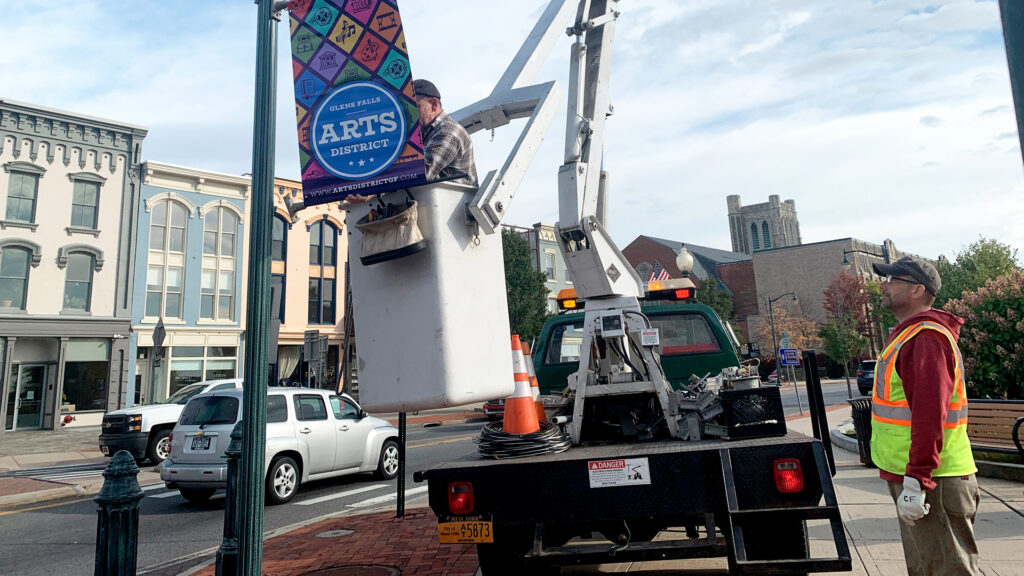
Glens Falls Arts District Signage | Photo: Provided

What is your philosophy and approach to building on those market segments?

The City is building a $4 million events space as part of the New York State Downtown Revitalization Initiative (DRI) — a critical piece of our continued growth. It will help to support already successful creative economy events like the LARAC Festival and other large entertainment opportunities. In fact, our vision is to be able to use the space to extend these activities throughout downtown locations — tying in many newly renovated gems to host festivals and large scale community wide events.

Our economic development and community development teams have grants and loans to support great ideas that become popular businesses, galleries or restaurants, like the Park Theater. And let’s not forget the innovative Shirt Factory on Lawrence Street — a haven for artists of all stripes. I believe that if we can continue to build the capacity for creative folks to live, work and play in the city (Including increased broadband access) our creative economy will continue to grow. And our city will continue to be a magnet for these magnificent people.

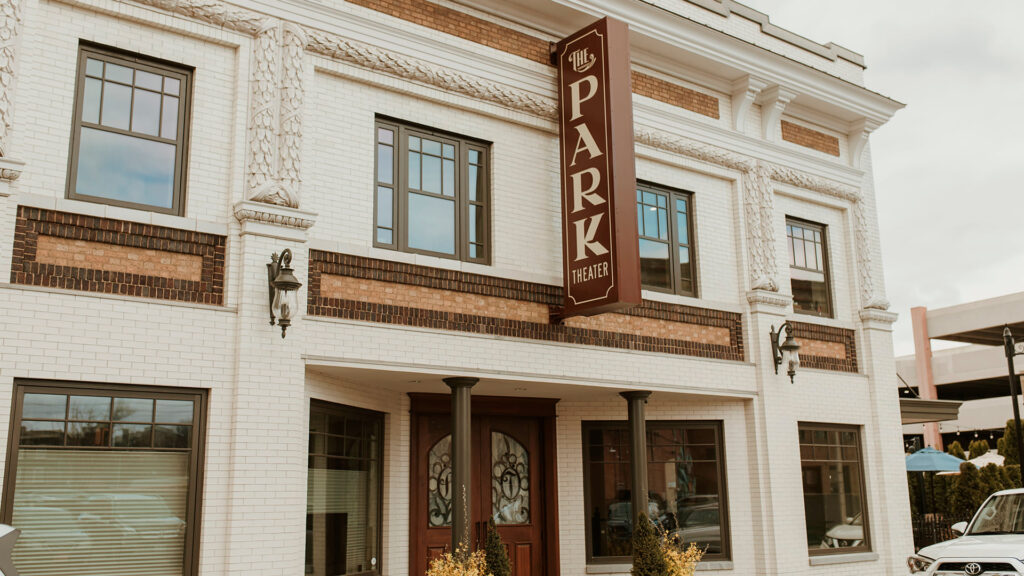
The Restored Park Theater | Photo: Sydney K. Andrew Photography

How much money from the DRI funding is being dedicated to creative / community building components?

The entire DRI project will inject $10 million into the South Street / Elm Street area — but that is just the state money. The new commercial use and housing projects, as well as the renovation of the three existing historic buildings, will invest more than $26 million cumulatively.

How does that benefit the creative economy? The overall project includes the Market Center, as noted above, which will host our weekly Farmer’s Market, music festivals and other outdoor events. The Center is tied to a planned community Commercial Kitchen for food demonstrations and exhibitions. The two other historic buildings will have restaurant / commercial space on the ground floors, and for the first time in decades will have living quarters above.

Add in more than 80 new apartments, all the commercial / studio space and the concentration of arts, music, food and people … and we definitely expect that it will support the growth of our creative economy. In fact, the creative economy interests will be an important beneficiary of the entire project. Glens Falls will become a hub and attraction point for the lower Adirondacks because of it.


For more check out: Glens Falls: A Winning Team Sharing Secrets to Success

Glens Falls : A Winning Team Sharing Secrets to Success

August 4, 2022 By Corey Aldrich

The Glens Falls Collaborative was founded in 2012 as a means to draw customers to downtown. A traffic circle was being constructed which was creating a challenge to Glens Falls Downtown BID (Business Improvement District) members. A small group of merchants decided to try and do something about it, to bring customers and visitors back to downtown. From these determined circumstances The Glens Falls Collaborative was born. The Collaborative is a membership organization whose mission is to band together and promote businesses in the Glens Falls region in an effort to help them grow and thrive. Currently, they have about 100 members. In addition to organizing many large downtown festivals and events, the Collaborative has created a brochure of Glens Falls with a large distribution that is used as a promotional tool for area businesses to connect with locals and out-of-town visitors alike. The Collaborative also holds membership networking mixers and works alongside the City of Glens Falls and the BID on hospitality and promotional efforts for the community.

Glens Fall Wing Fest | Photo: Provided

The Collaborative has a strong working relationship with the Lake George Chamber of Commerce and CVB (Convention and Visitors Bureau), the Adirondack Chamber and with Warren County Tourism. Collaborative events, branding and marketing have become a vital part of Glens Falls’ Tourism and economic development.

A seedling version of the eventual Glens Falls Arts District began meeting monthly in 2014 as a cross promotion of the Shirt Factory, LARAC, North Country Arts, World Awareness Children’s Museum and the Wood Theater. In the early days, there were a couple of iterations including the Glens Falls Arts and one called The Art Coalition (TAC). Eventually, dues were collected to pay for an administrative person to organize meetings, take notes and to organize collective events and promotions. In 2016, after a couple of years of conversations, the Glens Falls Arts District became a sub committee of The Collaborative. At this time, arts organizations became members of The Collaborative which then took over the administrative budget to help fund the basic operations of the Arts District. Currently, there are 13 members in the Arts District.

Phillip Casabona (LARAC) and Kate Austin (Advokate) | Photo: Provided

In 2017, the Arts District was written into the Glens Falls Downtown Revitalization Initiative (DRI) for a $125K award (Note: They are still waiting for receipt of the full amount.) to be used specifically in establishing the Arts District and Trail. The Arts District funding also includes grants from the Touba Family Foundation and the Charles R. Wood Foundation.

The Arts District is technically a committee under the umbrella of The Collaborative who cover the insurance for Arts District events as needed. LARAC, a founding member of the Arts District and member of the Collaborative manages the accounts for the organization. It is not uncommon for folks to be on at least two of the three entities and as such, there is a strong partnership.

“I host a monthly meeting for the Collaborative, I sit on the board of the Glens Falls (BID) and provide regular updates to all parties about the others. Many of us are involved in at least two of these organizations as well as others, so we have a good sense of connection and collaboration.” says Kate Austin :Co-founder and Administrator of the Arts District and Owner / Founder at Advokate

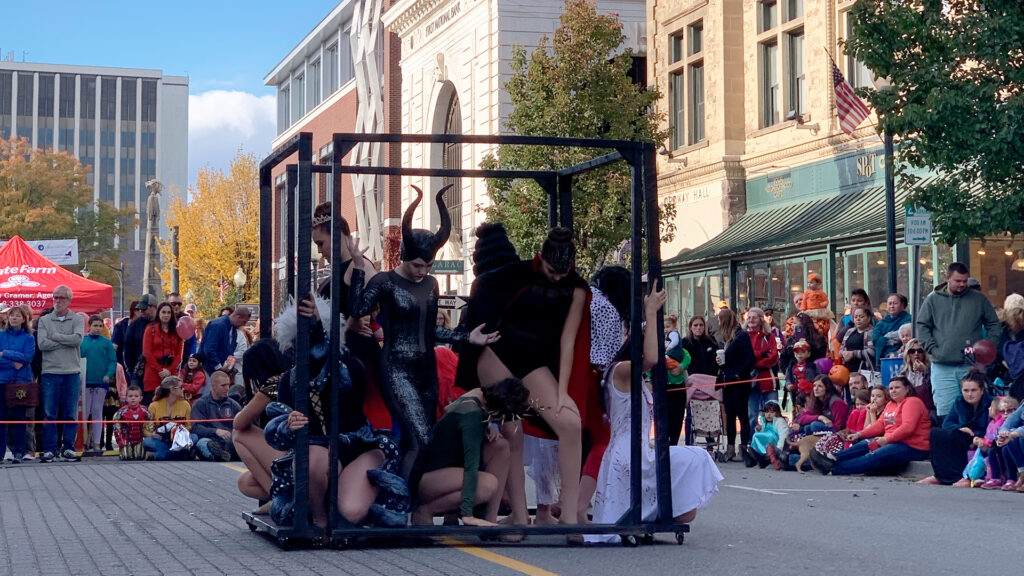
Boo 2 You | Photo: Provided

There is significant synergy and interplay between the organizations. For example, the Collaborative has used the Wood Theater to host family movies for one of their popular annual events, Hometown Holidays, which also includes The Hyde Collection as part of the events’ programming. They frequently have artist participation during their events and have collaborated with the Glens Falls Community Theater group and the Glens Falls Symphony. The map of the Arts District is located on The Glens Falls Collaborative website. They have a variety of free public events throughout the year that highlight a broad selection of businesses such as the recent Take a Bite walking restaurant tour. In 2021 The Collaborative was asked to host the Adirondack Christkindlmarkt, which originated in Lake George in 2018. This event had many local artisan vendors and brought visitors from across the Northeast.

Nancy Turner : President at The Glens Falls Collaborative | Photo: Provided

“We strive to be inclusive of all our members, many of whom are part of the Glens Falls Arts District. We are always looking for ways to include them in our events.” says Nancy Turner : President of The Collaborative. She continues… “As we move forward as an organization and our city becomes more recognized as an artistic community, continued growth will naturally come to us. This will bring new residents and tourists who dine at our restaurants, buy tickets to attend our theaters, concerts and sporting events, and stay in our lodging establishments.”


Editors Note: This article was updated to show NORTH COUNTRY ARTS as an initial founding member of the Glens Falls Arts District. We regret our initial oversight.


For more check out – Building on Strength : A Conversation with Glens Falls Mayor Bill Collins

  • Page 1
  • Page 2
  • Go to Next Page »

Creative Economy Updates and Other Good Stuff!

STAY CONNECTED!

  • Facebook
  • Instagram
  • Twitter
Copyright © 2020 THE UPSTATE ALLIANCE FOR THE CREATIVE ECONOMY

info@upstatecreative.org | 41 State Street, Albany, NY 12207

Design by Reach Creative