• Skip to primary navigation
  • Skip to main content

ACE

Upstate Alliance for the Creative Economy

  • HOME
  • ABOUT
  • NEWSLETTER
  • SUBSCRIBE
  • JOBS
  • Show Search
Hide Search

FEATURED

A.I. : What It Is and Why You Should Care | PART I OF III

March 21, 2023 By Taliesin Thomas

Powerful Artificial Intelligence engines like Chat GPT4 and Midjourney v5 are quickly moving into the mainstream. This 3-part series on the expanding prevalence of Artificial Intelligence (A.I.) will consider the topic with respect to art and the creative economies in our region and beyond. In this opening segment, Taliesin Thomas PhD explores the basic definitions of A.I. and where the current conversation is moving.

Installation View of a Daniel Arsham Exhibition at the Long Museum in Shanghai, China | 2019
Photo Credit: Taliesin Thomas

The noticeable buzz surrounding Artificial Intelligence (A.I.) appears to be infiltrating nearly every category of contemporary culture, especially creative fields. What exactly is A.I. and how does it work? What are the implications of A.I. for art? Although art made with semi-autonomous machines has been around since the 1960s, we are in an entirely new era of technological realities. First let us consider the pairing of these two words: ‘artificial’ and ‘intelligence.’ These concepts inspire distinct questions surrounding A.I. and its rising significance in our increasingly interconnected society. The term ‘artificial’ presents a wary definition to start—synonyms include ‘bogus’, ‘counterfeit,’ ‘factitious,’ and ‘faked.’ This provokes a circumspect context from the outset of the conversation: can we trust this fabricated form of perceiving, synthesizing, and inferring information? Second, the notion of ‘intelligence’ is arguably the basis of our entire civilization. We endure and increase our collective agency as a species thanks to our combined intelligence. Intelligence can be defined in various ways, including the capacity for understanding, self-awareness, reasoning, planning, critical thinking, and creativity. The power of our singular human experience is precisely our ability to cultivate intellect throughout our life journey.

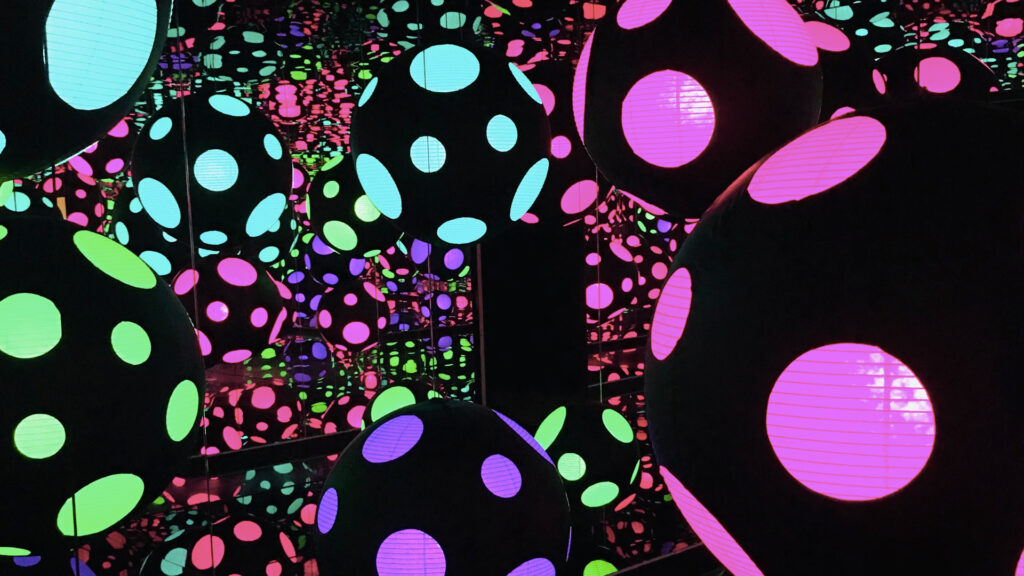
Installation View of Yayoi Kusama “Infinity Mirrors” Installation at the Hirshhorn Museum, DC | 2022
Image credit: Taliesin Thomas

Thus, we proceed with a sense of discernment regarding A.I. as a ‘phony mind’ yet we must marvel at its swift development and implementation in various realms of society, notably commercial applications. A.I. systems function through a foundation of specific hardware and software tools that consume large quantities of organized data that—through processing techniques—produce specific algorithms or patterns. Those algorithms in turn provide computing devices with step-by-step instructions for how to complete a specific task and can be manipulated to ‘create’ or output in distinct ways. A.I. is now employed for a variety of purposes including expert systems, natural language processing, speech recognition, and machine vision. The ride service Uber, for example, utilizes sophisticated A.I. machine learning algorithms to predict when people are likely to need rides in certain areas, which helps proactively get drivers on the road and to where they are needed most.

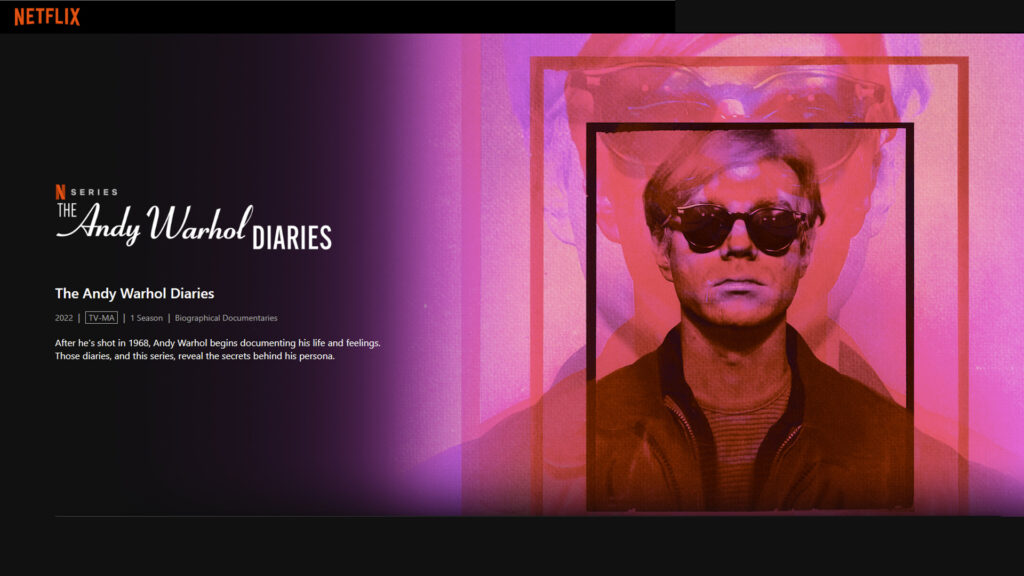
Screengrab of The Andy Warhol Diaries on Netflix

As a novel technology, A.I. is being progressively employed within the creative sector as well, often in fascinating ways. I anticipated the A.I. generated voice for Andy Warhol as encountered in the Andy Warhol Dairies would sound gimmicky and bizarre, however, I was delighted by the opposite effect. Not only does the Warhol’s voice sound incredibly accurate, but it also brings to life his articulate mind (and heart) in a beautiful and believable manner. We already know Warhol as an icon extraordinaire and enduring face of Pop Art, but this intimate series reveals Warhol the lover, and his words are pulled straight from his personal dairies and personified through A.I. technology. The result is a dreamy and eloquent Warhol voice, and it reduced me to bouts of sobbing throughout the series (the emotional quality is undeniable). The company Resemble AI crafted Warhol’s A.I. voice with just 3 minutes and 12 seconds of usable data in the form of existing audio recordings. The Andy Warhol Dairies is a marvelous example that demonstrates the success of A.I. as a tool that brings ever greater insight to the art of our times—and in the case of Warhol, a deceased artist who remains timeless.

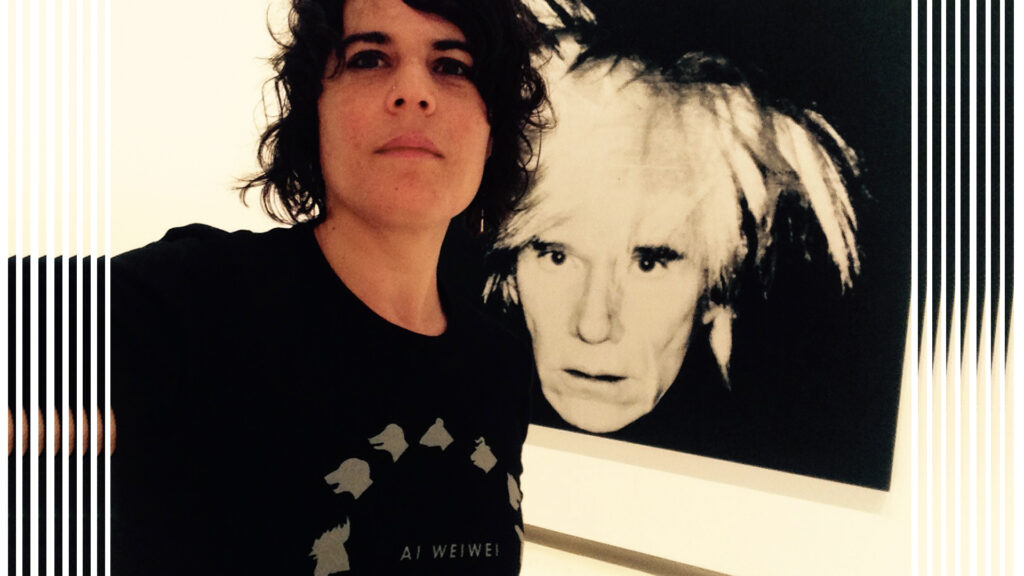
The Author with a Painting of Andy Warhol at the Warhol Museum | 2016
Image credit: Taliesin Thomas

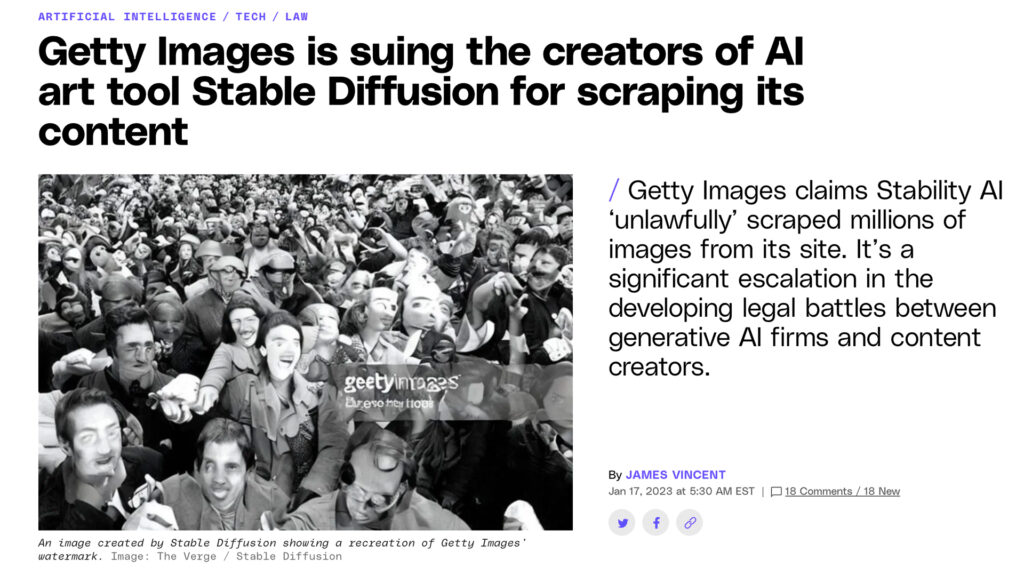
The pressing question in all of this seems to be: how does A.I. impact our concept of intelligence and creativity and our ‘ownership’ of that very intelligence and creativity? In other words, to restate a familiar concern about the expanding role of technology and the human mind in all its formats since the first publication of Mary Shelly’s Frankenstein (1818) and the dawn of the computing age: can machines ‘think’ for us? In the meantime, critics such as New York based arts, culture and technology writer Mike Pepi propose: “These so-called ‘creative’ machines are limited in that they can only ever remix existing media and data, they cannot truly create anything new. This is the province of human ingenuity alone.” Artists, fear not! These fictitious A.I. minds are mere derivative producing hacks! In any case, the fundamental thing to understand about A.I. is that it is as a unique form of simulated intelligence by way of computer systems that aim to assist humans achieve in increased capacities. Here one must acknowledge that notions of ‘human’ increasingly point toward the ‘posthuman’ in our hyper-stimulated digital era. A recent article at The Verge highlights the issues around copyright laws and exposes the ruffle between Getty Images and A.I. generated visions of humans that are downright freakish. Indeed, these are dense conceptual paradigms transforming our planet in real-time.

Screengrab of a Recent article concerning A.I. and Getty Images Published on The Verge | 2022

Nevertheless, A.I. is here to stay, so we must embrace it as part of the evolving global reality of today. We also recognize, however, an underlying apprehension for creatives, since corporate driven A.I image generators pose a threat to their livelihood. According to a recent article published by Artnews, the latest advancements in machine-learning programs have transformed A.I. into an impressive creative tool that seems capable of outpacing—and underpricing—human artists, sparking a real concern in diverse creative circles. Anxieties surrounding A.I. and art are highest among graphic artists and commercial illustrators, whose very livelihood is based on their ability to design artistic content specific to a clients’ vision. Another Artnews piece also warns that A.I. systems ‘learn’ by sifting through numerous man-made images that are often scraped from online sources by tech companies and often without the consent of their authors. As stated by writer Taylor Dafoe: “A.I. advocates argue that this practice is protected by fair use laws; artists have said it violates their copyrights.” How will A.I.’s artistic capabilities intimidate even more areas within the wider creative field?

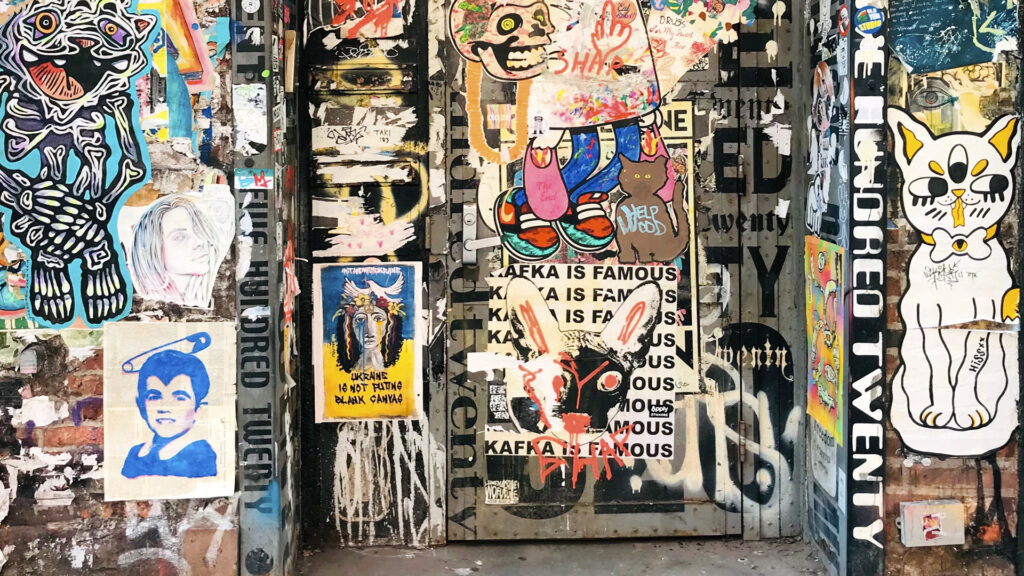
Street Art in the Chelsea Neighborhood in New York City | 2022
Image Credit: Taliesin Thomas

I agree with sceptics who suggest that the vast realm of art practices and material embodiments of aesthetic culture will not be undermined by the new A.I. landscape. And I agree with critical thinkers such as Mathew Dryhurst who states: “I do not believe that artists are in too much danger of being replaced by A.I. Artistic practices are so much more complex than a style that can be mimicked. What we value of art is more social than we often acknowledge.” Other cultural commentators such as Martin Herbert get to the heart of the matter from a meta perspective. In his recent article “I’m an Art Critic. Will AI Steal My Job?” he states the obvious regarding the entire A.I. project: “At the base of this inhuman ‘creativity’, of course, is human labour.” He also makes an important point about the ‘real’ value of art as a matter of ‘real’ lives lived: “The contemporary art scene seems, almost nostalgically, tied to people: artists, as fronting personalities and aspiration models, seem as important as the art.” Undoubtedly it is the corporeal, messy, compelling narratives of artists and their art—the true blood and guts of a creative life—that give art its enduring allure. Thus, we can welcome A.I. onto the scene as fellow ‘counterfeit’ creative as we remain rooted in a pulsating world of manifestation that comes into being precisely through authentic being.


In the next installment (II of III), we will hear from regional professionals who amplify our perspective on A.I. and its significance in arts fields especially.


Taliesin Thomas, Ph.D. is an artist-philosopher, writer, lecturer, and collector based in Troy, NY. Since 2007, she is the founding director of AW Asia and the collection manager of Art Issue Editions—two private art collections based in New York that are the foundation for collaborations and projects with artists and museums
worldwide. Thomas has lectured and published widely on contemporary art. She is the director of the Critical Forum program at the Arts Center for the Capital Region, NY and she is a faculty member at School of Visual Arts, NY. Thomas studied studio art, aesthetics, theory, and philosophy at Bennington College, Columbia University, and The Institute for Doctoral Studies in the Visual Arts.

518 Film Network : Connecting the Dots for Regional Film Producers

February 20, 2023 By Corey Aldrich

I originally met some of the members who later would form 518 Film through ACE! events and socially in downtown Troy New York. They registered strongly on my radar as an organizational force to be reckoned with last year when ACE! partnered up to amplify ‘The Monkey Short Film Fundraising Gala‘ in Albany New York. A collection of dedicated career film folks at a variety of levels in the film making ecosystem, 518 Film continues to be a part of a vibrant production feed that is increasingly making waves in the region and far beyond (in addition to throwing some great parties!). I caught up with Co-Founder and Community Engagement Director Michelle Polacinski to hear more about their vision and the big structural and programmatic expansion plans they have for the near future.

Michelle Polacinski, Community Manager and Cofounder at 518 Film Network | Photo: Richard Lovrich

Please state your name, title, company name and what you do.

My name is Michelle Polacinski (she/her). I am the Community Manager and Co-Founder at 518 Film Network. I’m also a freelance director, producer, and production manager. I’m currently co-producing the visual effects for an upcoming Superbowl commercial. I have worked on titles including John Wick 4, A Man Called Otto, Resurrection, The Witcher, Modern Marvels, Shark Tank, and Food Network Star. I graduated from both Binghamton University and FAMU International (Prague, Czechia) with degrees in Cinematography and Producing.

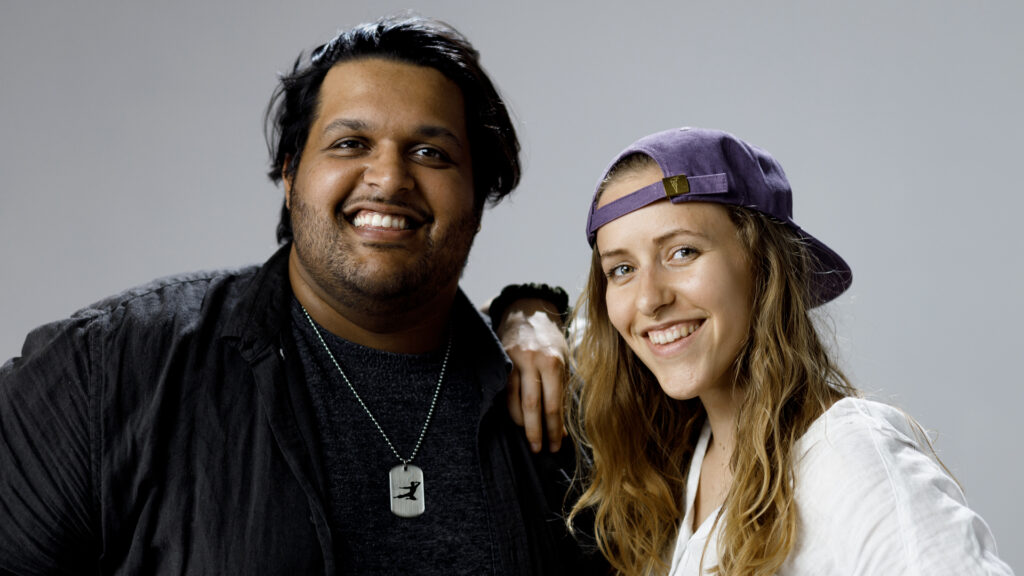
Micah Khan and Michelle Polacinski, Founders at 518 Film Network | Photo: Patrick J. Harris

How long has 518 FILM been in existence? Can you explain the structure of your business and what the organization’s aims and goals are?

518 Film Network was co-founded by local writer/film director Micah Khan and myself in 2019 after a handful of frustrating conversations about not being able to find local crew for our own productions. We wanted to meet more people in the area and we knew that they existed, so we started a database of 10 people we both knew, asking each of them to share anyone they knew and, like filmmaking itself, we grew by word of mouth and referrals. Since, we have hosted numerous creative networking events and as a collective were the catalyst for multiple local filmmakers to come together and make films. We have an active private online community with a job board and various subgroups such as ‘mastermind’ and ‘actors anonymous.’ We grew from 10 people to nearly 200 in the past 2-3 years. Our most active members, including but not limited to, Patrick Regan, Lakota Ruby-Eck, Spencer Sherry, and Victoria Diana have helped take 518 Film Network to the next level by spreading the word, co-hosting events, and bringing folks together.

Micah Khan, Co-Founder at 518 Film Network | Photo: Provided

Currently, we operate as a corporation under my film production company, Strangest Sea Films, but we plan to become a non-profit corporation within the year. We are in the process of asking for help in learning how to form a 501(c)3 that matches our goals.

As a group, we aim to connect local filmmakers to help them grow and create projects together, while bringing jobs from incoming film productions into the hands of local people. When productions hire locally, it benefits the local economy and also helps productions save money by not needing to pay for hotel rooms. We are currently in the process of expanding to provide education in the form of online courses and in-person workshops as well as partnering with local colleges to teach filmmaking courses. We plan to someday both receive and give grants to our local filmmakers so we can make more local films!

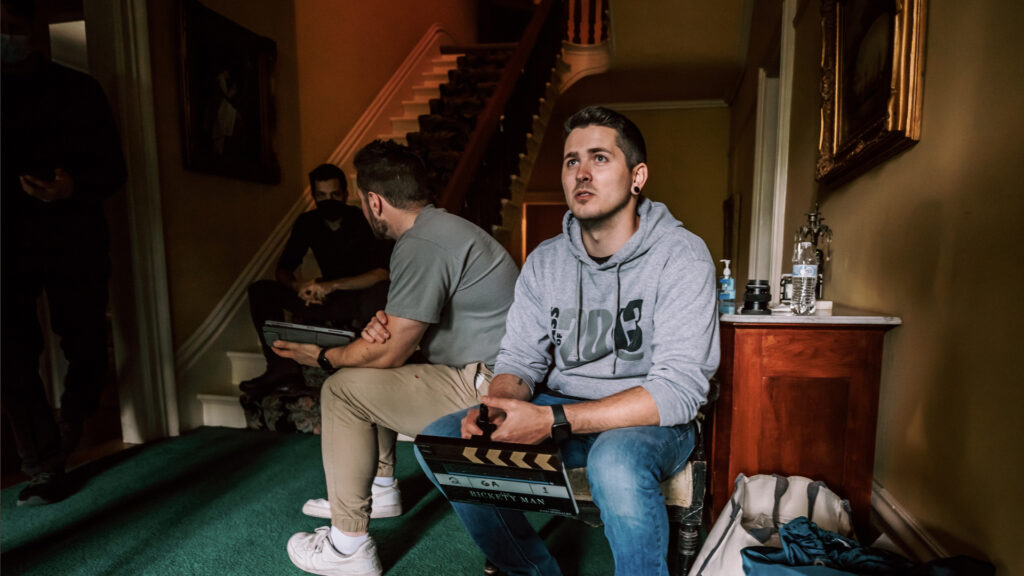
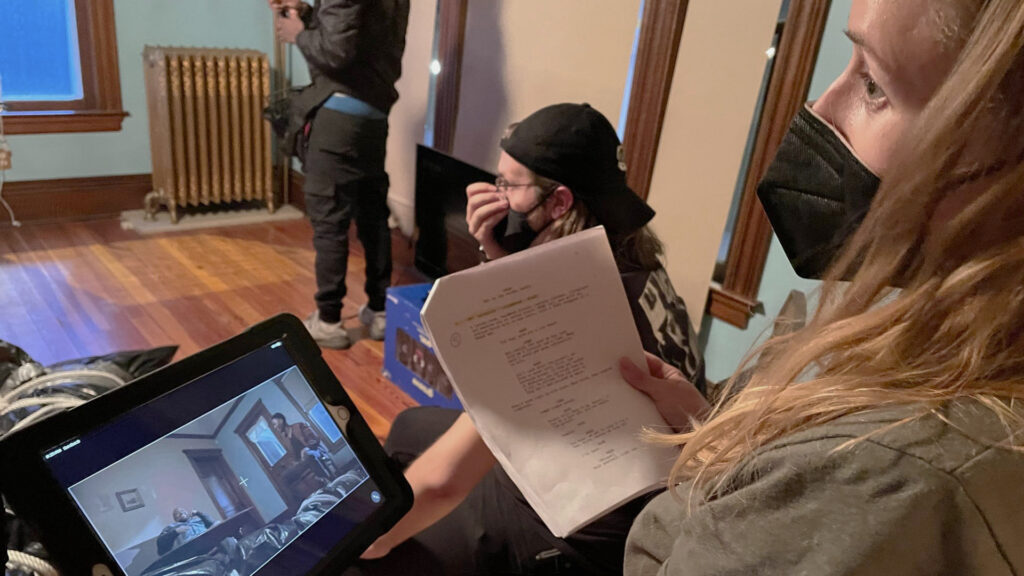
On Set for Filming The Rickety Man (Directed by Cameron Gallagher) | Photo: Ann Kielbasa

How are you different from other film organizations regionally?

We focus on building intimate connection between our members through collaboration and wildly creative networking events. It’s difficult to invite someone on something so intimate as a set, where anything can and will go wrong at any given moment, after talking with another filmmaker for 15 minutes and handed a business card. Our industry just doesn’t work that way. This is why we do things a bit differently.

We not only want local filmmakers to know each other, but also to help each other grow in a genuine way. We celebrate our local filmmakers by amplifying their projects, hosting regular screenings, and never shying away from sharing fundraising efforts. This is full-blown support with no strings attached. We benefit as a community by lifting each other up, period.

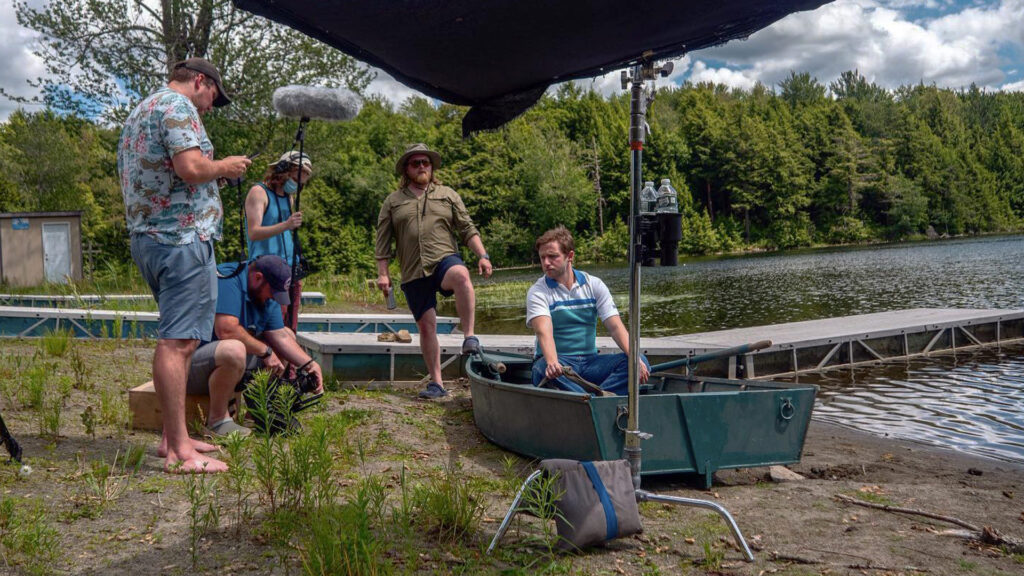
On Set for Filming The Rickety Man (Directed by Cameron Gallagher) | Photo: Ann Kielbasa
On Set of the Monkey Short Film (Directed by Spencer Sherry) | Photo: Provided

Can you talk about some specific projects that you are especially proud of being involved with?

It’s really hard to come up with an answer to this question. Every film our members make feels like a community film. My personal favorites are collaborations between members that wouldn’t have happened without them meeting through us or films that give others opportunity to grow and learn in a new role. It’s always exciting to see friendships blossom and turn into working relationships.

In regards to how I am directly involved, I’m vfx producing two corporate (non-local) commercials right now, one of which is a Superbowl commercial which is definitely a milestone for me. I am also producing Writer/Director/Comedian Victoria Diana‘s upcoming short film, ‘Second Coming.’ Second Coming is a raunchy twist on a Christmas film that is also one of the best scripts I have ever read. I cried laughing reading it and I can’t wait to bring it to life. We are hoping for a release close to the 2023 holiday season.

Michelle Directing a Scene | Photo: Provided

Anything coming up that we should know about or that your group is excited about?

There are truly too many amazing upcoming films right now. I hate not mentioning every incredible local film we have coming up, but there is no way I’d be able to fit all of them! Here are a few:

Writer/Director Joe Gietl recently worked with Producer Cameron S Mitchell to create the pilot for ‘The Fledgling Series‘, which is especially cool because not only was it shot in our region, but it stars ‘Buffy the Vampire Slayer’s‘ Juliet Landau as well as an incredible local actress, Anastasia Veronica Lee. Lee was such a joy to have on set and it’s really exciting that she is so close that we can bring her on other independent projects in the future.

Micah Khan recently directed his first big budget feature film, ‘Zombie Wedding‘, with Weekly World News and a handful of big names.

I’m also excited about Ember Autumn Skye‘s recent short, ‘You’re So Shy,’ a human rights-centered film, which stars her own sister, Sage, and was an incredible collaboration with local Director of Photography Lakota Ruby-Eck.

‘Insurance’, by Writer / Director Steve Rock, is currently in production, a collaboration between his production company Abomination Films and Lakota Ruby-Eck’s production company, Tomb Pictures.

‘The Monkey‘ a Stephen King short written / directed by Spencer Sherry and shot by local Emmy award winning Director of Photography Jim Powers, should be out soon. That is still in post-production. Spencer is also producing ‘Anomaly‘, a magic film written/directed by Ryan Jenkins.

Also Dirty Sweater Productions (owned by amazing married filmmaker couple Charity Buckbee and Kyle Kleege) is working on editing their first feature film, ‘Earworm.’

Joseph is Doling Out $510K in Statewide Community Regrant Funds : Find Out How to Get Yours

December 19, 2022 By Maureen Sager

ACE! connected with Joseph Mastroianni (Vice President of Programming / Statewide Community Regrants Coordinator) of the Arts Center of the Capital Region to find out more about the large pot of money that is being made available to artists and non profits in a two phase round of funding awards. Read on below to find out more about how to submit and qualify.

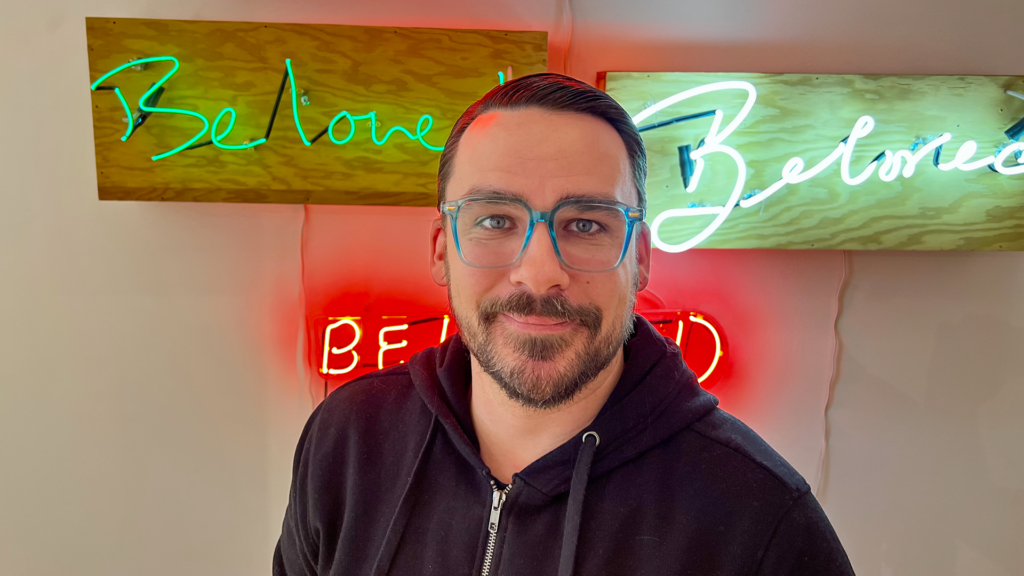
Joseph Mastroianni – VP of Programs / SCR Grants Coordinator | Photo: Provided

What is the Statewide Community Regrants program?

The Statewide Community Regrants program is an initiative of the New York State Council on the Arts (NYSCA) and administered by local arts organizations in New York’s 62 counties.

“The SCR program, fosters the continuing development of arts and cultural resources in response to the needs of local communities in each of New York’s counties. The SCR program invests NYSCA funds to serve all communities and people who comprise New York’s citizens and visitors. SCR sites are a network of non-profit organizations that serve local and regional cultural organizations and artists through three categories of support: Community Arts, Arts Education, and Individual Artists.”

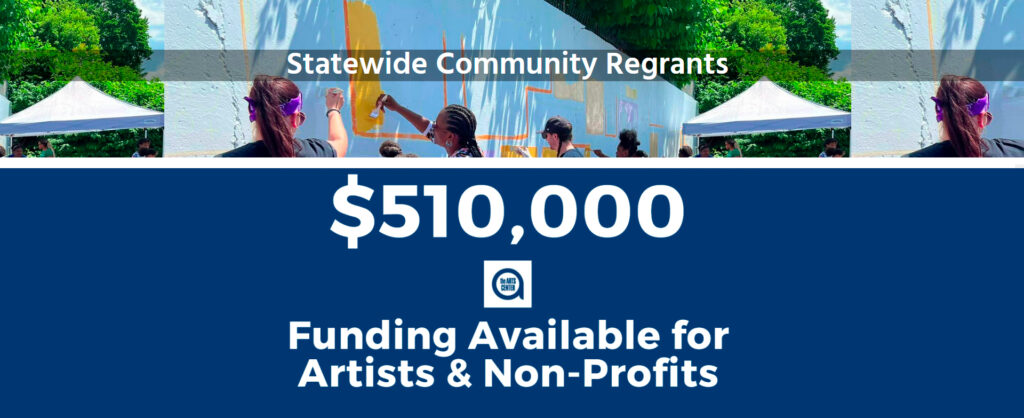
The Arts Center represents Albany, Schenectady, and Rensselaer Counties in the SCR program. In 2023, thanks to a generous one time increase in funding, we will award $510,000 in two rounds.

How much money is available this round?

In Round One, we will distribute $200,000. In Round Two, we will distribute $300,000. Additionally, $10,000 will be available for rolling mini-grants.

Who is eligible?

The SCR program has four categories: Community Arts, Arts Education, Individual Artists, and Pop Up Mini Grants.

In Community Arts, eligible applicants must be or be in partnership with a 501 ©3 nonprofit organization in Albany, Schenectady, or Rensselaer Counties. This category is for public art and fostering creative communities.

In Arts Education, eligible applicants must be either artists over age 18 and in partnership with a community organization, or community organizations. 501©3 status is not required in this category, but all proposed projects must have an educational component, whether in-school or after school.

In Individual Artists, eligible applicants must be artists 18 years of age or over and reside in Albany, Rensselaer, or Schenectady Counties. Projects should all be original work.

In Pop Up Mini Grants, eligible applicants are artists over age 18 or 501©3 organizations based in Albany, Schenectady, or Rensselaer Counties. Mini Grants are for small-scale projects and do not have to include an educational component.

Artists who work in any or all media are encouraged to apply; there is no priority.

Downtown Schenectady Improvement | Photo: Provided

What types of projects are prioritized in the funding?

All projects must have some type of community impact component and there are funding caps for each grant type.

In Community Arts, the maximum award is $5000. In Arts Education and Individual Artist, the cap is $2500. Artists may apply to all three categories if they are eligible; the maximum award any single artist or arts organization will receive is $5000.

Downtown Schenectady Improvement Mural | Photo: Provided

How do I learn more about applying?

We have grant seminars and office hours! At our virtual grant seminars, I’ll go over each type of grant available, so bring your creative ideas and ask questions! At the office hours, I’ll be able to answer very individualized questions about your projects and the application process. Remaining grant seminars are December 20, and January 5, all from 4-5 pm. They are free, but you do have to register to get the zoom link.

REGISTER HERE

Office Hours are Thursdays from 3-4 pm, starting January 12. Office hours may be over the phone, google meet, or email. No registration is required.

Electric City Arts – Jazz on Jay | Photo: Provided

Anything else we have missed we should know about?

Important dates!

ROUND ONE APPLICATION : Opens January 6 and closes March 1. Panel Review will be April 1, and awards will be announced on May 15. Projects must happen between June 1 and December 31 2023.

ROUND TWO APPLICATION : Opens on April 6 and closes on June 1. Panel Review will be July 6, and awards will be announced August 15. Projects must occur between September 1 and December 31 2023.


Made in America : Tech Valley Center of Gravity Provides Makers a Space to Learn and Grow

November 16, 2022 By Corey Aldrich

Having done several projects with COG over the years it was an exciting surprise to see the amazing new offerings that the facility developed since the pandemic. In a recent tour after a long hiatus, I was literally blown away by the level of professional equipment, variety of applications and the on-sight expertise available in what is surely the regions premier community Makerspace. To get a better handle on it all, I spoke with Dan Falkenstrom – Operations Director at Tech Valley Center of Gravity.

Dan Falkenstrom – Operations Director at Tech Valley Center of Gravity | Photo: Provided

Please state your name, title, and background. What do you do at COG on a daily basis?

Dan Falkenstrom, Operations Director. After graduating RPI with a dual degree in Mechanical & Aerospace Engineering, I spent time as a manufacturing engineer at Pratt & Whitney, Knolls Atomic Power Lab, and GE. I joined the COG as a member to make motorcycle parts, began serving as the volunteer treasurer, and have been an employee since 2018. In my current role I oversee our day-to-day operations, perform training, and maintain equipment. But most importantly, I help makers and startups overcome hurdles by connecting them with other creators and resources.

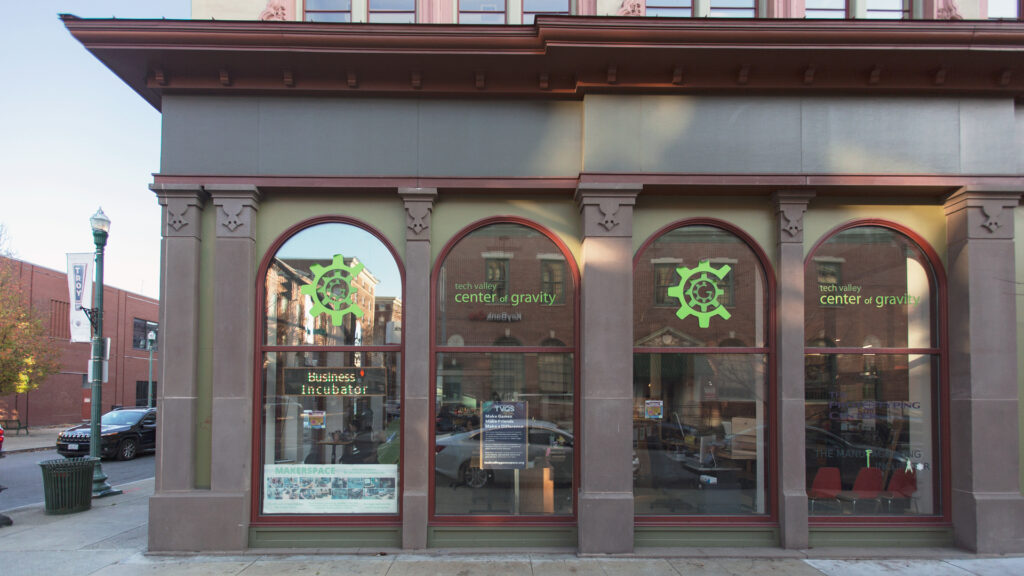
Tech Valley Center of Gravity – Downtown Troy, NY | Photo: Corey Aldrich

What makes COG different from other ‘coworking’ spaces in the region?

The main difference is that we are so much more! While we do have a traditional coworking area, which is predominantly visible through our street-level windows, I hesitate to consider ourselves a typical ‘coworking’ space. Makerspaces are more of a workshop environment – it’s perfectly acceptable (and encouraged) to start drilling, hammering, or soldering. Our aim is to support individuals, startups, and established businesses by providing low-cost access to fabrication equipment, workshop space, education, and a network of passionate creators.

The organizational structure of makerspaces is also very different from coworking spaces. As a non-profit organization, we have a strong focus on accessibility and community. In addition, our members have voting rights and help steer the direction of the organization. We are supported by a great group of sponsors, which allows us to keep membership and all of our resources financially accessible.

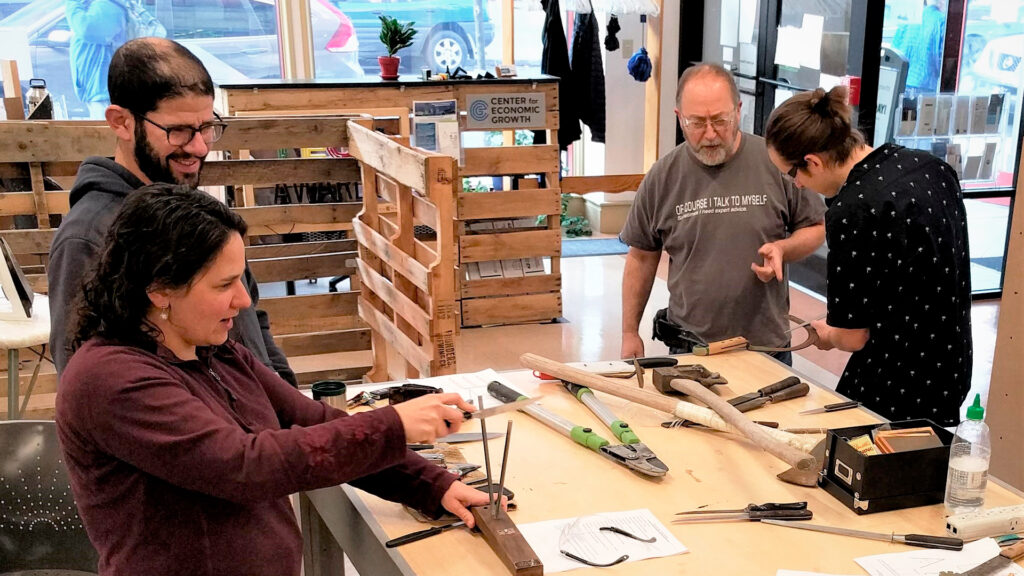
Sharpening Class at Tech Valley Center of Gravity | Photo: Provided

Can you tell us a bit about the types of facilities that you have available for use?

Within our 15,000 square feet, we have Maker Zones dedicated to 3D printing, children’s STEAM activities, laser cutting, electronics, fiber & glass arts, woodworking, welding, and machining. All told, we have over $200,000 of equipment available for members to use. Our kitchen, meeting room, and classroom/event space are also available to rent.

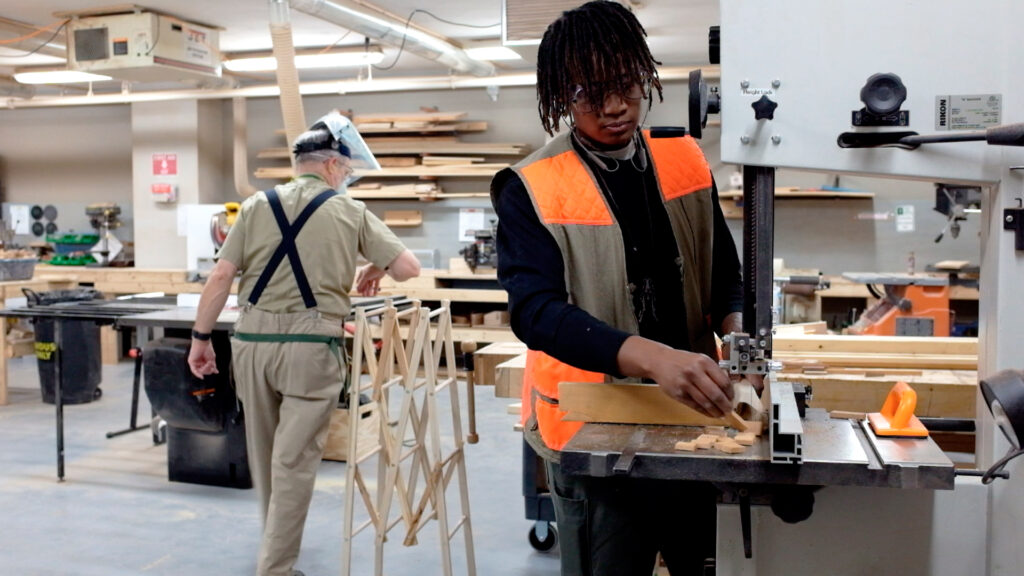
John and Sean working in the Woodshop at the Tech Valley Center of Gravity | photo: Provided

Who is COG best suited for? Can you tell us a bit about the people and projects happening there?

In our experience, at some level, everyone’s a maker. Our membership spans artists to engineers, students to retirees, and hobbyists to entrepreneurs. Over the past year I’ve seen our members make everything from prom dresses, cutting boards, bio-leather prototypes, physics experiment components, custom watches, welded steel sculptures, and more.

As a state-certified Incubator, we’re especially equipped to help hardware startup companies developing physical products through our Manufacturing Incubator program. In line with that, we’ve placed an emphasis on making digital fabrication equipment accessible. It’s really exciting to see so many small businesses get their start here.

Sewing Area at the Tech Valley Center of Gravity | Photo: Provided

Talk a little about the value of a STEAM over STEM based approach.

It’s a more holistic approach that acknowledges how interwoven these disciplines really are. All STEM fields are intrinsically creative disciplines. Beyond the ability to design products that look good and are enjoyable to use, problem solving requires out-of-the-box thinking. Take, for example, the scene from the movie “Apollo 13,” where engineers had to design a way to connect air filters using only what the astronauts had on board – “We have to make this, fit into the hole for this, using nothing but that.” Exercising both halves of the brain improves the ability to look at materials in new ways, to consider alternate processes, and to develop novel solutions to seemingly impossible constraints.

Kyle Moise makes and sells custom leather watch straps at the Tech Valley Center of Gravity
Photo: Provided

What are your goals for 2023? Anything your especially excited about?

2023 will be our 10 year anniversary, which is extra exciting because it puts us in the company of the few makerspaces that have reached the decade mark. As we continue to grow, we’ve been fortunate enough to secure additional funding to our Community Access Fund, which will allow us to expand our financial aid programs, such as our Pay-What-You-Can program and field trip assistance for Title 1 schools. Be sure to subscribe to our newsletter and follow our socials to learn more! Now that we’ve added a Community Developer to our team, you’ll be seeing much more activity about what we’ve got going on. Our main goal is to eliminate the phrase “I had no idea all of this was here!” from the reactions of our first-time visitors.

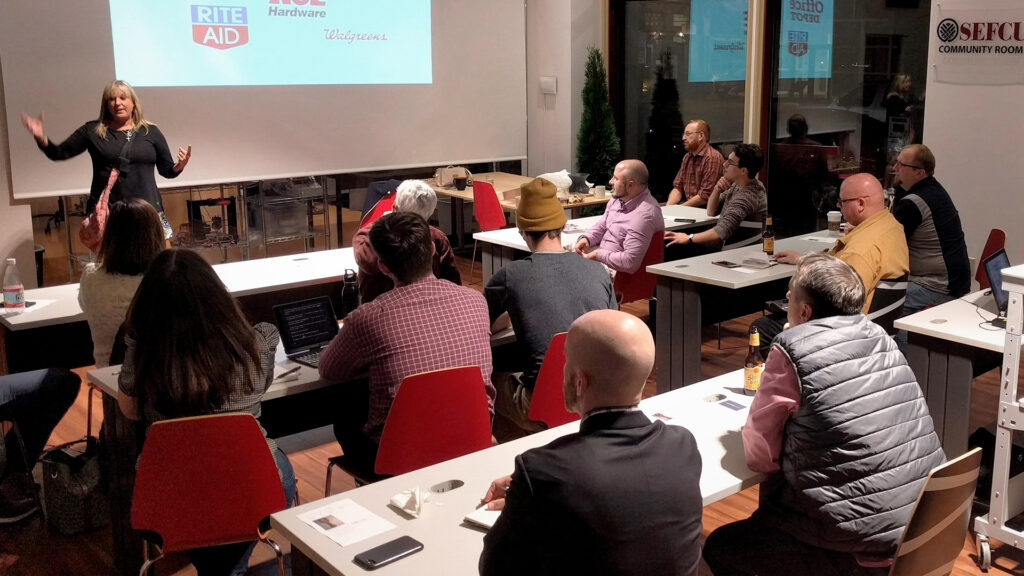
Inventor Nancy Tedeschi speaks at an event for entrepreneurs at the Tech Valley Center of Gravity
Photo: Provided

WEB: tvcog.net


Street Art / Graffiti as Gravity : Part III of III | Art and Community – From Local to Global

November 14, 2022 By Taliesin Thomas

In this 3-part series on the dynamic qualities of murals, street art, and graffiti—as both symbols of cultural consciousness and cultural commodities in their own right—we highlight these genres as viable assets within the regional and global creative economies of today. In the FIRST SEGMENT, the author shares a townie perspective on the arts scene as a citizen of Troy, NY. In the SECOND SEGMENT, we consider the financial side of art initiatives and opportunities around the Capital Region. In this third and final segment, the author discusses the connectivity between the local and the global with respect to artistic expression and community.

Left to Right: Andy Warhol Inspired Street Art in Troy, NY
Street Mural by Artist Lady Aiko in Vienna, Austria
Photos: Taliesin Thomas

How does art connect the local with the global? It does so through a consistent re-definition and re-contextualization of material realities and diverse conceptual, social, and philosophical frameworks. I think most of us can agree that art serves as a fantastical creative vehicle for illuminating both the personal and the political, the pressing issues of our time, and the urgency of the universal human condition—we turn to art to experience her charms as the “saving sorceress” that she is (as suggested by Nietzsche). Our increasingly interconnected society embraces manifold forms of artistic expression both real and imagined, and among the greatest pleasures of contemporary cultural life is encountering the multiplicity of art in every corner of the world. In this regard, the scope of artistic agency on the global scale points back to the local level, where artists engage with community as their place of being and belonging.

A View of the Capital Walls Murals in Albany, NY | Photo: Taliesin Thomas

Over the last several months I have been exploring distinct dimensions of the art scene in the Capital Region. This series for ACE! has been an opportunity to share my firsthand insights. In the first installment, I praised Troy as a locality with a lively arts culture, including strong examples of public murals, street art, and renegade graffiti. One can also see this in the neighboring areas of Albany, Glens Falls, and the wider Hudson Valley region. In that segment I considered these acts of artistic expression as a kind of gravity within society, where art demonstrates its value as a manner of cultural consciousness and a mode of civic engagement. Local arts organizations play an invaluable role by promoting the arts and artists as vital aspects of a rich community life. Encountering colorful forms of public art around Troy and in nearby towns, we can appreciate these artistic expressions as welcomed declarations of creative presence within society. Artists enliven community space while contributing their positive visionary energy to public places.

Artist Jeff Wigman Participates in a Street Art Event in Troy, NY
Photo: Taliesin Thomas

In the second segment of this series, I interfaced with several esteemed arts professionals in our area to understand aspects of New York State’s support for economic development vis-à-vis the arts sector, including increased public arts projects and collaborations between businesses and artists; community revitalization initiatives and efforts to develop existing infrastructures for the arts; and expansion of local arts programming and opportunities for artists. All of those conversations yielded a similar theme: support for the arts in our area is growing on all fronts!

In this final write-up, I suggest the conversation comes full circle with respect to the impact of local arts activities and modes of creative engagement within an international context. In my experience, the global is the local (and vice-versa). Here in the Capital Region, arts initiatives are, in fact, defining what the macro art-world looks like on the micro level. Regional arts organizations, arts professionals, and local artists have a singular opportunity and responsibility to promote the arts in our area, thus enriching the cultural atmosphere in New York State and beyond.

Taliesin in Front of a Keith Haring Mural in Melbourne, Australia
Photo: Rosie DiTaranto
Found Street Art in Prospect Park, Troy, NY | Photo: Taliesin Thomas

In our beloved Troy, the local indeed connects with the global in unexpectedly enchanting ways. Recently I came upon graffiti on a defunct building in Prospect Park that references the art of American artist Keith Haring (1958 – 1990), whose signature imagery and bold graphic style continues to influence a generation worldwide. An outspoken AIDS activist and beloved figure of downtown 80s culture in New York City, Haring is one of the most celebrated artists in the history of global contemporary art. I was truly moved to see Haring’s iconography represented in our neighborhood, a reminder that the sprawling global art world comes down to just that: an artist makes his or her own creative mark in their place and time. And in late September I was totally blown-away by a pop-up event on 2nd Street that entirely referenced the art of Jean-Michel Basquiat (1960 – 1988). This impressive exhibition presented a range of Basquiat inspired works by local artists and was an outrageously wonderful homage to one of most admired artists of all time. Basquiat and Haring are enduring cultural heroes, revered far and wide and still defining our global cultural zeitgeist in so many extraordinary ways. Nevertheless, our local hub offers numerous opportunities for community members to engage with art on every level. In that regard, distinct arts opportunities and connections among artists here in the Capital District promotes a sense of unity while placing us within a thriving arts culture that is global in scope. Thus, the magic and inspiration of the dynamic art-world at large is born right here in our lovely local digs.

Installation View of the “Jean-Michel Basquiat: King Pleasure” Exhibition in New York City
Photo: Taliesin Thomas
Artist Rae Frasier at a Basquiat Inspired Pop-Up Event in Troy, NY | Photo: Taliesin Thomas
Found Mural in Montreal, Canada | Photo: Taliesin Thomas
Found Mural on 2nd Street in Troy, NY | Photo: Ali Herrmann
Taliesin in front of Capital Walls Artist Nick Walker’s “Love Goes On” in Albany, NY
Photo: Taliesin Thomas

Taliesin Thomas, Ph.D. is an artist-philosopher, writer, lecturer, and collector based in Troy, NY. Since 2007, she is the founding director of AW Asia, NY and the collection manager of Art Issue Editions, NY—two private art collections that are the foundation for collaborations and projects with artists and museums worldwide. Thomas has lectured and published widely on contemporary art. She is the director of the Artist Training Initiative and a critic for the Critical Forum program at the Arts Center for the Capital Region, NY and she is a faculty member at School of Visual Arts, NY. Thomas studied studio art, aesthetics, theory, and philosophy at Bennington College, Columbia University, and The Institute for Doctoral Studies in the Visual Arts.

  • « Go to Previous Page
  • Page 1
  • Interim pages omitted …
  • Page 9
  • Page 10
  • Page 11
  • Page 12
  • Page 13
  • Interim pages omitted …
  • Page 16
  • Go to Next Page »

Creative Economy Updates and Other Good Stuff!

STAY CONNECTED!

  • Facebook
  • Instagram
  • Twitter
Copyright © 2020 THE UPSTATE ALLIANCE FOR THE CREATIVE ECONOMY

info@upstatecreative.org | 41 State Street, Albany, NY 12207

Design by Reach Creative