• Skip to primary navigation
  • Skip to main content

ACE

Upstate Alliance for the Creative Economy

  • HOME
  • ABOUT
  • NEWSLETTER
  • SUBSCRIBE
  • JOBS
  • Show Search
Hide Search

Makers

Elizabeth Reiss Advice for 2025 : Focus on the Basics | Embrace Change

January 10, 2025 By Corey Aldrich

Elizabeth Reiss, CEO of The Arts Center of the Capital Region is a force of nature. Many of you here no doubt know her or at least of her but many don’t fully understand the energetic impact and momentum she creates in the regional art scene and beyond. Seasoned and confident, Liz is not only a personal mentor to myself and many others but additionally serves as an Advisory Board Member of ACE! who has been connected here since it’s inception. As such, I can’t think of a better person to bring a slice of pragmatic sanity to the barrel we are looking down that we call 2025.
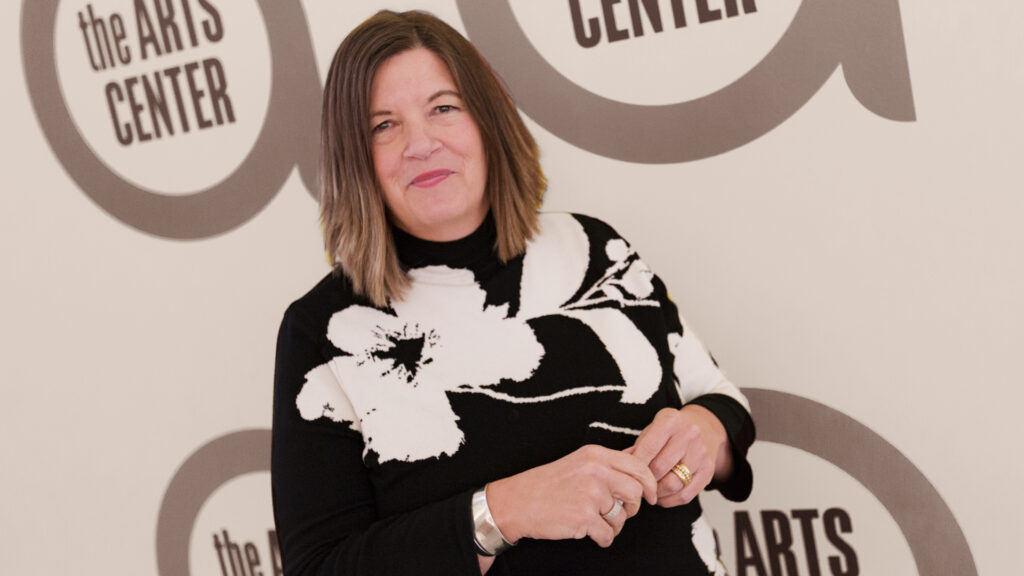
Elizabeth Reiss, CEO at The Arts Center of the Capital Region | Image: Corey Aldrich

Please state your name, title and past experience that got you to where you are today.

My name is Elizabeth Reiss. I am currently the CEO of the Arts Center of the Capital Region.

I’ve always worked in the arts, everything from gallery installer, docent trainer, publications manager to festival producer.  What got me here? At the Arts Center?  When I was in college I took a painting class.  A visiting artist/professor looked at my work and scoffed at it.  Told me to stop painting.  She and my primary professor laughed.  I was humiliated.  I never want that experience for someone.  Everyone should paint. Sing. Dance. Maybe they won’t end up in a gallery. Every artist belongs somewhere – the walls of MoMa or the fridge.  So, I work at a place that celebrates it all.  I love it. I’m lucky. 

That said, what else got me here?  I’m fearless when it comes to thinking I can pull off a project. I’ve opened a children’s museum in NYC, produced an artist-made skate board park in Pittsburgh, and now I’m working on my most complicated endeavor yet – finally developing the upper floors of the Arts Center.  
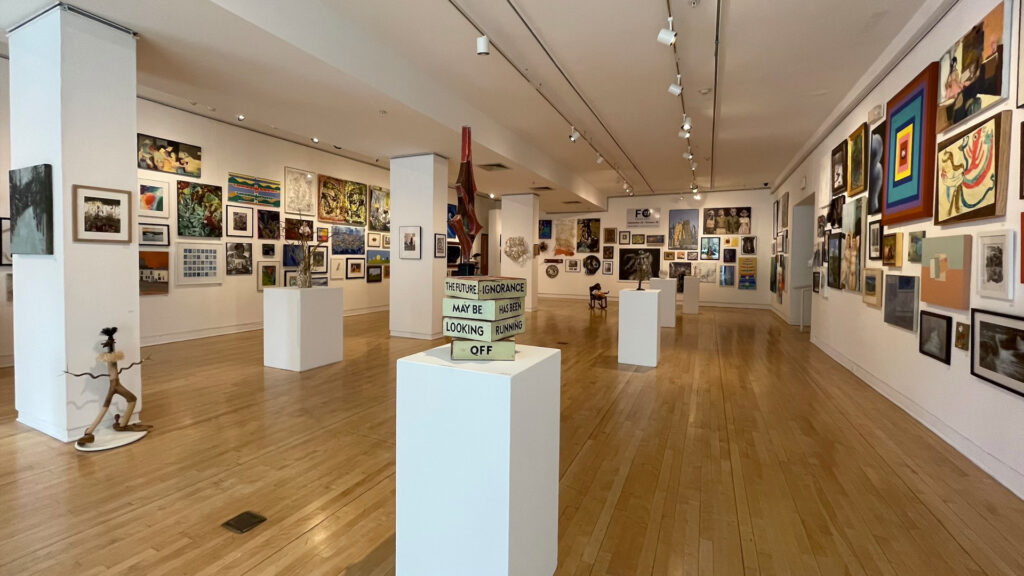
The 2024 FENCE Show in the Jane Altes Gallery at the Arts Center of the Capital Region
Image: Provided

Can you tell us a bit about what a day in the life looks like for you at the Arts Center?

The Arts Center has a much smaller staff than people may think.  There are 7 of us full time.  So, I spend a lot of time internally, writing & managing projects. I like writing. Our board is really involved, there’s lots of people dropping in. Or, I’m out. I’m old fashioned, I like to meet with people get a little deeper into things. Get to really know people. I spend a lot of my time representing the Center and the region at places like Creatives Rebuild New York, ArtsNYS, or with elected officials. I’m trying to start up a new group  – Capital Region Arts Allies, to help the region get more funding.  We are all surviving, but imagine if we all had enough resources to do more?
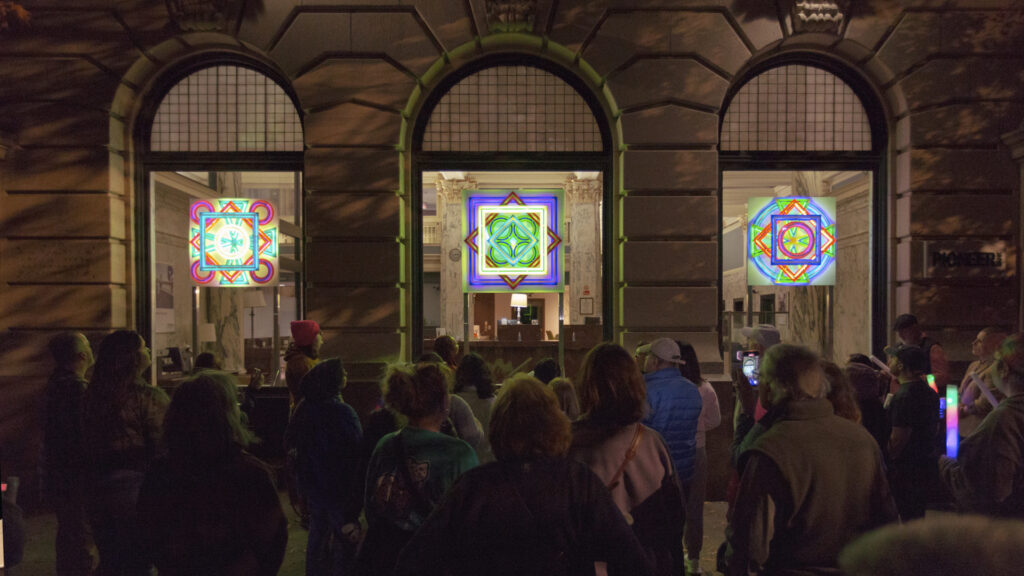
Arts Center of the Capital Region – One of the 2024 Troy Glow Exhibits in Downtown Troy NY
Image: Corey Aldrich

I know in addition to your main gig, you are involved in other supportive organizations. Can you tell us a bit about those roles?

When I started at the Arts Center, I knew we were also an arts council and a regrant site, but I didn’t really know what any of of that meant. So, I turned to my peers and had some fabulous mentors who mentors formed ArtsNYS, a state-wide educational and advocacy group. That led to me to serve as President of ArtsNYS for the last three years which has been incredibly fruitful.  The Arts Center was able to distribute a million dollars over two years in grants to our community.  Beyond the funding, I’ve met a lot of people. Last fall I invited the Center for Urban Futures (See ACE! Interview with Eli Dvorkin of CUF) here to talk about the arts and artists in the Capital Region. The growth here is phenomenal. The artist population is growing at a faster rate than any other sector. It’s really exciting. I stepped down as President, but will still be finishing the projects that I started, including a state-wide artist survey that ACE!, CREATE Council on the Arts and Siena College collaborated on with the Arts Center. We are just getting to building the research tools for the findings.  Stay tuned on that one.  
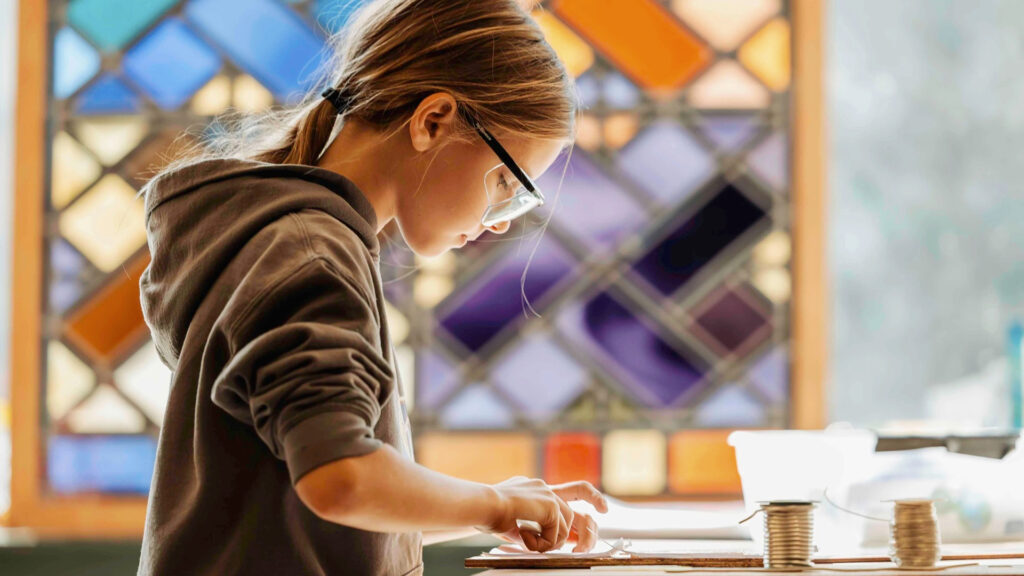
A Young Student Works in the Stained Glass Shop at the Arts Center of the Capital Region in Troy NY
Image: Provided

With a new administration, the end of ARPA funding and the current underwriting challenges for the arts, where do you see things headed in 2025? What in your opinion needs to be the main focus for arts / cultural institutions?

You know, the future is a little uncertain in regards to policy and funding.  And so many people are feeling unsafe right now.  This is where the rings on my tree may be an asset.  I’ve seen this before.  Federal funds may retract, state funds will be under strain….but….private dollars may fare better. It’s too soon to tell.  One thing I do know…. this kind of uncertainty leads me to my own true certainty – in times of unrest people need the arts.  Artists help us understand what we are seeing, experiencing and feeling. Time and time again, when things get tough, people want to feel control.  So they start making things again. There’s a reason crafts blew up during the pandemic. It was something to do, sure, but it was something we could do with our own two hands and with our own autonomy. So the arts will forge on. At the Arts Center? Our main focus will be on strengthening our core programming and to continue to rebuild now that the rescue funds have be spent. Yet, we’ll also try to be sensitive to the changes and stay ahead of them. We will be as nimble as possible to serve the needs as they present themselves. That said, we have a few ARPA (American Rescue Plan Act) and DRI (Downtown Revitalization Initiative) dollars to spend, so look forward to more public art.
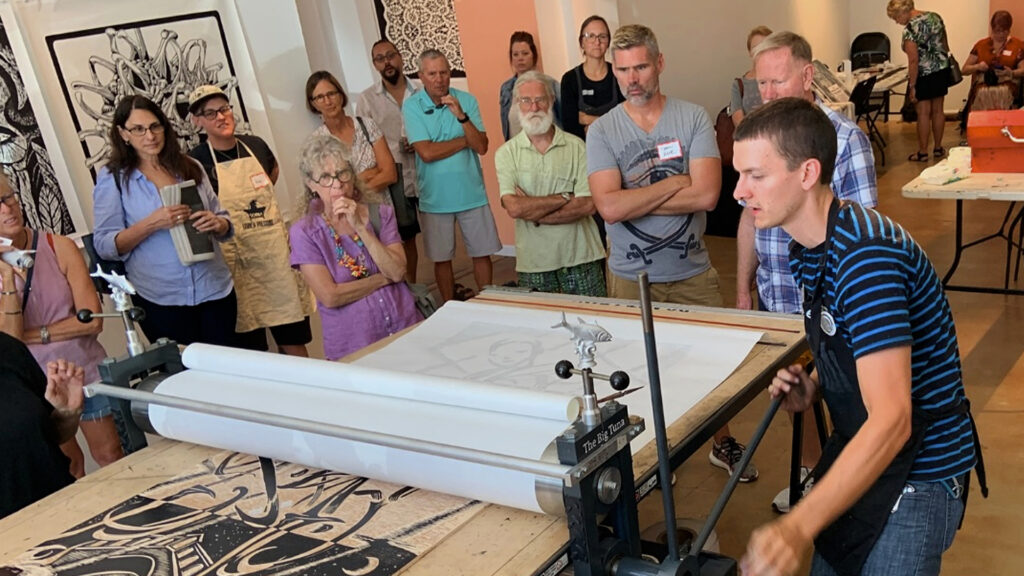
BIG INK Print Workshop at the Arts Center of the Capital Region in Troy NY | Image: Provided

What would you say are some practical suggestions that folks can put to use in their organizations to find a more predictable resource sustainability?

That’s a big question. Lets see…

When funding gets tough, its always good to stick to your core competencies and to deliver them with excellence. If you want predictability, you too need to be predictable. That doesn’t mean you have to do the same creative act every day, but it does mean you have to commit to the same level of care and thoughtfulness in what you bring to the public. 
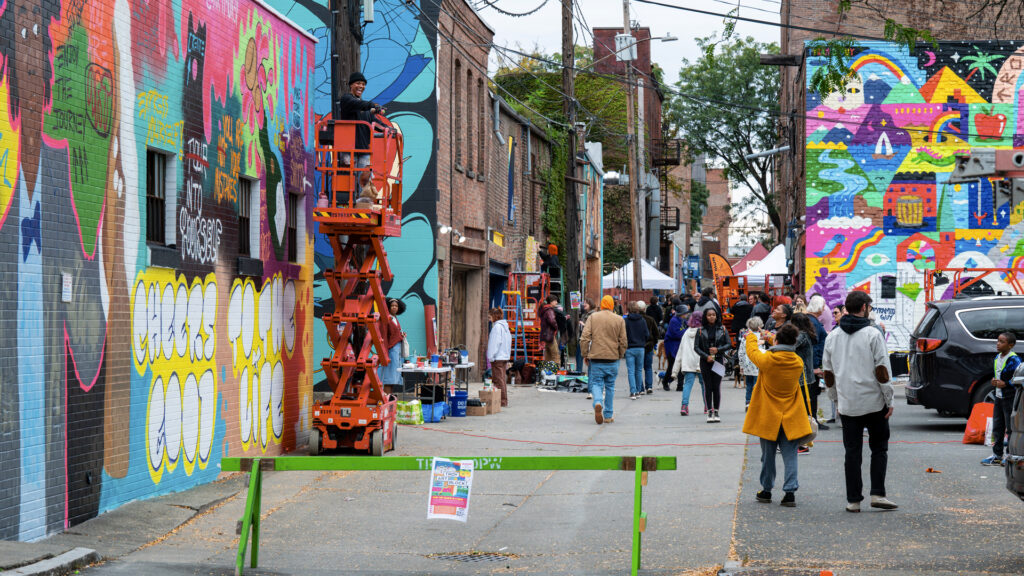
Art Center of the Capital Region – 2023 Troy Art Block in Church Street Alley, Troy NY
Image: Steve Alverez

It’s better to have 100 donors at $10 a month than one donor at $1000 a month even though its a lot more work. Your funding can withstand donors dropping in and out and your programming can stay on track.  

I’m also still learning this one – communicate more than you think you need to.  People – whether they are consumers or donors – want the inside track.  They want to stay in touch. Let’s face it, its hard to get people’s attention, so develop a communication plan and stick with it. Even if no one tells you they are listening. They are. 
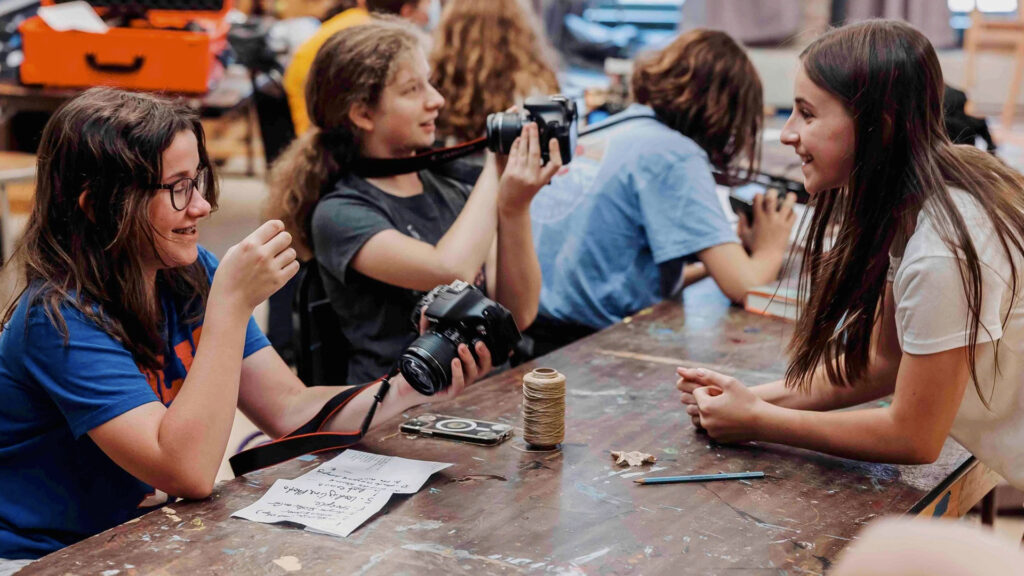
Youth Photography Workshop at the Arts Center of the Capital Region in Troy NY
Image: Provided

Anything in the pipeline that we should be aware of? Anything you would like to plug that you have coming up?

More and more creatives are moving upstate and they aren’t interested in our old rules of who does what or our outdated regional boundaries. The work week will continue to flow and change, where people go for arts and entertainment will flow and change, and I hope as a community we can work together to reach for more. 

Sorry I don’t have anything more tangible. It’s winter.  We are all hunkered down.  The kilns downstairs in the pottery studio are warm though…

For more info –
WEB: capartscenter.org
IG: @capregionartscenter
FB: @TheArtsCenteroftheCapitalRegion
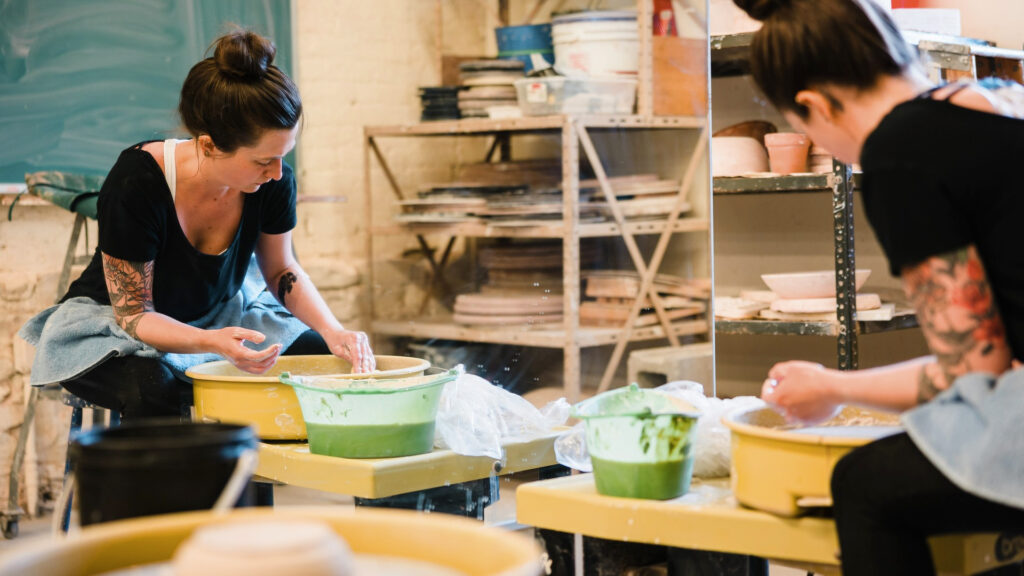
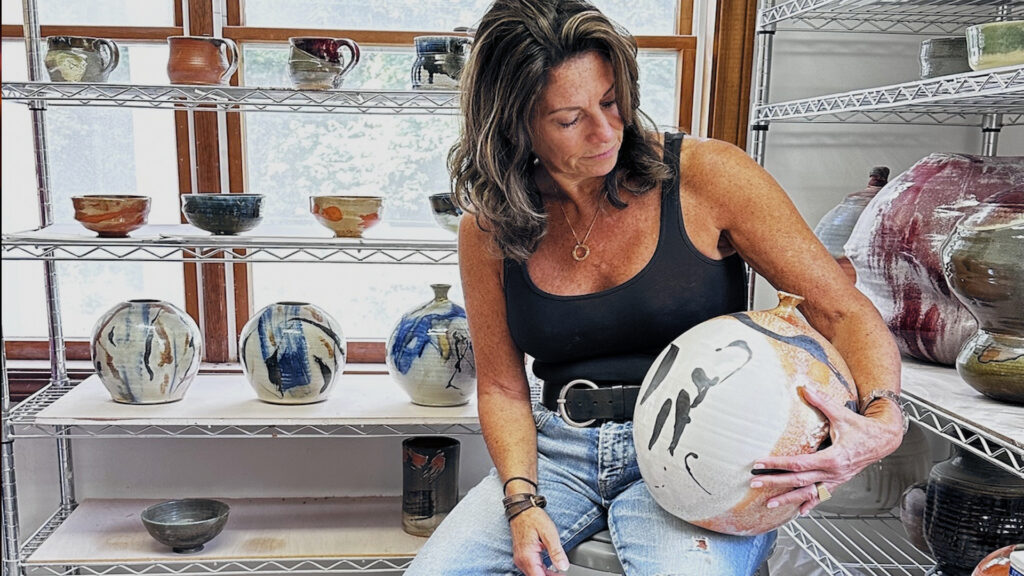
Working on the Wheel in the Pottery Studio | Image: Provided

ALN’S Steve Lawrence : All the Things, All the Time

January 10, 2025 By Corey Aldrich

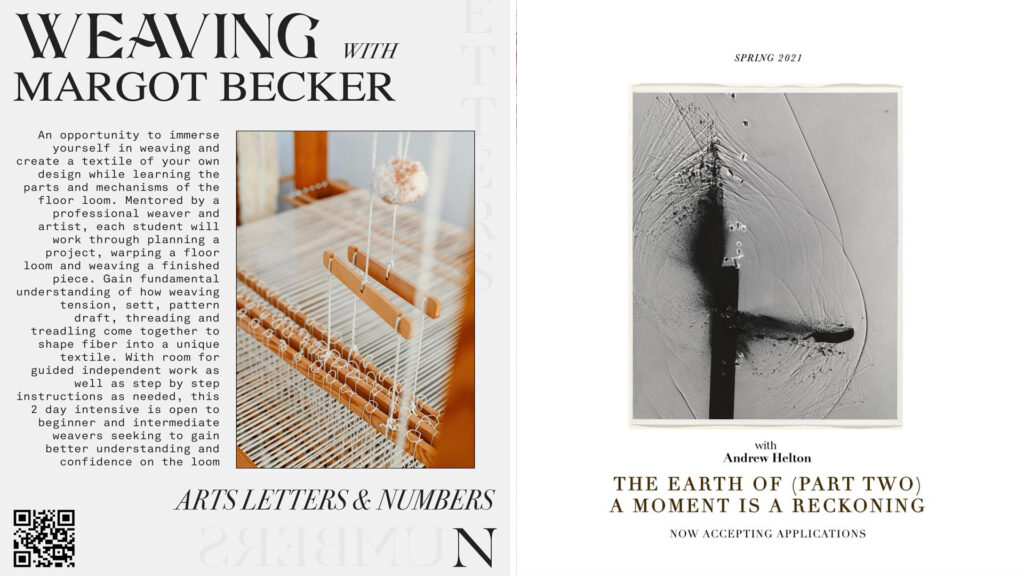
My first introduction to Arts Letters & Numbers was through ACE! Our previous ED, Maureen Sager had set up for us to do a ‘Creative Networking’ event there (2019). My first impression was very similar to that of Salem Art Works, who I had done a bit of consulting with when I first left my corporate job in real estate. A hyper creative, renegade spirit with an alluring joie de vivre that attracts highly creative minds and makers. Recently, I went to an opening there and Founding Director, David Gersten invited me to stay for dinner which would be at their newest campus acquisition, La Perla Restaurant. The conversation was rich. David and Steve Lawerence, the Associate Director started passionately telling me about the educational programming and creatively fluid campus style that is developing. I had to share. This type of experiential programming really gets me excited and I am hoping it will inspire you to consider new and innovative approaches to what you do.
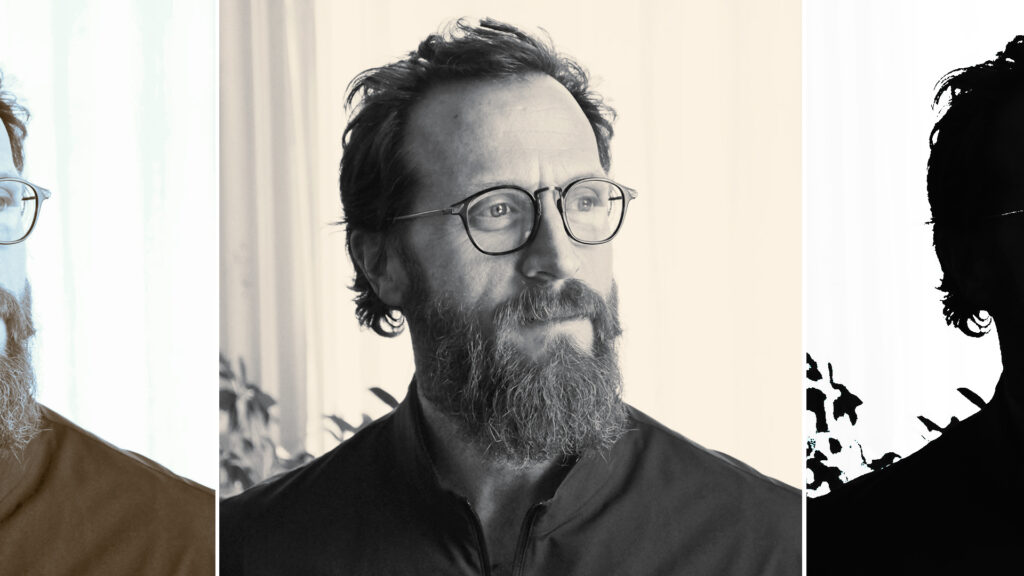
Steve Lawrence, Associate Director at Arts Letters & Numbers in Avrill Park, NY | Image: Provided

Please state your name, title and past experience that got you to where you are today.

I’m Steven Lawrence, and I currently serve as the Associate Director at Arts Letters & Numbers (ALN) in Averill Park, NY. My journey here has been shaped by a blend of being a tradesman, artist, educator, and psychologist. I ended up at Arts Letters & Numbers because I changed the heating system during a stint of contracting after retiring from the classroom and working on post-grad work.

After high school, I found my way into the trades as a plumbing and heating contractor. I ran my own company for several years before transitioning into becoming a licensed NYS teacher in 2009. I spent 12 years abroad teaching History, English, and Psychology across international schools in Kuwait, Saudi Arabia, Qatar, and China. Whatever the system I was teaching in, I focused on creating learning environments that nurture both intellectual and emotional growth. I quickly found that of all that I “taught”, the teaching of meditative practices to students was by far the most important. Through this, and my work outside the classroom in therapeutic settings, I’m now pursuing my PhD in Psychology at Saybrook University (C.A.) specializing in transpersonal psychology and the hermeneutics of meditative expressions as viable treatment.

I’ve always been passionate about the power of craft and the arts in shaping the future. At ALN, I’m working to bridge the worlds of arts, trades, and academics, helping students connect with opportunities that are both practical and creative. The skills students develop in these fields will play a crucial role in shaping their future – just as they did for me.

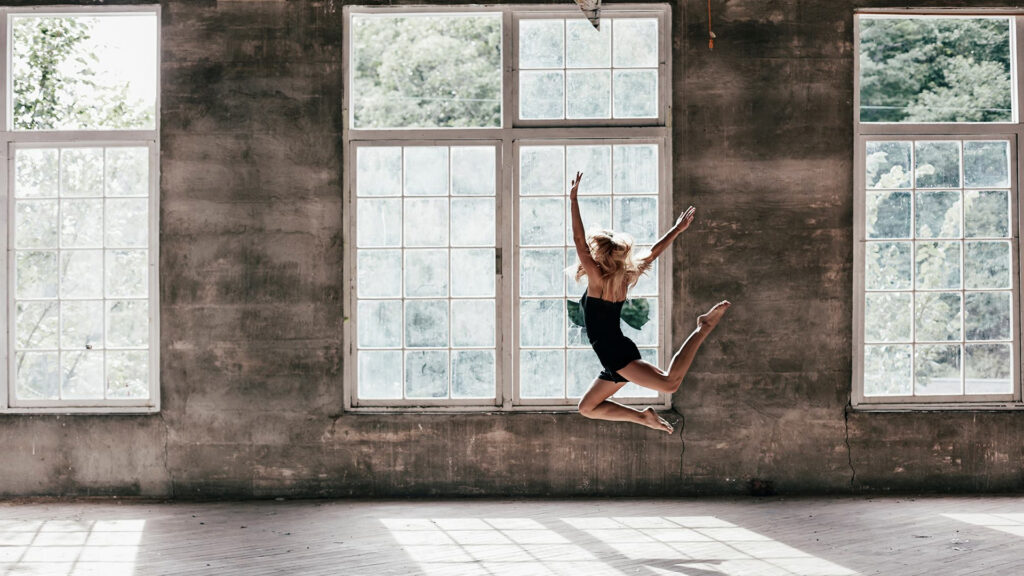
Arts Letters & Numbers – Resident Artist / Dancer Emma Bäcklund | Image: Zelé Angelides

Can you tell us a bit about what a day in the life looks like for you at ALN? Also, maybe a bit about the diversity of programming you have going on…

My days are a mix of community engagement, creative collaboration, and facility and program development. As Associate Director, I work on fostering connections with local educators and organizations, helping to expand our hands-on learning opportunities across arts, trades, and experiential programs. We have the privilege of a wonderfully supportive team and community that play a critical role in the success of any project associated with ALN.

A big part of my role is supporting artist residencies, where we provide them with space to create and collaborate. These residencies are about fostering the artistic experience, connecting artists with the community, and creating a space for cross-disciplinary exchange. Additionally, the maintenance of facilities could take an afternoon or two, keeping up houses, apartments, studios and the Mill.

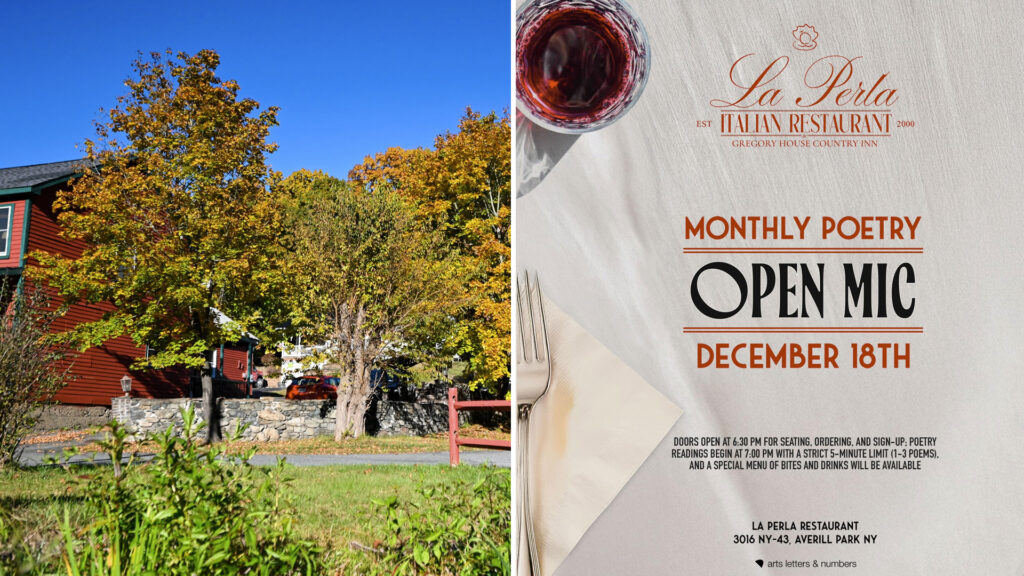
La Perla Restaurant and the Gregory House Inn, Part of ALN’s Growing Campus | Image: Provided

La Perla Restaurant, which was opened under the ALN banner in August 2024, has been an exciting addition to the project. The restaurant brings in not only local people from the community, but musicians, poets, and guests that stay at at the Gregory House Inn.

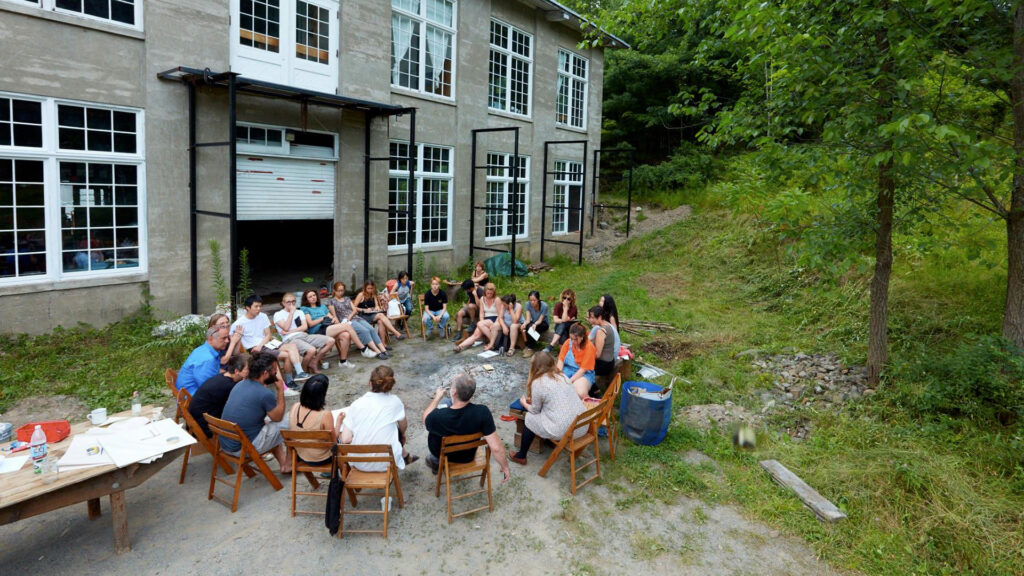
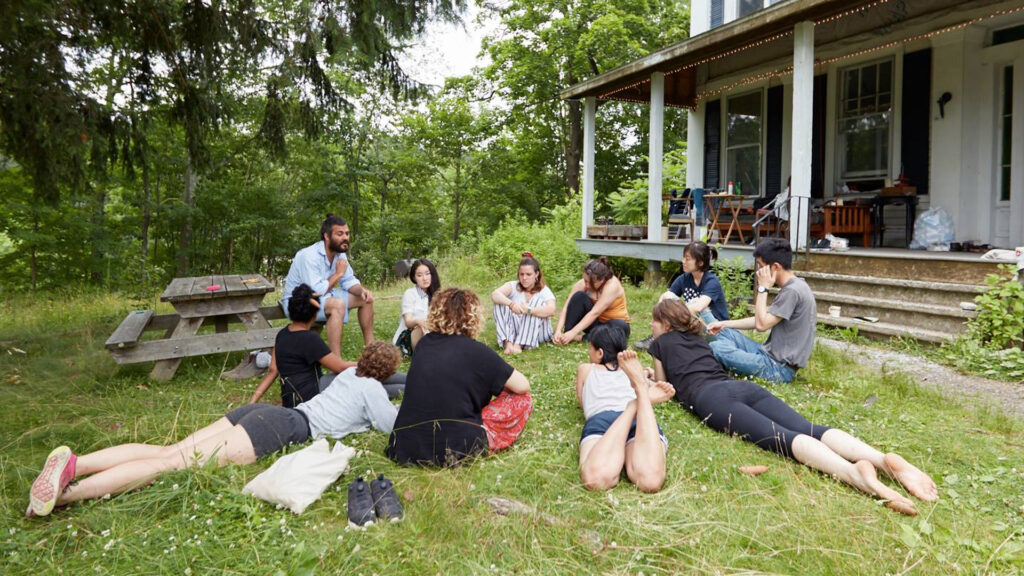
Arts Letters & Numbers Workshop / Educational Programming | Image: Provided

I am always struck by the quality of offerings that I see happening at ALN, real intellectual stuff juxtapositioned nicely with get your hands dirty, maker oriented programming. What’s the organizational philosophy that you have to drive the selection and balance?

Our philosophy centers on the belief that intellectual exploration and hands-on creativity are most impactful when combined. We intentionally balance thought-provoking programs with maker-oriented experiences to create a dynamic, holistic learning environment. Our aim is to balance thinking with making.

Arts Letters & Numbers Workshop on Campus | Image: Zelé Angelides

Our approach is interdisciplinary, connecting different fields to foster deeper understanding, while also encouraging collaboration across disciplines, enriching both intellectual and creative work. We prioritize personalization, offering opportunities for participants to engage in both deep reflection and tactile creation, to explore their passions in diverse ways. Add to that our moto: “Yes, in advance.” and “If we know what it’s going to be we don’t do it”. Very often that’s all anyone needs, it’s so remarkably simple. It’s not easy, but it’s simple.

We also ensure that our programs have a community impact, providing real-world relevance and opportunities to engage with the local environment.

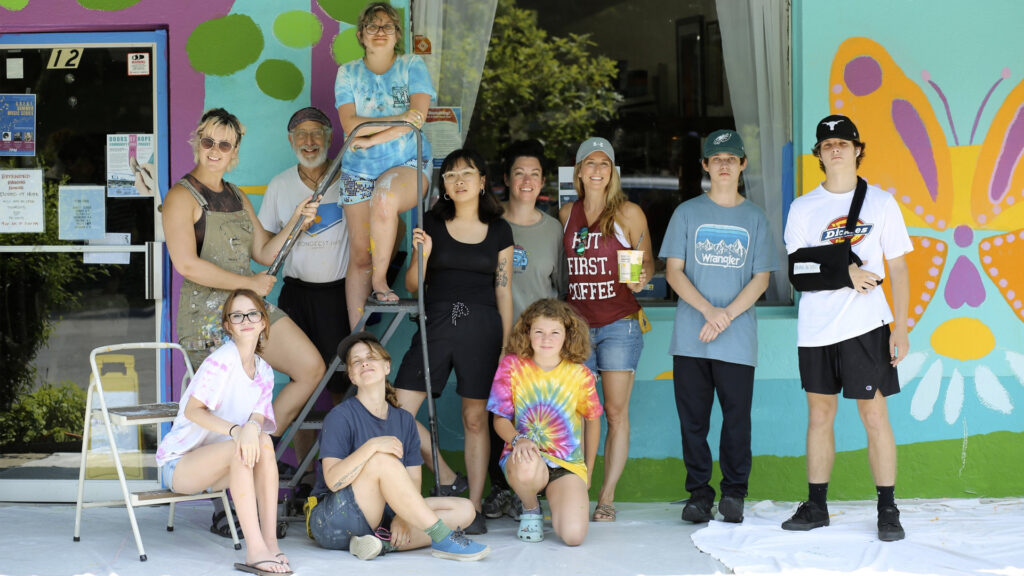
Art Letters & Number Mural Project for Doors of Hope with Partners: Rensselaer County Mental Health Student Assistance Program (SAP), and the Nopiates Committee | Image: Provided

I am especially interested in your pursuit of educational integration, IE working with non-campus based populations, academic institutions and other arts organizations. Can you sketch out what the ALN vision is there, and how you are continuing to expand that approach?

Our vision is to create a network where learning is not confined to traditional settings but extends into the broader community. Our approach is centered on connecting students and artists with real-world opportunities that span across any discipline imaginable. We are committed to collaborating with local schools, such as Big Picture Learning in Schenectady, the Averill Park School District and Berlin Central, to bring experiential learning out of the classroom through internships and hands-on programs. We also have a strong connection in secondary education with R.P.I., Russell Sage College, The Cooper Union in New York, as well as a range of international institutions. These connections are a testament of the life and career of David Gertsten, the Founding Director and President of ALN.

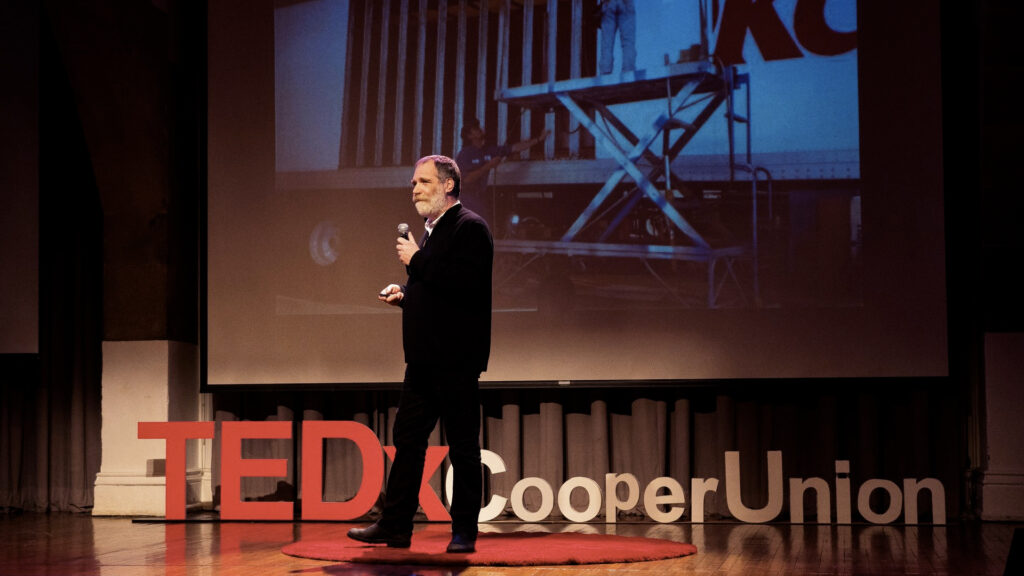
Arts Letters & Numbers Founding Director David Gertsten Does TEDx | Image: Provided
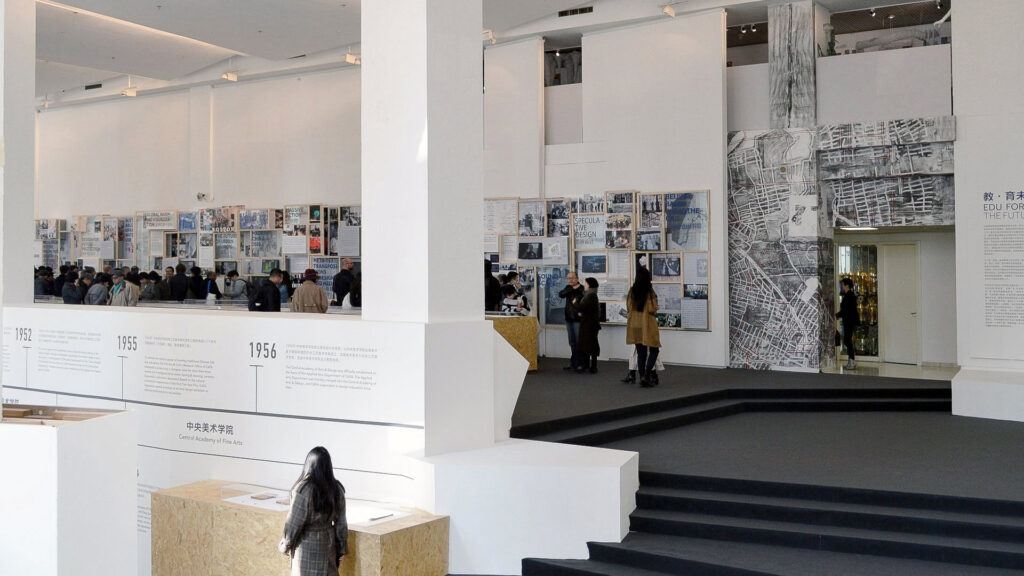
2018 ALN Collaboration : ‘Future Unknown’ Chancellor’s Summit held at
The Central Academy of Fine Arts (CAFA) in Beijing, China | Image: Provided

We’re deepening these collaborations to develop more integrated programs that connect craftsmanship, creativity, and theory as a sort of global exchange. This allows us to create rather unconventional pathways to learning and individual development. ALN is evolving into a truly interdisciplinary and transnational model. I wouldn’t say we’re building a school, it’s more like we’re working to supplement a learning experience that students want and typical schools can’t always provide. Schools have been open to working together. Generally, any hurdles are pragmatic, working through a system one issue at a time and sticking with it. ‘No’ can’t be an answer, sometimes.

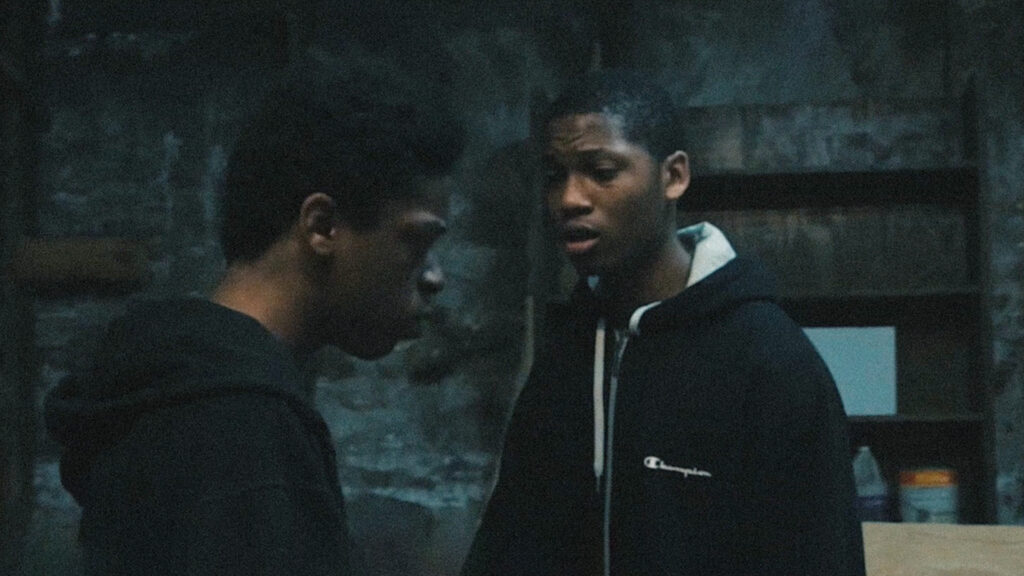
Arts Letter & Numbers Film Project Collaboration with Youth FX and the
Albany High School’s Social Justice Theater Program | Image: Provided

It’s all very collaborative, what would you recommend to other institutions who may have an interest in expanding their footprint to have a greater yet practical impact? Thoughts on how to do that sustainably from a resource perspective?

When working with other institutions towards the same ends, it’s essential to focus on creating genuine partnerships that bring real value. Find the people that ‘get it’ and work with them. Starting small with pilot programs or focused collaborations can help you see what works before expanding. It’s also important to find synergies between different partners—whether that’s through sharing resources like space and staffing or finding common goals to work towards. Sustainability comes from creating partnerships that are mutually beneficial, where the collaboration strengthens the work of everyone involved.

When partnering with local schools, businesses, or other arts organizations, we look for opportunities to build programs that are aligned with our style of approach. It’s important to note that these discussions often take months—sometimes even a year—before a project fully comes to fruition. This long timeline is the reality of creating great programs. While planning and discussing future initiatives, we’re also actively carrying out the programs that are already in motion. Patience is essential. It’s important to manage both long-term development and the work happening right now.

Arts Letters & Numbers Workshop / Educational Programming | Image: Provided

We’re always keen to open the space for folks to venture out into their artistic pursuits. Recently a local woodworker took up shop here to get his furniture business off the ground. As ‘compensation’ he lends a hand, using his skill sets to support us where he can. There are ways to be creative about developing transactional relationships.

Arts Letters and Numbers – Teaching Time | Image: Zelé Angelides

Anything in the pipeline that we should be aware of? Anything you would like to plug that you have coming up?

We’re continuing to work closely with local schools and developing community projects that students can be involved in. These initiatives take on many forms, from community-based murals to a community table-building project for the Poestenkill Town Park.

Our residency seasons run from January 15-March 15 and April 15-June 15, where we invite artists from various disciplines to create, collaborate, and engage with the local community. Many are scheduled to arrive, and our application process is still open. You can learn more by visiting our residency page.

We’re also excited to be running our Craft 1o1 project again this year in July and August 2025. It’s our second year running, and we had a remarkable time last year. It’s a unique opportunity for individuals to engage experiences unlike anything I’ve seen, where we engage masters of craft in upwards of 15 different disciplines – from music to masonry, poetry to plumbing. That is to say, musicians learn masonry and masons learn to play music, poets plumb and plumbers write poetry. It’s rather remarkable. We’ll be announcing the open registration for that soon, otherwise folks can plan ahead and join the residency which allows them to participate.

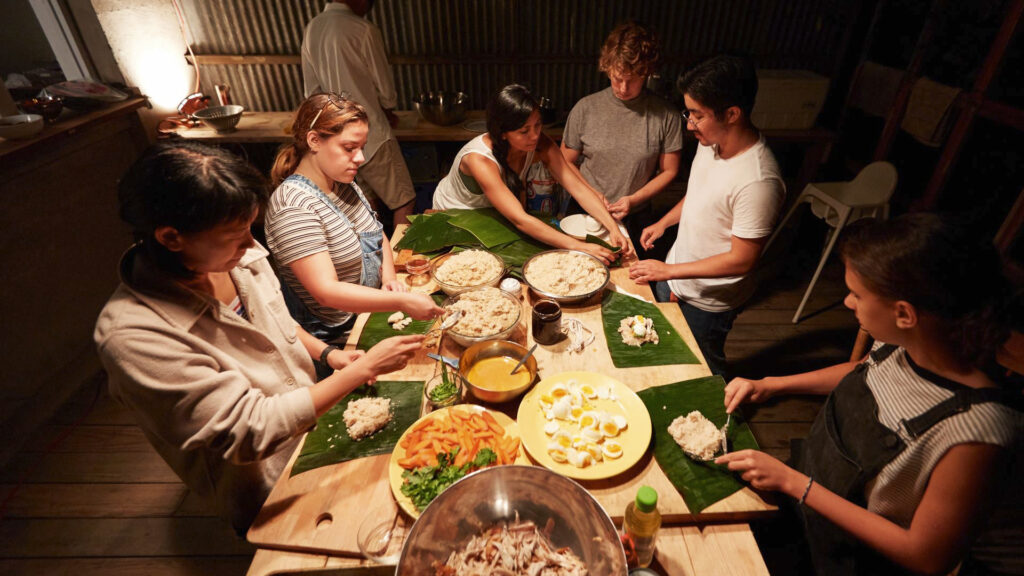
Food Prep at Arts Letters & Numbers | Image: Zelé Angelides

There are a few other exciting projects in development that I’m not quite ready to announce, but you can stay updated on all of our upcoming initiatives by following our newsletter. It’s the best way to stay in the loop and hear about what we’re up to.

For more info –
WEB: artslettersandnumbers.com | IG/FB : @artslettersandnumbers

Jill Fishon-Kovachick is Sculpting Success at Saratoga Clay Arts

June 6, 2024 By Corey Aldrich

I discovered Saratoga Clay Arts through my good friend Ping Xu who is a member there (Also a board member at Saratoga Arts). She kept telling me that I had to see the amazing facilities and community that she was a part of. Well, I have to say…she was right on all counts. What Founder and Executive Director Jill Fishon Kovachick has been able to cultivate is not just an oasis of creativity and an incredibly well equipped makers space but a connected and growing community that many have come to call home.

Please state your name, organization and what you do.

My name is Jill Fishon-Kovachick and the name of my center is the Saratoga Clay Arts Center. I am the Executive Director. I started working with Clay at eleven years of age at Bucks Rock Camp in New Milford Connecticut. I was a camper and became a counselor and found Clay as my medium. From there I went to Skidmore College where I received my BS Degree is Art Education. I studied under Regis Brodie. My love for clay has been my passion for most of my life and continues to be important to me and to be able to teach it to our community fills my heart.

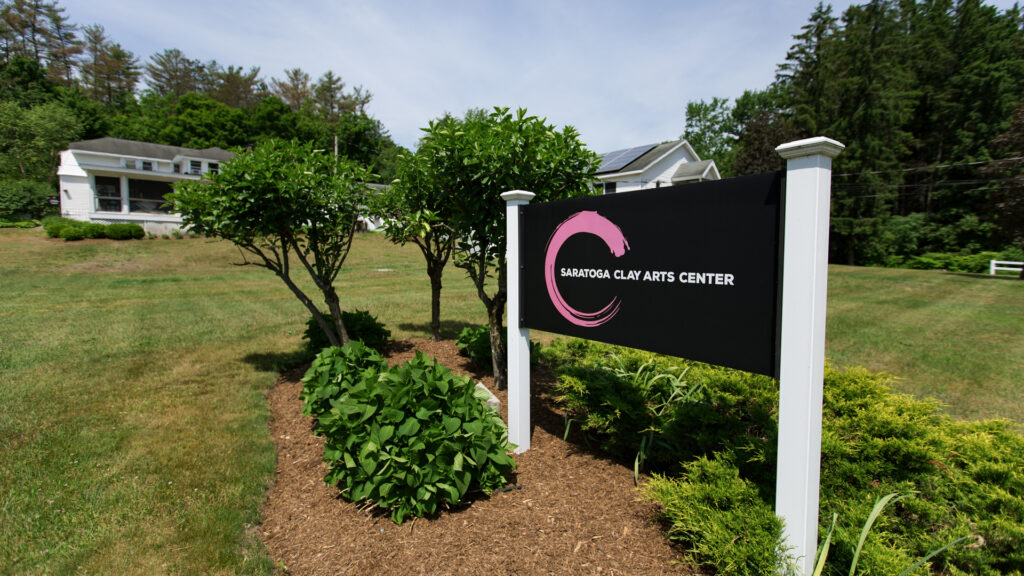
Entrance Sign at Saratoga Clay Arts | Image: Corey Aldrich

Can you tell us about what is happening at the Saratoga Clay Arts and what your mission is? The campus is so beautiful, I really love the vibe there!

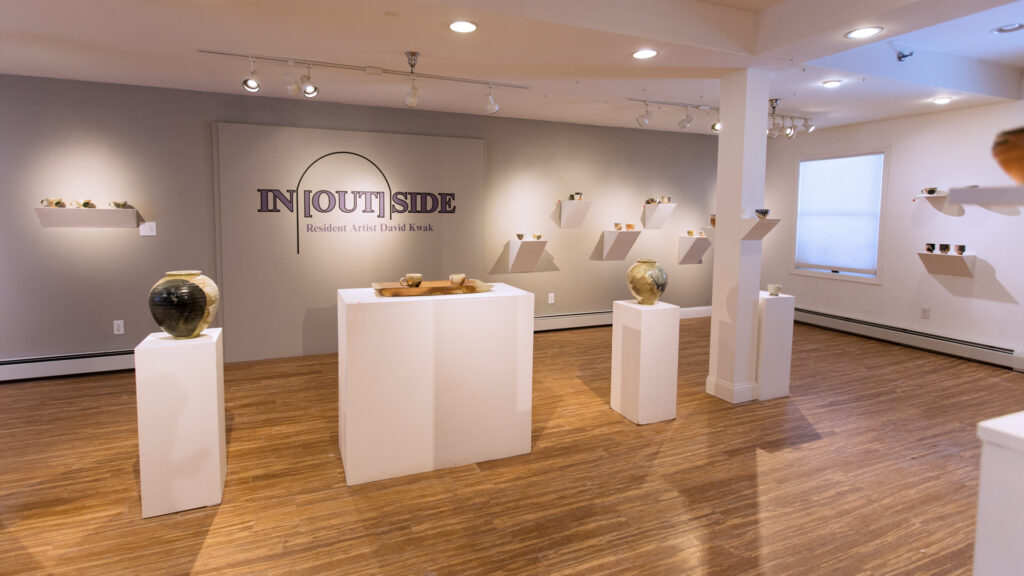
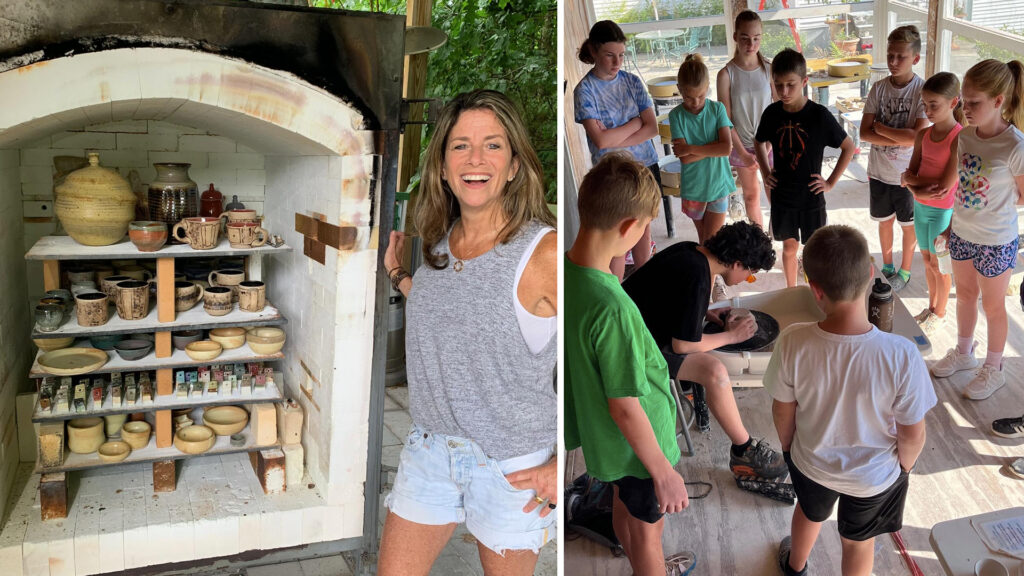
Our mission is all about community and to inspire people of all ages. We educate people all about clay. From the hand-building process to the potters wheel. We also have many different types of kilns and glazes. There is also a gallery on site called the Schacht Gallery, which I named after my Grandmother who’s maiden name was Schacht. The gallery brings in local and national artists. We want to expose people of all generations to what it means to work with clay. The gallery broadens people’s understanding of what can be done with clay – in all ways.

Schacht Gallery at Saratoga Clay Arts in Saratoga Springs, NY | Image: Corey Aldrich
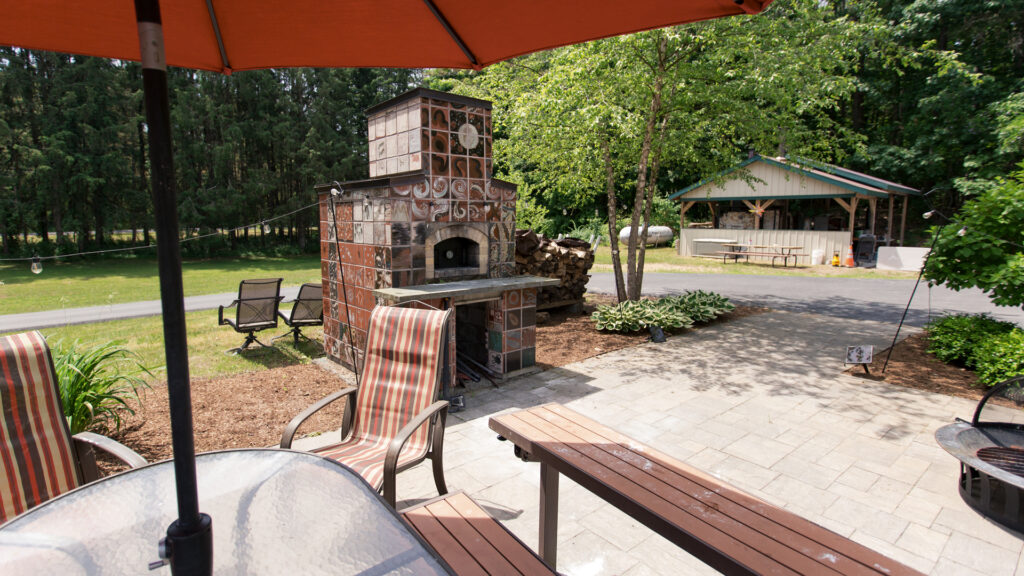
Outdoor Patio Area at Saratoga Clay Arts in Saratoga Springs, NY | Image: Corey Aldrich

What does a typical day look like for you on location?

My typical day is wearing many different hats at SCAC. From teaching to answering phones to paying bills and then of course finding time to work on my own work.

Hands On Soda Firing and Throwing Workshop with Matt Long at Saratoga Clay Arts | Image: Corey Aldrich

A lot of organizations with an educational program end up going the not for profit route. Why did you decide to structure as a for profit company?

I ended up making SCAC a private business because I had to react fast to create it. I had been working at Skidmore for Special Programs for 17 years. There I taught a night class for the outside community. Skidmore had decided to delete the night classes for ceramics so the people taking classes needed a place to work. This required me to move quickly to bring everyone to the center. There was no time to set up a not-for-profit. We all needed a place to work – immediately. I bought our current building in foreclosure. I know I made the right decisions as the center has been busier then I ever dreamed could happen.

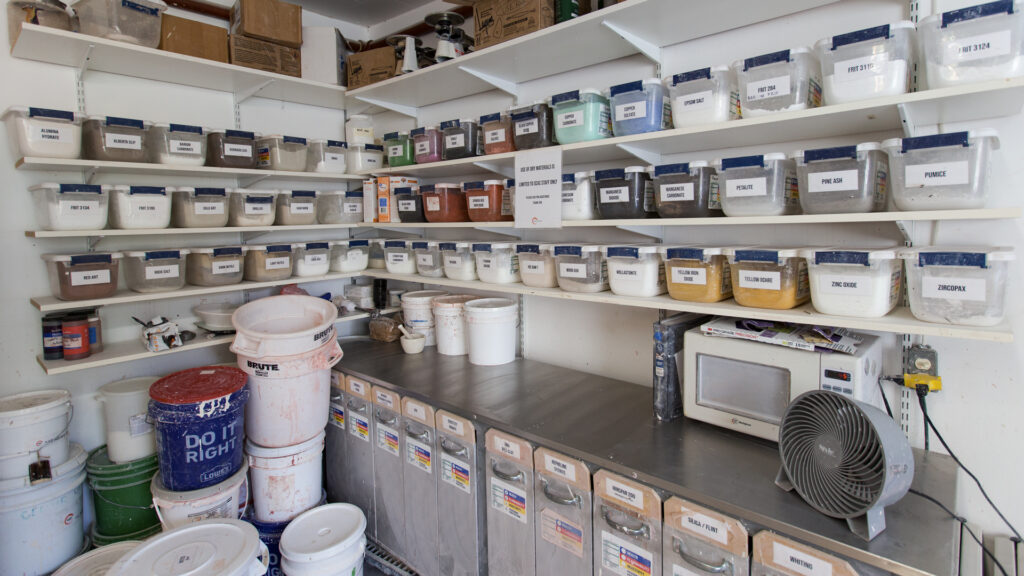
Materials Pantry at Saratoga Clay Arts | Image: Corey Aldrich
Saratoga Clay Arts has 7 Electric Kilns on Campus (4 Seen Here) | Image: Corey Aldrich

Can you talk a little bit about the economics of the business? I know running a pottery shop requires some serious equipment and infrastructure investment.

We opened in 2011. I was fortunate enough to be able to purchase the building and the equipment to get things going. The business did need some financial backing to cover the equipment side though. Since then we have been raising money through our annual fundraiser which is called the Chili Bowl. We give some of our proceeds to a local organization called To Life which is helping people with breast cancer. and to the Wilton Food Pantry. The local restaurants have participated and have been incredibly generous in donating their donations for the event. It’s a chili cook off and competition and is an amazing and fun event. This of course is in addition to our class and program fees.

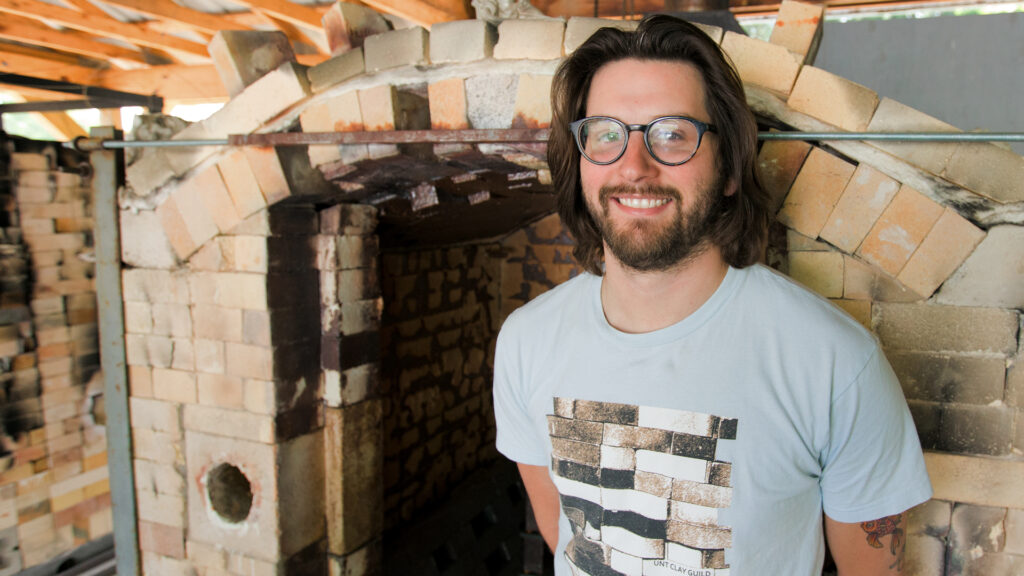
EDITORS NOTE: In addition to 7 electric kilns of various types, Saratoga Clay Arts has a large high-fire gas kiln, a salt kiln, a soda kiln, a raku kiln and a pit fire smoker.

Jill at the Kiln | Youth Programming at Saratoga Clay Arts | Image: Provided
Mark Tarabula – Studio Manager at Saratoga Clay Arts in Saratoga Springs, NY | Image: Corey Aldrich

Running a business can be so demanding, how do you balance that with your own artistic practice?

Running a business is incredibly demanding and I have had to give up some valuable time in making my own work to do but it, but it was worth it. The center is such a great place. Since opening and being available all the time I have hired some amazing people. I have a Studio Manager Mark Tarabula , an Artistic Director Leigh Taylor Mickelson and a Marketing and Engagement Community Coordinator Lyndee Deal. This allows me to be able to to focus more on my work. We also have up to 4 Artists in Residence at any given time who teach classes and work for the center in exchange for studio use. Additionally, we hire interns who learn from us and find their direction in clay. They help teach classes and learn the dynamics of running a center.

David Kwak – Resident Artist at Saratoga Clay Arts in Saratoga Springs, NY | Image: Corey Aldrich
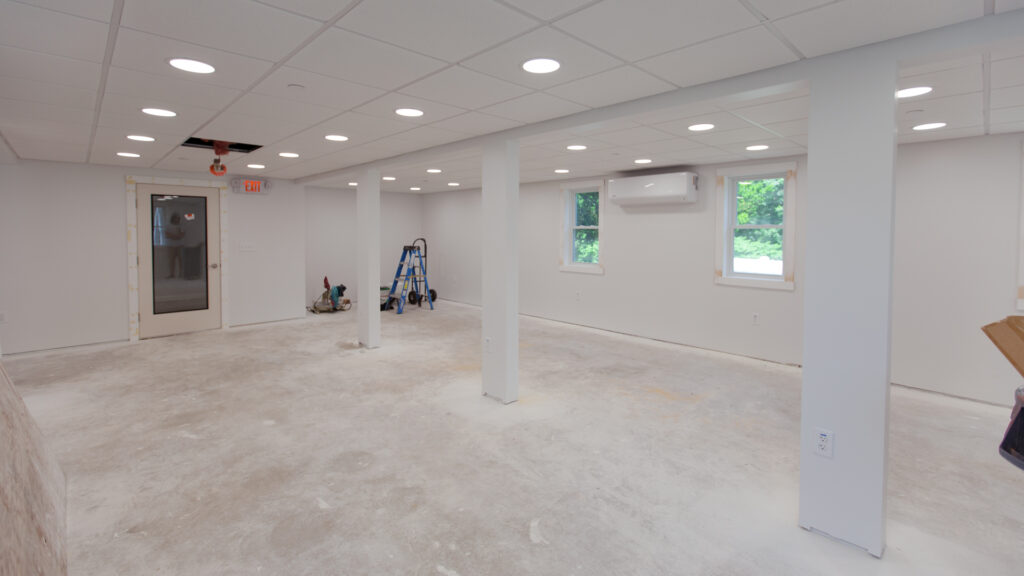
Under Construction : New Classroom Space at Saratoga Clay Arts in Saratoga Springs, NY | Image: Corey Aldrich

Bonus question: Anything coming up on the horizon you would like to tell us about, programming to promote?

Some exciting news on the horizon… we are almost finished renovating the basement and have created another beautiful classroom and more studio rentals. We plan for that to be open in June which will allow us to have more room to grow and more classes being offered. Additionally, this will allow us to promote more private parties and corporate clay events.

Fresh Out of the Kiln at Saratoga Clay Arts | Image: Provided

Bryan Hamill’s CIRCUS : DIY Print Space Seeks Mission Oriented Partnership

February 29, 2024 By Corey Aldrich

I first heard of Bryan Hamill at a meeting with Michelle Toch Dinsmore at Overit Media. We were planning the kick off of the rebranded First Friday in Albany last year. Part of the initial rollout was a FF show at her space including Abe Farraro and this “cool guy super connected guy doing amazing print stuff in the skateboard scene…” I came to find out, Bryan is all that and so much more, bringing a passion for craft and creative community to the Arbor Hill neighborhood in Albany. After a successful grand opening last year, he was notified that the space he occupied was no longer going to be available. So what is now to come of this community driven arts / maker space and its specialized equipment? We have an idea…

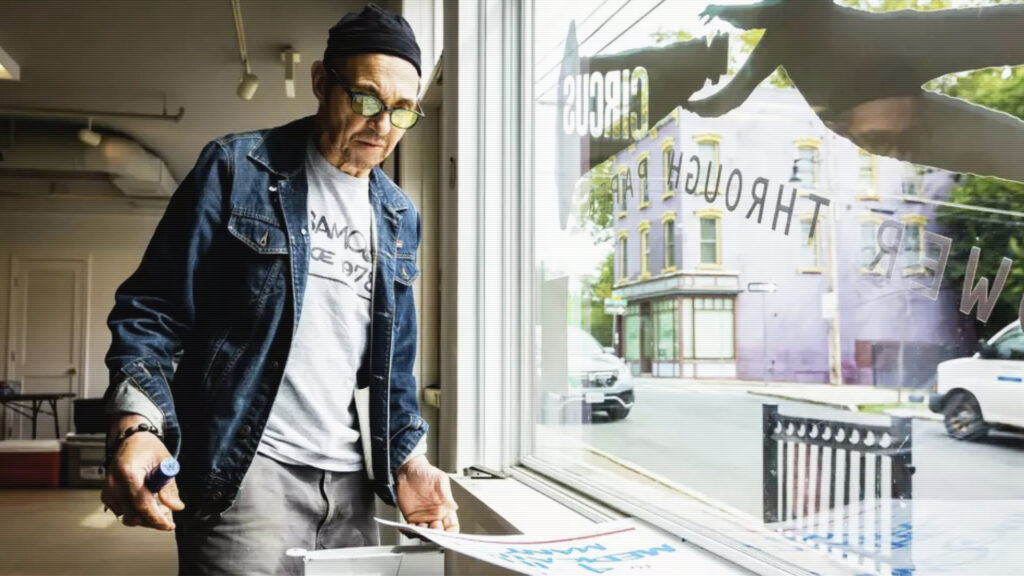
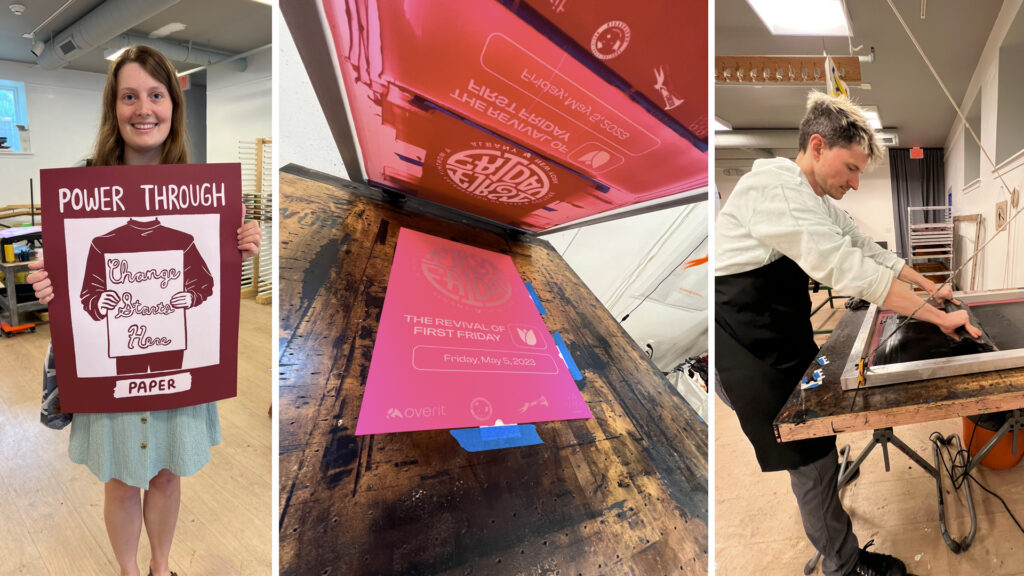
Bryan Hamill Founder and Shop Manager at CIRCUS (Power Through Paper) | Image: Provided

Please state your name, what you do and your educational / experiential background.

My name is Bryan Hamill. I am currently an Accounting Administrator at Audio Video Corporation in Albany New York and Founder and Shop Manager at Circus (Power Through Paper), a community based printing and events space in Albany’s Arbor Hill Neighborhood.

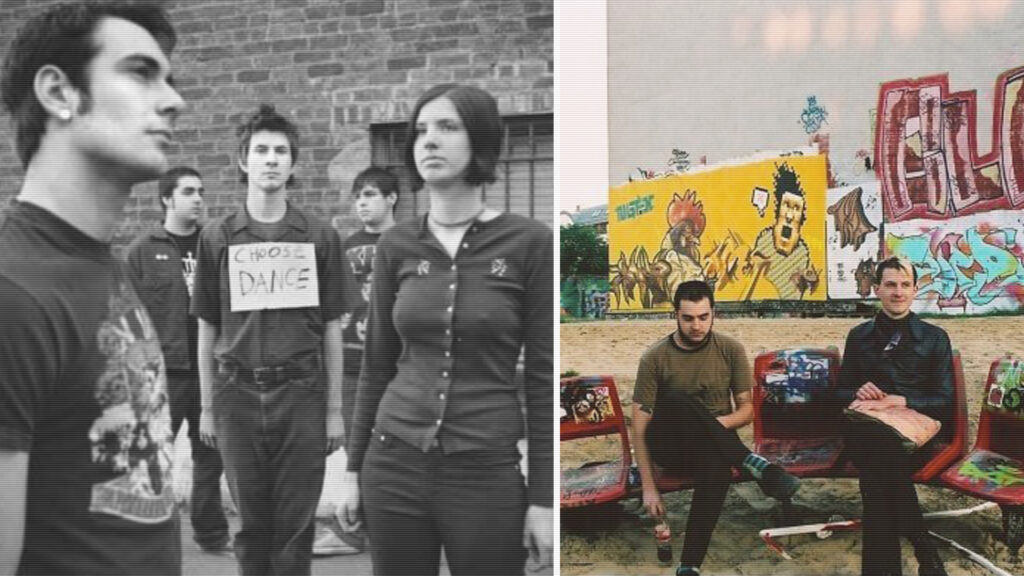
I grew up down by New York City but moved up here to go to college and absolutely fell in love with the city. I studied music and video production at St. Rose College in Albany and did odd jobs in both upon graduation; recording various albums for local musicians such as Steve Gaylord, commercials for small businesses, weddings, and music videos for bands such as Rockets and Blue Lights. I used to play in a band that was pretty popular in Albany called The Amazing Plaid among others. I’ve played shows around the country traveling in a beat up old prison bus, and even played a week’s worth of shows in Germany. I started and helped run a non-profit arts organization in Albany called the Capital District Federation of Ideas, where we had a performance space on Madison Ave called Point Five. I convinced myself that I needed to secure a grown up job, so I’ve been working full time at local company Audio-Video Corporation since 2011.

The Early Days | Image: Provided

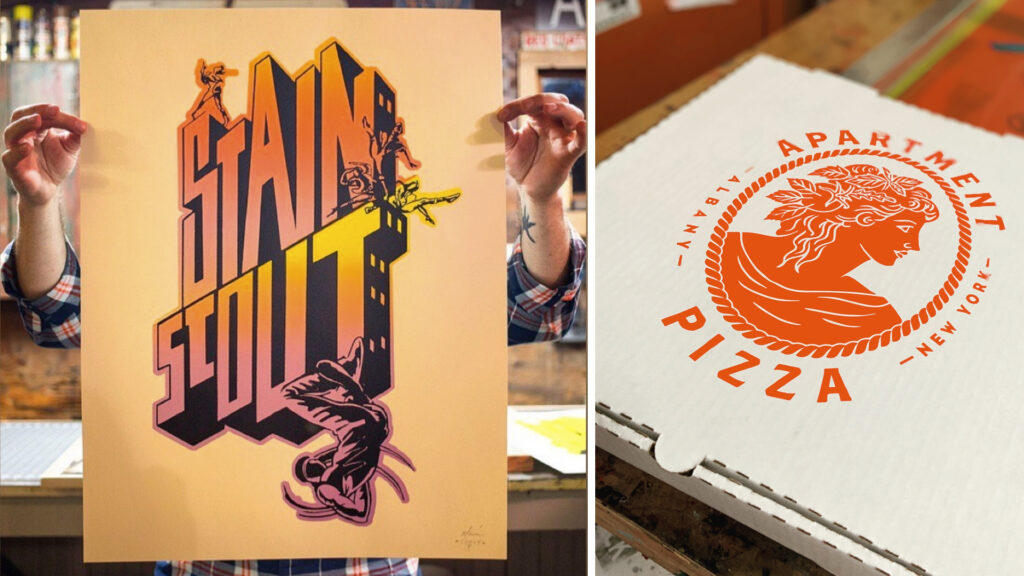
After work, needing to keep doing something creative, I fell back on something that was a full-blown necessity when playing in a DIY band – screen printing – learning everything I could from books and online videos. I started releasing prints under the banner of Pepper Spray Press, where I’ve been fortunate to work with legends such as Daniel Johnston, Dave Navarro, Laura Albert (the author behind JT LeRoy), Al Diaz (former artistic partner to Jean Michael Basquiat), and many others. The more I fell in love with printmaking, the more I wanted to share the amazing skill with others. The idea of a community print shop and art space formed.

Capital Federation of Ideas, POINT5 | Image: Flickr
Capital District Federation of Ideas | Image: Flickr

It sounds like you were on a strong path to full time freelance, self directed work and then…you ended up getting a full time gig. Can you talk about the decision to go that direction?

After graduating from St. Rose, I had what I thought at the time was the perfect job: I was the Assistant Manager for a local bookstore for many years. It allowed me to have a steady income while also taking off any time I needed for shows or tours. After work, I would record bands in my home studio, or work on various video projects. It was also at this time that the non-profit formed Capital District Federation of Ideas that had a performance space on Madison Ave called Point Five. Unfortunately, the people running it, myself included, really didn’t know what we were doing. We were young and passionate, but that’s about all we had going. After about two years worth of amazing events and programming, we decided to close shop. We had ended up spending so much time and energy on keeping the lights on that it felt like we weren’t making any progress towards our stated mission. After it ended, I was so burnt out and disillusioned that I decided I needed to try something more stable, which is when I entered corporate America.

Capital District Federation of Ideas, POINT5 Performance with Early Swamp Baby (?) | Image: Flickr

Your passionate about your current side project. Printing, music and deep community integration. Can you tell use more about what drives you in this area and what you have been up to? I believe you are currently in the old Stage 1 space of the Albany Barn…

Whenever I’m passionate about something, I want to share it with the world, and teaching someone how to print is about the most satisfying thing I’ve ever done. I’ve also always been acutely aware of access and privilege and how it shapes opportunity. If I wasn’t fortunate enough to go to college and get a stable job, I would never have been able to afford the equipment to print, and a house to print in. Printmaking is such an amazing tool, both for artistic expression AND commercial possibilities, and I want to give more people access because as it stands now, if you don’t go to college for printmaking or don’t have the resources to do it yourself, you’ll likely never have the opportunity.

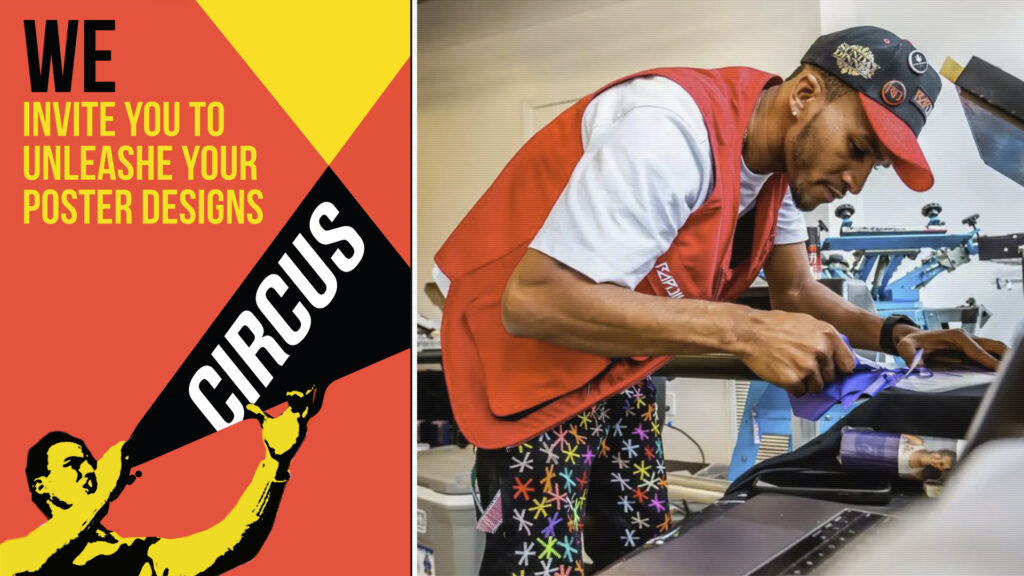
CIRCUS | Image: Provided

A couple of years ago, when this idea first began marinating in my head, I began purchasing the needed equipment. During that time, I was contacted by the family of local artist Steve Hazzard. He was a lifelong print maker, but he learned his trade back when dangerous chemicals were necessary to print, and those chemicals had made him sick to the point where he could no longer print. “Would you have any use for his old press?” he asked. The press was gorgeous and expensive, and if I could move it, it could be mine. I was so blown away by his generosity, and I had to share their gift with others. This was the big spark that set me off on this journey.

CIRCUS | Image: Provided

What is your long term vision for this project and why do you think its important?

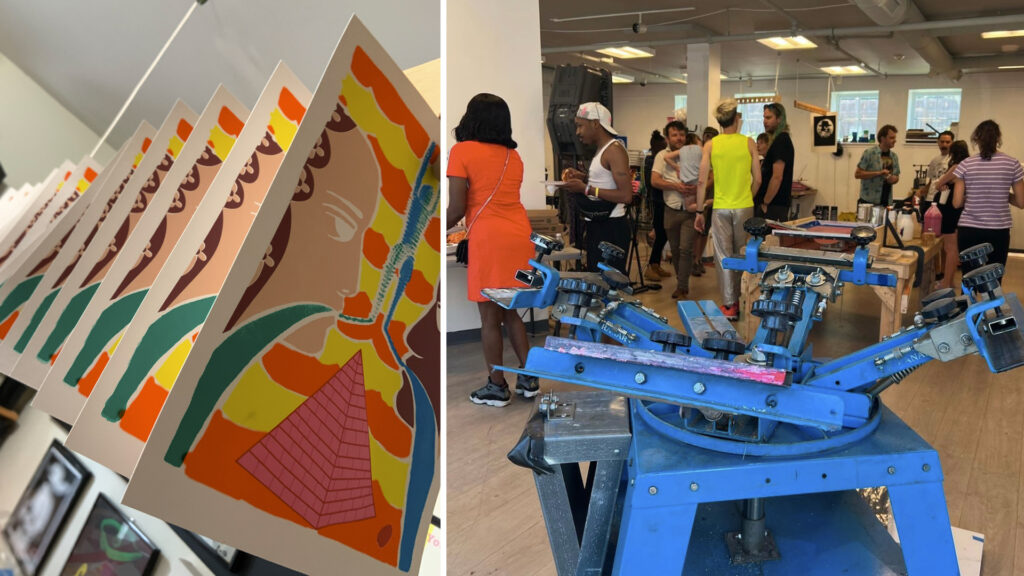
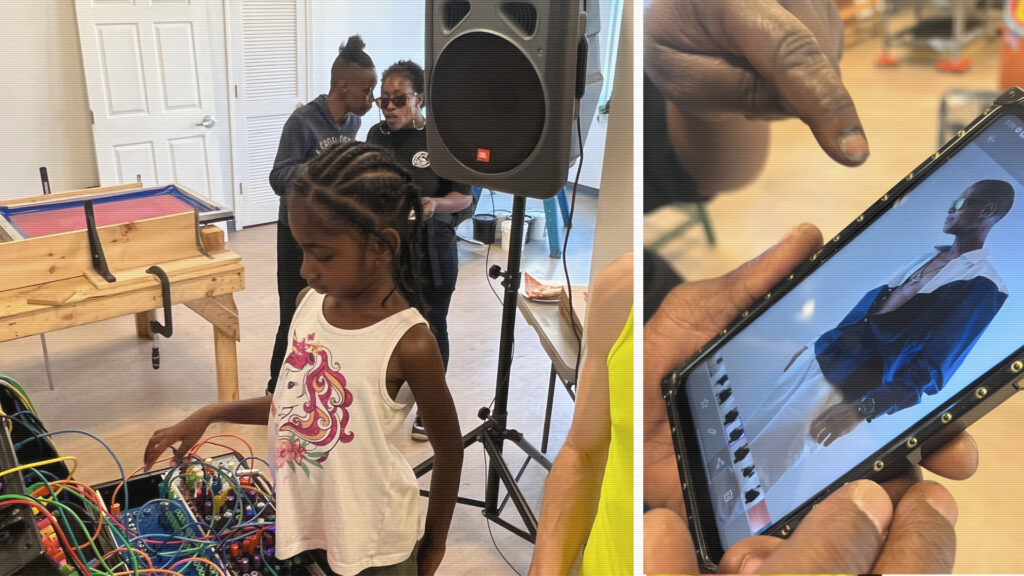
I envision this space as something for everyone. A place for young students to dip their toes into printmaking BEFORE having to decide if it’s something they want to study in college. A place where studied print makers can apply their craft. (surprisingly, or maybe unsurprisingly, many who go to college for printmaking can’t afford the equipment or space to print). It’s a place where kids from a tough neighborhood can come in and print their own shirts, start their own fashion labels. It’s a place where film photography is still preferred over jpegs. It’s a place where hip-hop open mics and poetry readings can coexist. It’s a place for after-school programs. It’s a place where someone can learn to print without worrying about the judgement of others. It’s a place where I can print pizza boxes for local ghost kitchens to give them a leg up on their competition. I really envision the space as THE hub for local DIY-ers.

Print Making Examples | Image: Provided
CIRCUS Print Making | Image: Provided

Recently, you were notified that you would need to find a new space for the print facilities. Can you share with us what you current situation is and what it is that you are ideally looking for as you transition out of this space and neighborhood?

Originally, the Albany Barn heard about my idea and wanted to help. They provided me with their old gallery space in Arbor Hill, formerly called Stage One. In exchange, I would pay the utilities and teach printmaking at their Schenectady location a couple of times a month. I really felt like it was the perfect space. Perfect size, perfect neighborhood for what I want to accomplish. Unfortunately, the Barn doesn’t own the space – the Albany Housing Authority does, and about a month after we had our grand opening, we were told that the AHA wanted the space back. I am not quite sure of the details or what happened. So…we are without a space. All of the equipment is still there, but I’m unable to use it, and they want it moved out by end of month (Thursday, 02.29).

Learning and Creating at CIRCUS | Image: Provided
CIRCUS Jam Session | Image: Provided

I’ve spent the past couple of months meeting with community leaders, artists, and local businesses, trying to figure out our next step. Everyone I’ve spoken to has been sympathetic, and some have even offered space, but for one reason or another, they wouldn’t work. A couple of examples – the Albany Community Investment Trust really liked our proposal, and their space in the south end (The Coliseum) is both promising and ideal, but they’re about to start new construction that would put us out at least a year. The Social Justice Center in Albany seems like a good match on paper, and they would be more than happy to have us occupy their second floor, but because of ADA restrictions, our ability to hold public events would be very limited. So as it stands now, we are still in need of a space.

EDITORS CHALLENGE: Have any location ideas or collaboration opportunities for Bryan? This feels like a great fit as a satellite location for an existing mission oriented / Not for Profit looking to expand it’s footprint outside city center. Hit him at the Circus website.

CIRCUS Neighborhood Shop Talk | Image: Provided

All the Good, All the Time : at Made X Hudson : Sustainability is More Than Just Fashionable

January 31, 2024 By Corey Aldrich

I met Trixie of Trixie’s List fame outside of Club Helsinki in Hudson, NY. It was part of a quick promotional shoot for ‘Wish You Were Hear,’ a covid pandemic live broadcast music series that I was co-producing with Ryder Cooley of the Dust Bowl Faeries. Since then, I have been on Trixie’s mailing list and recently came across this great article by Ben Rendich that I wanted to share with ACE! subscribers…very cool things are afoot in the sustainable fashion scene in Catskill…as you shall see.

EDITORS NOTE: Original article was published in December so you will notice a mention of the holidays.

Made in Hudson in downtown Catskill New York | Image: Provided

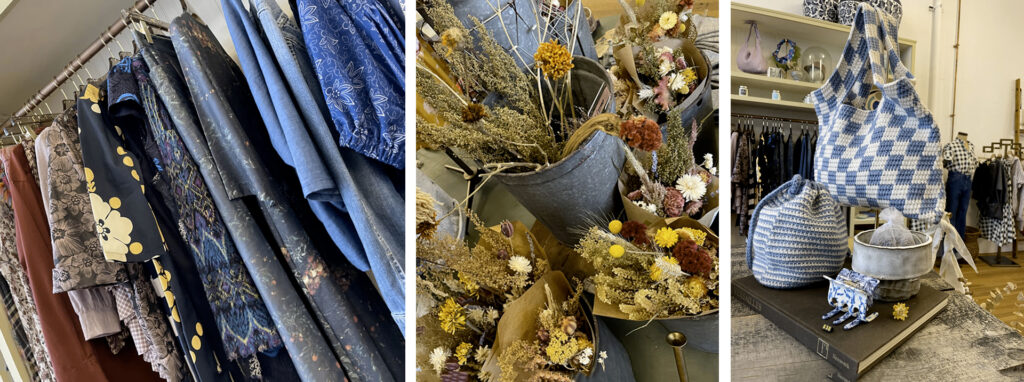
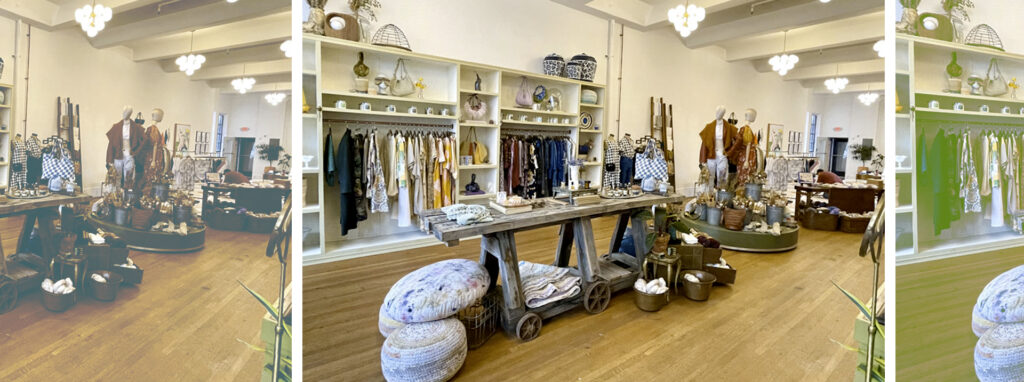
For anyone in search of a last-minute holiday gift, try swinging by Made X Hudson – the full service design atelier headquartered on Main Street in Catskill. From their own branded clothing (produced in-house by a team of skilled seamsters) to beauty and pantry items from a roster of Hudson Valley makers, everything in the store bespeaks local quality.

In addition, Made X Hudson offers a variety of ongoing events and unique services, including sewing classes, knitting circles, Pilates, garment alterations, and even custom clothing.

“We do so many different things, it’s kind of bonkers,” says Sergio Guadarrama, co-founder and the gentleman who helms all of Made X’s creative decision-making.

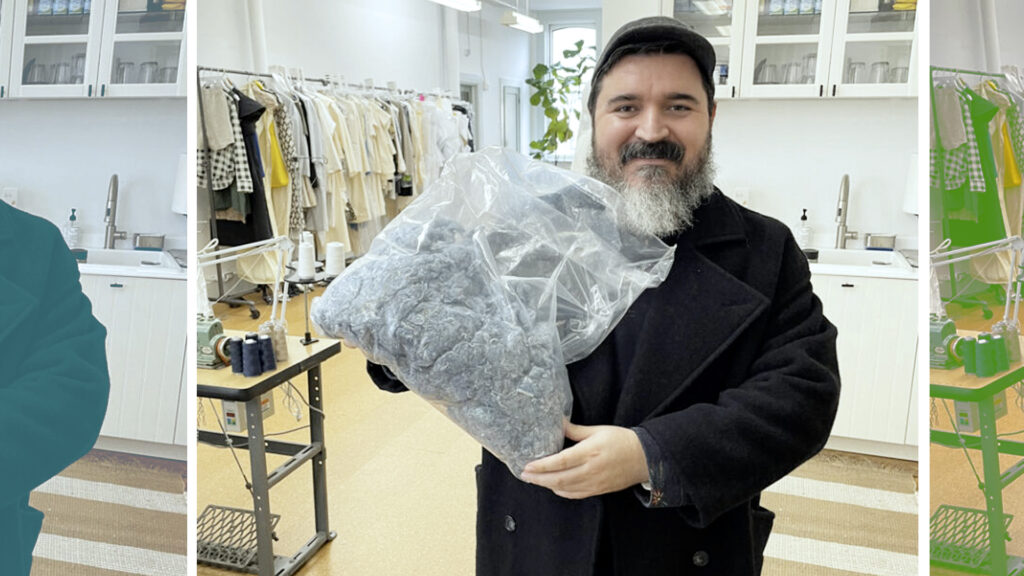
Co-founder at Made X Hudson, Sergio Guadarrama Poses with a Bag of Pre-Spun Wool
Image: Provided

“We’ve done a lot in two years,” agrees Eric De Feo, who manages the business side of things. “We don’t sleep much. It’s 24/7 work.”

Eric is founder and director of the Hudson Community Incubator, an organization devoted to fostering sustainable businesses in the city. It was through this organization that he met Sergio, who’d moved to the area and wanted to open a garment factory.

“It was the peak of the pandemic at that time,” says Eric, “and a lot of factories were struggling. A lot of designers were moving up from the city as well.”

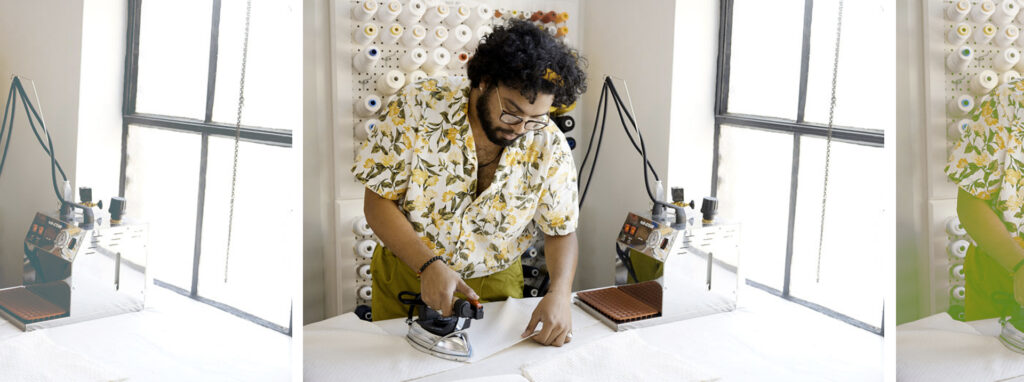
A Made X Employee Works on One of the Store’s in House Creations | Made X Hudson Offers a Variety of Services, Including Garment Alterations | Image: Shannon Greer

The duo hatched their plan in Hudson; they just couldn’t afford any real estate. “We started in a little barn in Leeds with two sewing machines,” remembers Eric. “As soon as we opened our doors, we had orders to create products – from day one.”

Eventually, they allocated enough resources to open their Catskill factory in November 2021, followed by an adjoining shop in March of this year. They opened their Hudson shop this past September.

Sergio has been in the industry for over twenty years, formerly working in women’s evening wear. “I love making things with my hands,” he says. “I love focusing on sustainability and trying to make the fashion industry as ethical as possible.”

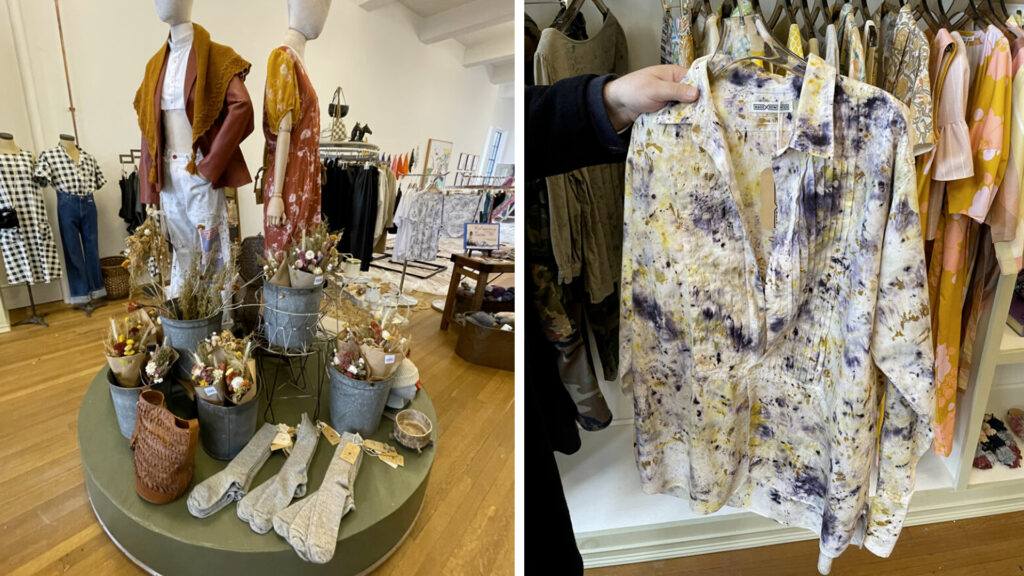
Colorful Racks of Made X Hudson Originals, Dried Flower Bouquets and Locally Made Handbags and Hair Clips are Just Some of the Offerings at Made X Hudson | Image: Provided
Made X Hudson is a Full Service Design Atelier Based in Catskill, New York | Image: Provided

His familiarity with the less-than equitable practices of other companies has aided in the creation of a factory that, as he puts it, “encompasses all the good.” The objective at Made X Hudson is to put employees first, and to bring manufacturing back to the community. This entails working in the “old style,” where workers are viewed as an investment, not an expenditure.

“You can overhear the banter,” Eric points out, referring to the conversation that’s drifting into the office where we’re conducting our interview. “Usually that’s not allowed in other factories.”

Made X Hudson employees are all folks based in Hudson, Catskill, and Saugerties; their workroom is on the second floor of the Catskill shop. “We have a fabulous team,” says Sergio. “No one is coming in with much factory experience, because many factories have been shuttering over the last few decades. So everybody’s being trained up – usually from some basic, home-sewing experience.”

“That’s why we opened up our retail shops,” he continues. “To subsidize our training and factory work so that we don’t have to create an environment that’s top-down… [It] enables us to have a more enjoyable work environment.”

Steaming Fabric at Made X Hudson | Image: Shannon Greer

This empowered mindset is echoed in Made X’s inventory as well. Most of the products in their shops originate from Hudson Valley artisans – including Brosgé, a Schenectady-based brand of eco-friendly clothing for plus-sized people; MLE, Saugerties designer Emily Li Mandri’s line of handbags, hair clips and other accessories; and Dunia, a Croatian-American designer who curates Made X’s jewelry selection.

Sergio says that this maker-to-store supply chain is yet another means of fostering sustainability. “When you spend money in stores that are selling products made in other locations, you’re sending money away from your own community. What we’re doing leads to a circular economy.”

A Display at Made X Hudson’s Catskill Store | Upcycled Vintage Piece | Image: Provided

Made X Hudson runs the gamut of price points so that everyone can participate in sustainability.

To that end, Made X Hudson is also involved in spearheading a New York State grant initiative that will create a self-sufficient, regional clothing industry, from seed to finished product. “We were selected alongside RPI and FIT to build a fashion innovation center,” says Eric, “which is going to focus on farm-to-fiber products, lab-grown textiles, and also work to promote a New York sustainable supply chain.”

In the meantime, Made X Hudson runs a popular quarterly clothing swap, where for $15 you can bring as many items and take as many items as you want. “You can get a full wardrobe for fifteen bucks,” quips Sergio. And while at the store, swappers can pick up one or two of Made X’s upcycled, vintage pieces, which are sold at entry-level prices alongside their in-house products.

Co-founder Eric De Feo in Made X Hudson Chore Jacket | Image: Eric De Feo

“We run the gamut of price points so that everyone can participate in sustainability.”

Their Catskill location recently featured the team’s first gallery show, showcasing works by Woodstock based photographer Chase Pierson, and every weekend, Atelier Kuki serves farm-to-table, gourmet Japanese bento and desserts from 12-6pm.

“It’s all a lot of fun,” says Sergio. “And it feels like we’re helping people, too.”

You can check out all of Made X Hudson’s services and upcoming events at their website : madexhudson.com


Ben Rendich is a filmmaker and writer. He’s in pre-production on his first feature, and has a blog where he writes movie reviews and essays called Reflections on a Silver Screen. He lives in Catskill.

This article was reprinted with the permission of Trixie’s List where it was originally posted.

  • « Go to Previous Page
  • Page 1
  • Page 2
  • Page 3
  • Page 4
  • Interim pages omitted …
  • Page 6
  • Go to Next Page »

Creative Economy Updates and Other Good Stuff!

STAY CONNECTED!

  • Facebook
  • Instagram
  • Twitter
Copyright © 2020 THE UPSTATE ALLIANCE FOR THE CREATIVE ECONOMY

info@upstatecreative.org | 41 State Street, Albany, NY 12207

Design by Reach Creative