• Skip to primary navigation
  • Skip to main content

ACE

Upstate Alliance for the Creative Economy

  • HOME
  • ABOUT
  • NEWSLETTER
  • SUBSCRIBE
  • JOBS
  • Show Search
Hide Search

Uncategorized

SPECIAL FEATURE : MENTAL HEALTH Tolerating Cognitive Dissonance

March 2, 2026 By Corey Aldrich

Improving Your Resilience and Relationships in an Unstable Paradigm
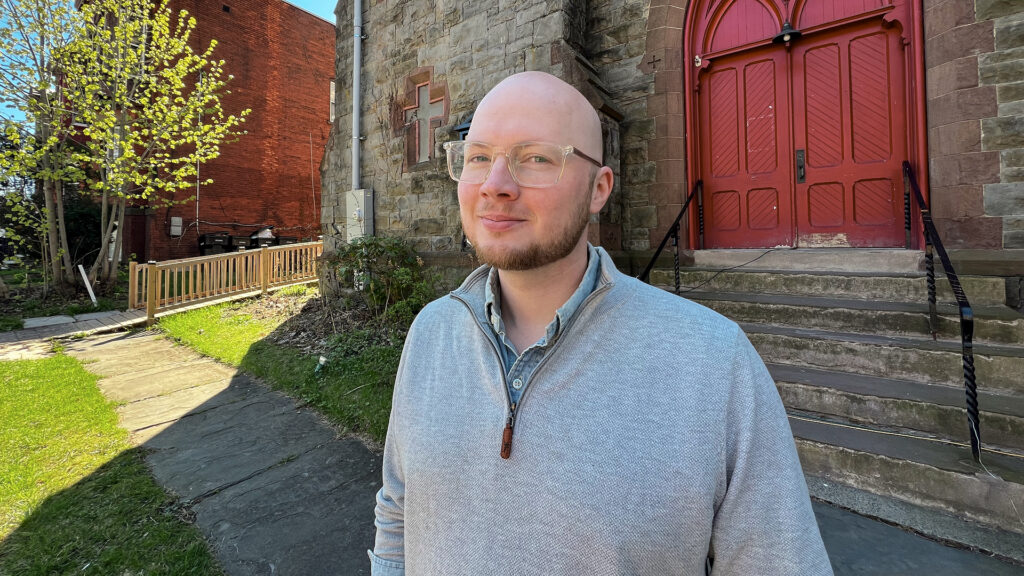
Guest Contributor: Rebecca (Giel) Santosuosso MHC-LP; BFA, BA, MS is a Mental Health Counselor. Additionally, Rebecca holds a Bachelor of Arts from SUNY Albany.

Rebecca (Giel) Santosuosso – MHC-LP,MS, BA, BFA | Image: Provided

Today, in order to survive in our without becoming an extremist, falling for propaganda, or falling victim to the impulse to completely isolate oneself; one must gather and implore a very specific set of skills. We talk about critical thinking skills, communication skills, skills for self care and community building, but we don’t often talk about that skill of tolerating cognitive dissonance.

For those unfamiliar with the term, cognitive dissonance is the feeling of discomfort that comes while holding two conflicting thoughts or beliefs simultaneously. Our ability to tolerate such discomfort directly impacts our ability to understand nuance, and to avoid the trap of black and white thinking. Examples could include the simultaneous understanding “I am a good person, who tries to do the right thing” and “I did the wrong thing and hurt someone I care for.” Our instinct is so often to defend ourselves, especially our egos, and deny that both these truths can exist at once. We may instead reason that what we did was not wrong, but instead misunderstood, or that maybe this mistake does indeed mean we are bad, and that there is no point in attempting repair. Both strategies, in the end, find us equally self-defeated.

Image: Corey Aldrich

Another example could be found in the recent public death of a celebrity beloved by many. The two beliefs may be “Their murder is a tragedy” and “Their rhetoric was harmful to a lot of people.” If the former is true then one should only believe they were good, in order to honor their memory. But, if the latter is true, one might feel quite conflicted in their grief. In reality, both can be true. You do feel sadness and horror, and they did say things that hurt many people and proliferated hate. If you are unable to hold these thoughts simultaneously you will either drown in self-loathing for mourning a problematic person, or you will shield your eyes from all evidence contrary to your admiration – putting yourself in danger of living a lie. This lie becomes dangerous as it separates you from a complex reality and distances you from the greater community around you. You may begin to feel you can only relate to people who see things just the way you do.

A third example might have to do with the tense family relations that this aforementioned political climate has created. You might be saddled with the conflicting simultaneous beliefs that you love your family member and feel deeply betrayed and saddened by the positions they’ve chosen to take. Maybe you feel conflicted even in loving them. It’s possible you don’t know how to hold love and anger at the same time. If you hold only the anger you will lose the loved one, and if you only hold the love, you will betray yourself, suppressing your very valid emotions, values and beliefs. Both outcomes are painful. Thankfully, both are avoidable.

Image: Corey Aldrich

The ability to tolerate cognitive dissonance, like so many skills, requires intentional practice in order to master. You must be able to notice when your thoughts or beliefs conflict, choose to closely examine the ways in which they butt against one another, and sit with the emotions such an impact gives rise to in you. Tolerating two truths requires an expansion of the mind, as well as the heart. The ability to do so allows us to be more grounded in reality, more flexible in our tolerance of other perspectives, more stable in our belief systems, and more loving in general. Without this ability we are more susceptible to influence, more prone to extreme emotions like rage and fear, and more likely to find ourselves isolated in an echo chamber of our own creation.

Ways to engage with cognitive dissonance today may be in a journal or with a trusted friend. Find in yourself two beliefs which directly conflict and find a way to allow both to be true. Let them each occupy your mind and your body equally and simultaneously. I promise you will be better for it.

ArtsNYS UPDATE | State of the State: Budget Edition

March 2, 2026 By Corey Aldrich

Elizabeth Lane – Executive Director at ArtsNYS | Image: Provided

New York State is in the heart of budget season. The Governor has proposed a largely steady overall spending plan, with a major watch item: the Financial Plan assumes roughly a 10% drop in federal receipts.

At the same time, the Executive Budget is proposing a ~35.2% cut to the New York State Council on the Arts (NYSCA) budget compared to the FY26 Enacted budget. Of noter, this is on par with the Executive Recommendation from last year as well.

That makes this next phase especially important, because it’s where each branch of the Legislature responds to the Executive Budget by releasing its own budget recommendations to get to a One-House Budget. This all is supposed to happen before April 1, the start of the 2027 State Fiscal Year.

Our main focus right now is securing increased statewide investment in NYSCA at $210 Million, a 26.8% increase from FY26 Enacted budget. This includes:

$100M Aid to Localities (NYSCA’s Primary Grantmaking : Support for Organizations, Support for Individuals, Statewide Community Regrants, and more)

$100M Arts & Cultural Facilities Improvement Program (ACFIP) – NYSCA’s Capital Grants Program

$10M Stabilization – NYSCA/NYFA Reserve Grant Program

The $210M ask does not include an additional ~$8M for NYSCA operations.

The nitty gritty numbers:

WHAT YOU CAN DO NOW!

  1. SAVE THE DATE: Arts Rally in Albany : Tuesday, March 24
    New Yorkers for Culture & Arts, Senator José M. Serrano, and statewide partners including ArtsNYS and a myriad of others are planning an arts and culture rally to support arts funding and arts education at the Capital on Tuesday, March 24 (details and exact timing coming soon). (EDITORS NOTE: Keep an eye out for a special ACE! Newsletter update with more details)
  2. Talk to or Meet with Your Legislators and the Governor’s Office about the NYSCA $210M ask. Plus, later this week, ArtsNYS will share a customizable form letter that you can personalize and send directly to your State Senator, Assemblymember, and the Governor.
  3. Arts Education Codification Bill Support:
    We are supporting legislation to require instruction in arts and music education to be incorporated into curriculums for all public school students. S.6318A / A.6490B. Please CHECK whether your Senator and Assemblymember are sponsors. If not, ask them to sign on!
  4. Other Legislation We’re Tracking
    We’re monitoring bills related to workforce development, cultural districts, nonprofit sustainability, and the broader creative economy. Check Out our BILL TRACKER.

STAY CONNECTED
If there are emerging challenges or opportunities in the Capital Region’s Creative Economy that we should be lifting up, please tell us. ArtsNYS’s advocacy priorities are shaped by local input.

To reach us: CONTACT ArtsNYS

Thanks for showing up for the Capital Region and for New York’s Creative Economy!

WEB: artsnys.org

Kyra D. Gaunt PhD is Unapologetically Pushing Back and Taking Space

October 8, 2025 By Corey Aldrich

I recently attended an event hosted by the The New York Writers Institute with author Keach Hagey regarding her recent book on Sam Altman, The Optimist. Though I am not convinced of Sam’s motives I was pleasantly surprised at a post event dinner (that Paul Grandal and Elisabeth Gray were kind enough to include me in), to meet SUNY Albany’s AI and Society Fellow Kyra D. Gaunt PhD. Her perspectives on the AI tool set, her research on specific biases in the music industry, and in the roots of culturally driven video editing practices intrigued me so, I just had to find out more about this dynamic personality and pick her brain about the universe of things she has poured herself into.

Kyra D. Gaunt, PhD : University at Albany, SUNY | Image: Provided

Please state your name, current position(s) / organization(s). Can you also give us a bit of your educational background and personal path as well?

My name is Kyra D. Gaunt, PhD. I am an Associate Professor of Ethnomusicology in Music, Women’s, Gender, and Sexuality Studies (WGSS), and Sociology.

Going to a community college, I never expected to become a professor. I am a proud graduate of the University of Michigan in Ann Arbor, where I received my PhD in ethnomusicology specializing in black girlhood studies and hip hop as music. All of my previous degrees are in classical voice. I started pursuing a Doctorate of Musical Arts while studying with the famed tenor, George Shirley. I am a singer, songwriter and jazz improvisational vocalist. I released an album in 2007 titled Be the True Revolution, named after a line from the poem When I Die (1970) by Nikki Giovanni.

I’m originally from Rockville Maryland from a community founded in 1891 called Linkin Park. My great great grandfather was a freedom seeker from Portsmouth, Virginia, escaping the free labor slavery camps in 1855. He changed his name from Robert Irving to Sheridan Ford and landed in Springfield, Massachusetts where my grandfather and his two brothers were from before they moved to the DC Maryland area. My great great grandmother also escaped from enslavement dressed as a man around the same time and migrated to Springfield, Massachusetts as well.

I only learned this in 2014 cause it’s the kind of knowledge that isn’t passed down by word of mouth in most African-American families. So my ancestors trace their history back nine generations: see here.

You can find more information about my work on the TED Fellows Blog.

Kyra D. Gaunt, PhD : University at Albany, SUNY | Image: Provided

You have so much going on! Its hard to pick where to focus. That said, one of the areas that I have interest in is your writing. Can you talk a bit about that and how you came to be published? Are you still active as a writer?

When I was still young and naïve (a fledgling 19!), I had my diary invaded by my mother‘s boyfriend at the very moment I was coming-of-age sexually. I’ve never shared this publicly, but it’s what inspires my current research project for a book that will come out next year titled PLAYED: How Music, Mutes and Monetizes Black Girls on YouTube.

I suffered 20 years of stage fright. My love language became procrastination! (lol) Writers block of one form or another followed. I thought academia wasn’t for me and left to get my MRS Degree. After a 5 year adjunct with TED I ended up landing here at University at Albany.

What has helped me find my voice has been my art and my artistry, my exploration of being true to the ancestral voice inside me that loves to sing and dance. Be silly and to teach others to free their voice. The root of my trauma has been emotional manipulation, so my work is often about that from research to teaching. If you ask me what I do as a teacher, I tell people that I teach emerging adults to own their own greatness, and their intellectual, emotional and social fitness.

Kyra D. Gaunt, PhD : University at Albany, SUNY | Image: Provided

One of the areas you explore as an ethnomusicalogist and professor is music videos on youtube, specifically in the area of black girlhood and musical blackness. You cover a number of areas but one was of specific interest to me. Can you share a bit about what ‘supercuts‘ are and maybe elaborate on that as a feminist practice that has a genesis that has been largely overlooked historically, and why it matters? Also, do you see a larger meaning or influence of this style of editing specifically in our current, larger cultural and political context as a communications style / tool?

I have a featured Vlog on my YouTube channel about the history of ‘supercuts.’ Most people don’t know that the vidding community of girls and women, invented the idea of ‘supercuts’ something that has taken over video culture since 2007. Vidding is when amateur content creators remix clips from their favorite songs and television shows together into an emotional narrative. It’s an underground scene that’s over 40 years in the making. As frequently is the case, the contributions of the most marginalized communities gets co-opted or gentrified by mainstream entities for profit, and the real influencers are left behind. The vidding community was primarily white and Latina. I’ve tried in my collaborative research with undergrads to change that. I prioritize emotional and effective labor with my students, who are emerging adults. In academia we focus a lot on STEM and book knowledge but not on helping students learn to have greater empathy for themselves and others. When we do that, we have more empathy for black girls and brown girls and disabled girls and other marginalized girls whose lives are often not represented by headlines about the harms of social media that have been in the news the last few years, even to the point of leading to congressional hearings. The black girl is the most disrespected user in the precarious and unregulated spaces of online content creation for kids and youth.

The aesthetic found in the female vidding community are similar aesthetics to most communities, but particularly the African aesthetic found from remix culture to dub culture and music. I argue with my first book that these aesthetics come from black girls game songs from hand club, games cheers and double dutch jump rope play. It’s the musicianship of gaming that is the hidden obvious as we like to say as ethnographers.

Still from TED TALK by Kyra D. Gaunt, PhD : University at Albany, SUNY | Image: Provided

You are also an ‘AI and Society’ Fellow at SUNY Albany. When we met, you had an interesting perspective on AI and how educators should consider approaching the tool with regards to student use…care to revisit that?

I found a new home thanks to Elizabeth Gray in the AI & Society Research Center at University at Albany. Most people on campus are pretty conservative about technology because our infrastructure really doesn’t help us explore new media and new emerging technologies. I recently spent two weeks writing a proposal for a Guggenheim fellowship in which I explore how the nonverbal sonic aspects of musical blackness cannot be read by AI’s large language models (LLM).

‘They tend to be text and visual based, but even when they do and code voice like Siri or Alexa, how do they translate in eyes and oops of African musical aesthetics?‘

I transcribed that last sentence by audio and you see what it produced. Let me transcribe that with human ingenuity: How does AI translate the aahs, the umms, the James Brown screams and field hollers, the Cardi B rolled kitten r’s or the moans from spirituals to jazz without a micro archive to develop systems of artificial intelligence consistent with ways of thinking, feeling, believing and behaving that are not from the term forms of knowledge associated with WEIRD nations (White, English Speaking, Industrialized, Rich Democracies).

I want to study with what Legacy Russell calls Glitch Feminism. The ghosts in the machine of artificial intelligence, the missing links, the faux pas that signal that you can’t read blackness. It begs the question: Does AI have any black and female friends? Like the old saying goes, ‘there’s truth in jest.’ Unless we have more ethnomusicologists interpreting non-western cultures in LLMs, more of us doing work with supercomputers like what’s available at the University at Albany, and having those systems made available to scholars like me – – a black women, brown women, people with disabilities, neurodivergents – the true revolution will be lost and left to only the most privileged in WEIRD Nations as we move into the age of post human AI intelligence. We are inhabiting the world that Octavia Butler imagined in ‘Parable of the Sower’. And I for one, will will do my best not to let that happen. I may be 63 years old and not considered somebody who is interested in new technology just because of my age. But my wisdom and ancestors who speak through me have so much more to offer than many of my students at a public university who have not been educated to trust their own thinking, take liberties and have compassion for people who are ‘not like us.’ (to riff off last summers Kendrick Lamar hit)

Presentation Board with Kyra D. Gaunt, PhD : University at Albany, SUNY | Image: Provided

In 2018 you had a TED video called “How the Jump Rope Got Its Rhythm” that has a total of over 7M views with translations in 29 languages. While covering the history of jumping rope and its importance as a tool of young female identity you also discussed how that playground practice then moved on to influence popular culture, specifically with black artists. Care to share a bit about this? I was intrigued by the concept of ‘Kinetic Orality‘ as a tool for memory. Please elaborate!

Kinetic orality and aurality is our first technology, both musical and otherwise. Hearing is the first sensory cognitive organ to develop in the womb. Nonverbal communication is our first language, it’s why in my opinion you should teach kids sign language before they can speak. There’s a gene in our DNA that prevents us from being able to say certain things with our tongue until a certain age. It’s just part of human development. However, kids can start to speak before they learn English by using sign language. We communicate all kinds of emotional knowledge and effective information by eye contact, tone, voice, facial expressions, gesture, timing, body posture, intensity, and our reactions to other human beings around us. Neuroscientist Daniel Siegel says that this is how you build an integrated brain in a child or in an adult. How does AI do this without hormones, without all of those factors of an integrated brain so that it can reproduce knowledge that I’d identify as African or African-American in tone, feel, touch and other sensibilities? Not just literate and visual communication?

Kinetic orality lives through the embodied action and percussion in games like telephone that we all remember from childhood. Black girls game songs have that added dimension of rhythmic intricacy and contrast expressed in polyrhythms, complexity and touch. We share hormones that keep us alive through touch, through hugs, through smiles and through laughter. AI doesn’t know how to tell a good black joke is my bet. It doesn’t know how to give sass and clap back to boys and men who think they can turn you into a joke or a punch line, whether it’s the Charlie Kirk‘s or the Drake’s of the world. Whether it’s the bullies or the sexual predators.

Kinetic orality is a term invented by Cornell West from 1989. He called it, the passionate physicality and embodied communication we used to survive and dream of freedom. I call it a technology, our first. Socio-biologists believe that music is our first technology. It’s what let us to walk upright to be able to sing a lullaby to a child swaddled on your back while you’re foraging or hunting. It led to how we language beyond the present to tell stories about the past and the future. Musical tone speech became the languages we all speak. Sets of pops and hisses as neuropsychologist Lera Boroditsky says turns into thousands of different languages among a single human race sharing 99.8% of the same DNA.

Embodied scripts of epigenetic or ancestral memory as behavior becomes part of our learned ways of being musical blackness. The earliest formation of a black popular music culture learned by kids, taught by girls, happens at a very young age; girls are taste makers of Black popular culture but they receive no royalties for them because they are children, they are female and they aren’t literate yet.

Kyra D. Gaunt, PhD : University at Albany, SUNY | Image: Provided

Finally, you also a singer songwriter in the jazz genre. How often do you gig and where can we find some of your music?

Right now I’m writing a memoir which I call a vocal memoir due to the fact that it’s based around several micro stories regarding my teaching after receiving hate mail my first year in the profession back in 1997, pertaining to various dimensions of my song life. A spiritual accompanies a story about why isn’t there a chapter on love in an anthropology textbook. The first song I ever wrote about meeting my dad at age 40 is accompanied by a story about daddy’s and daughters in the black community and the way people talk about deadbeat dads and won’t forgive the human experience. It’s my one woman show called Education Liberation: A Vocal Memoir. The tag is, ‘I know why the caged bird won’t sing.’

I performed it at University at Albany twice. The last time was in 2022. I sit in at a jazz jam sessions when I can, but now that I have arrived at having tenure, I can do more of the things I love. I’ve been cultivating the idea of doing an Albany First Friday event where I sing, tell stories and read poetry in the cozy lounge at the Argus Hotel in downtown Albany…

You can find my CD on all major platforms from iTunes to Spotify. But if you want me to make a few coins, then buy it on CDBaby. I love doing small gigs, parties or celebrations and I’m also a voice over artist. People love the voice that I was born with. I did the last national campaign for Planned Parenthood before Roe v. Wade was overturned. In fact, it was my first voice over gig ever.

Michael C. Clarke Leaves an Established Law Career to Promote Irish American Heritage

June 3, 2025 By Corey Aldrich

I met Michael C. Clarke, Executive Director at the Irish American Heritage Museum, recently at an event and was bowled over by not only his enthusiasm but his career story and how he came to be where he is today. Having decided to leave corporate real estate several years ago to pursue a career in arts and culture, I am always fascinated to find those kindred souls who make the plunge. But I guess for Michael, it is no surprise he ended up where he is…he has music in his soul and a strong connection to his immigrant heritage. Side note, ask him about a recent trip to Ireland where he helped deliver over 60 lambs on his brothers farm, it’s a good one but to long for this piece!

Micheal C Clarke : Performing Musician and Executive Director at the Irish American Heritage Museum
Image: Corey Aldrich

Could you please state your name, organization, position and give us a little bit about your history including educational, experiential and career background.

My name is Michael C. Clarke. I’m the Executive Director of the Irish American Heritage Museum (IAHM) at Quackenbush Square in Albany. I’ve been here for about six months. I’m a recovered lawyer. I left the law after about 30 plus years of practice and was reasonably successful. When I did, I had the intention of landing somewhere in the Irish cultural space. For a little background, I started playing Irish music when I was six years old and loved it. I was raised in a household of two Irish immigrants and had been very involved and aware of Irish culture and history growing up. I paid for college in law school, not by student loans, but by being a full-time musician playing music in New York City in the 1980s.

Micheal gets his first serious instrument at 13 years old | Image: Provided

IAHM is in the former Albany Planetarium location. In addition to a permanent exhibit including objects and artifacts of historical note, including a actual life sized cottage, there is a beautifully intimate 60 seat venue with a dome ceiling set up like a living room performance space. People come in and they sit down as if they’re at a friends home with the main difference being that there are stars shining up above while they listen to traditional and folk Irish music. We have an intensive program of music here and it’s filling up with internationally recognized artists. Additionally, we have a gallery space that currently has an amazing collection of canvases by painter Kevin McKrells, who is mainly known for his musical pursuits, first as a founding member of Celtic Folk band Donnybrook Fair and his current band, the Celtic Bluegrass band The McKrells.

Current Exhibit ‘Old Men in Hats’ at the Irish American Heritage Museum : Paintings by Kevin McKrell
Image: Corey Aldrich

What is the mission of the organization?

The mission of the organization is to educate. It’s to raise awareness in folks of the richness of Irish culture and art. My job is to curate shows, lectures, performances and exhibits that teach and expose our community to the impact of the Irish on America.

Irish American Heritage Museum Performance Space | Image: Provided

What artists have you had come through? Maybe you could elaborate a bit about that part of the program.

So we’ve had the Irish duo Ivan Goff and Katie Linane, who are internationally known for performing the Uilleann pipes, which is the Irish bagpipes in addition to the elbow pipes and fiddle. Last week we had Gerry O’Connor, who tours the EU and the United States constantly as an international recording artist. He has written books and he teaches at Celtic and traditional Irish music festivals around the globe. We had a band called Open the Door for Three. They are famous in the traditional Irish music and folk scene. They were performing in Buffalo and Maine and reached out to me and asked if they could perform in Albany on the way back through. So many people want to come because of the intimate nature of the venue which is perfect for this style of music. Albany is kind of a strategic stopover for them. I’ve been blessed in the six months that I’ve been here to be able to have this great pool of talent to choose from and only see that expanding over time. Oh one more…I am really excited to announce that later this year we have Kevin Burke who is one of the early members of the world-renowned Bothy Band and later the founder of Irish super-group Patrick Street, who will be performing on September 8th.

Irish Immigrant Objects at the Irish American Heritage Museum | Image: Corey Aldrich

Beyond the music, you said you had a connection with some genealogical research as well?

We have an in house genealogist! Lisa Walsh Dougherty has nearly 20 years experience helping people discover the specifics about their Irish roots. She is fantastic as far as sitting down with folks and is available on a regular basis. One of the scheduled times she comes in is before an open Irish jam style music event we sponsor called the ‘Traditional Music Sessions.’ These are held on the second and fourth Wednesday of every month at the museum. They start at 7:00 PM and we typically will have anywhere from 8 to 12 musicians from the community, who are very good at what they do, sitting around a table jamming out / performing together. Admission is free and the event is open to the public. Lisa comes in an hour before so anybody who wants to come early to do some family history research are able to do so.

Irish American Heritage Museum : Traditional Music Sessions Series | Image: Provided

Anything you can tell us about your midterm or long-term plans that you’d like to share?

I’m a very visual person. The reason why I am where I am today is because three years ago I was like, “What does a photograph of me look like three years from now?” I saw myself exactly where I am. Involved in Irish Cultural and Arts promotion and being a proponent for that.

To fast forward, the photograph of the museum and me three years from now is one where we are encouraging a new generation to embrace their heritage of Irish music, culture, dance and in general creating an overall appreciation of Irish immigration’s impact on America in the community at large. I am focused on activities involving children. Two areas I am actively looking at right now involve Irish music and dance programming, integrating schools and / or education. We’ve got the perfect space for a teacher to come in and organize recitals for kids and their families…

I recently hired a new Assistant Director, Hayden-Grace Francis, and am looking to integrate her more deeply into the various aspects of running the organizational mission. In addition to having a History Degree from Siena College, Heyden is a Certified Irish Dance Instructor through An Coimisiun le Rinci Gaelacha which adds a nice dimension to some of my aforementioned forward planning. Ultimately, I want this to be family oriented. It’s really about the mission, about getting the message out regarding the impact of Irish traditions, art and culture on American life while keeping them alive in a new generation.

HIstoric Cottage at the Irish American Heritage Museum | Image: Corey Aldrich

If people want to get involved, what’s the best way to do that?

Visit our website at irish-us.org or contact me at 518 . 427 . 1916.

Also, check out some of the events we have coming up later this month!

FIRST FRIDAY ALBANY Event – feat. Live Music with CURRAGH
Jun 6, 2025 | 6:00 PM | FREE SHOW! In collaboration with Metroland NOW!

THE EAST COASTERS – Trad / Folk Series
June 10, 2025 | 7:00 PM | Ticketed Event. Three renowned Irish performers from the eastern US weave together their regional styles in a memorable evening of tunes and songs

2025 Celtic Influences Performance Series: SEA SHANTIES W/SEÁN DAGHER
Jun 19, 2025 | 7:00 PM | Ticketed Event. The Sea Shanty resurgence is real! Join world renowned sea shanty expert and performer Seán Dagher in this full-throated, big fun IAHM evening of singing and learning about the genre!

Meg Mosca : Fashion Forward Design and Alterations in Saratoga Springs, New York

March 20, 2025 By Corey Aldrich

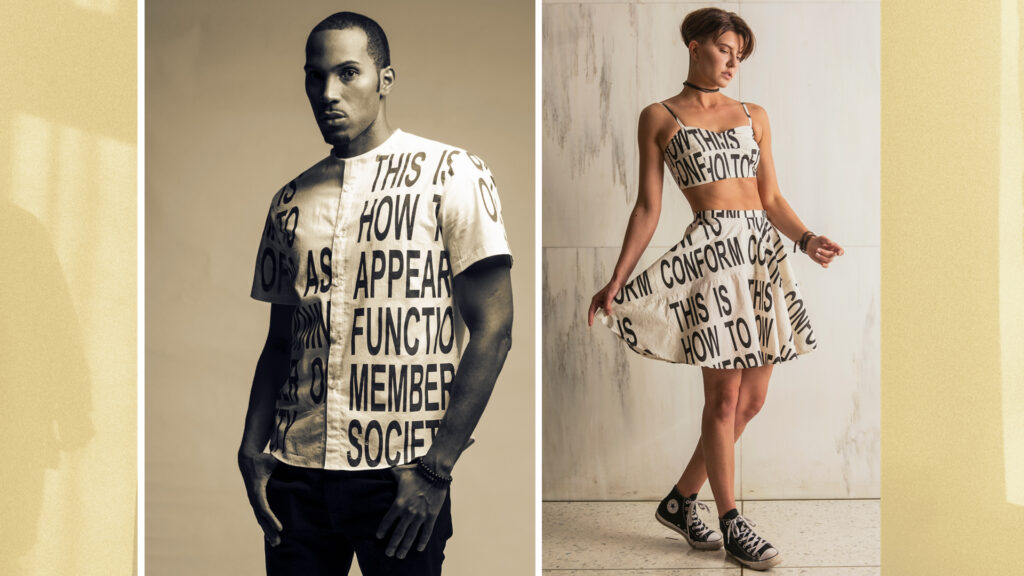
I recently reached out to Meg Mosca about helping out with a project ACE! is participating in this month with the NYS Art Teachers Association. I had worked with her back in 2017 where she participated in a fashion event that I did at the NYS Museum for Electric City Couture called IDENTITY. I was pleasantly surprised to find that she has grown and is now a fashion related entrepreneur working out of Saratoga Springs. Indie / custom fashion is a tough go. This is such a feel good and practical creative economy story, I just had to share. Additionally, who doesn’t need a good seamstress from time to time?!

Meg and Kevin Mosca : Owners at Mosca Alterations in Saratoga Springs, New York | Photo: Alexandra Eigo

Please state your name and title. Can you tell us a little about your educational / experiential background also?

My name is Megan Mosca, and I’m a fashion designer and small business owner. I completed my studies at Hudson Valley Community College before going on to study at the Fashion Institute of Technology. My education and experiences have shaped my approach to both the creative and practical sides of the fashion industry, allowing me to blend my passion for design with the skills necessary to run a business.

Starting at an existing business, WillFitUin in 2017, I eventually bought the business in August 2021.

2017 Electric City Couture IDENTITY Promo Shoot | Designer: Meg Kluball Mosca
Photo: (L) Doug Mitchell (R) Sarah Pezdek

What drew you to fashion and clothes making?

From a young age, I realized that clothing is like a second skin—it’s something I can choose for myself. It’s amazing how clothes can shift depending on your mood, how you want to present yourself to the world, or even how many times you want to change in a day. This realization sparked my interest in fashion. I quickly became fascinated by the power that clothing holds and how it can shape not just our appearance but how we feel and are perceived.

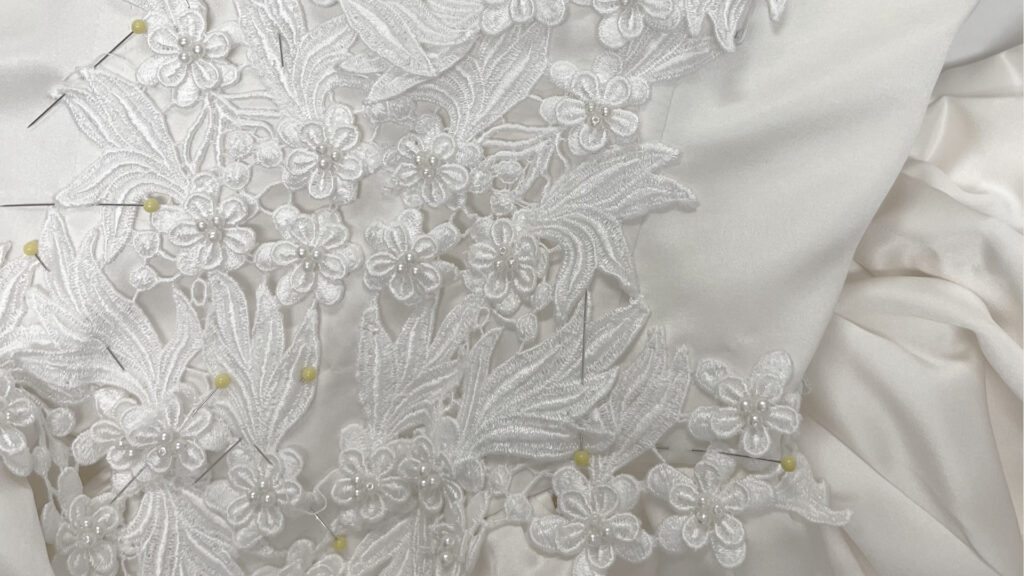
Mosca Alterations in Saratoga Springs, New York : Detail Work in Progress | Photo: Provided

Tell us more about your shop? Can you explain the types of work you do on a regular basis?

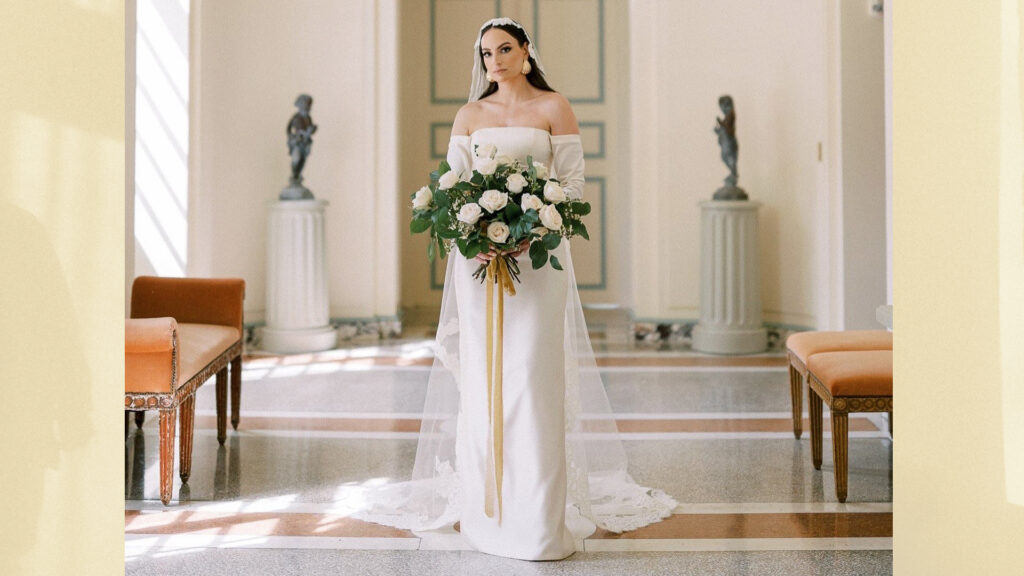
My husband and I own Mosca Alterations in Saratoga Springs, NY, where we specialize in women’s formal wear alterations, with a particular focus on wedding gowns. In addition to alterations, we also offer custom dresses, and we’re expanding into that market more and more. It’s really exciting to work on pieces that have such personal significance, and being a part of making someone’s day even more special is always incredibly rewarding.

Mosca Custom Wedding Dress Design | Photo: Michelle Lang

Are you still experimenting with producing original lines?

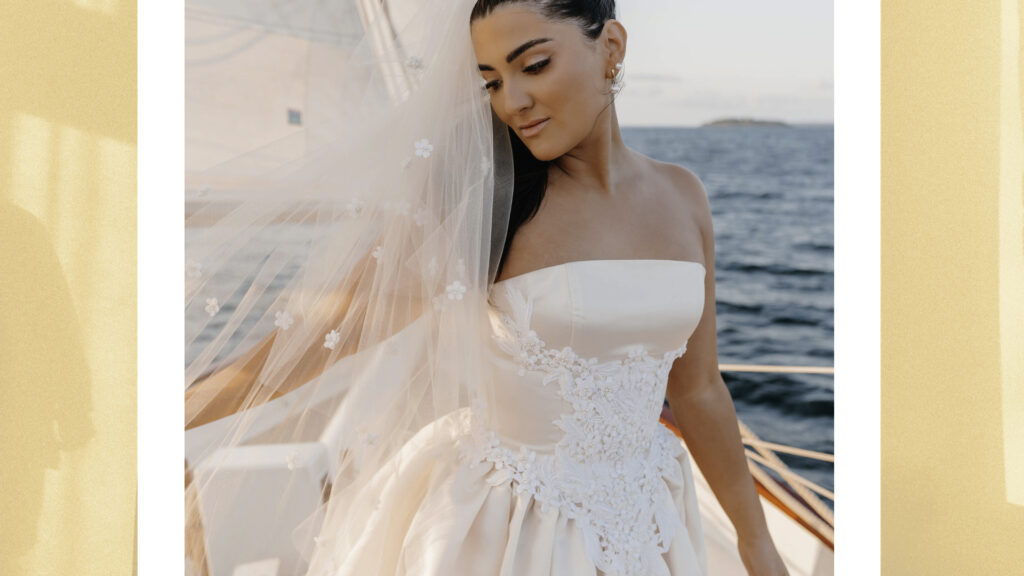
Yes, I’m currently working on developing a line of wedding veils called Opaline. I’m also focused on growing our custom gown offerings. One of the most rewarding parts of my work has been creating custom dresses for clients using vintage pieces, particularly wedding gowns from their families. Reworking these gowns—restoring them and giving them new life—has been such a joy, especially when you get to work with something so sentimental and meaningful.

Mosca Bespoke Garment Crafted From Heirloom Piece | Photo: Nicole Perfetuo

Running a business is a lot of work and a very different headspace from the creative. Can you tell us how you balance it? Also, anything you could share on the economics side of things? Any practical recommendations for fellow designers?

Balancing the creative and business sides is definitely a challenge. As a perfectionist, I often find it hard to let go of control, but being a business owner has forced me to rely on the strengths of my team. It’s an ongoing challenge to take my hands off certain tasks, but the growth that comes from collaboration has been invaluable.

In terms of practical advice, I try to keep a clear separation between work and life by setting boundaries. I “punch in” and track my hours to make sure I’m being as productive as possible during work hours. It’s also important to set times when I have to leave the studio. As someone whose brain never seems to turn off, I find it essential to create those boundaries to prevent burnout.

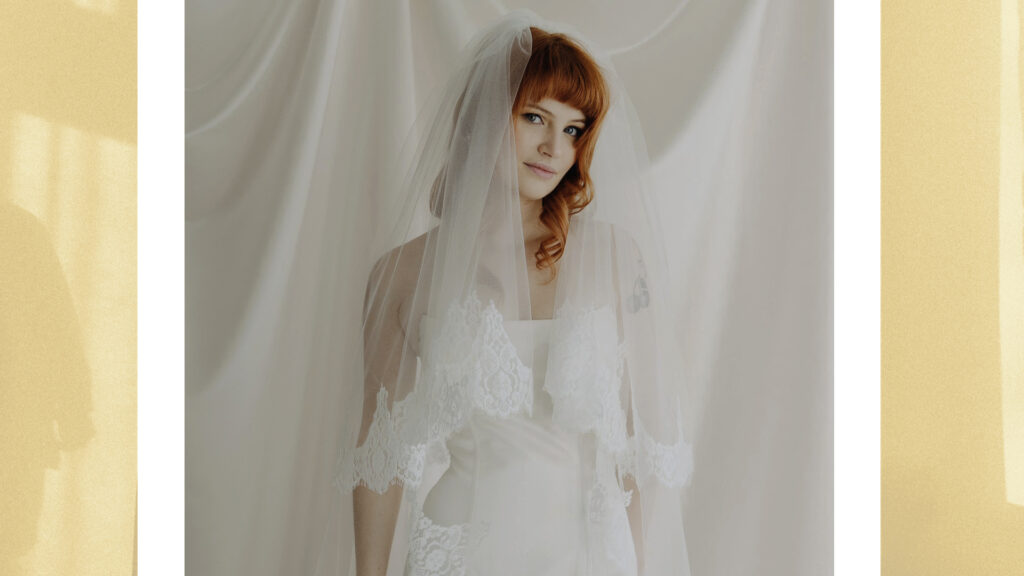
Mosca Opaline Veil | Photo: Amanda Irvine

EXTRA CREDIT: Anything you have coming up you would like to plug or that we should know about?

Yes! We’ve recently launched a collection of veils that are available via Etsy, and we’ll soon be adding them to our website as well. Be sure to check them out! It’s an exciting new venture, and I can’t wait for people to see the pieces we’ve been working on.

WEB: moscaalterations.com | IG: @moscaalterations

  • Page 1
  • Page 2
  • Page 3
  • Interim pages omitted …
  • Page 15
  • Go to Next Page »

Creative Economy Updates and Other Good Stuff!

STAY CONNECTED!

  • Facebook
  • Instagram
  • Twitter
Copyright © 2020 THE UPSTATE ALLIANCE FOR THE CREATIVE ECONOMY

info@upstatecreative.org | 41 State Street, Albany, NY 12207

Design by Reach Creative