• Skip to primary navigation
  • Skip to main content

ACE

Upstate Alliance for the Creative Economy

  • HOME
  • ABOUT
  • NEWSLETTER
  • SUBSCRIBE
  • JOBS
  • Show Search
Hide Search

ACE PEOPLE

A Day ‘AroundAlbany’

September 13, 2022 By Jonah Michel

Albany Skyline | Photo: Jonah Michel

Albany is the capital of New York State, and contrary to popular belief – it does NOT suck! Whether or not you’ve explored this city, you gotta keep reading on as I give you exactly what you need to know to have a solid day bopping around town. My hope is to give everyone the opportunity to experience the city and decide for yourself…whether or not it sucks.

PARKING

Parking can be a problem no matter what city you’re in, so to make this the most enjoyable trip possible, you should park along the Albany Riverfront at the Corning Preserve (plus it’s FREE!) and walk the newly opened Skyway towards downtown and Clinton Square. Be sure to wear comfortable shoes – you’ll be doing plenty of walking today.

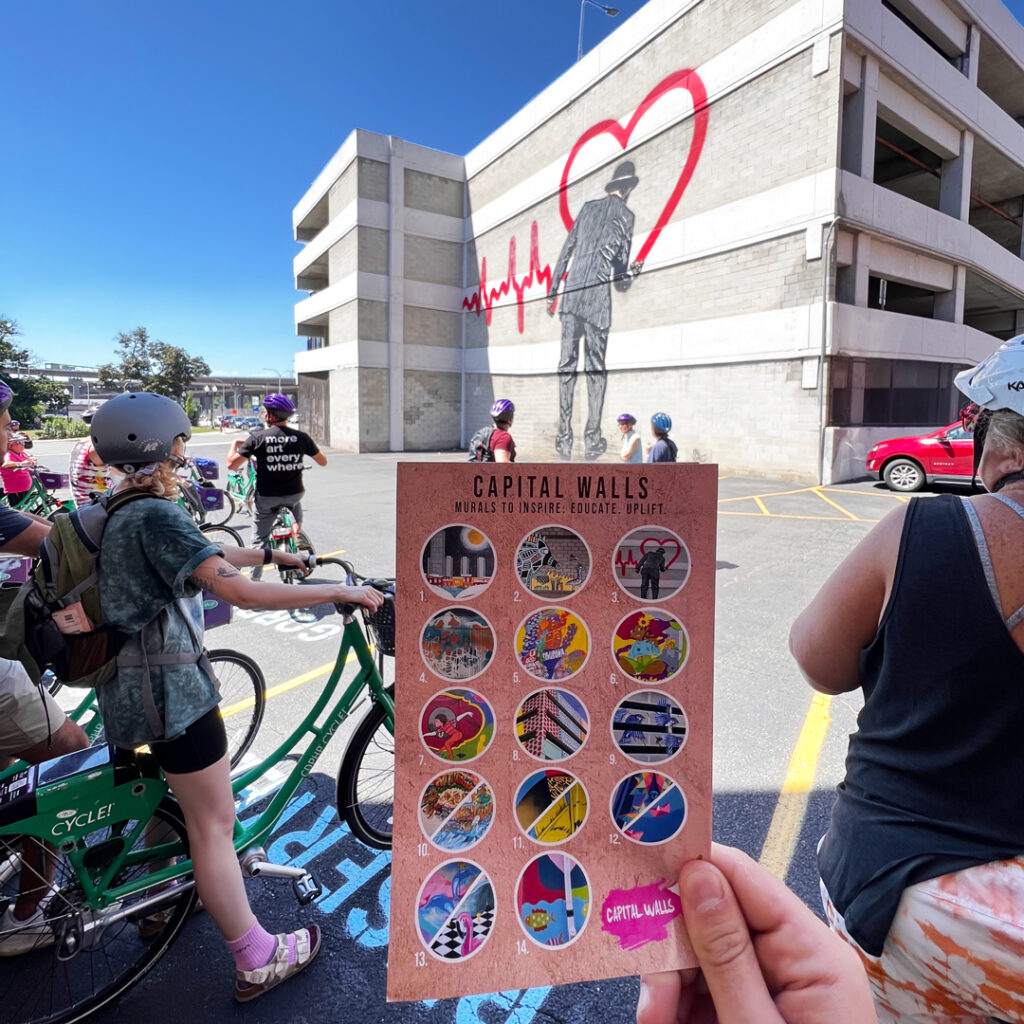
Capital Walls Tour | Photo: Jonah Michel

DOWNTOWN

Stacks on Broadway is open 7am – 3pm every day of the week, so drop by for a coffee and enjoy the big bright windows that flood the space with natural light. While you’re waiting for your order be sure to grab a map of the Capital Walls Murals – this will come in handy later. You can grab a croissant or bagel from Stacks too, but it is also worth the walk around the block to Coulson’s News & Deli – they’ve been slinging Sammy’s for over 100 years.

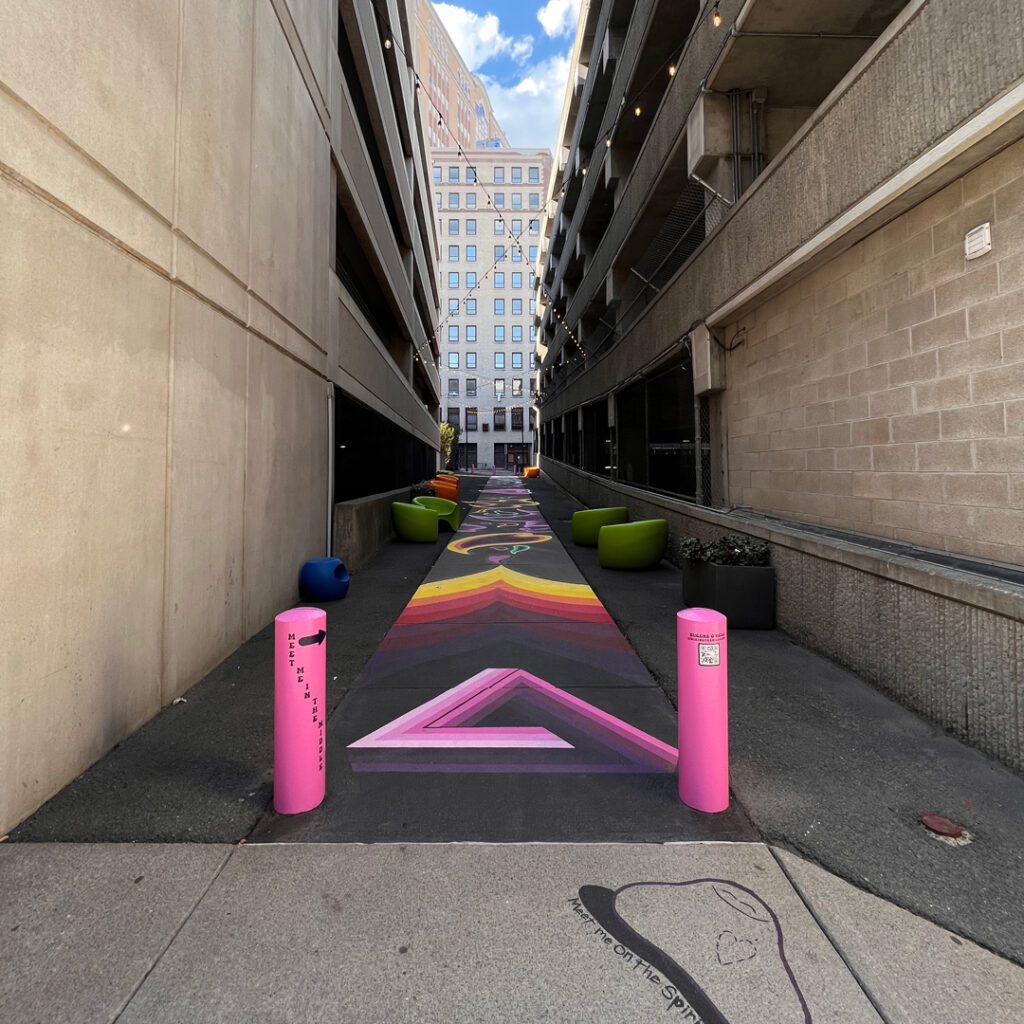
Now that you’re full and fueled, you can scope out about a dozen Capital Wall’s downtown public art installations and murals curated by Tony Iadicicco of Albany Albany Center Gallery on your way up State Streets towards the NYS Capitol Building. Consider dropping over to the new Williams Street Pedestrian Walkway which reactivated a neglected alleyway that is sandwiched between two parking garages next to the MVP Arena. It’s a little out of the way, but it features a bright and colorful mural with ample seating – pro tip: walk to the top of the adjacent parking garage for a brilliant view of both the Walkway and Downtown Albany.

Williams Street Pedestrian Walkway | Photo: Jonah Michel

You can book a tour of the Capitol Building HERE – they even do tours during spooky season so be sure to bring a change of pants – kidding!! The tour is a quick 90 minutes, leaving plenty of time to flow through the Plaza Concourse where you can check out a vast corridor filled with a mid century art collection curated by Governor Nelson Rockefeller – love him or hate him, he did have excellent taste in modern art. 

A View from the Corning Tower Observation Deck | Photo: iloveny.com

BIG VIEWS

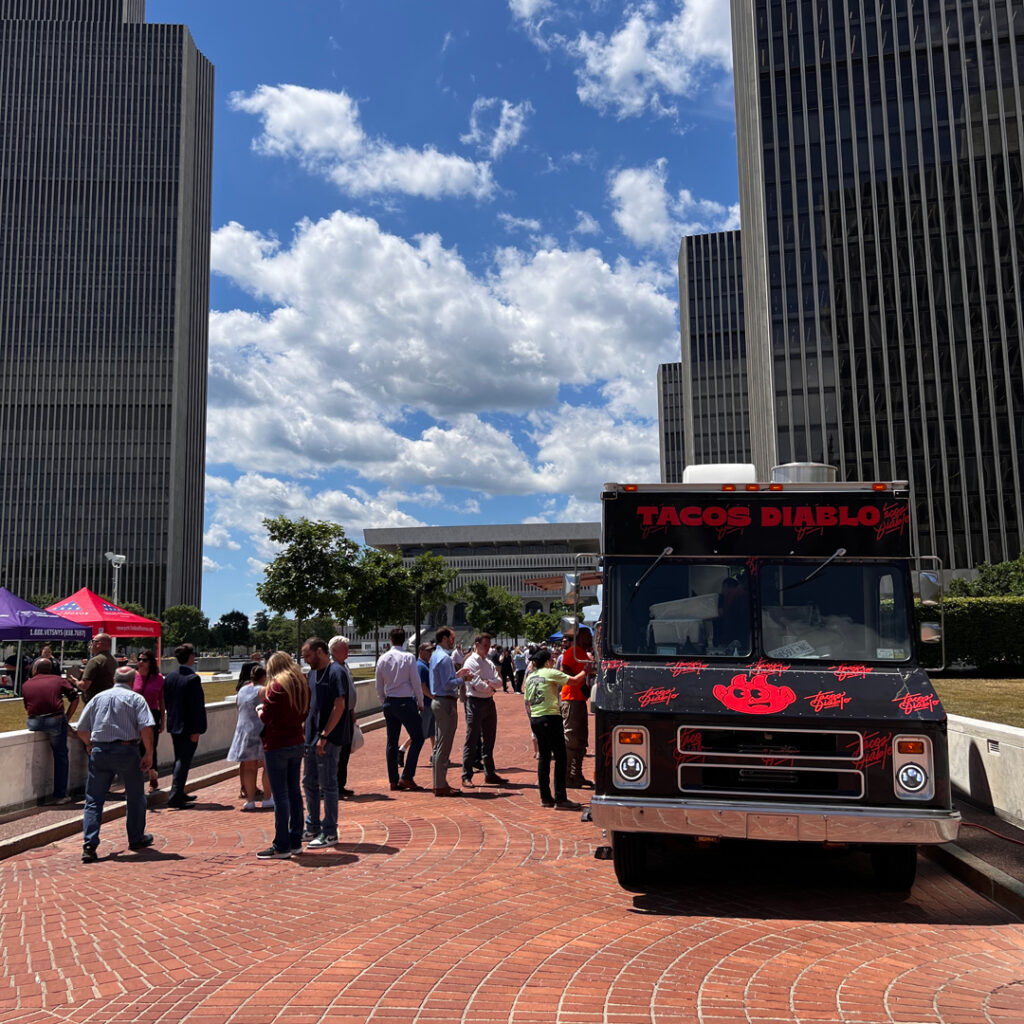
The Corning Tower Observation Deck is accessible directly through the concourse – but make sure you have quarters on you for the binoculars at the top that give you views as south as the Catskills! Also accessible from the concourse is the New York State Museum which is open Tuesday through Sunday 9:30am – 5:00pm for you to explore some of New York State’s most significant natural and cultural diversity, both past and present. Admission to the museum is free, so spend as much or as little time browsing as you wish. You can pop up to the Plaza after – and if it’s Wednesday they have Farmers Market and food trucks for you to enjoy. 

Farmers Market at the Plaza | Photo: Jonah Michel

LARK STREET

From there, head up Madison Ave towards Lark Street for some lunch and maybe a little shopping, too. Lark Street is its own little village and is considered the heart of the city by many featuring brilliant 19th and 20th century architecture, vibrant nightlife, and a wide variety of good eats. Grab a souvenir from Lark Street Mercantile or Elissa Halloran Designs, new shoes from Season’s Skateshop. On the food front I would recommend Rain Modern Chinese, Soho Pizza, or my personal favorite, Herbie’s Burgers. Grab a drink from the newly reopened Lark Tavern, Savoy Taproom, LoFi, OH Bar, Susie’s, or my all-time favorite Dive Bar: Palais Royale (Best enjoyed 12am and beyond). There are also a couple of great venues to grab a show in the neighborhood – Lark Hall and the Fuze Box – make sure to check out their websites for the schedule.

Washington Park Event | Photo: Jonah Michel

WASHINGTON PARK

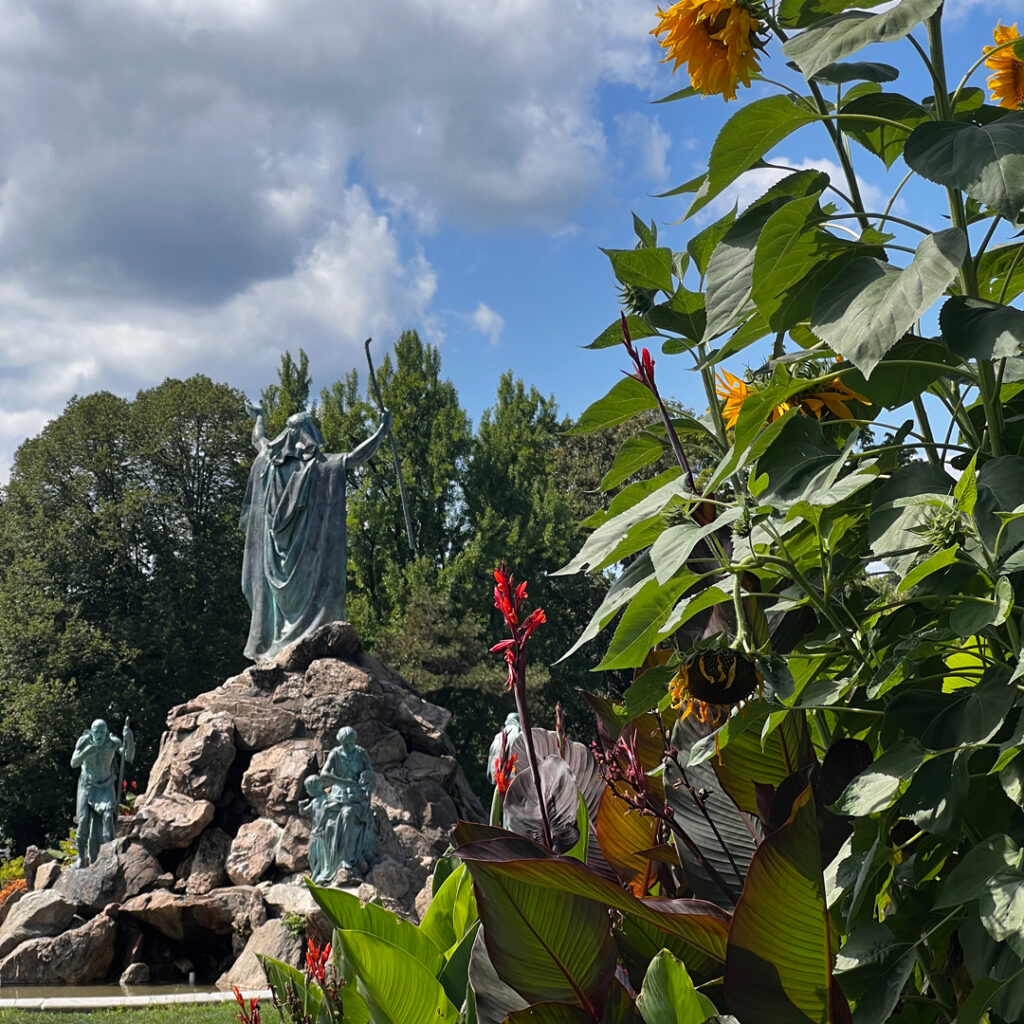
Now that you got a little retail therapy out of your system, it’s time to take a stroll through the park. But not just any park – Washington Park. Inspired by 19th century architect Frederick Law Omstead who designed New York’s Central Park, Washington Park was named one of the nation’s 100 most important parks by the American Association of Architects. The park features 80 acres of greenspace with monuments, gardens, a pond, a skatepark, basketball and tennis courts, an outdoor concert venue, a dog park, and playgrounds scattered throughout. 

Washington Park in the Summer | Photo: Jonah Michel

By now, you’re probably wiped – and you earned it! You can snag a CDPHP Cycle so you can just cruise back down to the riverfront and call it a day.

Although we’ve only scratched the surface, if you follow these suggestions you will certainly leave Albany with a better understanding and appreciation for one of the oldest cities in New York State. A day like this may leave you wanting more, so I might just have to pop back on here and map out your next trip to Albany. We can dig deeper, trust me. Although many call it ‘Smallbany’ I can assure you there is still so much more to discover.


Jonah Michel can be found creatively connecting in the City of Albany. Additionally, he focuses on ‘stuff worth talking about’ around the Capital Region and beyond as a core member and producer for the media outlet Two Buttons Deep.

IG: @aroundalbany | @twobuttonsdeep
Building on Strength : A Conversation with Glens Falls Mayor Bill Collins

August 4, 2022 By Corey Aldrich

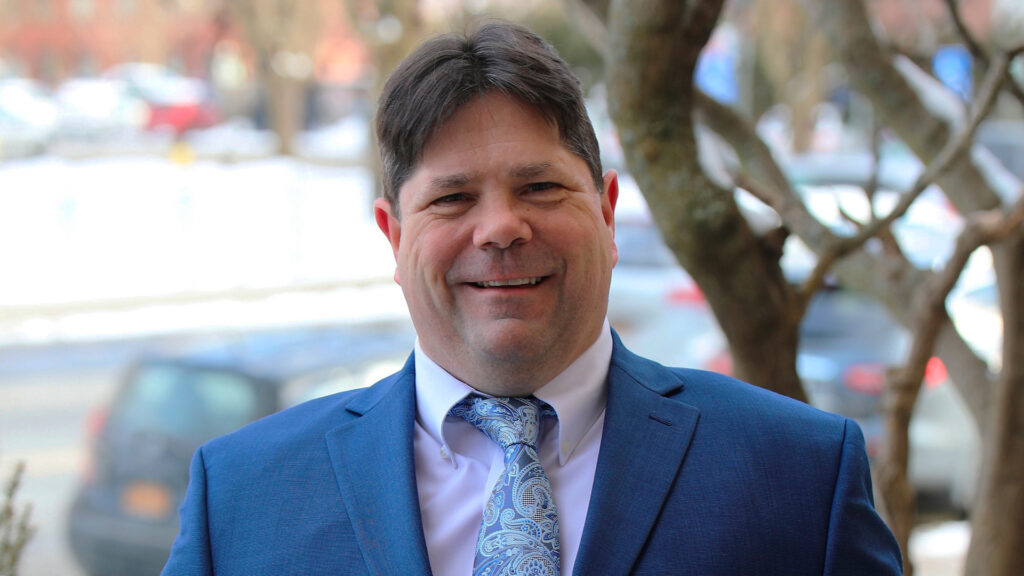
Glens Falls Mayor Bill Collins | Photo: Hartman Photography

From your perspective, why are Creative Economy components (artisan restaurants, arts and cultural institutions, performance space, etc) so important to a vibrant city scape?

Over the last decade, even during the height of the pandemic, we experienced people moving to the region. As the pandemic has shown us, the Creative Economy is a powerful, sustaining force — especially in a city like Glens Falls. For instance, it’s a long proud fact that Glens Falls is the smallest city in the country with its own paid symphony orchestra. New resident to our city are here working in arts, business, restaurants, music, medicine, banking, and other fields that supported and increased the diversity and talent of Glens Falls.

The Creative Economy shows up throughout — our new Glens Falls Arts District, the popularity of the library, the new murals being planned for three city properties, the new restaurants and the longtime venues. That attention — and that energy — feeds the economy in a way that is measured more by feeling than by economic development — our economy is thriving.

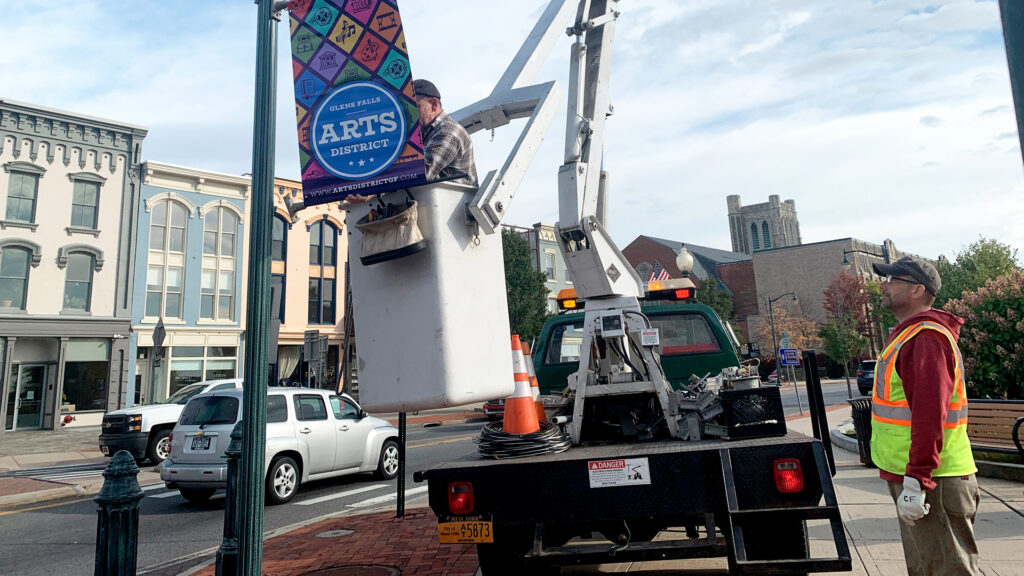
Glens Falls Arts District Signage | Photo: Provided

What is your philosophy and approach to building on those market segments?

The City is building a $4 million events space as part of the New York State Downtown Revitalization Initiative (DRI) — a critical piece of our continued growth. It will help to support already successful creative economy events like the LARAC Festival and other large entertainment opportunities. In fact, our vision is to be able to use the space to extend these activities throughout downtown locations — tying in many newly renovated gems to host festivals and large scale community wide events.

Our economic development and community development teams have grants and loans to support great ideas that become popular businesses, galleries or restaurants, like the Park Theater. And let’s not forget the innovative Shirt Factory on Lawrence Street — a haven for artists of all stripes. I believe that if we can continue to build the capacity for creative folks to live, work and play in the city (Including increased broadband access) our creative economy will continue to grow. And our city will continue to be a magnet for these magnificent people.

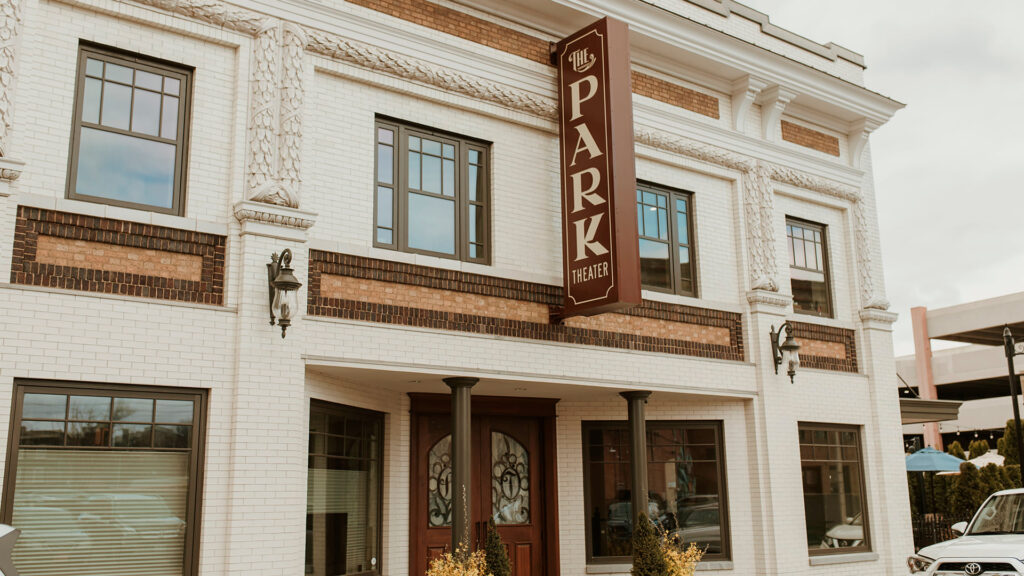
The Restored Park Theater | Photo: Sydney K. Andrew Photography

How much money from the DRI funding is being dedicated to creative / community building components?

The entire DRI project will inject $10 million into the South Street / Elm Street area — but that is just the state money. The new commercial use and housing projects, as well as the renovation of the three existing historic buildings, will invest more than $26 million cumulatively.

How does that benefit the creative economy? The overall project includes the Market Center, as noted above, which will host our weekly Farmer’s Market, music festivals and other outdoor events. The Center is tied to a planned community Commercial Kitchen for food demonstrations and exhibitions. The two other historic buildings will have restaurant / commercial space on the ground floors, and for the first time in decades will have living quarters above.

Add in more than 80 new apartments, all the commercial / studio space and the concentration of arts, music, food and people … and we definitely expect that it will support the growth of our creative economy. In fact, the creative economy interests will be an important beneficiary of the entire project. Glens Falls will become a hub and attraction point for the lower Adirondacks because of it.


For more check out: Glens Falls: A Winning Team Sharing Secrets to Success

Finding the Formula : A Conversation with Chet Opalka

July 12, 2022 By Corey Aldrich

My first memory of engaging directly with Chet was at an Ellen Sinopoli Gala Event. That particular year it was located on the Russell Sage Campus in Troy at the Bush Memorial Hall. Making a bold play to be dapper I had chosen a bow tie, the kind you have to actually tie yourself. Having never done this and distracted by the event that I was in fact running that evening for Ellen, I had neglected to figure out just how to do that. Guests were arriving and my stress level was rising.

But then, flanked by his charming wife, I spotted a dapper man in a seer sucker blazer and perfectly appointed bow tie entering the room. Swallowing my pride I approached sheepishly asking for advice. With a flashed smile and a chuckle the kind gentleman put his arms around me and adeptly tied the perfect knot.

And this was how I came to meet regional benefactor Chet Opalka.

Image: Corey Aldrich

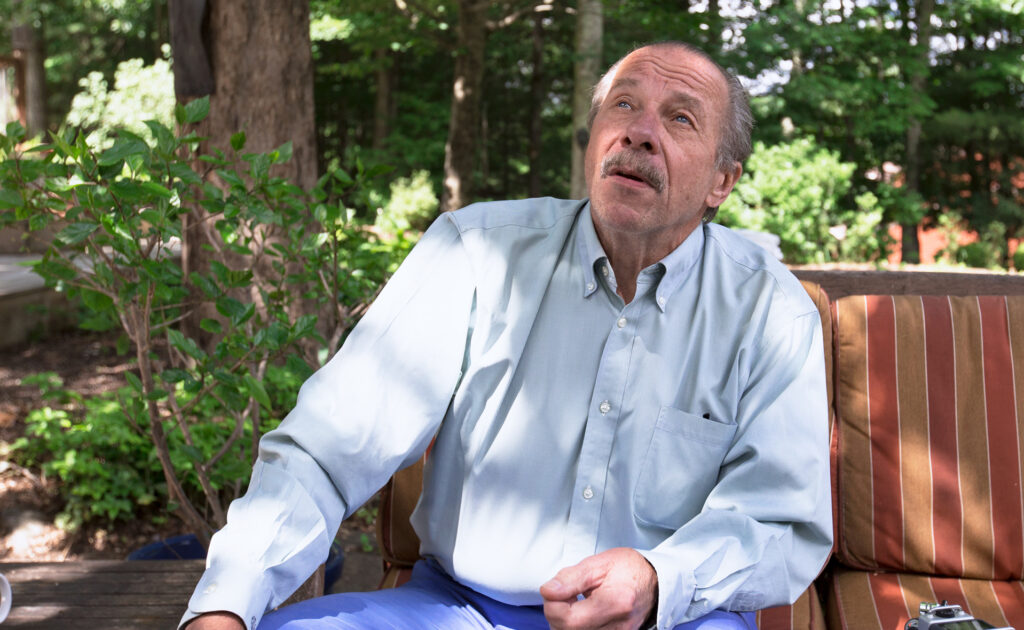
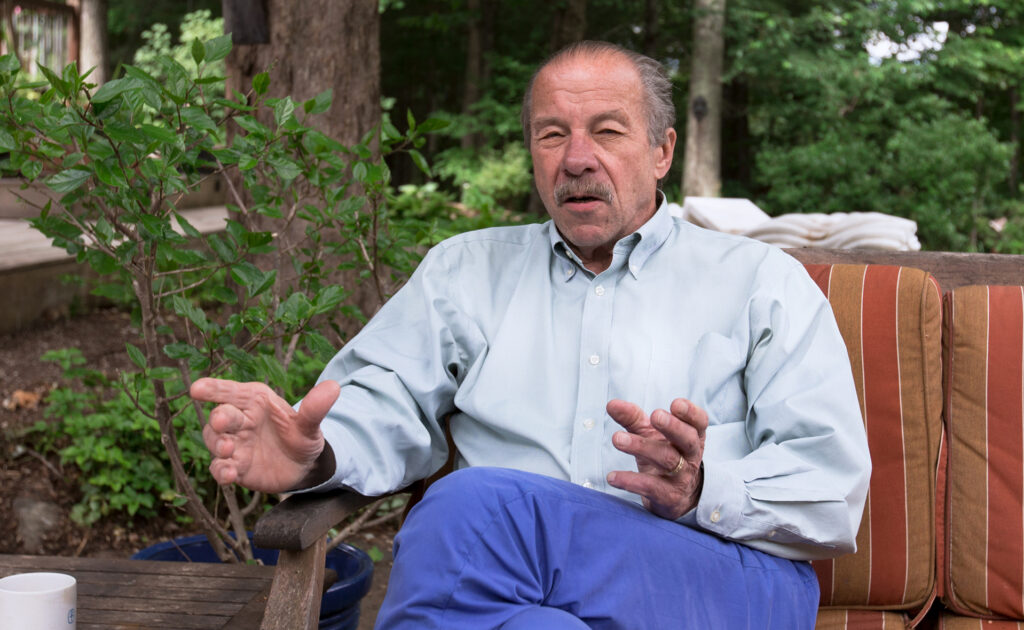
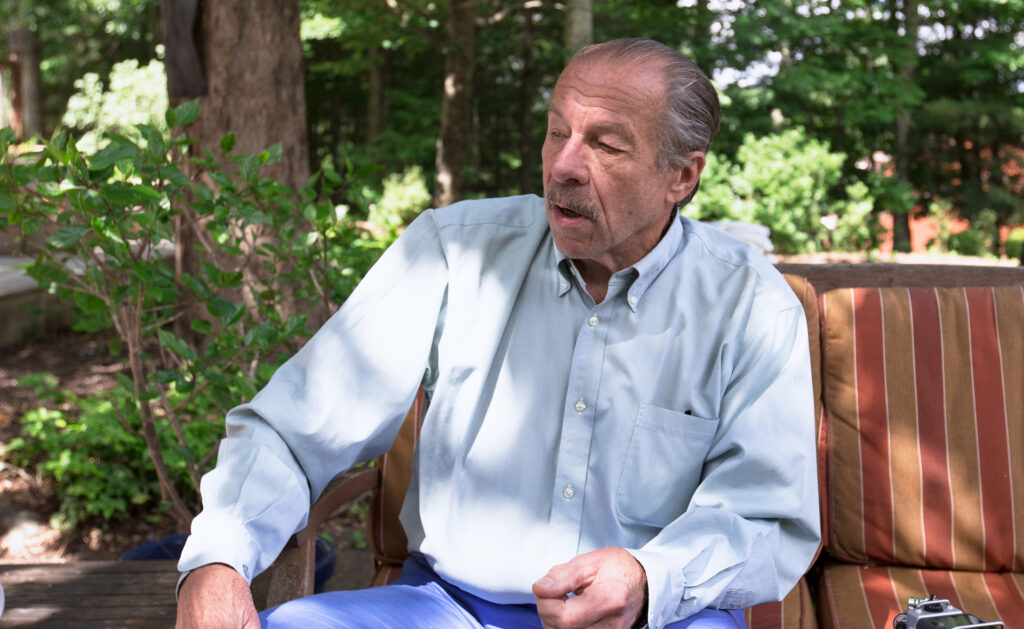
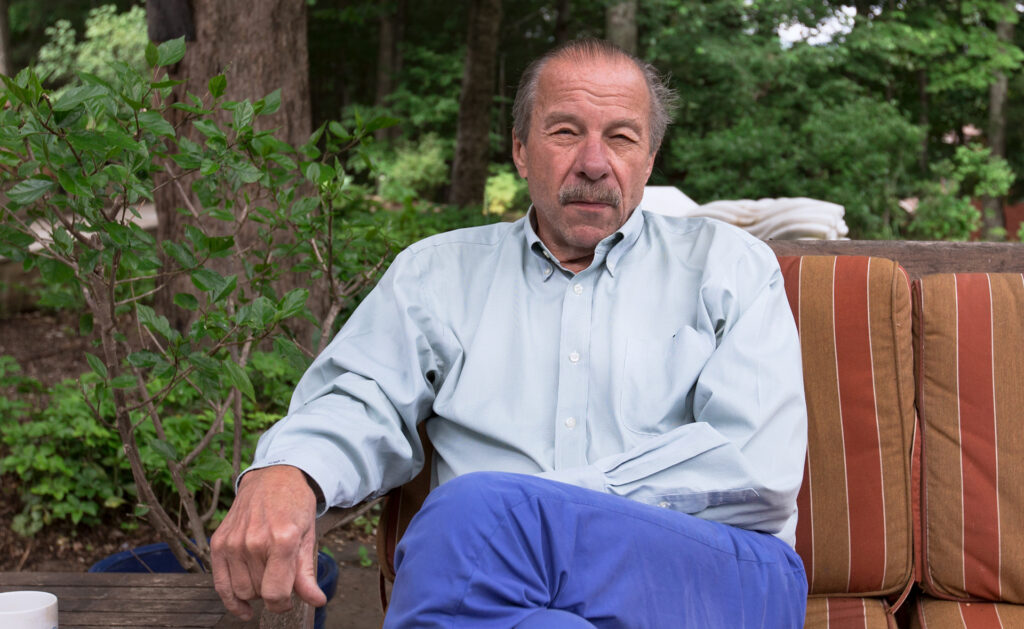
It was a warm and sunny afternoon when I joined Chet and Karen in the Japanese style garden at their home in Rensselear county. I was initially greeted by two playful pups that were demanding of a couple of pets on the head for the cost of admission. As conversations with Chet usually are, it meandered, jumping between past, present and future. A winding narrative that continued to hone in on a couple of overarching themes that helped to define in my mind the focus and direction that has been and continues to be a life philosophy, a guiding narrative for his philanthropic endeavors – open minded collaborative thinking, generosity, risk taking and a belief that people and their ideas and passions can create value in our regional community and far beyond.

Chet the man is curious, vivacious and at times renegade. A creatively improvisational soul that looks to find cohesive connectivity in all things around him. For the last 20 years he has found ways to do that by working through the passion and visions of others in the community. Whether it be in private business enterprise (Chet was an early investor in Starfire Systems and Plug Power) or mission oriented arts and cultural organizations. A true angel investor, his philosophy is to invest in many and see how they develop over time. Some will fail, its inevitable. Chet is ok with that. Not every business, organization or idea will be fully actionable or sustainable. His interest is in the giving someone a chance to realize their dreams, to pursue their passion.

“We try to support as much as possible. Small (such as the Sand Lake Center for the Arts) and large (SPAC) because they all add quality of life to the community. We support as many as we can, the best we can. I subscribe to the idea that…what good is leaving a part of your estate to an organization after your gone? Do you get any enjoyment out of that, do you get to see the value you created? You don’t even know if they are going to survive. I prefer to do it while I am living, to see what value has been created. You can leave money to your kids, we did set up trusts for them. They don’t need anymore money. I prefer to give money to organizations or companies, to give them a chance to grow. Give them the horsepower to be successful. Angel investment is a version of philanthropy, betting on companies not to make money but to help them to be successful. If I make money it gives me more money to give away. That’s the only reason for me. That’s why I want the market to do well, so I can make more money to give away. That doesn’t suck, right? Enough is enough, how much do you need to be happy? What else do I need? I can go anywhere I want to go, I can do anything I want to do. I have enough money. What more do I need? I actually prefer to cook at home. I could eat out every night, I could have a personal chef but what fun would that be?“

Image: Corey Aldrich

After two decades, the desire is still stronger than ever to have an impact. His desire for direct involvement though, is evolving.

“When being in the limelight was new, it was exciting. As time goes on though, now that Karen and I are 74 years old, it is not as exciting. I understand why folks I knew doing this 20 years ago dropped out of the limelight when they were hitting our age, it gets tiring.“

As such, Chet prefers to provide financial leverage and opportunity to those individuals and organizations he feels are worthy but has little interest in the day to day involvement that directs those funds. Preferring to give his beneficiaries free reign to leverage his financial support. We did talk a lot about financial sustainability and how we need to move forward in the creative / cultural sector in a post covid world.

Image: Corey Aldrich

“Organizations should be looking at all aspects of what they do and understand how they can be monetized, become financially self sustaining.” When pressed about how we can reconcile that approach specifically with a mission oriented organization he said, “With no financial sustainability, there is no accomplishment of mission.” This was particularly prescient to me as my prime motivation for leaving the Real Estate industry about 10 years ago was a motivation to address this very issue. I had seen through volunteerism that many organizations that I was working with were excellent at mission but had a very poor understanding of the financial or accounting side of the ‘business.’ As we moved along in that aspect we landed on an area that is increasingly near and dear to the mission of ACE! – education. Teaching our creative and mission based organizations how to be more financially savvy.

“They don’t think about it. So many of us are altruistic, people (artists / organizations) are like that with their art and mission. But everybody needs to understand finance. One of the weaknesses of our education system is that we don’t teach people practical things. The only thing we seem to teach kids in school is how to memorize stuff, which was always a problem for me because I am a hands on learner. I don’t have the attention span. That’s how I learned chemistry. By seeing what others did and going from there.”

Image: Corey Aldrich

This creative hands on approach turned out quite well for Chet when he was a young chemist at Sterling Drug where he gained his first patent for a drug that later became a foundation for a new series of drugs designed to address congestive heart failure. When at first he was left off the patent that was filed, his willingness to challenge a hierarchical system payed dividends. He went over his direct boss’ head to have the situation rectified. He had been assigned to work on a series of antibiotics. When he noticed an interesting structural formula that he felt may have different and beneficial characteristics, he set aside his own time to pursue it and created a tidy piece of intellectual property for his employer. To that end he said…

“What I did could be considered insubordination because I didn’t do what I was told but that’s the way my mind works.“

I was also really interested in Chet’s perspective on how we could get more successful regional individuals and institutions in the private sector to consider following a similar philanthropic path to create a new generation of support for arts and cultural in our region. Here he got a bit psychological.

“By exposing our biz leaders more to arts and culture. They tend to focus on their businesses, they are overachievers. They don’t spend as much leisure time enjoying arts and culture and the outdoors necessarily. The people that work for them do though.“

What attracts young creative talent to a region is more than just a paycheck. It has to do with the quality of life options, the placemaking advantages that a region has to offer. Again, the very areas of the creative economy that were identified in the Mt. Auburn Associates ‘CAPTIVATE‘ report commissioned by the Community Foundation for the Greater Capital Region and Center for Economic Growth for the stakeholders of ACE! close to its inception.

But then Chet drilled deeper…

Image: Corey Aldrich

“Our recruitment problem is that we have not made a name for ourselves as a cultural mecca of any kind. We are a secret externally and internally. To attract the kinds of young people who are in front edge creative careers we need to have a variety of things to do. What are they going to do when they are not working? Instead they go to NYC, Boston….In reality though, we are like the boroughs of Manhattan. Each community has its own character. What makes us different from Manhattan is that we look at ourselves as individual identities, we have not combined them. We are in fact neighborhoods – the Schenectady neighborhood, the Albany neighborhood, the Saratoga neighborhood.“

“We have a self esteem issue. There is no pride. We consider ourselves second hand citizens. Years ago in recruiting the big pitch was that we are 2.5 hours from NYC and 3 hours from Boston. It’s a Smallbany thing. We want to flip that script. Tell NYC folks that they are only 2.5 hours from Albany! Boston folks, 3 hours from Albany! I do love the Smallbany idea in that its easy to get to know people in our area. It’s about scale. It’s a benefit.“

Though I personally see some of that changing in the hearts and minds of young professionals in our area, this rang pretty true to me from an ACE! perspective. A few years ago, ACE! under the tenure of previous executive director Maureen Sager and in conjunction with several stakeholders including the Workforce Development Institute, held a series of round table discussions across the Capital District about how we could continue to attract bright creative individuals and companies to our region. This narrative is one that has been in the mouths and minds of many looking to create a destination space place for the Capital Region.

“The whole is greater than the sum of its parts, why don’t we understand that? Why are we so self centered and insecure that we can’t share with others for fear of them taking something from us? If it happens, so what? Personally, I don’t care if people use my ideas. Imitation is the greatest form of flattery. Who needs credit? I don’t care if I get credit for it or not. My ego is not so large as it needs credit for everything…unless its a patent!“

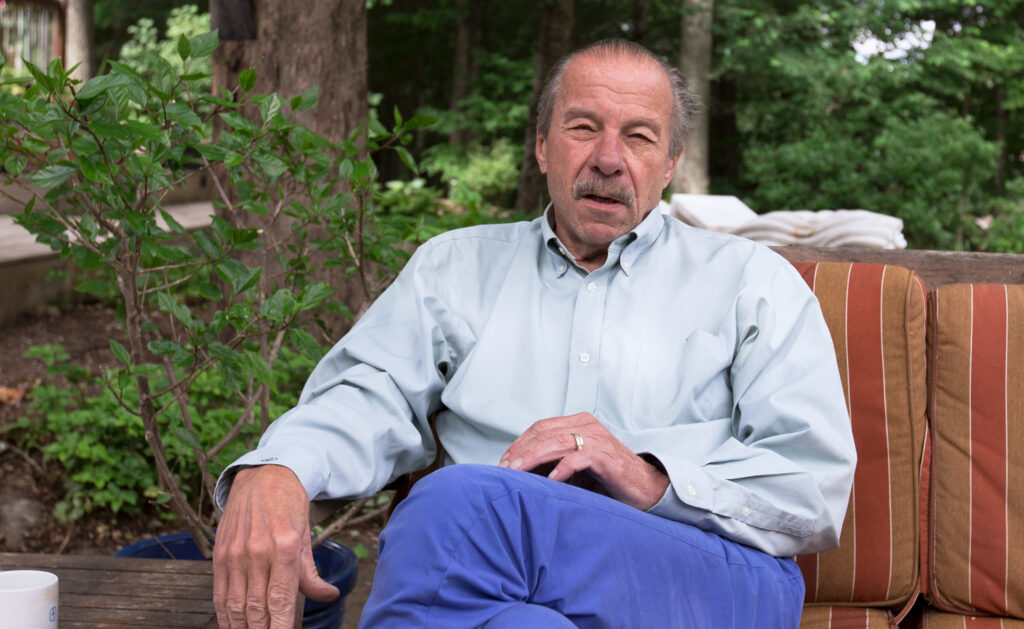
Chet and Karen Opalka | Image: Corey Aldrich

Putting the Economy in Creativity – A Conversation with Maureen Sager

June 6, 2022 By Corey Aldrich

I met Maureen while I was in Saratoga producing a sustainable fashion event in 2015. She took an interest in me and invited me out for drinks to talk about potential projects we could work on together. I will never forget how passionate she was about collaboration and the need for creatives to get proper compensation. We ended up working on a series of events together under the Saratoga Arts Fest summer program over the course of 3 years. Also at around that time she helped facilitate my connection with ACE! as the freelance creative representative in what was a group of who’s who of institutional arts in the Capital Region. This was back when it was a small gathering of folks meeting in a conference room at the Community Foundation of the Greater Capital Region. Since then, we have worked together on scores of events across the 8 counties of the Capital Region and helped create a connected community of talented creatives that I am proud to be a part of. While its bitter sweet to see Maureen move on to her next episode, I know that she will always be a quick text away and am excited to walk in her footsteps, continuing what we both believe is an important mission for all creative individuals and cultural and arts institutions in our region – the raising up of creative voices and providing opportunity for recognition, compensation and the strengthening of our most valuable regional asset, our creative class.

2016 WMHT Creative Networking Kickoff Event | Troy NY | Photo: Richard Lovrich

You came into this affiliation with a strong experiential background, can you share a little bit about your previous professional gigs?

Sure! I feel really lucky to have had a career in the entertainment industry. I went to film school at the American Film Institute in Los Angeles, and worked at film companies like PolyGram Filmed Entertainment, where we released a slew of great indies like Four Weddings and a Funeral and The Usual Suspects. Then I fell in love with dotcom, and ended up at Nickelodeon during the wild, early days of the internet. It was super fun.

2018 Art OMI | Ghent, NY | Photo: Kristin Halligan
2019 Darn Good Yarn | Clifton Park, NY

Tell us a little about the genesis of ACE! and how and when you came to be involved.

Almost ten years ago, the Community Foundation of the Greater Capital Region, along with key players like the Center for Economic Growth (CEG) and others, commissioned a report that quantified the “creative economy” of the 8-county Capital Region. The results were amazing! This sector — which had never been measured or talked about before — was suddenly seen as an economic driver, generating over a billion dollars in revenue, and employing tens of thousands of people. Such a surprise for everyone involved.

2018 Art OMI | Ghent, NY | Photo: Kristin Halligan

A group of people — Ellen Sax of MVP Health Care, Robert Altman of WMHT, Tom Lloyd of Adirondack Studios, Jeff Mirel of The Rosenblum Companies, Philip Morris of Proctors and MANY, MANY others — started convening, trying to figure out how to make the creative economy known and recognized in economic and workforce development circles. We gathered a bit of money together to start the project, and see whether we could get creatives businesses and organizations from all eight counties to work together in developing ourselves as a business sector. And, voila! ACE! was born.

2018 EYP Architecture and Engineering | Albany, NY
2019 PS21 | Chatham, NY | Photo: Ed Sager

You have been a passionate and dedicated leader to the organization, what particularly called you to the mission of ACE! and why do you feel that is important for our region?

There are SO MANY talented people up here — as talented as any I met in NY and LA — and yet, there just aren’t enough jobs and opportunities for our artists and creatives. People here — and small orgs and businesses — have drive, skill and passion to spare, and yet, they’re barely getting by. I think that’s what connected all of us who have worked with ACE! over the years. We wanted recognition for what’s here, and who’s here. We’re SO DAMN AWESOME. So, we just started throwing events, to celebrate all of the amazing venues, locations, and people we’ve got in this region.

2021 HBO Gilded Age Event with Special Guest Bob Shaw | Troy, NY | Photo: Konrad Odhiambo

Corey, I remember when you and I drove down to Brooklyn to go to a Freelancers Union networking event about 8 years ago. It was so cool to see a bunch of self-employed people sharing their knowledge and completely supporting each other’s efforts. You and I thought, “Damn, we could do that.” So, we did! We busted our asses for years, with dozens and dozens of events, and people were so supportive of our efforts. People were — are — really hungry to connect and learn and collaborate.

2018 Bull Moose Club | Albany, NY
2019 Pitney Meadows Community Farm | Saratoga Springs, NY

There have been many highlights over the last several years. Can you share what you feel or some of the most important accomplishments of ACE?

I guess the biggest accomplishment is that the term “creative economy” is officially recognized and respected throughout the region. That’s really what we set out to do — to make it easier for everyone to be seen as integral to the economy of the region. Creatives aren’t just eye candy. We’re MONEY. We give life to our cities and towns. And we deserve respect.

2018 Lumberyard | Catskill, NY
2018 National Museum of Dance | Saratoga Springs, NY | Photo: Ed Sager

Can you tell us about your latest decision to move on and what your current professional goals are?

Two years ago, I moved down to Catskill, a town I fell in love with while planning an ACE event six years ago. My life is centered down here now, and it’s too far south to cover the whole region. Plus, after these two years of COVID, I was ready for a change. I’m so damn glad that you (Corey) are here to take it over. We hatched this thing together, and it’s time for you to invent the next chapter. I’m so excited to see where it goes.

2019 Arts Letters and Numbers | Avril Park, NY
2019 Opalka Gallery | Albany, NY | Photo: Ed Sager

Is there anything specific you would like to share that you feel is important for our audience to consider?

The creative economy is a powerful change agent, but not all of the changes are good. Gentrification and skyrocketing rents are plaguing many of our cities and towns. It worries me, when creatives can no longer afford to live in the places they helped to flourish. I hope we can figure out ways to address this together, and if you have ideas, I’m all ears.

2019 Unihog | Hoosick Falls, NY

Maureen Sager is now the Director of Marketing and Communications at SUNY Columbia-Greene Community College and has a real estate side hustle based in Catskill, NY.


2019 Pitney Meadows Community Farm | Saratoga Springs, NY

Editors Note: Ellen Sax was inaccurately identified as working for CDPHP. Ellen is actually employed by MVP Health Care. We apologize for the confusion.

SALEM ART WORKS : A Conversation with Pearl Cafritz – Executive Director

May 4, 2022 By Corey Aldrich

My first exposure to SAW was through the ‘Things To Do’ section in back of The Metroland (RIP). There was a listing for a quirky music festival called SAWFEST. I went, saw and heard and ever since, I have been a big fan of this amazing institution. I first met Pearl through previous ACE! Executive Director Maureen Sager. We did an event together and I came to appreciate just how much Pearl had to offer SAW and the region at large. And now…you too are on the inside track.

Pearl Cafritz, Executive Director at Salem Art Works
Photo: Corey Aldrich

Please state your name, title, and what you do at Salem Art Works (SAW). How many employees do you have on campus and what do they oversee?

I am Pearl Cafritz, Executive Director. I oversee administration, programs, and strategic planning. There are twelve staff currently. The administrative team is comprised of a Director of Programs, a Coordinator of Workshops, a Director of Development, and a Graphic Designer. The studios each have a director as well including: blacksmithing, ceramics, glass, foundry and welding. We also have a sculpture park manager, a young artist coordinator, a seasonal chef and housekeeper.

Entrance to Salem Art Works
Photo: Corey Aldrich

Can you share a little bit about your education and background pre-SAW. Curious about the other places you have worked and learned your expertise from.

Originally from Saratoga Springs, my journey to creative problem solving began while working at my family’s hardware store, Farmers Hardware. I earned my Bachelor of Fine Arts from The College of Saint Rose with a concentration in sculpture. My background in exhibit installation and art handling took me to museums like The Guggenheim, The American Museum of Natural History, The Cooper Hewitt, Smithsonian Design Museum, and The Whitney. Pursuing the contemporary division of art shipping allowed me to travel, oversee import / exports and coordinate crews installing at various art fairs including Basel Switzerland & Miami, Frieze London, and Venice Biennale. I had the privilege of working directly with Matthew Barney as a set builder for Cremaster 3 and assisted Kiki Smith at the International Center of Photography.

As an art world entrepreneur, I started my own art handling company inspired by the Art Basel scene in Miami, Florida.

Salem ARt Works pieces from the ceramic kiln
From the Ceramic Kiln | Photo: Corey Aldrich

Can you tell us more about the mission and varied programming that you oversee?

The SAW mission is to provide a unique alternative arts learning and experimental environment for young, emerging, and established artists. In addition to a variety of artist residencies, SAW prides itself in its youth programming and workshop offerings. For example, In 2021 ‘Salem Teen Arts‘ taught 31 teens valuable art skills such as glass blowing, watercolor painting, acrylic painting, welding, pottery throwing, and welding.

Starting this year, we are offering a ‘Family Friendly Residency‘ which will allow families of teen artists to stay on campus and take advantage of workshop offerings. For the summer of 2022, we have families joining us from as far away as Washington state and Florida.

Over the past few seasons we have seen a dramatic increase in our workshop offerings. Our capital improvements have allowed us to winterize most of our shops, thus expanding our workshop schedules in a variety of disciplines including:

Blacksmithing, Welding, Making Natural Paints and Pigments, Painting, Retaining Wall Restoration, Woodturning and Stone carving

Barn Construction Shot
Barn Facility Upgrade | Photo: Michael Hatzel

How has COVID affected your programming and facilities over the last couple of years?

COVID imposed a variety of challenges on our operation, the result was an opportunity for re-examination of our procedures and processes. In March 2020, we temporarily postponed our the public programming scheduled for the 2020 season. Having this imposed breather allowed us to refine our administrative procedures, policies and programs. Additionally, we used this time to make several improvements to our facilities.

Image of teen boy and girl working in a blacksmithing shop.
Salem Teen Arts – Blacksmithing | Photo: Michael Hatzel
Young Student Grinding a Piece of Metal
Salem Teen Arts – Metal Shop | Photo: Michael Hatzel

It seems like SAW is an important part of the greater community at large in Salem and the immediate area. Can you talk a bit about your outside collaborations and partnerships?

I am actively seeking opportunities for our artists in residence as well as for local artists. Currently SAW has partnered with North Main Street Gallery, Railroad Station Gallery, North Bennington Outdoor Sculpture Park, HN Williams, Lower Adirondack Regional Arts Council, Kingsborough Community College, Southern Vermont Art Center, Elizabeth de C. Wilson Museum, Salem Historic Community Center, The Art Center of the Capital Region, Union College, Collar works, and MASS MoCA.

I also serve on the Salem Chamber of Commerce, our 4th of July Parade Committee, and have begun working with Jackos (A downtown Salem Restaurant/Gathering Space) to provide public programming which will begin this summer.

Students pouring molten iron into molds
Iron Pour with Hartwick College Students | Photo: Michael Hatzel
Student making an iron pour mold design
Mold Making for an Iron Pour | Photo: Michael Hatzel

Anything coming up that you are especially excited about that you would like to share?

Now in it’s 2nd year, the ‘NY/VT Regional Artist Residency‘ will host 10 artists who live and work in one of the two states and that have an income of $50,000 or less. This takes place from June 20th to July 5th. Artists will live and work at SAW for two weeks with a $500 unrestricted honorarium. Our goal with this residency is for the artists to see themselves as part of our region while generating new opportunities and growth.

Artwork created during the residency will be on view during a closing Artist Reception Friday, July 1st from 5-7 PM.

This is the 11th season of ‘salem2salem’, an international multi-disciplinary exchange between SAW and the Bodenseekreis (Cultural Department of Lake Constance in Salem Germany) which brings together 20 artists from August 8th to August 29th. The group will include 4 artists from Australia, 1 artist from Romania, 10 artists from Germany, and 5 artists from the USA. An open studio event with work created during the residency on Friday, August 19th from 5-7 PM will include live music, readings and fine art.

To join the mailing list, register for a program / class or to see the full program/workshop/event calendar drop by the website.


WEB: salemartworks.com | IG / FB: @salemartworks

  • « Go to Previous Page
  • Page 1
  • Interim pages omitted …
  • Page 10
  • Page 11
  • Page 12
  • Page 13
  • Page 14
  • Interim pages omitted …
  • Page 29
  • Go to Next Page »

Creative Economy Updates and Other Good Stuff!

STAY CONNECTED!

  • Facebook
  • Instagram
  • Twitter
Copyright © 2020 THE UPSTATE ALLIANCE FOR THE CREATIVE ECONOMY

info@upstatecreative.org | 41 State Street, Albany, NY 12207

Design by Reach Creative