• Skip to primary navigation
  • Skip to main content

ACE

Upstate Alliance for the Creative Economy

  • HOME
  • ABOUT
  • NEWSLETTER
  • SUBSCRIBE
  • JOBS
  • Show Search
Hide Search

Performing Arts

Behind the Scenes At “The Costumer”

July 6, 2021 By Maureen Sager

In 2016, Erik and Bonnie Johnsen moved from Massachusetts and bought The Costumer, a 100-year-old, full-service costume and makeup business with locations in Albany and Schenectady. The Johnsen’s are passionate about the positive impact of scholastic theater! Read on as Bonnie takes us behind the scenes at this creative — and mission driven — business.

How and why did you buy a costuming company?

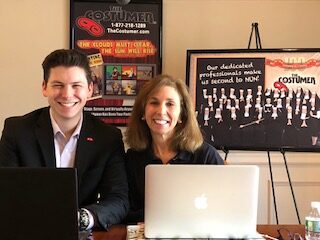
Tyler Johnsen and mom, Bonnie

Erik and I are theater parents. Our son, Tyler, was a very, very introverted little boy. Teachers tried everything to get him out of his shell. So, in fifth grade, he signed up for chorus, and he ended up with a solo. He blew us away! That was his stepping stone into theater, winning awards and leads in every show in high school. He just completely took off and it changed his life.

So, when Erik wanted to get out of the corporate world and saw this opportunity to buy a small business, we knew it was the right thing. We believe completely in this mission because know what scholastic theater can do for a young child’s confidence. It’s fabulous.

Erik Johnsen
Erik Johnsen, President of The Costumer

Tyler is 22 now and studied theater and business in college. He’s now getting his Masters degree, and helps us in the summers. We all love it. This business is truly something we’re passionate about.

What’s the history of The Costumer?

Costumes from Into the Woods

The business was started in Schenectady in 1917 by a woman named Anna White. She was trading handmade costumes in exchange for dance lessons for her daughter. Since then, it’s changed owners four times. The Sheehan family were performers and teachers, and they saw the niche of school productions. They believed that kids deserved Broadway-caliber costumes.at affordable prices.

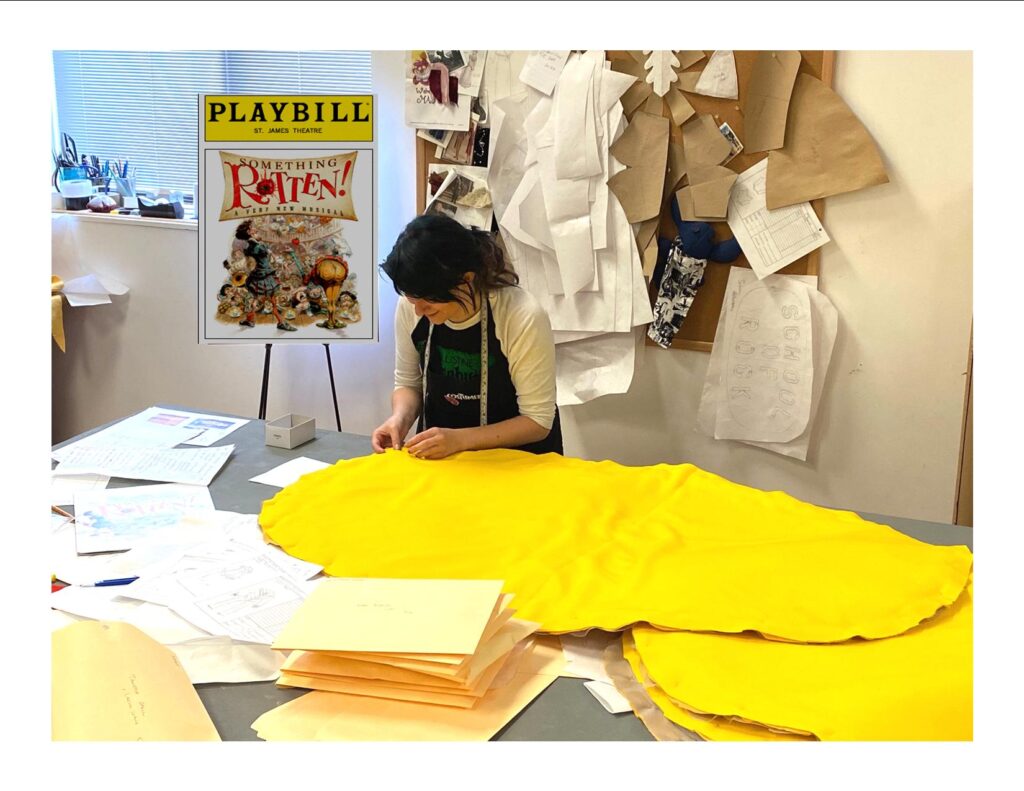
Constructing costumes for Something Rotten!

Our head designer has been with the business for over 30 years, with experience from Broadway. She creates costumes for all of the new shows, and makes sure that they are shipable and durable, because they’re for kids. We’re one of the few businesses that customize our products for all ages, even elementary schools. It used to be that high schools were the main customers for high-end costumes, but now we see it for all ages, even young children. So, the costumes need to be tailored to suit.

What kind of jobs and careers are there at The Costumer?

There are a wide variety of jobs here, and most of us wear a lot of hats. For the costumes, we need seamstresses to construct new products and tailor the costumes for our orders. Everything needs to be laundered, pressed, and packed, so we’ve got people who handle all of that.

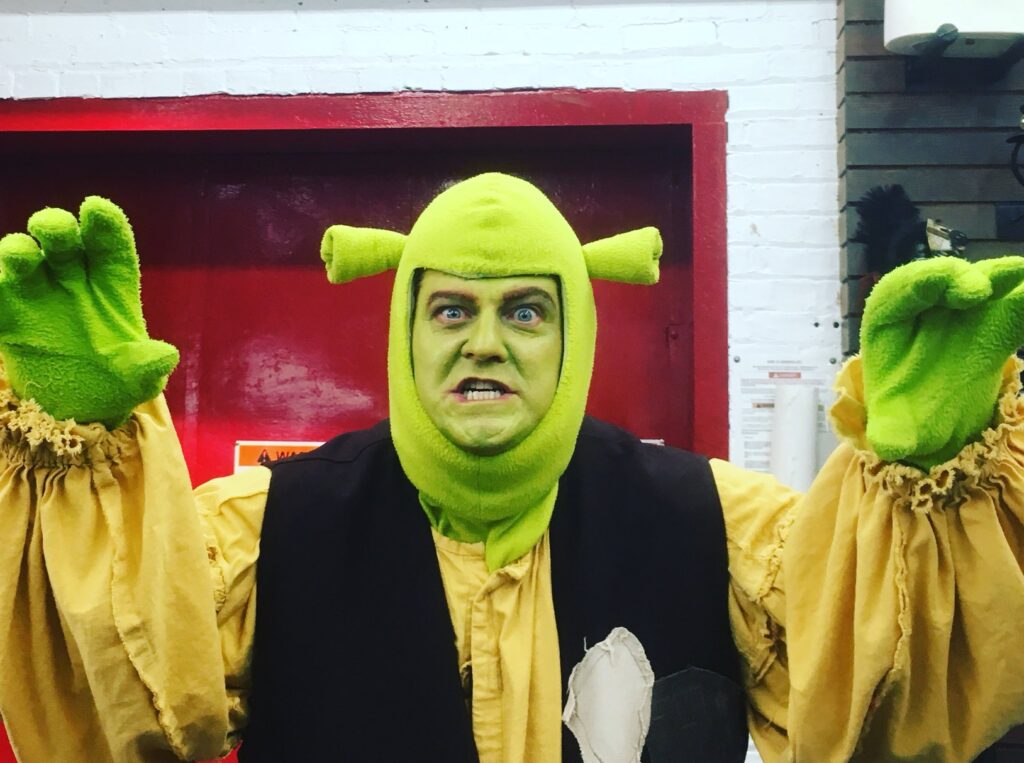
Shrek costume
The Costumer’s annual catalog photo shoot

Plus, we’ve got a retail establishment, so there are others who meet and talk to customers. And, there’s of course the office and administrative staff, who are doing bookkeeping and a variety of other things. I handle some of the marketing, and social media is done by retail manager. We’re all multi taskers. At the height of the theater season and during Halloween, we’ve got about 40 employees on staff.

Many businesses and organizations have expressed a need for tailors and seamstresses. Have you, too, had trouble finding people?

Yes, it’s very difficult to find trained seamstresses. I think it might be because they’ve largely stopped teaching Home Ec in schools, and that’s the way that a lot of us learned to sew. It’s definitely become a dying art.

Cosplay

Thankfully, though, they do teach sewing in college theater programs. Tyler knows how to sew for his theater degree, and we’ve hired other people from his school. But the best source of seamstresses has been young people who are very active in the cosplay community (the practice of dressing up as a character from a movie, book, or video game). Young people are making their own costumes. Cosplay and Comicon are absolutely enormous businesses, and sewing is a great skill for young people to have.

You’ve got a move in your future?

Yes! We are moving our retail location over to Mohawk Harbor, and are looking at an August opening.  We’re very excited. The Harbor has got the whole “live, work, play” environment. There are restaurants and the casino and the amphitheater. It’s a fun place, and we’re a fun company. Our employees are excited about it, too, After a difficult year and a half, it’s nice to have something great to look forward to.

Discover Your Inner Pinball Wizard At UPH

August 19, 2020 By Rachel Dunn

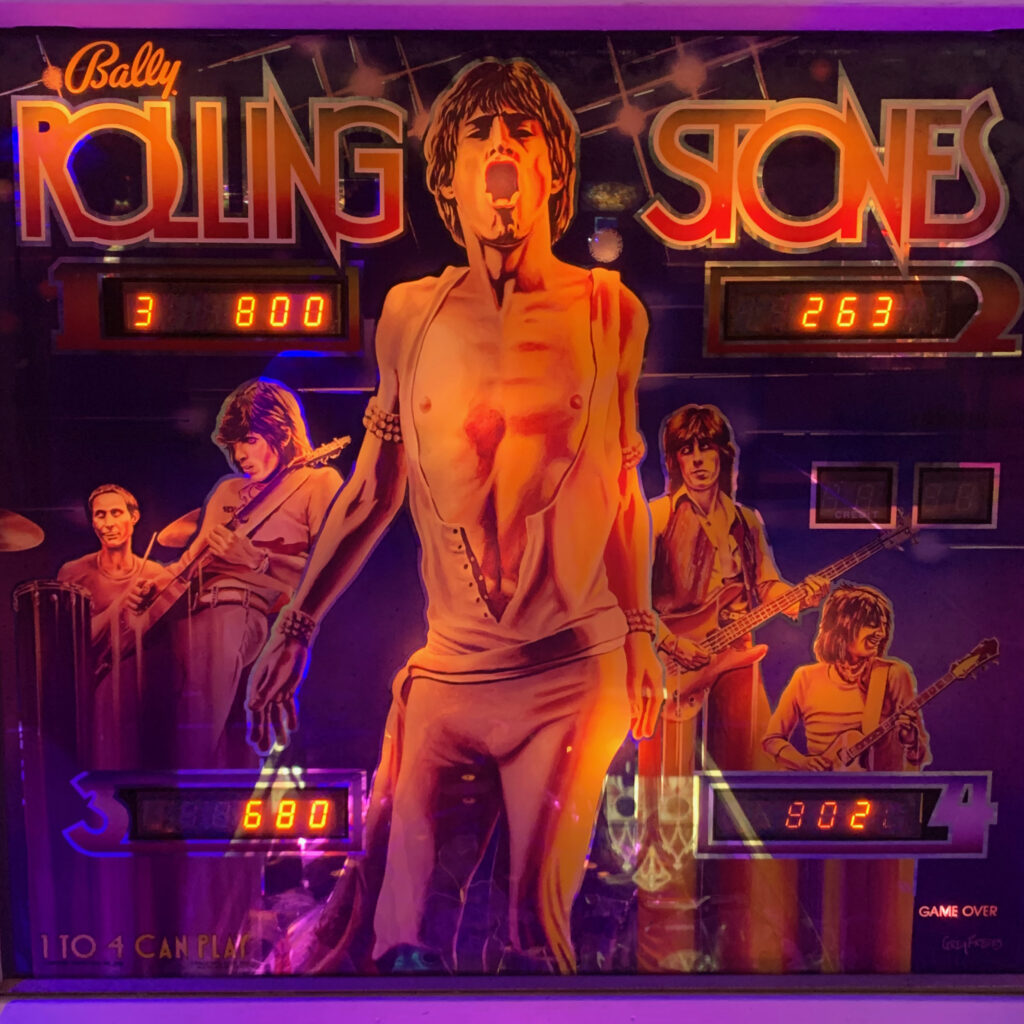
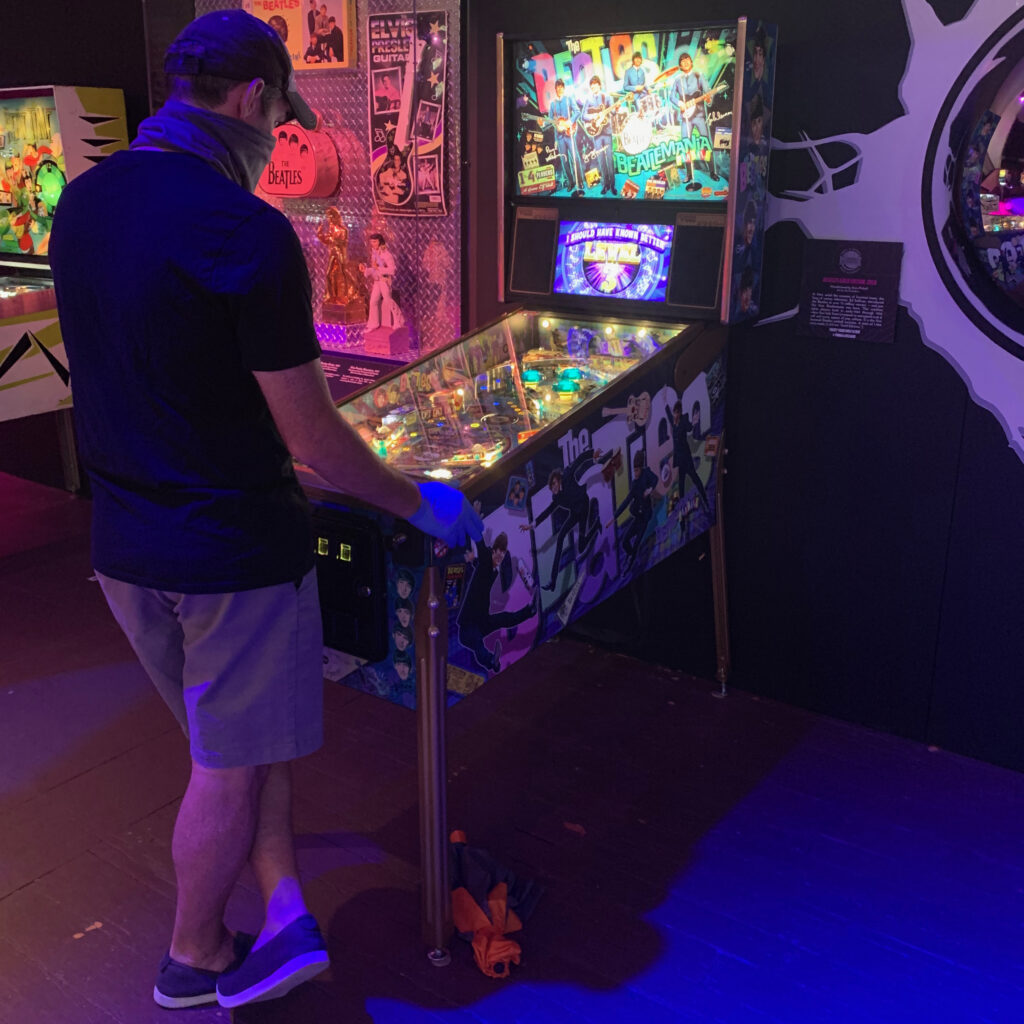
Want to spend some time with Elvis, Dolly Parton and Mick? Always thought you could be a pinball wizard just given the chance? Well, you’ll get your chance at Universal Preservation Hall’s “Part of The Machine: Rock & Pinball Exhibit“.The interactive exhibit is on loan from Cleveland’s Rock ‘n Roll Hall of Fame. Rock an old-school wooden machine or test drive a spectacular, modern, high-tech model. It’s a super-fun walk through music history by way of pinball machines.

The best part is that you can PLAY the machines as much as you want during your 90-minute visit. Attempt to break the high score solo, or if you’re like my husband and me, you can go head-to-head to see who is truly a pinball wizard. Hint: It wasn’t me.

There are also artifacts from the Hall of Fame including Alice Cooper’s electric chair, a Dolly Parton concert dress and more. It’s such an immersive and fun experience that you won’t want to leave. The good news is that the tickets are just $20, which includes all the pinball you can manage in 90 minutes, so you can go back again… and again… and again. At least until September 26th, when the exhibit moves on.

Side note: If you’re concerned about safety during your visit, UPH has put your health first and created an incredibly clean and sterile environment. I felt absolutely safe the entire time I was at the venue. See details below.

The Details:

Tickets:
$20 for a 90-minute session
Purchase here
Dates:
August 11, 2020 through September 26th, 2020
Times:
Sunday – Wednesday: 10 a.m., noon, 2 p.m. and 4 p.m. 
Thursday – Saturday: 10 a.m., noon, 2 p.m., 4 p.m. 6 p.m. and 8 p.m. 

COVID-19 Health & Safety Protocols

UPH will follow the Center for Disease Control and Prevention and New York State safety guidelines in establishing safety protocol for exhibit visitors.

  • Each visitor, staff person and volunteer will be required to bring and wear a face mask and to wear provided gloves while playing the pinball machines.
  • All individuals will also be required to maintain proper social distancing.
  • Staff will take and record each individual’s temperature and procure proper tracing information
  • Proper sanitization of all surfaces including handrails, light switches, elevators, exhibit pieces, restrooms and common surfaces will occur before new groups are admitted.

Related Posts

  • FRANCES TEPPNER ON MOTIVATIONS AND REWARDS AS A CAREER DANCER
  • KATE WILKINS ON SERVING ARTISTS AND COMMUNITIES WELL
  • KAYLA CARLSEN : FROM WORLD CLASS AUCTION HOUSES TO PEDIGREED MUSEUM SPACE

Noshing Around Schenectady with Proctors’ Jean Leonard

January 6, 2020 By Maureen Sager

Proctors’ Chief of Staff Jean Leonard has been at the epicenter of Schenectady’s creative scene and redevelopment efforts for over eight years, so we asked her about her favorite places to grab a bite.

If I were going to eat my way through Schenectady for a day, I would:

Have a breakfast sandwich at Katz’s on Jay Street.  The owner is the friendliest person in Schenectady.  It’s impossible to walk out of his store without a smile, and his sandwiches are delicious.

I’d have morning tea at the Whistling Kettle because I never knew there were so many kinds of tea until I took a look at their tea menu!

For lunch, I’d head to Puzzles Café.  I love their mission.  Their food tastes wonderful and my heart feels good when I leave.  Win-win for midday.

Before I ate again, I’d do a little shopping.  The Mercantile, Bluebird Home & Gift, Open Door Books, and The Silver Shop.  I’m a fan of local, independent stores with friendly, engaging customer service, and these shops are some of my favorites!

For an afternoon sweet treat, I’d head to Apostrophe Café at Proctors.  Sorry, but the best coconut macaroons are right there below my cubicle!  THE reason I need to head to the gym more often…

I think I’d land at Daley’s on Yates for dinner.  There are SO MANY good dinner options here, but since I can only eat one dinner, Daley’s has delicious food and great cocktail/wine options.  In the summer, I love their patio.

Because I am incapable of eating a meal without also eating just a little dessert, I’d finish my time in Schenectady at the Cocobar.  As it says on their website, “If the question is chocolate, the answer is yes.”  Enough said!

Creative Economy Mixer Photo Highlights: PS21

August 1, 2019 By Maureen Sager

Thanks to everyone who came out to enjoy our Creative Economy Mixer at PS21. We had a great time learning more about the facility, having a tour, and enjoying beverages from Hudson Chatham Winery, and Chatham Brewing. Special thanks to our event sponsors Columbia Economic Development Corporation, MVP Health Care, and Community Loan Fund of the Capital Region and promotional partner CREATE (Council for Resources to Enrich the Arts, Technology and Education).


We’ll see you at the next event!

NY’s Capital Region: A Heron’s Nest for North American Haiku

January 28, 2019 By Maureen Sager

Photo by James Schlett.

It is a story that starts almost like a joke: almost two decades ago, a state worker, an electrical engineer and a classical music composer walked into a Tai restaurant. The joke, however, ends there, and what has happened since then has amounted to a tour de force in the North American haiku community.

Haiku – yes, that Japanese art form often taught to middle school students – is thriving in upstate New York, especially the Capital Region. Not only do several of the nation’s best-known haiku poets live in the Capital Region, two of North America’s leading haiku journals have upstate editors at their helm: Rochester’s Michael Ketchek edits Frogpond, and Nassau’s John Stevenson is the managing editor of The Heron’s Nest. A third upstate publication, Upstate Dim Sum, a biannual haiku anthology, is edited by Schenectady’s Yu Chang.

Route 9 Haiku Group

The Capital Region’s influence on modern American haiku has been growing since the three poets met at the Tai Pan restaurant on Route 9 in Halfmoon in February 2000. They included Stevenson, a retired human resources administrator with the New York State Office of Mental Health; Chang, a retired Union College electrical engineering professor; and Schuylerville’s Hilary Tann, the current chair of Union’s Performing Arts Department. Since then, this trio, plus Tom Clausen of Ithaca, have been meeting at Tai Pan monthly, occupying the same back corner table and dining on dim sum often from noon to 6 p.m. They call themselves the Route 9 Haiku Group, and at these meetings they provide feedback on their haiku and select poems for Upstate Dim Sum.

on the horizon
just enough cloud
to hold some sunset
     Tom Clausen, Ithaca

American Haiku

Modern American haiku is very different from the three-lined poetry with 17 syllables that students are taught in middle school. It is an art that draws its power and beauty from not only nature but also from a faithfulness to simplicity and brevity. It is a nod to life’s impermanence and an attempt to capture its moments before they vanish like morning dew. Haiku leaves much unsaid and more to the imagination. The traditional 5-7-5 syllable structure is largely viewed as a maximum – rather than mandated – length per line. Haiku that exhaust all 17 syllables can be superfluous, whereas those with half as many are vastly more expressive.

silence
for some
includes birdsong
     Hillary Tann, Schuylerville

One core element of haiku is the kigo, or “seasonal word,” such as Tann’s “birdsong,” a harbinger of spring. Another core element is the kire-ji, or “cutting word,” which introduces a twist to the poem, the way the “birdsong” contradicts the “silence” in Tann’s poem. Haiku can be less centered on nature and lack a kigo, but those that primarily provide social commentary are categorized as senryu.

children’s ICU—
a tissue box beside
the pay phone
     John Stevenson, Nassau

Capital Region Haiku Headliners

If there is such a thing as a superstar haiku poet in the United States, Stevenson would be one. He is a former regional coordinator, treasurer, vice president and president of the Haiku Society of America (HSA) and editor of its quarterly journal, Frogpond. Since 2008, he has served as the editor of The Heron’s Nest, and since 2007 he has been a judge in the United Nations International School’s annual haiku contest. He is an Honorary Curator of the American Haiku Archives at the California State Library. He has won many first-place HSA contests and was voted “Poet of the Year” three times by Heron’s Nest readers prior to being named its editor.

                                                   autumn wind
                                                   the leaves are going
                                                   where I’m going
                                                             John Stevenson, Nassau

Chang, a Chinese native who grew up in Taiwan, started writing haiku in the mid-1990s and quickly established himself as a prominent haiku poet. He won the grand prize for the Shiki Internet Haiku Contest in 1996 and 1997, the Museum Of Haiku Literature Award in 1998 and the Harold G. Henderson Haiku Award in 1999. More recently, he won the Heron’s Nest’s grand prize for Poet of the Year in 2009 and Haiku of the Year in 2016. Schenectady’s Central Park, a short walk from his house, is a perennial source of inspiration for this humble, soft-spoken poet.

gathering light
at the tip of an acorn
yesterday’s rain
     Yu Chang, Schenectady

The Welsh-born Tann played an integral role in bringing Haiku North America – the nation’s largest haiku poet gathering that occurs biennially – to Union in 2015. She received the Haiku Society of America Museum of Haiku Literature Award in 2006. Along with the Route 9 Haiku Group poets and Paul Macneil, a Heron’s Nest editor from Ocala, Florida, Tann in 2017 and 2003 won the grand prize for the HAS’s Bernard Lionel Einbod Renku Collection Awards. Renku is a linked-verse poem of haiku-related literature written by multiple poets and alternating between three- and two- line stanzas.

Other Local Haiku Poets

Other established and emerging Capital Region haiku poets include, but are not limited to, Stuart Bartow, a SUNY Adirondack English professor from Salem who last year published his first haiku book; Wonja Brucker, a Korean-American retired librarian from Princetown; and Saratoga Springs’ Barbara Ungar, a College of St. Rose English professor who has been writing haiku for a half century. At Stanford University in the 1970s Ungar was a pupil of the renowned haiku critic Makoto Ueda, and her senior honors essay on “Haiku in English” was reprinted in Simply Haiku in 2009.

chickadees nesting
in the mailbox     news
     from the sky
     Stuart Bartow, Salem

snow in the air
on the stone walk a mouse
laid out by the cat
     Barbara Ungar, Saratoga Springs

sunlit icicle
he wants to keep it
in his toy box
     Wonja Brucker, Princetown

alone
hugging
warm laundry
     Davis Giacalone, Schenectady

cool August evening
grass clippings all over
our backs
     James Schlett, Colonie

The HAS does have a Northeast Metro region, which includes New York State. However, outside of the closed circle monthly Route 9 Haiku Group meetings at Tai Pan, there are no regular haiku poet gatherings in the Capital Region. Below are journals with Northeast-based editors and annual gatherings in New England.

New York/New England Haiku Journals

    • Frogpond, edited by Michael Ketchek, Rochester, New York
    • The Heron’s Nest, edited by John Stevenson, Nassau, New York


  • Modern Haiku, edited by Paul Miller, Portsmouth, Rhode Island


    • Bottle Rockets, edited by Stanford Forrester, Windsor, Connecticut
    • Akitsu-Quarterly, edited by Robin White, Deerfield, New Hampshire


  • Upstate Dim Sum, edited by Yu Chang, Schenectady, New York


  • New England Letters, edited by Wanda Cook, Hadley, Massachusetts

Annual Haiku Poet Gatherings

  • The Haiku Circle, in Northfield, Massachusetts, usually in June
  • Wild Graces Haiku-Gathering, in Deerfield, New Hampshire, usually in September

About the Author

In addition to being the Center for Economic Growth’s director of research and communications, James Schlett is an award-winning poet, author and journalist. He is the author of A Not Too Greatly Changed Eden: The Story of the Philosophers’ Camp in the Adirondacks (Ithaca and London: Cornell University Press, 2015), winner of the Adirondack Center for Writing’s Adirondack Literary Award for Best Book of Non-Fiction in 2015. His haiku has been published in Frogpond, The Heron’s Nest, Acorn, Modern Haiku, Bottle Rockets, Wild Plum, and Akitsu-Quarterly Journal.


  • « Go to Previous Page
  • Page 1
  • Interim pages omitted …
  • Page 7
  • Page 8
  • Page 9
  • Page 10
  • Page 11
  • Page 12
  • Go to Next Page »

Creative Economy Updates and Other Good Stuff!

STAY CONNECTED!

  • Facebook
  • Instagram
  • Twitter
Copyright © 2020 THE UPSTATE ALLIANCE FOR THE CREATIVE ECONOMY

info@upstatecreative.org | 41 State Street, Albany, NY 12207

Design by Reach Creative