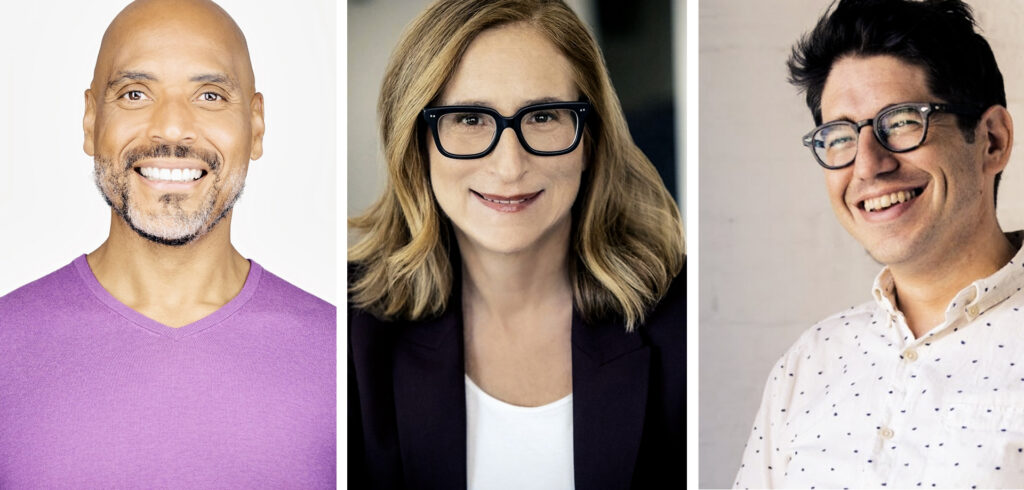
The Second Annual Empire Arts Summit, produced by ArtsNYS, is the premier gathering of New York’s arts and cultural leaders, policymakers and creative workers. This year it will be taking place from October 14 to 15, 2026 at The EGG in Albany, NY. This year’s theme, “Arts at the Heart of Healthy Communities,” will focus on the role of the arts in building healthy communities. All-star guest speakers for this 2026 Summit will include Erika Mallin, Executive Director of the New York State Council on the Arts (NYSCA), Michael J. Bobbitt, President & CEO, OPERA America, and Co-Founder of Kickstarter and Metalabel, Entrepreneur and Author, Yancy Strickler. I spoke briefly with Liz Lane, Executive Director at ArtsNYS about the what and importantly the why this years summit is an important moment for convening arts and culture leaders around the state.
2026 EMPIRE ARTS SUMMIT : Arts at the Heart of Healthy Communities
Wednesday, October 14 and Thursday, October 15
The EGG | Empire State Plaza | Albany NY
Can you share a bit more about the theme of this years summit and why you felt is was timely?
The theme, Arts at the Heart of Healthy Communities is reflecting upon a growing body of research and data proving what we in the arts have always known to be true, culture and creativity are essential to our wellbeing. They make us feel joy and connection and remind us of our shared humanity. At this time when so many of us are carrying stress, facing isolation and of course, the uncertainty of what’s ahead, the arts bring us back to each other, our community, while literally making us healthier!
Across three tracks (Policy, Place & Civic Engagement; Artists & Creative Workers; and Arts Organizations & Community Wellbeing), more than 25 presenters representing communities across the state will lead sessions on arts and health partnerships, cultural planning, public art, artificial intelligence, access to live events, and building arts champions in local government.
Why should folks consider attending this years summit?
For me, the room itself is the most important reason. This is a rare moment when our entire creative sector from across the state comes together. It makes us energize and powerful and able to solve big and real problems together.
The Summit is designed to leave people with tools, connections, and resources so Monday when they get back to the office or studio, they can get to work. Last year, every single attendee said they made a new and valuable connection and the more connected we are, the more effective we can be in our work.
Also, there are practical reasons like the upcoming elections and a new state legislature in 2027 which starts in January. So, there will be much talk about how we can prepare and have a shared agenda going into the year ahead.
What does the program look like from an attendee perspective?
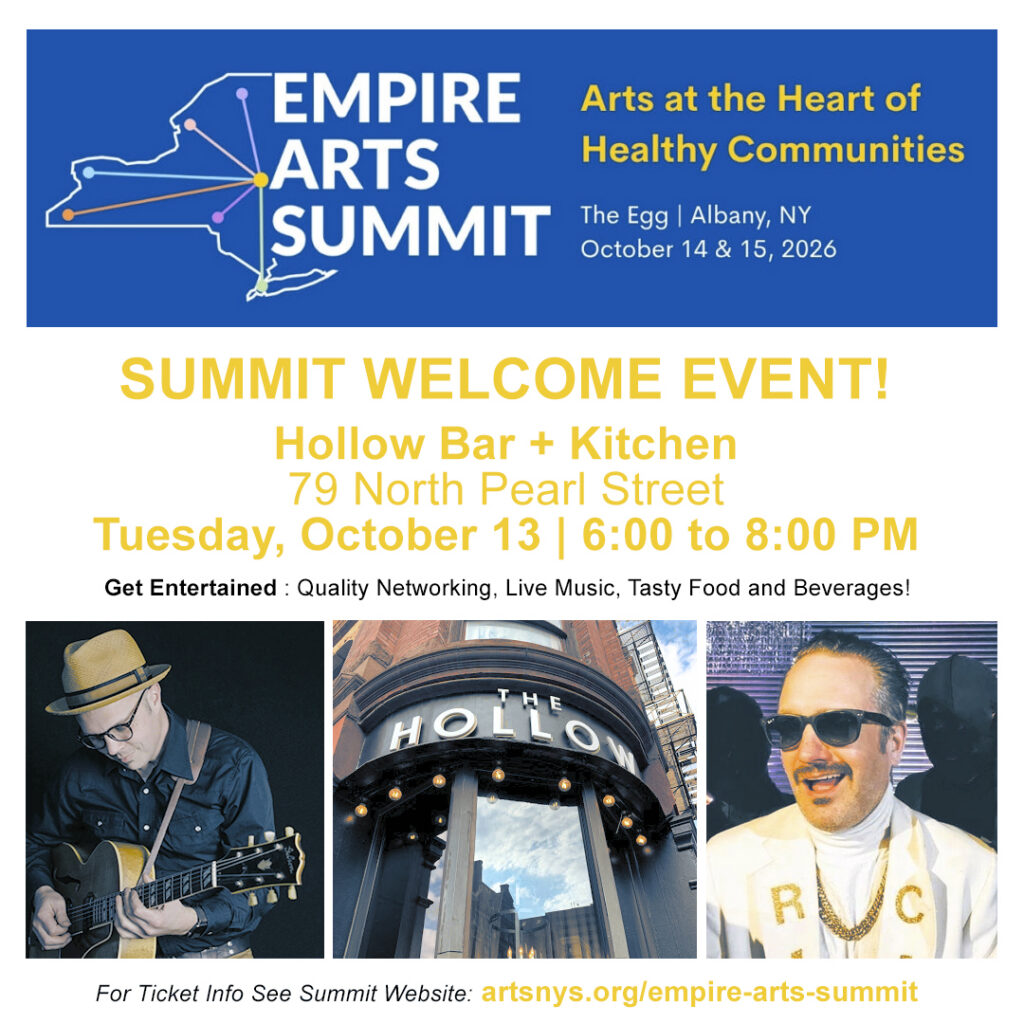
We have so much in store! The Summit opens on the evening of Tuesday, October 13 with a Welcome and Networking Cocktail Hour at The Hollow Bar + Kitchen, 79 North Pearl Street, Albany featuring the Graham Tichey Trio. Over a three-decade career, Graham has built an international reputation as a versatile and skilled guitarist known for his mastery of mid-20th-century musical styles. Graham will be joined by vocalist Mr. Capital Region, Ritz Carlton and drummer Chris Osborn. Tickets Available on website or at the door.
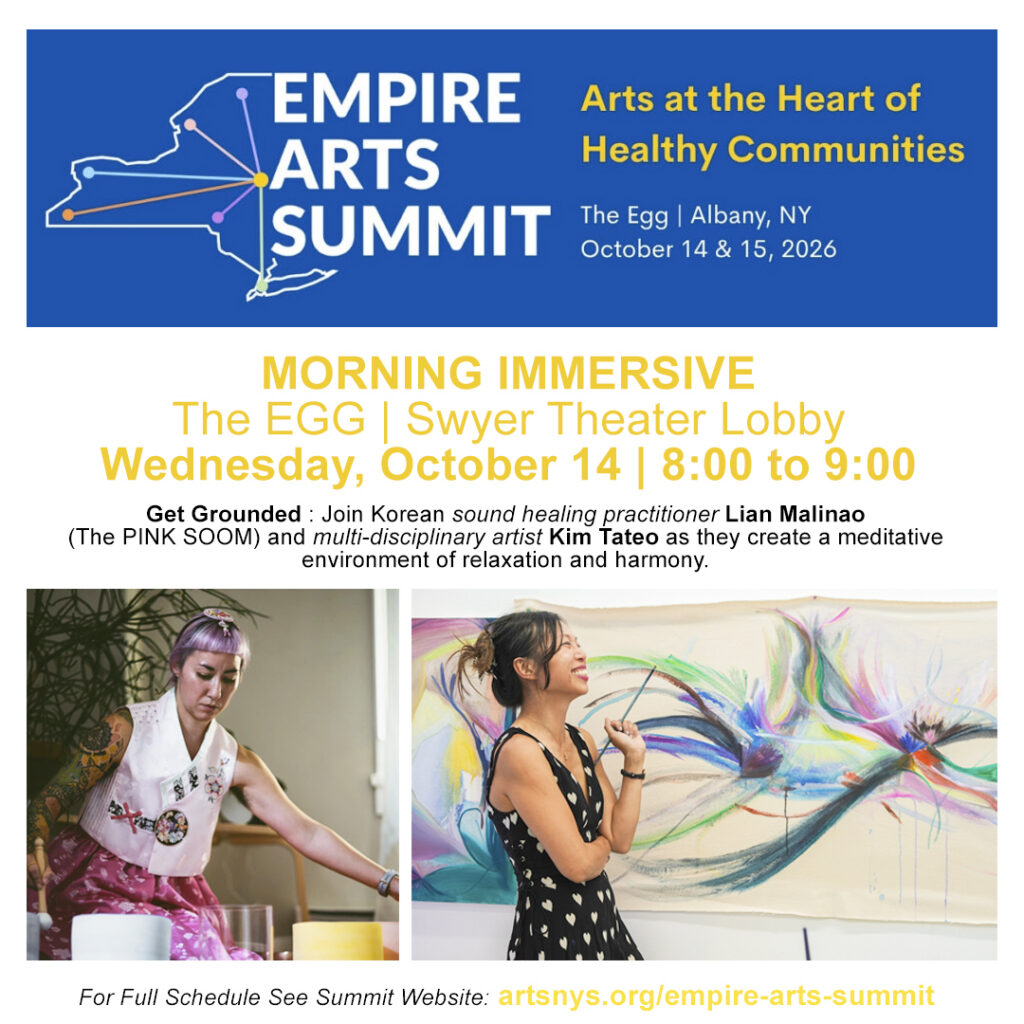
Programming begins Wednesday, October 14 at 8:00 a.m. at The Egg with breakfast and an opening plenary. A Morning Immersive event from 8:00 to 9:00 will feature Korean sound healing practitioner Lian Malinao (SOOM Healing Concepts) and multi-disciplinary artist Kim Tateo will set a receiving mindset as they create a meditative environment of relaxation and harmony. This collaborative approach will feature elements of sound, guided meditation and live painting.
Presentation topics over the course of the 14th and 15th include the following:
WEDNESDAY, OCTOBER 14
Care by Design: Arts and Health Partnerships That Work.
The Human Work: Creativity, Judgment, and AI.
Listen First, Build Better: Turning Community Research into Cultural Infrastructure
NYSCA’s FY27 Capital Projects Opportunity Seminar
KEYNOTE: Erika Mallin, Executive Director of the New York State Council on the Arts (NYSCA), | Yancy Strickler, Entrepreneur and Author, Co-Founder of Kickstarter and Metalabel. Current Projects include Artist Corporations (A-CORP).
Art as a Lifeline: Creative Practice as Community Infrastructure
The Ticket Trap: Who Controls Access to Live Culture?
Art in the Places We Share
Hidden Assets: Space, Memory, and the People in the Room
Counting What Counts: What the New York Museums Study Tells Us
Listen, Tell, Decide: Artist Tools for Community Conversations
Navigating a Shifting Landscape: Federal Arts Update
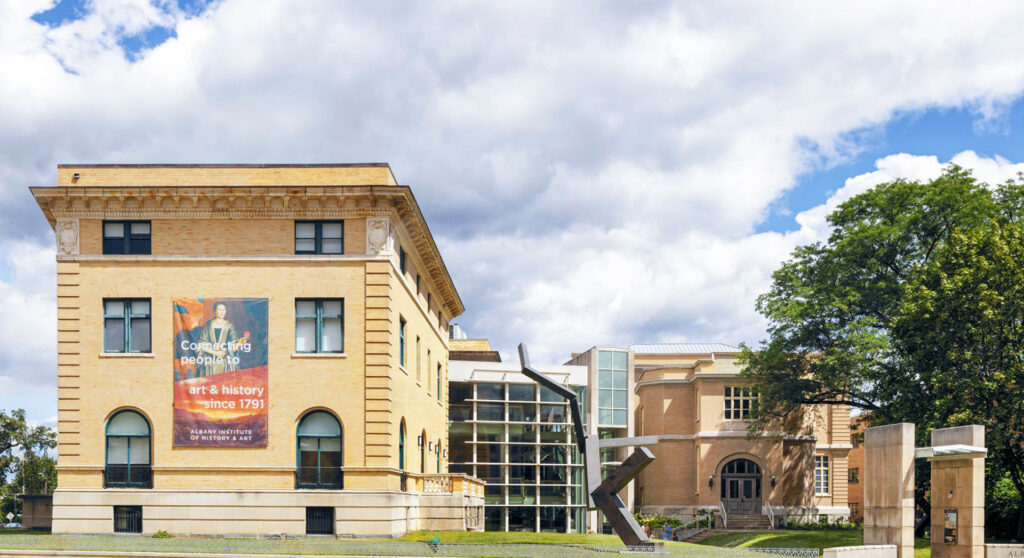
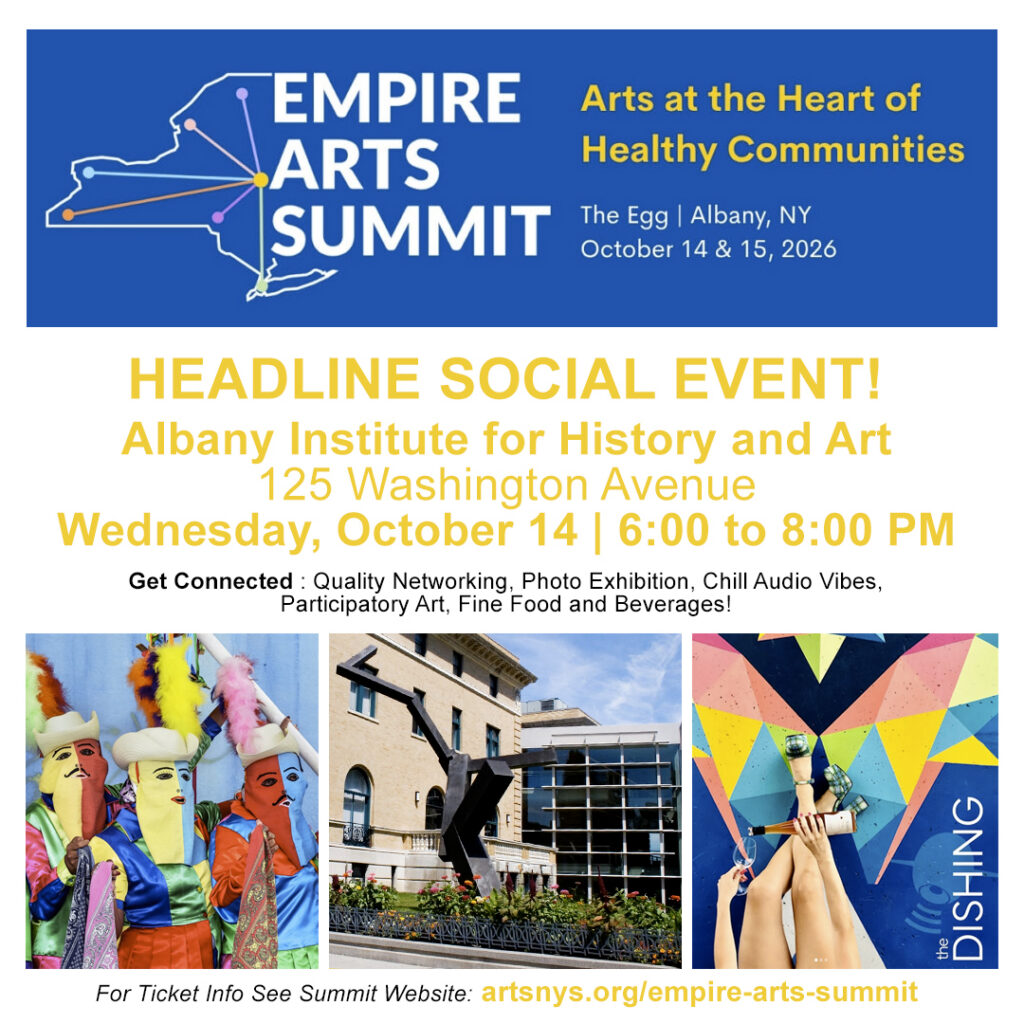
Summit Headline Social Event | Albany Institute for History and Art
Wednesday 10.14 from 6:00 to 8:00 PM
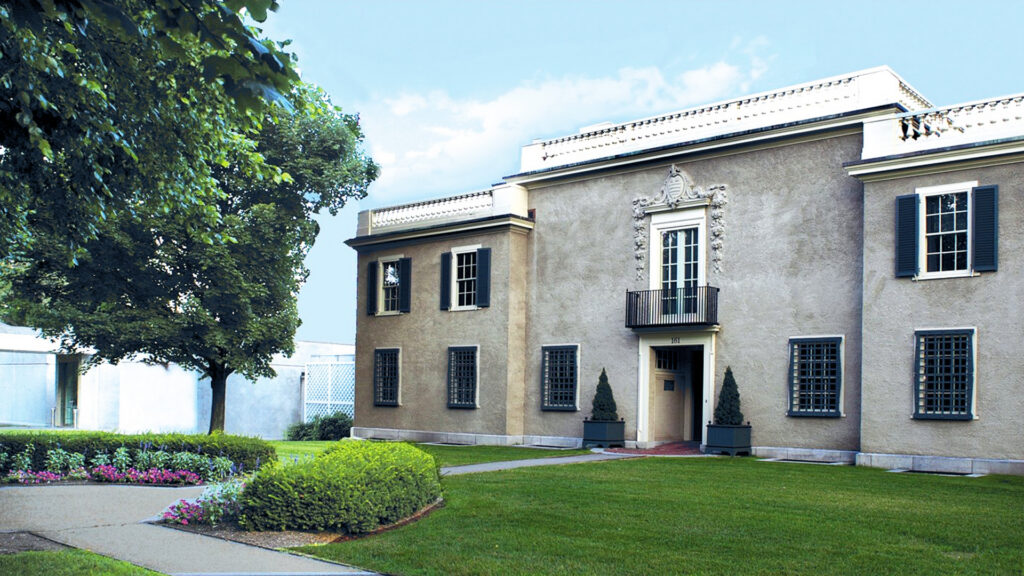
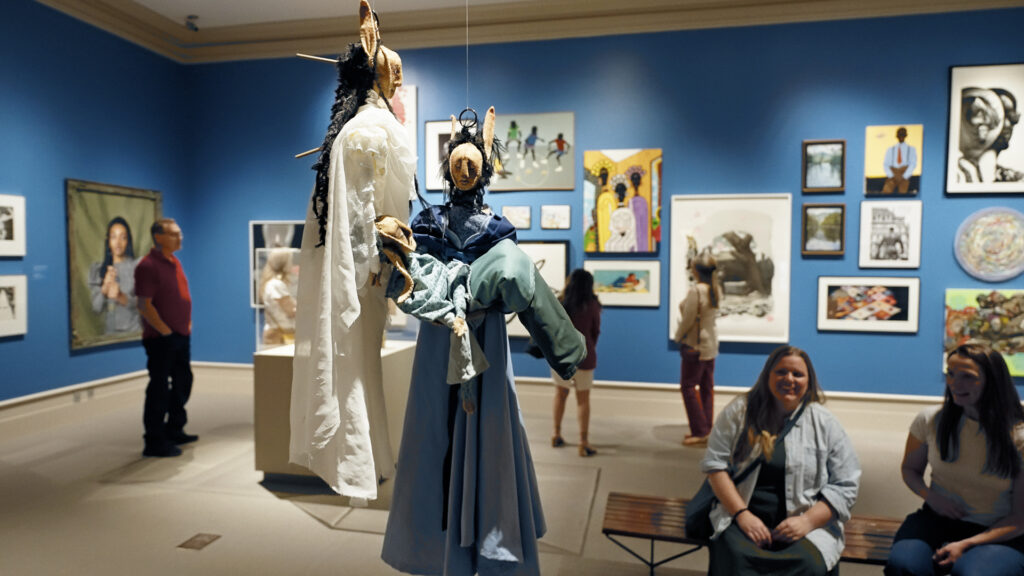
The Summit’s main social networking event for attendees will be held at the Albany Institute of History and Art and will feature a Taste of Albany food program by Susie Davidson Powell of The Dishing. The current gallery exhibition, Mexico Masks / Rituals: Photographs by Phyllis Galembo will be open to attendees. Entertainment for the evening includes audio lounge stylings by DJ collective groop_lab, a participatory art piece by Deyva Arthur‘s entitled Street Peace Project, and an end of evening send off with fire spinner / circus artist Acadia Rae. In addition to the food program, a selection of beer, wine, cider and a signature thematic cocktail will be on the menu. Expect unannounced surprises! Tickets available through website or at the door.
THURSDAY, OCTOBER 15
KEYNOTE: Michael J. Bobbitt, President & CEO, OPERA America
Close to Home: Building Arts Champions in Local Government
Get to Know Voices for Creative New York
On the Art Side
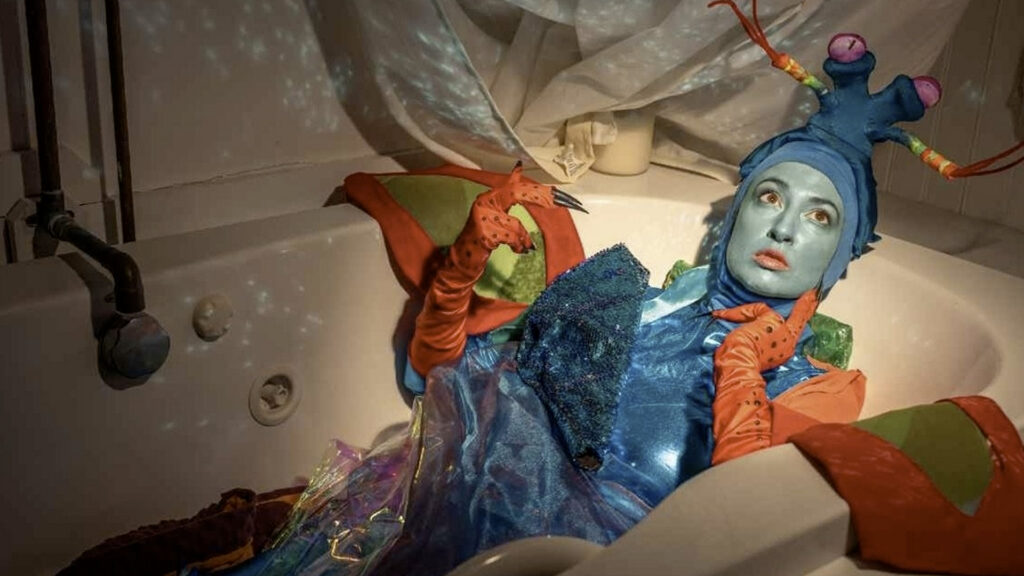
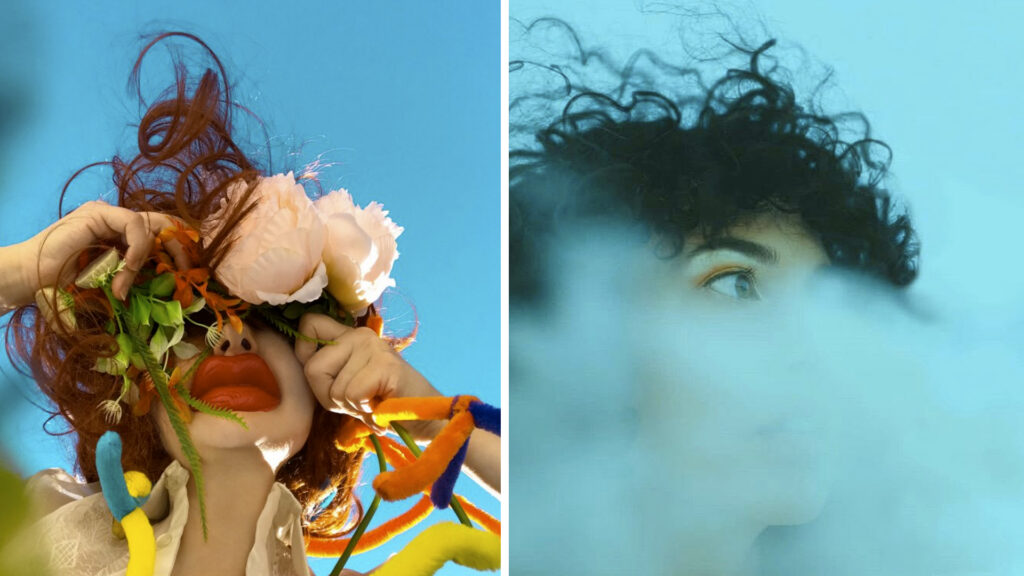
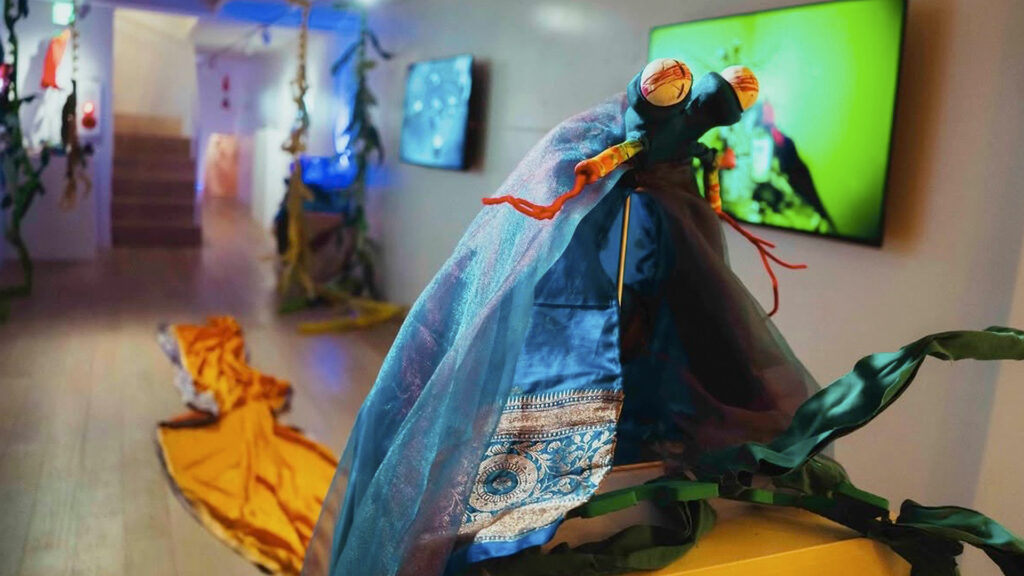
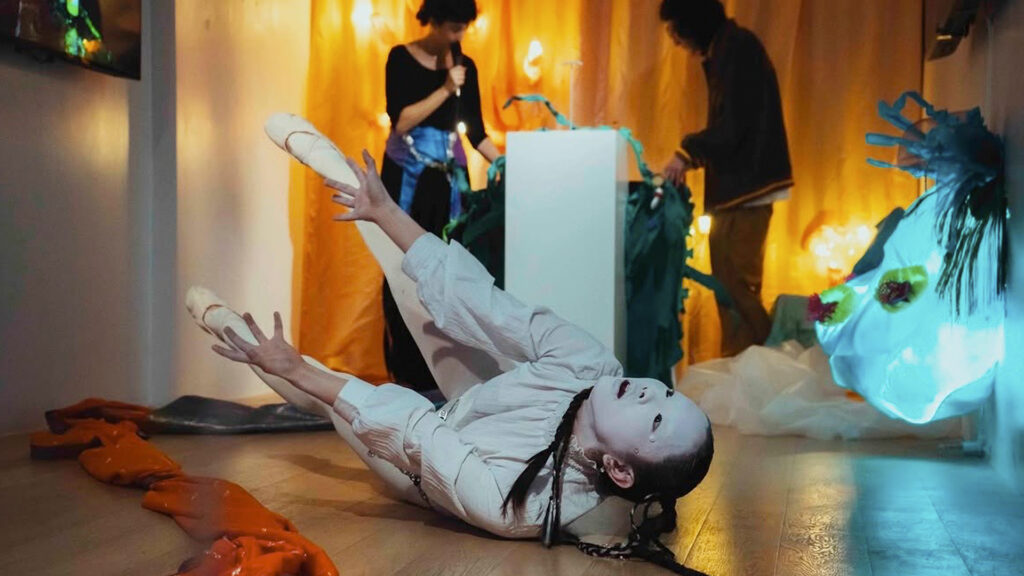
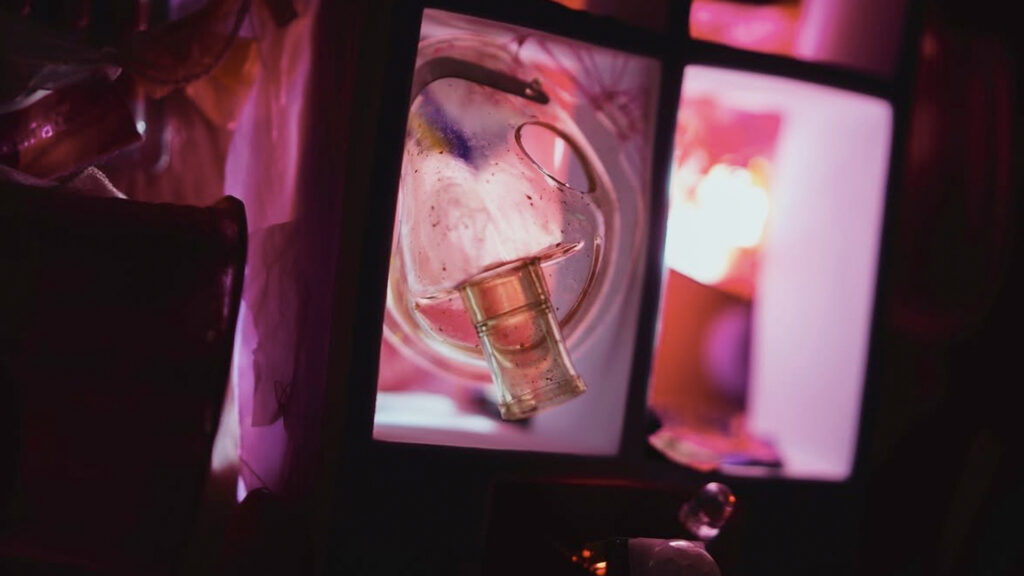
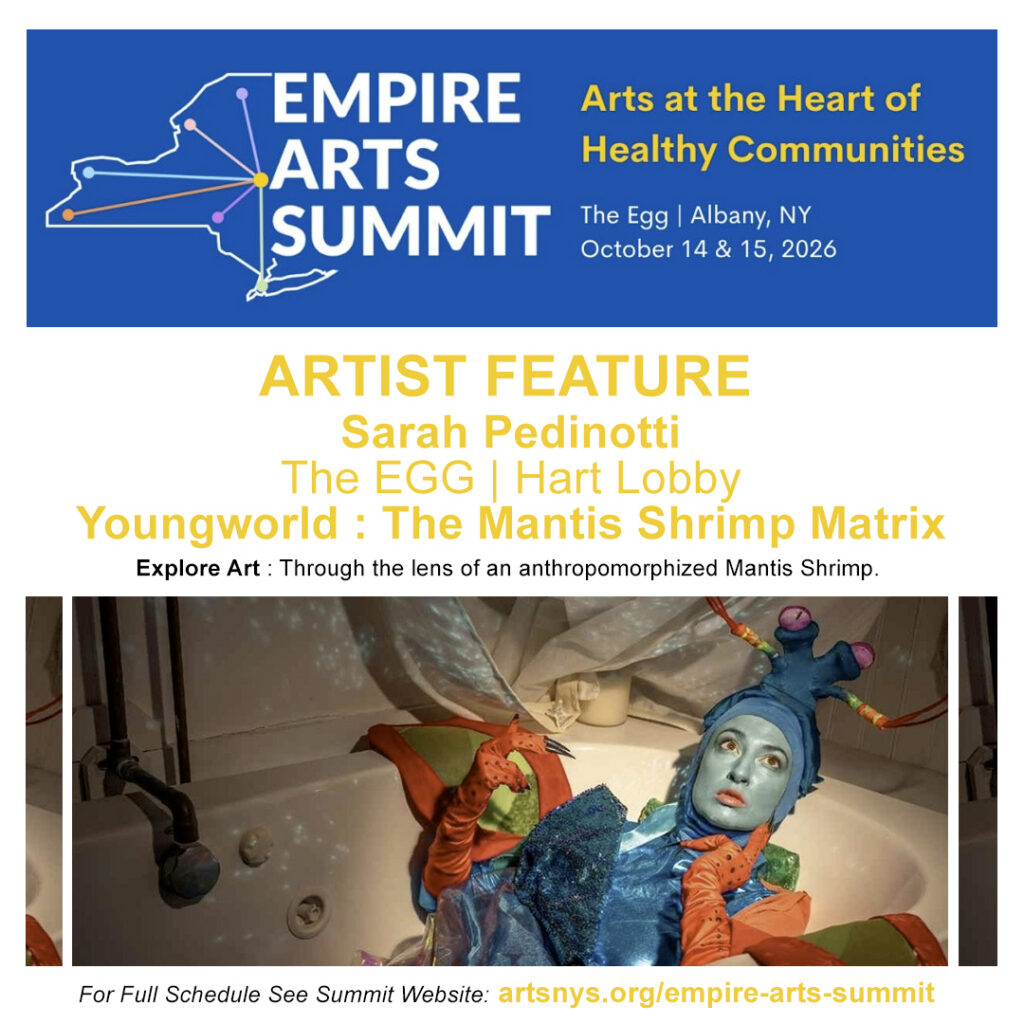
Attendees will be greeted into the recently renovated space at The EGG with an installation by artist Sarah Pedinotti (LIP TALK) featuring a representation of her project ‘Youngworld: The Mantis Shrimp Matrix’. This multi-media installation recently debuted in the United States after a successful run in Bangkok, where it was originally conceived, and Tokyo. The work combines site-responsive sound design, electronic visual elements and a sculptural environment built from discarded and ocean-bound materials, exploring human relationship with the natural environment through the lens of an anthropomorphized Mantis Shrimp.
Additional arts pieces will include Deyva Arthur‘s Street Peace Project and a sound painting by multi-disciplinary artist Kim Tateo.
In Conclusion
The Empire Arts Summit is an opportunity for New York’s creative sector to come together around a shared question: How can the arts help build healthier, more connected, and more vibrant communities? For registration and additional information, visit the Empire Arts Summit page at ARTSNYS.ORG.